2027 Best Accounting Schools in Hawaii – How to Become a CPA in HI

Co-Founder and Chief Data Scientist
Choosing an accounting school in Hawaii is not just a question of which campus is closest or which program sounds most familiar. The better question is whether a program can help you meet Hawaii CPA requirements, control education costs, build job-ready accounting skills, and connect with employers in the state’s tourism, government, healthcare, nonprofit, and private business sectors.
Hawaii already has approximately 4,940 accountants working across its economy, and accounting remains a practical major for students who want a career built around financial reporting, tax compliance, auditing, budgeting, and business decision-making. A degree in accounting can lead to staff accounting jobs, CPA preparation, auditing roles, financial management pathways, and specialized work in areas such as forensic accounting, payroll, healthcare finance, and compliance.
This guide explains how to compare accounting schools in Hawaii, what CPA candidates must complete, how long the path can take, what tuition ranges to expect, which Hawaii schools offer accounting programs, and what questions to ask before enrolling.
Best Schools of Accounting in Hawaii: Table of Contents
- Is accounting a strong career choice in Hawaii?
- How do you become an accountant or CPA in Hawaii?
- Where do accountants work in Hawaii?
- How long do accounting programs take in Hawaii?
- What does an accounting degree cost in Hawaii?
- Hawaii schools with accounting programs for 2027
- Online and flexible accounting options for Hawaii students
- How to choose the right accounting program in Hawaii
- Is forensic accounting worth considering?
- How are technology and AI changing accounting in Hawaii?
- How can accountants strengthen their credentials?
- Can medical billing knowledge help accountants in Hawaii?
- How should accountants respond to regulatory change?
- Can accounting experience lead to teaching?
- Can accounting support urban planning projects?
- How do Hawaiian values affect accounting relationships?
- Can legal knowledge improve an accounting career?
- Networking and professional development in Hawaii
- Which specialized accounting roles are growing?
- Can accounting skills transfer into healthcare?
- What other careers can an accounting background support?
Quick Answer: Best Accounting Schools in Hawaii
The best accounting school in Hawaii depends on your goal. Students who want CPA preparation should prioritize accredited bachelor’s programs that include upper-division accounting coursework, business courses, auditing, taxation, accounting information systems, and enough credits to help them work toward Hawaii’s 150-semester-hour CPA education requirement. Students who need flexibility should compare online, hybrid, and transfer-friendly options before committing.
| Decision Point | What to Look For | Why It Matters |
| CPA pathway | Bachelor’s degree, accounting and business coursework, CPA exam preparation | Hawaii CPA candidates must meet education, exam, and experience requirements before licensure. |
| Accreditation | Institutional accreditation and business or accounting accreditation where available | Accreditation affects transfer credits, employer confidence, graduate study, and financial aid eligibility. |
| Cost | Tuition, fees, housing, books, transportation, and time to completion | The lowest tuition is not always the lowest total cost if credits do not transfer or graduation takes longer. |
| Career fit | Internships, employer connections, accounting clubs, CPA support, and career services | Accounting hiring often depends on experience, networking, and early exposure to firms or finance teams. |
| Format | Campus, hybrid, or online delivery | Working adults and neighbor island students may need flexibility that a traditional campus schedule cannot provide. |
Is accounting a good job in Hawaii?
Accounting can be a solid career choice in Hawaii for people who want stable business skills that apply across industries. The state’s economy includes tourism, hospitality, healthcare, government, nonprofits, real estate, retail, financial services, and renewable energy, all of which need professionals who can prepare reports, manage budgets, review transactions, support audits, and interpret tax rules. Hawaii also has the Hawaii Society of CPAs (HSCPA), established in 1932, which supports CPAs through professional standards, continuing education, and networking.
Hawaii’s accounting market includes firms such as N&K CPAs, Inc., Accuity LLP, KMH LLP, and Michael J. Yuda CPA LLC. O*NET OnLine reports projected employment growth of 7% by 2032 for accountants and auditors in Hawaii, making the accounting career outlook favorable for students who build strong technical, analytical, and communication skills.
ZipRecruiter reports accounting jobs in Hawaii at an average annual pay of $70,988, while the CPA salary in Hawaii is around $95,564. These figures should be treated as market estimates rather than guaranteed outcomes because pay varies by employer, island, experience level, credential, industry, and specialization.
The main trade-off is cost of living. Hawaii can be expensive, so students should evaluate salaries alongside tuition, debt, housing, commute costs, and career advancement potential. Shorter credentials, transfer credits, employer tuition support, and certificate programs in accounting may help some learners enter or advance in the field without immediately committing to a longer degree path.
| Accounting in Hawaii: Pros | Accounting in Hawaii: Considerations |
| Skills apply across tourism, healthcare, government, nonprofits, and private companies. | High living costs can reduce the practical value of salary gains. |
| CPA licensure can support advancement into higher-responsibility roles. | CPA candidates must plan for 150 semester hours, exam preparation, and experience requirements. |
| Hawaii’s close professional community can make networking valuable. | Smaller markets can be relationship-driven and competitive for preferred positions. |
| Specializations such as tax, audit, payroll, compliance, and forensic accounting can improve focus. | Specialized roles may require additional training, certifications, or industry experience. |
What are the steps to becoming an accountant in Hawaii?
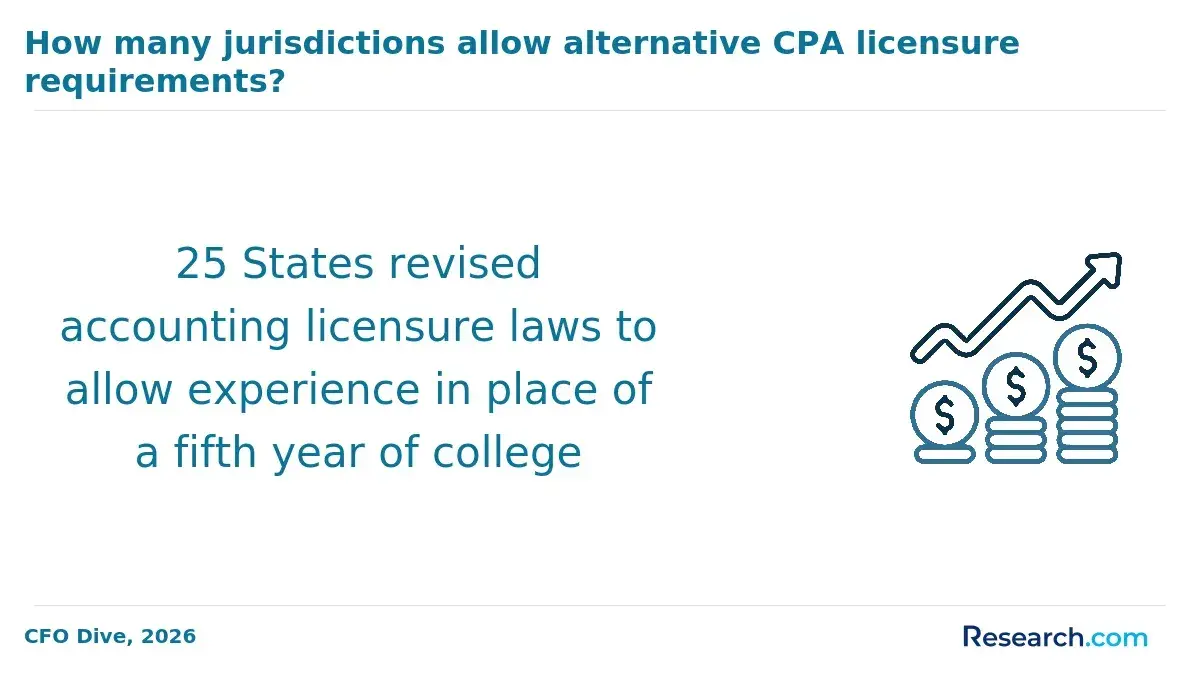
The route you choose depends on whether you want a general accounting job or a CPA license. Many accounting roles require a bachelor’s degree, but CPA licensure is regulated by the Hawaii Board of Public Accountancy. Hawaii CPA candidates must complete at least 150 semester hours, hold a bachelor’s degree, complete 24 semester hours of upper-division accounting coursework, and complete 24 semester hours of business coursework.
1. Complete the required education
CPA candidates need a bachelor’s degree or higher from an accredited college or university. Students may complete a campus-based program or one of the accredited online bachelor degrees in accounting, provided the coursework satisfies Hawaii’s content requirements. Before enrolling, ask the school to explain exactly how its courses map to Hawaii CPA education rules.
2. Pass the Uniform CPA Exam
After meeting the education prerequisites, candidates must pass the Uniform CPA Exam. The exam includes four sections, and candidates must earn passing scores on all four sections within 18 months.
3. Apply for the Hawaii CPA license
After completing the education and exam requirements, candidates can apply for a Hawaii CPA license. The process includes submitting an application, official transcripts, and required fees. Candidates must also meet experience requirements, which include 1,500 hours of auditing experience or two years in public accounting. Teaching accounting at the university level in Hawaii may also satisfy the experience requirement.
| Stage | Requirement or Action | Planning Tip |
| Undergraduate education | Earn a bachelor’s degree and complete required accounting and business coursework. | Confirm that upper-division accounting credits are clearly identified on the transcript. |
| 150 semester hours | Complete the total credit requirement for CPA eligibility. | Some students use a master’s degree, extra undergraduate credits, or certificate coursework to close the gap. |
| CPA exam | Pass all four sections within 18 months. | Ask whether the program offers CPA review support, faculty advising, or exam-prep partnerships. |
| Experience | Complete 1,500 hours of auditing experience, two years in public accounting, or an approved teaching route. | Look for internships and entry-level roles that align with Hawaii’s experience rules. |
| Licensure application | Submit application materials, transcripts, and fees. | Keep syllabi, course descriptions, and documentation in case the board requests clarification. |
What career opportunities exist for accountants in Hawaii?
Accounting graduates in Hawaii can work in public accounting firms, private companies, hospitals, government agencies, nonprofits, hospitality companies, and financial services organizations. Entry-level roles often focus on reconciliations, accounts payable and receivable, payroll, tax preparation, audit support, and monthly closing tasks. With experience, accountants may move into senior accountant, auditor, controller, accounting manager, tax manager, compliance, consulting, or financial leadership roles.
| Industry | Common Accounting Work | Good Fit For |
| Tourism and hospitality | Hotel accounting, revenue reporting, inventory controls, audits, budgeting, and vendor payments | Students interested in Hawaii’s largest visitor-facing business sector |
| Healthcare | Budgeting, insurance-related reporting, revenue cycle support, compliance, and department finance | Accountants who like regulated environments and operational detail |
| Government | Budget analysis, grant accounting, public audits, procurement controls, and financial oversight | Professionals who value public service and structured procedures |
| Nonprofits | Fund accounting, donor reporting, compliance, internal controls, and transparency reporting | Accountants who want mission-driven work |
| Private sector | Tax, payroll, financial reporting, forecasting, real estate accounting, retail accounting, and investment support | Graduates who want broad business exposure and advancement options |
Accounting Program Length in Hawaii
Hawaii is home to around 5,000 CPAs, but the time needed to become one varies by student. The timeline depends on transfer credits, full-time or part-time enrollment, whether the student needs additional credits beyond the bachelor’s degree, CPA exam pacing, and application processing.
A typical accounting pathway in Hawaii may take about five years when education and CPA preparation are considered together. Many students complete a four-year bachelor’s degree in accounting, then spend additional time finishing the 150-semester-hour requirement, preparing for the CPA exam, and meeting experience requirements. Some students move faster through accelerated, transfer-friendly, or dual-credit options, while working adults may need a longer part-time timeline.
| Path | Typical Use Case | Important Trade-Off |
| Four-year bachelor’s degree | Traditional students entering college after high school | May not alone provide the 150 semester hours needed for CPA licensure. |
| Bachelor’s plus extra credits | Students who want CPA eligibility without a full graduate degree | Requires careful course planning to avoid paying for credits that do not count. |
| Bachelor’s plus graduate certificate | Graduates who need focused advanced accounting coursework | Can be shorter than a full master’s degree but may have fewer career-service resources. |
| Bachelor’s plus master’s or MBA | Students targeting leadership, consulting, or advanced accounting roles | Usually costs more and should be evaluated for return on investment. |
| Part-time online pathway | Working adults, military-affiliated students, or neighbor island learners | Offers flexibility but requires strong self-management and advising. |
Tuition and Costs of Accounting in Hawaii
Accounting program costs in Hawaii vary by school, residency status, credit load, delivery format, fees, and living arrangements. Public four-year institutions in Hawaii average $11,460 in tuition and fees for in-state learners and $32,780 for out-of-state students, according to Ma et al., 2025.
Tuition is only one part of the total cost. Students should also budget for textbooks, technology, accounting software access, transportation, parking, housing, meals, professional clothing for interviews or internships, CPA review materials, exam-related costs, and potential lost income if they reduce work hours. The most affordable program is the one that helps you graduate efficiently with credits that count toward your goal.
| Cost Category | Why It Matters | Question to Ask |
| Tuition and mandatory fees | This is the most visible cost but not the only one. | What is the full cost per semester for my residency status and credit load? |
| Transfer credits | Accepted credits can reduce time and cost. | Which of my previous credits will apply to the accounting major and CPA requirements? |
| Books and materials | Accounting courses may require textbooks, calculators, software, or online homework platforms. | Are estimated course-material costs available before registration? |
| Housing and transportation | Campus attendance can add major living and commuting costs. | Would online or hybrid enrollment reduce my total expenses? |
| CPA preparation | CPA candidates may need review courses and additional credits. | Does the program include CPA exam advising or review support? |
| Financial aid and scholarships | Grants and scholarships can reduce borrowing. | What institutional, state, employer, or accounting scholarships can I apply for? |
Hawaii Schools Offering Accounting Programs for 2027
The schools below offer accounting-focused programs that can prepare students for accounting, auditing, finance, and CPA-related goals. Use this list as a starting point, then verify current tuition, course availability, delivery format, transfer policies, and CPA alignment directly with each institution.
| School | Program | Credits | Cost Information | Accreditation Listed |
| University of Hawaii at Hilo | BBA in Accounting | 121 | $306 to $846 per credit | Association to Advance Collegiate Schools of Business (AACSB) |
| Brigham Young University Hawaii | BS Accounting | 124 | $580 to $1,160 per credit | Western Association of Schools and Colleges (WASC) |
| Hawaii Pacific University | BSBA Accounting | 120 | $700 to $1400 per credit | AACSB |
| University of Hawaii in Manoa | BBA in Accounting | 120 | $700 to $1400 per credit | AACSB |
| Chaminade University of Honolulu | BS Accounting | 120 | $48,240 to $46,310 estimated cost of attendance | International Accreditation Council for Business Education (IACBE) |
1. University of Hawaii at Hilo
The University of Hawaii at Hilo accounting program offers a BBA in Accounting designed for students preparing for accounting and auditing careers. The curriculum includes financial accounting, managerial accounting, taxation, auditing, and accounting information systems, while also covering content areas connected to the Uniform CPA Exam. Students can also use advising, tutoring, and career support services to plan their academic and professional next steps.
- Program Length: Four years
- Cost per Credit: $306 to $846
- Tracks/concentrations: Finance, Marketing, General Management, Economics, Healthcare Management, Professional Studies
- Required Credits to Graduate: 121
- Accreditation: Association to Advance Collegiate Schools of Business (AACSB)
2. Brigham Young University Hawaii
The Brigham Young University Hawaii BS Accounting program focuses on accounting fundamentals, business principles, communication, standards, regulation, critical thinking, collaboration, and technology use. Its coursework is intended to help students analyze accounting issues, apply professional standards, and continue learning as accounting tools and expectations evolve.
- Program Length: Four years
- Cost per Credit: $580 to $1,160
- Tracks/concentrations: Financial and Managerial Accounting, Auditing, Information Systems, International Accounting, Taxation
- Required Credits to Graduate: 124
- Accreditation: Western Association of Schools and Colleges (WASC)
3. Hawaii Pacific University
The Hawaii Pacific University accounting degree is a BSBA Accounting program built for students interested in business, government, nonprofit, and accounting-firm roles. The program includes nine accounting courses covering areas such as financial accounting, managerial accounting, taxation, and auditing. HPU’s Accounting Club also gives students opportunities to connect with alumni, employers, accounting firms, job fairs, and recruiting events.
- Program Length: Four years
- Cost per Credit: $700 to $1400
- Tracks/concentrations: CPA, Controllers, Accounting Managers, Internal Auditors, Forensic Accountants, FBI Agents
- Required Credits to Graduate: 120
- Accreditation: AACSB
4. University of Hawaii in Manoa
The University of Hawaii in Manoa Shidler College of Business accounting program offers a BBA in Accounting for students seeking preparation for entry-level accounting roles or advanced study. The program can support pathways in public practice, private business, nonprofit organizations, government agencies, and related accounting fields.
- Program Length: Four years
- Cost per Credit: $700 to $1400
- Tracks/concentrations: CPA, Controllers, Accounting Managers, Internal Auditors
- Required Credits to Graduate: 120
- Accreditation: AACSB
5. Chaminade University of Honolulu
The Chaminade University of Honolulu accounting program offers a BS Accounting degree that emphasizes practical accounting application. Students study financial and managerial accounting, governmental and financial reporting differences, auditing and attestation, income tax preparation, ethical decision-making, communication, critical thinking, and community-focused experiential work.
- Program Length: Four years
- Estimated Cost of Attendance: $48,240 to $46,310
- Tracks/concentrations: CPA, Controllers, Accounting Managers, Internal Auditors
- Required Credits to Graduate: 120
- Accreditation: International Accreditation Council for Business Education (IACBE)
Flexible Online Accounting Programs in Hawaii
Online accounting programs can be a practical option for Hawaii students who work full time, live on a neighbor island, have family responsibilities, or need a schedule that does not require daily campus attendance. The key is not simply whether a program is online; it is whether the program is accredited, transfer-friendly, CPA-aligned, and supported by real advising.
When an online accounting program makes sense
- You need schedule flexibility: Asynchronous coursework can help students balance classes with work, caregiving, or military obligations.
- You want to reduce relocation or commuting costs: Online study may lower transportation, housing, and campus-related expenses.
- You already have college credits: A transfer-friendly online program may help you finish faster if prior credits apply to the major.
- You are pursuing CPA eligibility: Online credits may count, but you must confirm they meet Hawaii’s accounting and business coursework rules.
Online accounting options for Hawaii students
Some Hawaii institutions, including Brigham Young University Hawaii and Hawaii Pacific University, may offer hybrid or online options depending on the program, course, and term. Students who want broader choices can also compare nationally available best accredited online accounting programs, especially if they need asynchronous coursework or specific CPA-preparation features.
Online vs. campus accounting programs
| Format | Best For | Watch Out For |
| Campus-based | Students who want in-person faculty access, campus recruiting, clubs, and structured schedules | May require commuting, relocation, or less schedule flexibility |
| Hybrid | Students who want some in-person interaction with fewer campus trips | Course schedules can still conflict with work or travel between islands |
| Fully online | Working adults, remote learners, and students who need maximum flexibility | Requires strong self-discipline and careful CPA requirement verification |
CPA preparation in an online format
Many online accounting programs are designed with CPA eligibility in mind, but students should never assume that every online course automatically satisfies Hawaii’s requirements. Ask the program advisor to identify the courses that count toward the 24 semester hours of upper-division accounting and the 24 semester hours of business coursework required for Hawaii CPA candidates.
What To Look For in an Accounting Program in Hawaii
A good accounting program should match your career target, budget, schedule, and CPA plans. Before comparing schools, decide whether your main goal is entry-level employment, CPA licensure, career advancement, graduate study, or a specialized accounting role.
Accreditation
Accreditation should be one of the first filters. Institutional accreditation is essential, and business or accounting accreditation from bodies such as AACSB, ACBSP, or similar organizations can add credibility. Accreditation may influence financial aid eligibility, graduate admissions, transferability, and employer confidence.
CPA-aligned curriculum
Review the course catalog and degree map carefully. A strong accounting curriculum should include financial accounting, managerial accounting, auditing, taxation, accounting information systems, ethics, business law, economics, finance, analytics, and communication. If you plan to become a CPA, ask for a written explanation of how the program supports Hawaii’s education requirements.
Total program cost
Cost should be evaluated beyond advertised tuition. The Education Data Initiative reports that around 42.8 million students possess student debt, so students should compare total cost, aid, scholarships, credits accepted, graduation timeline, and likely borrowing. Accounting students in Hawaii should also explore financial aid and scholarships such as the Hawaii Society of Certified Public Accountants Scholarship.
Faculty and professional relevance
Faculty experience can affect how well classroom concepts connect to practice. Look for instructors with accounting, auditing, taxation, consulting, public-sector, research, or professional organization experience. Faculty who understand Hawaii’s business environment can help students connect technical accounting with local employer expectations.
Career services and employer access
Career support is especially important in accounting because internships often lead to full-time roles. Ask whether the school offers resume help, interview preparation, accounting career fairs, CPA firm visits, alumni panels, internship placement support, and connections with local employers.
Questions to ask before enrolling
| Question | Why It Matters |
| Is the institution accredited, and does the business or accounting school hold specialized accreditation? | Accreditation affects credibility, aid, transfer, and future education options. |
| Which courses satisfy Hawaii’s CPA accounting and business coursework requirements? | Course titles alone may not prove CPA eligibility. |
| How many credits will I need after the bachelor’s degree to reach 150 semester hours? | This helps you estimate the true CPA timeline and cost. |
| What percentage of accounting students complete internships? | Practical experience can improve employability. |
| Can online students access the same career services as campus students? | Flexible programs are stronger when support is not limited to on-campus learners. |
| What are the program’s graduation, retention, and job-placement resources? | Support systems can influence whether you finish and find relevant work. |
Common mistakes to avoid
| Mistake | Better Approach |
| Choosing a school based only on tuition. | Compare total cost, transfer credits, graduation timeline, aid, and CPA alignment. |
| Assuming every accounting degree meets CPA requirements. | Verify Hawaii’s specific accounting, business, and 150-semester-hour rules with the school and board. |
| Ignoring accreditation. | Confirm institutional and program-level accreditation before applying. |
| Waiting until senior year to plan for internships. | Use career services early and start building employer contacts in the first two years. |
| Assuming online means easier. | Evaluate workload, exam format, faculty access, tutoring, and time-management demands. |
| Using rankings as the only decision tool. | Use rankings as one input, then compare curriculum, cost, outcomes, and fit. |
Should I Consider Specializing in Forensic Accounting?
Forensic accounting is worth considering if you are interested in fraud detection, litigation support, compliance investigations, insurance claims, financial disputes, or internal controls. This specialization combines accounting knowledge with investigative thinking and documentation skills. Students who want a more focused pathway can explore a forensic accounting degree online, especially if they need flexible training in financial analysis, audit evidence, fraud schemes, and legal procedures.
Are Emerging Technologies Redefining the Accounting Landscape in Hawaii?
Technology is changing what employers expect from accountants. Artificial intelligence, automation, blockchain-related tools, cloud accounting platforms, and real-time analytics can reduce manual transaction work while increasing the need for review, interpretation, controls, cybersecurity awareness, and advisory judgment. Accountants who understand data quality and risk can be more valuable than those who only know routine bookkeeping tasks.
Technology also strengthens investigative work. For example, accountants who collaborate with professionals trained in evidence analysis, including those who pursue a forensic science degree in Hawaii, may be better prepared for fraud examinations, compliance reviews, and complex financial investigations.
How can you further enhance your accounting credentials?
After earning an undergraduate degree, accountants can build stronger credentials through CPA licensure, graduate study, certificates, technology training, and industry specialization. A graduate certificate in accounting and finance may be useful for professionals who want focused coursework in financial reporting, advanced taxation, auditing, financial management, or investment-related topics without immediately committing to a full graduate degree.
A graduate certificate can also help some students accumulate additional credits toward CPA eligibility, but students should verify whether the courses count toward Hawaii’s specific requirements. For career changers or working accountants, certificates can be a targeted way to refresh technical knowledge, prepare for advancement, or move into a specialized area.
| Credential or Skill | Best For | Career Value |
| CPA license | Public accounting, audit, tax, controllership, and leadership pathways | Signals advanced accounting competence and can improve advancement options. |
| Graduate certificate | Degree holders who want focused advanced coursework | Can deepen knowledge without the time commitment of a full master’s program. |
| MBA or accounting master’s | Professionals targeting management, consulting, or executive pathways | May broaden business and leadership preparation. |
| Data analytics and accounting software | Students entering modern finance departments | Supports automation, reporting, forecasting, and internal control work. |
| Forensic, payroll, tax, or healthcare specialization | Accountants who want a niche role | Can differentiate candidates in specific industries or functions. |
How Can Combined Accounting and Medical Billing Skills Boost Career Prospects in Hawaii?
Healthcare organizations need accurate billing, reimbursement tracking, budgeting, compliance, and revenue cycle management. Accountants who understand medical billing and coding may be better prepared to support hospitals, clinics, insurers, and healthcare administrators. Professionals who want to understand this adjacent skill set can review how to become a medical coder in Hawaii and decide whether billing, coding, or revenue cycle knowledge fits their accounting goals.
How Can Accountants Adapt to Hawaii’s Evolving Regulatory Landscape?
Accountants in Hawaii must stay current with state tax rules, federal updates, reporting standards, cybersecurity risks, audit automation, and compliance expectations. The practical approach is to schedule continuing education, follow board updates, use reliable professional sources, and document how new rules affect clients or employers. CPA candidates and licensed professionals should also review the current CPA requirements in Hawaii when planning education, exam, and experience steps.
How Can an Accounting Career Lead to a Teaching Role in Hawaii?
Experienced accountants can move into teaching, training, tutoring, adjunct instruction, corporate education, or community college roles. This path can suit professionals who enjoy explaining financial concepts, mentoring students, and connecting classroom learning with real accounting practice. Those considering a broader transition into education should review degree and credential expectations, including guidance on what degree do you need to be a teacher in Hawaii, and confirm requirements with the institution or licensing authority relevant to the teaching role they want.
Can Accounting Expertise Complement Urban Planning Initiatives in Hawaii?
Accounting can support urban planning through budgeting, cost analysis, grant tracking, infrastructure finance, internal controls, procurement review, and long-term financial forecasting. In Hawaii, where land use, sustainability, housing, tourism pressure, and public infrastructure require careful financial planning, accountants can help project teams understand feasibility and risk. Students interested in this intersection can learn more about how to become an urban planner in Hawaii and consider whether public finance or project accounting fits their goals.
How Do Hawaiian Cultural Values Influence Accounting Practices?
Accounting work in Hawaii is often relationship-based. Values such as respect, collaboration, accountability, and community responsibility can influence how accountants communicate with clients, nonprofit boards, family-owned businesses, public agencies, and local stakeholders. Technical accuracy still matters, but trust, clarity, and cultural awareness can shape whether financial advice is accepted and implemented.
Accountants who enjoy education and community impact may also consider teaching or tutoring pathways. For example, reviewing how to become a high school math teacher in Hawaii can help finance-minded professionals understand an alternative route that uses quantitative skills in a community-focused role.
Can Legal Insights Enhance Your Accounting Career in Hawaii?
Legal knowledge can help accountants who work with contracts, tax disputes, compliance audits, forensic accounting, business formation, risk management, and corporate governance. Accountants do not need to become lawyers to benefit from understanding documentation, evidence, confidentiality, and regulatory obligations. Professionals interested in the legal side of financial work can explore how to become a paralegal in Hawaii to better understand legal support roles that can complement accounting expertise.
Networking Opportunities and Professional Development for Accountants in Hawaii
Networking matters in Hawaii because the professional community is relatively close-knit, and many opportunities come through internships, alumni contacts, CPA firm events, association programming, and referrals. Students should begin networking before graduation, not after they start applying for full-time jobs.
The Hawaii Society of CPAs can be a useful professional resource for CPAs and CPA candidates seeking continuing education, legislative updates, industry events, and peer connections. Accounting clubs, employer visits, alumni panels, and career fairs can also help students learn what firms and finance departments expect from new hires.
Students comparing business schools may also review the best business schools in Hawaii to identify institutions with broader business networks, employer connections, alumni engagement, and career development resources.
Are Specialized Accounting Roles Driving Career Growth in Hawaii?
Specialization can help accountants stand out, especially in markets where employers want candidates who understand a specific function or industry. Payroll accounting is one example because it combines compensation processing, benefits coordination, tax withholding, reporting, and compliance. Students who like detail-heavy, deadline-driven work may want to explore jobs in payroll as an accounting-adjacent career path.
| Specialization | What It Involves | Who Should Consider It |
| Tax accounting | Preparing returns, advising on tax rules, supporting compliance | Students who like research, deadlines, and regulatory detail |
| Audit | Testing controls, reviewing evidence, evaluating financial statements | Students who enjoy investigation, documentation, and client work |
| Forensic accounting | Investigating fraud, disputes, and suspicious transactions | Students interested in accounting, law, and investigative analysis |
| Payroll accounting | Managing pay, deductions, benefits, reporting, and compliance | Detail-oriented students who want operational accounting work |
| Healthcare finance | Budgeting, billing analysis, compliance, and revenue cycle support | Accountants interested in hospitals, clinics, and healthcare systems |
Can Accounting Expertise Open Doors in Healthcare?
Accounting skills can transfer well into healthcare administration because hospitals, clinics, and medical organizations need budgeting, reimbursement tracking, compliance, financial reporting, and cost control. Accountants do not need clinical training to contribute to healthcare finance, but understanding how healthcare teams operate can improve communication. For readers exploring broader healthcare roles outside Hawaii, reviewing how to become a nurse practitioner in Georgia can provide context on advanced clinical pathways and how finance and care delivery intersect in healthcare organizations.
What Other Careers Can You Pursue with an Accounting Background in Hawaii?
An accounting background can support more than traditional staff accountant or CPA roles. Graduates may move into financial analysis, operations management, budgeting, compliance, auditing, consulting, tax preparation, business ownership, teaching, nonprofit administration, government finance, or healthcare revenue cycle work. Some professionals also transition into education, where quantitative and communication skills are valuable; those comparing teaching pathways in other states can review elementary school teacher requirements in Georgia.
Is an Accounting Degree in Hawaii Worth It?
An accounting degree in Hawaii can be worth it if the program helps you graduate on time, manage debt, meet CPA or career requirements, gain practical experience, and access employers in the industries where you want to work. It may be less worthwhile if you choose a high-cost program without confirming accreditation, transfer credits, CPA alignment, career services, or realistic salary expectations.
Students aiming for leadership or advanced accounting roles may later consider graduate options, including an MBA in accounting. However, graduate education should be evaluated carefully against total cost, employer demand, work experience, and whether CPA licensure or a specialized certificate would be a better next step.
Key Insights
- Hawaii CPA candidates must plan early because licensure requires a bachelor’s degree, 150 semester hours, 24 semester hours of upper-division accounting courses, 24 semester hours of business courses, the CPA exam, and qualifying experience.
- The strongest accounting school for you is the one that fits your goal: CPA licensure, entry-level employment, online flexibility, specialization, or advancement.
- Public four-year tuition and fees in Hawaii average $11,460 for in-state learners and $32,780 for out-of-state students, but total cost also includes housing, books, transportation, software, and CPA preparation.
- Salary estimates are encouraging but not guaranteed. ZipRecruiter reports average annual pay of $70,988 for accounting jobs in Hawaii and around $95,564 for CPA salary in Hawaii.
- Accreditation, curriculum, career services, internships, faculty experience, and transfer policies should carry more weight than rankings alone.
- Online accounting programs can be effective for Hawaii students, but CPA-focused learners must verify that online coursework satisfies state requirements.
- Technology is shifting accounting away from routine manual work and toward analytics, controls, advisory thinking, compliance, and fraud detection.
- Specializations such as tax, audit, forensic accounting, payroll, healthcare finance, and compliance can help graduates compete in Hawaii’s relationship-driven job market.
Related Articles for Nearby States
- 2027 Best Accounting Schools in Alaska – How to Become a CPA in AK
- 2027 Best Accounting Schools in Oregon – How to Become a CPA in OR
- 2027 Best Accounting Schools in Washington – How to Become a CPA in WA
- 2027 Best Accounting Schools in Nevada – How to Become a CPA in NV
- 2027 Best Accounting Schools in Arizona – How to Become a CPA in AZ
- 2027 Best Accounting Schools in Idaho – How to Become a CPA in ID
- 2027 Best Accounting Schools in Utah – How to Become a CPA in UT
- 2027 Best Accounting Schools in Montana – How to Become a CPA in MT
- 2027 Best Accounting Schools in Wyoming – How to Become a CPA in WY
- 2027 Best Accounting Schools in Colorado – How to Become a CPA in CO
References:
- BLS. (2025, August 28). Occupational projections and worker characteristics. Employment Projections. https://www.bls.gov/emp/tables/occupational-projections-and-characteristics.htm
- Hanson, M. (2026). Student Loan Debt Statistics. Education Data Initiative. https://educationdata.org/student-loan-debt-statistics
- Hawaii State Department of Business, Economic Development & Tourism. (2024). Occupational Employment and Wages in Hawaii. https://files.hawaii.gov/dbedt/economic/data_reports/DLIR/OEWS-2024-Publication.pdf
- Hood, D. (2026, January 2). Accounting in 2026: The year ahead in numbers. Accounting Today. https://www.accountingtoday.com/list/accounting-in-2026-the-year-ahead-in-numbers
- Ma, J., Pender, M., & Hu, X. (2025). Trends in College Pricing and Student Aid 2025. https://research.collegeboard.org/trends/college-pricing
- O*NET ONLine. (2025). Hawaii Employment Trends. Retrieved February 2026, from https://www.onetonline.org/link/summary/13-2011.00
- Robert Half. (2025). Demand for skilled talent: Accounting and finance. https://www.roberthalf.com/us/en/insights/salary-hiring-trends/demand-for-skilled-talent/accounting-finance
- Sadovi, M. (2026, January 20). Accounting student enrollment rises 7.3%, outpacing rate across majors. CFO Dive. https://www.cfodive.com/news/accounting-student-enrollment-rises-73-outpacing-rate-across-majors/810040/
- ZipRecruiter. (2026). Accountant Salary in Hawaii. Retrieved February 2026, from https://www.ziprecruiter.com/Salaries/Accountant-Salary--in-Hawaii
- ZipRecruiter. (2026). Cpa Salary in Hawaii. Retrieved February 2026, from https://www.ziprecruiter.com/Salaries/Cpa-Salary--in-Hawaii
Other Things You Should Know About the Best Accounting Schools in Hawaii
In 2027, the University of Hawaii at Manoa stands out as the best school for aspiring CPAs. Its Shidler College of Business offers a comprehensive accounting program that’s well-regarded for preparing students for the CPA exam and providing strong career support.
In 2027, faculty and instruction quality are crucial in Hawaii's accounting education, shaping student outcomes and CPA exam readiness. Professors with real-world experience and strong academic credentials enhance learning, while smaller class sizes in some schools facilitate personalized attention and mentorship.