2027 Best Online Master’s Degree in Forensic Accounting

Co-Founder and Chief Data Scientist
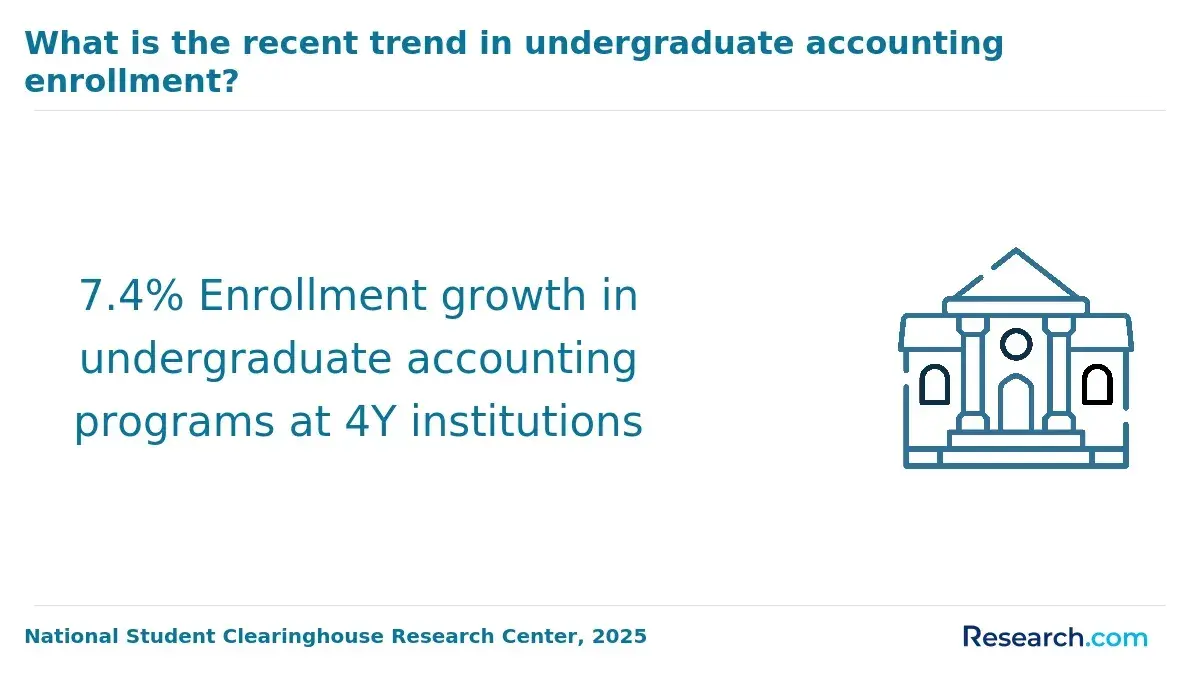
Financial fraud is no longer limited to altered ledgers or suspicious expense reports. In 2024, there were a total of 4,163 financial cyber incidents reported, up from 3,680 in 2023 (Statista, 2025). That growth is one reason many accounting professionals, auditors, investigators, and business graduates are looking at forensic accounting as a more specialized path within finance.
An online master’s degree in forensic accounting is designed for students who want graduate-level accounting training with a stronger focus on fraud detection, litigation support, cyber-enabled financial crime, internal controls, ethics, and corporate governance. It can also be one of the more practical options among the best masters degree choices for professionals who want to stay in business but move into investigative, compliance, or risk-focused roles.
This guide explains how online forensic accounting master’s programs work, whether employers respect them, what they cost, what courses they include, how to compare programs, and which career paths they can support. It also covers accreditation, certifications, technology trends, common mistakes, and questions to ask before enrolling.
Online Master’s Degree in Forensic Accounting Table of Contents
- Can you get a forensic accounting master’s degree fully online?
- Do employers respect online forensic accounting degrees?
- Are online degrees recognized internationally?
- Online vs. Traditional Master’s Degree in Forensic Accounting
- How much does an online master’s degree in forensic accounting cost?
- What are the requirements of an online master’s degree in forensic accounting?
- Courses to Expect in Online Master’s Degree in Forensic Accounting
- Things to Look for in an Online Master’s Degree in Forensic Accounting
- What are the ethical considerations in forensic accounting?
- What Factors Impact a Forensic Accountant’s Salary?
- What are the best resources to learn more about masters in forensic accounting?
- How Does a Forensic Accounting Degree Lead to High Paying Accounting Jobs?
- What are the career pathways for forensic accounting graduates?
- How to Bridge Your Education Through Certification Programs
- The Role of Technology in Modern Forensic Accounting Practices
- How Can Networking and Mentorship Accelerate Your Forensic Accounting Career?
- Is an Online Master’s Degree in Forensic Accounting a Cost-Effective Investment?
- How Can Interdisciplinary Expertise Enhance Forensic Accounting?
- How Do Accreditation and Certification Boost Professional Credibility in Forensic Accounting?
- How Can Practical Internships Enhance Your Forensic Accounting Career?
Quick Answer: Is an Online Master’s in Forensic Accounting Worth Considering?
Yes, an online master’s degree in forensic accounting can be worth considering if the program is accredited, matches your career goals, and helps you build practical skills in fraud examination, audit analytics, financial investigations, and legal reporting. The strongest programs combine accounting depth with technology, case analysis, ethics, and preparation for credentials such as CPA-related pathways or fraud examiner certifications.
The degree is most useful for accountants, auditors, compliance professionals, law enforcement personnel, and business graduates who want to move into financial investigations or fraud prevention. It may be less useful if you only need a narrow skill update, in which case a graduate certificate, CPA preparation coursework, or an accounting analytics certificate may be more cost-effective.
| Best fit | Why it makes sense | Possible alternative |
| Working accountants and auditors | Builds specialized fraud, litigation, and investigation skills without leaving work | CPA-focused coursework or fraud examiner certification |
| Business graduates moving into risk or compliance | Adds accounting, audit, and investigative foundations employers expect | Graduate certificate in accounting or forensic accounting |
| Criminal justice or IT professionals | Connects investigation, cyber risk, and financial evidence analysis | Targeted accounting prerequisites before a full master’s program |
| Students seeking general bookkeeping roles | May be more specialized and expensive than necessary | Bachelor’s-level accounting, payroll, or tax preparation training |
Can you get a degree completely online?
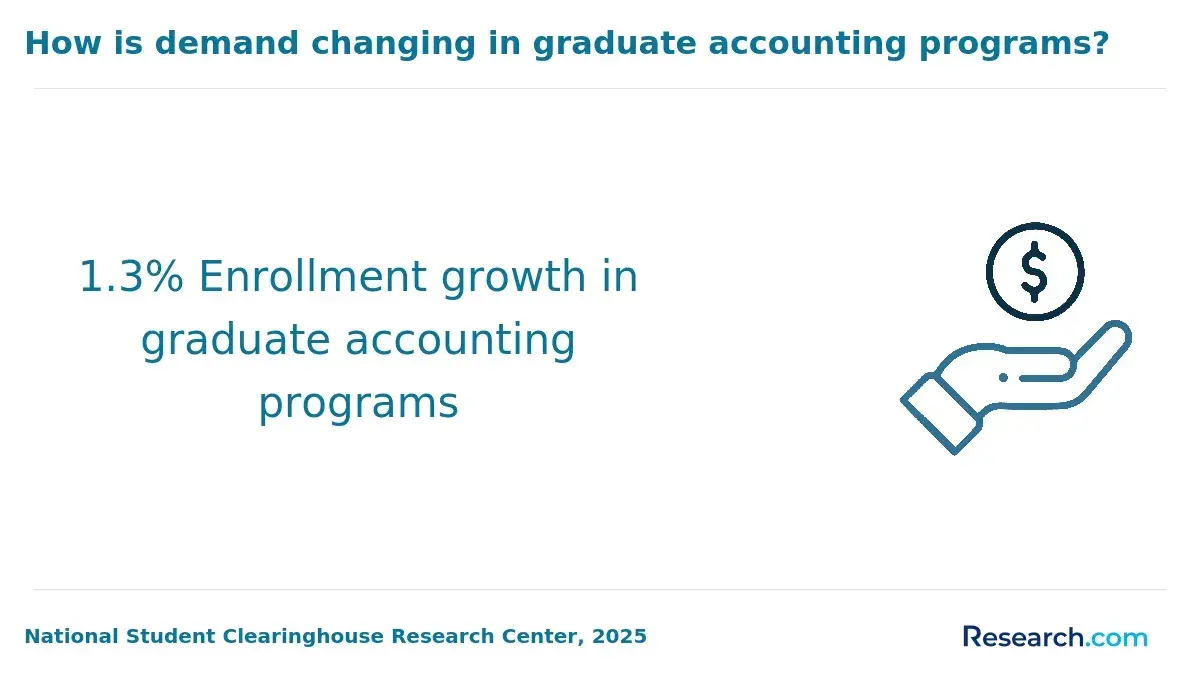
Yes. Many colleges and universities now offer graduate degrees that can be completed online, including accounting and forensic accounting programs. According to the National Student Clearinghouse Research Center (2024), a total of 24.3% of students were enrolled exclusively in distance education courses in 2024. This grew to 17.5% in 2019 and up to 45.5% during the height of the COVID-19 pandemic.
Fully online forensic accounting programs typically deliver lectures, readings, assignments, discussions, exams, and group projects through a learning management system. Some programs are asynchronous, meaning students can complete weekly work on their own schedule. Others require live online sessions, timed exams, virtual presentations, or scheduled meetings with faculty.
Before enrolling, confirm whether the program is truly 100% online. Some degrees advertise online delivery but still require campus residencies, proctored exams, internships, or in-person orientation. That may be manageable for nearby students but difficult for working adults or international learners.
Students comparing accounting careers should also understand how forensic accounting differs from general accounting work. For example, a program that prepares students for fraud investigation will not look exactly like training for the duties in a payroll accountant job description, although both require accuracy, documentation, and accounting knowledge.
Will employers take my online degree seriously?
Employers are more likely to respect an online degree when it comes from an accredited institution, uses the same academic standards as the campus program, and develops job-relevant accounting skills. The delivery format matters less than the credibility of the school, the rigor of the curriculum, and the evidence that graduates can perform the work.
In a survey, when hiring managers were asked about their current perception of online educational credentials, 52% of them responded that they now consider these degrees to be of equal quality to traditional degrees. Meanwhile, 38% said that they now perceive online credentials as actually superior to in-person ones, and only 10% still believed these credentials held less value (Forbes Advisor, 2024).
Hiring practices are also changing. Companies are shifting toward skills-first hiring, and 73% of recruitment professionals now prioritize skills over traditional educational credentials (LinkedIn, 2024). For forensic accounting students, this means a strong portfolio of case projects, audit analytics work, fraud reports, internships, and certification progress can strengthen the value of the degree.
| What employers usually check | Why it matters | What students should verify |
| Institutional accreditation | Shows the school meets recognized academic standards | Confirm the school’s accreditation status before applying |
| Business or accounting accreditation | Signals additional review of business curriculum quality | Look for ACBSP, IACBE, or AACSB where relevant |
| Course relevance | Employers want fraud, audit, analytics, and reporting skills | Review syllabi, software tools, and case-based assignments |
| Practical experience | Forensic accounting is evidence-driven and applied | Ask about internships, simulations, mock trials, and capstone projects |
| Credential alignment | Some roles prefer CPA, CFE, or other professional credentials | Check whether coursework supports your certification plan |
Are online degrees recognized all over the world?
Online degrees can be recognized internationally, but recognition is not automatic. It depends on the school’s accreditation, the country where you plan to work, employer expectations, professional licensing rules, and whether the credential is accepted by local credential evaluation agencies.
Many good degrees to get in college, including business, nursing, education, and computer science, are now commonly available online. Forensic accounting and other online professional degrees have existed for years, but broader acceptance increased after pandemic-era remote learning expanded worldwide. The worldwide online education market is expected to reach $257.70 billion by 2028 from its 2024 value of $185.20 billion (Statista, 2024).
If you plan to work outside the United States, ask the university whether graduates have used the degree internationally and check whether local employers, licensing boards, or credential evaluators recognize the institution. This is especially important for CPA-related pathways, government roles, and regulated financial positions.
2027 Best Online Master’s Degree in Forensic Accounting
The programs below are examples of institutions offering online graduate study in forensic accounting or closely related accounting concentrations. Use this list as a starting point, not as a substitute for your own program review. Always confirm current tuition, fees, course availability, accreditation, admission standards, and state authorization directly with the school before applying.
| School | Program | Program length | Cost per credit hour | Credits | Accreditation listed |
| Southern New Hampshire University | MS in Accounting with a concentration in Forensic Accounting | One to two years | $627 | 36 | ACBSP, NECHE |
| West Virginia University | MS in Forensic and Fraud Examination | Two years | $820 | 30 | HLC |
| Utica University | MS in Forensic Accounting | Two years | $775 | 30 | ACBSP, MSCHE |
| Carlow University | MS in Forensic Accounting & Fraud Investigation | 14 months | $800 | 30 | IACBE, MSCHE |
| Stevenson University | MS in Forensic Accounting | 18 months | $695 | 36 | MSCHE, IACBE |
1. Southern New Hampshire University
Southern New Hampshire University (SNHU) offers an online MS in Accounting with a forensic accounting concentration. Founded in 1932, SNHU emphasizes flexible online delivery and community-based learning. Its accounting curriculum is tailored to the Content and Skill Specification Outlines (CSOs/SSOs) set by the American Institute of Certified Public Accountants (AICPA), with coursework covering topics such as the legal aspects of fraud, fraudulent statement prevention, and accounting software use.
- Program Length: One to two years
- Tracks/concentrations: MS in Accounting with a concentration in Forensic Accounting
- Cost Per Credit Hour: $627
- Required Credits to Graduate: 36
- Accreditation: Accreditation Council for Business Schools and Programs (ACBSP), New England Commission on Higher Education (NECHE)
2. West Virginia University
West Virginia University offers an online MS in Forensic and Fraud Examination that extends its campus-based academic strengths into a remote format. The program includes four areas of emphasis and is offered in support of the Department of Justice. Students can engage with experiential learning activities, including real-life casework, moot court exercises, and collaboration with lawyers and other professionals.
- Program Length: Two years
- Tracks/concentrations: MS in Forensic and Fraud Examination
- Cost Per Credit Hour: $820
- Required Credits to Graduate: 30
- Accreditation: Higher Learning Commission (HLC)
3. Utica University
Founded in 1946, Utica University offers an MS in Forensic Accounting with practical coursework for students interested in fraud, auditing, and financial investigation. Its online accounting degrees include subjects such as advanced auditing and cost management, and the curriculum is tailored to meet certified public accountant (CPA) licensure requirements. Graduates may also benefit from the university’s partnership with the Association of Certified Anti-Money Laundering Specialists (ACAMS).
- Program Length: Two years
- Tracks/concentrations: MS in Forensic Accounting
- Cost Per Credit Hour: $775
- Required Credits to Graduate: 30
- Accreditation: ACBSP, Middle States Commission on Higher Education (MSCHE)
4. Carlow University
Carlow University offers an MS in Forensic Accounting & Fraud Investigation rooted in its Catholic educational mission and the values of the Sisters of Mercy. The program uses a broad cohort model and focuses on white-collar, financial, and cyber crimes. Through organizational partnerships, students may complete residencies online or in person while preparing for CPA-related goals.
- Program Length: 14 months
- Tracks/concentrations: MS in Forensic Accounting & Fraud Investigation
- Cost Per Credit Hour: $800
- Required Credits to Graduate: 30
- Accreditation: International Accreditation Council for Business Education (IACBE), MSCHE
5. Stevenson University
Stevenson University offers an online MS in Forensic Accounting with a career-focused approach. Since 1947, the university has emphasized applied learning and personalized instruction. Its program trains students in tax, business valuation, litigation practices, fraud risk assessment, and evidence evaluation. Small online class sizes may also support closer interaction with faculty and peers.
- Program Length: 18 months
- Tracks/concentrations: MS in Forensic Accounting
- Cost Per Credit Hour: $695
- Required Credits to Graduate: 36
- Accreditation: MSCHE, IACBE
Online vs. Traditional Master’s Degree in Forensic Accounting
An accredited online forensic accounting master’s degree can be academically comparable to a campus-based program. The main differences are not usually the degree title or course expectations, but the format, access to faculty, peer interaction, hands-on learning design, and networking opportunities.
Online programs work well for students who need flexibility, live far from campus, or plan to continue working full time. Campus programs may be better for students who want frequent face-to-face interaction, local internships, in-person networking, or structured class schedules.
| Factor | Online master’s degree | Traditional campus degree |
| Schedule | Often more flexible; may include asynchronous coursework | Usually follows fixed class meeting times |
| Location | Can be completed from home if no residency is required | Requires regular campus attendance |
| Networking | Depends on virtual events, alumni access, group projects, and faculty engagement | Often easier through campus events, local firms, and in-person faculty contact |
| Hands-on learning | May use simulations, digital labs, case studies, and virtual presentations | May provide easier access to local internships, mock trials, and live events |
| Best for | Working adults, career changers, remote learners | Students who prefer in-person structure and campus resources |
Forensic accounting education still depends heavily on how well programs create applied learning opportunities. Research published in Accounting Education notes that “The most pervasive teaching method is case study and these provide opportunities for illustrating the ethical dimension in forensic accounting work as well. Participants also acknowledged the usefulness of using various teaching methods including, guest speakers, videos, mock trial, report writing, presentations, software, and group discussions […] However, while the experiential approach to teaching forensic accounting students was advocated by the participants, it was not widely reflected in the current forensic accounting courses."
The same study, “Perceptions of the Usefulness of Various Teaching Methods in Forensic Accounting Education," adds that “This paradox derives from; first, the impediments that forensic accounting educators face in collaborating with the forensic accounting industry; and second, the divergence among forensic accounting educators regarding their role. We suggest that forensic accounting educators limit traditional approaches to teaching and aspire to involve students with more experiential learning methods such as case studies."
Is an online degree cheaper?
Online forensic accounting programs can be less expensive than campus programs, but they are not automatically cheaper. Students may save on relocation, commuting, meal plans, and housing, yet online programs can still include technology fees, software costs, proctoring fees, and distance learning charges. On average, a master’s degree can cost around $54,500 in public universities and about $81,100 in private institutions (Hanson, 2024).
When comparing costs, do not look only at tuition per credit. Calculate the full cost to graduate: required credits, fees, books, software, travel for residencies, exam preparation, and lost income if you reduce work hours. Students considering broader accounting options may also compare accounting degrees online before choosing a forensic accounting specialization.
Is an online degree as good as a regular degree?
An online degree can be as strong as a campus degree when the institution is properly accredited, the curriculum is rigorous, and students receive meaningful academic and career support. Student experience also matters. In a survey, 93% of online learners reported they were highly likely to recommend their program of study to others (Wiley, 2024).
The better question is not whether online is “as good” in general. Ask whether a specific program teaches the tools, legal concepts, accounting standards, and investigative methods required for the jobs you want.
How much does an online master’s degree in forensic accounting cost?
Costs vary by school, program length, residency rules, transfer credit policy, and required technology. On average, a traditional graduate degree in accounting costs around $11,961 (in-state tuition) to $23,121 (out-of-state tuition) (College Tuition Compare, 2024). Regular MS degrees cost around $62,100, while MA degrees reach $72,980 (Hanson, 2024).
Online forensic accounting degree online programs may cost less, the same, or more than campus options after fees are included. Common cost factors include technology access, IT support, library services, e-books, forensic accounting software, proctoring, and distance learning fees. Some universities waive residency-related costs for online students, while others charge the same tuition regardless of location.
If a full graduate degree is not necessary for your current goal, online accounting certificate programs may provide a lower-cost way to build targeted skills in fraud examination, auditing, or accounting fundamentals.
| Cost item | Why it matters | Question to ask |
| Tuition per credit | Determines the base cost of the degree | Is tuition charged per credit, per term, or as a flat rate? |
| Required credits | A lower per-credit price can still be expensive if the program requires more credits | How many credits are needed to graduate? |
| Online fees | Technology, platform, and support fees can change the total price | Are online learners charged additional fees? |
| Software and materials | Forensic accounting may require specialized tools or databases | Are software licenses included in tuition? |
| Residency or travel | Some online programs still require in-person participation | Are any campus visits, internships, or proctored exams required? |
| Certification expenses | CPA, CFE, or other credentials may require separate fees | Does the program include exam preparation or discounts? |
Is an online forensic accounting degree worth it?
An online forensic accounting master’s degree can be worth the investment if it helps you qualify for roles that require deeper accounting knowledge, fraud investigation skills, audit analytics, or preparation for professional credentials. It is less likely to be worth it if you choose a weak program, overborrow, or enroll without a clear career objective.
The broader accounting labor market remains stable. Reports from the U.S. Bureau of Labor Statistics (2024) indicate that there will be a 6% increase in employment change for accountants and auditors from 2023 to 2033. Forensic accountants can earn a yearly median wage of $92,433, which is higher than the $79,880 that general accountants yield annually (Indeed, 2025; BLS, 2024).
Because outcomes vary by employer, location, experience, credentials, and industry, students should treat salary data as a benchmark, not a guarantee. A strong return on investment is more likely when the degree complements a clear plan, such as building internal auditor skills, preparing for CPA eligibility, moving into fraud examination, or advancing in compliance. Students comparing options should also review accounting degree types and career pathways before committing to one specialization.
What are the requirements of an online master’s degree in forensic accounting?
Admission requirements differ by institution, but most online forensic accounting master’s programs expect applicants to show academic readiness, professional focus, and enough accounting background to handle graduate coursework. Students without an accounting bachelor’s degree may need prerequisite courses before starting advanced classes.
Common Admission Requirements
- Undergraduate transcripts. Applicants usually submit official transcripts with the application. Students from non-accounting majors may need an accredited undergraduate degree and a minimum number of accounting credits.
- Resume or curriculum vitae. Schools use this document to review professional experience, internships, leadership, accounting exposure, or investigation-related work.
- Letters of recommendation. Recommendations from professors, supervisors, mentors, or professional contacts help verify academic ability, work ethic, and readiness for graduate study.
- GPA and test scores. Many institutions expect a GPA of at least 2.70 or higher. Some schools may also request GMAT or GRE scores, although policies vary.
- Additional materials. Programs may ask for a personal statement, essay, interview, or language proficiency test scores for international applicants.
Skills That Help Students Succeed
- Quantitative ability. Forensic accounting requires comfort with calculations, financial statements, ratios, reconciliations, and statistical reasoning.
- Computer literacy. Students need confidence using spreadsheets, databases, accounting systems, research tools, and online learning platforms.
- Attention to detail. Fraud cases often depend on small inconsistencies, missing records, unusual patterns, or documentation gaps.
- Analytical judgment. Students must interpret evidence, evaluate competing explanations, and avoid jumping to conclusions before the facts support them.
- Clear communication. Forensic accountants often write reports and explain financial evidence to attorneys, executives, regulators, law enforcement, judges, or clients.
What are the technological requirements of students for online learning?
A laptop or desktop computer is usually the most reliable device for graduate coursework, especially when students need spreadsheets, accounting software, video meetings, and document review. However, a study reveals that 66% of prospective learners wish to access their classes and coursework on smartphones or tablets (Wiley, 2024).
Students should have stable internet, a webcam, a microphone, updated productivity software, and access to the program’s learning management system. For forensic accounting courses, ask whether the school provides software licenses or expects students to buy separate tools. A phone or tablet may be convenient for reading and discussions, but complex financial analysis is usually easier on a full computer.
Courses to Expect in an Online Master’s Degree in Forensic Accounting
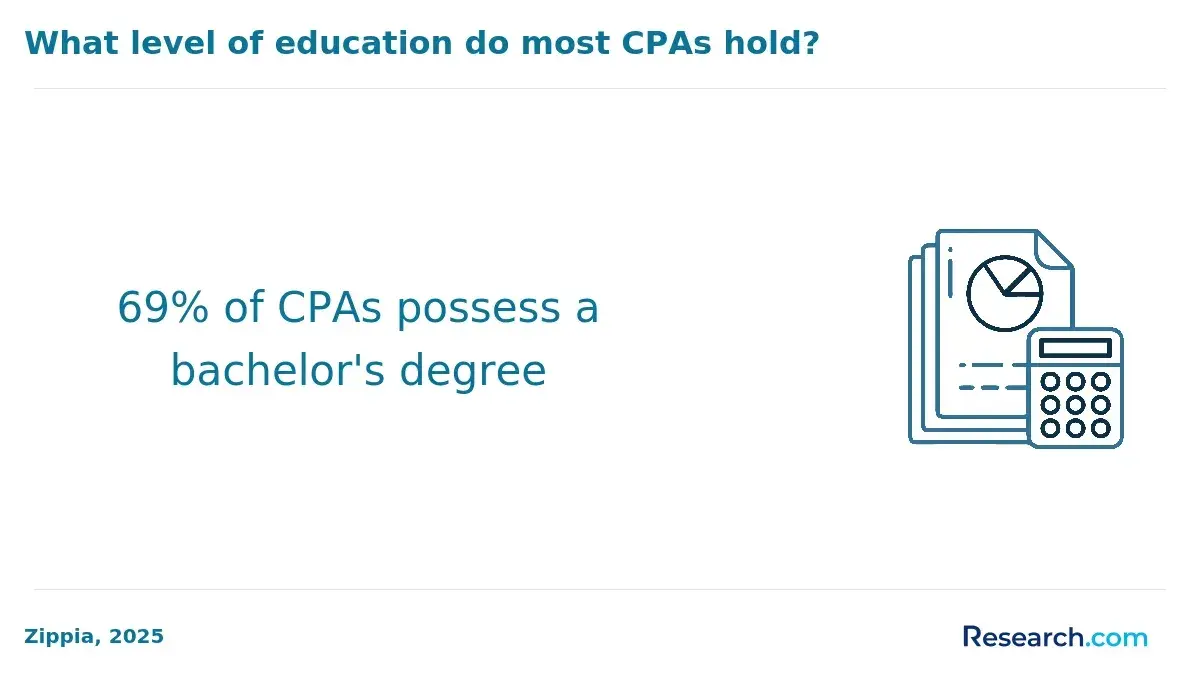
Forensic accounting programs combine graduate accounting coursework with investigation, fraud examination, legal concepts, audit analytics, and technology. Students pursuing CPA-related goals should also understand education-hour requirements. To become CPAs, students need to complete a total of 150 semester hours of education (AICPA, n.d.). Some students meet that requirement through a master’s degree, while others use graduate-level coursework.
Course titles differ by school, but many programs cover topics connected to business forecasting, financial planning, fraud investigation, forensic psychology, and criminal justice. Students interested in the investigative side of the field may also compare related study areas such as an online criminal justice degree.
- Advanced accounting. Students study financial reporting, budgeting, analysis, controls, and the accounting practices used to evaluate business operations.
- Legal elements of fraud. This course introduces laws, regulations, legal procedures, and consequences connected to financial misconduct and fraud cases.
- Taxation. Students examine tax rules for individuals, businesses, and corporations, along with planning and preparation concepts relevant to investigations.
- Forensic information technology. Learners study computer-related financial crime, digital records, software tools, and methods used to investigate electronic evidence.
- White collar crime. This course covers white-collar crime theories, fraud triangle concepts, money laundering, corruption, and organizational misconduct.
| Course area | What students learn | Career relevance |
| Fraud examination | How schemes are detected, documented, and prevented | Fraud examiner, forensic accountant, compliance analyst |
| Auditing and internal controls | How organizations reduce risk and identify control weaknesses | Internal auditor, risk analyst, audit manager |
| Litigation support | How financial evidence is prepared for legal settings | Consultant, expert witness support, financial investigator |
| Data analytics | How to analyze transactions, anomalies, and patterns | Forensic analyst, audit analytics specialist, fraud analyst |
| Cyber and digital forensics | How technology supports financial investigations | Cyber fraud analyst, financial crimes investigator |
Things to Look for in an Online Master’s Degree in Forensic Accounting
Choosing an online graduate program should be a decision based on evidence, not marketing. A strong forensic accounting program should help you meet academic, professional, licensing, and career goals. Students considering earlier-stage options can also compare a forensic accounting degree before moving into graduate study.
- Accreditation. Confirm institutional accreditation first. For business or accounting programs, also look for programmatic accreditation from ACBSP, IACBE, or the Association to Advance Collegiate Schools of Business (AACSB), when applicable.
- Program fit. Check whether the degree is truly forensic accounting or only a general accounting degree with one fraud course. The distinction matters for career positioning.
- Teaching methods. Strong programs use cases, simulations, software, report writing, mock trials, and applied projects instead of relying only on lectures and exams.
- Student support. Technical problems and isolation are among the challenges that online learning poses. In a survey, 77% of students found teachers supportive throughout their online learning, while 61% indicated that their school was able to provide the support they needed to stay enrolled (Wiley, 2024).
- Scholarships and aid. In addition to school-based aid, graduate students may explore scholarship opportunities from the AICPA or the Association of Certified Fraud Examiners (ACFE).
Questions to Ask Before You Apply
- Is the institution accredited, and is the business or accounting program separately accredited?
- Does the curriculum support CPA education requirements in the state where I plan to practice?
- How many courses focus specifically on fraud, forensic accounting, data analytics, litigation, or financial crime?
- Are internships, capstones, mock investigations, or case simulations included?
- Which software tools will I use during the program?
- Are classes asynchronous, synchronous, or a mix of both?
- What is the total cost to graduate, including fees and materials?
- Can prior graduate credits transfer into the program?
- What career services are available to online students?
- Do graduates pursue CPA, CFE, ACAMS, audit, compliance, or law enforcement-related roles?
What are the ethical considerations in forensic accounting?
Forensic accountants work with sensitive financial records, potential misconduct, legal disputes, and high-stakes evidence. Because their findings may affect lawsuits, regulatory actions, employment decisions, or criminal investigations, ethical judgment is central to the profession.
- Confidentiality and privacy: Forensic accountants must protect financial records, client information, employee data, and investigative materials from unauthorized disclosure.
- Objectivity and independence: Investigators should avoid conflicts of interest and present findings based on evidence, not pressure from clients, employers, or attorneys.
- Accurate reporting: Reports should explain methods, assumptions, limitations, and findings honestly. Omitting inconvenient facts can undermine both the case and the professional’s credibility.
- Legal compliance: Evidence collection, document handling, and data access must follow applicable laws, regulations, and professional standards.
- Professional accountability: Forensic accountants are responsible for maintaining competence, documenting their work, and recognizing when a case requires legal, cybersecurity, or specialist input.
What Factors Impact a Forensic Accountant’s Salary?
A forensic accountant’s compensation depends on experience, credentials, location, employer type, industry, technical specialization, and the complexity of the investigations handled. Professionals who can combine accounting expertise with fraud analytics, litigation support, cybersecurity awareness, and advanced reporting may be more competitive in specialized roles.
Credentials can also matter. CPA eligibility, fraud examination training, anti-money laundering knowledge, audit experience, or expertise with forensic software can strengthen a candidate’s profile. For more detailed role and compensation context, review Research.com’s guide to forensic accountant salary.
What are the best resources to learn more about masters in forensic accounting?
Good research should include university program pages, accreditation databases, professional association resources, accounting journals, labor market data, and career guides. Students comparing masters in forensic accounting options should look beyond tuition and review curriculum depth, faculty background, internship support, software access, certification alignment, and graduate outcomes.
Professional organizations can also help students understand the field’s expectations. The AICPA, ACFE, ACAMS, NASBA, state boards of accountancy, and accounting accreditation bodies are useful starting points for students evaluating CPA pathways, fraud examination careers, or continuing education requirements.
How Does a Forensic Accounting Degree Lead to High Paying Accounting Jobs?
Forensic accounting can support higher-paying accounting pathways because it develops specialized skills that many general accounting programs cover only briefly. Students learn how to investigate fraud, evaluate controls, analyze complex transactions, prepare evidence, support litigation, and communicate findings to non-accounting audiences.
This specialization can be relevant for audit, consulting, compliance, risk management, financial investigation, and litigation support roles. It can also help professionals compete for opportunities discussed in Research.com’s guide to high paying accounting jobs, although salary outcomes still depend on experience, credentials, employer, and location.
What are the career pathways for forensic accounting graduates?
Graduates of online and campus-based forensic accounting programs may work in accounting firms, consulting practices, corporations, insurance companies, financial institutions, law enforcement agencies, government offices, and legal support environments. Students comparing broader options can review top online accounting programs to understand how forensic accounting fits into the larger accounting education landscape.
- Forensic accountant: Investigates financial records, identifies suspicious transactions, evaluates fraud schemes, prepares reports, and may support legal proceedings.
- Fraud examiner: Focuses on detecting, investigating, and preventing fraud within organizations, banks, insurers, agencies, or consulting firms.
- Financial investigator: Traces assets, analyzes financial documents, supports criminal or civil investigations, and works with attorneys or enforcement teams.
- Internal auditor: Reviews controls, identifies operational weaknesses, tests compliance, and helps organizations reduce fraud risk.
- Forensic accounting consultant: Provides specialized services in fraud detection, damages analysis, litigation support, compliance, cyber-enabled financial crime, or risk management.
| Career path | Common employers | Useful preparation |
| Forensic accountant | Accounting firms, consulting firms, government agencies | Fraud examination, audit, litigation support, report writing |
| Fraud examiner | Banks, corporations, insurers, public agencies | Interviewing, fraud schemes, internal controls, ethics |
| Financial investigator | Law enforcement, regulators, legal teams | Asset tracing, legal procedures, financial statement analysis |
| Internal auditor | Corporations, nonprofits, government offices | Audit standards, risk assessment, compliance, controls testing |
| Consultant | Advisory firms, independent practice, litigation teams | Specialized expertise, client communication, expert reporting |
How to Bridge Your Education Through Certification Programs
A full master’s degree is not the only route into forensic accounting. Graduate certificates can be useful for students who want to test the field, meet accounting prerequisites, or add a focused credential without committing immediately to a full degree.
An accounting graduate certificate may be a practical bridge for professionals from criminal justice, IT, finance, business administration, or general accounting. Some certificates allow credits to transfer into a later master’s program, but policies vary by school. Always ask whether credits are stackable before enrolling.
Certificates may be a better short-term option if you need targeted knowledge in fraud prevention, accounting foundations, audit analytics, or financial compliance. A master’s degree may be better if you need broader graduate credentials, CPA education hours, deeper specialization, or long-term advancement in accounting leadership.
The Role of Technology in Modern Forensic Accounting Practices
Technology now shapes how financial investigations are performed. Forensic accountants increasingly work with digital records, large transaction datasets, cloud accounting systems, cybersecurity teams, and automated monitoring tools. Online programs that ignore technology may leave graduates underprepared for current fraud and compliance work.
1. Data Analytics and Forensic Software
Forensic accountants use data analytics to detect unusual transactions, identify duplicate payments, test controls, and uncover patterns that would be difficult to find manually. Programs such as IDEA, ACL, and advanced Excel functions are commonly associated with forensic and audit analysis. Students should ask whether a program includes hands-on software work rather than only theoretical discussion.
2. Blockchain and Cryptocurrency Analysis
Digital currencies and blockchain-based transactions can appear in fraud, money laundering, and asset tracing investigations. Forensic accounting students do not necessarily need to become blockchain engineers, but they should understand how digital transaction records are structured, traced, and interpreted.
3. Artificial Intelligence and Machine Learning
AI and machine learning can help identify anomalies, flag suspicious activity, and automate routine analysis. These tools do not replace professional judgment. Instead, they increase the importance of knowing how to test outputs, evaluate assumptions, document methods, and explain conclusions clearly.
4. Cybersecurity and Digital Forensics
Financial crimes may involve phishing, ransomware, compromised accounts, unauthorized transactions, or manipulated digital records. Forensic accountants often collaborate with cybersecurity specialists, IT auditors, legal teams, and compliance officers to understand both the financial and technical evidence.
5. Accessibility Through Online Education
Many online degrees for working adults use virtual platforms, digital labs, remote collaboration tools, and flexible course structures. For working professionals, this can make it easier to build forensic accounting skills while staying employed.
Embracing Technology for Career Readiness
A strong forensic accounting education should teach students how to use technology responsibly, not just quickly. Accuracy, documentation, privacy, and ethical judgment remain essential, especially when automated tools are used in investigations with legal or financial consequences.
How Can Networking and Mentorship Accelerate Your Forensic Accounting Career?
Forensic accounting is a relationship-driven field because many opportunities come through accounting firms, legal networks, compliance teams, government agencies, alumni contacts, and professional associations. Mentors can help students understand which credentials matter, how to document investigative work, how to prepare for interviews, and how to move from general accounting into fraud-focused roles.
Students should prioritize relevant networks: accounting associations, fraud examiner groups, CPA societies, alumni panels, employer information sessions, and faculty-led industry projects. Avoid relying on unrelated comparisons or generic career advice; for example, an affordable sports management online bachelor's degree may be useful for a different audience, but forensic accounting students need networks connected to audit, fraud, finance, law, technology, and compliance.
Is an Online Master’s Degree in Forensic Accounting a Cost-Effective Investment?
To decide whether the degree is cost-effective, compare total program cost against realistic career benefits. Include tuition, fees, books, software, certification expenses, travel, time commitment, and potential changes to your work schedule. Then compare those costs with your current salary, target roles, local job market, and credential requirements.
Students looking for lower-cost options can compare programs listed among the cheapest online accounting masters degree options, but affordability should not be the only criterion. A low-cost program that lacks accreditation, practical coursework, or career support may be a poor investment.
Simple ROI Checklist
- Will the degree help me qualify for roles I cannot realistically access now?
- Does the curriculum support CPA, fraud examination, audit, or compliance goals?
- Can I finish without taking on debt that limits my career flexibility?
- Does the school publish useful career outcomes or provide employer connections?
- Will the program build evidence of skill through projects, software work, reports, or internships?
How Can Interdisciplinary Expertise Enhance Forensic Accounting?
Forensic accounting overlaps with law, data analytics, cybersecurity, criminology, finance, risk management, and communication. Professionals who understand more than debits and credits can often interpret evidence more effectively and collaborate better with attorneys, investigators, executives, and technical teams.
Interdisciplinary strengths can be especially useful in complex cases involving cyber fraud, insurance claims, valuation disputes, money laundering, or predictive risk analysis. Students who enjoy quantitative modeling may also study related analytical career paths, including what it takes to become an actuary, while still keeping forensic accounting as their primary focus.
How Do Accreditation and Certification Boost Professional Credibility in Forensic Accounting?
Accreditation and certification serve different purposes. Accreditation evaluates schools or programs. Certification evaluates professional knowledge, experience, or exam readiness. For students, both can influence credibility.
Institutional accreditation helps confirm that the school meets recognized academic standards. Business or accounting accreditation can add further quality assurance. Professional credentials can then help demonstrate readiness for specific roles. Students pursuing public accounting should carefully review the requirements for CPA, because CPA rules vary by jurisdiction and may include education, examination, and experience components.
| Credibility factor | What it shows | Why it matters |
| Institutional accreditation | The school meets recognized academic standards | Important for employer trust, credit transfer, and financial aid eligibility |
| Business/accounting accreditation | The program has undergone additional discipline-specific review | Can strengthen confidence in curriculum quality |
| CPA pathway alignment | Coursework may support CPA education requirements | Important for students targeting public accounting or licensed roles |
| Fraud and compliance credentials | Specialized expertise beyond general accounting | Useful for fraud examination, investigations, and risk roles |
How Can Practical Internships Enhance Your Forensic Accounting Career?
Forensic accounting is applied work. Internships, practicums, capstones, simulations, and case projects help students move from theory to practice by requiring them to analyze evidence, write findings, use tools, and explain conclusions.
Hands-on experience can also make students more competitive for entry-level or advancement roles because it gives them concrete examples to discuss in interviews. If your online program does not require an internship, ask whether it offers employer projects, virtual labs, faculty-supervised investigations, or networking with accounting and consulting firms.
Students who want to broaden their finance background may also compare related programs, including cheap online master of finance programs, but forensic accounting students should prioritize practical fraud, audit, investigation, and litigation experience.
Common Mistakes to Avoid When Choosing an Online Forensic Accounting Master’s Program
- Choosing a program before checking accreditation. Accreditation should be verified early, not after you enroll.
- Focusing only on tuition per credit. Fees, software, books, residencies, and required credits can change the true cost.
- Assuming every online program is fully online. Some programs include campus visits, residencies, or in-person requirements.
- Ignoring CPA rules. If CPA eligibility is part of your plan, confirm state-specific education requirements before choosing courses.
- Choosing a general accounting degree by mistake. A program with one fraud course may not provide the same preparation as a forensic accounting curriculum.
- Overlooking practical learning. Case studies, software, report writing, and simulations are important in this field.
- Assuming salary outcomes are guaranteed. Salary depends on experience, credentials, location, employer, and market demand.
- Skipping career services. Online students should have access to advising, alumni networks, job boards, and employer events.
How to Choose the Right Online Master’s in Forensic Accounting
- Define your career target. Decide whether you want fraud examination, public accounting, internal audit, compliance, litigation support, government investigation, or consulting.
- Check accreditation. Verify institutional accreditation and review whether the accounting or business program has ACBSP, IACBE, or AACSB recognition where relevant.
- Compare curriculum depth. Look for courses in fraud, audit, digital forensics, data analytics, legal issues, internal controls, and forensic reporting.
- Confirm certification alignment. If you plan to pursue CPA, CFE, or compliance credentials, ask how the program supports that path.
- Calculate total cost. Include tuition, fees, software, materials, residencies, certification expenses, and time away from work.
- Evaluate online support. Ask about tutoring, faculty access, technical support, library resources, career advising, and mental health support.
- Look for applied experience. Prioritize programs with case projects, internships, simulations, mock trials, or software-based assignments.
- Talk to admissions and faculty. Ask specific questions about graduate outcomes, course formats, employer partnerships, and workload expectations.
Put a Stop to Financial Crimes with an Online Master’s Degree in Forensic Accounting
An online master’s accounting program with a forensic accounting focus can help students build advanced skills in fraud investigation, audit analytics, financial reporting, cyber-enabled crime analysis, ethics, and legal documentation. For working adults, online delivery can make graduate study more manageable, but the value of the degree depends on program quality, accreditation, cost, practical training, and career fit.
Technology has expanded both the tools available to investigators and the methods used to commit financial crime. As cyber-enabled schemes become more sophisticated, bad actors may use this advancement to commit financial cyber crimes. Forensic accountants who understand accounting, evidence, ethics, and technology can play an important role in detecting and preventing those crimes.
Students interested in the investigative side of the profession may also explore adjacent fields, including some of the cheapest online criminal justice degree programs, especially if they want to combine financial analysis with law enforcement, compliance, or public-sector investigation.
Key Insights
- Accreditation is non-negotiable. An online forensic accounting master’s degree is most credible when the institution is accredited and the business or accounting program meets recognized quality standards.
- The degree is best for specialized accounting careers. It is most useful for fraud examination, forensic accounting, internal audit, compliance, litigation support, and financial investigation roles.
- Online does not mean easier. Strong online programs should include rigorous accounting coursework, applied cases, software use, report writing, and ethical decision-making.
- Cost comparisons must include more than tuition. Fees, credits, software, residencies, books, and certification expenses all affect the true price of the degree.
- Career value depends on your plan. The degree can support advancement, but salary and job outcomes depend on experience, credentials, employer type, location, and market conditions.
- Technology is now central to forensic accounting. Data analytics, digital records, cybersecurity collaboration, AI tools, and cryptocurrency-related investigations are increasingly relevant to the field.
- Certificates can be a smart bridge. Students who are unsure about a full master’s program may start with a graduate accounting certificate or targeted fraud-related coursework.
- Practical experience matters. Internships, capstones, simulations, mock investigations, and case-based projects can make graduates more competitive than coursework alone.
References:
- AICPA & CIMA. (2025). 2025 MAP Survey Executive Summary. https://www.aicpa-cima.com/resources/download/map-survey-executive-summary
- AICPA. (2025). AICPA 2025 Trends Report. https://www.aicpa-cima.com/professional-insights/download/2023-trends-report
- BLS. (2025, August 28). Occupational projections and worker characteristics. Employment Projections. https://www.bls.gov/emp/tables/occupational-projections-and-characteristics.htm
- U.S. Bureau of Labor Statistics. (2024, August 29). Accountants and Auditors. Occupational Outlook Handbook. https://www.bls.gov/ooh/business-and-financial/accountants-and-auditors.htm
- National Student Clearinghouse Research Center. (2025). Clearinghouse Enrollment Insights Series: Final Fall Enrollment Trends. https://nscresearchcenter.org/final-fall-enrollment-trends
- NASBA. (2025). Explore the Numbers Behind CPA Exam Success: 2024 NASBA Report Now Available. https://nasba.org/blog/2025/08/04/2024-candidate-performance-book-now-available/
- Statista. (2025). Number of cyberattacks on financial services institutions worldwide from 2020 to 2024. https://www.statista.com/statistics/1273105/cyber-attacks-financial-services-worldwide/
- National Student Clearinghouse Research Center. (2024). Stay Informed with the Latest Enrollment Data: Fall 2024. https://nscresearchcenter.org/stay-informed/
- Forbes Advisor. (2024, February 21). Are Online Degrees Respected? 2024 Employer Survey. https://www.forbes.com/advisor/education/online-colleges/are-online-degrees-respected/
- LinkedIn. (2024). Global Talent Trends: The Skills-First Revolution. https://www.linkedin.com/business/talent/blog/talent-strategy/skills-first-hiring-report
- Statista. (2024). Online Education - Worldwide. https://www.statista.com/outlook/dmo/eservices/online-education/worldwide
- Hanson, M. (2024, May 19). Average Cost of a Master’s Degree. Education Data Initiative. https://educationdata.org/average-cost-of-a-masters-degree
- Wiley. (2024). Voice of the Online Learner 2024. https://universityservices.wiley.com/wp-content/uploads/2024/06/2024-Voice-of-the-Online-Learner-Report.pdf
- College Tuition Compare. (2024). Accounting Program 2024-2025 Tuition & Fees. https://www.collegetuitioncompare.com/majors/52.0301/accounting/
Other Things You Should Know About Master’s Degree in Forensic Accounting
In 2027, students pursuing an online master's degree in forensic accounting can expect courses including Fraud Examination, Financial Statement Analysis, Forensic Auditing, Legal Elements of Fraud, and Ethics in Accounting. These courses equip students with the necessary skills for detecting and preventing financial fraud.
The cost of an online master's degree in forensic accounting can vary widely, typically ranging from $10,000 to $20,000 annually for bachelor's programs, with master's programs potentially costing more depending on the institution and other factors. Financial aid and scholarships may be available to help offset costs.
A master's degree in forensic accounting online typically requires a time commitment of about 2 years, with students completing around 30-36 credit hours. Some programs offer accelerated options, allowing completion in as little as 18 months, depending on course load and scheduling.
In 2027, an online master's degree in forensic accounting typically requires a bachelor's degree in accounting or a related field. Applicants may need to submit GRE/GMAT scores, letters of recommendation, a statement of purpose, and resume. Some programs require work experience in accounting or finance.
Many 30- to 36-credit online forensic accounting master’s programs require a final capstone instead of a thesis. A capstone usually appears in the last term and may involve a fraud investigation case study, forensic report, or applied research project approved by the graduate faculty.