
2027 Best Online Forensic Accounting Degree Programs

Co-Founder and Chief Data Scientist
Choosing an online forensic accounting degree is a practical decision if you want to investigate fraud, trace suspicious transactions, support legal cases, or move from general accounting into financial crime work. The field sits at the intersection of accounting, auditing, data analysis, investigation, and law. It is different from laboratory-based forensic science, so students comparing related fields should understand that a forensic science degree prepares learners for a different type of evidence work.
A forensic accounting degree teaches students how to examine financial records for signs of fraud, embezzlement, money laundering, asset misappropriation, and other financial misconduct. Programs typically cover accounting principles, auditing, financial statement analysis, fraud examination, data analytics, investigation methods, evidence handling, and legal procedures.
The career outlook is one reason many students are considering this path. Robert Half reports annual forensic accounting salary ranges of $96,500-$133,750 in 2025, while the Bureau of Labor Statistics reports about 130,800 annual openings for accountants and auditors in 2024. Colleges are also expanding accounting programs as demand for specialized accounting skills grows.
This guide explains what an online forensic accounting degree includes, how online programs compare with campus programs, what they cost, how to evaluate quality, which courses and credentials matter, and how to choose a program that fits your career goals.
Online Degree in Forensic Accounting Table of Contents
- Can you earn a forensic accounting degree fully online?
- Do employers respect online forensic accounting degrees?
- Are online forensic accounting degrees accepted internationally?
- Online vs. campus forensic accounting degrees
- How much does an online forensic accounting degree cost?
- What are the admission and technology requirements?
- Common courses in an online forensic accounting program
- How can you finish an online forensic accounting degree faster?
- Financial aid and cost-saving optionsAccelerated optionsCourse planning
- How to evaluate online forensic accounting programs
- Forensic accounting job and salary outlookProgram evaluation
- 2027 best online forensic accounting degree programs
- Professional certifications in forensic accounting
- Technology trends shaping forensic accounting
- Networking and cross-industry learning
- Master’s degree opportunities in forensic accounting
- Career advancement options
- Quantitative skills for forensic accountants
- How to accelerate your forensic accounting career
- How to choose the best online program
- Comparing forensic accounting and accounting master’s programsChoosing a programCareer accelerationAdvancement pathsBest programs
Quick Answer: Is an Online Forensic Accounting Degree a Good Choice?
Yes, an online forensic accounting degree can be a strong option if the school is properly accredited, the curriculum includes accounting and fraud investigation coursework, and the program fits your career target. It is most useful for students who want accounting-based roles in fraud examination, financial investigation, litigation support, internal audit, compliance, or risk management.
| Question | Short answer |
| Can the degree be completed online? | Yes. Many schools offer online forensic accounting or accounting programs with forensic accounting concentrations. |
| Will employers take it seriously? | Usually, yes, if the institution is accredited and the program develops job-relevant accounting, auditing, investigation, and data skills. |
| Is it the same as forensic science? | No. Forensic accounting focuses on financial records and fraud, while forensic science usually focuses on physical or biological evidence. |
| What degree level should you choose? | A bachelor’s degree can support entry-level accounting and fraud roles; a master’s degree may help experienced professionals move into specialized or senior positions. |
| What should you check first? | Accreditation, curriculum, CPA or CFE preparation, total cost, transfer credit policies, faculty experience, and career support. |
Can You Earn a Forensic Accounting Degree Fully Online?
Yes. Students can complete many forensic accounting degrees entirely online, depending on the school and degree level. Online options may include an associate degree in accounting, a bachelor’s program, a graduate certificate, a master’s program, or even doctoral-level accounting study with a forensic or fraud-related focus.
If you are trying to understand what a bachelor’s degree is in this field, think of it as the standard undergraduate credential that combines general education, business fundamentals, accounting coursework, and specialized study in fraud detection or forensic accounting. Online delivery usually allows students to complete lectures, assignments, discussions, exams, and group work through a learning management system rather than on campus.
Online forensic accounting programs are especially useful for working adults, military students, parents, career changers, and students who do not live near a college offering this specialization. However, “online” does not always mean “self-paced.” Some programs require live class meetings, timed exams, group projects, internship participation, or proctored assessments.
Do Employers Respect Online Forensic Accounting Degrees?
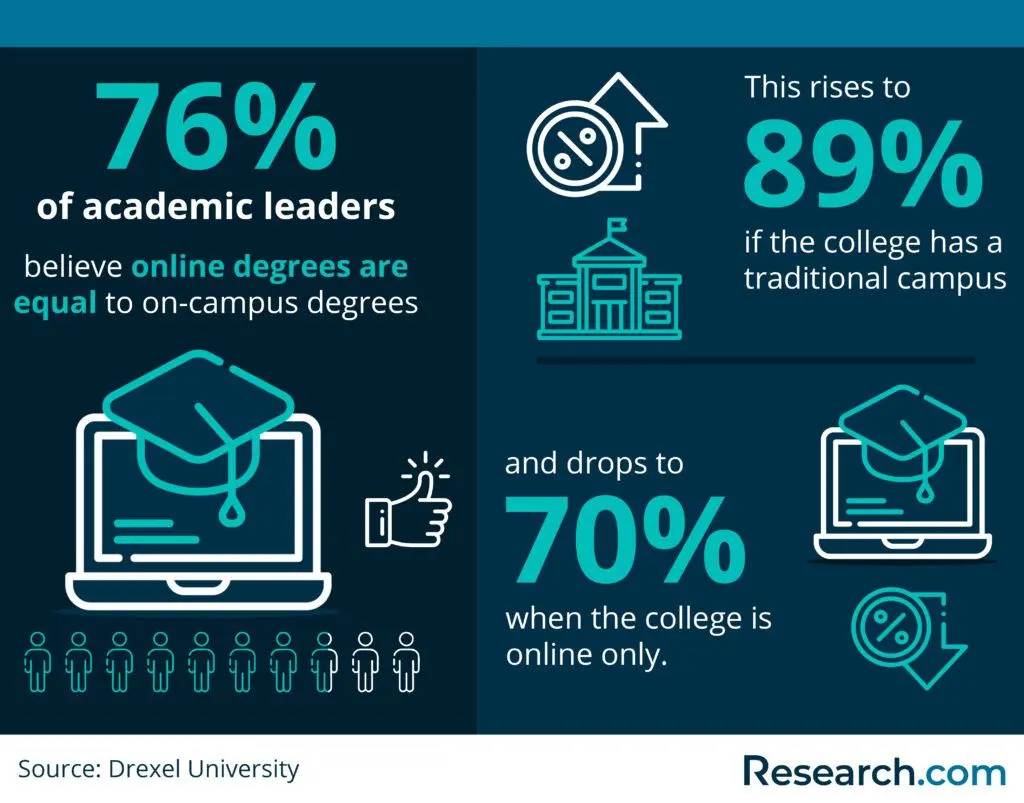
Employers are generally more concerned with school legitimacy, accreditation, accounting competence, analytical ability, and relevant experience than with whether coursework was completed online or on campus. An online degree from an accredited institution is typically viewed differently from a credential issued by an unaccredited school or diploma mill.
Accreditation is the first credibility checkpoint. Forbes Advisor noted in 2024 that accredited online programs from reputable institutions are generally treated as equivalent to traditional degrees. This applies across disciplines: an accredited online business or accounting program carries more value than an unaccredited campus-based program, just as accredited online counseling degrees are typically stronger than unrecognized credentials.
Students asking, “What can I do with a forensic accounting degree?” should connect the degree to specific roles. Graduates may pursue work as forensic accountants, fraud examiners, financial investigators, audit associates, compliance analysts, litigation support professionals, or financial crime specialists. Zippia notes that graduates can pursue forensic accountant jobs, including financial investigation and fraud-focused roles.
Are Online Forensic Accounting Degrees Accepted Internationally?
Online degrees are increasingly common, but recognition is not automatic in every country, employer, or licensing context. The institution, accreditation status, program reputation, and local professional rules all affect whether a degree will be accepted.
Students who plan to work outside the country where their school is based should verify recognition before enrolling. Ask employers, licensing bodies, government agencies, or credential evaluation services whether the degree will meet their requirements. This is especially important for accounting licensure, public sector jobs, immigration-related credential reviews, and multinational employers.
The same caution applies to other online graduate fields. A public policy online master’s degree, for example, may be widely respected in one employment market but require additional evaluation in another. Forensic accounting students should confirm acceptance in the location where they intend to work, not only where the school is located.
Online vs. Campus Forensic Accounting Degrees
Online and campus forensic accounting degrees can cover similar academic material, but the learning experience differs. The better format depends on your schedule, learning style, career stage, location, and need for in-person interaction.
| Factor | Online forensic accounting degree | Campus forensic accounting degree |
| Best for | Working adults, remote learners, students needing schedule flexibility | Students who prefer face-to-face learning and campus resources |
| Class format | May be asynchronous, synchronous, or a combination | Usually scheduled in-person classes |
| Networking | Virtual events, discussion boards, online alumni groups, remote career services | In-person faculty access, campus organizations, local employer events |
| Costs | May reduce commuting, housing, and relocation expenses | May include campus fees, housing, transportation, or relocation costs |
| Discipline required | High; students must manage deadlines independently | Structured schedule may help students stay on track |
| Career preparation | Strong if the program includes applied projects, case studies, accounting software, and career support | Strong if students use internships, faculty access, and employer connections |
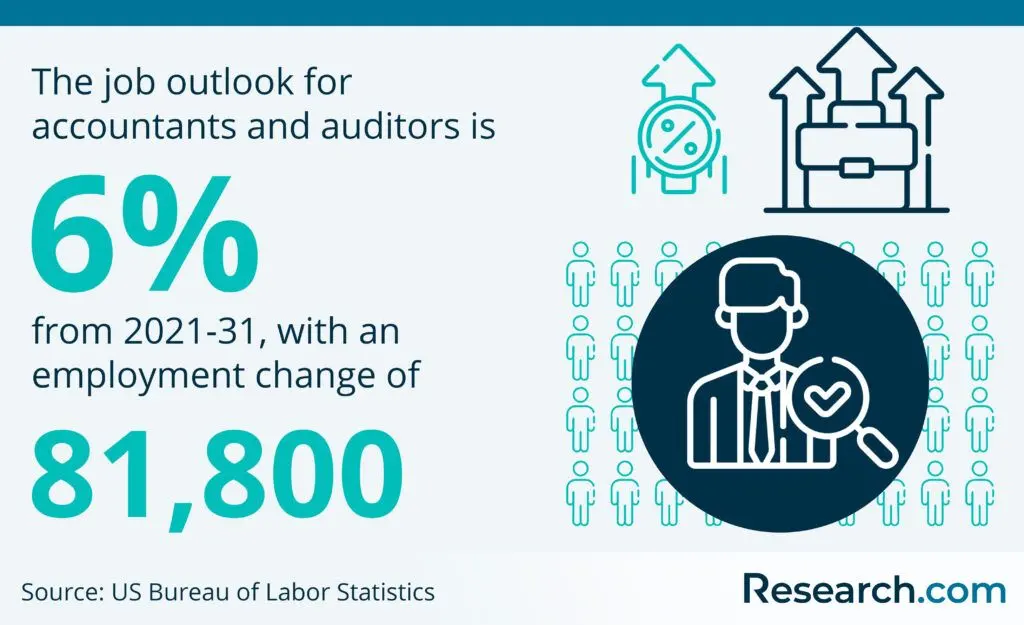
The U.S. Bureau of Labor Statistics projects that jobs for accountants and auditors, including professionals who may work in forensic accounting, will grow 6% between 2023 and 2033. Both online and campus programs can prepare students for accounting-related opportunities if the program is rigorous and recognized.
Is an Online Degree Cheaper?
An online forensic accounting degree may cost less overall, but it is not automatically cheaper. Students may save on commuting, parking, housing, relocation, and campus living costs. Some schools also charge lower online tuition rates, while others charge the same tuition for online and campus learners.
To compare programs accurately, look beyond advertised tuition. Add required fees, textbooks, accounting software, technology costs, proctoring fees, graduation fees, and any travel required for residencies, internships, or exams.
Is an Online Degree as Good as a Campus Degree?
An online forensic accounting degree can be comparable to a campus degree when it comes from an accredited school, uses a strong curriculum, and teaches the same accounting, auditing, fraud investigation, and legal concepts. Drexel University noted in 2023 that online degrees can be respected when they are accredited and industry-recognized.
The main difference is not quality by default; it is delivery. Online learners need reliable internet, strong time management, comfort with digital tools, and the ability to stay engaged without regular classroom attendance. Students who need frequent in-person feedback may prefer a campus or hybrid program.
How Much Does an Online Forensic Accounting Degree Cost?
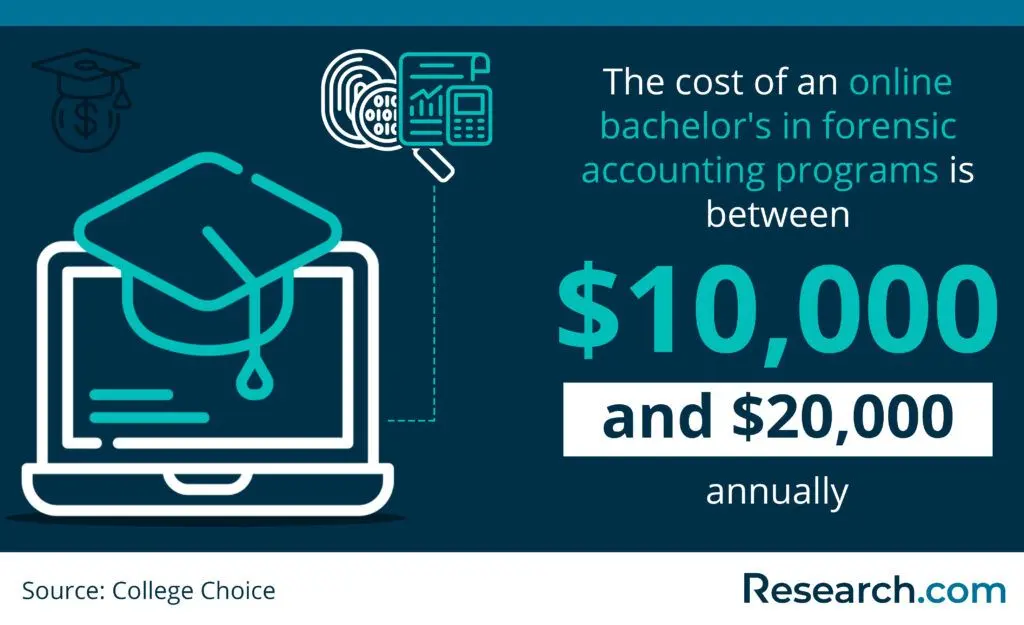
College Choice reported that the most affordable online bachelor’s in forensic accounting programs cost between $9,000 and $15,000 annually in 2024. Actual cost depends on degree level, school type, residency status, transfer credits, financial aid, and whether the program charges flat-rate or per-credit tuition.
Students considering doctoral study should evaluate costs carefully. If you are asking what a doctorate degree is in accounting or a related field, it is an advanced credential that may support research, teaching, executive, or highly specialized professional goals. The average total cost of a Ph.D. program is $240,000, though institutional costs can differ significantly.
Students comparing doctoral options should also review doctorate in accounting programs, because some may offer lower-cost structures than others. Always confirm whether tuition quotes include fees, dissertation costs, technology fees, books, and required residencies.
| Cost item | Why it matters | Question to ask |
| Tuition | This is usually the largest direct cost. | Is tuition charged per credit, per term, or at a flat rate? |
| Fees | Online, technology, graduation, and proctoring fees can raise the total price. | What mandatory fees are not included in the tuition estimate? |
| Books and software | Accounting, analytics, and forensic courses may require specialized materials. | Are textbooks, accounting software, or data tools included? |
| Transfer credits | Accepted credits can reduce both time and cost. | How many credits can I transfer, and how will they apply to the major? |
| Residency or travel | Some online programs still include in-person requirements. | Are there campus visits, internship sites, or in-person exams? |
| Financial aid | A lower sticker price is not always the lowest net price. | What scholarships, grants, employer benefits, or payment plans are available? |
Is an Online Forensic Accounting Degree Worth It?
An online forensic accounting degree may be worth it if it helps you qualify for accounting, audit, fraud examination, compliance, or financial investigation roles at a cost you can reasonably repay. It can be especially valuable for students who need flexibility while working or managing family responsibilities.
Some students start with an online associate degree in accounting to build foundational skills before pursuing a bachelor’s degree or specialization. This path can make sense for students who want a lower-cost entry point, plan to transfer credits, or need to test their interest before committing to a four-year program.
Salary outcomes vary by role, location, experience, employer, and credentials. Zippia reports that forensic accountant graduates can earn an average of $66,833 in the United States. Robert Half reports a higher annual range of $96,500-$133,750 for forensic accounting in 2025. These figures should be used as benchmarks, not guarantees.
The work can also be meaningful. In the International Journal of Professional Business Review, Silva et al. (2024) found a “positive correlation between forensic accounting and fraud detection and prevention.” The authors also noted that “Fraud is complex, and in carrying out fraud investigations, one must be aware of its complexity,” and argued that limited awareness and education can restrict the field. For students motivated by preventing financial harm, forensic accounting can offer both technical challenge and public value.
What Are the Requirements for an Online Degree in Forensic Accounting?
Online forensic accounting students usually meet the same academic requirements as campus students. Requirements vary by level, but schools commonly ask for transcripts, proof of prior education, minimum GPA, and sometimes test scores or professional experience.
Zippia notes that forensic accountant education requirements often include an accredited bachelor’s degree in accounting, forensic accounting, finance, or a related field. Some graduate programs may also expect prior coursework in accounting, business law, finance, auditing, or statistics.
Common Admission Requirements
| Program level | Typical requirements | What to verify |
| Associate degree | High school diploma or equivalent, transcripts, placement requirements | Whether credits transfer into a bachelor’s program |
| Bachelor’s degree | High school diploma or equivalent, transcripts, GPA requirements, transfer credit review | Whether the major includes enough accounting credits for future goals |
| Graduate certificate | Bachelor’s degree, transcripts, possible accounting prerequisites | Whether credits can later apply to a master’s degree |
| Master’s degree | Accredited bachelor’s degree, minimum GPA, personal statement, recommendations, possible GRE scores | Whether non-accounting majors must complete bridge courses |
| Doctoral degree | Graduate degree or substantial professional preparation, transcripts, statement of purpose, possible professional experience | Whether the program is research-focused, practice-focused, or CPA-aligned |
Some programs require a minimum undergraduate GPA of 3.0. Some may request GRE scores, including recommended scores at or above the 30th percentile in verbal, quantitative, and analytical writing. Applicants whose first language is not English may need to submit TOEFL or another English proficiency exam.
Skills That Help Students Succeed
- Accounting foundation. Students need comfort with financial statements, debits and credits, internal controls, auditing concepts, and business transactions.
- Analytical reasoning. Forensic accounting requires the ability to identify inconsistencies, compare evidence, test explanations, and draw supportable conclusions.
- Legal and investigative awareness. Students should understand how evidence, documentation, interviews, and expert reports may be used in legal or regulatory settings.
- Communication skills. Forensic accountants often explain complex financial findings to non-accountants, including attorneys, executives, investigators, regulators, and sometimes courts.
- Technology readiness. Data analysis, spreadsheets, accounting systems, and digital evidence are increasingly important in fraud-related work.
Students who are still comparing technical fields may also look at a computer programming bachelor’s degree online, especially if they are more interested in software development than accounting investigation.
What Technology Do Online Forensic Accounting Students Need?
Most online students need a dependable computer, stable internet connection, webcam, microphone, updated browser, office productivity software, and access to any accounting or analytics tools required by the program. Requirements differ by school, so students should check the official technology page before enrolling.
- Computer specs. Many online courses work best with a desktop or laptop that is less than five years old. Programs may recommend strong memory, adequate hard-drive capacity, and a post-2000 processor.
- Internet speed. Multiple universities recommend 512 Kbps download speed for a typical online class using a learning management system. Higher speeds are more useful when students participate in video conferencing, upload large files, or share a household connection.
- Software. Students commonly use browsers such as Google Chrome or Mozilla Firefox, along with Microsoft Office, Google Suite, Adobe Creative Suite, accounting applications, spreadsheet tools, or data analysis software.
| Activity | Number of devices | Ideal download speed |
| Checking email, browsing social media, watching the occasional YouTube video | 1-2 | Around 25 Mbps |
| 4K Ultra HD content streaming | 3-5 | 100 Mbps or higher |
| Video conferencing and/or sharing large files at the same time as other activities above | 5+ | 1 Gbps or higher |
Common Courses in an Online Forensic Accounting Program
An online forensic accounting curriculum should do more than teach general accounting. Strong programs help students connect accounting records to fraud schemes, internal controls, litigation support, regulatory compliance, digital evidence, and clear reporting.
| Course area | What students learn | Why it matters in forensic accounting |
| Accounting | Financial statements, accounting standards, business transactions, and ethics | Fraud investigations often begin with the ability to understand and test accounting records. |
| Auditing | Internal controls, audit evidence, procedures, risk, and reporting | Auditing skills help forensic accountants evaluate whether records are reliable. |
| Financial analysis | Ratio analysis, trend analysis, cash flow analysis, risk assessment, and business performance | Analytical review can reveal unusual patterns or inconsistencies. |
| Digital forensics | Data acquisition, document review, email evidence, volume analysis, and computer-based investigation tools | Many financial crimes leave digital trails that must be preserved and analyzed carefully. |
| Fraud examination | Fraud prevention, detection, investigation techniques, regulations, and fraud schemes | This is the core specialization for students seeking financial crime roles. |
| Legal procedures | Evidence, litigation support, expert testimony, legal ethics, and documentation | Findings may need to withstand scrutiny from attorneys, regulators, or courts. |
Because many forensic accountants work in the private sector, according to Zippia in 2024, students should look for programs that include corporate fraud, internal controls, financial reporting, and applied case analysis rather than only theory.
How Can You Finish an Online Forensic Accounting Degree Faster?
Students who want to enter the workforce sooner can look for accelerated online formats. These programs often use shorter terms—commonly five to eight weeks rather than traditional sixteen-week semesters—so motivated students can complete more courses in a calendar year.
Acceleration works best for students who are organized, have predictable study time, and can handle intensive assignments. It may not be ideal for students who need a lighter course load, are returning to school after a long break, or are balancing demanding full-time work with caregiving responsibilities.
Some schools also offer combined bachelor’s-to-master’s pathways. These options may allow qualified students to begin graduate coursework before finishing the bachelor’s degree. This can be helpful for students planning to pursue advanced roles or credentials such as Certified Fraud Examiner (CFE) or Certified Public Accountant (CPA).
If speed is a priority, compare forensic accounting programs with a fast track accounting degree. A broader accelerated accounting program may be a better fit if you want accounting fundamentals first and forensic specialization later.
Financial Aid and Cost-Saving Options for Online Forensic Accounting Degrees
The best financial decision is not always the program with the lowest advertised tuition. Students should compare net cost, aid availability, transfer credit, completion time, employer support, and the degree’s relevance to their career target.
- Scholarships and grants. Scholarships are often merit-based, while grants are commonly need-based. Some schools offer awards for accounting, business, finance, or fraud examination students. External organizations, including the Association of Certified Fraud Examiners (ACFE), may also offer resources for students pursuing fraud-related careers.
- Employer tuition reimbursement. Students already working in accounting, auditing, compliance, finance, banking, insurance, or government may ask whether their employer supports job-related education.
- Flexible payment plans. Some online institutions allow students to pay tuition in installments rather than in one large payment at the beginning of a term.
- Lower-cost accredited options. Students focused on affordability can compare forensic accounting programs with the cheapest accredited online accounting degree options to see whether a broader accounting degree plus forensic electives is more cost-effective.
- Tax benefits and education credits. U.S. students may qualify for education-related tax benefits, including the Lifetime Learning Credit (LLC), depending on eligibility.
- Transfer credits. Prior college credit, military training, professional certifications, or exams may reduce total credits required, depending on school policy.
How to Evaluate an Online Forensic Accounting Degree
Whether you are comparing bachelor’s programs or the best online master’s degrees in forensic accounting, the decision should be based on fit, credibility, cost, and career alignment—not ranking alone.
- Accreditation. Confirm institutional accreditation first. For business schools, also look for recognized business accreditation such as the Association to Advance Collegiate Schools of Business (AACSB) or the Accreditation Council for Business Schools and Programs (ACBSP).
- Curriculum depth. A strong program should include accounting, auditing, fraud examination, financial analysis, legal procedures, ethics, and data-focused coursework.
- CPA or certification alignment. If you plan to pursue CPA licensure, verify whether the program helps meet your state’s education requirements. If you want fraud-focused credentials, check whether coursework supports CFE preparation.
- Faculty experience. Instructors with accounting, audit, law enforcement, litigation support, compliance, or fraud investigation backgrounds can add practical value.
- Online format. Determine whether courses are asynchronous, live online, hybrid, self-paced, cohort-based, or accelerated.
- Location restrictions. Some online programs limit enrollment by state or country. Others may have internship, exam, or residency requirements that affect remote students.
- Technology and materials. Review required software, textbooks, proctoring tools, and hardware before enrolling.
- Career services. Look for resume support, accounting employer connections, alumni networking, internship assistance, and access to job boards.
- Total cost transparency. Ask for a full estimate that includes tuition, fees, course materials, and expected time to completion.
- Student support. Online learners should have access to advisors, tutoring, library services, technical support, and faculty communication channels.
Common Mistakes to Avoid
| Mistake | Why it can hurt you | Better approach |
| Choosing a program without checking accreditation | An unrecognized degree may not satisfy employers, graduate schools, or licensing boards. | Verify accreditation through official school and accreditor sources before applying. |
| Focusing only on tuition | Fees, books, software, and travel can change the real cost. | Compare the full cost of attendance and estimated net price. |
| Assuming every accounting degree prepares you for forensic work | Some accounting programs have little or no fraud investigation coursework. | Review the actual course list, electives, and capstone projects. |
| Ignoring CPA requirements | CPA rules vary by state and may require specific credits. | Ask the program and your state board how credits apply. |
| Assuming online means easy | Online courses often require strict deadlines, writing, projects, and exams. | Plan weekly study time before the term begins. |
| Relying only on rankings | A highly ranked program may not fit your budget, schedule, or career goal. | Use rankings as one input, not the whole decision. |
What Is the Forensic Accounting Job and Salary Outlook?
Forensic accounting careers are tied to the broader accounting, audit, compliance, and financial investigation labor market. The Bureau of Labor Statistics projects 6% growth for accountants and auditors between 2023 and 2033, with about 130,800 annual openings reported in 2024. Robert Half reports forensic accounting salaries of $96,500-$133,750 annually in 2025.
Salary depends on role, employer, geography, experience, credentials, and whether the position involves litigation support, fraud examination, consulting, government investigation, banking, insurance, or corporate compliance. Students should review current compensation data and role requirements before estimating return on investment. For a career-specific breakdown, see Research.com’s guide to forensic accountant salary.
| Career direction | Typical focus | Helpful preparation |
| Forensic accountant | Investigating financial records, tracing transactions, documenting findings | Accounting, auditing, fraud examination, legal procedures |
| Fraud examiner | Detecting and investigating fraud schemes | CFE-aligned coursework, interviewing, internal controls, evidence review |
| Internal auditor | Testing controls, identifying risk, improving processes | Auditing, risk assessment, data analytics, compliance |
| Compliance analyst | Monitoring adherence to laws, regulations, and internal policies | Regulatory knowledge, reporting, documentation, analytics |
| Litigation support specialist | Preparing financial analysis for legal disputes | Legal procedures, expert reports, damages analysis, communication |
How Do You Choose the Best Online Forensic Accounting Degree Program?
The best program is the one that matches your target role, budget, timeline, and credential needs. Start with accreditation, then evaluate the curriculum and outcomes. A program that looks inexpensive may not be the best value if it lacks forensic coursework, has weak student support, or does not help you meet CPA or certification goals.
Students aiming for higher-paying accounting paths should compare forensic accounting with other specialized areas, including audit, tax, finance, controller roles, and advisory services. Research.com’s guide to accounting jobs salary can help you compare broader accounting career options.
Questions to Ask Before Enrolling
- Is the institution regionally or otherwise properly accredited?
- Does the program include forensic accounting, fraud examination, auditing, digital evidence, and legal procedure coursework?
- Will credits apply toward CPA education requirements in my state, if that is my goal?
- Does the program prepare students for CFE, CPA, CFF, or other relevant credentials?
- Are courses asynchronous, synchronous, accelerated, or cohort-based?
- How many transfer credits will the school accept?
- What is the total cost after fees, books, software, and proctoring?
- Are internships, case projects, simulations, or capstones available?
- What career services are available to online students?
- Are there any in-person requirements?
What Should You Consider When Comparing Online Forensic Accounting and Accounting Master’s Programs?
A forensic accounting master’s program is narrower and more specialized, while a general accounting master’s program may offer broader preparation for audit, tax, corporate accounting, CPA coursework, and leadership roles. The right choice depends on whether your main goal is fraud investigation or a wider accounting career path.
| Option | Best for | Potential drawback |
| Master’s in forensic accounting | Students focused on fraud investigation, litigation support, financial crime, or compliance | May be narrower than needed for students seeking broad accounting leadership roles |
| Master’s in accounting | Students seeking CPA preparation, audit, tax, corporate accounting, or flexible accounting career options | May require forensic electives or certificates for fraud-focused roles |
| Graduate certificate in forensic accounting | Professionals who already have an accounting degree and want specialization | May not carry the same weight as a full graduate degree |
When comparing advanced programs, review accreditation, faculty qualifications, CPA alignment, forensic coursework, analytics training, career support, and total cost. Students who want a cost benchmark can compare options with the cheapest online master’s in accounting programs to see whether a broader accounting degree may offer better value.
2027 Best Online Forensic Accounting Degree Programs
The following programs were selected for readers researching online forensic accounting options. They are not the only viable programs, and students should confirm all costs, accreditation details, transfer policies, and curriculum requirements directly with each institution before applying.
Southern New Hampshire University (SNHU)
Southern New Hampshire University offers an online Bachelor of Science in Accounting with a concentration in Forensic Accounting and Fraud Examination. The program helps students apply accounting knowledge to financial record review, fraud schemes, and organizational risk. Students also study financial accounting concepts, which can support understanding of what a financial accountant does.
- Program Length: 4+ years
- Tracks/concentrations: Financial Accounting, Detection/Prevention of Fraudulent Financial Statements, etc
- Cost per Credit: $320
- Required Credits to Graduate: 120
- Accreditation: New England Commission of Higher Education (NECHE)
Champlain College
Champlain College offers an online undergraduate certificate that provides a forensic accounting foundation for students interested in fraud-related accounting work. Because Champlain also offers computer forensics coursework, students may be able to connect financial investigation concepts with digital evidence topics.
- Program Length: 4+ years
- Tracks/concentrations: White-Collar Crime, Cybercrime, etc.
- Cost per Credit: $328 or $984*
- Required Credits to Graduate: 21 or 3*
- Accreditation: New England Commission of Higher Education (NECHE)
Purdue University Global
Purdue University Global allows accounting students to choose concentrations aligned with career goals, including a forensic accounting concentration. The auditing and forensic accounting concentration includes topics such as engagement letters, audit procedures, audit processes, exit interviews, audit reports, business cycles, and the financial audit process.
- Program Length: 4+ years
- Tracks/concentrations: Advanced Forensic Accounting, Auditing, etc.
- Cost per Credit: $371
- Required Credits to Graduate: 120
- Accreditation: Higher Learning Commission (HLC)
Franklin University
Franklin University offers a dedicated online bachelor’s degree in forensic accounting. The program is designed for students who want focused preparation in fraud examination, forensic accounting methods, and applied accounting investigation rather than a general accounting degree alone.
- Program Length: 4+ years
- Tracks/concentrations: Fraud Examination, Business Foren/Forensic Account Capstone, etc.
- Cost per Credit: $398
- Required Credits to Graduate: 124
- Accreditation: International Accreditation Council for Business Education (IACBE)
Utica University
Utica University offers an online B.S. in Fraud and Financial Crime Investigation. The program takes a broad approach to financial criminology, economic crime investigation, and prevention. Students may complete all 120 credits through Utica University, and eligible credits may apply toward the undergraduate degree.
- Program Length: 4 years
- Tracks/concentrations: Economic Crime Theory, Information Privacy, etc.
- Cost per Credit: $450
- Required Credits to Graduate: 120
- Accreditation: Middle States Commission on Higher Education
What Role Do Professional Certifications Play in Forensic Accounting?
Professional credentials can help forensic accountants demonstrate specialized competence beyond a degree. Commonly discussed credentials include the Certified Fraud Examiner (CFE), Certified Public Accountant (CPA), and other forensic or financial investigation certifications.
The CPA can be especially valuable for accountants who want broader authority in audit, public accounting, financial reporting, or expert services. Requirements vary by state, so students should review licensing rules early. Research.com’s guide to the steps to becoming a CPA can help students understand the process.
| Credential | Why it may help | Best suited for |
| CFE | Signals fraud prevention, detection, and investigation knowledge | Fraud examiners, forensic accountants, compliance professionals |
| CPA | Supports accounting credibility, audit work, and some legal or expert contexts | Accountants pursuing public accounting, audit, or senior accounting roles |
| CFF or forensic-focused credentials | May support litigation, valuation, damages, and forensic accounting specialization | Experienced accounting professionals moving into expert or advisory work |
What Impact Do Emerging Technologies Have on Forensic Accounting?
Technology is changing how forensic accountants identify suspicious patterns, review large datasets, and document financial evidence. AI, machine learning, blockchain analysis, and advanced data analytics can help professionals detect anomalies faster, monitor transactions more efficiently, and investigate complex financial activity.
Technology does not replace professional judgment. Forensic accountants still need accounting knowledge, skepticism, evidence standards, ethics, and the ability to explain findings clearly. Students who want stronger finance and analytics preparation may also compare forensic accounting options with a cheap online finance master’s degree.
Can Networking and Cross-Industry Education Help a Forensic Accounting Career?
Networking can make a measurable difference in forensic accounting because many roles are specialized and relationship-driven. Students should use alumni groups, accounting associations, fraud examination organizations, internship contacts, faculty connections, and employer events to learn how hiring works in their target sector.
Cross-industry knowledge can also help. Fraud and financial risk appear in banking, healthcare, insurance, government, nonprofits, sports, entertainment, and technology. Students interested in how financial controls work in specialized industries might compare business-adjacent programs such as an affordable online bachelor’s in sports management, though forensic accounting remains the better fit for students whose main interest is fraud investigation.
What Opportunities Are Available with a Forensic Accounting Master’s Degree?
A master’s degree in forensic accounting can help accounting professionals deepen expertise in fraud investigation, litigation support, forensic analytics, compliance, and financial crime prevention. It may also support advancement into senior analyst, manager, consultant, expert witness, or specialized government and corporate roles.
Students should choose a master’s program based on career direction. A practitioner-focused program may emphasize casework, reporting, expert testimony, and applied analytics. A broader accounting master’s may be better for CPA preparation or accounting leadership. A research-focused graduate path may suit students interested in teaching or doctoral study.
What Are the Career Advancement Opportunities for Forensic Accounting Graduates?
Forensic accounting offers several advancement paths. The right path depends on whether you want to specialize technically, manage teams, support litigation, investigate financial crimes, consult independently, or move into risk and compliance leadership.
- Certified Fraud Examiner (CFE) certification. The CFE is widely recognized for fraud prevention, detection, and investigation. It can help professionals compete for fraud-focused roles.
- Certified Public Accountant (CPA) license. CPA licensure may expand opportunities in audit, public accounting, forensic accounting, and expert work, depending on state rules and employer preferences.
- Compliance and risk leadership. Forensic accounting skills transfer well into internal audit, enterprise risk management, anti-fraud controls, and regulatory compliance roles.
- Digital forensics and cybersecurity specialization. Additional training in digital evidence, cyber fraud, and data security can help accountants investigate technology-enabled financial crimes.
- Consulting and expert witness work. Experienced professionals may advise attorneys, companies, insurers, government agencies, or courts on complex financial disputes.
- Higher education and research. Professionals with advanced degrees may teach accounting, fraud examination, or forensic accounting courses and contribute to research in the field.
Can Quantitative Skills Strengthen a Forensic Accounting Career?
Yes. Strong quantitative skills can help forensic accountants analyze large datasets, identify outliers, test assumptions, model losses, detect unusual patterns, and explain findings with evidence. Useful skill areas include statistics, spreadsheet modeling, database analysis, visualization, risk scoring, and financial analytics.
Students who enjoy quantitative problem-solving may also explore adjacent analytical professions. For example, Research.com explains how to become an actuary for readers interested in risk modeling and statistical career paths outside forensic accounting.
How to Accelerate Your Forensic Accounting Career with an Online Degree
An online forensic accounting degree can help you move toward financial investigation work, but the degree alone is not enough. The fastest progress usually comes from combining education, practical experience, credentials, networking, and a clear role target.
- Choose an accelerated or transfer-friendly program. If you already have college credits, ask how many will apply to the major. If you can handle intensive study, an accelerated accounting degree may shorten your timeline.
- Build accounting experience early. Entry-level bookkeeping, audit, tax, accounting assistant, or compliance work can help you develop the record-review skills forensic roles require.
- Pursue relevant certifications. Credentials such as the CFE, CPA, or CFF can strengthen your profile when they align with your career goals.
- Use case projects strategically. Choose class projects involving fraud schemes, internal controls, financial statement analysis, data analytics, or litigation support so you can discuss them in interviews.
- Network before graduation. Join accounting and fraud examination organizations, attend virtual events, ask faculty for employer contacts, and connect with alumni.
- Specialize thoughtfully. Cyber fraud, financial statement fraud, asset misappropriation, insurance fraud, anti-money laundering, and litigation support require different skill combinations.
Related Paths If Forensic Accounting Is Not the Right Fit
Forensic accounting is best for students who like accounting, evidence, financial records, and investigative analysis. If you are more interested in human behavior, criminal assessment, or court-related psychological work, becoming a forensic psychologist may be a better match. If you are drawn to laboratory evidence, forensic science may be more appropriate. If you prefer policy, technology, counseling, finance, actuarial analysis, or sports business, compare those options before committing to an accounting-heavy degree.
The broader forensic accounting market continues to attract attention as organizations focus on fraud risk, financial transparency, and investigation capacity. Still, students should make the decision based on personal fit, program quality, credential requirements, and realistic career planning.
Key Insights
- Forensic accounting is accounting-based investigation. It is not the same as forensic science. The work centers on financial records, fraud schemes, audit evidence, internal controls, and legal support.
- Online degrees can be credible. Employers are more likely to respect an online degree when the school is accredited, the curriculum is rigorous, and the student can show relevant accounting and investigation skills.
- Cost varies widely. College Choice reported affordable online bachelor’s programs at $9,000-$15,000 annually in 2024, but students must also account for fees, software, books, proctoring, and transfer credit policies.
- Career outcomes are not guaranteed. Robert Half reports $96,500-$133,750 annually for forensic accounting in 2025, while Zippia reports an average of $66,833 in the United States. Actual pay depends on credentials, experience, employer, role, and location.
- Certifications can matter. The CFE can support fraud investigation roles, while the CPA can expand accounting and audit opportunities. Students should plan credential requirements before choosing courses.
- Technology skills are becoming more important. Data analytics, AI-assisted review, digital forensics, and blockchain-related analysis are changing how financial investigations are conducted.
- The best program is the best fit, not simply the highest-ranked option. Check accreditation, curriculum, CPA alignment, total cost, online format, support services, and career resources before enrolling.
References:
- AICPA & CIMA. (2025). 2025 MAP Survey Executive Summary. https://www.aicpa-cima.com/resources/download/map-survey-executive-summary
- AICPA. (2025). AICPA 2025 Trends Report. https://www.aicpa-cima.com/professional-insights/download/2023-trends-report
- BLS. (2025, August 28). Occupational projections and worker characteristics. Employment Projections. https://www.bls.gov/emp/tables/occupational-projections-and-characteristics.htm
- U.S. Bureau of Labor Statistics. (2024, August 29). Accountants and Auditors. Occupational Outlook Handbook. https://www.bls.gov/ooh/business-and-financial/accountants-and-auditors.htm
- Psychology.org. (2025, January 6). How to Become a Forensic Psychologist. https://www.psychology.org/careers/forensic-psychologist/
- College Choice. (2025). Most Affordable Online Forensic Accounting Degrees. https://www.collegechoice.net/accounting/forensic-accounting-degrees/affordable-online/
- Franklin University. (2024). How To Become a Forensic Accountant: 5 Steps To Consider. https://www.franklin.edu/blog/how-to-become-a-forensic-accountant
- Zippia. (2025). Forensic Accountant Demographics and Statistics In The US. https://www.zippia.com/forensic-accountant-jobs/demographics/
Other Things You Should Know About Online Forensic Accounting Degree Programs
Many 2027 online forensic accounting programs require a capstone or supervised practicum in the final term. A capstone is often worth 3 credits and asks students to analyze fraud cases, prepare audit reports, or complete a forensic investigation project. Some schools accept an accounting internship instead.
In 2027, requirements for an online forensic accounting degree typically include a high school diploma or equivalent, submission of transcripts, personal statements, and occasionally standardized test scores. Programs may also require coursework in accounting principles, ethics, finance, and law for a more specialized focus in forensic accounting studies.
In 2027, prioritize programs accredited by reputable bodies like AACSB or ACBSP. Look for curriculums with a balanced mix of accounting, law, and investigative techniques. Check for faculty expertise, internship opportunities, a strong alumni network, and career services that support professional advancement in forensic accounting.
Typical courses include general accounting principles, financial analysis, digital forensics, fraud examination, and legal procedures. These courses provide a comprehensive understanding of forensic accounting practices and prepare students for careers in the field.
In 2027, employers increasingly recognize online forensic accounting degrees due to their rigorous curricula and advanced digital platforms. Many reputable institutions now offer excellent online programs, ensuring graduates possess skills comparable to those from traditional settings. However, accreditation and reputation still play crucial roles in employer perception.
Graduates can pursue careers such as forensic accountant, fraud examiner, or financial analyst. Employment opportunities are available in accounting firms, government agencies, and corporations. Certifications like Certified Fraud Examiner (CFE) can enhance career prospects in 2027.
Online forensic accounting programs in 2027 often integrate advanced software such as data analytics tools, blockchain technology, and digital forensics applications. These tools help students develop crucial skills in detecting fraud, analyzing financial data, and conducting thorough investigations in digital environments.


