2027 Best Accounting Schools in Arkansas – How to Become a CPA in AR

Co-Founder and Chief Data Scientist
Choosing an accounting school in Arkansas is not just about finding a business program with accounting courses. Students need to know whether the degree supports CPA eligibility, whether the school is properly accredited, how much the program will cost, and whether the local job market can support their career goals after graduation. Arkansas enrolled 16,950 undergraduate students in business, management, and marketing fields in 2025, according to National Student Clearinghouse Research Center data, and accountancy remains one of the practical degree choices for students who want careers in tax, auditing, corporate finance, government, healthcare, or financial analysis.
Quick answer: Accounting can be a strong career path in Arkansas for students who want a stable business profession, especially if they choose an accredited program, plan early for the 150 semester hours required for CPA licensure, and gain internship or entry-level experience before graduation. This guide explains how to compare accounting schools in Arkansas, what the CPA path requires, how long programs usually take, what costs to expect, which industries hire accountants, and how to avoid common mistakes when selecting a program.
Best Accounting Schools in Arkansas Table of Contents
- Is accounting a smart career choice in Arkansas?
- How do you become an accountant in Arkansas?
- How long do accounting programs in Arkansas take?
- How much do accounting programs in Arkansas cost?
- Arkansas schools with accounting programs for 2027
- How to evaluate an Arkansas accounting program
- Industries in Arkansas that hire accountants
- How to choose the right accounting school in Arkansas
- Other career options for Arkansas accounting graduates
- Healthcare opportunities for accountants
- Networking and career development for Arkansas accountants
- Accelerated online accounting degrees in Arkansas
- Technology trends changing accounting work
- Forensic accounting and investigative skills
- Master’s degrees in accounting
- Using accounting skills in high school math teaching
- Medical billing and coding as a related skill set
- Arkansas licensing and certification requirements
- Accounting skills and teaching careers
- Accounting skills in urban development
- Accounting skills in legal support roles
Is accountant a good job in Arkansas?
Accounting is a practical career option in Arkansas because every major sector needs professionals who can prepare financial records, manage taxes, support audits, monitor budgets, and help organizations comply with rules. The state’s economy includes agriculture, healthcare, manufacturing, retail, transportation, government, and nonprofit organizations, giving accounting graduates more than one employment route.
The best fit depends on your goals. Students who want the highest long-term mobility should consider the CPA path. Students who prefer faster entry into the workforce may begin in bookkeeping, accounts payable, payroll, staff accounting, or tax preparation while deciding whether to pursue licensure later.
Cost of living
Arkansas can be appealing for accounting graduates because everyday expenses are comparatively low. The Arkansas Economic Development Commission reports that the state ranks among the most affordable places to live, with housing, transportation, and essential goods and services costing 14% lower than the national average. A lower cost base can make entry-level salaries go further, although compensation still varies by employer, credential, specialization, and location.
Job opportunities
Arkansas employers need accounting talent across several industries. Manufacturing, healthcare, retail, agriculture, and transportation all depend on accurate financial reporting and compliance. The state is also home to large companies, including Walmart, Tyson Foods, Murphy USA, and J.B. Hunt Transport Services, which have their headquarters in the state (Swaim, 2025).
For students weighing career stability, the labor outlook is another consideration. Arkansas is projected to see employment growth of 3.02% by 2026 and 12.42% by 2032. Those figures do not guarantee a job for any individual graduate, but they suggest that accounting remains relevant to the state’s broader employment market.
| Reason Arkansas can work for accounting graduates | What it means for students |
| Lower living costs | Graduates may be able to manage early-career income more comfortably than in higher-cost states. |
| Industry variety | Accounting graduates can look beyond public accounting firms and consider healthcare, retail, manufacturing, government, transportation, agriculture, and nonprofits. |
| Major employers | Large Arkansas-based companies may need accountants for corporate finance, tax, internal audit, financial planning, and compliance roles. |
| CPA pathway | Students who complete the required education, exam, experience, and continuing education steps can pursue licensed CPA roles. |
What are the steps to becoming an accountant in Arkansas?
The path to an accounting career in Arkansas depends on whether you want a general accounting role or a CPA license. Many accounting jobs require a bachelor’s degree, but CPA licensure has additional requirements. Research also indicates that graduates with digital skills, accredited certifications, foreign language proficiency, and experience with the “Big Four" accounting firms are more likely to access higher-paying opportunities (Tsaruk, 2020).
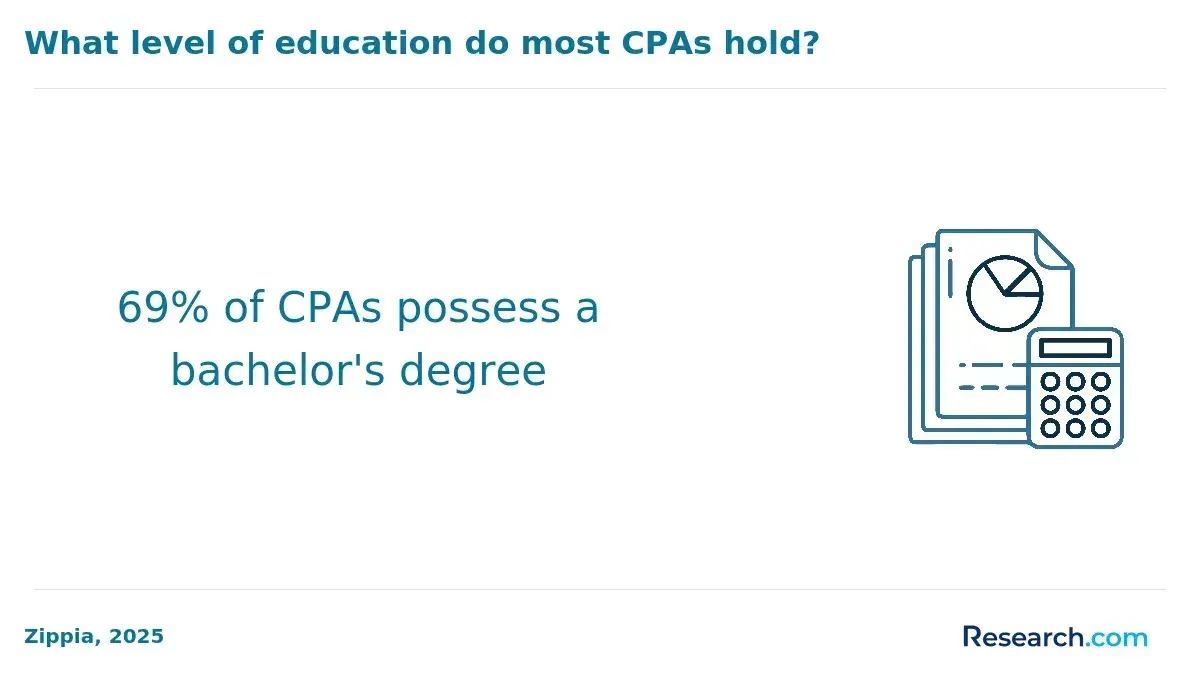
- Complete an accounting-focused bachelor’s degree. Most students start with an accounting degree or a closely related business degree. Arkansas CPA candidates must complete 150 semester hours of college education, which is higher than the typical 120 hours included in many bachelor’s programs (AICPA & CIMA, n.d.).
- Plan how you will reach 150 semester hours. Some students add a master’s degree, a graduate certificate, extra undergraduate coursework, or a combined bachelor’s-to-master’s pathway. If CPA licensure is your goal, confirm with your advisor that your coursework aligns with Arkansas State Board of Public Accountancy expectations.
- Build practical experience early. Arkansas does not require a person to hold a CPA license to work in many entry-level accounting jobs, but internships and staff-level roles can improve hiring prospects. CPA candidates must complete at least one year, or 2,000 hours, of experience in public accounting. The experience must be verified by an active CPA and should relate to accounting, attest, management advisory, financial advisory, tax, or consulting services.
- Apply for and pass the CPA exam if you want licensure. Students pursuing the CPA route typically benefit from an accounting major because it covers topics tested on the exam. Candidates who completed coursework outside the U.S. may need a Comprehensive Evaluation from a foreign transcript evaluation service, according to the Arkansas State Board of Public Accountancy.
- Submit the CPA license application. After meeting education, exam, and experience requirements, candidates apply for a CPA license through the Arkansas State Board of Public Accountancy. The process generally includes documentation, required fees, transcripts, exam results, and experience verification.
- Complete continuing professional education. Arkansas CPAs must renew their license by completing 40 hours of continuing education every year. Renewal can be completed online through the Arkansas State Board of Public Accountancy.
- Consider advanced education if it supports your goals. A master’s degree, MBA, or graduate-level finance credential can be useful for students who want management, advisory, analytics, corporate finance, or specialized accounting roles.
Accounting Program Length in Arkansas
Accounting education can take different amounts of time depending on whether you stop at a bachelor’s degree, pursue CPA licensure, or continue into graduate study. Students should map the timeline before enrolling because the CPA requirement of 150 semester hours often requires more planning than a standard four-year degree.
| Path | Typical time frame | Best for | Important planning note |
| Bachelor’s degree | Four years for full-time students | Students seeking entry-level accounting, tax, payroll, audit support, or corporate finance roles | Many bachelor’s programs require 120 units or semester hours, so CPA candidates need a plan for the additional hours. |
| Online bachelor’s degree | Often similar to campus programs, with flexibility for working students | Students who need remote access or flexible scheduling | Compare online accounting degree options carefully for accreditation, transfer policies, internship support, and CPA alignment. |
| Master’s degree | One to two years | Students who need additional credits for CPA eligibility or want deeper tax, audit, analytics, or advisory preparation | A graduate program can help reach 150 semester hours, but students should compare total cost and career payoff. |
| Doctorate degree | Four to six years on average | Students interested in university teaching, academic research, or advanced research roles | A Ph.D. is not required for most accounting jobs. |
| CPA preparation and licensure | Several months to a year for exam preparation, plus at least one year or 2,000 hours of required experience | Students pursuing licensed public accounting, audit, tax, consulting, or higher-responsibility accounting roles | Experience must be documented and verified by an active CPA. |
| Internships | A few months to a year | Students who want employer connections and practical experience before graduation | Internship length varies by employer and academic calendar (Indeed.com, 2025). |
Tuition and Costs of Accounting Programs in Arkansas
Cost should be evaluated beyond the advertised tuition rate. Students comparing accounting schools in Arkansas should calculate tuition, fees, books, technology costs, commuting or housing, exam preparation, CPA application expenses, and the cost of any extra credits needed to reach 150 semester hours. In-state tuition at public institutions is generally lower than out-of-state tuition, which can make residency status a major factor in total price.
The average tuition fees in accounting are $10,500 for in-state public school students and $27,630 for out-of-state public school students (Ma et al., 2025). At the University of Arkansas, tuition and fees are $10,496 for residents and $31,550 for non-residents. Arkansas students can also look for grants, loans, fellowships, scholarships, and state aid through the scholarship search tool.
| Cost factor | Why it matters | Question to ask before enrolling |
| Tuition and required fees | These create the largest direct education cost for most students. | Is the quoted amount per credit, per semester, or per year? |
| Residency status | Out-of-state rates can significantly increase the total cost at public universities. | Can I qualify for in-state tuition now or later? |
| Credits needed for CPA eligibility | CPA candidates must complete 150 semester hours, which may exceed the bachelor’s degree minimum. | How will this program help me reach 150 semester hours efficiently? |
| Online or campus format | Online study may reduce commuting or relocation costs, but fees and course delivery vary. | Are online students charged additional technology or distance learning fees? |
| Financial aid | Scholarships, grants, loans, fellowships, and work-study can change net cost. | What aid is available specifically for business or accounting students? |
| CPA exam preparation | Review materials and exam-related expenses can add to the total investment. | Does the school include CPA preparation support, or will I pay separately? |
Arkansas Schools Offering Accounting Programs for 2027
Arkansas students can choose from public and private institutions that offer accounting or accounting-related business programs. The best option depends on your budget, preferred format, transfer-credit situation, CPA plans, internship access, and desired campus environment. The schools below are presented as options to compare rather than as a guarantee of individual outcomes.
| School | Program details | Cost and credits | Accreditation |
| John Brown University | Private university in Siloam Springs with an undergraduate accounting program through the College of Business. Students complete an internship, and the university also offers a Master of Business Administration program in accounting. | Program duration: Four years. Area of concentration: Business Administration in Accounting. Cost per unit: $492 per credit hour. Units needed to graduate: 120 units in Bachelor’s Degree. | Higher Learning Commission and Accreditation Council for Business Schools & Programs. |
| Harding University | Offers undergraduate programs in Accounting, Finance, and International Business. The accounting program is chaired by a CPA and the university offers an ethics-based Master of Business Administration program for business professionals seeking advancement. | Program duration: Four years. Area of concentration: Business Administration in Accounting. Cost per unit: $650 per credit hour. Units needed to graduate: 129 units. | Higher Learning Commission and Accreditation Council for Business Schools and Programs. |
| Sam M. Walton College of Business at the University of Arkansas | Provides accounting students with business coursework, facilities, study abroad options, mentoring, internships, and career services. | Program duration: Four years. Area of concentration: Business Administration in Accounting. Cost per unit: $255.51 per credit hour for in-state students and $899.68 per credit hour for out-of-state students. Units needed to graduate: 120 units. | Association to Advance Collegiate Schools of Business. |
| University of Arkansas Fort Smith College of Business & Industry | Offers a concentration-based curriculum with 13 professional pathways and opportunities for applied learning through internships and related experiences. | Program duration: Four years. Area of concentration: Accounting. Cost per unit: $474 per credit hour. Units needed to graduate: 120 units. | Association to Advance Collegiate Schools of Business. |
| Arkansas State University | Offers an undergraduate accounting program through the College of Business and Administration, with coursework in accounting, taxation, and auditing. Students may also consider an online accounting degree option. | Program duration: Four years. Area of concentration: Accounting. Cost per unit: $299 per credit hour. Units needed to graduate: 120 units. | Association to Advance Collegiate Schools of Business. |
What To Look For in an Accounting Program in Arkansas
Accounting salaries in Arkansas vary by role, experience, employer, credential, and specialization. The annual average accountant salary in Arkansas is $56,499, while CPAs earn $76,059 (ZipRecruiter, 2026). Because a CPA credential can affect career options, students should choose a program that fits both short-term affordability and long-term licensing plans.
- Accreditation. Start by confirming institutional and business-program accreditation. In Arkansas, regional accreditation through the Higher Learning Commission and business accreditation through the Association to Advance Collegiate Schools of Business or the Accreditation Council for Business Schools and Programs can signal that a school meets recognized quality standards.
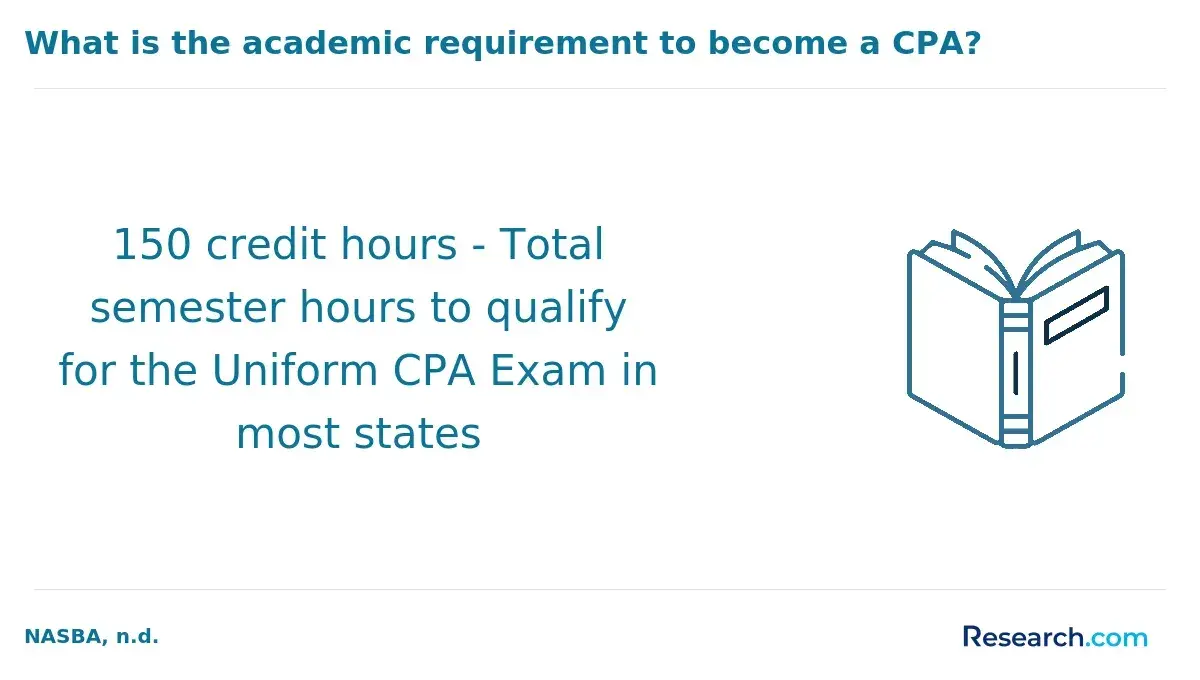
- CPA exam alignment. If you plan to become a CPA, confirm that the curriculum helps satisfy Arkansas education requirements. CPA candidates in Arkansas must hold a four-year degree from an accredited college or university and complete 150 semester hours.
- Program outcomes. Ask about graduate employment, internship placement, CPA exam pass rates, employer partnerships, and alumni career paths. Do not rely only on marketing language; request measurable outcomes when available.
- Faculty expertise. Look for instructors with CPA credentials, tax experience, audit experience, analytics experience, industry background, or research strengths that match your career interests.
- Internship access. A strong accounting program should help students find internships with firms, companies, government agencies, nonprofits, or healthcare organizations.
- Cost and financial aid. Compare the total net price, not just the listed tuition. Include scholarships, grants, work-study, transfer credits, employer tuition support, and the likely cost of any graduate coursework needed for CPA eligibility.
| Student goal | Program feature to prioritize | Why it matters |
| Become a CPA | CPA-aligned coursework and a 150-hour plan | Graduating with only 120 hours may delay licensure unless you already know how you will complete the remaining credits. |
| Enter the workforce quickly | Internships, career services, and applied coursework | Employers often value experience with accounting software, spreadsheets, tax preparation, reporting, and client or department workflows. |
| Keep costs low | In-state tuition, transfer credits, scholarships, and online options | The least expensive sticker price is not always the lowest total cost if credits do not transfer or extra coursework is required. |
| Work while studying | Online, evening, hybrid, or part-time scheduling | Flexible formats can help working students continue earning income while completing a degree. |
| Specialize | Electives in tax, auditing, analytics, forensic accounting, nonprofit accounting, or government accounting | Specialized coursework can support targeted job searches and advanced credentials. |
Key Industries for Accountants in Arkansas
Accounting graduates in Arkansas are not limited to public accounting firms. Many students build careers inside organizations that need financial reporting, budgeting, cost control, tax compliance, payroll, grants management, reimbursement tracking, or internal controls.
- Agriculture: Farms, agribusinesses, and related suppliers need accounting support for tax planning, reporting, inventory, compliance, and cash-flow management.
- Manufacturing: Manufacturers rely on accountants for cost accounting, budgeting, forecasting, inventory valuation, audit preparation, and performance analysis.
- Healthcare: Hospitals, clinics, insurers, and medical practices need professionals who understand budgets, reimbursements, billing accuracy, compliance, and operational finance.
- Government: State and local agencies hire accountants to manage public funds, prepare budgets, monitor spending, and support transparency.
- Nonprofit organizations: Nonprofits need accountants to track donations, grants, restricted funds, payroll, program expenses, and reporting obligations.
- Retail and corporate operations: Large retail and corporate employers may need accounting graduates for financial planning, internal audit, tax, procurement, logistics finance, and shared services.
Tips for Selecting the Best Accounting School in Arkansas
The right accounting school is the one that fits your career goal, budget, learning style, and licensing plan. Rankings can be useful, but they should not replace careful program comparison. Students considering broader business options can also compare accounting programs with the best business schools in Arkansas to see which institutions offer the strongest mix of business courses, employer connections, and student support.
Questions to ask before choosing a program
- Is the institution accredited, and is the business or accounting program separately accredited?
- Does the program clearly explain how CPA candidates can reach 150 semester hours?
- Are internships required, optional, or supported through career services?
- What accounting software, analytics tools, spreadsheet work, and tax preparation practice are included?
- Does the school publish CPA exam pass rates, placement outcomes, or employer partnerships?
- How many credits will transfer if you already attended another college?
- What is the total estimated cost after aid, not just tuition?
- Can online students access the same advising, tutoring, career services, and internship help as campus students?
Common mistakes to avoid
| Mistake | Why it can hurt you | Better approach |
| Choosing a school without checking accreditation | Accreditation can affect transfer credits, graduate admissions, employer confidence, and CPA eligibility. | Verify accreditation before applying or paying deposits. |
| Assuming a bachelor’s degree automatically meets CPA requirements | Many bachelor’s degrees require 120 hours, while Arkansas CPA candidates need 150 semester hours. | Ask for a written academic plan showing how to complete the 150 hours. |
| Comparing only tuition | Fees, housing, books, online charges, lost credits, and exam preparation can change the real cost. | Calculate total cost to graduation and, if relevant, total cost to CPA eligibility. |
| Ignoring internships | Graduating without experience can make the first job search harder. | Prioritize programs with employer relationships, required internships, or strong career services. |
| Relying only on rankings | A highly ranked school may still be the wrong fit for your schedule, budget, location, or specialization. | Use rankings as one input, then compare outcomes, format, cost, and CPA alignment. |
What Other Career Paths Are Available to Accounting Graduates in Arkansas?
An accounting degree can lead to work outside traditional accounting firms. Graduates may move into finance, operations, compliance, budgeting, business analysis, government administration, nonprofit management, or education-related roles. Those considering a move into K-12 education can review the elementary school teacher requirements in Arkansas to understand the degree, certification, and preparation steps for that career path.
What opportunities exist for accountants in the healthcare sector?
Healthcare organizations need careful financial management because they deal with reimbursement systems, budgets, compliance demands, staffing costs, patient billing, and resource allocation. Accountants who understand healthcare operations may work in hospital finance, clinic administration, insurance accounting, revenue cycle support, budgeting, or compliance. Students who want a broader view of clinical leadership pathways can explore how to become a nurse practitioner in Arkansas, especially if they are comparing administrative finance roles with direct-care career paths.
Career Development and Networking for Accountants in Arkansas
Accounting careers grow through more than coursework. Students and early-career professionals should deliberately build experience, professional contacts, software skills, and credentials. The earlier you start, the easier it is to compete for internships, staff accounting roles, audit positions, tax roles, and corporate finance jobs.
Professional associations
- Arkansas Society of Certified Public Accountants: ASCPA can help accounting professionals follow regulatory updates, continuing education options, networking events, and professional development opportunities.
- Beta Alpha Psi: This honor organization serves students, professionals, and academics in financial information fields and may offer access to leadership development, service activities, scholarships, and networking.
Career-building activities
- Internships: Use internships to test whether you prefer tax, audit, corporate accounting, government, nonprofit, or healthcare finance.
- Career services: Meet with career advisors early for resume reviews, interview preparation, employer introductions, and job-search planning.
- Mentorship: Ask faculty, alumni, CPAs, or supervisors for guidance on coursework, exam preparation, and specialization choices.
- Conferences and workshops: Attend events focused on tax updates, financial technology, auditing, forensic accounting, or regulatory compliance.
- Online learning flexibility: Students comparing remote study options can review online accounting programs to find formats that fit work or family responsibilities.
Certifications to consider after gaining direction
- Certified Public Accountant
- Certified Management Accountant
- Certified Internal Auditor
- Forensic accounting credentials
- Bookkeeping, payroll, tax, or analytics certificates for targeted skill development
Why choose an accelerated online accounting degree in Arkansas?
An accelerated online accounting degree can make sense for disciplined students who want a faster route into the workforce, need flexible scheduling, or already have transfer credits. A traditional accounting bachelor’s degree usually takes four years, while some accelerated programs may allow motivated students to finish coursework in as little as three years.
This option is not right for everyone. Accelerated courses move quickly, and accounting concepts build on each other. Students who need more time for math, business law, tax, or auditing may perform better in a standard or part-time format. Before enrolling, confirm accreditation, transfer policies, faculty access, tutoring, internship support, and whether the program can help you reach the 150 credit hours required for CPA licensure in Arkansas.
| Online accelerated accounting degree | When it may be a good fit | When to be cautious |
| Faster completion | You have strong study habits and can handle compressed deadlines. | You are working long hours or need more time to master quantitative courses. |
| Flexible location | You live far from campus or need to study from Little Rock, Fayetteville, or a rural area. | You learn best through in-person discussion or structured campus routines. |
| CPA credit planning | You need an efficient way to accumulate credits toward the 150-hour requirement. | The program does not clearly explain how its credits apply to Arkansas CPA requirements. |
| Career transition | You already work in business, bookkeeping, finance, or administration and want a degree credential. | You need extensive internship placement support and the online program offers limited employer connections. |
Students who want to move quickly should compare accelerated accounting degree programs online and request details on course pacing, support services, and CPA preparation.
Count Your Future with Accounting in Arkansas
Accounting in Arkansas can be a strong option for students who want a business career with applications across many sectors. The state may not offer the same brand association as major finance hubs, but it provides a combination of corporate employers, public agencies, healthcare systems, agricultural businesses, manufacturers, nonprofits, and local firms that need accounting expertise.
The best decision is not simply “Which school is best?” but “Which program gives me the clearest path to my target role at a price I can manage?” Students who answer that question before enrolling are better positioned to choose the right school, complete the right credits, gain experience, and pursue CPA licensure if it fits their goals.
Key Insights
- Accounting remains useful across Arkansas industries. Healthcare, agriculture, manufacturing, retail, government, transportation, and nonprofits all need financial recordkeeping, reporting, budgeting, and compliance skills.
- Arkansas can be cost-effective for graduates. The state’s costs for housing, transportation, and essential goods and services are 14% lower than the national average, which can help early-career professionals manage expenses.
- CPA planning should begin early. Arkansas CPA candidates need 150 semester hours, a four-year degree from an accredited college or university, a passing CPA exam result, at least one year or 2,000 hours of relevant experience, and 40 hours of continuing education every year after licensure.
- Program fit matters more than name recognition alone. Accreditation, CPA alignment, internships, career services, transfer policies, online support, and total cost should drive the school-selection process.
- Costs vary widely. Average tuition fees in accounting are $10,500 for in-state public school students and $27,630 for out-of-state public school students, while University of Arkansas tuition and fees are $10,496 for residents and $31,550 for non-residents.
- Experience improves employability. Internships, part-time accounting work, software skills, and professional networking can make a major difference in the first job search.
- Technology is changing the profession. Students should seek programs that teach cloud tools, automation awareness, analytics, spreadsheets, controls, and ethical data use alongside traditional accounting principles.
How Are Technological Innovations Reshaping the Accounting Profession in Arkansas?
Accounting work increasingly involves cloud accounting systems, workflow automation, digital audit tools, data analytics, and real-time reporting. These tools can reduce repetitive manual tasks, improve accuracy, and help organizations respond faster to financial risks. For Arkansas students, this means that technical accounting knowledge should be paired with software proficiency, spreadsheet modeling, data interpretation, cybersecurity awareness, and professional judgment.
Technology does not eliminate the need for accountants; it changes what employers expect from them. Professionals who can interpret financial data, explain risk, evaluate controls, and advise decision-makers may be better positioned for advancement. Students comparing career outcomes can also review information on accountant salary and related accounting roles.
Can Specializing in Forensic Science Enhance Your Accounting Career in Arkansas?
Forensic accounting combines accounting, investigation, documentation, fraud detection, and litigation support. It may appeal to students who enjoy detail-oriented analysis, evidence review, compliance, and financial irregularity detection. A forensic focus can be useful in public accounting firms, corporate compliance departments, insurance investigations, government agencies, and legal support environments.
Students interested in this intersection can explore whether a forensic science degree in Arkansas or related forensic coursework would complement accounting training. The best choice depends on whether the student wants to work primarily as an accountant with investigative skills or as a forensic specialist with financial knowledge.
Can a Master's Degree in Accounting Accelerate Your Career in Arkansas?
A master’s degree in accounting can help students reach the 150 semester hours needed for CPA eligibility while deepening knowledge in tax, audit, analytics, advisory services, financial reporting, or regulation. It may also support advancement into senior accountant, audit, tax, controller-track, consulting, or leadership roles, depending on experience and employer needs.
However, a master’s degree is an investment. Before enrolling, compare tuition, delivery format, CPA exam support, employer connections, assistantships, and expected career benefits. Students looking for lower-cost graduate pathways can review options for masters in accounting.
Can Accounting Expertise Facilitate a Transition to High School Math Teaching in Arkansas?
Accounting professionals often have strong quantitative reasoning, spreadsheet skills, problem-solving ability, and experience explaining numerical information. Those strengths can transfer to math education, but teaching requires additional preparation in classroom management, lesson design, pedagogy, student assessment, and state certification.
Anyone considering this route should review how to become a high school math teacher in Arkansas before assuming an accounting degree alone is enough. Alternative licensure or teacher-preparation pathways may be available, but requirements depend on state rules and individual background.
Could Integrating Medical Billing and Coding Skills Broaden Your Opportunities?
Accounting knowledge can pair well with medical billing and coding because healthcare finance depends on accurate claims, reimbursements, compliance, documentation, and revenue cycle management. This combination may be useful for professionals interested in hospital finance, clinic administration, billing operations, compliance support, or healthcare accounting.
Students who want to expand into this area can learn how to be a medical coder in Arkansas and compare that path with accounting, healthcare administration, and revenue cycle roles.
What Are the Specific Licensing and Certification Requirements for Accountants in Arkansas?
Not every accounting job requires licensure, but the CPA credential has formal requirements. In Arkansas, CPA candidates must complete an accredited education pathway, meet the 150-semester-hour requirement, pass the CPA exam, complete at least one year or 2,000 hours of relevant experience verified by an active CPA, and maintain licensure through ongoing continuing education.
Because rules can affect eligibility, students should verify requirements directly before choosing coursework or applying for the exam. For a focused step-by-step overview, review CPA requirements in Arkansas.
Can Accounting Skills Support a Transition to a Teaching Career in Arkansas?
Accounting skills can support teaching-related careers in several ways. Budgeting, data analysis, program evaluation, resource planning, and financial literacy are useful in schools, districts, education nonprofits, and administrative roles. Moving into classroom teaching, however, generally requires education-specific preparation and certification.
Professionals considering this change should first confirm what degree do you need to be a teacher in Arkansas and then compare teacher-preparation, alternative licensure, and graduate education options.
Can Accounting Skills Contribute to Urban Development Initiatives in Arkansas?
Urban development and community planning projects require budgets, grant tracking, cost controls, public finance knowledge, risk assessment, and transparent reporting. Accountants can contribute to infrastructure projects, housing initiatives, redevelopment programs, and public-private partnerships by helping leaders understand financial feasibility and accountability.
Professionals who want to combine finance with planning can explore how to become an urban planner in Arkansas and evaluate whether additional planning, public administration, or policy education is needed.
Can Accounting Skills Support a Transition to Legal Roles in Arkansas?
Accounting experience can be valuable in legal settings that involve financial records, compliance, due diligence, fraud matters, taxation, bankruptcy, business transactions, or litigation support. Accountants may work with attorneys as financial analysts, forensic accounting specialists, compliance professionals, or legal support staff.
Those who want a more formal legal support role can learn how to become a paralegal in Arkansas and compare paralegal education requirements with their existing accounting background.
Related Articles for Nearby States
- 2027 Best Accounting Schools in Missouri – How to Become a CPA in MO
- 2027 Best Accounting Schools in Oklahoma – How to Become a CPA in OK
- 2027 Best Accounting Schools in Tennessee – How to Become a CPA in TN
- 2027 Best Accounting Schools in Mississippi – How to Become a CPA in MS
- 2027 Best Accounting Schools in Louisiana – How to Become a CPA in LA
- 2027 Accounting Schools in Texas: How to Become a CPA in TX
- 2027 Best Accounting Schools in Kentucky – How to Become a CPA in KY
- 2027 Best Accounting Schools in Kansas – How to Become a CPA in KS
- 2027 Best Accounting Schools in Alabama – How to Become a CPA in AL
- 2027 Accounting Schools in Illinois – How to Become a CPA in IL
References:
- AICPA & CIMA. (n.d.). Everything You Need to Know About the CPA Exam. Retrieved February 2026, from https://www.aicpa-cima.com/resources/toolkit/cpa-exam
- Arkansas Division of Workforce Services. (n.d.). Long-Term Projections: Occupational Employment Projections. Labor Market Information Section. Retrieved February 2026, from https://www.discover.arkansas.gov/employment/employment-projections/index
- Arkansas Division of Workforce Services. (n.d.). Short-Term Projections: Occupational Employment Projections. Labor Market Information Section. Retrieved February 2026, from https://www.discover.arkansas.gov/_docs/Publications/Projections/2024-2026/ST-2024-26-State.pdf
- Arkansas Economic Development Company. (n.d.). Cost of Living. Retrieved February 2026, from https://www.arkansasedc.com/why-arkansas/life-in-the-natural-state/detail/cost-of-living
- Arkansas State Board of Public Accountancy. (n.d.). CPA Exam Requirements, Application, and Structure. Arkansas Department of Labor and Licensing. Retrieved February 2026, from https://labor.arkansas.gov/licensing/state-board-of-public-accountancy/cpa-exam-website-changes/
- Hood, D. (2026, January 2). Accounting in 2026: The year ahead in numbers. Accounting Today. https://www.accountingtoday.com/list/accounting-in-2026-the-year-ahead-in-numbers
- Indeed Editorial Team. (2025). FAQs About Internship Lengths. Indeed. https://www.indeed.com/career-advice/career-development/how-long-are-internships
- Ma, J., Pender, M., & Hu, X. (2025). Trends in College Pricing and Student Aid 2025. https://research.collegeboard.org/trends/college-pricing
- National Association of State Boards of Accountancy. (n.d.). How to get licensed. Retrieved January 2026, from https://nasba.org/licensure/gettingacpalicense/howtogetlicensed
- National Student Clearinghouse Research Center. (2025). Clearinghouse Enrollment Insights Series: Final Fall Enrollment Trends. https://nscresearchcenter.org/final-fall-enrollment-trends/
- Tsaruk, N. (2020). Accountant’s qualification according to the employers’ queries. Accounting and Finance, (1(87)), 7783. https://doi.org/10.33146/2307-9878-2020-1(87)-77-83
- U.S. Bureau of Labor Statistics. (2024). May 2024 Occupational Employment and Wage Statistics. Occupational Employment and Wage Statistics Query System. Retrieved January 2026, from https://data.bls.gov/oes/#/industry/000000
- Zippia. (2025, January 8). Forensic accountant demographics and statistics in the US. https://www.zippia.com/forensic-accountant-jobs/demographics/#degree-level-types
- ZipRecruiter. (2026). Accountant Salary in Arkansas. Retrieved February 2026, from https://www.ziprecruiter.com/Salaries/Accountant-Salary--in-Arkansas
- ZipRecruiter. (2026). Cpa Salary in Arkansas. Retrieved February 2026, from https://www.ziprecruiter.com/Salaries/Cpa-Salary--in-Arkansas
Other Things You Should Know About the Best Accounting Schools in Arkansas
To choose the best accounting school in Arkansas for 2027, consider factors such as CPA exam pass rates, faculty credentials, curriculum rigor, alumni success, and available specializations. Additionally, assess the school's support services, internship opportunities, and industry connections to ensure strong career prospects post-graduation.
Studying accounting in Arkansas can cost between $8,000 to $20,000 per year for tuition at public universities. Private institutions might charge more. Additional costs include textbooks, supplies, and living expenses. It's important to check individual college sites for precise and current tuition rates.
For 2027, the top accounting schools in Arkansas include the University of Arkansas at Fayetteville, Harding University, and Arkansas State University. These institutions offer robust accounting programs that combine academic excellence with practical experiences, essential for aspiring CPAs in the state.
When choosing an accounting program in Arkansas, consider accreditation, program outcomes, CPA exam eligibility, cost, and financial aid options. Ensure the program aligns with your career goals and offers robust support for CPA preparation.
Yes, several institutions in Arkansas offer online accounting programs. These programs provide flexibility for students who need to balance their studies with other commitments while offering the same rigorous curriculum as on-campus programs.
CPAs in Arkansas must complete 40 hours of continuing professional education (CPE) each year to maintain their license. This ensures that CPAs stay updated with the latest accounting standards and practices.
In Arkansas, top accounting schools such as the University of Arkansas and Arkansas State University offer unique networking and professional development opportunities through events like career fairs, workshops, and partnerships with local firms, providing students with valuable industry connections.