2027 Best Online Associate Degree in Accounting Programs

Co-Founder and Chief Data Scientist
An online associate degree in accounting is often the first practical credential for students who want to enter bookkeeping, payroll, tax support, accounts payable, accounts receivable, or accounting assistant roles without committing immediately to a four-year degree. It can also be a transfer-friendly starting point for students who eventually want to become accountants, auditors, financial managers, or CPAs.
This matters because accounting work remains tied to nearly every industry. Organizations need accurate records, compliant reporting, reliable payroll, and financial data that managers can trust. In 2024, there were approximately 1,550,000 employees in the bookkeeping, accounting, and auditing clerk occupation, and the field is projected to have about 186,300 job openings each year on average from 2024 to 2034 (U.S. Bureau of Labor Statistics, 2025). This guide explains how online associate programs work, what they cost, what you will study, how employers view online degrees, and how to decide whether this path fits your career goals.
If you are comparing accounting career paths or researching online accounting degree programs, use this guide to evaluate programs based on accreditation, cost, transfer options, student support, technology requirements, career services, and long-term return on investment.
Online Associate Degree in Accounting Table of Contents
- Can you complete an accounting associate degree fully online?
- Do employers respect online accounting degrees?
- Are online accounting degrees accepted internationally?
- Online vs. campus-based associate degree in accounting
- Accelerated accounting degree options for associate-level students
- 2027 best online associate in accounting programs
- How much does an online associate degree in accounting cost?
- What are the requirements for an online associate degree in accounting?
- Courses to expect in an online associate degree in accounting
- How to choose an online associate degree in accounting
- What financial aid options can help pay for the degree?
- What is the return on investment for an online associate degree in accounting?
- Can online accounting students gain practical experience?
- What skills will you build in an online associate accounting program?
- Is an online associate degree enough for CPA licensure?
- What challenges do online accounting students face?
- Can pairing accounting with another field expand career options?
- What career services support online associate accounting students?
- Industry certifications that complement an online associate degree in accounting
- What should you do after completing an online associate degree in accounting?
- Can an online associate degree in accounting lead toward an actuarial career?
Quick Answer: Is an Online Associate Degree in Accounting Worth Considering?
Yes, an online associate degree in accounting can be worth considering if you want an affordable, flexible entry point into accounting-related work or a lower-cost way to begin college before transferring into a bachelor’s program. It is best suited for students seeking entry-level roles such as bookkeeping clerk, accounting assistant, payroll clerk, or tax support associate. It is not enough by itself for most CPA licensure pathways, which usually require a bachelor’s degree and additional credit hours.
| Best fit | Why it makes sense | When to consider another path |
| Career starters | Provides accounting fundamentals for entry-level office and finance roles | If your target job requires a bachelor’s degree from the start |
| Working adults | Online formats can reduce commuting time and support part-time study | If you need in-person labs, campus networking, or structured classroom time |
| Transfer students | Can lower the cost of the first two years of college | If credits do not transfer cleanly into your intended bachelor’s program |
| Future CPA candidates | Builds a foundation before bachelor’s-level accounting coursework | If you assume the associate degree alone satisfies CPA education rules |
Can you complete an accounting associate degree fully online?
Yes. Many accredited colleges now offer associate, bachelor’s, master’s, certificate, and specialized accounting programs online. Students can study core accounting concepts remotely, including bookkeeping, payroll, financial statements, taxation, accounting software, and business law. Online options also exist in more advanced and specialized fields, including forensic accounting degrees.
Students may choose accounting certification programs, associate degrees, bachelor’s degrees, or graduate degrees depending on their career goals. The expansion of digital learning has made it possible for many students to complete coursework from anywhere with reliable technology and internet access, supporting the broader goal of accessible online learning.
An accounting credential can support careers in business, finance, government, nonprofits, and professional services. Accounting is also commonly discussed among the best majors to make money, but students should evaluate salary outcomes carefully because pay depends on degree level, experience, location, industry, and credentials.
Most online associate degrees in accounting are designed to teach the foundations of the field in about two years. Some schools offer accelerated formats that may allow students to finish in a shorter period, including programs that can be completed in just a year.
Do employers respect online accounting degrees?
Employers are generally more interested in whether your school is accredited, whether the curriculum is relevant, and whether you can use accounting tools accurately than whether you studied online or on campus. A degree from an accredited institution is typically easier to defend in job interviews, background checks, transfer evaluations, and future graduate admissions.
That said, not every online credential carries the same value. Students should avoid unaccredited schools, vague “career diploma” programs, or providers that do not clearly disclose tuition, transfer policies, faculty qualifications, and student support. When comparing programs, start with accredited institutions such as those included among the best online colleges for an associates degree.
The employment base for accounting support work is broad. In 2024, 352,620 employees were working in accounting, tax preparation, bookkeeping, and payroll services. Other large employers included enterprises, with 98,100 jobs, and local government agencies, with 46,900 jobs (U.S. Bureau of Labor Statistics, 2025).
Are online accounting degrees accepted internationally?
Online degrees can be recognized outside the United States, but recognition is not automatic in every country, employer, licensing body, or immigration process. The most important factor is whether the institution is properly accredited and whether the receiving organization accepts the credential for employment, transfer, licensure, or professional registration.
Online education continues to grow globally. The global online education market has a compound annual growth rate of about 7%, and in 2025, its value is projected to be $325 billion (Statista, 2025). This growth has made online learning more familiar to employers and universities, but students who plan to work or study abroad should confirm local recognition before enrolling.
Accreditation matters because it signals that an institution and its academic offerings have been reviewed against recognized education standards. If you plan to use your degree internationally, ask the school whether graduates have successfully transferred credits, entered bachelor’s programs, or had credentials evaluated in the country where you intend to work.
Online vs. campus-based associate degree in accounting
The best format depends on your schedule, learning style, budget, and career timeline. Online programs are often attractive to working adults, parents, military learners, and students who do not live near a campus. Campus programs may work better for students who want face-to-face instruction, in-person tutoring, or stronger local networking.
| Factor | Online associate degree in accounting | Traditional campus program |
| Schedule | Often more flexible, especially when courses are asynchronous | Usually tied to set class times and campus attendance |
| Cost structure | May reduce commuting, relocation, parking, and campus-related expenses | May include additional transportation, housing, or campus fees |
| Interaction | Uses discussion boards, video meetings, email, group projects, and virtual office hours | Offers in-person contact with instructors, classmates, tutors, and campus staff |
| Self-discipline | Requires strong time management and independent study habits | Provides more external structure through scheduled meetings |
| Best for | Students balancing school with work, caregiving, or location limits | Students who learn best through live classroom participation |
Cost considerations
Online study can lower the total cost of attendance because students may avoid moving, commuting, parking, and some campus-based expenses. However, online students should still review technology fees, textbook or digital resource fees, proctoring costs, graduation fees, and whether tuition differs for in-state and out-of-state learners.
Learning format and flexibility
Online accounting courses may be synchronous, asynchronous, or a mix of both. Asynchronous courses are often more flexible because students can complete weekly work on their own schedule. Synchronous courses may include required live sessions. Campus programs usually provide more structure but less flexibility.
Academic interaction
Online learning does not mean learning alone. Strong programs provide instructor access, tutoring, peer discussion, group projects, and academic advising. Still, students who need frequent in-person feedback may prefer a campus program or a hybrid format.
Is an online degree cheaper?
An online degree is often less expensive overall, but students should compare total cost rather than tuition alone. Savings may come from avoiding commuting, relocation, parking, meal plans, and some campus fees. Students who transfer prior college credits may also shorten their time to completion, which can reduce total tuition.
Before choosing a program, request a full cost breakdown that includes tuition, fees, books, software, exam proctoring, technology requirements, and graduation expenses. A low tuition rate is helpful only if the program is accredited, transferable, and aligned with your career plans.
Is an online degree as good as a regular degree?
An accredited online accounting degree can provide comparable academic preparation to a campus-based degree when the curriculum, faculty expectations, assessment standards, and student support are strong. Employers usually care most about the institution, accreditation, coursework, skills, and work experience.
In 2025, 71% of students reported finding online learning more effective than traditional classroom learning for exam preparation, with 34% rating it "much more effective" and only 8% viewing it as less effective (Save My Exams Survey, 2025). Individual results still depend on the student’s motivation, schedule, study habits, and access to support.
Accelerated accounting degree options for associate-level students
Accelerated accounting programs are designed for students who want to finish faster or move quickly from an associate degree into a bachelor’s program. These formats may use shorter terms, year-round enrollment, generous transfer credit policies, or stacked credentials that let students apply completed coursework toward a higher degree.
A fast track accounting degree can be useful if you already have transfer credits, can study consistently each week, and want to enter the workforce or continue into a bachelor’s program sooner. It may not be ideal if you are new to college, working unpredictable hours, or need more time to master quantitative coursework.
| Accelerated option | How it works | Best for | Risk to watch |
| Short-term courses | Classes run in compressed sessions instead of full semesters | Students who can handle a faster weekly pace | Falling behind can be difficult to recover from |
| Transfer-heavy pathway | Prior credits reduce the number of courses needed | Students with previous college coursework | Credits may not apply as expected |
| Associate-to-bachelor’s bridge | Associate coursework is planned around future bachelor’s requirements | Students who want a four-year degree later | Poor advising can lead to excess credits |
| Year-round enrollment | Students take courses across multiple terms without long breaks | Motivated students with stable schedules | Burnout can affect performance |
2027 Best Online Associate Degree in Accounting
Research.com reviewed available information from credible sources to identify online associate accounting programs that may fit students seeking flexibility, affordability, transfer potential, and recognized academic quality. The schools below were selected using factors such as cost, academic reputation, program structure, accreditation, and other relevant criteria.
1. Indiana Wesleyan University Global
Indiana Wesleyan University Global offers more than 100 academic programs across multiple fields, including graduate programs in theology and ministry. Its online associate of science in accounting introduces students to business economics, personal finance, contemporary business concepts, and accounting principles.
Program Length: 24 months
Tracks/concentrations: Accounting Assistant, Accountant, Auditor, Finance Manager
Cost per Credit: $305
Required Credits to Graduate: 60
Accreditation: Higher Learning Commission
2. Franklin University
Franklin University is a private institution with more than 115 years of experience serving students, including working adults who need online options. Its online associate degree in accounting covers accounting theory, financial accounting, managerial accounting, and individual income tax.
Program Length: Eight or 12 weeks
Tracks/concentrations: Accounting Assistant, Accountant, Auditor, Finance Manager
Cost per Credit: $398
Required Credits to Graduate: 64
Accreditation: Higher Learning Commission
3. Champlain College
Champlain College has offered online education for nearly 30 years and emphasizes career-focused programs. Its online associate degree in accounting includes coursework in managerial accounting, financial accounting, cost accounting, business law, and principles of marketing.
Program Length: Eight weeks
Tracks/concentrations: Accounting Assistant, Accountant, Auditor, Finance Manager
Cost per Credit: $328
Required Credits to Graduate: 60
Accreditation: New England Commission of Higher Education
4. Southern New Hampshire University
Southern New Hampshire University is a private nonprofit institution founded in 1932. It serves over 3,000 on-campus students and more than 170,000 online students. Its online associate accounting program focuses on applying managerial, financial, and cost accounting principles to workplace tasks.
Program Length: Eight weeks
Tracks/concentrations: Accounting Assistant, Accountant, Auditor, Finance Manager
Cost per Credit: $320
Required Credits to Graduate: 60
Accreditation: ACBSP
5. Davenport University
Davenport University is among Michigan’s long-standing higher education institutions and has more than 20 years of online degree experience. Its associate of business administration in accounting teaches students how to maintain accounting records and prepare financial statements through courses such as accounting foundations, microeconomics or macroeconomics, accounting information technology, and marketing foundations.
Program Length: Two years
Tracks/concentrations: Accounting Assistant, Accountant, Auditor, Finance Manager
Cost per Credit: $627
Required Credits to Graduate: 64
Accreditation: International Accreditation Council for Business Education (IACBE)
How much does an online associate degree in accounting cost?
In A.Y. 2024–2025, the average tuition and fees for two-year private nonprofit colleges rose to approximately $20,000, while private for-profit institutions averaged $17,500 (National Center for Education Statistics, 2025). Online accounting associate programs commonly cost $120–$350 per credit, with total tuition typically ranging from $7,000–$25,000 including technology fees. Students should also review year-to-year tuition changes and fee policies before enrolling.College cost trend reference
What affects the total price?
| Cost factor | Why it matters | Question to ask |
| Tuition per credit | Most associate programs require 60 or more credits | Is the quoted rate guaranteed for the full program? |
| Transfer credits | Accepted credits can reduce time and cost | Which prior courses count toward accounting requirements? |
| Fees | Technology, proctoring, graduation, and online course fees can add up | Can I see the full fee schedule before applying? |
| Books and software | Accounting courses may require digital textbooks, spreadsheets, or accounting platforms | Are software subscriptions included in tuition? |
| Pace of study | Part-time study can be easier to manage but may extend the timeline | How does enrollment pace affect total cost? |
Is an online accounting degree worth it?
An online accounting degree can be worthwhile when the program is accredited, affordable, and connected to your career goals. Graduates may qualify for entry-level roles such as bookkeeping, accounting, and auditing clerk positions, which had a median pay of $49,210 per year (U.S. Bureau of Labor Statistics, 2025).
Students who continue beyond the associate level may qualify for higher-level roles over time. If you are trying to choose between finance degree vs accounting, compare the coursework, target occupations, certification pathways, and salary ranges. Accountants and auditors had an average annual pay of $84,300, while financial managers had a median yearly pay of $139,790 (U.S. Bureau of Labor Statistics, 2025).
| Careers | Annual Median Salary |
| Bookkeeping, Accounting, and Auditing Clerks | $49,210 |
| Accountants and Auditors | $84,300 |
| Financial Managers | $139,790 |
What are the requirements for an online associate degree in accounting?
Before enrolling, students should understand what is associate degree and how it differs from a certificate, bachelor’s degree, or graduate program. An associate degree usually combines general education courses with introductory business and accounting coursework.
Common admission requirements
- High school completion. Most programs require a high school diploma or GED certificate.
- Standardized tests. SAT or ACT scores are often not required for two-year online programs, although students may submit them if the school accepts them.
- Personal statement. Some schools ask applicants to explain their goals, academic background, and reasons for studying accounting.
- Recommendation letters. Certain programs may request letters from teachers, supervisors, coaches, mentors, or other people who can discuss the applicant’s readiness for college study.
Personal and academic qualities that help accounting students succeed
- Analytical thinking. Accounting students need to interpret transactions, identify errors, compare records, and recognize patterns. This matters because 31% of bookkeeping, accounting, and auditing clerks reported the occurrence of conflict situations once a month or more but not every week (O*NET OnLine, n.d.).
- Decision-making ability. Bookkeeping, accounting, and auditing clerks make decisions 60% of the time in daily work contexts (O*NET OnLine, n.d.). Students should be comfortable using evidence, policy, and financial data to make choices.
- Initiative. Accounting work often involves deadlines, monthly closes, budget cycles, compliance requirements, and coordination with other departments. Proactive students are better prepared to manage workload changes.
- Technology readiness. Accounting has become increasingly software-driven. Students should be prepared to use spreadsheets, accounting systems, communication platforms, databases, and digital documents.
Technology competence is now central to accounting work. In “Digitalisation in Accounting: A Systematic Literature Review of Activities and Implications for Competences,” published in Empirical Research in Vocational Education and Training, Pargmann et al. (2023) noted that digitalization increases the need for accounting graduates and employees to assess digital tools, evaluate software implementation, and adapt to changing technology demands.
Bookkeeping, accounting, and auditing clerks deal with electronic mail 94% of the time (O*NET OnLine, n.d.), but email is only one part of the technology requirement. Students should also expect to work with spreadsheets, learning management systems, file-sharing tools, tax preparation concepts, and accounting software.
| Work Context | Percentage | Frequency |
| Occurrence of conflict situations | 31 | Once a month or more but not every week |
| Making decisions | 60 | Everyday |
| Dealing with electronic mail | 94 | Everyday |
Technology requirements for online accounting students
Online students need reliable hardware, secure internet access, and basic troubleshooting skills. A desktop or laptop should be able to handle spreadsheets, video meetings, browser-based learning systems, and accounting software. A Windows or Mac device with a 64-bit multicore processor or better and 16G of RAM or greater can help improve performance.
Students should also have a stable internet connection, webcam or camera, microphone, and headphones or earbuds for virtual meetings, presentations, remote advising, and proctored exams. Before enrolling, ask whether the program requires specific software, operating systems, browser settings, or proctoring tools.
Courses to expect in an online associate degree in accounting
Associate accounting programs usually introduce the language, rules, systems, and tools used to record and interpret financial activity. In A.Y. 2023–2024, approximately 55,200 students completed a a bachelor’s in accounting or a masters degree fields of study (National Center for Education Statistics & AICPA, 2025). Associate coursework can prepare students for immediate entry-level roles or later transfer into bachelor’s-level accounting study.Accounting enrollment reference
- Principles of Accounting. Students learn core accounting procedures, business and government uses of accounting, bookkeeping methods, financial document preparation, and transaction tracking.
- Cost Accounting. This course introduces product costing, cost management, cost-volume-profit analysis, and the way organizations track costs for decision-making.
- Managerial Accounting. Students examine budgeting, performance measurement, cost-benefit analysis, and internal reporting used by managers.
- Financial Accounting. This course covers financial statements, accounting rules, financial record analysis, and tasks connected to financial accounting careers.
- Income Taxation. Students study tax preparation concepts for individuals and businesses, including deductions, federal tax policies, preparation methods, auditing methods, and capital gains taxes.
| Course area | What you learn | How it applies at work |
| Bookkeeping | Recording and classifying transactions | Maintaining accurate ledgers and account records |
| Payroll | Wages, withholdings, payroll records, and reporting concepts | Supporting payroll processing and compliance |
| Taxation | Individual and business tax preparation basics | Assisting with tax documents and client records |
| Accounting software | Digital tools used to organize and report financial data | Improving accuracy and reducing manual work |
| Business law and ethics | Legal and ethical responsibilities in business settings | Supporting compliant financial practices |
How to choose an online associate degree in accounting
Not all online accounting programs are equal. The strongest choice is usually the program that combines recognized accreditation, transparent pricing, transfer-friendly coursework, relevant accounting software exposure, and meaningful student support.
- Check accreditation first. Look for institutional accreditation and, when available, business or accounting-related accreditation from bodies such as AACSB, Accreditation Council for Business Schools and Programs (ACBSP), or similar organizations. Accreditation can affect credit transfer, employer confidence, financial aid eligibility, and access to future degree pathways. Students interested in advanced academic routes can later compare options such as a doctorate degree in accounting salary discussion, but the foundation begins with a legitimate program.
- Match the format to your schedule. Decide whether you need full-time, part-time, accelerated, synchronous, or asynchronous study. The right format is the one you can complete consistently.
- Review financial aid support. Even lower-cost associate programs can create financial strain. Ask about federal aid eligibility, scholarships, payment plans, employer tuition assistance, and accounting-specific awards such as AICPA John L. Carey Scholarship Award and John W. Puckett Memorial Accounting Scholarship.
- Evaluate student services. In 2025, 12% of students preferred online education with accessible support services provided by the college or university (Statista, 2025). Prioritize programs with tutoring, advising, financial aid help, career support, library access, and technology assistance.
- Confirm transfer pathways. If you may pursue a bachelor’s degree later, ask for written information about articulation agreements and which credits will apply to accounting major requirements.
Questions to ask before enrolling
- Is the institution accredited, and by whom?
- Are accounting courses taught by qualified faculty with relevant academic or professional experience?
- Will my credits transfer into a bachelor’s degree in accounting?
- Does the program include accounting software, spreadsheets, tax concepts, and payroll exposure?
- What is the full cost after tuition, fees, books, software, and proctoring?
- Are classes asynchronous, synchronous, or both?
- What career services are available to online students?
- Does the school publish graduation, transfer, or job placement information?
What financial aid options can help fund my online associate degree in accounting?
Students should start by completing the financial aid process for accredited institutions and then compare the net price of each school. Common funding sources include federal student aid, institutional scholarships, grants, work-study, payment plans, employer tuition reimbursement, and accounting-related scholarships from professional organizations.
Financial aid policies differ by institution, enrollment status, and program structure. Ask each financial aid office whether online students qualify for the same aid as campus students, whether part-time students remain eligible, and how accelerated terms affect disbursement. Students who plan to continue beyond the associate level should also think about long-term affordability; for example, comparing future graduate options through resources such as Is a masters in accounting worth it? can help frame the full education investment.
What is the return on investment for an online associate degree in accounting?
ROI depends on the price you pay, how much debt you take on, whether you finish, how quickly you find relevant work, and whether credits transfer into a bachelor’s program. The strongest ROI usually comes from choosing an accredited, affordable program that prepares you for entry-level work while preserving the option to continue your education.
Entry-level salaries may be more modest than salaries for accountants, auditors, financial managers, or specialized professionals, but the degree can still create value if it helps you enter the field, gain experience, and move toward higher credentials. Students comparing long-term opportunities may also review fields connected to the chartered accountant salary and other advanced accounting paths.
How to estimate your ROI before applying
- Calculate total program cost, including tuition, fees, books, software, and equipment.
- Subtract grants, scholarships, employer assistance, and transfer credit savings.
- Compare expected entry-level roles with local job postings.
- Review whether the degree transfers into a bachelor’s program without excess credits.
- Estimate how long it may take to repay loans based on realistic wages, not best-case salaries.
Can I gain practical experience while pursuing an online associate degree in accounting?
Yes, but the quality of practical experience varies by program. Strong online accounting programs may use simulations, case studies, accounting software assignments, spreadsheet projects, tax scenarios, group work, and capstone-style projects. Some schools also help students find local or remote internships.
Practical experience matters because employers often want candidates who can do more than define accounting terms. They may expect comfort with spreadsheets, transaction classification, reconciliations, invoices, payroll records, and basic financial reports. Students deciding whether the field fits them can also explore whether is accounting a good career before investing in additional credentials.
Ways online students can build experience
- Complete virtual accounting simulations and portfolio projects.
- Ask career services about remote bookkeeping or accounting internships.
- Volunteer for treasurer or budgeting roles in student, nonprofit, or community organizations.
- Practice spreadsheets, reconciliations, and simple financial statement preparation.
- Earn a software or bookkeeping certification while completing the degree.
What skills will you build in an online associate degree in accounting?
An online associate degree in accounting builds both technical and workplace skills. Students learn how businesses record transactions, organize financial information, prepare basic reports, and follow ethical standards. They also practice communication, problem-solving, and technology use.
| Skill area | What students practice | Why employers value it |
| Financial reporting | Preparing and interpreting balance sheets, income statements, and cash flow statements | Helps organizations understand financial performance |
| Bookkeeping | Tracking transactions, maintaining ledgers, and reconciling accounts | Supports accurate records and audit readiness |
| Tax preparation basics | Understanding deductions, credits, returns, and tax rules | Useful for tax support, payroll, and small business accounting roles |
| Software proficiency | Using tools such as QuickBooks and Microsoft Excel | Reduces manual errors and improves productivity |
| Attention to detail | Finding discrepancies and correcting records | Protects the accuracy of financial information |
| Ethical judgment | Applying professional conduct standards | Supports trust in financial reporting |
| Communication | Explaining financial information to non-accounting colleagues | Helps teams make informed decisions |
Students who want to finish more quickly can compare accelerated accounting degree programs, but speed should not come at the expense of comprehension. Accounting builds in layers, so weak foundations in bookkeeping, debits and credits, or financial statements can create problems in later coursework.
Is an online associate degree enough to pursue CPA licensure?
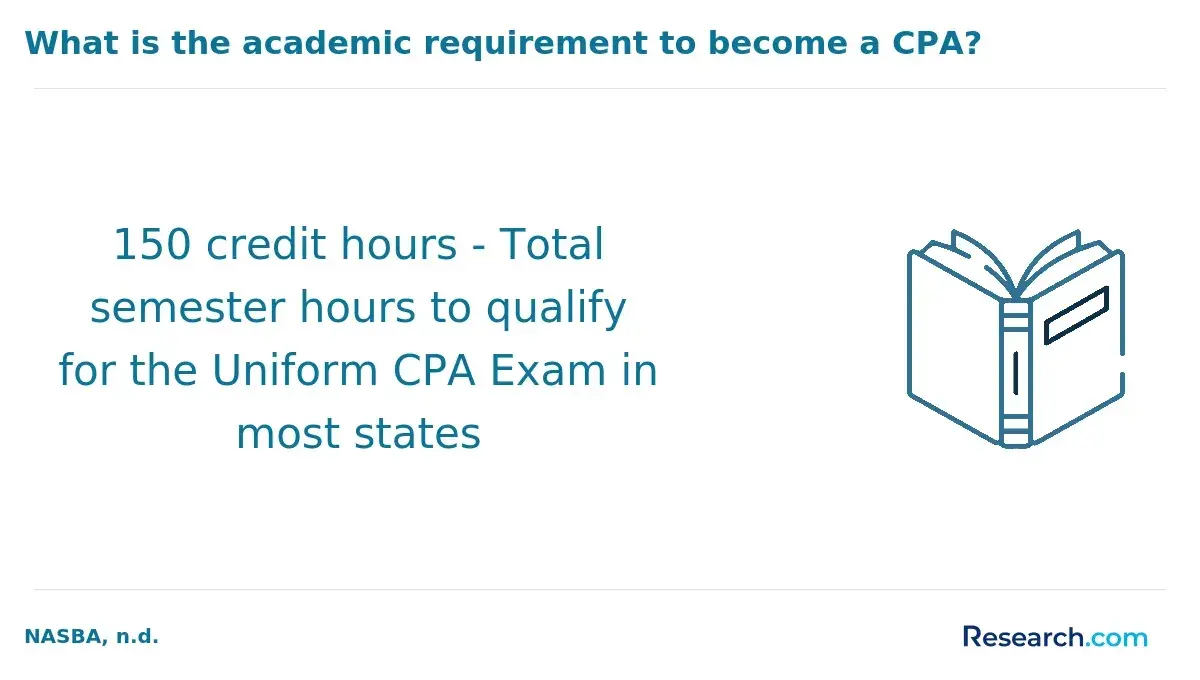
No, an online associate degree alone generally does not satisfy CPA licensure education requirements. Most state boards require a bachelor’s degree, specific accounting and business coursework, and credit hours beyond the associate level. Requirements vary by state, so students should verify rules with the relevant state board before planning their path.
An associate degree can still be a useful first step if the credits transfer into a bachelor’s program. Prospective CPAs should prioritize accredited programs with clear articulation agreements and should review detailed guidance on how to become a licensed CPA before choosing courses.
What challenges might online accounting students face?
Online accounting students often struggle with time management, limited face-to-face interaction, technology issues, and the need to learn quantitative material independently. Accounting courses also require precision. Small mistakes in formulas, transaction entries, or account classifications can change an entire answer.
Good programs reduce these risks through tutoring, instructor office hours, discussion forums, live review sessions, technical support, academic advising, and structured course calendars. Students who later want to broaden their financial skill set may compare additional options such as the cheapest online master's in finance, but the immediate priority should be completing the associate degree with strong fundamentals.
Common mistakes to avoid
| Mistake | Why it can hurt you | Better approach |
| Choosing a program without checking accreditation | Credits may not transfer and employers may question the credential | Verify institutional and programmatic accreditation before applying |
| Focusing only on tuition | Fees, books, software, and proctoring can raise the real cost | Compare total cost of attendance |
| Assuming online means easier | Accounting requires practice, accuracy, and deadlines | Schedule weekly study blocks and use tutoring early |
| Ignoring transfer policies | You may lose credits when moving into a bachelor’s program | Get transfer agreements in writing |
| Waiting too long to use career services | You may graduate without a resume, references, or job leads | Contact career support during the first term |
| Assuming salary outcomes are guaranteed | Pay depends on location, role, experience, industry, and credentials | Research local job postings and realistic entry-level wages |
Can combining accounting with complementary disciplines broaden career opportunities?
Yes. Accounting pairs well with fields that rely on budgeting, reporting, forecasting, compliance, and performance measurement. Students may strengthen their career options by adding coursework or credentials in business management, data analytics, finance, taxation, information systems, digital marketing, or industry-specific areas.
The right combination depends on your target role. Accounting plus data skills can support reporting and analytics work. Accounting plus management can help with operations or small business administration. Accounting plus a specialized sector may prepare students for niche financial roles. For example, students interested in sports organizations may compare options such as the cheapest sports management bachelor's degree online to understand how industry knowledge can pair with accounting skills.
What career services are available to support online associate degree in accounting students?
Career support can make a major difference for online students, especially those entering accounting for the first time. Before enrolling, confirm that online learners receive access to the same or comparable services as campus students.
- Resume and cover letter help. Advisors can help students present coursework, software skills, projects, certifications, and prior work experience in a way that fits accounting support roles.
- Job search support. Some schools provide job boards, employer connections, local business relationships, and hiring events for accounting, bookkeeping, payroll, and administrative finance roles.
- Internship guidance. Programs may help students find remote or local internships that provide experience with invoices, reconciliations, payroll records, and financial documents.
- Career advising. Advisors can help students decide whether to seek employment immediately, transfer into a bachelor’s degree, or pursue certifications.
- Networking opportunities. Online students may gain access to alumni groups, virtual events, employer panels, and professional associations.
- Interview preparation. Mock interviews and workshops can help students practice explaining accounting concepts, software experience, and workplace scenarios.
Industry certifications that complement an online associate degree in accounting
Certifications can help entry-level accounting candidates demonstrate job-ready skills, especially when they do not yet have years of experience. They should not replace an accredited degree, but they can strengthen a resume when aligned with your target role.
The Certified Bookkeeper (CB) credential from the American Institute of Professional Bookkeepers (AIPB) can be useful for students pursuing bookkeeping or accounting assistant roles. It signals knowledge of areas such as payroll, adjusting entries, and financial statement preparation.
QuickBooks Certified User certification can also help because many small businesses and accounting support teams use QuickBooks. Software-specific credentials may reduce employer training time and show that candidates can work with invoices, records, reports, and account data.
Students who want more focused preparation can compare the best bookkeeping courses, including options that emphasize tax preparation, payroll, and advanced bookkeeping practices.
What should you do after completing an online associate degree in accounting?
After graduation, your next move should depend on your career target. Some students apply for entry-level accounting support jobs right away. Others transfer into bachelor’s programs to pursue accountant, auditor, financial analyst, financial manager, or CPA-related pathways.
| Goal after graduation | Recommended next step | Why it helps |
| Start working quickly | Apply for bookkeeping, payroll, accounting assistant, or accounts payable/receivable roles | Builds experience and workplace references |
| Become an accountant or auditor | Transfer into a bachelor’s degree in accounting | Meets common education expectations for higher-level accounting roles |
| Pursue CPA licensure | Plan bachelor’s coursework and state-specific credit requirements early | CPA rules usually require education beyond the associate level |
| Specialize | Add certifications in bookkeeping, payroll, tax, software, or management accounting | Signals focused skill development |
| Advance academically | Consider an online masters degree in accounting after completing bachelor’s-level preparation | Can support advanced roles and specialized expertise |
Can an online associate degree in accounting be a pathway to becoming an actuary?
An online associate degree in accounting can introduce useful financial analysis, business, and data interpretation concepts, but it is not a direct actuarial qualification. Actuarial careers require deeper preparation in mathematics, probability, statistics, and professional examinations.
Students interested in shifting from accounting toward actuarial work should plan additional coursework and exam preparation. Reviewing the steps to become an actuary can help clarify the required credentials, technical skills, and timeline.
References
- American Institute of CPAs. (2025, February 5). Undergraduate accounting enrollment rose 12% in fall 2024. https://www.aicpa-cima.com/news/article/undergraduate-accounting-enrollment-rose-12-in-fall-2024
- National Association of State Boards of Accountancy. (n.d.). How to get licensed. Retrieved January 2026, from https://nasba.org/licensure/gettingacpalicense/howtogetlicensed/
- National Center for Education Statistics. (2025). Average undergraduate tuition and fees. https://nces.ed.gov/programs/digest/current_tables.asp
- National Center for Education Statistics. (2025). Postsecondary certificates and degrees conferred. https://nces.ed.gov/programs/coe/indicator/cts
- National Student Clearinghouse Research Center. (2025). Clearinghouse Enrollment Insights Series: Final Fall Enrollment Trends. https://nscresearchcenter.org/final-fall-enrollment-trends/
- Pioneer Wealth Management. (2025, December 7). Cost increases at private colleges outpaced public colleges in 2025–2026. https://www.pioneerwealth.com/cost-increases-at-private-colleges-outpaced-public-colleges-in-2025-2026/
- Save My Exams. (2026, January 6). Online learning statistics 2025: Insights from 5,000+ UK students. https://www.savemyexams.com/learning-hub/insights/online-learning-vs-classroom-statistics/
- U.S. Bureau of Labor Statistics. (2025, August 27). Accountants and auditors. Occupational Outlook Handbook. https://www.bls.gov/ooh/business-and-financial/accountants-and-auditors.htm
- U.S. Bureau of Labor Statistics. (2025, August 27). Bookkeeping, accounting, and auditing clerks. Occupational Outlook Handbook. https://www.bls.gov/ooh/office-and-administrative-support/bookkeeping-accounting-and-auditing-clerks.htm
- Zippia. (2025, January 8). Certified public accountant education requirements. https://www.zippia.com/certified-public-accountant-jobs/education/
Key Insights
- An online associate degree in accounting is a practical starting credential for bookkeeping, payroll, accounting assistant, tax support, and related entry-level roles.
- Accreditation is the first filter. It affects employer confidence, transfer credit, financial aid eligibility, and future bachelor’s or CPA pathways.
- The degree can be completed fully online at many schools, but students should confirm course format, technology requirements, tutoring access, and career services before enrolling.
- Cost should be judged by total price, not tuition alone. Include fees, software, textbooks, equipment, proctoring, and the value of accepted transfer credits.
- An associate degree alone is usually not enough for CPA licensure. Students with CPA goals should plan early for a bachelor’s degree and state-specific credit requirements.
- The best ROI comes from a program that is affordable, accredited, transfer-friendly, and connected to real accounting tools and practical experience.
- Students who want to advance faster can explore online accounting programs, accelerated pathways, certifications, or a related business management degree online depending on their long-term career goals.
Other Things You Should Know About Online Associate Degree in Accounting Programs
In 2027, schools like Southern New Hampshire University and American Public University have strong transfer agreements for their online associate degrees in accounting, ensuring a seamless pathway to a bachelor's program. It is advised to consult academic advisors for specific transfer policies.
When evaluating programs for reputation, check accreditation status from recognized bodies like the ACBSP or AACSB. Look for faculty qualifications, student support services, and high graduate employment rates in accounting roles. Verify transfer credit policies with prospective bachelor's programs.
In 2027, several online associate degree programs in accounting prioritize flexibility for students balancing other commitments. Institutions like Southern New Hampshire University and Liberty University offer customizable course schedules, allowing students to complete coursework at their own pace, making it easier to juggle education, work, and personal life.