2027 Best Online Accounting Degree Programs

Co-Founder and Chief Data Scientist
Choosing an online accounting degree is usually a practical career decision: you want a credential that can lead to accounting, auditing, tax, finance, or management roles without putting your work schedule or budget at risk. The challenge is that accounting programs vary widely in cost, accreditation, CPA preparation, course delivery, and career support. A program that looks convenient may not meet your licensure goals; a cheaper option may cost more if credits do not transfer or if it lacks the courses you need.
This guide explains what to expect from an online accounting degree, how online and campus programs compare, what costs and financial aid options to review, which schools are included in this ranking, and how to choose a program that fits your career plans. It is written for students considering a first accounting degree, working adults returning to school, transfer students, and future CPA candidates who need a clearer decision framework.
Quick answer: Is an online accounting degree worth it?
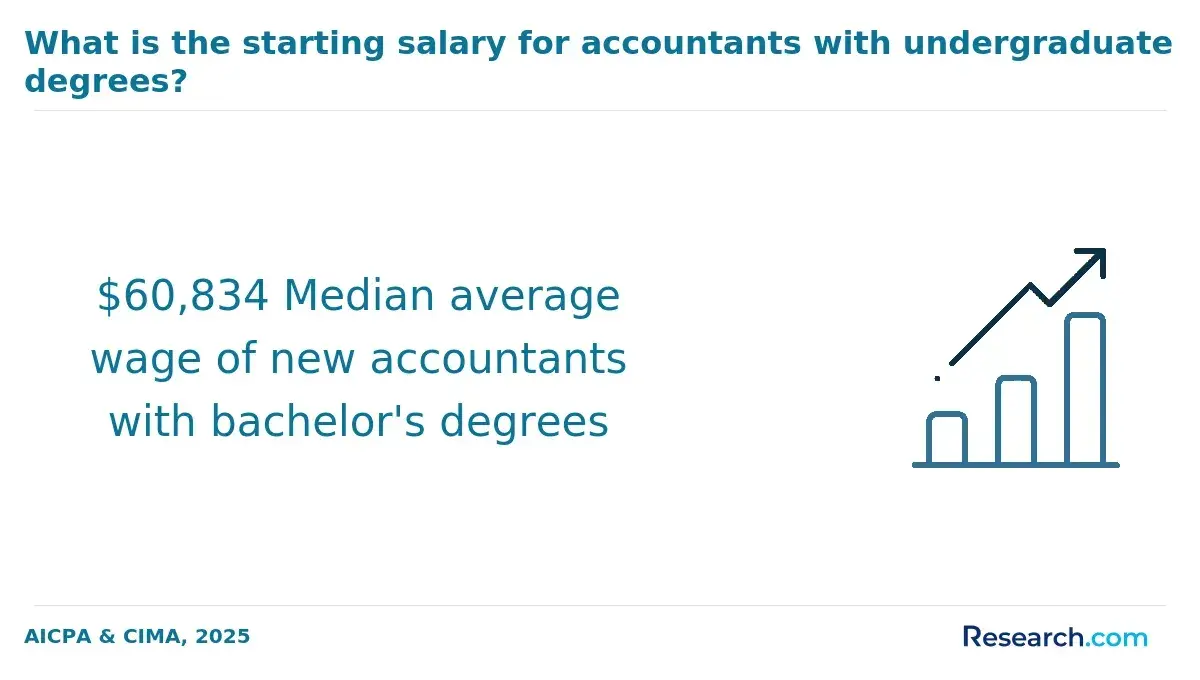
An online accounting degree can be worth it if the program is accredited, fits your schedule, supports your target credential, and keeps total costs manageable. Accounting graduates often move into accountant, auditor, analyst, tax, bookkeeping, budget, or financial management roles. Talent.com’s 2025 data reports an accountant’s average annual salary of $72,000, while Georgetown University reported average earnings of $39,600 two years after graduation for students with a bachelor’s degree in accounting credential.
- Best fit: students who want business, finance, tax, auditing, or CPA-oriented careers and need flexible coursework.
- Main caution: if you plan to become a CPA, confirm that the program helps you meet your state’s education requirements, including the additional credits many candidates need.
- Cost advantage: online programs may reduce commuting, relocation, housing, and some campus-based expenses, but tuition is not always lower than campus tuition.
What can I expect from an online accounting degree?
An online accounting degree teaches students how organizations record, analyze, verify, and report financial information. The curriculum usually blends accounting theory, business law, taxation, auditing, data tools, and managerial decision-making so graduates can support financial operations in businesses, nonprofits, government agencies, and public accounting firms.
- Students learn how financial information is used to manage cash flow, evaluate performance, prepare reports, support budgets, and keep organizations financially stable.
- The program may take students at least two years to complete, depending on transfer credits, course load, and whether the student enrolls full time or part time.
- Common courses include accounting principles, managerial accounting, taxation, auditing, and electives such as forensic accounting or advanced audit topics.
- Some online programs add applied learning through internships, simulations, capstone projects, case studies, or software-based assignments.
- Reported annual costs range from $29,000 to $46,000, though individual programs can vary by residency, credit load, fees, and institution type.
| Program feature | What it usually means for students | What to verify before enrolling |
| Online delivery | Courses are completed remotely through a learning platform, with lectures, assignments, discussions, exams, and group work managed online. | Whether classes are live, self-paced, or a mix of both. |
| Accounting core | Students study financial accounting, managerial accounting, auditing, taxation, accounting systems, and business fundamentals. | Whether the course sequence supports your target career or CPA preparation. |
| Practical experience | Programs may use projects, internships, virtual labs, accounting software, or case studies. | Whether internships are required, optional, or supported by career services. |
| CPA pathway | A bachelor’s degree can be an important step toward CPA eligibility, but it may not be enough by itself. | State CPA rules, required credits, accounting coursework, and exam preparation options. |
Where can I work with an online accounting degree?
An online accounting degree can prepare graduates for finance-related work in many settings because most organizations need accurate records, compliant reporting, budget control, and financial analysis. Common employers include:
- Accounting firms
- Corporations
- Non-profit organizations
- Government
Graduates may pursue roles such as accountant, auditor, financial manager, personal financial advisor, budget analyst, tax associate, staff accountant, or internal auditor. Completing online accounting coursework can also be an early step toward becoming a CPA, although CPA eligibility depends on state-specific education, exam, and experience rules.
How much can I make with an online accounting degree?
Salary depends on role, location, industry, experience, certification, and employer size. Talent.com’s 2025 data indicates an accountant’s average annual salary is $72,000. The U.S. Bureau of Labor Statistics reported that, in May 2024, the lowest 10% of accountants and auditors earned less than $59,170, while the highest 10% earned over $137,280 (U.S. Bureau of Labor Statistics, 2025).
The same BLS report identified these top-paying industries for accountants and auditors:
- Media Streaming Distribution Services, Social Networks, and Other Media Networks and Content Providers $144,780
- Drinking Places $134,270
- Computer and Peripheral Equipment Manufacturing $124,180
Use these figures as benchmarks, not guarantees. Entry-level pay may be lower, and higher earnings often require experience, CPA licensure, specialized skills, or work in higher-paying industries.
- Ranked online accounting programs for 2027
- Completion time for online accounting degrees
- Online accounting vs. campus accounting programs
- Typical online accounting degree costs
- Financial aid options for accounting students
- Admission requirements for online accounting programs
- Common online accounting courses and related admission planning
- Popular accounting concentrations
- How to select the right online accounting program
- Accounting certifications that may improve career options
- Why accreditation matters in online accounting education
- Employer recognition of online accounting degrees
- How online programs build hands-on accounting experience
- Career paths for online accounting graduates
- Job market outlook for accounting graduates
- Trends changing accounting education and work
- How accounting connects with broader business study
- Accelerated online accounting degree options
- Using accounting as a bridge to actuarial science
- Networking and mentorship in online accounting programs
- Career placement and internships in online accounting programs
- Improving ROI with affordable online accounting education
Best Online Accounting Programs for 2027
How this ranking was built
This ranking uses the latest available information from the IPEDS database, Peterson’s database, College Scorecard database, and the National Center for Education Statistics (NCES). Schools were reviewed using Research.com’s ranking methodology, which emphasizes data-informed evaluation. Rankings should be used as a starting point, not a final decision; students should still compare accreditation, cost, transfer policies, CPA alignment, online format, and career support.
| Rank | School and program | Key details |
| 1 | University of West Florida BS in Accounting | Program Length: 2-4 years; Cost Per Credit: $218.98 (in-state), $648.37 (out-of-state); Required Credits to Graduate: 120; Accreditation: Association to Advance Collegiate Schools of Business (AACSB) International. The program combines accounting coursework with management-focused study to help students understand how accounting supports business decisions and stakeholder communication. |
| 2 | Santa Fe College BS in Accounting | Program Length: 2-4 years; Cost Per Credit: $126.33 (in-state), $428.83 (out-of-state); Required Credits to Graduate: 120; Accreditation: Southern Association of Colleges and Schools Commission on Colleges. The curriculum covers practical business topics such as managerial accounting, auditing, and financial statement analysis. |
| 3 | University of Arkansas in Little Rock Bachelor of Business Administration in Accounting | Program Length: 2 years; Cost Per Credit: $280; Required Credits to Graduate: 120; Accreditation: AACSB. The BBA structure gives students an accounting foundation within a broader business education. |
| 4 | Ottawa University-Online BA in Accounting | Program Length: 2-5 years; Cost Per Credit: $499; Required Credits to Graduate: 120; Accreditation: Accreditation Council for Business Schools and Programs (ACBSP). The program emphasizes accounting knowledge, business operations, and communication with internal and external stakeholders. |
| 5 | Liberty University BS in Accounting and Data Analysis | Program Length: 3-4 years; Cost Per Credit: $390; Required Credits to Graduate: 120; Accreditation: ACBSP. The program pairs accounting fundamentals with data analysis and business tools. |
| 6 | University of Massachusetts Amherst Bachelor’s in Business Administration, Major in Accounting | Program Length: No information available; Cost Per Credit: starts at $691; Required Credits: 120; Accreditation: AACSB. The program is designed to prepare students for accounting, tax and consulting, and auditing responsibilities. |
| 7 | SUNY Polytechnic Institute MS in Accounting | Program Length: No information available; Cost Per Credit: starts at $295; Required Credits: 33; Accreditation: Board of Regents of the State of New York. Developed in 2000, the program supports full-time and part-time students preparing for professional accounting examinations related to CPA and CMA credentials. |
| 8 | Maryville University of Saint Louis MS in Accounting | Program Length: 10 months; Tracks/Concentrations: Business Analysis and Reporting or Information Systems and Controls; Cost Per Credit: No information available; Required Credits: No information available; Accreditation: Higher Learning Commission (HLC), ACBSP. The curriculum focuses on advanced accounting, finance, business knowledge, and CPA evolution CPA exam preparation. |
| 9 | Temple University Master of Accountancy | Program Length: 3-6 semesters; Tracks/Concentrations: No information available; Cost Per Credit: $583; Required Credits: 39; Accreditation: CCNE. Offered through the Fox School of Business, the MAcc is structured around CPA exam preparation and includes CPA exam review courses. |
| 10 | University of Pennsylvania Wharton School Ph.D. in Accounting | Program Length: at least 4 months; Cost: Accepted students automatically get a scholarship that covers tuition; Required Courses: 16 graduate-level courses; Accreditation: No information available. The program focuses on accounting research, research design, and completion of a dissertation or publishable research. A strong undergraduate foundation in mathematics and microeconomics is recommended. |
Important findings to keep in mind
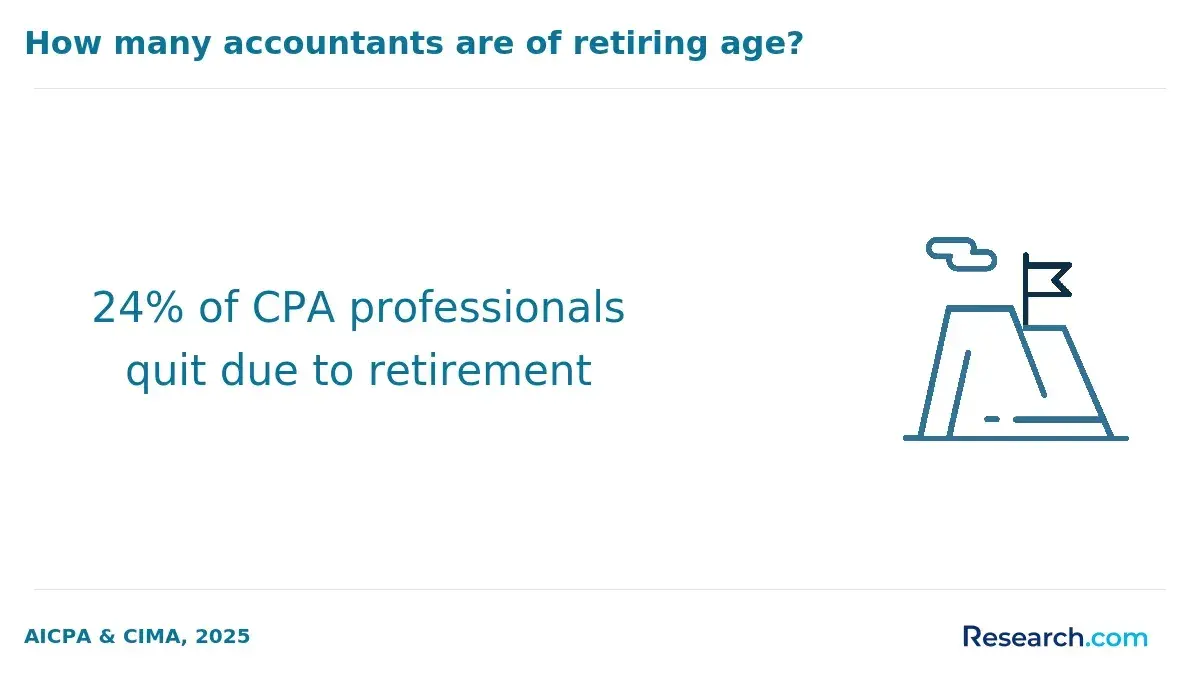
- Students must complete at least 30 extra credits to qualify as a CPA.
- International students are required to get at least a 61 TOEFL score.
- An online accounting degree can cost up to $49,000.
- Over 40% of students prefer live online classes.
- The staff accountant role has 58,402 job openings, making it the most in-demand accounting career in the source data used for this guide.
How long does it take to complete an online accounting program?
An online bachelor’s degree in accounting may take at least 2 years to complete, especially for students bringing transfer credits. Completion time depends on the number of credits accepted, how many courses you take each term, whether the program uses accelerated sessions, and whether you enroll full time or part time. Early coursework often overlaps with business and finance foundations found in a degree in finance.
CPA-focused students should plan beyond the bachelor’s degree. To qualify as a CPA, students must complete at least 30 additional credits. Many candidates meet that requirement through an online certificate program in accounting or an online master’s degree in accounting.
Certificate programs are usually shorter than full degree programs and may take a few months to 1 year. Most online master’s in accounting programs require about 18 to 24 months of full-time study.
| Path | Typical purpose | Time information from this guide |
| Online bachelor’s in accounting | Entry-level accounting, auditing, tax, business, or finance roles | At least 2 years, depending on credits and course load |
| Online accounting certificate | Additional accounting coursework, career change, or CPA credit planning | A few months to 1 year |
| Online master’s in accounting | Advanced accounting study and possible CPA credit completion | About 18 to 24 months of full-time study |
How does an online accounting program compare to an on-campus program?
Online accounting programs and campus programs can lead to the same degree title when offered by the same institution, but the learning experience can feel very different. Online study is often better for students who need schedule flexibility, while campus study may appeal to students who want in-person networking, structured class meetings, or direct access to campus resources.
| Factor | Online accounting program | On-campus accounting program |
| Cost structure | May reduce commuting, relocation, housing, parking, and some campus fees, though tuition can be similar to campus tuition. | May include more campus-based costs, especially for students who relocate or commute regularly. |
| Access | Students can attend from home and often continue working while enrolled. | Students attend classes in person and must live near campus or travel to class. |
| Schedule | May offer asynchronous courses, live virtual classes, or hybrid requirements. | Usually follows fixed class meeting times and in-person expectations. |
| Learning experience | Requires self-discipline, reliable technology, and comfort with digital communication. | Provides face-to-face interaction and easier access to some campus activities. |
| Credential | Can carry the same academic value when the institution is accredited and the program is rigorous. | Traditional format may be preferred by students who learn best in structured classroom settings. |
The online-versus-campus choice is not about which format is automatically better. It is about which format you can complete successfully. A student comparing accounting with another business-related option, such as a degree in economics, should evaluate format, curriculum, and career goals together.
What is the average cost of an online accounting program?
CollegeBoard reported that pursuing an online accounting degree costs between $29,000 and $46,000 per year, while on-campus tuition ranges from $27,000 to $55,000. Many colleges charge online students by the credit, but fee structures vary. Some programs also charge technology, online course, proctoring, graduation, or textbook-related costs.
Online study is not always cheaper than campus study. The difference between a public or private university, residency status, transfer credit acceptance, and required fees can matter more than delivery format alone.
| Online Learning | In-campus Learning | |
| Public In-state | $28,728 | $26,820 |
| Public Out-of-state | $37,368 | $43,280 |
| Private | $45,506 | $54,880 |
What are the financial aid options for students enrolling in an online accounting program?
Students pursuing an accountant degree should start with federal, state, institutional, employer, and professional-organization aid. Online students at accredited institutions may qualify for many of the same aid types as campus students, but eligibility depends on enrollment status, program approval, and school policies.
- American Institute of CPAs. The AICPA has supported accounting students for over 130 years and awards more than $1 million in scholarships, grants, and fellowships to hundreds of CPA candidates and doctoral students each year.
- National Society of Accountants. The Society offers scholarships to graduating high school students or enrolled students interested in cooperative accounting or finance careers. Applicants must have an immediate family member who belongs to the Society, be a US citizen, and attend a US institution.
- Institute of Management Accountants. The IMA’s CMA Scholarship Program helps students prepare for and take the Certified Management Accountant (CMA) exam for free. It also offers the IMA Century Scholarship Award, which recognizes up to 2 active IMA student members with an award of $7,500 and a CMA scholarship.
- National Association of Black Accountants Inc. NABA supports the development of more Black business leaders by offering 150 scholarships yearly, ranging from $1.000-$10.000. Applicants must be active NABA members, enrolled at an accredited 2-year college or 4-year university in the US, and able to demonstrate academic excellence.
Students with military service should also compare military friendly online colleges, because some schools provide tuition assistance, military discounts, transfer credit for training, or dedicated advising for service members and veterans.
What are the prerequisites for enrolling in an online accounting program?
Admission requirements vary by school and degree level, but online accounting programs commonly review academic readiness, prior coursework, English proficiency, and technology access. Before applying, confirm whether the school treats you as a first-year, transfer, second-degree, or graduate applicant.
- Test scores. Some colleges still request ACT or SAT scores, while others use test-optional or test-free admissions policies.
- Official transcripts. Incoming first-year students may need a minimum GPA of 2.0. Transfer students must submit transcripts from prior institutions so the school can evaluate credits and support a smooth transfer process; reviewing how course codes and transfer credit work can help students avoid losing credits unnecessarily.
- English proficiency. International students are typically required to demonstrate English proficiency and must obtain a TOEFL score of at least 61.
- Technology requirements. Students need reliable internet and a computer capable of running course platforms, proctoring tools, spreadsheets, accounting applications, and communication software. Many schools use systems similar to the popular learning management software used across online education, and accounting students may also encounter tax software in coursework or practice assignments.
What courses are typically in an online accounting program?
An online bachelor’s in accounting usually covers the technical and analytical skills needed to prepare, interpret, audit, and communicate financial information. Students should expect a combination of accounting, business, technology, and quantitative coursework.
- Accounting Principles. This course introduces core accounting concepts, the accounting cycle, financial statement preparation, and foundational accounting theory.
- Auditing. Students learn how auditors collect evidence, test records, identify reporting errors, evaluate risk, and recognize signs of fraud. The course may also address relevant auditing standards, laws, and regulations.
- Taxation. Tax courses explain how tax rules apply to individuals and businesses, including legal strategies for reducing tax exposure.
- Accounting Computer Applications. Students practice with well-known accounting software and learn about systems security, data controls, and technology-related risk management.
What types of specializations are available in online accounting programs?
Accounting students often begin with a shared business and accounting foundation before choosing electives or concentrations aligned with a career goal. The right specialization depends on whether you prefer reporting, analysis, investigation, operations, tax, or management decision support.
- Managerial Accounting. This area focuses on using accounting data to guide internal decisions. Managerial accountants help with budgeting, planning, performance analysis, and resource allocation.
- Forensic Accounting. This specialization prepares students to investigate financial irregularities and potential fraud. Forensic accountants may work with attorneys, law enforcement, insurers, or corporations.
- Financial Accounting. Financial accountants prepare reports for external users such as investors, creditors, regulators, and business partners. Their work helps explain an organization’s financial position, performance, and cash flows.
- Cost Accounting. Cost accountants examine production, labor, materials, and operating costs so organizations can make better pricing, process, and resource decisions.
| Specialization | Best for students interested in | Potential work focus |
| Managerial accounting | Planning, budgeting, and internal decision support | Performance reports, budgets, forecasts, and internal analysis |
| Forensic accounting | Fraud detection, investigations, and legal support | Financial evidence, dispute analysis, and fraud-related documentation |
| Financial accounting | External reporting and financial statements | Statement preparation, reporting accuracy, and compliance support |
| Cost accounting | Operations, production, and cost control | Cost analysis, pricing support, and process improvement |
How to choose the best online accounting program?
The best online accounting program is the one that matches your career target, meets quality standards, fits your schedule, and stays within a responsible budget. The same disciplined approach applies when comparing other online degrees, whether a business credential or a design online degree, but accounting students must pay extra attention to CPA eligibility, accreditation, and technical coursework.
- Confirm accreditation. Look for institutions recognized by the Council for Higher Education Accreditation (CHEA). Students considering distance-focused institutions can also review schools recognized by the Distance Education Accrediting Commission (DEAC).
- Check licensure and certification alignment. If your goal is CPA licensure, ask whether the curriculum helps meet your state’s accounting and credit-hour requirements. Some students compare accounting with finance before committing, especially when weighing the accounting vs finance degree decision.
- Compare course format. Online programs may use live classes, recorded lectures, or both. Understanding synchronous vs. asynchronous classes can help you choose a schedule you can realistically maintain.
- Review total cost, not just tuition. Include fees, books, software, transfer-credit limits, residency pricing, and the cost of extra credits if you need CPA eligibility.
- Evaluate career support. Look for internship help, employer connections, resume support, accounting software access, CPA exam advising, and alumni networking.
Questions to ask before enrolling
| Question | Why it matters |
| Is the institution accredited? | Accreditation affects credibility, transfer credit, financial aid eligibility, and employer confidence. |
| Does the program meet CPA education requirements in my state? | CPA rules vary, and a degree alone may not provide all required credits or courses. |
| How many of my credits will transfer? | Transfer credit can shorten completion time and reduce total cost. |
| Are courses live, self-paced, or mixed? | Format affects scheduling, participation, and how much independent learning is required. |
| What software and accounting tools will I use? | Employers value practical familiarity with accounting, spreadsheet, tax, and data tools. |
| What career services are available to online students? | Online learners should have access to internship support, job-search help, and employer events. |
What accounting certifications can enhance my career prospects?
Accounting certifications can signal specialized knowledge and professional commitment. For students new to the field, reviewing accounting certifications for beginners can clarify which credentials fit early-career roles and which require more education or experience. Commonly discussed credentials include the Certified Public Accountant (CPA) and Chartered Global Management Accountant (CGMA), but the best choice depends on whether you want public accounting, corporate accounting, tax, management accounting, audit, or advisory work.
Before choosing a certification, compare eligibility rules, exam structure, work-experience requirements, renewal obligations, and employer demand in your target field. Some online accounting programs include exam-prep resources or specialized coursework, but students should verify this directly with the school.
How does accreditation enhance online accounting program quality?
Accreditation gives students a way to judge whether a school or program has been reviewed for academic quality, faculty qualifications, curriculum standards, institutional stability, and student support. In accounting, accreditation can also matter because employers and licensing boards may look closely at where and how a candidate completed required coursework.
Accredited programs are more likely to support transfer credit, financial aid eligibility, graduate admission, and professional credibility. Students planning to continue into finance or management roles may also compare options such as the cheapest online masters in finance after completing accounting coursework.
Are online accounting degrees recognized by employers?
Employers can recognize online accounting degrees as legitimate when they come from accredited institutions with rigorous coursework. In most hiring decisions, the degree format matters less than the candidate’s accounting knowledge, technical skills, internship or work experience, communication ability, and readiness to use digital tools. Students exploring compensation and role options can review accounting careers to understand how responsibilities and earnings can differ by position.
To strengthen employer confidence, choose an accredited school, keep a portfolio of accounting projects when possible, learn widely used software, complete internships or applied assignments, and pursue certifications that align with your role.
How can online accounting programs deliver practical, hands-on experience?
Strong online accounting programs do more than assign readings and exams. They use case studies, simulations, spreadsheet modeling, virtual labs, tax or audit scenarios, accounting software, and capstone projects to help students practice the tasks accountants perform at work. Some programs also support internships or employer-sponsored projects that allow students to apply coursework in real organizations.
Students who want targeted skills in transaction recording, reconciliations, and financial reporting may also consider bookkeeping courses as a shorter or supplemental option. Hands-on practice is especially important for online learners because it helps translate remote coursework into job-ready evidence.
What career paths are available for graduates of online accounting programs?
Accounting graduates help individuals, businesses, nonprofits, and public agencies track money, prepare reports, evaluate performance, meet tax obligations, investigate irregularities, and plan financially. The degree can support multiple career directions.
- Academic or Researcher. Some accounting graduates continue into teaching, research, or doctoral study, contributing to accounting theory, education, and practice.
- Forensic Accountant. Forensic accountants examine financial records for evidence related to fraud, disputes, investigations, or legal proceedings.
- Financial Analyst. Financial analysts review financial data, trends, and market conditions to support investment, budgeting, and planning decisions.
- Corporate Accountant. Corporate accountants maintain records, prepare statements, support audits, assist with budgets, and provide financial insight within organizations.
If you are comparing accounting with broader business or corporate paths, adjacent degrees may also be worth reviewing. For example, students asking what can I do with a psychology degree may find human resources or organizational roles appealing, while online degrees in business administration may suit students who want a wider management-focused curriculum.
What is the job market for graduates of an online accounting program?
According to the BLS’ 2025 report, around 130,000 jobs for students with an accounting degree will be available each year between 2024 and 2034. Accountant and auditor careers are expected to grow by 5% during that period, which is faster than average (U.S. Bureau of Labor Statistics, 2025).
Demand is influenced by economic growth, tax and regulatory changes, business complexity, and globalization. When companies expand, merge, face new reporting standards, or need stronger internal controls, accounting professionals are needed to maintain accurate financial information and support compliance.
The chart below shows that staff accountant is the most in-demand career in the field based on the data used in this guide.
What emerging trends are shaping the future of accounting education and the profession?
Accounting education is changing because accounting work is changing. Automation, artificial intelligence, data analytics, cloud platforms, and digital reporting tools are reshaping routine tasks such as reconciliations, transaction classification, and report preparation. As a result, strong online accounting programs increasingly teach students how to interpret data, evaluate controls, use software, and explain financial findings clearly.
Specialization is also becoming more important. Traditional public accounting and corporate accounting remain central paths, but students may also see growing interest in forensic accounting, sustainability accounting, management accounting, and information-systems controls. These areas require accountants who can combine technical knowledge with judgment, communication, and problem-solving.
Accelerated formats are another option for students who want to finish sooner. A accelerated accounting degree may appeal to working adults, transfer students, or career changers who can handle a heavier pace. The trade-off is workload: shorter courses require steady weekly effort and strong time management.
How does an online accounting degree complement broader business studies?
Accounting gives business students a disciplined way to understand performance, risk, cash flow, taxes, budgets, and compliance. When paired with broader business study, accounting can support leadership roles in operations, finance, consulting, corporate management, and entrepreneurship. Students comparing management-oriented degrees can review which is better, business management or business administration to understand how accounting fits into wider business training.
Exploring accelerated online accounting degree options
Accelerated online accounting programs are built for students who want to move through coursework faster than a traditional semester schedule. They can be useful for motivated learners who already have credits, work experience, or strong study habits. However, accelerated does not mean easier. The same material is usually compressed into shorter terms.
Common features of accelerated accounting programs
- Condensed courses: Many accelerated programs use 5-8 week courses instead of standard 16-week terms.
- Flexible scheduling: Some programs are asynchronous, allowing students to complete weekly work around employment and family obligations.
- Faster career movement: Graduates may qualify sooner for roles such as staff accountant, financial analyst, or tax consultant than students in longer-format programs.
Students interested in a fast track accounting degree should confirm accreditation, credit load, weekly time expectations, and whether the accelerated format still supports CPA planning.
Can an online accounting degree serve as a pathway to actuarial science?
An online accounting degree can build useful quantitative, financial, and analytical skills for students who later consider actuarial science. However, actuarial work has its own exam pathway and often requires deeper preparation in probability, statistics, risk modeling, and mathematics. Students considering this transition should review resources explaining how long does it take to be an actuary so they understand the exam timeline and qualification process before assuming accounting coursework will be enough.
How can online accounting programs foster professional networking and mentorship?
Quality online programs create networking opportunities through virtual career fairs, alumni groups, discussion forums, employer webinars, student accounting associations, team projects, and mentoring programs. These connections can help students learn about public accounting, corporate finance, tax, audit, and government roles before applying for jobs.
Networking is also useful for students planning licensure. A mentor can help future CPA candidates understand education planning, exam timing, state rules, and early-career choices. Students can also review how to get a CPA for a clearer overview of the process.
How do online accounting programs facilitate career placement and internship opportunities?
Online students should receive career services that are comparable to those available to campus students. Useful support may include resume reviews, interview coaching, employer introductions, internship postings, virtual recruiting events, alumni panels, and guidance on accounting career paths. Ask whether services are available to fully online learners and whether internships can be completed near your location.
Students comparing cost and career support across business programs may also find it useful to review the cheapest online business degree options, especially if they are still deciding between accounting and a broader business major.
Maximizing ROI with affordable online accounting education
Return on investment depends on more than the school’s advertised tuition. Students should compare total cost, graduation requirements, transfer credits, financial aid, certification alignment, job placement support, and likely career path. A lower-cost program can be a strong choice if it is accredited and meets your goals; a cheap program that lacks needed coursework may cost more in the long run.
Graduate students looking for advanced accounting study at a lower price can compare the cheapest online masters in accounting. When evaluating affordability, ask whether the program supports CPA or CMA preparation, includes relevant technology training, and offers advising for working adults.
Common mistakes to avoid when choosing an online accounting degree
- Choosing a program without checking accreditation. Accreditation affects financial aid, transfer credit, employer recognition, and licensure planning.
- Looking only at tuition. Fees, books, software, exam proctoring, lost transfer credits, and extra CPA-related credits can change the real price.
- Assuming every accounting degree meets CPA rules. CPA requirements vary by state, and many students need credits beyond the bachelor’s degree.
- Ignoring course format. A self-paced program can be convenient, but it requires discipline; live classes offer structure but less scheduling freedom.
- Skipping career services questions. Internships, employer access, and resume support can affect how quickly you move from degree to job.
- Relying only on rankings. Rankings help narrow options, but the best program depends on your budget, state requirements, learning style, and career plan.
Key insights
- An online accounting degree can be a strong option for students who need flexibility and want access to accounting, auditing, tax, finance, or business roles.
- Accreditation, CPA alignment, transfer-credit policy, cost, and course format should carry more weight than brand recognition alone.
- Online programs are not automatically cheaper than campus programs, but they may reduce commuting, relocation, and some campus-related costs.
- CPA-focused students should plan early because they must complete at least 30 extra credits to qualify as a CPA.
- Talent.com’s 2025 data reports an accountant’s average annual salary of $72,000, while BLS data shows accountant and auditor earnings vary widely by experience and industry.
- The BLS’ 2025 report projects around 130,000 accounting-related job openings each year between 2024 and 2034, with accountant and auditor careers expected to grow by 5%.
- The best online accounting program is the one you can complete successfully while meeting your career, certification, and financial goals.
References
- AICPA. (2025). AICPA 2025 Trends Report. https://www.aicpa-cima.com/professional-insights/download/2025-trends-report
- AICPA & CIMA. (2025). MAP survey executive summary. https://www.aicpa-cima.com/resources/download/map-survey-executive-summary
- National Association of State Boards of Accountancy. (n.d.). How to get licensed. Retrieved January 2026, from https://nasba.org/licensure/gettingacpalicense/howtogetlicensed/
- National Student Clearinghouse Research Center. (2025). Clearinghouse Enrollment Insights Series: Final Fall Enrollment Trends. https://nscresearchcenter.org/final-fall-enrollment-trends/
- Sadovi, M. (2026, January 20). Accounting student enrollment rises 7.3%, outpacing rate across majors. CFO Dive. https://www.cfodive.com/news/accounting-student-enrollment-rises-73-outpacing-rate-across-majors/810040/
- Talent.com. (2025). Accountant salary in United States. https://www.talent.com/salary?job=accountant
- U.S. Bureau of Labor Statistics. (2025, August 27). Accountants and auditors. Occupational Outlook Handbook. https://www.bls.gov/ooh/business-and-financial/accountants-and-auditors.htm
Other Things You Should Know About Online Accounting Programs
Yes, many online accounting programs accept transfer credits into a master’s degree, but the receiving school usually limits how many. Most universities cap transfers at 6 to 12 semester hours, and the credits must come from regionally accredited institutions with comparable upper-division accounting content.
Accreditation for online accounting degree programs in 2027 typically requires approval from recognized bodies like the Association to Advance Collegiate Schools of Business or the Accreditation Council for Business Schools and Programs, ensuring the program meets high educational standards and is accepted by employers.