2027 How to Prepare for Graduate-Level Social Work Courses

Co-Founder and Chief Data Scientist
Graduate social work study is a major shift if your undergraduate degree was not in social work, psychology, sociology, or a related field. MSW courses ask you to combine theory, policy analysis, research, ethics, and supervised practice while preparing for a profession that often involves high-stakes decisions for individuals, families, and communities.
This guide explains what graduate-level social work courses include, what MSW programs commonly require, how to evaluate accreditation and fieldwork, and how to compare online, campus, full-time, part-time, and accelerated options. It is designed for prospective MSW students, career changers, and working professionals who want a realistic view of the academic, financial, licensing, and career decisions ahead.
Key Things You Should Know
- Graduate-level social work programs increasingly emphasize trauma-informed care and cultural competence, reflecting a 23% rise in related coursework since 2024.
- Effective preparation requires honing research skills; 78% of accredited programs now include extensive statistics and data analysis components.
- Time management and fieldwork readiness are critical, as practicum hours average 900 in 2026, demanding early familiarity with real-world client interactions.
What Are Graduate-Level Social Work Courses?
Graduate-level social work courses are advanced classes that prepare students to assess client needs, understand social systems, apply ethical standards, evaluate research, and intervene at individual, family, community, and policy levels. Unlike many undergraduate courses, MSW coursework is practice-oriented: students are expected to connect readings and theory to real client situations, agency operations, and legal or ethical responsibilities.
Most graduate social work programs include core study in human behavior, social welfare policy, research methods, ethics, diversity, and clinical or generalist practice. Students may then choose electives or concentrations in areas such as clinical social work, community organizing, health care, school social work, child welfare, substance use, administration, or policy advocacy.
Clinical tracks usually emphasize assessment, diagnosis, treatment planning, therapeutic interventions, crisis response, and documentation. Macro or community-focused tracks often emphasize organizational leadership, program evaluation, community development, grant writing, advocacy, and systems change.
Field education is one of the defining parts of graduate social work training. Students complete supervised internships that connect classroom learning with practice in hospitals, schools, nonprofits, government agencies, mental health programs, child welfare agencies, or community organizations. These placements help students build skills in client engagement, case assessment, ethical decision-making, cultural responsiveness, documentation, and interdisciplinary collaboration.
Prospective students should also plan carefully for cost. Average tuition and fees for graduate social work programs are approximately $11,118 for in-state students and $22,741 for out-of-state students, according to College Tuition Compare. Tuition is only one part of the budget; students should also account for books, fees, transportation, background checks, technology costs, and any unpaid or low-paid field placement requirements.
Before enrolling, compare program catalogs closely. Look at required courses, concentration options, field placement support, faculty expertise, online or evening availability, licensure alignment, and Council on Social Work Education (CSWE) accreditation. Students interested in long-term academic, research, or advanced leadership roles may also explore online social work PhD programs after completing graduate preparation.
What Prerequisites Are Needed for MSW Programs?
Most MSW programs require a bachelor's degree from an accredited institution, but many do not require that degree to be in social work. Students from fields such as education, public health, criminal justice, communications, business, humanities, or the natural sciences can often apply if they show academic readiness and a clear commitment to social work values.
Still, applicants without a social science background may need to strengthen their preparation. Commonly helpful coursework includes human behavior, psychology, sociology, statistics, research methods, social welfare policy, diversity studies, and ethics. Some schools list these as formal prerequisites, while others treat them as recommended preparation.
Applicants should be ready to submit official transcripts, a resume, recommendation letters, and a personal statement explaining why they are pursuing social work and how their background prepares them for graduate study. Relevant employment, internships, or volunteer experience in social services can make an application stronger, especially experience with children, older adults, people with disabilities, unhoused individuals, survivors of violence, people affected by substance abuse, or communities facing systemic barriers.
Advanced standing tracks are different from regular MSW tracks. These programs usually require a Bachelor of Social Work (BSW) degree or its equivalent and allow qualified students to bypass some foundational coursework. Non-BSW students typically enter a traditional MSW pathway, although some schools offer bridge or extended options to help students build foundational knowledge before advanced practice courses.
The GRE is less commonly required than it once was, but selective institutions may still request it. Always check each program's current admissions page rather than assuming test policies are the same across schools.
Financial preparation matters as much as academic preparation. Elite private social work programs can have debt-to-income ratios exceeding 4:1 despite average starting salaries near $55,000. Before applying, compare tuition, scholarships, assistantships, public university options, employer benefits, and part-time formats. Students looking for shorter pathways may also review 1 year MSW programs online no BSW, while confirming whether the timeline, workload, and eligibility rules fit their background.
How Do You Choose an Accredited Social Work Program?
The first filter should be accreditation. In the United States, students should prioritize programs accredited by the Council on Social Work Education (CSWE). CSWE accreditation signals that the curriculum, field education, assessment practices, and professional competencies meet recognized standards. It also affects licensure eligibility, employer recognition, and access to certain forms of financial aid.
A non-accredited program can create serious barriers. Graduates may discover too late that they do not meet state licensing rules, cannot sit for required exams, or are less competitive for jobs that require a CSWE-accredited degree. Before applying, verify accreditation directly through official program and accreditor sources.
After accreditation, evaluate fit. A strong program should offer required coursework in human behavior, policy, research methods, ethics, social justice, and practice with individuals, families, groups, organizations, and communities. It should also provide field placements that match your goals, whether those involve clinical mental health, school social work, child welfare, medical social work, aging services, community practice, or policy.
Flexibility also matters. Part-time, online, hybrid, evening, and weekend formats can make an MSW possible for working adults, caregivers, and students who cannot relocate. However, flexibility should not come at the expense of placement quality, faculty access, advising, or licensure alignment.
Use the following questions when comparing programs:
- Is the program CSWE-accredited?
- Does the curriculum support your intended specialization?
- How are field placements assigned, supervised, and evaluated?
- Does the program meet licensing expectations in the state where you plan to practice?
- What are the tuition, fees, scholarship options, assistantships, and fieldwork-related costs?
- Are faculty active in research, clinical practice, policy work, or community partnerships related to your interests?
- What graduation, employment, and licensure exam outcomes does the school publish?
Employment for social workers is projected to grow 6% between 2024 and 2034, faster than average growth. That outlook is useful, but it does not make every program equally valuable. The best choice is the accredited program that aligns with your state licensing path, career goals, financial limits, and learning format. Students who need a shorter timeline may compare accelerated master's of social work programs while reviewing workload and field placement expectations carefully.
A typical MSW curriculum combines classroom learning, skills practice, research literacy, policy analysis, ethics, and supervised field education. The goal is to prepare graduates to work competently with clients and communities while understanding the systems that shape access to care, safety, housing, education, health, and economic stability.
Foundation courses usually cover human behavior and the social environment, social welfare policy, research methods, social work ethics, diversity and oppression, generalist practice, and assessment. These courses help students understand how individual development is shaped by families, institutions, communities, culture, trauma, discrimination, and public policy.
Advanced coursework depends on concentration. Clinical students may study mental health assessment, diagnostic frameworks, evidence-informed interventions, trauma practice, family therapy, group work, substance use, crisis intervention, and clinical documentation. Students focused on macro practice may study leadership, program planning, policy analysis, advocacy, grant writing, nonprofit management, community organizing, and evaluation.
Most programs require practicum or fieldwork placements, typically requiring 900 to 1200 hours in settings such as hospitals, schools, community agencies, government offices, or behavioral health programs. Field education is not simply an internship added to coursework; it is a central part of professional preparation and often influences future employment options.
Ethics, diversity, and social justice are usually integrated throughout the curriculum rather than limited to a single course. Students learn to identify conflicts of interest, protect confidentiality, document appropriately, address bias, work across differences, and advocate for equitable services.
Many programs also introduce financing and health care systems so students can understand insurance, government programs, reimbursement, grants, agency budgets, and resource navigation. These topics are especially important for students entering hospitals, behavioral health agencies, nonprofits, and public service settings.
Salary expectations should be viewed realistically alongside the training required. The median annual wage for social workers is $61,330. Graduates pursuing specialized or clinical roles may earn higher wages, but outcomes vary by state, setting, licensure, experience, and employer. Students seeking accessible admission routes can compare the easiest MSW online program options while still verifying accreditation, field support, and licensure alignment.
MSW admission requirements typically include a bachelor's degree from an accredited institution, official transcripts, a resume, letters of recommendation, and a statement of purpose. Many programs look for a minimum GPA around 3.0, although policies vary. Some schools require or recommend prerequisite coursework in social sciences, statistics, psychology, sociology, or related areas.
The personal statement is often one of the most important parts of the application. It should explain why you want to become a social worker, what populations or issues you hope to serve, how your academic or professional background has prepared you, and why the specific program fits your goals. Strong essays are specific, reflective, and grounded in social work values rather than vague statements about wanting to help people.
Relevant experience can include internships, community service, AmeriCorps-style service, health care work, education roles, mental health support, crisis hotline work, case management, advocacy, shelter services, youth programs, elder services, or nonprofit employment. Admissions committees often value applicants who understand the realities of service work, including boundaries, documentation, teamwork, ethical judgment, and cultural humility.
Letters of recommendation should come from people who can speak directly to your readiness for graduate-level study and professional social work. Academic instructors, supervisors, field coordinators, volunteer managers, or social service professionals are often stronger choices than personal contacts.
GRE scores are often requested by some programs but may be waived based on professional experience or academic background. International students usually need to prove English proficiency through tests like TOEFL or IELTS. Depending on the program and field placement settings, students may also need background checks, immunization documentation, or additional screening.
Admissions committees also consider fit with available specializations, such as clinical social work, policy, administration, school social work, or community practice. Apply early enough to secure transcripts, recommendations, test documentation if needed, financial aid materials, and field placement requirements.
Support systems can influence completion. For instance, at the University of California, Berkeley, 92% of Master of Social Welfare students complete their degree within two years, and 98% within three, illustrating how program structure and student readiness can contribute to persistence.
Most traditional MSW programs take two years of full-time study. Part-time formats commonly take three or more years, which may be more realistic for students who work, care for family members, or need a lighter course load. Accelerated tracks can allow completion in as little as one year, but they are usually intensive and may require prior social work preparation or a closely related background.
Program length depends on more than classroom credits. Field education can shape the schedule significantly because students must complete supervised hours during agency availability, which may not always align with evenings or weekends. Working students should ask whether the school offers employment-based placements, evening placements, or flexible practicum options.
Tuition varies widely by school type, residency status, and format. Annual tuition typically ranges between $10,000 and $40,000. Public universities often charge in-state students $10,000 to $20,000 per year, while private schools may exceed $30,000. Additional expenses can include university fees, books, software, transportation, parking, professional liability insurance, background checks, and costs connected to field placement.
Online programs may reduce commuting or relocation costs, but they are not automatically cheaper. Some charge technology fees or use the same tuition rate as campus programs. Campus programs may provide stronger in-person networking and local agency connections, but students should include housing, transportation, and lost work hours in the real cost calculation.
Financial aid, scholarships, assistantships, stipends, loan repayment programs, and employer tuition reimbursement can reduce out-of-pocket cost. Part-time study can make payments more manageable but may increase the total time before graduation and licensure progress. Students should compare total program cost, not just per-credit tuition.
Campus culture may also matter for some students. For example, at the University of Texas at Arlington School of Social Work, 88.71% of students identify as female and 11.29% as male, reflecting broader gender patterns in the field.
The best timeline is the one you can complete without undermining your finances, health, employment, or field placement performance. A faster program is not always better if it creates an unsustainable workload.
Online and campus MSW programs can both prepare students for social work careers when they are properly accredited and aligned with licensing rules. The main differences are format, scheduling, campus access, peer interaction, and how field education is coordinated.
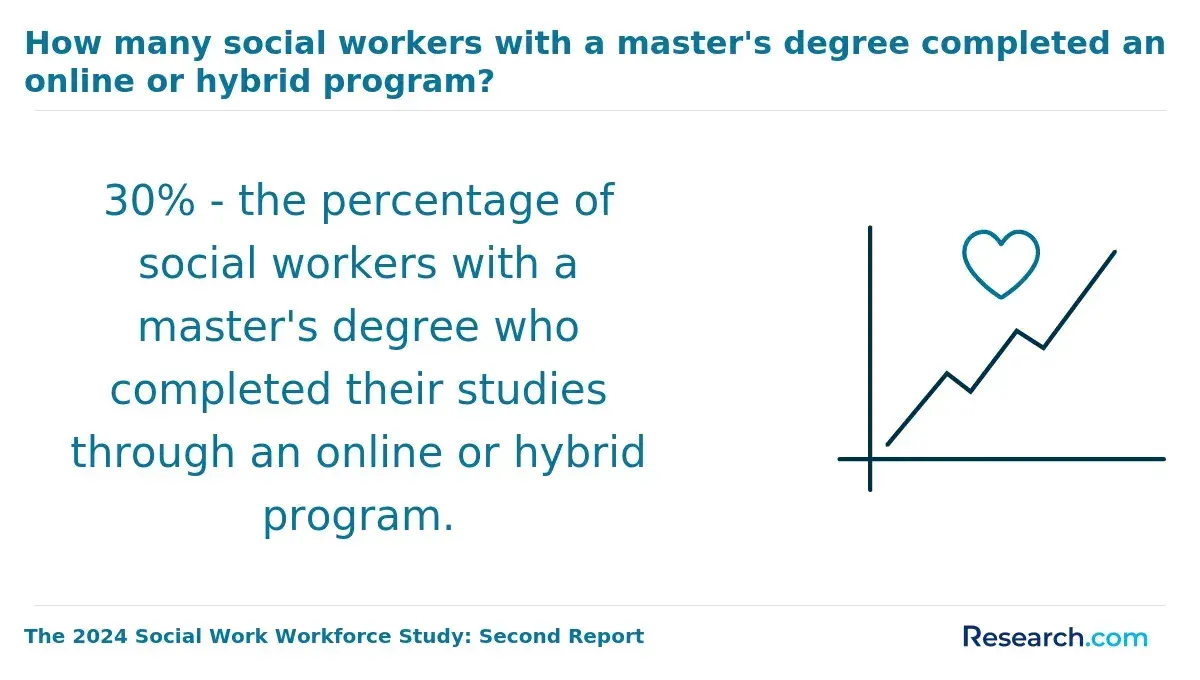
Online MSW programs often work well for students who cannot relocate, need schedule flexibility, work full time, or live far from a university. Courses may be asynchronous, synchronous, or a mix of both. Asynchronous courses allow students to review lectures and complete assignments on a weekly schedule, while synchronous sessions require live attendance. Even in online programs, fieldwork is usually completed in person through approved agencies near the student when possible.
Campus MSW programs provide face-to-face access to faculty, classmates, libraries, advising offices, student organizations, and local agency networks. They may be a better fit for students who learn best through in-person discussion, want stronger campus identity, or need structured weekly routines.
Neither format is automatically superior. The better choice depends on how the program handles field placement, advising, faculty access, career support, and licensure preparation. Students comparing options should ask how quickly faculty respond, how field sites are approved, whether placements are guaranteed or student-arranged, and whether online students receive the same career services as campus students.
Licensure rules are especially important. Some states may have specific expectations for clinical hours, supervision, exams, or degree eligibility. Students should check their state's licensing board before enrolling, particularly if they plan to attend an online program based in another state. Exam pass rates vary from 60% to 80%, per the National Association of Social Workers.
Cost comparisons should include more than tuition. Online students may pay technology fees and may need reliable equipment and internet access. Campus students may pay for commuting, parking, housing, or relocation. In both formats, accreditation by the Council on Social Work Education is vital for licensure eligibility.
An MSW can lead to clinical, direct practice, administrative, community, policy, and research-oriented roles. The right path depends on specialization, field placements, licensure goals, state requirements, and the populations or systems a graduate wants to serve.
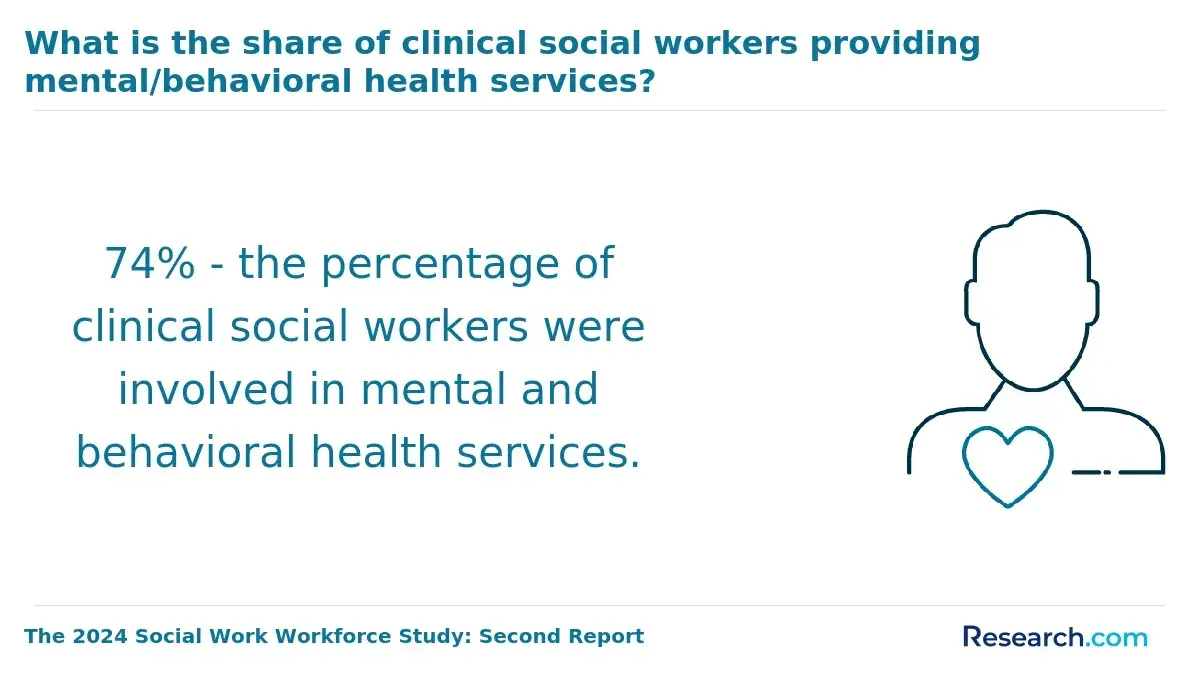
Clinical social work is one common route. Clinical social workers assess client needs, provide counseling or psychotherapy where permitted, develop treatment plans, coordinate care, document services, and collaborate with medical, behavioral health, school, or community teams. Licensure as a clinical social worker (LCSW) often requires supervised post-MSW experience and passing a state licensing exam.
MSW graduates also work in child welfare, school social work, health care, hospice, aging services, substance abuse treatment, domestic violence programs, housing services, crisis response, veterans services, correctional settings, and community mental health. These roles often combine advocacy, case management, resource navigation, risk assessment, family support, and interdisciplinary coordination.
Macro-focused graduates may become program managers, nonprofit administrators, policy analysts, community organizers, grant writers, legislative advocates, or evaluation specialists. These roles focus less on individual therapy and more on systems, programs, funding, organizational strategy, and policy change.
Field placements are essential, typically requiring 900 to 1,200 hours of supervised work, depending on accreditation standards and state regulations. Students should treat field placement selection as an early career decision, not only as a graduation requirement. A strong placement can lead to references, specialized skills, licensure supervision options, and job opportunities.
Practical advice for MSW students and graduates includes:
- Choose a specialization early enough to align electives and field placements with your goals.
- Confirm the licensure steps required in the state where you plan to work.
- Build relationships with field supervisors, faculty, alumni, and professional associations.
- Track supervised hours, training certificates, and field evaluations carefully.
- Use career services for resumes, cover letters, mock interviews, and agency-specific job searches.
- Prepare for licensing exams early so you do not delay entry into clinical or advanced practice roles.
What Licensing Is Required for Social Work Practice?
Social work licensing in the United States is regulated by states, so requirements vary. In general, students who want licensed practice should complete a Master of Social Work (MSW) from a program accredited by the Council on Social Work Education (CSWE), meet supervised experience requirements where applicable, and pass the appropriate Association of Social Work Boards (ASWB) licensing exam for their level of practice.
Many states use credentials such as Licensed Master Social Worker (LMSW) and Licensed Clinical Social Worker (LCSW), although exact titles differ. An LMSW or equivalent credential often applies to master-level practice under defined conditions. An LCSW or equivalent credential usually permits independent clinical practice after additional supervised post-MSW experience and successful completion of the clinical exam.
Typically, earning LCSW status involves two to three years of supervised clinical experience following the MSW before taking the clinical exam. For example, New York mandates at least 3,000 hours of supervised experience for LCSW licensure. Because rules differ by state, students should check the licensing board in the state where they plan to practice before choosing a program, field placement, or post-graduate job.
Licensure affects what services a social worker may provide, whether they can practice independently, whether they can diagnose or treat mental health conditions, and whether services may qualify for insurance reimbursement. Practicing outside the scope of a license can create legal, ethical, and employment consequences.
Continuing education, renewal cycles, supervision documentation, background checks, and reciprocity rules also vary. Students who may relocate should ask whether their degree, exam, and supervised hours will transfer easily to another state.
Employers increasingly prioritize licensed social workers, especially in healthcare, mental health, schools, child welfare, and community agencies. At Stony Brook University, 87% of MSW graduates find employment in New York within two years, reflecting strong demand for prepared professionals. The best approach is to plan licensure from the start of the MSW, not after graduation.
Other Things You Should Know About Social Work
Graduate-level social work courses demand strong critical thinking and communication skills. Students must be able to analyze complex social issues, practice ethical decision-making, and effectively engage with diverse populations. Time management and self-reflection are also crucial for balancing coursework and field placements.
In 2027, fieldwork remains crucial in graduate social work studies. It provides practical experience, enhances learning by applying theoretical concepts to real-world situations, helps students build essential skills, and prepares them for professional practice. Programs often integrate field placements with academic coursework to ensure comprehensive training.
Most online graduate social work courses require a laptop or desktop computer, a reliable broadband connection, a webcam, and a microphone for live seminars and field-practice meetings. Many programs also use learning systems such as Canvas or Blackboard, and some require file uploads in PDF format.
Yes, individuals with undergraduate degrees in other disciplines can succeed in graduate social work programs. Many MSW programs offer foundational courses to cover core social work concepts. Success depends on a willingness to learn and adapt to the profession's values and methods.
- Accreditation and/or licensing requirements | SWTP https://socialworktestprep.com/blog/2024/october/25/accreditation-and-or-licensing-requirements/
- Master of Social Work - Wikipedia https://en.wikipedia.org/wiki/Master_of_Social_Work
- 5 Things Every Social Work Graduate Should Know https://therapistdevelopmentcenter.com/blog/5-things-every-social-work-graduate-should-know
- What Is an MSW Degree? - Increasing Your Impact as a Social Worker https://www.umassglobal.edu/blog-news/msw-degree-increasing-your-impact-a-social-worker
- How Long is a Master of Social Work Program? Length of MSW Programs https://www.masterofsocialwork.com/faqs/length-of-msw-programs
- Admission Requirements and Available Intakes https://www.uwindsor.ca/msw/401/admission-requirements
- Best Affordable Master's Degree In Social Work https://www.psychology.org/social-work/best-affordable-masters-programs/
- Support for social workers https://support-for-social-workers.education.gov.uk/become-a-social-worker/postgraduate-university-qualification-course-in-social-work
- Social Work - MSW https://www.sacredheart.edu/majors--programs/social-work---msw/
- Social Work Degrees https://socialworklicensemap.com/social-work-degrees/