2027 Social Work vs School Counseling: Which Degree Fits Your Goals?

Co-Founder and Chief Data Scientist
If you want a helping career in schools, families, mental health, or community services, the choice between social work and school counseling is not just a degree decision. It determines the populations you serve, the license you pursue, the settings where you can work, and how much flexibility you will have if your career goals change later.
Social work is usually the broader path. It can lead to roles in schools, hospitals, child welfare, mental health agencies, community organizations, and clinical practice. School counseling is more specialized. It prepares professionals to support students’ academic progress, career planning, social-emotional development, and school-based mental health needs.
This guide compares social work and school counseling by degree requirements, licensing, curriculum, admissions, program length, cost, careers, salary, and job outlook. Use it to decide which path fits your preferred work environment, level of clinical responsibility, and long-term career plans.
Key Things You Should Know
- Social work degrees focus on broader community and individual welfare, while school counseling specializes in supporting students' academic and emotional development within educational settings.
- Employment growth for social workers is projected at 12% through 2031, higher than the 10% growth expected for school counselors, reflecting diverse job opportunities in social work.
- Licensing requirements vary: social workers need state licensure often involving an LMSW or LCSW, whereas school counselors require certification specific to educational institutions, impacting career pathways.
What is the difference between social work and school counseling?
The main difference between social work and school counseling is scope. Social workers address personal, family, community, and systemic barriers that affect well-being. School counselors focus on helping students succeed within the school environment through academic guidance, career planning, social-emotional support, and short-term counseling.
A social worker may help a student’s family access housing support, coordinate with child welfare agencies, respond to trauma, connect a client with healthcare, or provide therapy if properly licensed. A school counselor may help students choose courses, prepare for college or careers, manage peer conflict, cope with stress, or navigate academic and behavioral concerns inside the school system.
Social work is broader and more systems-focused
Social work training emphasizes how poverty, family instability, abuse, disability, discrimination, healthcare access, and public policy affect individuals and communities. Social workers often coordinate services across agencies and advocate for clients who face barriers beyond the classroom.
School counseling is more school-centered
School counseling training is built around K-12 student development. School counselors work closely with teachers, administrators, families, and students to support academic achievement, personal growth, and postsecondary planning.
- Choose social work if you want broader career mobility across healthcare, mental health, child welfare, nonprofit, government, and school settings.
- Choose school counseling if you want to work primarily in K-12 schools and focus on student academic, emotional, and career development.
- Consider both carefully if your goal is school-based mental health work, because both professions can serve students but through different roles and licenses.
The distinction matters as demand for student support grows. Amid increasing demand for student mental health services-58% of public schools report rising requests-school counselors provide direct school-based assistance, while social workers often address the underlying family, community, and resource issues affecting students. If you want advanced leadership, teaching, research, or policy roles in social work, an online doctorate social work program may expand your options after graduate preparation.
What degrees are required for social work vs school counseling careers?
Social work and school counseling require different academic pathways. Social work offers an entry point at the bachelor’s level, while school counseling typically requires a master’s degree for professional practice in K-12 schools.
Degrees for social work
A Bachelor of Social Work (BSW) can qualify graduates for entry-level social service roles such as case aide, community outreach worker, behavioral health support specialist, or child and family services worker. However, clinical, supervisory, and many school-based social work roles usually require a Master of Social Work (MSW).
The MSW is the key degree for advanced practice. It prepares students for clinical assessment, intervention planning, policy practice, field supervision, and specialized work with populations such as children, families, older adults, patients, or people with mental health and substance use needs. The MSW is also necessary for licensure as a clinical social worker, enabling professionals to diagnose and treat mental health issues where state law allows.
Degrees for school counseling
School counselors usually need a master’s degree in school counseling, counseling, education, psychology, or a closely related field with a school counseling specialization. Programs commonly include coursework in child and adolescent development, counseling methods, group counseling, assessment, career development, ethics, and the structure of the education system.
A Master of Education (M.Ed.) with an emphasis on school counseling can also lead to licensure eligibility when it meets state requirements. Because school counselor certification is controlled by state education agencies, students should verify that any program they choose is approved for the state where they intend to work.
How the degree decision affects your career
- BSW: Good for entry-level human services roles, but limited for independent or clinical practice.
- MSW: Best for advanced social work, school social work, clinical practice, and broader career flexibility.
- Master’s in school counseling: Best for those committed to K-12 school counseling roles.
Licensing also separates the two fields. Social workers pursue credentials such as LCSW, while school counselors receive state certification or may pursue LPC status depending on state rules and career goals. Both routes require supervised practice, but social work leans more toward clinical, case management, and systems intervention, while school counseling centers on student development and academic support.
Projected job growth for school counselors is 10% from 2021 to 2031, faster than the average across occupations. Students comparing graduate costs and access may want to review options such as affordable online MSW programs when evaluating the social work pathway.
What are the licensing requirements for social workers vs school counselors?
Licensing requirements differ because social workers are regulated primarily through state social work boards, while school counselors are usually certified or licensed through state education agencies. Before enrolling, confirm that the program meets the requirements of the state where you plan to work.
Social work licensing
Social workers generally need a degree from a program accredited by the Council on Social Work Education (CSWE). Entry-level licensure may be available with a BSW in some states, but clinical practice usually requires an MSW, a licensing exam, and supervised post-graduate experience.
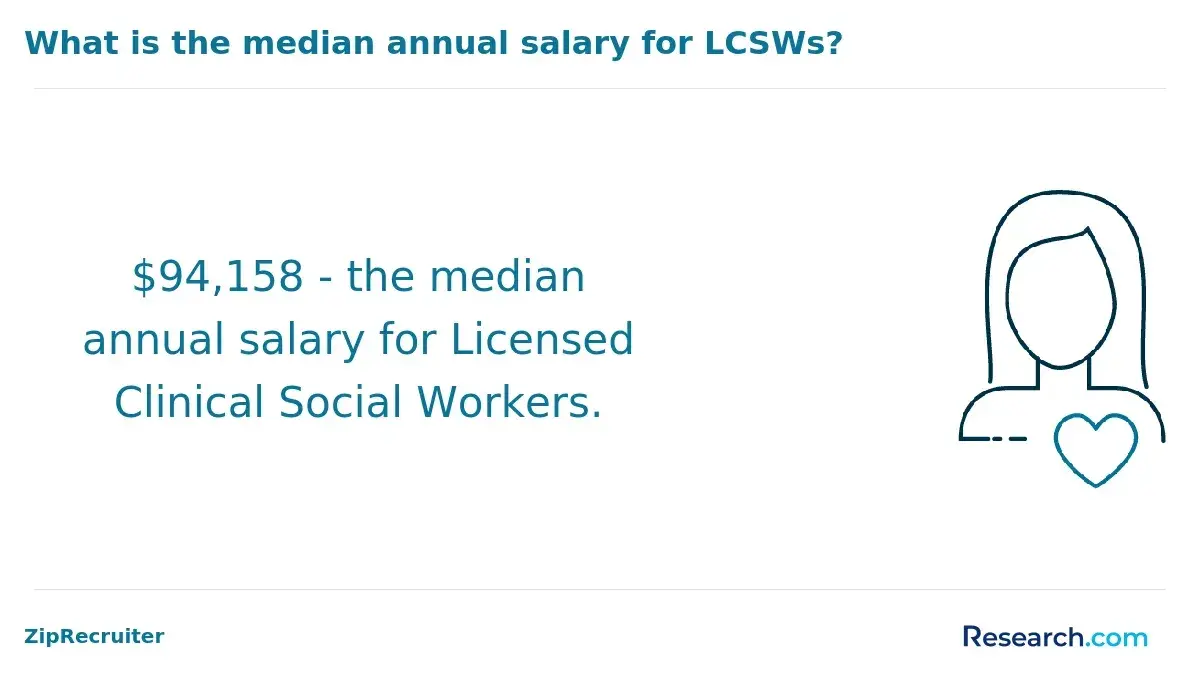
Candidates commonly take an Association of Social Work Boards (ASWB) exam. Clinical social workers often need the Licensed Clinical Social Worker (LCSW) credential, which involves graduate education and 2-3 years of supervised clinical experience. The LCSW is especially important for professionals who want to provide therapy, diagnose mental health conditions, bill insurance, or practice independently where permitted.
School counselor licensing or certification
School counselors must meet standards set by their state’s department of education. Requirements typically include a master’s degree in school counseling or a related field from an approved program, supervised internship or practicum experience in a school, and a state-specific or Praxis exam.
Maintaining certification usually involves continuing education credits every few years. Some states also offer provisional, emergency, or reciprocity pathways, but these should not be assumed. A credential that qualifies you in one state may not automatically qualify you in another.
Common licensing mistakes to avoid
- Enrolling in a program before confirming state approval for licensure or certification.
- Assuming an online program automatically meets internship rules in your local school district or state.
- Confusing school counselor certification with LPC or clinical social work licensure.
- Underestimating the supervised experience required after graduation for clinical social work.
The difference between social work and school counselor licensure also affects compensation and job mobility. For example, North Carolina school counselors earn an average of $45,790 annually, which is below the national average of $48,190 (Public Schools First NC, Facts on Helping Professionals). Students who already meet prerequisites and want a faster graduate route may compare options such as 1 year MSW programs.
Admission requirements depend on degree level, program selectivity, accreditation standards, and state licensure rules. In general, social work programs look for evidence of commitment to human services and ethical practice, while school counseling programs look for readiness to support children and adolescents in educational settings.
Bachelor’s in social work admissions
Applicants to a BSW program typically need a high school diploma or equivalent. Programs often expect a minimum GPA of 2.5 to 3.0 and may request standardized test scores depending on institutional policy. Helpful preparation includes coursework or experience in psychology, sociology, human services, education, or community service.
Some BSW programs admit students to the university first and then require a separate application to the social work major after foundational coursework. Volunteer work, service learning, or internship experience can strengthen an application because social work requires maturity, reliability, communication skills, and comfort working with vulnerable populations.
Master’s in social work admissions
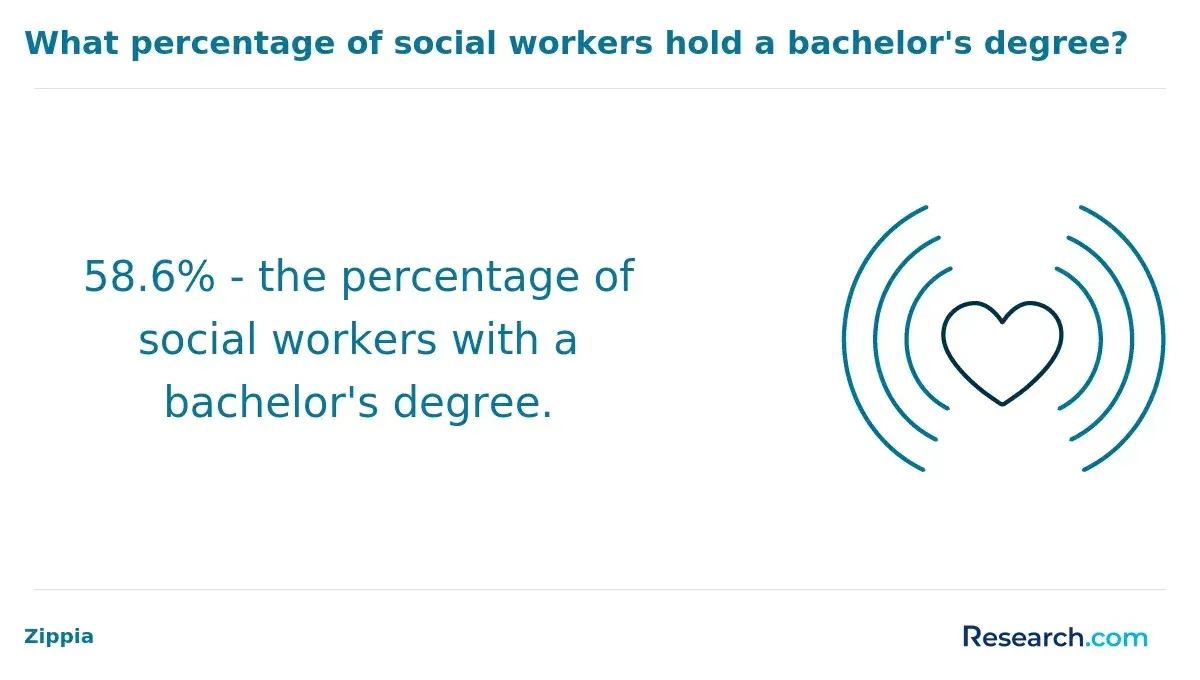
MSW programs usually require a bachelor’s degree, preferably in social work or a related discipline, with a GPA around 3.0. Applicants commonly submit letters of recommendation, a statement of purpose, transcripts, and evidence of relevant work, volunteer, or field experience. Interviews and background checks are also common because students will complete supervised field placements with clients and agencies.
Applicants with a BSW may qualify for accelerated or advanced standing options, depending on the program. Applicants from other majors can still be admitted but may need the full MSW curriculum.
School counseling master’s admissions
School counseling master’s programs usually accept applicants from many undergraduate majors, although education, psychology, sociology, child development, or human services backgrounds can be helpful. Most programs require a GPA of 3.0 or higher, GRE scores if required by the institution, personal statements, and letters of recommendation.
Experience with children or adolescents is valuable. Tutoring, mentoring, classroom support, youth programming, residential life, coaching, or counseling-related volunteer work can show that an applicant understands school environments and student needs. Some programs may also require state-specific coursework or prerequisites tied to certification.
How to strengthen your application
- Explain clearly why you want social work or school counseling, not just a general helping career.
- Connect your experience to the populations you want to serve.
- Show readiness for supervised fieldwork, ethical decision-making, and emotionally demanding situations.
- Confirm that the program supports licensure or certification in your state before applying.
Demand for school counselors remains high, particularly in majority-minority schools where counselors serve approximately 390 students each, compared to 370 in predominately White schools, according to the NCES Mental Health Staff in Public Schools report.
What is the job outlook for social work and school counseling fields?
Both fields have a positive outlook, but the reasons differ. Social work growth is driven by demand for mental health services, healthcare support, child welfare, aging services, and community-based care. School counseling growth is tied to student mental health needs, academic recovery, career readiness, and the demand for more comprehensive student support in K-12 schools.
Social work job outlook
Employment for social workers is expected to grow by 13% from 2024 to 2034, outpacing the average for all occupations. Social workers can pursue roles in healthcare settings, government agencies, schools, nonprofit organizations, behavioral health providers, and community programs. This range of settings gives the field strong flexibility, especially for professionals with an MSW and clinical licensure.
Students who want the strongest long-term mobility may consider specializations in clinical social work, healthcare social work, mental health, child and family services, school social work, or community program leadership.
School counseling job outlook
Jobs for school counselors are projected to increase by about 10% in the same period. Demand is supported by growing attention to student mental health, academic planning, college and career readiness, and crisis prevention in schools.
However, workload remains a serious factor. The student-to-mental-health-staff ratio averages 260 to 1, above the recommended 250 to 1, creating both employment opportunities and heavier demands for professionals in this field. School counselors should build strong skills in crisis intervention, academic advising, group support, family communication, and referral coordination.
Which field offers better long-term opportunity?
Social work usually offers broader employment flexibility because the credential can apply across multiple sectors. School counseling offers a clearer pathway for those who specifically want to work in K-12 education. Geographic location also matters: urban areas may offer more varied roles but more competition, while rural regions may have fewer openings yet greater unmet need.
The best choice depends on your preferred setting. Choose social work if you want career mobility across systems and populations. Choose school counseling if your goal is to work directly in schools helping students navigate academic, emotional, and future-planning challenges.
Other Things You Should Know About Social Work
Social work emphasizes a strong commitment to client dignity, confidentiality, and social justice. Practitioners must navigate complex ethical dilemmas involving client autonomy, cultural competence, and advocacy for vulnerable populations. The National Association of Social Workers (NASW) Code of Ethics provides detailed guidance on maintaining professional integrity and addressing systemic inequalities.
Most social work graduates must pass the ASWB exam for licensure, with the level depending on the degree and state board. Licensed clinical social workers usually need an MSW plus supervised practice, while school counselors typically must meet state certification rules instead of ASWB testing.
Field experience is a critical component of social work education, usually requiring hundreds of hours of supervised practice in real-world settings. This hands-on training allows students to apply theoretical knowledge, develop professional skills, and gain exposure to diverse client populations. It also prepares graduates to meet licensing board requirements and succeed in their careers.
Yes, social work graduates can work beyond traditional environments like hospitals and schools. Opportunities exist in community organizations, policy advocacy groups, corporate social responsibility roles, and research institutions. The versatility of the degree supports roles in areas such as program development, administration, and public health.
- Social Work Master's Degree Prerequisites https://www.psychology.org/social-work/masters/
- What Are the Licensed Social Worker Requirements? https://www.tuw.edu/school-news/licensed-social-worker-requirements/
- How Long Does It Take to Become a Licensed Counselor? https://onlinecounselingprograms.com/become-a-counselor/how-long-does-it-take/
- Integrating Services for Safe and Successful Schools https://www.schoolcounselor.org/newsletters/november-2020/integrating-services-for-safe-and-successful-schoo
- High-demand social work roles in 2026: trends and opportunities https://socialwork.pacific.edu/blog/high-demand-social-work-roles-2026-trends-and-opportunities
- LMSW vs. LCSW: What’s the difference? https://socialworklicensemap.com/become-a-social-worker/lmsw-vs-lcsw/
- Master of Social Work vs. Master’s in Counseling: Choosing the Right Path for Your Career in Helping Professions https://paloaltou.edu/resources/blog/master-social-work-vs-masters-counseling-choosing-right-path-your-career-helping-professions
- Social Work vs Counseling vs Psychology https://www.onlinemswprograms.com/careers/social-work-vs-counseling-vs-psychology/
- Difference Between Guidance Counselor and School Social Worker in Schools - PASEN https://pasen.org/difference-between-guidance-counselor-social-worker/
- How to Become a School Counselor: Education & Certification https://online.uwa.edu/news/how-to-become-a-counselor/