2027 Human Services Degree vs MSW: Which Route Leads to Better Career Outcomes?

Co-Founder and Chief Data Scientist
If you want to work in social services but did not major in social work, the choice often comes down to two paths: a human services degree or a Master of Social Work (MSW). The right option depends less on the title of the degree and more on what you want to be allowed to do after graduation. Case management, outreach, program coordination, and advocacy may be possible with human services training. Clinical assessment, therapy, independent practice, and many licensed social work roles usually require an MSW.
This guide compares human services degrees and MSW programs by scope, admission requirements, program length, cost, online availability, career outcomes, salary potential, job outlook, accreditation, and licensure implications. It is written for career changers, bachelor’s degree holders, working professionals, and students deciding whether a broader social service credential is enough or whether the MSW is the stronger long-term investment.
Key Things You Should Know
- A human services degree offers broader career options in social assistance, while an MSW is required for clinical positions and licensing, leading to a 16% higher median salary as of 2025.
- Employment growth for MSW holders is projected at 12% through 2030, faster than the 6% average for human services graduates, reflecting stronger demand for licensed social workers.
- MSW programs typically require 2 years post-bachelor's and emphasize clinical practice, whereas human services degrees generally take 4 years and focus more on community support roles.
What Is a Human Services Degree vs an MSW?
A human services degree is a broad academic credential that prepares students for helping roles in community agencies, nonprofits, government programs, and residential or rehabilitation settings. Coursework usually draws from psychology, sociology, counseling, public policy, crisis intervention, ethics, and community resource coordination. The goal is to train graduates to assess client needs, connect people with services, support prevention programs, and help organizations deliver social support.
A Master of Social Work is a professional graduate degree designed specifically for advanced social work practice. MSW programs combine social work theory, human behavior, research, policy, ethics, and supervised field education. Depending on the program and state rules, an MSW can support a path toward licensed clinical social worker (LCSW) status, which may allow graduates to provide clinical assessments, treatment planning, psychotherapy, and independent or supervised mental health services.
The practical difference is scope. Human services degrees generally lead to non-clinical support, coordination, advocacy, and administrative roles. MSW programs are built around the recognized social work profession and can lead to licensed, clinical, supervisory, policy, and leadership positions. Labor data shows 65% of social worker job postings in 2020 preferred candidates with a master's degree, which helps explain why an MSW is often the more portable credential for people who want long-term advancement in social work.
For readers considering graduate-level specialization after an MSW, programs such as a doctorate social work online may support advanced teaching, research, policy, or executive practice goals. However, a doctorate is not a substitute for checking state licensure requirements for clinical practice.
What Are the Key Differences Between Human Services and MSW Degrees?
The main differences are professional recognition, licensure eligibility, field training, and employer demand. A human services degree is flexible and interdisciplinary, but it usually does not create a direct pathway to licensed clinical social work. An MSW is more specialized and regulated because it is tied to the social work profession, supervised field education, and, for many graduates, state licensure.
| Factor | Human Services Degree | MSW |
| Primary focus | Community support, case coordination, advocacy, program delivery, and nonprofit or agency services | Advanced social work practice, clinical skills, policy, research, leadership, and supervised field education |
| Typical credential level | Associate, bachelor’s, or master’s options | Graduate professional degree |
| Clinical licensure path | Generally not designed for LCSW preparation | Common pathway toward clinical social work licensure when the program and state requirements align |
| Common roles | Case manager, community outreach coordinator, program assistant, advocate, rehabilitation support specialist | Clinical social worker, healthcare social worker, school social worker, therapist, supervisor, policy or program leader |
| Employer demand signal | About 4,000 job openings listed for human services master's degrees in PayScale data | Over 70,000 U.S. job openings requiring an MSW in PayScale data |
MSW programs usually take two years and include structured fieldwork. Human services programs vary more widely and may emphasize administration, policy, community services, or direct support rather than clinical practice. This matters because many healthcare, school, mental health, and government employers use the MSW as a screening credential for roles involving assessment, treatment planning, supervision, or regulated practice.
Choose a human services program if you want a broad route into social service delivery, community programs, or nonprofit operations and do not need clinical licensure. Choose an MSW if your goal is therapy, clinical social work, independent practice, healthcare social work, school social work, or higher-level social work leadership. Students comparing costs and formats can review affordable online MSW programs as part of their planning.
What Careers Can You Pursue with a Human Services Degree vs MSW?
A human services degree can prepare graduates for roles that help people navigate social systems. These jobs often focus on intake, referrals, resource coordination, advocacy, prevention services, crisis support, reentry services, youth programs, disability services, housing support, or rehabilitation services. Common titles include case manager, community outreach coordinator, probation officer, rehabilitation specialist, family support worker, program coordinator, and client services specialist.
An MSW can open many of the same service environments but usually with a higher ceiling for responsibility. MSW graduates may work as licensed clinical social workers, therapists, mental health counselors, healthcare social workers, school social workers, substance abuse social workers, child welfare specialists, clinical supervisors, policy analysts, or program directors. MSW training is especially important for roles involving psychotherapy, diagnosis-related documentation, treatment planning, and clinical assessment, subject to state law and licensure rules.
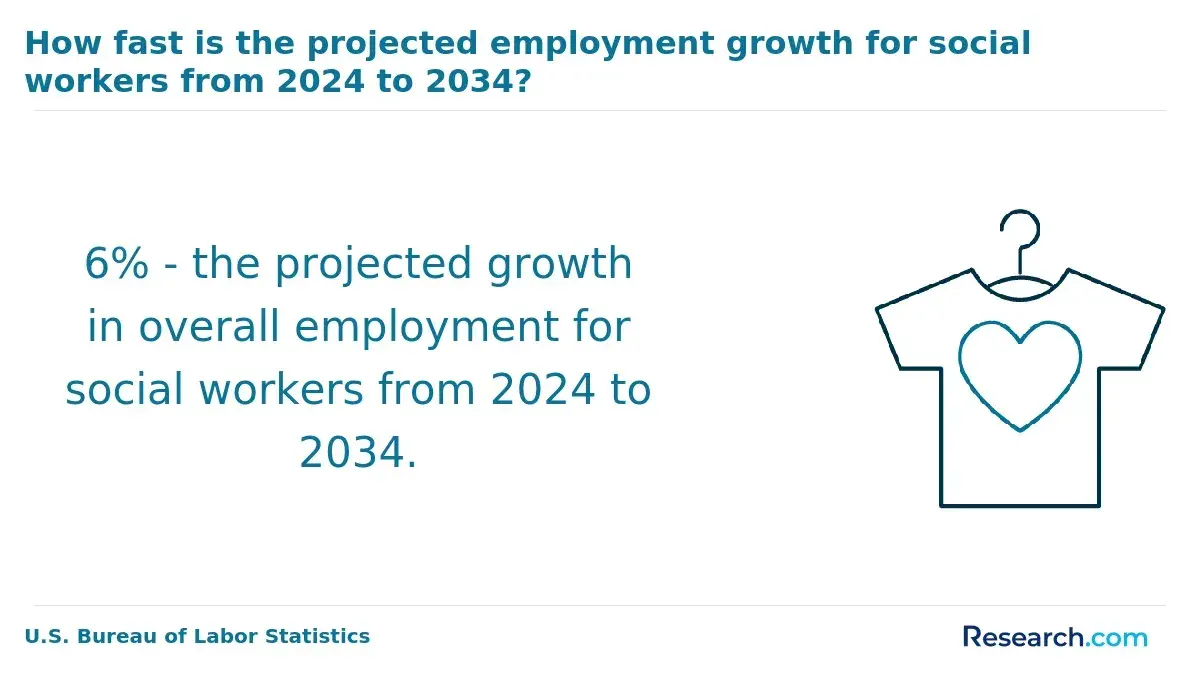
Employment for social workers is projected to grow 6% from 2024 to 2034, faster than the average for all occupations. That outlook is relevant for MSW graduates because the MSW is the standard credential for many professional social work jobs. Human services graduates may also benefit from demand for social support roles, but their advancement can be more dependent on agency budgets, experience, certifications, and whether the position requires a licensed professional.
The decision should start with the job title you want most. If you want to coordinate services, support clients, manage community programs, or work in advocacy without providing clinical treatment, a human services degree may be enough. If you want to become licensed, provide therapy, supervise clinical staff, work in healthcare or mental health at an advanced level, or compete for roles requiring a social work credential, the MSW is usually the stronger match.
For salary planning by location, see this guide on how much do LCSW make, which compares licensed clinical social worker earnings across states.
Human services programs are usually more accessible at the entry level. Bachelor’s programs commonly require a high school diploma or equivalent, transcripts, an application, and sometimes a personal statement or recommendation letters. Prior volunteer work, human service experience, or community involvement can strengthen an application, but requirements vary by school and degree level.
MSW programs are graduate programs, so applicants need a completed bachelor’s degree. Many programs consider applicants from a range of majors, not only social work, but they typically look for academic readiness, writing ability, ethical judgment, and evidence of commitment to vulnerable populations. A typical minimum GPA is around 3.0. Applicants commonly submit transcripts, letters of recommendation, a personal statement, and a resume. Some competitive programs may also require interviews or relevant field experience.
Relevant experience matters because MSW programs involve intensive work with clients and agencies. Many programs prefer applicants who have completed 200-400 hours of relevant field experience, volunteer work, or paid service work. Experience in crisis lines, shelters, schools, hospitals, behavioral health agencies, domestic violence programs, reentry services, or community nonprofits can help applicants show that they understand the demands of the field.
Students who want clinical licensure should pay close attention to accreditation before applying. Those pursuing clinical licensure through an MSW must graduate from a CSWE-accredited program, complete over 3,000 supervised clinical hours, varying by state, and pass the ASWB Clinical exam according to the National Association of Social Workers. Human services graduates usually enter supportive or administrative roles and are not typically subject to the same social work licensure pathway.
For students who need flexibility or are concerned about admissions selectivity, online MSW programs may be worth comparing. Ease of admission should not be the only factor, however. Accreditation, field placement support, licensure alignment, graduation outcomes, and total cost are more important than convenience alone.
Human services master's programs generally take 1 to 2 years, depending on enrollment status, transfer credits, course load, and whether the program includes an internship or capstone. A full-time student may complete the degree in 12 to 18 months, while part-time enrollment often extends completion to about 2 years. Bachelor’s-level human services programs take longer overall, but the comparison here is most useful for students deciding between graduate human services study and an MSW.
MSW programs usually require 2 years of full-time study for students entering without advanced standing. The timeline includes classroom learning and supervised field education, which is central to social work preparation. Fieldwork can make scheduling more demanding because students must meet agency placement requirements in addition to completing coursework.
Part-time MSW options can extend completion to 3 or more years. This may be more realistic for working adults, parents, and students who cannot complete daytime field placements on a full-time schedule. However, part-time study does not remove the field education requirement; it spreads the workload across a longer period.
Practicum expectations are a major difference between the two routes. MSW programs may involve practicum hours ranging from 1,000 to 3,000, depending on how the program, state requirements, and post-degree licensure pathway are counted. Human services programs may include internships, but many do not require the same level of supervised clinical field training.
If speed is the priority, a human services master’s may be faster. If licensure, clinical practice, or formal social work recognition is the priority, the MSW’s longer structure is usually necessary. The National Association of Social Workers (NASW) emphasizes the practicum as a core part of MSW preparation, so students should plan for both tuition and time away from work when comparing options.
The cost difference between a human services degree and an MSW depends heavily on school type, residency status, delivery format, transfer credits, fees, and field placement expenses. Public universities often charge between $10,000 and $30,000 for bachelor's or master's degrees in human services, while private schools can range from $30,000 to $60,000 or more. MSW programs generally cost more, from about $25,000 to $70,000, because they include specialized professional coursework and supervised field training.
Online or certificate-style human services options may appear cheaper, but students should compare what the credential actually qualifies them to do. A lower-cost program is not a good value if it does not meet employer expectations, does not transfer well, or does not support the career path you want. For MSW students, the most important cost question is whether the program is properly accredited and aligned with the licensure requirements of the state where they plan to practice.
Financial aid can change the real price for either path. Students should compare scholarships, graduate assistantships, employer tuition reimbursement, public service loan options, payment plans, and whether they can keep working while enrolled. Field placements may also create indirect costs, including transportation, reduced work hours, background checks, immunization documentation, and professional liability requirements.
PayScale data indicates that employers strongly favor candidates with an MSW in many social work roles. Graduates with an MSW usually earn 10% to 25% more over time compared to those holding a human services master's degree, making the higher tuition a potential long-term investment. That does not mean the MSW is automatically the best financial choice for every student. It is most compelling when the student plans to pursue licensed practice, clinical work, healthcare or school settings, supervision, or roles that explicitly require an MSW.
Before enrolling, compare total program cost against likely outcomes: accreditation, practicum quality, licensure eligibility, local employer recognition, field placement support, and graduate employment data. The cheapest program is not always the lowest-risk program.
Yes. Many institutions offer online human services and online MSW degrees for students who need flexibility. The formats can be fully online, hybrid, synchronous, asynchronous, or a mix of scheduled virtual classes and self-paced assignments. Online learning can reduce commuting and make graduate study more realistic, but it does not eliminate the need for practical experience in many programs.
Online human services degrees often cover case management, community outreach, ethics, program planning, counseling techniques, crisis response, nonprofit operations, and social policy. They may be well suited for students who want broader agency, advocacy, or administrative roles and who need part-time enrollment options.
Online MSW programs are more complex because they must pair academic coursework with field education. Many offer advanced courses in clinical practice, policy analysis, research, human behavior, trauma-informed practice, healthcare social work, school social work, or specialized areas such as medical or forensic social work. Students may complete assignments online while arranging supervised field placements in or near their local communities.
Common online MSW formats include:
- Full-time online MSW degrees completed in two years.
- Part-time tracks extending three to four years for working professionals.
- Advanced standing MSW programs for eligible students who already hold a qualifying background, often in social work or a closely related field depending on the institution.
Students should not assume that every online MSW leads to licensure in every state. Before applying, confirm accreditation, state authorization, field placement support, whether placements can be completed near your home, and whether the curriculum meets the requirements of the state where you intend to practice. For human services programs, confirm whether the degree is recognized by employers in your target sector and whether it supports any certification goals you may have.
MSW graduates generally have stronger salary potential than graduates with only a human services degree because the MSW can qualify them for licensed, clinical, supervisory, and specialized roles. According to the Bureau of Labor Statistics, social workers holding an MSW earn a median annual wage near $60,000, while human services professionals average closer to $40,000. The gap reflects differences in credential recognition, licensure eligibility, job setting, and scope of responsibility.
Human services graduates may start in support or coordination roles at around $30,000 to $35,000, with growth depending on employer type, location, experience, and whether they move into program management. These roles are essential, but many are funded through nonprofits, grants, public agencies, or community programs with tighter salary structures.
MSW graduates may qualify for roles in healthcare, mental health, schools, child welfare, substance use treatment, government agencies, and private or group practice settings, depending on licensure. With experience, MSW professionals can move into program director, clinical supervisor, or administrative leadership roles, where salaries often exceed $75,000 to $85,000 annually.
The salary advantage of the MSW is strongest when graduates complete the steps needed for licensure and pursue settings that pay for advanced clinical or specialized expertise. An MSW without licensure may still improve access to professional social work roles, but the largest earnings gains often come after supervised experience, exam completion, and movement into higher-responsibility positions.
- MSW holders generally have access to higher median salaries.
- Clinical licensure can expand job options and earning potential.
- Human services degrees can be cost-effective for non-clinical support, advocacy, and program roles.
- Salary outcomes vary by state, employer, specialization, and whether the role is grant-funded, public-sector, healthcare-based, or privately reimbursed.
Students should compare salary potential against debt, lost wages during fieldwork, time to licensure, and the type of work they actually want to do.
Human services careers offer broad entry points into community support work. Because many roles do not require a formal state license or a protected professional title, graduates may be able to enter the workforce faster in case management, outreach, residential services, reentry support, youth programs, advocacy, or program coordination. This flexibility can be valuable for students who want to begin working quickly or who are still deciding whether to pursue clinical training later.
The trade-off is that human services roles may have fewer built-in advancement pathways. Without a standardized license, promotion often depends on experience, agency size, grant funding, management openings, and whether the employer values the specific degree. Some graduates advance into nonprofit leadership or program administration, while others eventually return to school for an MSW or another graduate credential.
MSW careers are more regulated, but that regulation can improve professional mobility. State licensure creates a clearer pathway into clinical work, supervisory positions, mental health services, child welfare leadership, healthcare roles, and school-based social work. Employment for social workers is projected to grow 12% over the next decade, faster than average. For MSW graduates, licensure can also support independent practice and, in many settings, the ability to bill insurance.
The stronger job outlook for MSW graduates is not only about the number of openings. It is also about the types of openings. Employers that need clinical documentation, treatment planning, risk assessment, behavioral health expertise, or compliance with funding and regulatory requirements often prefer or require an MSW. Human services graduates may find more openings in frontline support roles, but they may face limits when applying for clinical, supervisory, or reimbursable positions.
Prospective students should consider:
- Whether their target jobs require an MSW, licensure, or a specific supervised practice background.
- Whether they want faster entry into the workforce or a longer pathway with stronger professional recognition.
- Whether local employers hire human services graduates for advancement roles or reserve those positions for MSW-prepared staff.
- Whether they are willing to complete supervised hours, exams, and state requirements after graduation.
How to Choose an Accredited Human Services or MSW Program?
Choosing the right program starts with the credential you need for your intended job. If your goal is clinical social work, therapy, healthcare social work, school social work, or independent practice, prioritize a CSWE-accredited MSW program that aligns with your state’s licensure rules. If your goal is community programming, nonprofit leadership, advocacy, case coordination, or human service administration, a human services program may be appropriate, especially if it has strong field experience and employer connections.
Accreditation matters because it signals that a program meets recognized educational standards. For social work, accreditation from the Council on Social Work Education (CSWE) is especially important for licensure pathways. For human services, the Council for Standards in Human Service Education (CSHSE) can indicate alignment with human service education standards. Accreditation can affect licensure eligibility, transferability, employer confidence, and access to certain credentials.
MSW programs generally focus on clinical practice, policy advocacy, research, ethics, human behavior, field education, and advanced practice methods. Human services programs often emphasize program administration, organizational strategy, community services, nonprofit leadership, client advocacy, and service delivery systems. According to the U.S. Bureau of Labor Statistics, social workers often advance through clinical licensure or policy advocacy, while human services professionals progress via program administration and nonprofit leadership.
Evaluate the program beyond the course catalog. Strong programs should be transparent about fieldwork, advising, licensure support, graduate outcomes, faculty expertise, and local employer relationships. For online programs, ask how field placements are arranged and whether the school has experience placing students in your state or region.
Before enrolling, ask:
- Is the program accredited by the organization relevant to my career goal?
- Does the program provide licensed clinical social work (LCSW) preparation if I want clinical practice?
- Does the curriculum match the roles I plan to pursue after graduation?
- What field placements, internships, or practicum experiences are required?
- Are there clear pathways to leadership roles within nonprofits, healthcare organizations, schools, or government agencies?
- What are the program's graduation rates and alumni employment outcomes in relevant sectors?
- Will this degree meet requirements in the state where I plan to work?
The best program is the one that matches your target credential, not simply the one that is cheapest, fastest, or easiest to enter. Choose human services for broad non-clinical service, coordination, and organizational roles. Choose an MSW when licensure, clinical authority, professional social work identity, and long-term mobility are central to your career plan.
Other Things You Should Know About Social Work
Most MSW programs require 900 to 1,200 supervised field practicum hours, completed in one or two placements across advanced generalist or specialized settings. Programs are typically approved by the Council on Social Work Education, and placement sites must meet university supervision and learning-contract standards.
A 2027 Human Services Degree often leads to roles in community outreach and case management, offering fewer clinical options. An MSW, however, typically results in advanced clinical positions, licensure opportunities, and higher salaries, positioning graduates for leadership in mental health, schools, and healthcare.
Individuals pursuing an MSW can specialize in areas such as clinical social work, school social work, or medical social work. On the other hand, a 2027 Human Services Degree often leads to broad roles without specific specializations, focusing more on general support services across various community programs.
Admission requirements for an MSW typically include a bachelor's degree in a related field, letters of recommendation, and relevant work or volunteer experience. In contrast, a 2027 Human Services Degree may require only a high school diploma or equivalent with no professional experience prerequisites.
- How Long Does it Take to Become a Social Worker? https://socialworklicensemap.com/become-a-social-worker/how-long-does-it-take/
- Types of Social Work Degrees https://www.socialworkers.org/Careers/Career-Center/Explore-Social-Work/Types-of-Social-Work-Degrees
- How Long Does It Take to Become a Social Worker? https://www.onlinemswprograms.com/careers/how-to-become-a-social-worker/how-long-does-it-take/
- High-demand social work roles in California: trends and opportunities https://socialwork.pacific.edu/blog/high-demand-social-work-roles-california-trends-and-opportunities
- Human Services vs. Social Work: Understanding the Pathways https://columbia.ca/human-services-vs-social-work-understanding-the-pathways/
- Best Online Master's Programs For Social Work 2025 https://www.psychology.org/social-work/best-masters-programs/
- Human Services vs. Social Work: What’s the Difference? https://www.herzing.edu/difference/human-services-vs-social-work
- Social Work Career Path Guide: BSW vs MSW for Your Aspirations https://online.aurora.edu/program-resources/social-work-career-path-bsw-msw-aspirations/
- Online Master’s in Human Services Degree Programs - OnlineEducation.com https://www.onlineeducation.com/social-work/human-services-programs
- Is Human Services the Same as Social Work? https://www.cdicollege.ca/news/is-human-services-the-same-as-social-work/