2027 Can You Get Into an MSW Program With a Low GPA?

Co-Founder and Chief Data Scientist
A low undergraduate GPA does not automatically end your chances of earning a Master of Social Work, but it does change how you should choose programs and present your application. MSW admissions committees usually look for evidence that you can handle graduate-level writing, research, ethics, and fieldwork. If your transcript is weak, your application needs to prove readiness in other ways.
This guide is for applicants with a GPA below a typical MSW benchmark, career changers, students with uneven academic histories, and BSW graduates trying to understand their options. It explains what GPA standards usually look like, how holistic admissions work, when conditional admission may help, why CSWE accreditation matters, and how program format, curriculum, licensing, and career outcomes should shape your decision.
Key Things You Should Know
- Many MSW programs accept applicants with low GPAs if they demonstrate strong personal statements, relevant experience, or recommendation letters, reflecting holistic admissions processes in 2026.
- Approximately 40% of MSW programs report admitting students with GPAs below 3.0, emphasizing practical skills and community involvement over GPA alone.
- Applicants with low GPAs often enhance admission chances by completing prerequisite coursework or obtaining relevant volunteer or employment experience before applying.
Can You Get Into an MSW Program With a Low GPA?
Yes. You can get into an MSW program with a low GPA, especially if you apply strategically and target schools that use holistic admissions. A low GPA is a weakness, but it is rarely the only factor in an MSW admissions decision. Programs often review your work history, volunteer service, recommendation letters, personal statement, interview performance, prerequisite coursework, and fit with social work values.
The strongest low-GPA applicants usually show three things: academic readiness, commitment to vulnerable populations, and maturity about past performance. Admissions committees want to know whether you understand the demands of graduate study and whether you can succeed in field placements, client-facing environments, and writing-intensive courses.
Applicants with a bachelor's degree in social work (BSW) may have an advantage because their prior education is directly aligned with MSW training. Data from CSWE reports a 77.8% acceptance rate for BSW graduates from the same institution. That kind of continuity can signal preparation for advanced social work study and may help offset a less competitive transcript.
How to make a low-GPA application more competitive
- Show recent academic improvement. Retaking key courses or completing post-baccalaureate coursework can help demonstrate that your current academic ability is stronger than your cumulative GPA suggests.
- Use the personal statement carefully. Explain academic challenges briefly and professionally, then focus on growth, accountability, readiness, and your reasons for pursuing social work.
- Choose recommenders who know your work. Letters from supervisors, faculty members, or social service professionals should speak to your judgment, reliability, communication skills, and ability to serve clients ethically.
- Document relevant experience. Paid work, internships, case management support, crisis line volunteering, advocacy, behavioral health work, and community service can all strengthen your file.
- Ask about conditional admission. Some programs allow applicants below the standard GPA to enroll provisionally and continue after earning strong grades in initial courses.
Program choice matters. A school with a rigid GPA cutoff may not be realistic, while a program that values field experience, interviews, and professional purpose may be a better match. If you later want advanced practice or leadership training beyond the MSW, you can also explore DSW online programs as a possible future step.
What GPA Do MSW Programs Require for Admission?
Many MSW programs list a 3.0 undergraduate GPA as the standard admission benchmark. However, that number is not universal. Some schools consider applicants with GPAs as low as 2.5 when the rest of the application shows strong preparation, relevant service, and a clear professional purpose.
The key distinction is between a published minimum and a competitive GPA. A program may accept applications below 3.0, but those applicants usually need stronger supporting materials. Highly competitive programs may have a firm GPA cutoff of 3.2 or higher, while less selective and online programs may offer more flexible review.
How GPA ranges typically affect your MSW strategy
- 3.0 or above: You may meet the standard requirement at many schools, but admissions decisions will still depend on experience, essays, recommendations, and program fit.
- 2.7 to 2.9: You should focus on programs with holistic review, strong personal statement expectations, and possible conditional admission options.
- 2.5 to 2.6: You may need to be more selective, contact admissions offices before applying, and consider recent coursework to show academic readiness.
- Below 2.5: Admission is more difficult. Post-baccalaureate classes, certificates, or prerequisite coursework may be necessary before applying broadly.
Applicants below 3.0 should highlight compensating strengths such as social services experience, volunteer work, advanced coursework, certifications, strong essays, and recommendations that address graduate-level potential. A short explanation of past academic difficulty can help, but the application should not dwell on excuses. It should show what has changed.
The admissions environment is also broader than a single GPA number. A 75.2% average acceptance rate for MSW programs in 2025 has been tied in part to the expansion of accessible online cohorts. This does not mean every applicant is admitted, but it does mean that students with varied academic backgrounds may find more options than they expect.
If affordability and flexible entry standards are part of your search, compare the most affordable online MSW programs and check each school’s exact GPA policy before applying.
How Can You Get Into MSW With Below 3.0 GPA?
To get into an MSW program with a GPA below 3.0, you need to reduce the admissions committee’s concern that your transcript predicts future academic problems. The goal is not to hide the GPA. The goal is to prove that you are prepared now.
Build an application that answers the GPA concern directly
- Show an upward academic trend. If your last semesters were stronger than your early college record, point that out. If not, consider taking relevant courses before applying.
- Complete prerequisite or related coursework. Courses in psychology, sociology, statistics, research methods, human development, policy, or ethics can help show readiness.
- Choose experience that matches social work practice. Admissions committees value sustained service more than one-time volunteering. Work with families, schools, hospitals, shelters, behavioral health programs, or community organizations can be especially useful.
- Write a focused personal statement. Explain the low GPA only as much as necessary. Then connect your growth to the discipline, your professional goals, and your understanding of social work ethics.
- Request specific recommendation letters. Ask recommenders to address reliability, writing ability, cultural humility, client interaction, professionalism, and capacity for graduate study.
- Apply to a balanced school list. Include programs known for holistic review, online or part-time options, and conditional admission pathways instead of applying only to highly selective schools.
Conditional admission or probationary acceptance can be valuable for below-3.0 applicants. These offers usually require you to earn a specified grade point average during the first term or complete certain foundational courses successfully. Before accepting, ask what happens if you do not meet the condition, whether financial aid applies, and whether the program remains CSWE-accredited.
Your personal statement should be honest but not overly personal in a way that distracts from readiness. A strong version might briefly identify the cause of earlier academic difficulty, describe what changed, and provide evidence of stronger performance, work discipline, or professional maturity.
Career outcomes are not determined by undergraduate GPA alone. According to the 2025 NASW Workforce Study, MSW graduates with GPAs below 3.0 achieve a 92% employment rate within six months, comparable to higher-GPA peers. For applicants comparing long-term opportunities, it can also help to review what states pay social workers the most.
Most MSW programs require a bachelor’s degree from an accredited institution, official transcripts, recommendation letters, a personal statement, and a resume or CV. Many programs cite a minimum GPA around 3.0, but some review lower-GPA applicants when there is strong evidence of field experience, academic improvement, or professional readiness.
Typical MSW application materials
- Official transcripts: Schools use these to verify degree completion, GPA, prerequisite coursework, and academic trends.
- Personal statement or admissions essay: This is often the most important document for a low-GPA applicant because it explains motivation, readiness, and fit with social work.
- Letters of recommendation: Programs usually prefer recommenders who can evaluate your academic ability, professional judgment, service orientation, or direct practice potential.
- Resume or CV: Include employment, internships, volunteer roles, leadership, certifications, and relevant training.
- Prerequisite coursework: Some programs expect background in psychology, sociology, human behavior, statistics, or social science research.
- Interview: Some schools use interviews to assess communication skills, ethical judgment, maturity, and understanding of the profession.
- GRE scores: Standardized test scores such as the GRE are often requested by some schools, though an increasing number waive this requirement for candidates with significant work or volunteer backgrounds.
MSW admissions committees also look for qualities that do not appear directly in a GPA: commitment to social justice, respect for client dignity, ethical awareness, cultural humility, emotional resilience, and the ability to handle feedback. These traits matter because social work training includes supervised field placements, not just classroom assignments.
Applicants with low GPAs should avoid one common mistake: submitting a generic application. A strong application should connect your background to the school’s mission, field placement opportunities, concentration areas, and population focus. The more clearly you explain why that program fits your goals, the easier it is for admissions staff to see you as a serious candidate.
The median starting salary for MSW graduates is around $58,000, regardless of undergraduate GPA, which reinforces the importance of developing practical skills and completing a credible program. If you are prioritizing accessible admissions policies, the easiest MSW programs to get into can be a useful starting point for comparing requirements.
If your goal is professional social work practice in the United States, you should strongly prioritize a CSWE-accredited MSW program. The Council on Social Work Education (CSWE) is the primary accrediting body for MSW programs in the U.S., and its accreditation signals that a program meets accepted standards for curriculum, field education, faculty qualifications, and professional preparation.
CSWE accreditation matters most because licensure and employment often depend on it. Most states require graduation from a CSWE-accredited program to qualify for clinical licensure or related credentials. Many employers in healthcare, behavioral health, schools, government agencies, and community organizations also expect an accredited MSW.
Accredited vs. non-accredited MSW programs
- CSWE-accredited programs: Usually support licensure pathways, include required field education, and are widely recognized by employers and licensing boards.
- Non-accredited programs: May offer coursework in social work topics but can create serious barriers to licensure, clinical practice, and some jobs.
- Newer programs: Some may be pursuing accreditation, but applicants should ask about current status, timelines, and what happens if accreditation is delayed or denied.
A non-accredited program may appear attractive if it has easier admissions standards, but that flexibility can come with long-term risk. If the degree is not recognized by your state licensing board, you may be unable to become clinically licensed even after completing the program.
Students with GPAs under 3.0 can still find CSWE-accredited options, especially among programs that use holistic or conditional review. Do not trade accreditation for admission ease unless you fully understand the consequences.
The long-term value of an accredited MSW can be substantial. The 15-year return on investment (ROI) for MSW graduates is about 245%, driven by strong job growth projections of 22% through 2033 (Georgetown CEW 2025). Before applying, verify accreditation directly and confirm that the program aligns with your state’s licensing requirements.
MSW programs are commonly offered in online, campus-based, and hybrid formats. The best format depends on your schedule, learning style, support needs, location, field placement access, and admissions profile. For applicants with lower GPAs, format can also affect how flexible a program may be in reviewing nontraditional backgrounds.
Fully online MSW programs
Fully online programs offer the most scheduling flexibility because coursework is completed remotely. They can be a strong fit for working adults, parents, rural students, military-connected students, and applicants who need to keep earning income while studying. Field placements are still completed in approved agencies, often near the student’s location.
For example, Walden University's MSW program requires only a 2.5 GPA minimum and enrolls about 85% of its students from non-traditional backgrounds, making the program accessible to many applicants who do not meet traditional academic thresholds.
Campus-based MSW programs
Campus programs provide in-person classes, direct access to faculty, peer relationships, campus services, and local agency partnerships. They may work well for students who want structure, face-to-face discussion, and immediate academic support. However, campus-based programs can be less flexible for applicants balancing employment, caregiving, or long commutes.
Hybrid MSW programs
Hybrid programs combine online coursework with in-person sessions, residencies, or campus-based requirements. They can offer a useful middle ground: more flexibility than a traditional program, but more direct engagement than a fully online model. Some hybrid programs also provide additional academic support, tutoring, or preparatory coursework for students who need to strengthen graduate-level skills.
What low-GPA applicants should compare
- Minimum GPA requirements and whether exceptions are considered
- Conditional or provisional admission policies
- Availability of part-time enrollment
- Writing, tutoring, advising, and academic support services
- Field placement coordination in your area
- CSWE accreditation status
- Whether online students receive the same student services as campus students
Do not choose a format based only on convenience. An online program can be rigorous, and a campus program is not automatically better. The right choice is the one that gives you a realistic path to completion, licensure preparation, and supervised field experience.
Most MSW programs take about two years of full-time study. Part-time programs often take three or four years, while accelerated options can take one year through heavier course loads, summer enrollment, or advanced standing pathways. The exact timeline depends on your prior education, enrollment status, field placement schedule, and program structure.
Common MSW timelines
- Traditional full-time MSW: Usually about two years across four semesters, including coursework and field placements.
- Part-time MSW: Often three or four years, designed for students who work or manage other responsibilities.
- Accelerated MSW: Can reduce completion to one year, but the pace is demanding and may not be ideal for students who need academic support.
- Advanced standing MSW: Typically designed for eligible BSW graduates and may shorten the program by recognizing prior social work education.
Credit requirements typically run around 60 credit hours, though this varies by school and by advanced standing eligibility. Fieldwork also affects the timeline because practicum hours must fit both program requirements and agency availability.
Students admitted conditionally because of a GPA below 3.0 should pay close attention to pacing. A slower part-time option may be more realistic than an accelerated route if you need time to rebuild academic confidence, strengthen writing, or balance work with field placement. Still, lower-GPA students can complete on schedule with the right support. According to the CSWE 2025 Outcomes Survey, 65% of conditionally admitted students with GPAs below 3.0 graduated on time in 2025.
Before enrolling, ask the program how field placements are arranged, whether evening or weekend placements are possible, how many courses students usually take per term, and what academic support exists if you struggle in the first semester. Finishing on time depends less on speed and more on choosing a schedule you can sustain.
MSW curricula are designed to move students from generalist social work knowledge to advanced practice skills. Although course names differ by school, most programs cover human behavior, social welfare policy, research, ethics, diversity, assessment, intervention, and supervised field education.
First-year foundation courses
- Human behavior in the social environment
- Social welfare policy and services
- Research methods and evidence-informed practice
- Generalist practice with individuals, families, groups, organizations, and communities
- Ethics, professional identity, and social work values
These courses help students understand systems, client needs, inequality, policy, and intervention methods. For low-GPA students, the first year is also the time to prove academic readiness through consistent writing, participation, and field performance.
Advanced-year concentrations and electives
In the second year, students often choose a specialization such as clinical social work, child welfare, healthcare social work, school social work, substance abuse, community practice, or policy. Advanced courses may focus on diagnosis, therapy models, trauma-informed care, crisis intervention, program evaluation, leadership, or advanced policy analysis.
Field education is central to MSW training. Many programs require 900 to 1,200 hours of supervised experience, allowing students to connect classroom learning with direct practice, community work, or organizational settings. Strong field performance can be especially important for students whose undergraduate GPA does not reflect their professional potential.
Programs have also changed admissions testing expectations. Notably, 92% of MSW programs waived the GRE requirement in 2025, which increased applications from students with lower GPAs by 28%, according to the CSWE Program Director Survey 2025. That shift places more weight on transcripts, experience, essays, and recommendations.
When comparing curricula, look beyond course titles. Ask whether the program offers the concentration you need for your career goals, whether field placements match your interests, and whether academic support is available for graduate writing, research, and statistics.
An MSW can lead to careers in healthcare, mental health, schools, child welfare, government, community agencies, corrections, aging services, policy, and nonprofit leadership. Your exact options depend on your concentration, field placements, state licensing rules, and whether you pursue clinical licensure.
Common MSW career paths
- Licensed clinical social worker (LCSW): Provides therapy, counseling, assessment, and crisis intervention after meeting state licensure requirements.
- Healthcare social worker: Helps patients and families navigate illness, discharge planning, care coordination, insurance barriers, and community resources.
- School social worker: Supports students, families, attendance, mental health needs, crisis response, and connections between schools and communities.
- Child welfare specialist: Works with children and families involved in protection, foster care, reunification, adoption, or prevention services.
- Program manager or administrator: Oversees social service programs, staff, budgets, compliance, evaluation, and community partnerships.
- Policy or advocacy professional: Works on legislation, public programs, research, community organizing, or systems-level reform.
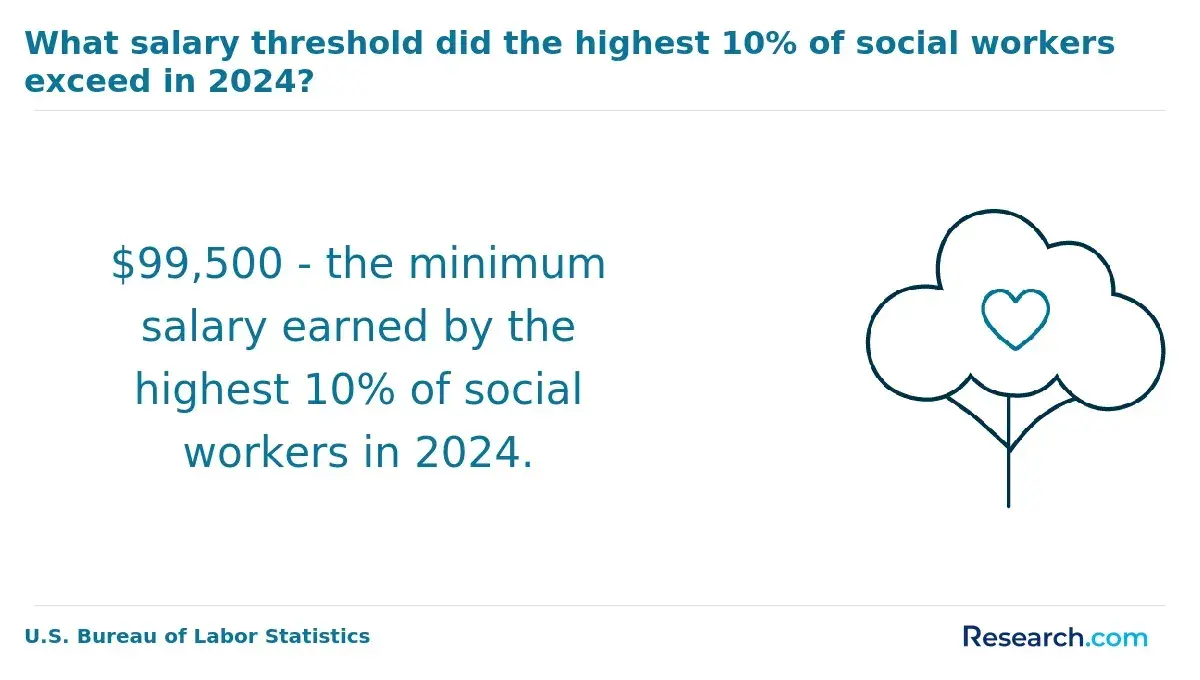
Many graduates become licensed clinical social workers (LCSWs), offering mental health counseling, therapy, and crisis intervention, with median salaries between $50,000 and $70,000 depending on location and employer. Other roles include child welfare specialists, school social workers, and healthcare social workers, earning $45,000 to $65,000 annually.
Advanced positions such as administration, policy analysis, and program management require an MSW and often pay between $60,000 and $90,000. Some MSW holders pursue doctoral studies to enter academia, advanced clinical research, or high-level leadership roles.
Admission chances can vary by region, which may matter for low-GPA applicants choosing where to apply. Southern U.S. programs admitted 82% of applicants with GPAs between 2.7 and 2.9 in 2025, while the national rate was 61%, according to the Regional CSWE Data Brief 2025. That variation can help applicants build a more realistic school list, but it does not define career outcomes after graduation.
Long-term stability usually improves with licensure, supervised clinical experience, specialized training, and certifications in areas such as clinical social work, substance abuse treatment, school social work, trauma, or healthcare practice. GPA may matter for admission, but career growth depends more on competence, licensure, experience, and professional reputation.
What Is MSW Job Outlook and Licensing Process?
The job outlook for MSW graduates remains strong, especially in healthcare, mental health, substance use treatment, aging services, schools, and community-based care. The BLS and CSWE Joint Forecast projects a 12% growth in demand by 2030, outpacing many other occupations. This demand helps explain why MSW programs continue to consider applicants from varied academic backgrounds, including those with lower GPAs who show relevant experience and commitment.
Low-GPA applicants still benefit from high acceptance rates around 80% in MSW programs when they combine a credible application with experience, readiness, and program fit. After admission, however, the bigger issue becomes completing an accredited degree and meeting licensing requirements.
Typical social work licensing steps
- Graduate from an accredited MSW program
- Pass the ASWB exam at the clinical, advanced generalist, or bachelor's level
- Complete supervised clinical experience, often 2-3 years or about 3,000 hours
- Complete background checks and meet state-specific application requirements
- Maintain continuing education after licensure
Licensing rules vary by state, so applicants should check requirements before choosing a program, especially if they plan to study online in one state and practice in another. Clinical licensure usually requires an MSW from a CSWE-accredited program, supervised post-graduate hours, an exam, and documentation of ethical and legal eligibility.
For applicants who entered an MSW program with a low GPA, licensing boards generally focus on the accredited MSW degree, supervised experience, exam performance, and professional conduct rather than undergraduate grades. Your field placements, clinical supervision, and exam preparation will matter far more at that stage.
Choose a program with strong field placement support, clear licensure guidance, and resources for ASWB exam preparation. Those factors can make the difference between simply earning the degree and being fully prepared for licensed practice.
Other Things You Should Know About Social Work
Yes, volunteering experience is often valued by MSW programs because it demonstrates commitment to community service and provides practical exposure to social work settings. Many programs look for applicants who have experience working with diverse populations or contributing to social causes, which can strengthen admission prospects despite a low GPA.
Absolutely. Many MSW programs accept applicants from various undergraduate backgrounds, not just social work majors. The key is to show relevant experience or interest in social work and complete any prerequisite courses the program requires before or during enrollment.
Recommendation letters play a significant role in MSW admissions as they provide insight into an applicant's character, academic ability, and suitability for social work. Strong letters from professors, supervisors, or professionals in social work-related fields can help offset a lower GPA by highlighting other strengths.
Yes, some MSW programs still consider GRE scores, and a strong result can help offset a low GPA when the school reviews the full application. Many programs are GRE-optional or no longer require it, so check each program’s policy before applying.
- MSW Program Length: 1-4 Year Timeline Guide for 2025 https://www.socialworkdegrees.org/faq/how-long-does-it-take-to-complete-a-msw-program
- What does a Social Worker (MSW) do? Career Overview, Roles, Jobs | NASW https://joblink.socialworkers.org/career/social-worker-msw
- How Long Does it Take to Complete an MSW Program? Online or Campus https://www.onlineeducation.com/social-work/faqs/how-long-is-an-msw-program
- 15 MSW Programs That Accept Low GPA Students in 2025 (Below 3.0) - Social Work Education Center https://www.socialworkdegree.net/online-msw-programs/msw-programs-that-accept-low-gpa/
- MSW Programs by State: Campus vs Hybrid vs Online MSW Programs https://www.masterofsocialwork.com/states/
- CSWE Accreditation Requirements and Standards https://lumivero.com/resources/blog/cswe-accreditation/
- FAQ: What are the GPA requirements for online MSW programs? https://www.onlinemswprograms.com/faqs/gpa-requirements-for-online-msw-programs/
- Explore Social Work https://www.socialworkers.org/Careers/NASW-Career-Center/Explore-Social-Work
- 5 High-Paying Jobs You Can Get with an MSW https://onlinedegrees.keuka.edu/blog/highest-paying-msw-jobs
- The Evolution of Online Social Work Education https://www.socialworktoday.com/news/enews_0317_1.shtml