2027 Choosing the Right Online MSW Concentration for Your Career Goals

Co-Founder and Chief Data Scientist
Choosing an online MSW concentration is not just a course-planning decision. It can affect your field placement, licensure path, first post-graduate role, salary potential, and the communities you are prepared to serve. This is especially important for students entering social work from another field, where the differences between clinical practice, school social work, policy, healthcare, child welfare, and macro practice may not be obvious at first.
The best concentration depends on three questions: Do you want to provide direct services, lead programs, influence systems, or specialize in a specific population? Will your state require particular coursework or supervised experience for the license you want? And does the online program have field placement support in the type of setting where you hope to work?
This guide explains the main online MSW concentrations, how they connect to career goals, what to expect from online versus campus formats, which accredited schools are commonly recognized for online MSW study, and how admissions, curriculum, timelines, salaries, job outlook, and licensing considerations should shape your decision.
Key Things You Should Know
- Choosing an MSW concentration aligns your education with career goals, with specialties like clinical, policy, or community practice shaping job roles and salary potential.
- Clinical concentrations lead to 20% higher earning potential and 15% faster job placement compared to generalist degrees, according to 2024 labor data.
- Emerging fields such as mental health and gerontology report increasing demand, reflecting demographic trends and requiring specialized MSW training for future-proof careers.
What Are the Main Online MSW Concentrations?
The main online MSW concentrations prepare students for different levels of social work practice: direct clinical work with individuals and families, specialized services for specific populations, or broader roles in policy, administration, and community systems. The right choice should match the kind of work you want to do after graduation, not just the concentration title that sounds most appealing.
Clinical social work is one of the most common concentrations. It focuses on assessment, diagnosis, counseling, psychotherapy, crisis intervention, and evidence-based treatment. Students who plan to pursue Licensed Clinical Social Worker (LCSW) licensure often choose this path because it is most closely aligned with mental health and therapeutic practice.
Macro social work, by contrast, prepares students for work beyond one-on-one services. This concentration may include community organizing, policy advocacy, nonprofit leadership, program evaluation, grant writing, and administration. It is often a better fit for students who want to improve systems, manage programs, influence legislation, or work in public agencies.
Many online MSW programs also offer specialized concentrations for specific populations or settings, including child and family social work, gerontology, school social work, healthcare social work, and substance abuse counseling. These tracks can be valuable when you already know the group or service system you want to serve.
| Concentration | Best fit for students who want to | Common work settings |
| Clinical social work | Provide therapy, mental health services, assessment, and treatment | Mental health clinics, hospitals, private practice, community agencies |
| Macro social work | Lead programs, advocate for policy change, manage organizations, or work at the systems level | Nonprofits, government agencies, public health departments, advocacy organizations |
| Child and family social work | Support children, caregivers, and families through crisis, protection, and service coordination | Child welfare agencies, family service nonprofits, schools, courts |
| Gerontology | Work with older adults, caregivers, long-term care systems, and aging-related services | Hospitals, senior service agencies, hospice, long-term care organizations |
| School social work | Support students’ behavioral, emotional, family, and resource needs in education settings | K-12 schools, school districts, youth programs |
| Substance abuse counseling | Work with clients affected by addiction, co-occurring disorders, and recovery challenges | Treatment centers, outpatient clinics, community health agencies, correctional settings |
According to Bureau of Labor Statistics data, median social worker salaries range from $48,780 to $65,070 depending on specialization and location, with post-MSW salary growth typically between $15,000 and $25,000 annually. Those figures do not guarantee a specific outcome, but they show why concentration choice, licensure eligibility, and local labor demand matter.
Students planning for advanced practice, leadership, or academic roles may also compare future doctoral options, including affordable doctorate of social work programs online, after they understand how an MSW concentration fits their immediate career plan.
How Do MSW Concentrations Align with Career Goals?
MSW concentrations align your coursework, field placement, and professional preparation with a specific type of social work career. A strong concentration choice should make your next step clearer: the license you will pursue, the clients or communities you want to serve, and the employers most likely to value your training.
Students interested in therapy, behavioral health, crisis intervention, and diagnosis usually need a clinical social work concentration or a curriculum with substantial clinical content. A 2018 NASW survey found that over 80% of MSW graduates who applied for jobs received at least one offer, with 43.2% securing multiple offers, highlighting strong demand for clinical expertise.
Students who want to change policies, strengthen organizations, manage grants, evaluate programs, or lead community initiatives may be better served by concentrations such as Community Organization, Policy Practice, or Administration. These paths are less therapy-focused and more connected to planning, leadership, research use, and systems change.
Use the following decision points before choosing a concentration:
- Licensure requirements: If your goal is LCSW licensure, confirm that the concentration includes clinical assessment, diagnosis, intervention methods, and supervised field experience that align with your state’s rules.
- Preferred work environment: Hospitals, mental health clinics, schools, nonprofits, child welfare agencies, and government offices often value different skill sets.
- Client population: Decide whether you want to work mainly with children, families, older adults, students, people with substance use disorders, healthcare patients, or broader communities.
- Direct service versus systems work: Clinical and direct-practice tracks usually center on clients and families, while macro tracks focus on programs, policies, and communities.
- Long-term career direction: A future private practice therapist, school social worker, policy analyst, agency director, and hospital discharge planner should not all choose a concentration for the same reasons.
A common mistake is choosing the most familiar concentration without checking whether it supports the student’s actual career goal. For example, a student who wants to become a therapist should not assume that any online MSW will satisfy clinical licensure expectations. Likewise, a student who wants to lead nonprofit programs may not need the most therapy-intensive option if macro leadership coursework and administrative fieldwork are available.
Cost should also be part of the decision. A concentration that requires unpaid weekday field hours, additional licensure preparation, or travel to placement sites can affect affordability. Reviewing the online MSW cost can help you compare the full investment, not just tuition.
What Are the Key Differences Between Online and Campus MSW Programs?
The key differences between online and campus MSW programs usually involve flexibility, interaction, field placement logistics, and how much structure students want in their weekly learning. Both formats can prepare students for social work careers when the program is properly accredited and meets licensure-related expectations, but the student experience can be very different.
Online MSW programs are often designed for working adults, caregivers, career changers, and students who cannot relocate. Courses may be asynchronous, synchronous, or a mix of both. This flexibility can make graduate study possible, but it also requires strong time management because students must keep up with readings, assignments, discussions, and fieldwork without the rhythm of regular campus attendance.
Campus MSW programs provide more in-person contact with faculty, classmates, supervisors, and campus-based professional events. Students who learn best through face-to-face discussion, immediate feedback, and structured weekly routines may prefer this format. Campus programs may also have longstanding relationships with nearby agencies, which can simplify field placement access in some regions.
| Factor | Online MSW programs | Campus MSW programs |
| Schedule flexibility | Often stronger, especially for working professionals | Usually more fixed around class meeting times |
| Peer and faculty interaction | Often virtual through video sessions, discussion boards, and online meetings | More frequent in-person interaction and informal networking |
| Field placement | Typically completed in the student’s local community, with varying levels of placement support | Often connected to agencies near campus through established relationships |
| Best fit | Students who need location flexibility and can work independently | Students who want in-person structure, campus resources, and local networking |
| Cost considerations | May reduce relocation and commuting costs, though tuition can be similar | May involve commuting, relocation, or campus-related costs |
Clinical placement options are especially important. Campus students may have easier access to local agencies connected to the school. Online students usually complete fieldwork where they live, which can be an advantage if they want to build connections in their own community. However, placement availability can be limited in some rural areas or highly competitive markets, so students should ask how placements are secured before enrolling.
The advantages of online MSW degrees compared to traditional campus options may be especially relevant for students interested in policy and macro practice. According to 2018 CSWE workforce data, online MSW graduates concentrating in macro/policy areas are more likely to enter government roles (23%) versus campus graduates (17%).
Financially, online MSW programs can reduce relocation and commuting costs, but tuition often parallels campus rates. Prospective students should verify accreditation, field placement support, licensure alignment, and outcomes in their intended state. It can also be useful to compare regional earning potential, including the licensed clinical social worker salary across states.
Accredited online MSW programs are offered by several well-known universities, including the University of Southern California, the University of Denver, and Columbia University's School of Social Work. The most important quality marker is not name recognition alone; students should confirm that the program is accredited by the Council on Social Work Education (CSWE), because CSWE accreditation is commonly tied to licensure eligibility and employer recognition.
These schools illustrate how online MSW programs can serve different career paths. The University of Southern California offers a clinical concentration designed for students seeking licensure and direct practice. The University of Denver provides a balance of policy and practice-oriented tracks for students with varied employment goals. Columbia's healthcare and medical social work concentration is an example of a specialized pathway connected to clinical and healthcare settings.
According to the Columbia School of Social Work 2024 MS Graduate Outcomes Report, therapy and counseling are the primary job functions for graduates, followed by case management and crisis intervention. For prospective students, this kind of outcomes information is useful because it shows how graduates are using the degree after completion.
When comparing accredited online MSW programs, look beyond rankings and marketing language. Ask practical questions:
- Is the program CSWE-accredited? This should be verified directly through the school and accreditor.
- Does the concentration match your intended license or career? Clinical, school, healthcare, and macro tracks can lead to very different roles.
- How are field placements arranged? Find out whether the school finds placements, supports student searches, or expects students to identify agencies themselves.
- Where do graduates work? Review employment outcomes by function, employer type, and location when available.
- What student supports are available online? Advising, licensure guidance, writing support, field education staff, and alumni networks can affect completion and job readiness.
Schools with strong alumni networks in healthcare systems, school districts, mental health agencies, or public-sector organizations may offer practical advantages. This matters for students asking is social work a good major and trying to determine whether an online MSW will create a realistic path into the roles they want.
Typical admission requirements for online MSW programs include a bachelor’s degree from an accredited institution, official transcripts, a resume, letters of recommendation, and a personal statement explaining the applicant’s goals and readiness for graduate social work study. Many programs prefer a minimum GPA of 3.0, though some schools accept GPAs as low as 2.5 through conditional or probationary admission.
Applicants are usually asked to submit two or three letters of recommendation. Strong letters often come from professors, supervisors, volunteer coordinators, or professionals who can speak to the applicant’s judgment, communication skills, maturity, service orientation, and ability to handle graduate-level work.
The personal statement is especially important for career changers. It should do more than say the applicant wants to help people. A stronger essay explains the population or problem the applicant wants to address, relevant experience, why social work is the right profession, and how the chosen concentration supports future goals.
Relevant work or volunteer experience in social services is often valued, especially for applicants who did not major in social work as undergraduates. Experience in case management, crisis support, youth programs, healthcare, community organizations, behavioral health, shelters, advocacy groups, or related settings can show readiness for the profession’s demands.
GRE requirements are becoming less common, but some institutions still require scores. Non-native English speakers may need TOEFL or IELTS results. Background checks and immunization records are also common because MSW programs include in-person field placements with agencies that serve clients and communities.
| Requirement | What schools are evaluating |
| Bachelor’s degree and transcripts | Academic preparation and prerequisite readiness |
| Minimum GPA | Ability to handle graduate coursework; many prefer 3.0, while some consider 2.5 through conditional or probationary admission |
| Resume | Work, volunteer, leadership, and human service experience |
| Letters of recommendation | Professionalism, judgment, communication skills, and graduate-school readiness |
| Personal statement | Career goals, motivation, fit with social work values, and concentration alignment |
| Background checks and immunization records | Eligibility for field placements and client-facing settings |
Concentration choice can also shape the application. For instance, among Columbia's MSW graduates specializing in school social work, 71% engaged directly with individuals, groups, and families, compared to smaller percentages focusing on mezzo/macro roles. Applicants interested in direct practice should make that goal clear and connect it to their experience, coursework interests, and preferred field setting.
Online MSW programs typically take two to three years to complete, depending on enrollment status, program structure, field placement scheduling, and whether the student qualifies for advanced standing. Full-time students commonly finish in about two years, while part-time students may take three or more years.
Students who already hold a Bachelor of Social Work (BSW) may qualify for advanced standing programs. These programs can allow eligible students to earn the MSW in about one year because they have already completed foundational social work coursework at the undergraduate level.
| Program format | Typical completion time | Best fit |
| Full-time traditional MSW | About two years | Students who can manage a heavier course load and field placement schedule |
| Part-time traditional MSW | Three or more years | Working professionals, caregivers, and students who need a slower pace |
| Advanced standing MSW | About one year | Students with a BSW who meet the program’s eligibility standards |
Many online MSW students bring substantial professional experience to the classroom. According to the CSWE 2018 Workforce Data Brief, 54% of online MSW students had six or more years of work experience prior to enrollment, compared to 23% of in-person students. That experience can help students connect theory to practice, but it does not eliminate the time required for coursework and field education.
Fieldwork is often the main scheduling challenge. Even when classes are online, practicum hours usually take place in person at an approved agency. Students should ask whether field placements require weekday availability, evening or weekend options, a minimum number of hours per term, or travel to specific sites.
Full-time study can lead to faster completion and earlier career advancement, but it may reduce work hours or create financial pressure. Part-time study can preserve income and stability, but it delays graduation and may extend the period of balancing school, work, and field placement. The best timeline is the one that allows you to complete the degree, meet field requirements, and maintain enough capacity to learn effectively.
MSW curricula combine core social work foundations with concentration-specific coursework and supervised field education. Most programs cover human behavior, social welfare policy, research methods, ethics, diversity and oppression, practice theory, assessment, intervention, and evaluation. The concentration then determines how those foundations are applied.
Clinical concentrations typically emphasize assessment, diagnosis, therapeutic methods, crisis intervention, trauma-informed care, substance abuse counseling, family practice, and evidence-based treatment. Students learn to work with individuals, families, and groups in settings such as hospitals, mental health clinics, community agencies, and private practice environments.
Macro social work concentrations focus on systems rather than individual treatment. Coursework may include community organizing, policy analysis, program development, nonprofit management, advocacy, grant writing, leadership, and evaluation research. These skills prepare students to design, manage, and improve services at the agency, community, or policy level.
Child welfare tracks often cover child protection laws, family systems, foster care, permanency planning, mandated reporting, trauma, and service coordination. Healthcare social work concentrations may address healthcare systems, chronic illness, discharge planning, palliative care, interdisciplinary collaboration, health equity, and social determinants of health.
School social work, gerontology, and substance abuse specializations add more focused preparation. School tracks may examine education law, student mental health, family-school collaboration, and behavioral intervention. Gerontology may cover aging policy, caregiver support, dementia, long-term services, and end-of-life issues. Substance abuse tracks often focus on addiction treatment, relapse prevention, co-occurring disorders, and recovery systems.
Notably, over half of online MSW graduates serve rural or smaller communities, versus about one-third of in-person graduates. That difference makes curriculum content such as telehealth, culturally responsive practice, resource navigation, and rural service delivery especially relevant for some online students.
Across all concentrations, practicum fieldwork is essential. It gives students supervised experience applying classroom concepts with real clients, organizations, or communities. Before enrolling, students should compare not only the course list but also the types of field placements available for each concentration.
Each MSW concentration prepares graduates for a different set of roles, although social work careers often overlap across settings. The concentration does not permanently lock a graduate into one job, but it can influence first job options, field placement experience, licensure preparation, and employer fit.
| MSW concentration | Common career paths | Typical employers |
| Clinical social work | Licensed clinical social worker, therapist, mental health clinician, crisis counselor, behavioral health specialist | Mental health clinics, hospitals, private practices, community agencies, integrated care settings |
| Child welfare and family services | Child welfare social worker, family services specialist, foster care coordinator, permanency worker, family advocate | Government agencies, child welfare organizations, courts, family service nonprofits |
| Healthcare social work | Medical social worker, discharge planner, hospice social worker, patient advocate, rehabilitation social worker | Hospitals, hospice programs, rehabilitation centers, community health organizations |
| School social work | School social worker, student support specialist, family liaison, behavioral intervention specialist | K-12 schools, school districts, youth programs, education-related nonprofits |
| Policy and administration | Program director, policy analyst, grant writer, nonprofit manager, community program planner | Government agencies, nonprofits, advocacy organizations, public health departments |
| Substance abuse counseling | Addiction counselor, recovery program clinician, substance use case manager, co-occurring disorders specialist | Treatment centers, outpatient clinics, community behavioral health agencies, correctional settings |
Clinical social work graduates often pursue LCSW licensure and provide therapy or mental health services. These roles may involve individual counseling, group therapy, family intervention, crisis response, diagnosis, and care coordination. State licensure requirements determine the exact scope of independent clinical practice.
Child welfare and family services concentrations often lead to jobs centered on safety, permanency, case planning, family support, and crisis intervention. These positions can be meaningful but demanding, so students should understand the realities of documentation, court involvement, high caseloads, and emotionally complex work.
Healthcare social work prepares graduates to help patients and families navigate illness, treatment decisions, discharge planning, insurance barriers, community resources, and end-of-life care. These roles require strong collaboration with physicians, nurses, care managers, and other health professionals.
Policy and administration concentrations are a better fit for students who want to influence programs and systems rather than provide primarily clinical services. Graduates may manage social service programs, analyze policy proposals, write grants, supervise teams, or evaluate community interventions.
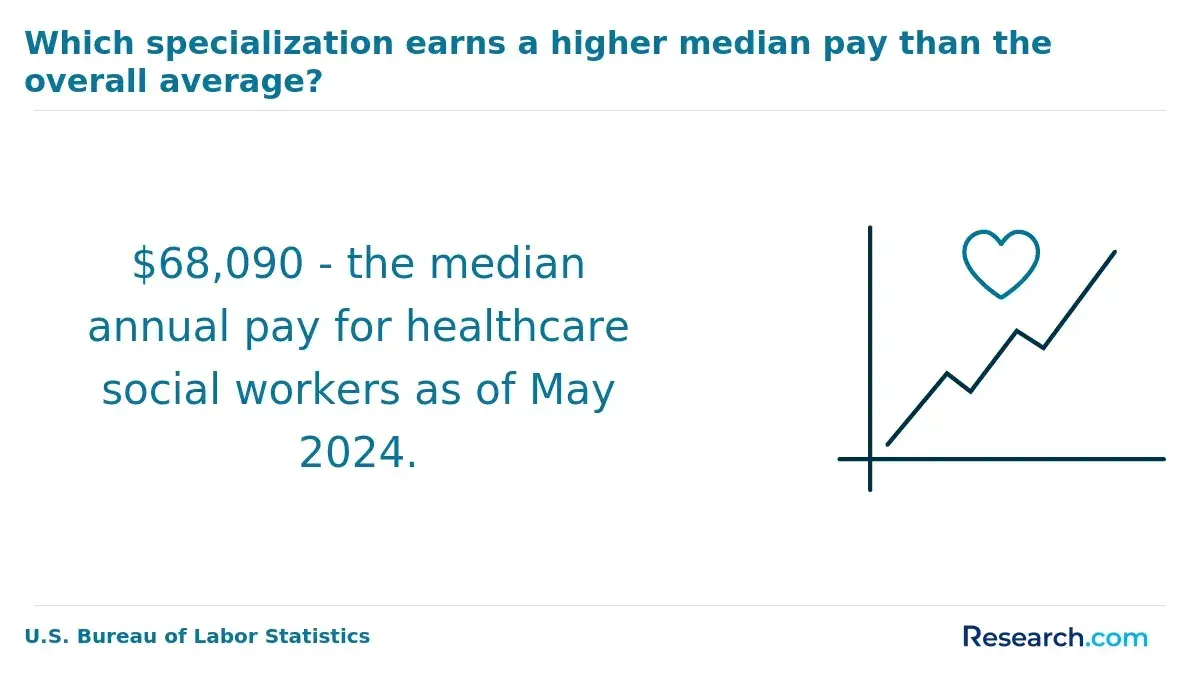
MSW salary expectations vary by concentration, licensure status, employer, location, experience, and whether the role involves clinical practice, healthcare, school systems, public agencies, or administration. The median annual wage for licensed clinical social workers is around $62,000, with the top 10% earning more than $90,000. These figures should be treated as broad reference points rather than guarantees for any single graduate.
Specializations such as healthcare, clinical practice, and school social work often offer stronger salary potential when demand is high and licensure or certification is required. Policy, administration, and nonprofit leadership roles can also become higher-paying over time, especially when they involve supervision, budgeting, program direction, or public-sector leadership.
Employment in social work is expected to grow 13% from 2024 to 2034, exceeding average job growth rates. This projected growth is connected to demand for mental health services, an aging population, healthcare needs, school-based support, and community services.
Licensure is one of the biggest factors in salary growth. Graduates who complete the required supervised experience, pass the relevant exam, and maintain continuing education can qualify for roles with broader responsibility and, in some settings, higher compensation. About 30% of licensed social workers earned their degrees through online or hybrid programs, with no notable differences in licensure success compared to traditional formats. Graduates consistently meet or exceed competency standards in key professional areas.
When comparing concentrations, consider both earnings and job fit:
- Clinical social work: Often provides a clear path to therapy roles and independent practice where permitted by state law.
- Healthcare social work: May offer stable demand in hospitals, hospice, rehabilitation, and integrated care settings.
- School social work: Can provide structured employment in education systems, though requirements vary by state and district.
- Substance abuse treatment: Can lead to faster employment and salary growth in areas with strong behavioral health demand.
- Policy and nonprofit leadership: May offer higher compensation as graduates move into management, program direction, or government roles.
To improve earning potential, students should choose a concentration aligned with licensure goals, complete field placements strategically, pursue licensure promptly when required, build experience in high-need settings, and monitor regional demand before committing to a location.
How Do MSW Concentrations Prepare You for Licensing?
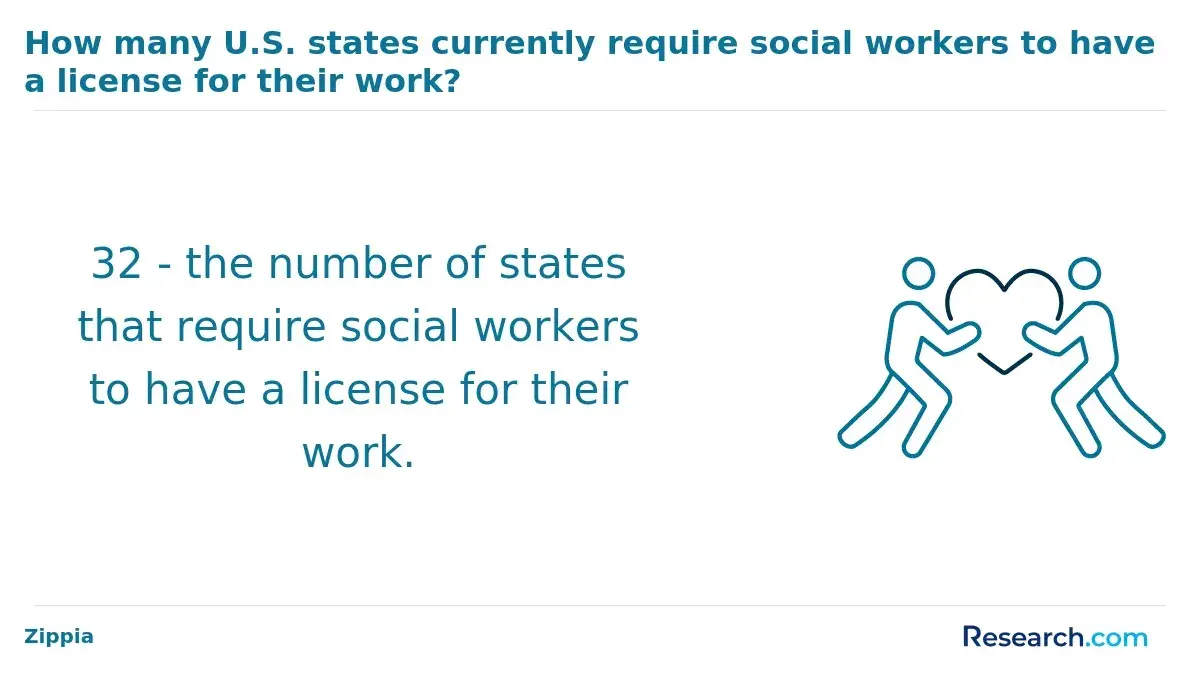
MSW concentrations prepare students for licensing by aligning coursework, competencies, field placements, and documentation with the type of license they plan to pursue. Licensing rules are set by states, so students should never assume that a concentration title alone is enough. They should verify requirements with the state licensing board where they intend to practice.
Clinical social work concentrations are typically the most directly connected to LCSW preparation. They usually include assessment, diagnosis, clinical intervention, ethics, treatment planning, and supervised practice with individuals, families, or groups. This background can support later eligibility for exams such as the ASWB Clinical, depending on state rules.
Other concentrations may support different licensing or credentialing goals. School social work may need to align with education department or school certification requirements. Healthcare social work may not always require a separate healthcare license, but clinical roles in hospitals or medical systems may still prefer or require licensed professionals. Child welfare, substance abuse, and family service tracks may include laws, reporting requirements, ethical standards, and practice skills that support specialized employment and, where applicable, licensing pathways.
Choosing a concentration that matches your intended license can reduce the risk of needing extra coursework or additional supervised experience after graduation. This is especially important for online students, because field placements occur in their local communities and must still satisfy program and licensing expectations.
Practical alignment also matters for students who plan to stay with or return to an employer. Studies show 46% of online MSW graduates return to previous employers, compared to 20% of in-person graduates, reflecting how concentrations often reinforce existing career paths. A healthcare employee, for example, may benefit from a healthcare social work concentration if it supports advancement within that system and aligns with licensing expectations.
Before enrolling, prospective students should ask each program:
- Does this concentration meet educational expectations for the license I want in my state?
- Will field placements include the type of supervised experience required for my licensing path?
- Does the program provide licensure advising for online students in multiple states?
- Which ASWB exam or state credential do graduates typically pursue?
- Will I receive the documentation needed for supervised hours, field evaluations, and board applications?
The safest approach is to start with the license and work backward. Identify the state requirements, choose a CSWE-accredited program, select a concentration that supports the required competencies, and secure field placements that produce relevant supervised experience.
Other Things You Should Know About Social Work
Field placement requirements vary by concentration, but CSWE-accredited online MSW programs usually require at least 900 supervised practicum hours total. Clinical tracks often place students in therapy or assessment settings, while macro tracks use policy, administration, or community agencies. Many programs split hours across foundation and advanced placements.
Yes, many online MSW programs include clinical tracks designed to prepare students for licensing as clinical social workers. These programs typically require supervised fieldwork or practicums that meet state licensing board standards. Graduates from accredited online clinical MSW programs are eligible to pursue licensure exams in their respective states.
Online social work education may pose challenges such as requiring strong self-discipline and time management skills. Students must also seek practical field placements independently, which can vary in availability depending on location. However, reputable programs provide support through online resources, faculty mentoring, and networking opportunities to overcome these obstacles.
In 2027, a social work license remains pivotal for career growth. It allows you to practice clinically, increases job opportunities, and enhances credibility. A license can be essential depending on your chosen concentration within an online MSW program.
- What are the Admission Requirements for Online MSW Programs? https://www.onlinemswprograms.com/faqs/admission-requirements/
- MSW curriculum https://socialwork.wayne.edu/msw/curriculum
- 5 High-Paying Jobs You Can Get with an MSW https://onlinedegrees.keuka.edu/blog/highest-paying-msw-jobs
- Social Work Careers https://socialworklicensemap.com/social-work-careers/
- MSW Program Options and Curriculum - MSU Denver https://www.msudenver.edu/social-work/master-social-work/program-options-and-curriculum/
- MSW Salary Trends in India: Growth, Factors, and Job Prospects https://www.odljain.com/blog/msw-salary-trends-india-growth-job-prospects.html
- Socialworkdegrees https://socialworkdegrees.org
- How I Passed the Licensing Exam: 10 Tips https://www.socialworker.com/feature-articles/education--credentials/How_I_Passed_the_Licensing_Exam%3A_10_Tips/
- Application Requirements https://online.howard.edu/msw/admissions/application-requirements/
- Licensing FAQs - National Association of Social Workers https://www.naswma.org/page/LicensingFAQs