2027 Best Value CSWE-Accredited Online MSW Programs in the U.S.

Co-Founder and Chief Data Scientist
Choosing an online MSW is a licensing, cost, and career decision—not just a question of convenience. Students who already hold a bachelor’s degree, including many from fields outside social work, need a program that is affordable, flexible enough for adult responsibilities, and accredited in a way that supports future social work licensure.
The key credential to verify is Council on Social Work Education accreditation. CSWE accreditation matters because many licensing boards and employers use it as a baseline for determining whether an MSW program provides the required curriculum, field education, and professional preparation.
This guide explains what CSWE-accredited online MSW programs are, why students often choose online study over campus programs, how to compare value, what admissions and curriculum requirements usually include, how long programs take, what tuition may cost, and which careers and salary outcomes commonly follow an MSW.
Key Things You Should Know
- In 2026, over 150 CSWE-accredited online MSW programs offer flexible options, with many providing advanced standing for BSW holders to complete quicker degrees.
- Tuition varies widely; public universities average $18,000 annually for residents, while private institutions often exceed $30,000, influencing affordability and financial aid opportunities.
- Graduates from these programs benefit from strong licensure exam pass rates, typically above 80%, enhancing career prospects in clinical and macro social work fields.
What are CSWE-accredited online MSW programs?
CSWE-accredited online MSW programs are Master of Social Work degrees that meet the educational standards of the Council on Social Work Education. In practical terms, accreditation signals that the program has been reviewed for curriculum quality, faculty qualifications, field education structure, student outcomes, and alignment with professional social work competencies.
For students planning to become licensed social workers, CSWE accreditation is especially important. Licensing rules vary by state, but many boards expect applicants to graduate from a CSWE-accredited MSW program. Enrolling in a non-accredited program can create serious problems later, including limited licensure eligibility, fewer employer options, or the need to repeat coursework elsewhere.
Online MSW programs usually combine academic coursework with supervised field education. Courses may be asynchronous, synchronous, or a mix of both. Field placements are typically completed in approved agencies near the student’s location, such as hospitals, schools, mental health clinics, child welfare organizations, community nonprofits, or government agencies.
Many programs also offer pathways for different student backgrounds. Traditional MSW tracks are commonly designed for students with bachelor’s degrees in other fields, while advanced standing tracks are usually intended for applicants who already hold a Bachelor of Social Work from a CSWE-accredited program.
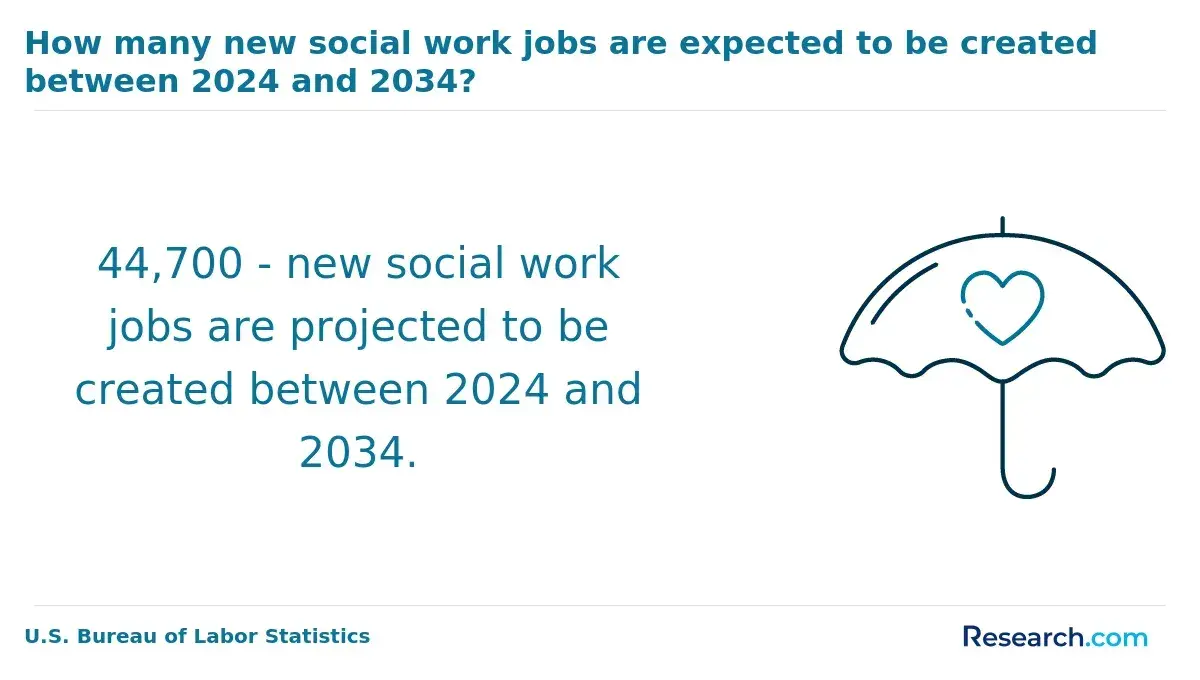
Employment in social work is expected to grow substantially, with the U.S. Bureau of Labor Statistics projecting a 13% increase by 2032. Graduates of CSWE-accredited online programs can pursue roles in healthcare, schools, child welfare, behavioral health, community practice, and policy settings, depending on state rules, specialization, and licensure level.
Students who later want to move into advanced practice, higher education, research, or executive leadership may also compare social work doctorate programs online after completing the MSW.
Why choose online MSW programs over campus options?
Online MSW programs can be a better fit for students who need to keep working, live far from a campus, care for family members, or want to avoid relocation. The strongest online programs are not “easier” versions of campus degrees; they are structured differently, with digital coursework and locally arranged field education.
Cost is one of the main reasons students compare online options. Advanced standing online MSW tracks typically cost a median total of $25,400, with over 72 accredited online programs averaging 32% lower expenses compared to on-campus options. For students who can avoid moving, commuting, parking, or reducing work hours, the total savings may be larger than tuition alone suggests.
Flexibility is another major advantage. Many online programs use asynchronous coursework so students can complete lectures, readings, and assignments around employment schedules. Others include live evening or weekend classes to support discussion, role-play, supervision, and cohort connection. The right format depends on how much structure a student needs.
Online study may be especially useful for students in rural areas or underserved regions where nearby campus-based MSW options are limited. It can also help working social service professionals advance without leaving their current employers.
However, online is not automatically the best choice for everyone. Students should compare how each program handles field placement coordination, faculty access, technology requirements, group projects, and live attendance expectations. A low-tuition program with weak practicum support can become stressful if students must find placements entirely on their own.
- Choose online if schedule flexibility, location independence, and lower indirect costs are top priorities.
- Choose campus or hybrid study if you prefer in-person networking, face-to-face classroom practice, or direct access to local faculty and agencies.
- Compare both formats by total cost, field placement support, accreditation, licensure alignment, and completion timeline.
Students focused primarily on cost can start by reviewing the most affordable MSW programs while still confirming CSWE accreditation and field education support.
How to find the best value online MSW programs?
The best value online MSW program is not always the cheapest. A high-value program combines CSWE accreditation, manageable tuition, strong field placement support, licensure alignment, useful specialization options, and a format the student can realistically complete.
Start with accreditation. Confirm the program’s CSWE status directly through official sources, not only through marketing pages. Then evaluate total cost, including tuition, fees, technology charges, travel for any campus intensives, books, and the financial impact of reducing work hours during field placement.
Next, look closely at the field education model. Ask whether the school helps identify and approve placements, how far in advance placements are arranged, whether evening or weekend placements are possible, and what happens if a placement falls through. Field education is often the hardest part of an online MSW to schedule, especially for working students.
Program length also affects value. Advanced standing, accelerated, full-time, and part-time tracks can produce very different costs and opportunity costs. Some students save money by finishing faster; others need a slower pace to avoid burnout or maintain income.
Return on investment should be evaluated realistically. MSW graduates typically see a 75% salary increase within a year of graduation, with median earnings around $62,000 versus $35,000 for BSW holders, as noted in Human Services Edu's 25 Best Fully Online MSW Programs for 2026. Actual outcomes still depend on location, licensure, specialization, employer type, and prior experience.
Specialization is another value factor. Students interested in therapy should verify clinical preparation and licensure support. Those aiming for policy, administration, school social work, healthcare, or community practice should review electives, practicum options, and alumni roles in those areas.
- Verify CSWE accreditation before reviewing anything else.
- Compare total program cost, not only per-credit tuition.
- Ask detailed questions about field placement support.
- Check whether the curriculum matches your state’s licensure pathway.
- Review available concentrations, electives, and practicum settings.
- Look for transparent student support, advising, and career services.
Students who want a shorter route may also compare online accelerated MSW programs, while weighing whether the pace is sustainable with work and field hours.
The main accreditation to look for in an MSW program is Council on Social Work Education accreditation. CSWE accreditation is the recognized quality standard for social work education in the United States and is often tied to licensure eligibility, employer recognition, and graduate professional credibility.
CSWE accreditation evaluates whether a program prepares students for competent, ethical social work practice. Review areas include curriculum design, faculty qualifications, field education, assessment of student learning, and program outcomes. Accredited programs are expected to teach core competencies such as social work ethics, human behavior, research, policy, diversity and inclusion, assessment, intervention, and practice with individuals, families, groups, organizations, and communities.
This matters because social work is a regulated profession. A degree that does not meet accreditation expectations may limit a graduate’s ability to pursue licensure or compete for professional roles. Students should be particularly careful with programs that use broad language such as “aligned with professional standards” but do not clearly state CSWE accreditation.
Data from the CSWE 2025 Annual Statistics report reveals that 95% of online MSW graduates from accredited institutions secure social work employment within six months, outperforming national averages by 15%. While individual outcomes vary, accreditation remains one of the clearest signals that a program has met an external professional standard.
Before applying, students should confirm three items: the institution’s overall accreditation, the MSW program’s CSWE accreditation, and the program’s fit with the licensure requirements in the state where they plan to practice. Licensing rules can differ for LMSW, LSW, LCSW, LICSW, and similar credentials, so students should verify requirements with the relevant state board.
Students still weighing whether the field fits their goals can review resources such as should i study social work before committing to an MSW pathway.
Most online MSW programs require applicants to hold a bachelor’s degree from an accredited institution. The degree does not always have to be in social work. Students with backgrounds in psychology, sociology, human services, public health, education, criminal justice, or unrelated fields may qualify for traditional MSW tracks if they meet the program’s academic requirements.
Advanced standing admission is usually more restrictive. These tracks are generally intended for applicants with a Bachelor of Social Work from a CSWE-accredited program, because they build on undergraduate social work coursework and field education.
Common application materials include official transcripts, a resume or CV, letters of recommendation, and a personal statement. Many programs look for a minimum cumulative GPA, usually around 3.0 on a 4.0 scale, although some schools review applicants holistically and may consider professional experience, upward grade trends, volunteer service, or explanation of past academic challenges.
The personal statement is often more important than applicants expect. Strong statements explain why the applicant is pursuing social work, what populations or issues they hope to serve, how their experience has prepared them, and whether their goals match the program’s mission and concentration options.
Programs may request two or three letters of recommendation from professors, supervisors, volunteer coordinators, or professionals who can evaluate the applicant’s readiness for graduate-level study and human service work. Applicants without social work experience can strengthen their file through relevant volunteer work, case management exposure, advocacy experience, or employment in adjacent fields.
GRE requirements have become less common, but some programs or tracks may still request standardized test scores. International applicants may need TOEFL or IELTS results to document English proficiency. Interviews may also be used to assess communication skills, ethical judgment, maturity, and commitment to the profession.
Regional hotspots such as California, New York, and Texas represent 35% of social worker job openings. Online MSW programs improve placement rates by 40% for non-resident students in these states, emphasizing the importance of choosing an accredited program with strong placement and advising support.
CSWE-accredited MSW programs are designed to prepare students for professional social work practice through a combination of theory, skills training, ethics, research, policy study, and supervised field education. The curriculum should build both generalist competence and advanced practice skills.
Foundation coursework commonly covers human behavior in the social environment, social welfare policy, research methods, social work ethics, diversity and social justice, assessment, and practice with individuals, families, groups, organizations, and communities. Students learn how social systems, policy, trauma, poverty, discrimination, health, and family dynamics affect client outcomes.
Advanced coursework depends on the program’s concentration. Clinical tracks may emphasize diagnosis, evidence-informed interventions, psychotherapy methods, trauma-informed care, substance use, crisis intervention, and preparation for clinical licensure. Macro or community practice tracks may focus on policy advocacy, nonprofit leadership, program evaluation, grant writing, community organizing, and systems change.
Field education is the central applied component. Students complete supervised practicum hours in approved settings such as mental health clinics, hospitals, schools, child welfare agencies, community organizations, substance use treatment programs, and government agencies. Online students usually complete these requirements in or near their local communities, subject to program approval and state rules.
Ethical decision-making and cultural competence should appear throughout the curriculum rather than as isolated topics. Students should expect to examine confidentiality, mandated reporting, boundaries, power dynamics, anti-oppressive practice, and culturally responsive service delivery.
Tuition trends show increased accessibility, with 2025-2026 rates dropping 12% on average due to flat-rate pricing in 60% of accredited online programs. This pricing can save students up to $15,000 compared to traditional out-of-state fees. Even so, students should review whether the curriculum includes the courses and field experiences needed for their intended licensure and career path.
When comparing programs, ask whether the curriculum is more clinically focused, community focused, policy focused, or broadly generalist. The best fit is the program that supports the work you want to do after graduation, not simply the one with the longest list of electives.
Online MSW programs generally take two to three years to complete, depending on the student’s prior education, enrollment status, program format, and field placement schedule. Full-time traditional students commonly finish in about two years, while part-time students may take three or more years.
Students with a CSWE-accredited Bachelor of Social Work may qualify for advanced standing, which can shorten completion time to roughly one year. This path is not typically available to students whose bachelor’s degree is in another field, even if they have human services experience.
Program pace affects more than graduation date. A faster format can reduce time away from higher-level roles, but it may require heavy course loads and intensive field hours. A part-time format may be easier to manage with employment and caregiving, but it can extend tuition payments and delay licensure progress.
The advanced standing path offers notable benefits. According to the Human Services Edu 2026 MSW Salary and ROI Report, advanced standing graduates start with a median salary 25% higher-$68,500 compared to peers on traditional tracks. This advantage is tied to reduced time to completion and earlier movement toward licensure and advanced roles.
Field education can be the biggest scheduling variable. Even if classes are asynchronous, practicum hours often need to occur during agency business hours. Students who work full time should ask whether evening, weekend, employment-based, or flexible placements are available and approved.
- Choose accelerated or advanced standing study if you can handle a demanding pace and meet eligibility rules.
- Choose full-time study if you want a standard timeline and can accommodate field placement hours.
- Choose part-time study if work, caregiving, or finances make a slower pace more realistic.
Before enrolling, students should ask advisors for a term-by-term plan showing courses, field hours, residency requirements if any, and expected weekly time commitment.
Tuition for top CSWE-accredited online MSW programs ranges from $15,000 to $45,000 for the entire degree depending on residency, length, and prestige. Public universities typically charge $15,000 to $25,000 for in-state students, while private programs may cost $30,000 to $45,000. Many programs bill per credit, with rates between $700 and $1,200 per credit; the full MSW usually requires 30 to 60 credits.
Total cost can vary sharply by track. Advanced standing students usually complete fewer credits than traditional students, which can reduce tuition and shorten time away from higher-paid roles. Part-time students may spread payments over a longer period, but should watch for fees charged each term.
Students should compare direct and indirect expenses. Direct expenses include tuition, mandatory fees, technology fees, books, background checks, liability insurance, and graduation fees. Indirect expenses may include reduced work hours, travel to field sites, childcare, and any required campus visits.
Affordable programs often include strong licensure support and field placement services, which help students complete their LSW licensure requirements more efficiently. According to the CSWE 2025 Field Education Outcomes Survey, 92% of online MSW students complete field placements leading to licensure within 12 months. Programs partnering with local agencies boost pass rates by 18% compared to those where students arrange placements independently. This support can justify higher tuition if it reduces delays, placement uncertainty, and time to licensure.
Financial aid may include federal student loans, institutional scholarships, employer tuition assistance, public service programs, military benefits, state grants, and agency-based stipends. Students should ask whether scholarships are automatically considered or require a separate application.
Key cost factors to review include:
- Tuition per credit and total program cost
- Residency status and whether online students receive in-state or special tuition rates
- Number of credits required for traditional and advanced standing tracks
- Mandatory fees, technology charges, and field placement expenses
- Scholarships, assistantships, employer benefits, or other aid
- Quality of field placement coordination and licensure exam preparation
- Any required campus intensives or travel costs
The lowest sticker price is not always the lowest-risk option. A slightly more expensive program with dependable placement coordination, responsive advising, and clear licensure guidance may provide better value than a cheaper program that leaves students to navigate key requirements alone.
An MSW can lead to clinical, community, administrative, policy, and leadership roles across the social services sector. The specific jobs a graduate can pursue depend on specialization, field experience, state licensure, and whether the graduate completes post-degree supervised clinical hours.
Many graduates pursue licensed clinical social work. In these roles, social workers may provide psychotherapy, assessment, crisis intervention, treatment planning, and case coordination in mental health clinics, hospitals, private practices, substance use programs, or community agencies. Clinical roles typically require additional supervised experience and examination after graduation.
Healthcare is another major pathway. MSW graduates may work as medical social workers, care coordinators, discharge planners, hospice social workers, patient advocates, or behavioral health specialists. These roles often involve helping clients and families navigate illness, disability, insurance barriers, treatment decisions, and community resources.
School social work is a common option for graduates interested in children, families, and educational systems. School social workers may address attendance, behavioral concerns, trauma, family instability, special education needs, and access to services. Requirements vary by state and may include school-specific credentials.
Child welfare, family services, and community practice also employ many MSW graduates. Roles may involve foster care, adoption, family reunification, domestic violence services, housing support, reentry programs, crisis response, and services for older adults, immigrants, veterans, or people experiencing homelessness.
MSW graduates can also move into nonprofit management, program evaluation, grant writing, policy advocacy, workforce development, and public administration. These roles draw on social work training in systems thinking, ethics, community engagement, research, and equity-focused practice.
Specialized areas include forensic social work, gerontology, military social work, substance use services, trauma response, and integrated behavioral health. Administrators and educators with an MSW may later contribute to supervision, training, organizational development, or social work education.
The growth of online MSW programs has increased diversity, with underrepresented minorities making up 42% of new cohorts. For career flexibility, students should plan early for licensure requirements, certifications, continuing education, and field placements that match their intended specialty.
What salary and job outlook for MSW graduates?
Salary and job outlook for MSW graduates vary by role, location, licensure, employer type, specialization, and years of experience. Clinical licensure, healthcare settings, government employment, and specialized behavioral health roles often improve earning potential, but outcomes are not guaranteed.
Demand for clinical social workers with online MSW degrees is expected to grow 22% by 2030, driven by a 15% shortage of licensed practitioners nationwide, according to the U.S. Bureau of Labor Statistics 2025 Long-Term Occupational Projections.
The median annual salary for MSW graduates typically ranges from $60,000 to $75,000, varying by location, employer, and specialization. Clinical social workers in urban or specialized mental health settings may earn over $80,000, while those in rural or nonprofit roles often see salaries between $50,000 and $60,000.
Benefits can also affect total compensation. Hospitals, government agencies, universities, and large health systems may offer retirement plans, health insurance, paid leave, supervision support, continuing education funding, and loan forgiveness opportunities. Smaller nonprofits may offer lower salaries but provide mission alignment, broad experience, or faster responsibility growth.
Job opportunities for MSW holders extend beyond therapy. Graduates may work in school social work, child welfare, healthcare case management, community mental health, substance use treatment, aging services, policy advocacy, nonprofit leadership, and program administration. Healthcare settings are expanding rapidly and may offer salaries above average.
Licensure is one of the most important salary factors. Graduates who pursue clinical licensure may qualify for a wider range of behavioral health and private practice roles, while nonclinical graduates may advance through program management, policy, supervision, and administrative tracks.
Students should evaluate salary expectations by state and metro area before enrolling. A strong MSW program should help students understand local licensure rules, field placement options, and employment pathways so they can connect the degree to a realistic career plan.
Other Things You Should Know About Social Work
Graduates of CSWE-accredited MSW programs must obtain licensure to practice as social workers, which typically involves passing a state-specific exam such as the ASWB (Association of Social Work Boards) exam. Additionally, most states require a certain number of supervised clinical hours, often ranging from 2,000 to 4,000, completed after graduation before full licensure is granted.
Top CSWE-accredited online MSW programs offering the best value in 2027 include the University of Central Florida, the University of South Florida, and Indiana University. These programs are renowned for their cost-effectiveness, flexible study options, and comprehensive curriculum that meets licensure requirements.
Many online MSW programs offer specialization tracks such as clinical social work, child and family services, or community organization. These concentrations allow students to tailor their education toward specific career goals while still meeting all core curriculum requirements set by the CSWE.
CSWE-accredited MSW programs require at least 900 hours of supervised field education, and many programs divide them into foundation and advanced placements. Students must complete placements approved by the program and supervised by qualified field instructors, even when the degree is earned online.
- All CSWE Accredited Online MSW Programs (2025 Update) https://www.masterofsocialwork.com/online-msw-programs
- Social Worker (LCSW, MSW) Salary Guide By State https://socialworklicensemap.com/social-work-careers/social-work-salary/
- Online Master’s in Social Work Programs https://onlinecounselingprograms.com/online-counseling-degrees/cswe-accredited-online-msw-programs/
- Social Worker Salary and Jobs in Social Work https://teach.com/online-ed/social-work-degrees/online-masters-social-work/salary-and-career-outlook/
- What CSWE Accreditation Tells You About an MSW Program https://www.chamberlain.edu/blog/what-is-cswe-accreditation-and-what-are-its-benefits
- Social Work Salaries https://www.socialworkers.org/careers/career-center/kickstart-your-job-hunt/social-work-salaries
- Traditional vs. Accelerated MSW Programs https://www.socialworkdegreecenter.com/accelerated-msw/traditional-vs-accelerated/
- The Importance of a CSWE Accredited Program in Social Work - Tulane School of Social Work https://socialwork.tulane.edu/blog/importance-of-cswe-accredited-program/
- Most Affordable Online MSW Programs | Grad School Hub https://www.gradschoolhub.com/affordable/online/masters/social-work/
- MSW Career Outlook https://www.kysu.edu/academics/college-as/school-of-social-work/careers/msw-career-outlook.php