2027 How to Become a Wildlife Biologist? Salary & Career Paths

Co-Founder and Chief Data Scientist
Becoming a wildlife biologist in the United States is not just a matter of loving animals or wanting to work outdoors. It is a science career that usually requires a biology-focused degree, field experience, data skills, comfort with rugged conditions, and a realistic understanding of a competitive job market. This guide explains how to become a wildlife biologist for 2027, what the work actually involves, which degrees and credentials matter, how salaries and job prospects look, and how to decide whether this path fits your goals.
You will also learn how to compare education options, where online environmental science programs may help, what ethical and legal rules shape the profession, and which mistakes can slow down your progress. The goal is simple: help you build a practical path into wildlife biology instead of relying on scattered or outdated advice.
Quick Answer: How Do You Become a Wildlife Biologist?
To become a wildlife biologist, you typically need at least a bachelor's degree in wildlife biology, zoology, ecology, conservation biology, or a closely related biological science. A master's degree is often preferred for research, project leadership, and advancement, while a Ph.D. is usually expected for university teaching or independent research roles. Field experience, GIS skills, statistics, scientific writing, and familiarity with wildlife laws are also important. Professional certification through The Wildlife Society (TWS) can strengthen your credibility, although licensing requirements vary by state and by activity.
Key Things You Should Know About Becoming a Wildlife Biologist
- Minimum education: Most employers expect a bachelor's degree in wildlife biology, ecology, zoology, conservation biology, or another biological science. Graduate education is often needed for research-heavy or senior roles.
- Important coursework: Strong programs usually include ecology, zoology, botany, wildlife management, conservation biology, statistics, and Geographic Information Systems (GIS).
- Field experience matters: Internships, seasonal jobs, undergraduate research, volunteer surveys, and technician roles often carry major weight in hiring decisions.
- Useful credentials: The Associate Wildlife Biologist® and Certified Wildlife Biologist® credentials from The Wildlife Society can demonstrate that your education and experience meet professional standards.
- Common specializations: Wildlife biologists may focus on habitat management, population ecology, conservation genetics, disease ecology, human-wildlife conflict, endangered species, or environmental consulting.
- Technical skills are essential: Employers often value GIS, GPS, telemetry, remote sensing, data management, R or Python, statistical analysis, and clear report writing.
- Communication is part of the job: Wildlife biologists frequently explain findings to agencies, landowners, tribal governments, nonprofits, policymakers, and the public.
- Fieldwork can be physically demanding: Work may involve remote locations, irregular hours, harsh weather, long hikes, boats, aircraft, or wildlife handling.
- The market is competitive: Federal and state agencies, consulting firms, universities, and conservation nonprofits hire wildlife biologists, but desirable roles can attract many applicants.
- Ongoing learning is expected: Conservation science changes as new technologies, regulations, and ecological threats emerge.
- Pay varies widely: Salary depends on employer, location, degree level, seniority, funding source, and specialization.
- Personal fit matters: Strong candidates are patient, detail-oriented, adaptable, ethical, comfortable outdoors, and able to work independently and on teams.
- Networking helps: Joining professional organizations, attending conferences, and building mentor relationships can lead to internships, seasonal jobs, and long-term opportunities.
- How can you become a wildlife biologist for 2027?
- What does a wildlife biologist do?
- What are the educational requirements for becoming a wildlife biologist?
- What skills are required for wildlife biologists?
- What is the certification and licensing process for wildlife biologists?
- What ethical and legal guidelines should you observe as a wildlife biologist?
- How much can you earn as a wildlife biologist?
- What is the job market like for a wildlife biologist?
- What subspecialties and career paths are available for wildlife biologists?
- Can an online environmental degree accelerate career advancement?
- What challenges should you consider as a wildlife biologist?
- How can an environmental science online degree expand career opportunities in wildlife biology?
- Can affordable online credentials boost interdisciplinary conservation efforts?
- How can professional networks and mentorship drive career advancement in wildlife biology?
- How do emerging sustainability trends shape wildlife biology roles?
- How can wildlife biologists transition into environmental science roles?
- How does urban planning influence wildlife conservation?
How can you become a wildlife biologist for 2027?
The most reliable path into wildlife biology combines a relevant degree, repeated field experience, technical training, and professional connections. A degree gives you the scientific foundation, but fieldwork and data skills often determine whether you can compete for entry-level roles.
- Choose a biology-focused bachelor's program. Look for wildlife biology, zoology, ecology, conservation biology, fisheries and wildlife science, environmental science, or a related major. Students who need flexibility can compare accelerated online bachelor degree programs, but should confirm that the curriculum includes lab science, field methods, statistics, and ecology.
- Build field experience early. Apply for seasonal technician jobs, research assistant positions, park internships, wildlife surveys, rehabilitation volunteer roles, or conservation corps programs. Employers want evidence that you can collect reliable data in real field conditions.
- Develop quantitative and mapping skills. GIS, GPS, telemetry, database management, R, Python, and statistical analysis are increasingly valuable in wildlife research and management.
- Consider graduate school strategically. A master's degree can improve access to research, consulting, management, and specialist roles. A doctorate is most relevant for university faculty positions and independent research leadership.
- Join professional networks. Attend local and national meetings, join student chapters, connect with agency biologists, and ask faculty or supervisors about seasonal openings.
- Apply broadly for entry-level roles. Common first jobs include wildlife technician, biological science technician, field assistant, habitat technician, GIS assistant, environmental consultant assistant, or research aide.
- Evaluate certification once you qualify. Credentials such as Associate Wildlife Biologist® or Certified Wildlife Biologist® can help signal professional readiness, especially when paired with strong experience.
| Career stage | What to focus on | Why it matters |
| High school or early college | Biology, ecology, statistics, outdoor experience, volunteering | Helps confirm interest and prepares you for science-heavy coursework |
| Bachelor's degree | Wildlife biology courses, field methods, GIS, internships, undergraduate research | Meets typical entry-level education expectations and builds employable skills |
| Entry-level work | Seasonal technician roles, survey work, data entry, report writing, permits | Converts academic knowledge into real field competence |
| Graduate study or specialization | Population modeling, disease ecology, habitat restoration, conservation genetics, policy, consulting | Supports advancement into research, management, and higher-responsibility roles |
| Mid-career advancement | Project leadership, grant writing, stakeholder communication, certification, mentoring | Prepares you for supervisory, agency, consulting, or research leadership positions |
A wildlife biology career is built over time. The strongest candidates usually combine formal education with repeated proof that they can conduct ethical, accurate, and useful work in the field.
What does a wildlife biologist do?
Wildlife biologists study animals, habitats, and ecosystems so that agencies, communities, landowners, and conservation organizations can make evidence-based decisions. Their work may involve endangered species monitoring, habitat restoration, environmental impact assessment, invasive species control, population modeling, wildlife health studies, or public education.
- Research wildlife behavior and ecology: Design studies, collect field observations, track movement, and assess habitat use.
- Monitor populations: Estimate abundance, survival, reproduction, distribution, and health trends.
- Manage habitats: Help restore wetlands, forests, grasslands, riparian zones, or other habitats needed by target species.
- Analyze data: Use statistical methods, GIS, and modeling tools to interpret field results and guide management decisions.
- Prepare technical reports: Write agency documents, environmental assessments, permit materials, grant reports, and scientific papers.
- Advise decision-makers: Provide scientific input for conservation plans, land-use decisions, mitigation strategies, and regulations.
- Work with stakeholders: Coordinate with landowners, tribal governments, local communities, developers, nonprofits, and public agencies.
- Support conservation action: Recommend strategies to protect species, improve habitats, reduce mortality, or resolve human-wildlife conflict.
- Evaluate environmental impacts: Assess how construction, energy development, agriculture, recreation, or climate pressures affect wildlife and ecosystems.
- Manage invasive species: Study, monitor, and help control non-native species that threaten native biodiversity.
- Assess wildlife health: Track disease outbreaks, collect samples, and collaborate with veterinarians or epidemiologists.
- Use GIS and spatial tools: Map habitat, migration corridors, survey points, land cover, and risk areas.
The importance of this work is clear in global conservation data. In 2024, approximately 17,832 animal species are listed as endangered on the IUCN Red List. Fish account for the largest share at 23%, totaling 4,017 species. Amphibians make up 16% with 2,873 species, while mollusks and insects each represent 14%, with 2,456 and 2,423 species. Reptiles account for 10% with 1,845 species, mammals for 8% with 1,354 species, and birds for 7% with 1,311 species. Other animal groups, including invertebrates such as crustaceans and arachnids, represent 9% with 1,533 species. These figures, sourced from the International Union for Conservation of Nature and shown in the graph below, show why wildlife biologists are needed across aquatic, terrestrial, and invertebrate conservation.
With nearly 18,000 endangered animal species identified by the IUCN Red List, wildlife biology is directly tied to biodiversity protection. The high number of endangered fish and amphibians also shows why the field is broader than charismatic mammals and birds. Many urgent conservation problems involve aquatic systems, disease, habitat fragmentation, climate stress, and species groups that receive less public attention.
What are the educational requirements for becoming a wildlife biologist?
A bachelor's degree is the usual starting point for wildlife biology jobs, but the right coursework and experience matter as much as the title of the degree. Employers typically look for a strong biological science foundation, field methods, quantitative training, and evidence that you understand wildlife management issues.
| Credential | Best for | What to check before enrolling |
| Bachelor's degree | Entry-level wildlife technician, biological science technician, habitat assistant, field assistant, and some agency or nonprofit roles | Confirm coursework in ecology, zoology, botany, conservation, statistics, GIS, and field techniques |
| Master's degree | Research roles, project management, consulting, senior agency work, and specialized conservation positions | Look for funded assistantships, faculty research fit, thesis options, field access, and employer outcomes |
| Ph.D. | University teaching, independent research, advanced modeling, principal investigator roles, and high-level scientific leadership | Evaluate advisor reputation, publication expectations, funding, research facilities, and long-term academic or research goals |
| Graduate certificate or professional coursework | Skill building in GIS, statistics, environmental policy, restoration, sustainability, or data analysis | Make sure the credential fills a real skill gap and is recognized by employers in your target sector |
- Bachelor's degree: Wildlife biology, ecology, zoology, fisheries and wildlife science, environmental science, conservation biology, and related majors are common. Students seeking lower-cost options can compare cheap online degrees, but should prioritize science quality, labs, transfer policies, and field opportunities.
- Master's degree: A graduate degree is often useful for research positions, consulting roles, applied management, and advancement beyond technician-level work.
- Doctorate: A Ph.D. is usually most relevant for academic faculty roles, independent research programs, and advanced scientific leadership.
- Core coursework: Biology, ecology, zoology, botany, conservation biology, wildlife management, statistics, GIS, scientific writing, and environmental law are highly relevant.
- Field courses: Classes that include wildlife surveys, habitat assessment, species identification, sampling design, and field data collection can make your resume stronger.
Online study can be useful for some environmental science, GIS, sustainability, or data-related coursework, but wildlife biology is a field-based profession. Before choosing an online program, ask how the school handles labs, field experiences, internships, research projects, and employer connections.
What skills are required for wildlife biologists?
Wildlife biologists need scientific, technical, physical, and interpersonal skills. The job is rarely limited to observing animals. It often requires planning surveys, managing data, interpreting laws, writing reports, presenting findings, and working with people who may have competing priorities.
| Skill area | Examples | How to build it |
| Field biology | Species identification, habitat assessment, animal tracking, camera traps, capture and handling, sample collection | Take field courses, volunteer on surveys, apply for seasonal technician roles, and learn from experienced field crews |
| Data and analysis | Statistics, R, Python, database management, population estimates, study design | Complete statistics courses, analyze real datasets, and document projects in a portfolio |
| GIS and technology | GIS mapping, GPS, telemetry, remote sensing, spatial analysis | Take GIS courses, practice with mapping projects, and use spatial tools in internships or research |
| Communication | Technical reports, public presentations, stakeholder meetings, grant writing, scientific papers | Write research summaries, present at student conferences, and ask mentors for feedback on reports |
| Professional judgment | Permitting, ethics, animal welfare, regulatory compliance, conflict management | Study environmental law, read agency guidance, and work under permitted professionals |
- Observation: Accurate notes on behavior, habitat, weather, location, and survey conditions are essential.
- Research design: Wildlife biologists must know how to ask testable questions and collect data that can answer them.
- Data interpretation: Numbers only matter if you can explain what they mean for management or policy.
- Physical stamina: Fieldwork can involve long days, remote sites, uneven terrain, heat, cold, insects, boats, or night surveys.
- Teamwork: Conservation projects often involve scientists, technicians, land managers, lawyers, engineers, planners, and community groups.
- Adaptability: Weather, wildlife behavior, equipment problems, access issues, and permit restrictions can change plans quickly.
- Writing: Clear writing is a career skill, not an optional extra. Reports, permit documents, and recommendations must be precise.
- Regulatory knowledge: Wildlife work often intersects with protected species rules, environmental review, land management policy, and state-specific requirements.
Many wildlife biology skills overlap with other technical professions, although the subject matter differs. For example, someone reviewing information security officer qualifications would see a different regulatory environment, but similar emphasis on risk assessment, documentation, ethics, and careful decision-making.
What is the certification and licensing process for wildlife biologists?
Wildlife biologists are not licensed in one uniform national system, but credentials and permits can still be important. Certification can strengthen professional credibility, while state or federal permits may be required for specific activities such as handling protected species, conducting surveys, rehabilitating wildlife, or working on regulated projects.
- The Wildlife Society certification: The Wildlife Society offers professional certification pathways, including Certified Wildlife Biologist (CWB). These credentials generally signal that a professional has met defined education and experience standards and agrees to professional ethics.
- State-specific licensing and permits: Some activities require state approval, especially wildlife rehabilitation, handling certain species, trapping, hunting-related management, or protected-species work.
- Federal permits: Work involving federally protected species, migratory birds, endangered species, or research on certain public lands may require additional authorization.
- Specialized credentials: GIS, wetland delineation, habitat restoration, animal tracking, environmental assessment, or data analysis certifications may help in consulting or agency roles.
- Continuing education: Maintaining credentials often requires ongoing professional development through workshops, conferences, coursework, or documented experience.
- Graduate education: Some professionals pursue advanced degrees to qualify for higher-level roles. Flexible options such as 1 year master's programs online may be worth comparing, but wildlife biologists should verify whether the program includes the scientific depth and field relevance they need.
| Credential or approval | When it may matter | Decision tip |
| Associate Wildlife Biologist® | Early-career professionals who meet education standards but are still building experience | Useful if your coursework aligns with professional wildlife biology standards |
| Certified Wildlife Biologist® | Experienced professionals seeking stronger professional recognition | Best paired with substantial applied experience and a clear career focus |
| State permits or licenses | Species handling, rehabilitation, surveys, harvest management, or protected wildlife work | Check requirements in the state where you plan to work, not just where you studied |
| Specialized technical certificates | GIS, wetland work, restoration, environmental consulting, or data-heavy roles | Choose credentials that match employer requirements in job postings |
According to data from the U.S. Bureau of Labor Statistics, Washington employs the largest number of zoologists and wildlife biologists, with 2,040 workers. California follows with 1,620, Florida with 1,310, Oregon with 1,180, and Colorado with 880. As shown in the graph below, employment is often concentrated in states with major natural resources, strong conservation programs, and substantial public land or environmental management needs.
What ethical and legal guidelines should you observe as a wildlife biologist?
Wildlife biologists work with living animals, public resources, private lands, sensitive data, and sometimes controversial policy questions. Ethical conduct is not separate from the science; it determines whether findings are credible and whether conservation actions are defensible.
- Protect animal welfare: Use humane capture, handling, marking, and sampling methods. Any procedure should have a clear scientific or management purpose.
- Follow environmental laws: Comply with federal, state, tribal, and local rules related to protected species, habitats, environmental review, research access, and specimen collection.
- Maintain data integrity: Record observations accurately, preserve original data, disclose uncertainty, and avoid manipulating results to support a preferred outcome. Students interested in deeper analytics can also compare the cheapest online Masters in Data Analytics programs as a way to strengthen quantitative skills.
- Secure permits and permissions: Obtain required approvals from agencies, landowners, institutional review bodies, or project sponsors before starting work.
- Be transparent about conflicts: Disclose financial, professional, or personal interests that could affect recommendations.
- Respect communities and landowners: Conservation work often succeeds or fails based on trust, especially when private land, working landscapes, or culturally significant places are involved.
- Protect sensitive species information: Location data for rare, threatened, or commercially valuable species may need to be restricted to prevent harm.
- Communicate uncertainty honestly: Wildlife data can be incomplete. Ethical professionals explain limitations instead of overstating certainty.
- Prioritize long-term ecosystem health: Decisions should consider biodiversity, habitat function, sustainability, and legal obligations, not only short-term convenience.
- Keep learning: Best practices change as new research, technologies, and regulations emerge.
Ethics and legal compliance protect animals, ecosystems, clients, agencies, and the reputation of the profession. They also help wildlife biologists navigate difficult trade-offs when conservation goals, development pressure, public safety, and funding constraints collide.
How much can you earn as a wildlife biologist?
Wildlife biology salaries depend on education, experience, geography, employer type, funding source, and specialization. A bachelor's degree can qualify candidates for some entry-level positions, but higher-paying research, management, and senior roles often favor candidates with graduate education, technical expertise, and proven project experience. Students comparing science majors may also review broader guidance on the best degrees to get, while keeping in mind that wildlife biology is usually chosen for mission fit as well as compensation.
- According to the U.S. Bureau of Labor Statistics, the median annual wage for zoologists and wildlife biologists was $70,600 in May 2023.
- Entry-level and seasonal roles may pay less than permanent professional roles, while senior, specialized, or supervisory positions may pay more.
- Government agencies, universities, research organizations, consulting firms, nonprofits, and federal contractors can have different compensation structures and benefits.
The salary data shown in the graph below illustrates how compensation can vary across related roles. Fish and Wildlife Biologists earn between $61,619 and $78,010, while Senior Biologists average $84,800. Wetland Scientists earn about $69,196, general Wildlife Biologists average $58,721, Wildlife Biologists in California earn $64,065, and those in Texas earn $57,488. Wildlife Biologists working for the U.S. Department of Defense earn $65,444. Zoologists or Wildlife Biologists typically earn between $55,194 and $81,064. These differences reflect specialization, location, seniority, and employer type.
Salary should be evaluated alongside job stability, benefits, location, field demands, advancement potential, and the cost of any additional education. A higher degree can improve access to some roles, but it is not automatically a guarantee of higher pay.
What is the job market like for a wildlife biologist?
The wildlife biology job market is stable but competitive. Demand is shaped by public funding, environmental regulation, infrastructure projects, conservation priorities, climate impacts, endangered species needs, and the availability of research grants. Many people want to work with wildlife, so candidates with field experience, technical skills, and strong references tend to be more competitive.
- The BLS projects that employment of zoologists and wildlife biologists is projected to grow 5 percent from 2022 to 2032, about as fast as the average for all occupations.
- Government agencies, nonprofit conservation organizations, universities, environmental consulting firms, zoos, and research institutions are common employers.
- Competition can be strongest for permanent roles, high-profile species work, desirable locations, and jobs with stable public benefits.
- Conservation funding can create or limit opportunities, especially for research and nonprofit positions.
- Environmental pressures may support ongoing demand for professionals who can work on habitat, species, invasive species, and land-use challenges.
- Some professionals pursue leadership training later in their careers; for those considering broader management roles, the cheapest online doctorate in organizational leadership programs may be relevant outside traditional wildlife science pathways.
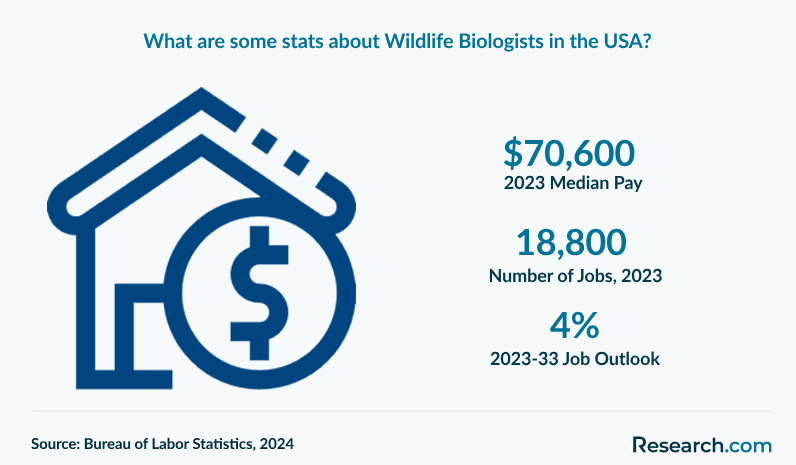
In 2023, the median annual pay for Zoologists and Wildlife Biologists was $70,600, or $33.94 per hour, according to the U.S. Bureau of Labor Statistics. A bachelor's degree is the typical entry-level education requirement, with no related work experience or on-the-job training generally required. The field had 18,800 jobs in 2023. From 2023 to 2033, employment is projected to grow by 4%, which is considered as fast as the average for all occupations, adding 800 jobs. These figures, shown in the graphic below, suggest moderate growth rather than rapid expansion.
How to Improve Your Odds in a Competitive Market
- Apply for seasonal roles before graduation: Technician experience can be the bridge between coursework and permanent employment.
- Learn GIS and statistics: These skills appear across agency, consulting, and research roles.
- Be willing to relocate: Wildlife jobs are often tied to specific habitats, agencies, research sites, or field stations.
- Document your field skills: Keep a record of species surveyed, methods used, equipment handled, software learned, and reports written.
- Build references: Supervisors who can confirm reliability, safety, accuracy, and teamwork can be decisive.
- Read job postings early: Use current postings to identify the skills employers request most often for your target roles.
What subspecialties and career paths are available for wildlife biologists?
Wildlife biology is broad. Some professionals work mostly outdoors, while others spend much of their time on data analysis, policy, permitting, management, teaching, or public engagement. Specialization can help you become more competitive, especially if it aligns with agency needs or funded conservation priorities.
| Specialty or role | Primary focus | Good fit for people who like |
| Mammalogy | Mammal ecology, behavior, conservation, and management | Field surveys, tracking, population studies, and species-specific research |
| Ornithology | Bird populations, migration, breeding, habitat, and conservation | Early fieldwork, acoustic surveys, banding, migration data, and habitat management |
| Herpetology | Reptiles and amphibians, including ecology, disease, and conservation | Wetlands, night surveys, disease issues, and sensitive species work |
| Ichthyology | Fish and aquatic ecosystems | Streams, lakes, fisheries management, aquatic surveys, and water-quality issues |
| Conservation biology | Protection of species, habitats, and ecological processes | Applied science, endangered species, restoration, policy, and nonprofit work |
| Habitat management | Restoration, land management, prescribed interventions, and monitoring | Practical conservation work, land stewardship, and measurable habitat outcomes |
| Wildlife disease ecology | Pathogens, disease spread, population health, and management response | Lab-field collaboration, epidemiology, data analysis, and emerging threats |
| Environmental consulting | Surveys, permitting, environmental assessments, mitigation, and client reports | Applied regulations, deadlines, technical writing, and project-based work |
| GIS or remote sensing specialist | Spatial data, habitat mapping, movement patterns, and landscape analysis | Technology, mapping, modeling, and large-scale ecological questions |
| Wildlife law enforcement | Wildlife regulations, investigations, public safety, and resource protection | Law enforcement, outdoor work, public contact, and regulatory compliance |
Specialization works best when it is tied to a real labor-market need. For comparison, someone following an app developer career path may specialize in backend systems, mobile platforms, or user experience; wildlife biologists can also improve their prospects by developing a focused technical niche rather than remaining too general.
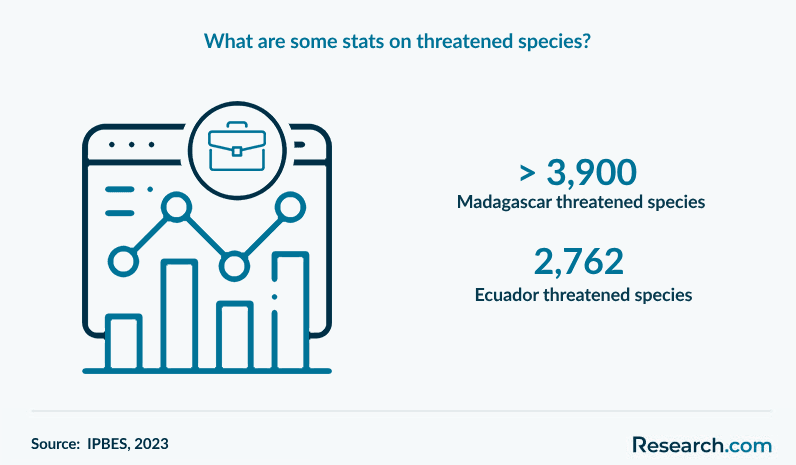
Threatened-species data also helps explain where specialized conservation expertise is needed. In 2024, Madagascar had the highest number of threatened species globally, with over 3,900 species at risk. Ecuador ranked second with 2,762 threatened species, about three-quarters of which were plants. The Americas were strongly represented among the countries with the largest number of threatened species, with five of the top ten located on that continent. The graphic below highlights biodiversity hotspots where targeted conservation planning is especially important.
Can an online environmental degree accelerate career advancement?
An online environmental degree can support wildlife biology advancement when it adds skills that your current background lacks. It may be especially useful for working professionals who need flexibility while strengthening knowledge in environmental policy, GIS, sustainability, ecological risk, environmental assessment, or data-driven resource management.
However, an online degree should be evaluated carefully. Wildlife biology remains a field-intensive discipline, so students should ask whether the program includes labs, field components, internship support, research opportunities, and faculty expertise that aligns with conservation work. An online program can help, but it should not leave you without the practical experience employers expect.
| Online degree may make sense if... | Be cautious if... |
| You already have field experience and need stronger credentials or technical skills | You have no field background and the program offers limited hands-on training |
| You are working full time and need a flexible format | You need a highly field-based degree but cannot access local field placements |
| The curriculum includes GIS, statistics, ecology, policy, and applied projects | The program is broad but thin on wildlife biology, field methods, or ecological science |
| You can verify accreditation, cost, transfer policies, and employer relevance | You are choosing mainly because the program is fast or inexpensive |
What challenges should you consider as a wildlife biologist?
Wildlife biology can be meaningful, but it is not always easy. Before committing to the field, weigh the professional, financial, physical, and emotional demands.
- Funding uncertainty: Research and conservation jobs can depend on grants, agency budgets, contracts, or project cycles.
- Competition for permanent roles: Many candidates start with seasonal or temporary positions before securing stable employment.
- Political and stakeholder pressure: Wildlife decisions may involve land use, development, agriculture, energy, recreation, hunting, or public safety.
- Climate change impacts: Changing temperature, precipitation, wildfire, sea level, and habitat conditions affect wildlife distribution and survival.
- Habitat loss and fragmentation: Development and land-use change can isolate populations and reduce habitat quality.
- Invasive species: Non-native species can transform ecosystems, displace native species, and increase management costs.
- Human-wildlife conflict: Biologists may help address crop damage, livestock predation, vehicle collisions, urban wildlife, or safety concerns.
- Difficult field conditions: Remote work, insects, rugged terrain, long hours, night surveys, and harsh weather may be routine.
- Ethical trade-offs: Conservation sometimes requires hard choices involving animal welfare, population control, relocation, or habitat intervention.
- Technology changes: Remote sensing, acoustic monitoring, AI-assisted image review, eDNA, and advanced modeling require continuous learning.
Career fit should include both passion and practicality. Just as prospective healthcare students might research what medical degree makes the most money before choosing a path, aspiring wildlife biologists should compare compensation, job availability, education cost, field demands, and long-term advancement.
According to the Intergovernmental Science-Policy Platform on Biodiversity and Ecosystem Services (IPBES) 2023 report, invasive alien species contributed to 60% of recorded global extinctions, with 90% occurring on islands, as shown in the graphic below. Examples include the European shore crab harming commercial shellfish beds in North America and the Chytrid fungus contributing to severe amphibian declines worldwide. The economic cost of biological invasions has also increased fourfold every decade.
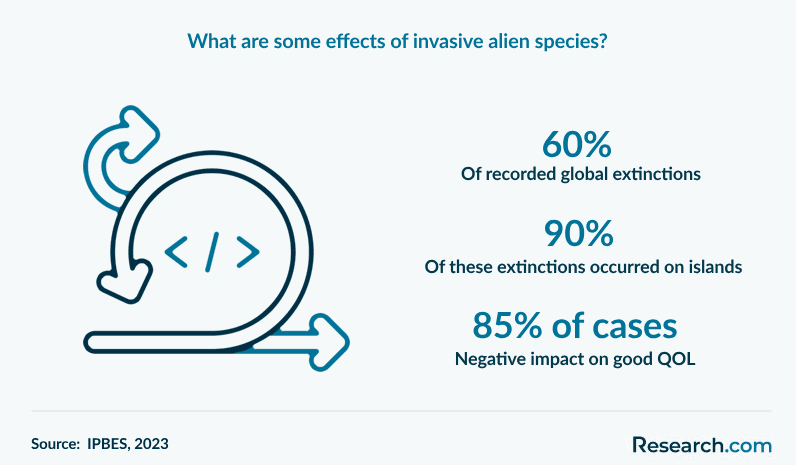
Invasive alien species also affect human well-being, with 85% of documented cases showing negative quality-of-life impacts. Japanese knotweed can reduce native plant diversity, the brown tree snake has caused local bird extinctions in Guam, buffel grass has restricted access to culturally important sites in Australia, and the Nile perch in Lake Victoria has contributed to the global extinction of many endemic cichlid fish species. These examples show why invasive species work often requires collaboration among wildlife biologists, land managers, policymakers, and communities.
How can an environmental science online degree expand career opportunities in wildlife biology?
An environmental science online degree can broaden a wildlife biology career by adding training in environmental assessment, policy, sustainability, water resources, geospatial analysis, and ecosystem management. This can be useful for professionals who want to move beyond species-specific fieldwork into consulting, environmental planning, regulatory work, restoration projects, or interdisciplinary research.
The best choice depends on your starting point. If you already have strong biology training, an environmental science program may add policy and systems-level perspective. If your background is broad environmental studies, you may need more wildlife-specific coursework and field experience before competing for wildlife biology roles.
Can affordable online credentials boost interdisciplinary conservation efforts?
Affordable online credentials can help wildlife professionals add targeted skills without committing to a full degree. For example, coursework in environmental engineering, hydrology, GIS, data analysis, sustainability, or restoration design may help bridge the gap between ecological science and practical conservation solutions. Students comparing technical options might review a cheap online environmental engineering degree if their goals involve water systems, infrastructure impacts, remediation, or habitat restoration design.
The key is relevance. A low-cost credential is only valuable if it improves your ability to qualify for specific jobs, solve real conservation problems, or meet employer expectations.
How can professional networks and mentorship drive career advancement in wildlife biology?
Mentorship and networking are especially important in wildlife biology because many opportunities are seasonal, project-based, or shared through professional circles before they become widely visible. Faculty advisors, field supervisors, agency biologists, nonprofit leaders, and consulting professionals can help you understand which skills matter, how to prepare for graduate school, and how to navigate early-career uncertainty.
- Join professional associations: Student chapters, regional meetings, and national conferences can expose you to employers and research trends.
- Ask for informational interviews: Short conversations with working biologists can clarify what daily work, hiring, and advancement really look like.
- Seek mentors with different perspectives: A field supervisor, academic researcher, agency manager, and consultant may each offer different career advice.
- Present your work: Posters, talks, and student research presentations help build credibility and communication skills.
- Use education to close gaps: If your target roles increasingly require sustainability, climate adaptation, or systems thinking, an affordable sustainability master degree may be a relevant option.
Here’s What Graduates Say About Their Wildlife Biology Careers
“The most rewarding part of my work is seeing data turn into action. When our field surveys help shape a conservation plan for a vulnerable species, the long days and difficult terrain feel worth it.” Rowan
“Wildlife biology has taken me into wetlands, mountains, grasslands, and desert habitats. The variety is exciting, but the job also demands patience, preparation, and a willingness to adapt when field conditions change.” Phoenix
“I enjoy the mix of outdoor work and technology. GIS, remote sensing, and data analysis help us see patterns we would miss in the field alone, and restoration projects make the work feel tangible.” Rachel
How do emerging sustainability trends shape wildlife biology roles?
Wildlife biology increasingly overlaps with sustainability, climate resilience, land-use planning, and data-driven environmental management. Employers may expect biologists to understand habitat connectivity, ecosystem services, environmental justice, carbon and land management discussions, renewable energy impacts, and long-term resource planning.
Technology is also changing the field. Remote cameras, acoustic monitors, drones, satellite imagery, environmental DNA, automated sensors, GIS, and advanced statistical models can make conservation work more precise. These tools do not replace field biology, but they do change the skills needed to design studies, manage data, and communicate results. For professionals interested in broader environmental impact, wildlife biology can connect naturally to a sustainability career.
How can wildlife biologists transition into environmental science roles?
Wildlife biologists often have transferable skills that apply to environmental science careers: field sampling, ecological assessment, data analysis, technical writing, GIS, regulatory familiarity, and stakeholder communication. These skills can support movement into environmental consulting, policy analysis, sustainability planning, restoration, natural resource management, or environmental compliance.
To transition successfully, identify the gaps between your current experience and the job descriptions you want. You may need training in environmental regulations, water quality, soil science, environmental impact assessment, sustainability reporting, or project management. Compensation should also be part of the decision; review How much do environmental scientist make? when comparing wildlife biology with broader environmental science roles.
How does urban planning influence wildlife conservation?
Urban planning affects wildlife by shaping habitat connectivity, stormwater systems, green space, transportation corridors, development density, and land-use patterns. Poor planning can fragment habitat and increase human-wildlife conflict, while better planning can support wildlife corridors, green infrastructure, riparian buffers, native vegetation, and climate-resilient landscapes.
Wildlife biologists who understand planning can contribute to environmental review, mitigation design, corridor mapping, urban biodiversity strategies, and community conservation. Professionals who want to work at this intersection may consider additional education in planning; one option to compare is an online masters in urban and regional planning.
Common Mistakes to Avoid
| Mistake | Why it causes problems | Better approach |
| Choosing a program based only on the major name | A degree title may not guarantee strong coursework in ecology, statistics, GIS, or field methods | Review the actual curriculum, faculty expertise, field opportunities, and internship support |
| Waiting until after graduation to get field experience | Entry-level jobs often favor candidates who already know survey methods and field protocols | Pursue internships, seasonal work, volunteer surveys, and undergraduate research early |
| Ignoring quantitative skills | Modern wildlife work relies heavily on data analysis, modeling, and spatial tools | Take statistics, GIS, and programming-related coursework whenever possible |
| Assuming online programs automatically fit wildlife biology | Some online degrees may lack fieldwork, labs, or wildlife-specific training | Ask how the program provides hands-on experience and whether employers value the credential |
| Focusing only on salary | Location, benefits, job stability, field demands, and advancement may matter just as much | Compare total career fit, not only median pay |
| Overlooking permits and ethics | Unauthorized wildlife work can create legal, safety, and animal welfare problems | Work under qualified supervisors and confirm all required permits before field activities |
| Relying only on rankings or program marketing | Marketing may not reflect field placements, research access, or job outcomes | Speak with faculty, students, alumni, and employers before enrolling |
Questions to Ask Before Choosing a Wildlife Biology Program
- Does the program include ecology, zoology, botany, wildlife management, statistics, GIS, and field methods?
- Are there faculty members conducting research in wildlife biology, conservation, fisheries, ecology, or habitat management?
- Can students participate in field research, internships, agency projects, or seasonal surveys?
- Does the program help students build GIS, statistical, and technical writing skills?
- How does the school support online students who need labs or field experiences?
- What kinds of jobs or graduate programs do recent graduates enter?
- Are transfer credits accepted, and how do they affect time to completion?
- What is the total cost, including fees, travel, field equipment, software, and lost work time?
- Will the degree support certification goals through The Wildlife Society?
- Does the program match the region, species, ecosystem, or employer type you want to work with?
Key Insights
- A bachelor's degree is usually the starting point: Wildlife biology, ecology, zoology, conservation biology, and related biological science degrees are common pathways, but coursework and field experience matter heavily.
- Graduate school is useful for advancement: A master's degree often helps with research, consulting, and management roles, while a Ph.D. is usually most relevant for academic and independent research careers.
- Field experience is not optional: Internships, seasonal technician jobs, surveys, and research assistantships can make the difference in a competitive job market.
- Technical skills improve employability: GIS, statistics, GPS, telemetry, remote sensing, R, Python, data management, and scientific writing are valuable across many wildlife biology roles.
- Conservation need is significant: In 2024, fish represented 23% of endangered species with 4,017 species, followed by amphibians at 16% with 2,873 species, mollusks at 14% with 2,456 species, insects at 14% with 2,423 species, reptiles at 10% with 1,845 species, mammals at 8% with 1,354 species, birds at 7% with 1,311 species, and others at 9% with 1,533 species.
- Employment is concentrated by region: Washington employed 2,040 zoologists and wildlife biologists, followed by California with 1,620, Florida with 1,310, Oregon with 1,180, and Colorado with 880.
- Pay varies by role and location: Fish and Wildlife Biologists earn between $61,619 and $78,010, Senior Biologists average $84,800, Wetland Scientists earn about $69,196, and broader Wildlife Biologist averages vary by state and employer.
- The job outlook is moderate: In 2023, median annual pay for Zoologists and Wildlife Biologists was $70,600. Employment was projected to grow by 4% from 2023 to 2033, adding 800 jobs.
- Invasive species are a major professional challenge: IPBES reported that invasive alien species contributed to 60% of recorded global extinctions, with 90% occurring on islands.
- The best path is intentional: Choose education, credentials, mentors, fieldwork, and technical training based on the specific wildlife biology roles you want, not just the appeal of the job title.
References
- Bureau of Labor Statistics. Zoologists and wildlife biologists. Occupational Outlook Handbook. U.S. Department of Labor.
- Bureau of Labor Statistics. Occupational employment and wages, May 2023: Zoologists and Wildlife Biologists. U.S. Bureau of Labor Statistics.
- Salary.com. Aquatic Biologist Salary. Salary.com.
- Salary.com. Conservation Biologist Salary at Xerces Society Inc. Salary.com.
- Salary.com. Fish and Wildlife Biologist Salary in Washington. Salary.com.
- Salary.com. Zoologist Or Wildlife Biologist Salary in the United States. Salary.com.
- Salary.com. Senior Biologist Salary. Salary.com.
- Salary.com. Wetland Scientist Salary. Salary.com.
- Salary.com. Wildlife Biologist Salary. Salary.com.
- Salary.com. Wildlife Biologist Salary in California. Salary.com.
- Salary.com. Wildlife Biologist Salary in Texas. Salary.com.
- Salary.com. Wildlife Biologist Salary at U.S. Department of Defense. Salary.com.
- Salary.com. Zoologist Or Wildlife Biologist Salary in the United States. Salary.com.
- IPBES. Summary for Policymakers of the Thematic Assessment Report on Invasive Alien Species and their Control of the Intergovernmental Science-Policy Platform on Biodiversity and Ecosystem Services. IPBES.
- Statista. Most endangered species by country as of 2024. Statista.
- Statista. Number of threatened species - Red List [Graph]. Statista.
- Zippia.com. Wildlife biologist demographics and statistics in the US. Zippia.com.
Other Things You Should Know About Becoming a Wildlife Biologist
A strong wildlife biology plan includes ecology, zoology, botany, statistics, chemistry, and GIS mapping. Most employers also expect field methods, genetics, and conservation biology. A bachelor’s degree usually requires about 120 semester credits, with several upper-level science labs and a field research experience.
In 2027, the average salary of a wildlife biologist in the United States is approximately $65,000 per year. Salaries can vary based on experience, education, and location, with top earners making over $90,000 annually.
To become a wildlife biologist in 2027, you'll typically need at least a bachelor's degree in wildlife biology or a related field, such as ecology or environmental science. Many positions, particularly in research or academia, may require a master's or doctorate to advance in the field.