
2027 Most Affordable Online Environmental Science Degree Programs

Co-Founder and Chief Data Scientist
Choosing an online environmental science degree is usually a three-part decision: Will the program fit your schedule, will it provide enough science and field-related training, and will the total cost make sense for the jobs you want? This guide is designed for students, working adults, transfer students, and career changers comparing affordable online environmental science programs and trying to understand what the degree can realistically lead to.
Environmental science combines biology, chemistry, ecology, policy, data analysis, and sustainability. Because employers now need professionals who can interpret environmental data, support compliance, manage natural resources, and help organizations reduce environmental risk, the degree can lead to roles in government, consulting, conservation, renewable energy, research, education, and corporate sustainability. In this guide, you will find affordable online program options, expected coursework, costs, timelines, admissions requirements, career paths, salary information, job outlook, specializations, technology trends, and practical questions to ask before enrolling.
Key Insights
- An online environmental science degree is best for students who want flexibility but still need credible science, data, policy, and applied environmental training.
- Affordability should be judged by total cost, not tuition alone. Fees, lab kits, software, transfer credits, and time to completion can change the real price.
- Most online environmental science degrees take about four years, though accelerated, transfer-friendly, and completion programs can shorten the path for some students.
- Hands-on learning is the biggest factor to verify in online programs. Ask exactly how labs, fieldwork, internships, capstones, and research projects are completed.
- Career outcomes depend on specialization and skills. GIS, environmental data analysis, compliance, technical writing, water quality, sustainability reporting, and field methods can strengthen employability.
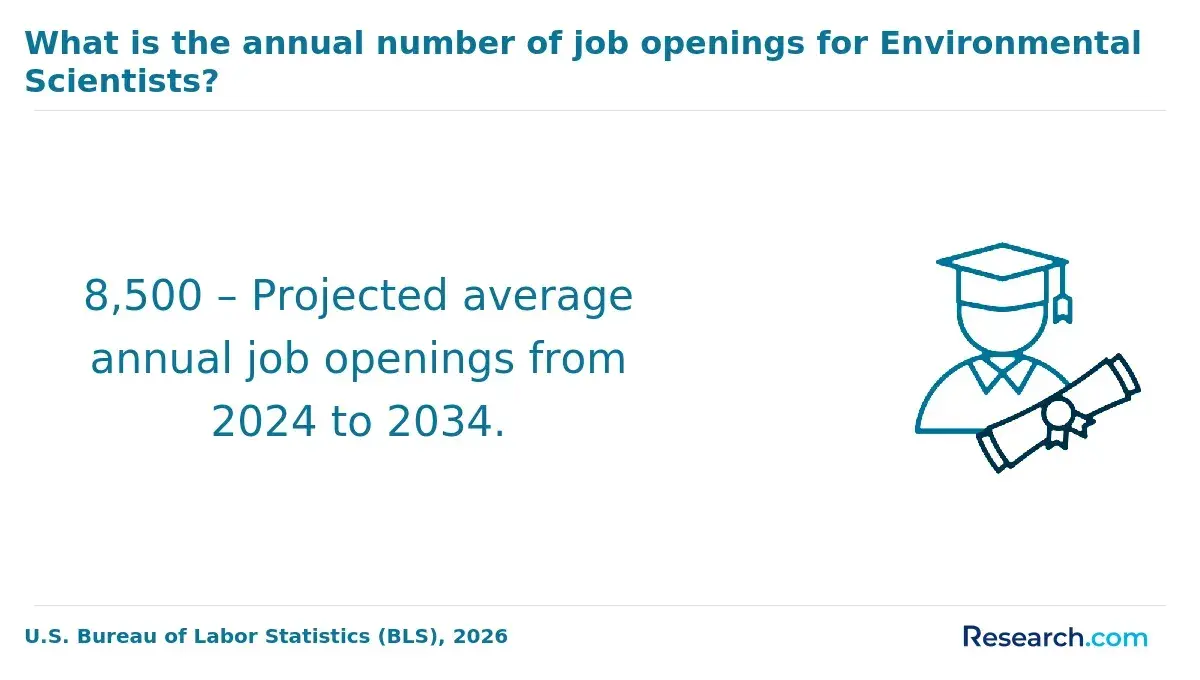
- The BLS projects 4% growth for environmental scientists and specialists from 2024 to 2034, with about 6,900 openings each year over the decade.
- Before enrolling, confirm accreditation, transfer policies, student support, career services, and whether the curriculum matches the environmental jobs you want.
Quick Answer: Is an Online Environmental Science Degree a Good Choice?
An online environmental science degree can be a strong option if you want a flexible path into environmental work and are comfortable learning independently. It is especially practical for students who need to keep working while completing a bachelor’s degree, transfer students with prior credits, and professionals who want to move into sustainability, compliance, conservation, or environmental management roles.
The degree is not automatically the best fit for every student. If you want extensive in-person lab work, frequent field research, or a highly technical engineering role, you should carefully compare online programs with campus-based options. The best online programs address hands-on learning through lab kits, virtual labs, field assignments, internships, research projects, or local experiential learning.
Why students choose online environmental science programs
- Schedule flexibility: Online study can make it easier to balance coursework with employment, caregiving, military service, or other responsibilities.
- Career relevance: Environmental scientists and specialists earn an average of $86,710 annually, or $41.69 per hour, according to the wage figure cited in this guide.
- Broad employment options: Graduates may work for government agencies, environmental consulting firms, nonprofit organizations, private companies, research institutions, schools, and sustainability-focused organizations.
What should you expect from an online environmental science degree?
An online environmental science degree typically covers the scientific foundations of environmental systems while also teaching students how human activity, public policy, business practices, and technology affect natural resources. The exact experience depends on the school, program level, delivery format, and whether the degree is closer to environmental science, environmental studies, sustainability, geosciences, water resources, or environmental management.
Typical curriculum and learning format
Most programs start with courses in biology, chemistry, physics, ecology, geology, or related natural sciences. From there, students study topics such as pollution control, climate change, sustainability, conservation, natural resource management, environmental law, and environmental data analysis. Online courses may use recorded lectures, live sessions, discussion boards, simulations, virtual labs, lab kits, research projects, and collaborative assignments.
Skills you should build
Students usually develop scientific reasoning, research design, data interpretation, technical writing, and communication skills. Many programs also introduce tools used in the field, such as environmental modeling software, geographic information systems, mapping tools, and data analysis platforms. These skills matter because many environmental roles require professionals to explain technical findings to nontechnical audiences, clients, regulators, or community stakeholders.
How online students are assessed
Online environmental science courses commonly use quizzes, exams, lab reports, case studies, discussion participation, research papers, data projects, presentations, and capstone assignments. Strong programs make expectations clear early, especially for lab requirements, fieldwork, proctored exams, internship options, and software access.
Important program details to verify
Before applying, confirm how the program handles labs, field experiences, internship support, transfer credits, advising, tutoring, career services, and technical requirements. Two programs with the same degree title can differ significantly in rigor, specialization options, and hands-on learning opportunities.
Where can you work with an online environmental science degree?
An environmental science degree can prepare graduates for work in several sectors. Your job options will depend on your coursework, internships, technical skills, location, prior experience, and whether you pursue graduate study or professional certifications.
- Government agencies: Federal, state, and local agencies may hire environmental science graduates for environmental monitoring, regulatory compliance, impact assessment, park and wildlife management, public health work, and research. Examples include the Environmental Protection Agency (EPA), the Department of Energy, and the National Park Service.
- Environmental consulting firms: Consulting companies help clients meet environmental rules, evaluate project impacts, manage contamination risks, prepare reports, and plan remediation or restoration efforts.
- Nonprofit organizations: Conservation, climate, clean energy, public lands, and sustainability organizations may need staff for research, education, advocacy, communications, and program management.
- Private companies: Employers in renewable energy, manufacturing, agriculture, logistics, construction, and real estate may hire environmental professionals to manage compliance, sustainability reporting, resource use, environmental risk, and waste reduction.
- Research institutions: Universities, government labs, and private research organizations employ environmental professionals to study climate, pollution, ecosystems, environmental health, and resource systems.
- Education: Graduates who complete additional teaching requirements may pursue teaching roles in high schools, community colleges, universities, museums, parks, or public education programs.
This list is not exhaustive. Environmental work is broad, and your strongest opportunities will usually align with a clear skill set, such as GIS, water quality, environmental compliance, sustainability reporting, ecological field methods, data analysis, or policy research.
How much can you make with an online environmental science degree?
According to the United States Bureau of Labor Statistics, environmental scientists and specialists earn an average of $86,710 a year, or $41.69 an hour.
BLS also reports a median annual wage of $78,980.
Your actual pay can vary widely based on job title, employer, industry, state, region, technical skills, level of responsibility, and years of experience. Entry-level roles may pay less than the figures above, while specialized roles in consulting, energy, data analysis, compliance, or management may offer stronger earning potential.
Education can affect advancement, but salary is never guaranteed. Employers often look for a mix of degree completion, relevant experience, technical competence, communication skills, and proof that you can apply environmental science to real workplace problems.
- 2027 affordable online environmental science degree options
- How long an online environmental science degree usually takes
- Online vs. campus environmental science programs
- Typical cost of online environmental science degree programs
- Environmental science specializations to compare
- Why interdisciplinary training matters for environmental careers
- Common online environmental science courses
- Career paths for environmental science graduates
- Job market and salary outlook for environmental science graduates
- Career support and networking for online students
- Career advancement after an online environmental science degree
- Financial aid for online environmental science students
- Support for adult and non-traditional learners
- Whether you can finish an online environmental science degree faster
- How to choose the right online environmental science program
- Admission requirements for online environmental science degrees
- Non-traditional career routes for environmental science graduates
- Whether an online environmental science degree is worth it
- Accelerated environmental science education options
- Skills developed in an online environmental science program
- Policy and community impact opportunities
- Employer recognition of online environmental science degrees
- Research opportunities after an online environmental science degree
2027 affordable online environmental science degree options
How these programs were evaluated
Affordability matters, but it should not be the only factor in choosing an online environmental science degree. Research.com’s ranking process considers verifiable information and transparent data sources. Our ranking methodology draws on sources such as the IPEDS database, Peterson’s database, including the Distance Learning Licensed Data Set, the College Scorecard database, and the National Center for Education Statistics.
Affordable online environmental science programs at a glance
| School | Online degree | Key affordability or program detail | Accreditation |
| Florida Gateway College | Bachelor of Applied Science in Water Resources Management | Program cost: $18,038 | Southern Association of Colleges and Schools Commission on Colleges (SACSCOC) |
| University of Wisconsin - Superior | Bachelor of Science in Sustainable Management | Cost per credit: $450 | Higher Learning Commission (HLC) |
| Florida Atlantic University | Bachelor of Arts in Geosciences - Geography | Annual tuition: $3,152 | SACSCOC |
| Columbia Southern University | Bachelor of Science in Environmental Management | Cost per credit: $270 | SACSCOC; Council for Higher Education Accreditation (CHEA) |
| Southern New Hampshire University | Bachelor of Science in Environmental Science | Cost per credit: $330 | New England Commission of Higher Education (NECHE) |
| American Public University System | Bachelor of Science in Environmental Science | Cost per credit: $350 | HLC |
| Indiana University | Bachelor of Arts in Sustainability Studies | Annual Tuition: $10,959 | HLC |
| Wilmington University | Bachelor of Science in Environmental Science and Policy | Cost per course (3 credits): $1,257 | Middle States Commission on Higher Education (MSCHE) |
| University of Phoenix | Bachelor of Science in Environmental Science | Cost per credit: $398 | HLC |
| Virginia Wesleyan University | Bachelor of Arts in Environmental Studies | Cost per credit: $399 | SACSCOC |
1. Florida Gateway College
Florida Gateway College offers an online Bachelor of Applied Science in Water Resources Management that connects public administration, environmental science, water resources, and conservation. The program is especially relevant for students interested in wetlands, water systems, and resource management.
Coursework emphasizes wetland protection and governance through classes such as Wetlands Through Time, Wetland Soil, and Wetland Governance & Public Policy. Students may build knowledge useful for roles connected to water and wastewater treatment operations, environmental science, hydrology, and related fields.
Applicants must already have an Associate of Arts (A.A.) or related Associate of Science (A.S.) degree before enrolling.
- Location: Lake City, FL
- School type: Public
- Online degree offered: Bachelor of Applied Science in Water Resources Management
- Program length: 2 years
- Credits required to graduate: 121
- Program cost: $18,038
- Accreditation: Southern Association of Colleges and Schools Commission on Colleges (SACSCOC)
2. University of Wisconsin - Superior
University of Wisconsin - Superior offers a 100% online Bachelor of Science in Sustainable Management. The program is designed for students who want to understand how organizations can reduce waste, improve resource use, and connect business decisions with sustainability goals.
Students complete online lectures and participate in collaborative forums with instructors and classmates. Because this is a completion program, it is best suited for students who already have an associate degree in a related field.
- Location: Superior, WI
- School type: Public
- Online degree offered: Bachelor of Science in Sustainable Management
- Program length: 3 semesters
- Credits required to graduate: 63
- Cost per credit: $450
- Accreditation: Higher Learning Commission (HLC)
3. Florida Atlantic University
Florida Atlantic University offers a 100% online Bachelor of Arts in Geosciences - Geography. The curriculum includes biology, physics, mathematics, and chemistry while also examining human cultures, language, religion, and spatial relationships.
The program is a good match for students interested in geography, geographic information sciences, spatial modeling, environmental systems, and the relationship between people and places. FAU also provides support services for online learners.
- Location: Boca Raton, FL
- School type: Public
- Online degree offered: Bachelor of Arts in Geosciences - Geography
- Annual tuition: $3,152
- Accreditation: SACSCOC
4. Columbia Southern University
Columbia Southern University offers an online Bachelor of Science in Environmental Management. The program combines environmental theory, technology, collaboration, and management practices for students interested in regulatory compliance, environmental hazards, and organizational environmental performance.
Students study environmental issues, environmental best practices, mitigation, remediation, and compliance strategies that can apply across industries.
- Location: Orange Beach, AL
- School type: Private For Profit
- Online degree offered: Bachelor of Science in Environmental Management
- Credits required to graduate: 120
- Cost per credit: $270
- Accreditation: SACSCOC; Council for Higher Education Accreditation (CHEA)
5. Southern New Hampshire University
Southern New Hampshire University Online offers a Bachelor of Science in Environmental Science focused on scientific analysis and real-world environmental issues. Students can transfer up to 90 credits, complete instructor-led labs using custom kits mailed to them, and study a curriculum grounded in natural and physical sciences.
The program connects with SNHU’s Arboretum, a 24-acre area of wetland ecosystems and native forestland used as a living classroom for environmental learning. Experiential learning courses and internships support practical development in problem-solving, critical thinking, communication, and environmental stewardship.
- Location: Manchester, NH
- School type: Private
- Online degree offered: Bachelor of Science in Environmental Science
- Credits required to graduate: 120
- Cost per credit: $330
- Accreditation: New England Commission of Higher Education (NECHE)
6. American Public University System
American Public University System offers a Bachelor of Science in Environmental Science that combines science, policy, and management. The program includes natural and social science coursework and introduces students to natural resources, pollution, fish and wildlife, hazardous materials, environmental regulations, sustainability, and public health implications of ecological disasters.
This option may appeal to students who want a broad environmental science degree with management and policy context.
- Location: Charles Town, WV
- School type: For Profit
- Online degree offered: Bachelor of Science in Environmental Science
- Credits required to graduate: 120
- Cost per credit: $350
- Accreditation: HLC
7. Indiana University
Indiana University offers a Bachelor of Arts in Sustainability Studies through a collaborative online model. Students may take coursework from multiple IU campuses, including IU South Bend, IU East, IU Kokomo, IU Northwest, and IU Southeast.
The curriculum covers climate, energy, history, sociology, economics, and geography. It is designed for students who want to examine environmental challenges through social, economic, and conservation-focused perspectives.
- Location: South Bend, IN
- School type: Public
- Online degree offered: Bachelor of Arts in Sustainability Studies
- Credits required to graduate: 120
- Annual Tuition: $10,959
- Accreditation: HLC
8. Wilmington University
Wilmington University offers a Bachelor of Science in Environmental Science and Policy that can prepare students for work as environmental scientists, specialists, policy analysts, educators, consultants, writers, or park rangers. The program is available both face-to-face and online.
Online students receive lab kits for home preparation and faculty guidance from practitioners in the field. Students may also benefit from WilmU’s affiliation with the Delaware Space Grant Consortium, a NASA-funded program supporting training in science, technology, engineering, mathematics, and geography.
- Location: New Castle, DE
- School type: Private
- Online degree offered: Bachelor of Science in Environmental Science and Policy
- Credits required to graduate: 120
- Cost per course (3 credits): $1,257
- Accreditation: Middle States Commission on Higher Education (MSCHE)
9. University of Phoenix
University of Phoenix offers an online Bachelor of Science in Environmental Science. The curriculum examines science and environmental issues, including renewable resources, urban infrastructure, climate change, and sustainable green living.
Online students can work with an academic counselor for help planning course schedules.
- Location: Phoenix, AZ
- School type: Private
- Online degree offered: Bachelor of Science in Environmental Science
- Credits required to graduate: 120
- Cost per credit: $398
- Accreditation: HLC
10. Virginia Wesleyan University
Virginia Wesleyan University offers an online Bachelor of Arts in Environmental Studies that combines science, economics, and human-environment relationships. The program is designed for students interested in environmental studies, corporate sustainability, conservation, and related fields.
Because it emphasizes interdisciplinary learning, this degree may be useful for students who want to understand environmental issues from scientific, social, economic, and workplace perspectives.
- Location: Norfolk, VA
- School type: Private
- Online degree offered: Bachelor of Arts in Environmental Studies
- Program length: 12 months
- Credits required to graduate: 128
- Cost per credit: $399
- Accreditation: SACSCOC
How to interpret online student experiences
Student feedback about online environmental science programs often centers on three themes: flexibility, self-discipline, and the quality of hands-on learning. Working adults often value being able to complete assignments around employment and family schedules, but they also report that online study requires strong planning habits.
- Flexibility can make the degree possible: Online coursework may help students continue working while completing the program, especially when classes are asynchronous.
- Virtual and home-based labs can be useful when designed well: Some students find online lectures, simulations, mailed lab kits, and applied projects effective, but this depends heavily on the program’s design.
- Independent learning is essential: Students who like research projects, self-paced reading, and online discussion may adapt well, while students who need frequent in-person structure should compare campus or hybrid options.
Key findings for prospective students
- Most online environmental science degrees are structured for completion in four years.
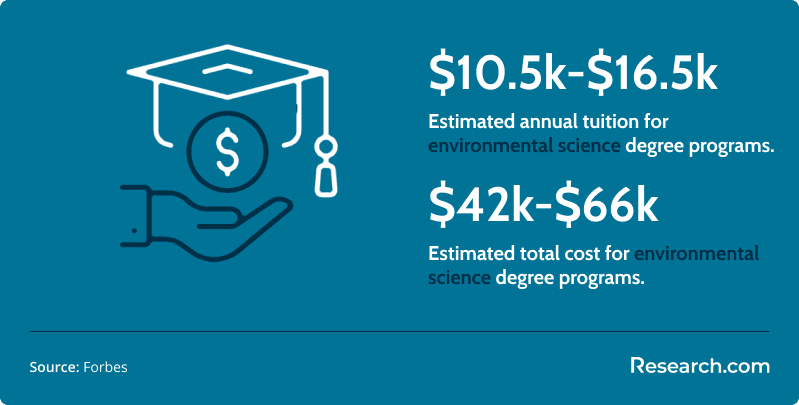
- Estimated tuition for a full-time online environmental science degree ranges from $10,500 to $16,500 per academic year.
- The U.S. Bureau of Labor Statistics projects 4% growth for environmental scientists and specialists from 2024 to 2034.
- About 6,900 openings for environmental scientists and specialists are projected each year over the next decade.
- Common specialization areas include conservation biology, environmental policy and law, ecology and ecosystem management, climate change science and impacts, energy and sustainability, and water resources management.
How long does it take to earn an online environmental science degree?
The completion timeline depends on program structure, transfer credits, and your enrollment pace. A bachelor’s degree in environmental science is usually not a shortcut credential; it commonly requires the same level of commitment as other science-based undergraduate programs.
| Factor | How it affects your timeline |
| Program length | Most online environmental science degrees are built for four years of full-time study. Some accelerated options may take as little as 18 months, while part-time formats can take longer than four years. If your main goal is one of the quick degrees that pay well, environmental science may not be the fastest match. |
| Transfer credits | Previously earned college credits may reduce the number of courses you still need, especially if the program accepts general education, science, or associate degree credits. |
| Full-time vs. part-time enrollment | Full-time students usually finish sooner because they take more credits each term. Part-time students may need more semesters but often have a more manageable workload. |
How does an online environmental science degree compare to an on-campus program?
Online and campus-based environmental science programs can both be rigorous, but the learning experience is different. The right choice depends on your schedule, learning style, lab needs, budget, and career goals.
| Comparison point | Online environmental science degree | On-campus environmental science degree |
| Learning format | Often uses asynchronous lessons, recorded lectures, online readings, virtual labs, and digital collaboration tools. Best for students who need flexibility. | Uses in-person classes, campus labs, field trips, and direct interaction. Best for students who want structured face-to-face learning. |
| Interaction | Communication usually happens through forums, email, video meetings, group projects, and learning platforms. | Students interact in classrooms, labs, fieldwork, office hours, clubs, and campus events. |
| Hands-on experience | May use simulations, lab kits, local field assignments, case studies, internships, or virtual labs. | Usually offers easier access to physical laboratories, equipment, field research, faculty projects, and campus resources. |
| Cost considerations | May reduce relocation and commuting costs, though technology fees, software, lab kits, or online course fees may apply. | May include housing, transportation, campus fees, and relocation expenses in addition to tuition. |
| Best fit | Working adults, parents, military students, rural students, and transfer students who need schedule control. | Students who want in-person labs, field immersion, campus networking, and frequent faculty contact. |
Whether you are comparing campus programs, affordable online bachelor’s degrees, or related online options such as affordable online master's in public health programs, focus on accreditation, curriculum depth, student support, and career relevance rather than delivery format alone.
What is the average cost of online environmental science degree programs?
Estimated tuition for a full-time online environmental science degree program can range from $10,500 to $16,500 per academic year. Across a four-year program, that equals roughly $42,000 to $66,000 in tuition.
Your final cost will depend on institution type, residency status, transfer credits, fees, books, lab kits, software, technology requirements, and how long you take to finish.
According to the National Center for Education Statistics, the average annual tuition rate at in-state, public colleges in the U.S. is $9,375. Private schools or universities charge an average of $32,825 in annual tuition.
Cost factors students often overlook
- Fees: Online course fees, technology fees, graduation fees, and lab fees can increase the total price.
- Lab materials: Some programs require home lab kits, field equipment, or software access.
- Transfer policies: A school with a higher per-credit price may cost less overall if it accepts more transfer credits.
- Time to completion: Delayed graduation can increase borrowing, fees, and opportunity costs.
- Residency rules: Public institutions may charge different rates for in-state and out-of-state students.
What specializations are available in an environmental science program?
Environmental science is broad, so specialization can help you build a clearer career direction. Not every online program offers the same concentrations, and some schools use degree titles such as environmental studies, sustainability, geosciences, water resources, or environmental management.
| Specialization | Best for students interested in | Common topics |
| Conservation Biology | Biodiversity, endangered species, habitat protection, and ecological restoration | Habitat management, population ecology, conservation strategies |
| Environmental Policy and Law | Regulation, advocacy, compliance, and public decision-making | Environmental laws, policy development, environmental impact assessment, sustainable practices |
| Environmental Chemistry | Pollution, toxicology, remediation, and environmental testing | Environmental toxicology, water quality analysis, pollution remediation techniques |
| Ecology and Ecosystem Management | Ecosystem function, human impacts, and resource stewardship | Population dynamics, community ecology, sustainable resource management |
| Energy and Sustainability | Renewable energy, energy efficiency, and sustainable organizations | Solar energy, wind power, sustainable building design |
| Climate Change Science and Impacts | Climate systems, adaptation, mitigation, and climate risk | Climate modeling, sea level rise, adaptation strategies |
| Environmental GIS | Mapping, spatial analysis, field data, and environmental planning | Spatial data analysis, mapping techniques, GIS applications in environmental science |
| Water Resources Management | Freshwater systems, water quality, wastewater, and hydrology | Hydrology, water treatment technologies, water policy |
The chart below highlights alternative environmental careers you can consider, with or without a formal specialization.
How does the interdisciplinary nature of environmental science affect career opportunities?
Environmental science is interdisciplinary because environmental problems rarely fit within one subject area. A water quality issue, for example, may involve chemistry, biology, land use, public policy, economics, community health, and regulation. Programs that train students across several fields can prepare graduates for a wider range of roles than programs focused only on theory.
This interdisciplinary structure can be useful in government, consulting, nonprofit work, sustainability management, research, and policy analysis. Students who later want graduate-level specialization may compare options such as a low-cost online master's degree in the USA, particularly if they want to focus on environmental law, sustainability, environmental health, or research methods.
When comparing programs, look for a balance of science, data, policy, communication, and applied learning. A broad curriculum can be valuable, but it should still help you build marketable skills such as GIS, environmental sampling, compliance documentation, sustainability reporting, or statistical analysis.
What courses are typically included in an online environmental science program?
Course titles vary by school, but most online environmental science programs cover core science, environmental systems, policy, and applied analysis.
- Natural science foundation: Biology, chemistry, physics, ecology, geology, or related courses that explain how environmental systems work.
- Environmental science principles: Introductory and advanced courses covering sustainability, resource management, climate change, pollution, and ecosystem processes.
- Environmental policy and law: Classes focused on regulations, compliance, environmental impact, policy development, and public decision-making.
- Environmental data analysis: Coursework in statistics, data interpretation, environmental monitoring, and possibly Geographic Information Systems (GIS).
- Environmental modeling: Courses or projects that use models to understand environmental systems, estimate impacts, or analyze future scenarios.
What career paths are available for environmental science graduates?
Environmental science may not be listed among the highest-paying bachelor’s degrees, but it can lead to meaningful careers for students who want to work on conservation, sustainability, compliance, research, public health, natural resources, or climate-related issues.
Government agencies
- Environmental scientist: Conducts research, reviews project impacts, supports environmental regulation, and helps manage parks, natural areas, wildlife refuges, or public resources.
- Policy analyst: Studies environmental laws, evaluates proposals, prepares reports, and advises decision-makers on environmental issues.
Private companies
- Environmental consultant: Helps clients meet environmental requirements, complete assessments, manage risks, and plan remediation or sustainability projects.
- Sustainability specialist: Designs and tracks sustainability initiatives focused on emissions, waste, energy, reporting, procurement, or resource use.
- Renewable energy specialist: Supports planning, implementation, environmental review, or management of renewable energy projects such as solar and wind.
Nonprofit organizations
- Research scientist: Studies issues such as pollution, climate change, biodiversity, conservation, or community environmental health.
- Education and outreach specialist: Builds programs that explain environmental problems and encourage responsible action among communities, schools, or stakeholders.
Research institutions
- Research scientist: Works in universities, government labs, or private research organizations on environmental systems and applied science questions.
- Data analyst: Interprets environmental data, identifies trends, supports reports, and helps organizations make evidence-based decisions.
Other possible routes
- Environmental lawyer: Requires legal education and focuses on environmental regulation, litigation, compliance, or advocacy.
- Environmental educator: Teaches environmental science in schools, colleges, parks, museums, camps, or community programs, often with additional teaching qualifications.
The graphic below illustrates the range of environmental career directions graduates may explore.
What is the job market for environmental science degree holders?
The job market for environmental science graduates is projected to remain positive, but growth is not uniform across every role. Students should look beyond a single job title and consider related opportunities in conservation, energy, environmental technology, compliance, data analysis, sustainability, and research.
The U.S. Bureau of Labor Statistics projects a growth rate of 4% for environmental scientists and specialists from 2024 to 2034, which is about as fast as the average for all occupations.
Demand is shaped by environmental regulation, climate concerns, sustainability goals, renewable energy development, natural resource management, infrastructure planning, and public awareness of environmental risk.
BLS also projects an average of about 6,900 job openings for environmental scientists and specialists each year over the next decade.
The table below lists compensation and demand figures for selected environmental and conservation-related roles.
| Role | Salary | Demand |
| Forest and Conservation Technicians | $40,000 | -8% |
| Environment Science and Protection Technicians | $41,437 | 11% |
| Wind Turbine Technicians | $72,724 | 68% |
| Soil and Water Conservationists | $45,440 | 7% |
| Wildlife Biologists | $51,620 | 5% |
| Environmental Engineers | $81,213 | 4% |
| Industrial Ecologists | $76,530 | 8% |
| Climate Change Analysts | $73,217 | 8% |
| Atmospheric Scientists | $71,000 | 8% |
| Environmental Biotechnologists | $73,728 | 8% |
| Environmental Physicists | $73,000 | 8% |
| Environmental Statistician | $98,027 | 33% |
What career support and networking should online environmental science students look for?
Career services can make a major difference for online students, especially in a field where internships, technical skills, and professional contacts often influence hiring. Before enrolling, ask what support is available to distance learners, not just campus students.
- Career advising: Look for help with resumes, cover letters, interview preparation, job search strategy, graduate school planning, and career mapping.
- Internship support: Ask whether the school helps online students find local internships, remote projects, agency placements, or faculty-led research opportunities.
- Employer connections: Strong programs may host virtual job fairs, employer panels, guest speakers, or webinars with government agencies, consulting firms, nonprofits, and private employers.
- Alumni networks: Alumni contacts can help students understand job titles, hiring expectations, and career pathways in specific environmental sectors.
- Professional associations: Some programs encourage participation in groups such as the National Association of Environmental Professionals or the Society for Conservation Biology.
Students who prioritize institutional reputation and career services may also want to compare programs from the most respected online colleges, while still verifying that the specific environmental science program fits their goals.
What career advancement opportunities are available with an online environmental science degree?
An online environmental science degree can support advancement when it is paired with relevant experience, technical skill development, and a clear professional focus. Graduates may move from entry-level technician, coordinator, or assistant roles into environmental consulting, sustainability leadership, policy analysis, compliance management, research coordination, or program management.
Advancement often depends on specialization. GIS skills may support planning and mapping roles, water quality experience may lead toward resource management, and compliance knowledge may help graduates move into regulatory or consulting work. For a broader view of career outcomes, see Research.com’s guide to careers you can pursue with an environmental science degree.
What financial aid options are available for online environmental science degrees?
Online students should compare total cost after aid, not just the advertised tuition rate. Potential funding sources include federal and state grants, scholarships, federal student loans, work-study programs, employer tuition assistance, military benefits, institutional aid, and payment plans.
Start by contacting each school’s financial aid office and confirming whether online students are eligible for the same aid as campus students. Also ask whether transfer credits can reduce your tuition burden. Financial planning is important across fields; for example, students comparing unrelated online programs such as the best online kinesiology degree should use the same cost-and-aid comparison process.
How can online environmental science programs support non-traditional learners?
Many online environmental science students are not first-time, full-time residential students. They may be parents, working adults, military students, returning students, career changers, or caregivers. Strong online programs support these learners with asynchronous courses, flexible pacing, transfer credit evaluation, tutoring, remote advising, technical support, and career services.
Students balancing school with caregiving responsibilities should ask whether deadlines are flexible, whether courses require live attendance, and how labs are completed. Resources built for groups such as online degree seekers who are stay-at-home moms can also help students evaluate scheduling, childcare, workload, and support needs.
Can you earn an online environmental science degree quickly?
Some accelerated online environmental science programs allow students to move faster through condensed terms, generous transfer credit policies, or year-round enrollment. However, faster does not always mean better. Science-heavy degrees require time for labs, data work, writing, and applied projects.
If speed is a priority, compare accelerated options carefully with fast online bachelor’s degree programs. Verify accreditation, transfer rules, workload, lab requirements, support services, and whether the pace is realistic alongside your work and personal responsibilities.
How do you choose an online environmental science degree program?
The best program is not simply the cheapest or fastest one. It is the program that matches your goals, provides credible training, fits your life, and offers a reasonable path to graduation.
Step 1: Define your career target
- Clarify your preferred work setting: Decide whether you are more interested in government, consulting, nonprofit work, corporate sustainability, research, education, conservation, or energy.
- Identify skill requirements: Review job postings to see whether employers request GIS, data analysis, field sampling, lab work, compliance knowledge, technical writing, or policy experience.
- Choose a concentration intentionally: A specialization in water resources, policy, GIS, sustainability, or conservation should connect to the jobs you want.
Step 2: Compare academic quality
- Accreditation: Confirm that the institution is accredited by a recognized accrediting body. Accreditation affects transferability, employer recognition, graduate school options, and financial aid eligibility.
- Curriculum: Check whether the program includes both foundational science and applied environmental coursework.
- Faculty expertise: Review faculty backgrounds to see whether instructors have experience in your area of interest.
Step 3: Evaluate online delivery
- Course schedule: Confirm whether classes are asynchronous, synchronous, accelerated, full-time, part-time, or cohort-based.
- Technology requirements: Ask about internet speed, software, GIS access, virtual labs, proctoring, and hardware needs.
- Student support: Look for academic advising, tutoring, library access, tech help, disability services, writing support, and online career counseling.
Step 4: Review cost and aid
- Total price: Compare tuition, fees, books, lab kits, software, and required equipment. You can also review affordable online colleges to understand broader cost options.
- Financial aid: Ask about federal aid, scholarships, grants, employer benefits, and payment plans.
- Transfer value: A program that accepts more credits may be less expensive overall, even if the per-credit rate is not the lowest.
Step 5: Check deadlines and admissions fit
- Application requirements: Review transcript rules, essays, recommendation letters, test requirements, and prerequisites.
- Start dates: Some programs offer rolling admissions, while others only admit students for specific terms.
- Completion requirements: Confirm capstone, internship, residency, lab, and fieldwork expectations before enrolling.
What are the admission requirements for an online environmental science degree?
Admission requirements vary by institution and degree level, but most undergraduate online environmental science programs ask for a standard set of academic materials.
- High school diploma or GED: A diploma or equivalent credential is typically required for bachelor’s-level admission.
- Official transcripts: Schools usually require transcripts from high schools and any colleges previously attended.
- GPA requirement: Some programs set minimum GPA expectations, either overall or in science-related coursework.
- Standardized test scores: Some programs no longer require standardized tests, while some graduate programs may still request scores such as the Graduate Record Examinations (GRE) or Graduate Management Admission Test (GMAT).
- Personal statement or essay: Many schools ask applicants to explain their academic goals, interest in environmental science, and reasons for choosing online study.
- Letters of recommendation: Some programs request letters from teachers, professors, employers, or supervisors.
- Resume or curriculum vitae: Applicants with environmental work experience, military experience, volunteer work, or transfer credits may strengthen their application with a resume or CV.
How can online environmental science degrees lead to non-traditional career paths?
Environmental science graduates do not always follow a single, traditional route. Some move into field technology, infrastructure support, environmental remediation, sustainability operations, energy systems, resource conservation, technical training, or public communication roles. These positions may combine environmental knowledge with hands-on, trade-related, or operational skills.
Students interested in practical and technical pathways may also compare environmental science options with skilled career routes such as those described in this trade school careers list and salaries. The right path depends on whether you want a science-focused degree, a technical credential, or a combination of both.
Is an online degree in environmental science worth it?
An online environmental science degree can be worth it if it helps you enter or advance in a field you genuinely want to work in, and if the cost, time commitment, and program quality make sense for your goals. It is less likely to be a good fit if you are only looking for the easiest online degree or a program with minimal science requirements.
Advantages
- Flexible scheduling: Online learning can make degree completion possible for students with work, family, or location constraints.
- Wider school access: Students can compare programs beyond their local area without relocating.
- Potential cost savings: Online students may avoid housing and commuting costs, though fees and materials should still be reviewed.
- Relevant career preparation: Environmental science remains one of the college majors worth considering for students interested in sustainability, natural resources, compliance, and environmental problem-solving.
- Specialization options: Many programs allow students to focus on renewable energy, conservation biology, climate change, policy, water resources, or related areas.
Limitations
- Hands-on learning may vary: Online programs may rely on lab kits, simulations, case studies, or local assignments instead of campus labs and field trips.
- Self-management is required: Online students need strong time management, motivation, and communication habits.
- Less in-person interaction: Students may have fewer spontaneous conversations with faculty and classmates, although many programs offer video meetings and discussion platforms.
- Accreditation must be verified: Always confirm that the institution is properly accredited before applying.
Questions to ask before enrolling
- Does the program include enough lab, field, or applied project work for my career goal?
- Will my transfer credits count toward the degree?
- What is the total cost after fees, books, lab kits, and software?
- Are online students eligible for internships, research projects, and career services?
- Do graduates pursue jobs similar to the ones I want?
- Is the institution accredited by a recognized accreditor?
Is an accelerated pathway a viable option for environmental science education?
Accelerated pathways can help motivated students finish faster, but they require careful planning. Condensed courses can be demanding, especially when they include science labs, data projects, technical writing, and field-based assignments.
Some students may use a short-term credential, such as an associate degree in 6 months online, as a stepping stone before pursuing a bachelor’s degree. This may work for career changers or students who want to build credits quickly, but it is important to verify transferability, accreditation, and whether the coursework aligns with the bachelor’s program you eventually want.
What skills do you gain in an online environmental science degree program?
Online environmental science programs can help students develop a mix of scientific, analytical, technical, and communication skills. These skills are useful across environmental consulting, conservation, compliance, sustainability, education, government, and research roles.
- Data analysis and interpretation: Students learn to gather, evaluate, and explain environmental data. Programs may include statistics, GIS, environmental monitoring, and data visualization.
- Environmental policy and regulatory knowledge: Coursework can introduce students to local, national, and global environmental rules, compliance processes, impact assessments, and policy development.
- Problem-solving and critical thinking: Students practice evaluating complex issues such as pollution, climate risk, water quality, land use, and resource management.
- Communication and outreach: Graduates learn to explain scientific information through reports, presentations, public education materials, and stakeholder communication.
- Project management and collaboration: Group assignments, capstones, and applied projects can build planning, teamwork, documentation, and coordination skills.
How can online environmental science degrees drive policy and community impact?
Environmental science graduates can influence policy and community outcomes by translating scientific information into practical recommendations. This may involve working with agencies, nonprofits, schools, local governments, businesses, neighborhood groups, or advocacy organizations.
Examples include supporting climate adaptation plans, improving recycling or waste programs, contributing to environmental impact reviews, explaining water quality findings to the public, or helping organizations adopt more sustainable practices. Environmental education is also open to a wide range of learners; resources such as affordable online degrees for seniors show how online education can help professionals and lifelong learners contribute new perspectives.
Are online environmental science degrees recognized and valued by employers?
Employers typically focus less on whether a degree was online and more on whether the institution is accredited, the curriculum is credible, and the graduate can do the work. Relevant experience, internships, technical skills, communication ability, and evidence of applied learning are often critical.
Students should be cautious about choosing a program simply because it appears easy. Comparing an environmental science degree with the easiest bachelor degree options can be useful only if it helps clarify workload expectations. Environmental science is best suited to students willing to study science, data, policy, and applied environmental problems.
How can an online environmental science degree support advanced research opportunities?
An online environmental science degree can prepare students for graduate study if it includes research methods, data analysis, scientific writing, lab work, and a strong foundation in environmental systems. Students interested in research should look for faculty-led projects, capstones, virtual labs, independent studies, and opportunities to present or publish work.
Graduates who want to continue quickly into advanced study may compare options such as a 1 year online masters program, especially if they want specialized training in environmental research, sustainability, policy, climate science, or environmental health.
What emerging technologies are influencing environmental science?
Technology is changing how environmental scientists collect data, analyze risk, monitor ecosystems, and communicate findings. Online students should pay attention to programs that teach current tools, especially GIS, environmental data analysis, remote sensing, and modeling.
- Remote sensing and satellite monitoring: Satellite imagery helps scientists monitor deforestation, land degradation, climate effects, disasters, and large-scale environmental change.
- Geographic Information Systems (GIS): GIS is used to map spatial data, evaluate environmental impacts, model change, and support planning for conservation, land use, and resource management.
- Artificial intelligence (AI) and machine learning: AI and machine learning can help analyze large environmental datasets, identify patterns, support climate modeling, track pollution, and improve decision-making.
- Drones and unmanned aerial vehicles (UAVs): Drones can survey ecosystems, wildlife, disasters, and hard-to-reach areas more efficiently than some traditional methods.
- Internet of Things (IoT) sensors: Environmental sensors can monitor air quality, water quality, soil conditions, and climate variables in real time.
- Renewable energy technologies: Solar, wind, and bioenergy development create demand for environmental assessment, impact analysis, and sustainability planning.
Common mistakes to avoid when choosing an online environmental science degree
| Mistake | Why it matters | Better approach |
| Choosing only by tuition price | The lowest tuition may not be the lowest total cost if fees, lab kits, software, or poor transfer policies add expenses. | Compare total cost of attendance and estimated time to graduation. |
| Ignoring accreditation | Accreditation affects financial aid, transfer credits, graduate school options, and employer recognition. | Verify institutional accreditation before applying. |
| Assuming all online programs include fieldwork | Hands-on requirements vary widely by school. | Ask how labs, field experiences, internships, and local projects are completed. |
| Overlooking technical skills | Many environmental jobs prefer candidates with GIS, data analysis, writing, or compliance skills. | Choose programs with applied tools and career-relevant assignments. |
| Relying only on rankings | A ranked school may still not match your career goal, schedule, or transfer needs. | Use rankings as a starting point, then compare curriculum, cost, support, and outcomes. |
| Assuming salary outcomes are guaranteed | Pay depends on location, role, employer, experience, and skills. | Review job postings in your target region and build the skills employers request. |
References:
- United States Bureau of Labor Statistics. (2024, April 19). Occupational Outlook Handbook: Environmental Scientists and Specialists. BLS.
- United States Bureau of Labor Statistics. (2024, April 3). 19-2041 Environmental Scientists and Specialists, Including Health. BLS.
- Data USA (n.d.). Environmental Studies. Data USA.
- Global Industry Analysts. (2025, October). Environmental Technology - Global Market Trajectory & Analytics. MarketResearch.com. https://www.marketresearch.com/Global-Industry-Analysts-v1039/Environmental-Technology-42705861/
Other Things You Should Know About Earning an Online Environmental Science Degree
Most regionally accredited online environmental science bachelor’s programs accept up to 60 transferable semester credits toward a 120-credit degree. Schools usually require at least 30 credits earned at the institution, and science labs or major courses may not transfer without prior approval.
Admission requirements typically include a high school diploma or GED, completion of prerequisite courses in science or math, and a minimum GPA as specified by the institution. Some programs may also require standardized test scores or letters of recommendation.


