2027 Best Accredited Online Space Studies Degree Programs: Compare Tuition, Admissions, and Career Outcomes

Co-Founder and Chief Data Scientist
Choosing an online space studies degree is really a decision about cost, credibility, and career direction. The U.S. Bureau of Labor Statistics projects aerospace engineer employment to grow 6% from 2023 to 2033, signaling steady demand for space, defense, aviation, and satellite-related expertise. This guide is for working adults, transfer students, military-affiliated learners, and STEM graduates comparing accredited online options. You'll learn how programs differ in tuition, admissions, accreditation, flexibility, support, and outcomes so you can choose a degree that fits your goals without overpaying.
Key Things You Should Know
- The best-value online space studies programs usually combine institutional accreditation, transparent tuition, transfer-credit flexibility, and career-relevant coursework in space operations, orbital mechanics, policy, remote sensing, or systems engineering.
- Published online tuition can range from about $350 per credit in lower-cost programs to more than $1,700 per credit in selective engineering-focused graduate programs, so total program cost matters more than sticker tuition alone.
- Career outcomes vary by specialization: BLS May 2024 wage data places aerospace engineers at a median annual wage of $134,830, but technical, operations, policy, and research roles may require different credentials and experience levels.
Which Accredited Online Space Studies Degree Programs Offer the Best Overall Value?
The strongest online space studies degree is not automatically the most famous or the cheapest. For most students, the best overall value comes from a program that is accredited, affordable enough to avoid excessive borrowing, flexible enough to complete while working, and aligned with a clear career pathway such as space operations, aerospace systems, satellite technology, defense contracting, or space policy.
The comparison below focuses on accredited U.S. institutions that offer online degrees or closely related online programs in space studies, space operations, space systems engineering, or planetary science. Tuition figures are based on publicly advertised rates and should be verified with each school because fees, residency rules, military rates, and employer partnerships can change.
| Program | Credential Level | Accreditation | Approximate Published Tuition | Best Fit | Value Consideration |
| American Public University System, Space Studies | Bachelor's and master's | Higher Learning Commission | About $350 per undergraduate credit and $425 per graduate credit before discounts | Military-affiliated students, working adults, and cost-conscious learners | Strong affordability and flexible online delivery, but students should confirm employer recognition for their target role |
| Embry-Riddle Aeronautical University Worldwide, Spaceflight or Space Operations | Bachelor's and master's options | Southern Association of Colleges and Schools Commission on Colleges | About $485 per undergraduate credit and $868 per graduate credit | Students seeking a space-focused degree from a well-known aviation and aerospace institution | Higher cost than budget programs, but strong industry name recognition may matter in aerospace networks |
| University of North Dakota, Space Studies | Master's | Higher Learning Commission | Graduate online tuition varies by term and fee structure | Students interested in interdisciplinary space science, policy, and research-oriented study | Good option for students who want an established space studies department and graduate-level depth |
| Johns Hopkins Engineering for Professionals, Space Systems Engineering | Master's | Middle States Commission on Higher Education | About $5,270 per course in recent published schedules | Engineers and technical professionals working toward advanced systems roles | Expensive, but potentially valuable for students already positioned for engineering or defense-sector advancement |
| Arizona State University Online, Astronomical and Planetary Sciences | Bachelor's | Higher Learning Commission | Online undergraduate tuition varies by program and course load | Students drawn to astronomy, planetary science, and data-oriented scientific study | Best for science-focused goals, not necessarily for direct space operations training |
A lower-cost program can be the best investment when it teaches the skills you need and lets you graduate with less debt. A higher-cost program may make sense if it gives you access to specialized engineering coursework, a recognizable aerospace brand, or a curriculum closely tied to your current employer's promotion requirements.
Students comparing space studies with other online pathways should also think about credential length and career fit. For example, someone drawn to administration in a space, aviation, or defense organization may find an admin assistant degree more practical than a full space studies bachelor's if their target role is business support rather than technical operations.
What Accreditation Should Students Look for in an Online Space Studies Degree Program?
Accreditation is the first filter students should use because it affects federal financial aid eligibility, transfer credit, graduate school admission, and employer confidence. For online space studies programs, institutional accreditation is usually more important than a specialized space-studies accreditation because there is no single required programmatic accreditor for general space studies degrees.
Students should understand the difference between institutional and programmatic accreditation before applying. The table below shows what to look for and why it matters.
| Accreditation Type | What It Means | Why It Matters for Space Studies Students |
| Institutional accreditation | The entire college or university is reviewed by a recognized accreditor | Usually required for federal financial aid, transfer credit, and recognition by many employers and graduate schools |
| ABET accreditation | Specialized accreditation for certain engineering, computing, and technology programs | Important if the degree is an engineering program and the student wants engineering licensure or roles requiring an ABET-accredited background |
| Program-specific approval or industry alignment | Curriculum may align with NASA, aerospace, defense, or space operations skill areas without formal accreditation | Useful for career relevance, but it should not replace recognized institutional accreditation |
| State authorization for online learning | The school is authorized to enroll online students in particular states | Important for students who live outside the school's home state, especially if internships, practicums, or exams are involved |
A common mistake is assuming "accredited" means every program at a university has the same level of career relevance. A regionally accredited university can offer a strong space studies program, a broad science program, or a more general technical degree; the transcript may be legitimate in all cases, but the career signal can differ.
Space studies students can learn from fields where programmatic accreditation is more decisive. In counseling, for example, students often compare CACREP programs because licensure pathways may depend on specialized approval; in space studies, ABET matters mainly when the degree is explicitly an engineering pathway.
How Do Tuition Costs Compare Across Accredited Online Space Studies Degree Programs?
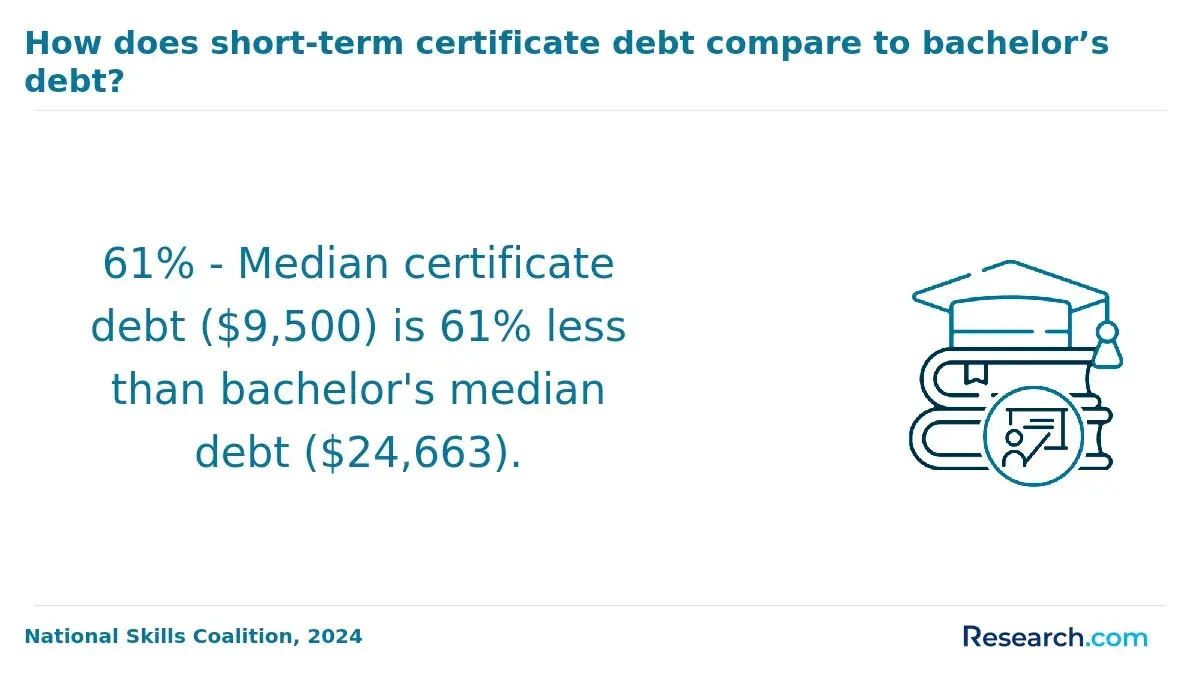
Tuition for accredited online space studies programs varies widely because the category includes low-cost undergraduate degrees, specialized graduate programs, and elite engineering master's degrees. The most useful comparison is not tuition per credit by itself, but estimated total cost after transfer credits, employer tuition assistance, military benefits, fees, books, and required software or lab expenses.
The table below summarizes typical cost patterns students are likely to see when comparing online space studies and closely related programs. Use it as a decision framework, then request a written cost estimate from each school.
| Cost Category | Typical Online Program Example | Cost Signal | What to Check Before Enrolling |
| Lower-cost undergraduate or graduate space studies | Large online universities with monthly or frequent start dates | Often the most affordable per credit | Transfer-credit limits, course sequencing, faculty expertise, and whether the curriculum fits your career goal |
| Midrange aerospace or space operations program | Aviation or aerospace-focused universities with online campuses | Higher tuition but stronger field-specific branding | Whether the higher price is justified by employer connections, curriculum depth, and alumni network |
| Public university graduate space studies program | Established public research university offering online master's coursework | May vary by residency, fees, and course delivery model | Whether online students receive the same faculty access, advising, and research opportunities as campus students |
| Selective engineering-focused master's program | Private university space systems engineering program | Can exceed $50,000 in tuition before fees | Whether you already have the engineering background needed to benefit from the credential |
One practical rule is to compare the cost of completion, not the cost of admission. A program that accepts 60 transfer credits, offers employer reimbursement compatibility, or allows part-time enrollment without extra term fees may be cheaper in real life than a lower advertised tuition rate with stricter transfer rules.
Before committing, ask each school for the following cost details so you can make an apples-to-apples comparison:
- Total credits required after transfer evaluation, not just total credits listed in the catalog
- Per-credit tuition, mandatory online fees, technology fees, graduation fees, and course materials
- Whether tuition differs for military students, veterans, in-state students, or employer-sponsored students
- Whether courses require proctored exams, specialized software, lab kits, travel, or synchronous attendance
- How tuition is charged if you pause enrollment, repeat a course, or change from part-time to full-time study
How Competitive Is Admission to Accredited Online Space Studies Degree Programs?
Admissions competitiveness depends heavily on degree level. Online bachelor's programs in space studies or space operations are often transfer-friendly and may admit students with a high school diploma, GED, or prior college credit. Graduate programs are more selective because they may require a bachelor's degree, minimum GPA, STEM prerequisites, professional experience, or quantitative coursework.
The table below shows how admissions expectations usually differ by program type. This helps applicants avoid applying only to programs that are either too broad for their goals or too advanced for their background.
| Program Type | Common Admissions Requirements | Competitiveness Level | Best Applicant Profile |
| Online bachelor's in space studies | High school diploma or equivalent, transcripts, placement requirements, and transfer-credit review | Usually accessible | First-time students, military learners, aviation workers, and transfer students seeking a broad foundation |
| Online bachelor's in planetary science or astronomy-related studies | General undergraduate admission plus math and science readiness | Moderate, depending on institution | Students comfortable with physics, calculus, data analysis, and scientific writing |
| Online master's in space studies | Bachelor's degree, transcripts, GPA review, statement of purpose, and sometimes prerequisite coursework | Moderate | Students with STEM, aviation, military, policy, or technical backgrounds |
| Online master's in space systems engineering | Engineering, math, or physical science background; advanced prerequisites; possible professional experience | More selective | Practicing engineers or technical professionals seeking systems, satellite, or mission-design roles |
Admissions flexibility does not automatically mean weak academics. Some online universities use broader access policies because they serve adult learners, while the difficulty appears later in math-heavy courses, programming assignments, research projects, or capstone work.
If admissions flexibility is your top priority, compare it with program rigor and career relevance. Students researching open-access pathways in other fields often look for the easiest MSW online program, but space studies applicants should be careful not to choose easy admission over the technical preparation needed for aerospace or space operations work.
Which Learning Formats Offer the Greatest Flexibility in Online Space Studies Degree Programs?
Online space studies programs can be highly flexible, but "online" does not always mean self-paced. Some courses are asynchronous, some require live sessions, and some use fixed deadlines that can be difficult for students with military schedules, rotating shifts, or family responsibilities.
The table below compares common learning formats and the type of student each one serves best. This matters because the wrong format can increase withdrawal risk even when the academic program is a good match.
| Learning Format | How It Works | Best For | Potential Drawback |
| Asynchronous online | Students complete weekly work without required live class meetings | Working adults, military students, and students in different time zones | Requires strong self-management and comfort asking for help online |
| Synchronous online | Students attend live virtual sessions at scheduled times | Students who want real-time discussion and instructor interaction | Less flexible for shift workers or deployed students |
| Hybrid or low-residency | Most coursework is online, but some labs, intensives, or campus visits may be required | Students who want hands-on experiences or research exposure | Travel costs and scheduling can reduce flexibility |
| Self-paced or competency-based elements | Students move faster through familiar material when allowed by the school | Experienced professionals with prior technical knowledge | Less common in specialized space studies programs and may offer fewer peer interactions |
The best format depends on your schedule and learning style. A student with a full-time job may benefit from asynchronous courses, while a student aiming for research or engineering roles may prefer live faculty interaction, structured projects, and access to technical mentoring.
Before applying, ask admissions or the program director these format-specific questions:
- Are classes fully asynchronous, or are any live sessions required?
- Are exams proctored, and can they be scheduled outside business hours?
- Do online students complete the same capstone, thesis, or project options as campus students?
- Are group projects required, and how are teams managed across time zones?
- Can students slow down to one course at a time without losing financial aid eligibility?
What Student Support Services Improve Success in Online Space Studies Degree Programs?
Student support can make a major difference in online space studies because many courses combine science, engineering concepts, mathematics, writing, and specialized software. A program with lower tuition may still be a poor value if students cannot get help when they struggle in physics, orbital mechanics, programming, or research methods.
The most valuable support services are the ones tied directly to persistence and career preparation. Students should look beyond general promises and ask how support works for online learners specifically.
- Dedicated academic advising that helps students plan prerequisites, transfer credits, course load, and graduation timing
- STEM tutoring in math, physics, statistics, programming, and technical writing
- Career services with aerospace, defense, aviation, satellite, geospatial, or government-sector employer knowledge
- Faculty access through virtual office hours, discussion boards, research mentoring, or capstone supervision
- Library and research support for technical databases, citation help, and literature reviews
- Veteran, military, and employer-sponsored student services when relevant to tuition benefits and scheduling
A red flag is a program that offers online enrollment but cannot clearly explain online advising, tutoring hours, internship support, or career services for distance learners. Another warning sign is a curriculum page with impressive course titles but little information about faculty, projects, outcomes, or student support.
Students should also check whether support is proactive or reactive. Proactive programs may monitor progress, contact students after missed assignments, and help with course sequencing; reactive programs may expect students to identify problems on their own, which can be harder in technical online courses.
Which Financial Aid Options Are Available for Accredited Online Space Studies Degree Students?
Accredited online space studies students may qualify for many of the same aid options as campus students, including federal loans, grants, scholarships, military education benefits, employer tuition assistance, and payment plans. Eligibility depends on the school, degree level, enrollment intensity, citizenship or residency status, satisfactory academic progress, and the student's financial profile.
Federal borrowing costs are especially important for students comparing expensive graduate programs. For the 2024-2025 award year, federal Direct Unsubsidized Loans carry a 8.08% interest rate for graduate and professional students, which means a higher-priced master's degree should be evaluated against realistic career advancement, not just interest in the subject.
Students should compare financial aid offers in a structured way before enrolling. The steps below help prevent underestimating debt or choosing a program based only on the first award letter received.
- Complete the FAFSA if the school participates in federal student aid and you may be eligible.
- Ask each school for a full cost-of-attendance estimate, including tuition, fees, books, technology, and expected living expenses if applicable.
- Separate gift aid from loans so scholarships and grants are not confused with money that must be repaid.
- Confirm whether employer tuition assistance or military benefits apply to every course in the program.
- Calculate the cost if you attend part time, because many online students take longer than the catalog timeline.
- Compare repayment scenarios before accepting graduate PLUS loans or private loans.
Be skeptical of claims that an advanced degree can be completed at no cost unless the source clearly explains scholarships, assistantships, employer funding, or tuition waivers. Similar caution applies when researching topics like 1 year PhD programs online free; legitimate funding exists, but students should verify accreditation, total cost, and academic requirements before making enrollment decisions.
Which Career Outcomes Are Associated With Accredited Online Space Studies Degree Programs?
Online space studies degrees can lead to different outcomes depending on specialization, prior experience, and degree level. A bachelor's degree may support entry into operations, technical support, aerospace administration, military advancement, or graduate study. A master's degree may be more useful for professionals pursuing systems, mission planning, policy, research support, or leadership roles.
The table below connects common space studies pathways with related U.S. labor market roles. Salary figures are national medians from BLS May 2024 wage data where closely related occupational categories are available, so students should treat them as market context rather than program-specific outcomes.
| Career Direction | Related Roles | Relevant Preparation | BLS May 2024 Median Wage Context |
| Aerospace and space systems engineering | Aerospace engineer, systems engineer, mission systems analyst | Engineering-heavy degree, advanced math, physics, modeling, and often ABET-aligned preparation | Aerospace engineers: $134,830 |
| Space operations and mission support | Satellite operations specialist, mission operations support, payload operations coordinator | Space operations coursework, orbital mechanics, communications systems, troubleshooting, and procedural discipline | Comparable wages vary because roles may be classified under engineering, technician, or operations categories |
| Planetary science and astronomy support | Research assistant, observatory support, data analyst, graduate research pathway | Physics, astronomy, data analysis, programming, and research methods | Astronomers: $132,170, typically requiring advanced graduate education |
| Geospatial, remote sensing, and satellite data | Remote sensing analyst, geospatial analyst, Earth observation data specialist | GIS, Python or R, statistics, satellite imagery, and data visualization | Often overlaps with data, mapping, and environmental analysis occupations |
| Space policy, commercialization, and administration | Policy analyst, program coordinator, contracts or project support specialist | Space law, policy, economics, writing, project management, and government or commercial space knowledge | Wages vary widely by employer, clearance needs, and management responsibility |
The biggest mistake is assuming a space studies degree alone is enough for every space-sector job. Engineering roles may require engineering degrees, research roles often require graduate study, and federal or defense jobs may require citizenship, security clearance eligibility, or relevant experience.
Students considering a career change should compare how much additional education each path requires. A teacher moving toward health care, for example, would face a very different pathway to become a speech pathologist than a teacher moving into space education, science communication, or aerospace training roles.
How Do Online and Campus-Based Space Studies Degree Programs Compare?
Online and campus-based space studies programs can both be credible when offered by accredited institutions, but they serve different student needs. Online programs usually win on scheduling flexibility, while campus programs may offer easier access to laboratories, observatories, faculty research groups, student clubs, and in-person recruiting.
The table below compares the practical trade-offs. Students should use it to decide which format supports their academic goals, not simply which one feels more convenient.
| Decision Factor | Online Space Studies Program | Campus-Based Space Studies Program | Best Choice Depends On |
| Schedule flexibility | Often better for working adults and military-affiliated students | Less flexible because classes and labs follow campus schedules | Work schedule, time zone, and family responsibilities |
| Hands-on learning | May use simulations, remote labs, datasets, and capstone projects | May provide more direct access to labs, equipment, observatories, or student design teams | Whether your target career requires physical lab or hardware experience |
| Networking | Depends on virtual events, faculty access, alumni groups, and employer partnerships | Often easier through in-person clubs, research teams, and career fairs | How actively the student builds relationships in either format |
| Cost | May reduce relocation and commuting costs | May include higher living, transportation, or campus fee costs | Total cost after aid, not format alone |
| Career signaling | Strong when the university is reputable and the curriculum is rigorous | Strong when campus resources add research, lab, or project experience | Employer expectations in your target role |
Online is usually the better fit for students who need flexibility, already work in aviation or defense, or want to advance without relocating. Campus may be better for younger students seeking immersive research, engineering design teams, or frequent in-person networking.
The better investment is the format that helps you finish, build evidence of skill, and connect with the roles you want. A fully online degree with strong projects can outperform a campus degree used passively, while a campus program with hands-on research can be worth the extra cost for students targeting laboratory or engineering-intensive pathways.
How Should Students Choose the Best Accredited Online Space Studies Degree Program?
Choosing the best accredited online space studies degree starts with your target outcome. A student who wants to work in satellite operations needs a different curriculum than someone interested in space policy, planetary science, aerospace systems, or science communication.
Use the steps below to narrow your options before applying. This process helps balance affordability, academic quality, flexibility, and long-term return on investment.
- Define your target role first, then identify the degree level and technical skills commonly expected for that role.
- Verify institutional accreditation through the school and recognized accreditation databases before discussing tuition or admissions.
- Check whether ABET accreditation matters for your intended engineering pathway.
- Compare total completion cost after transfer credits, employer benefits, military benefits, scholarships, fees, and expected time to graduation.
- Review the curriculum for math, physics, programming, data analysis, space policy, remote sensing, or systems coursework that matches your goal.
- Ask for online-specific support details, including tutoring, advising, career services, faculty access, and capstone guidance.
- Look for evidence of career relevance, such as project portfolios, internship guidance, alumni outcomes, employer partnerships, or faculty experience.
- Speak with admissions, financial aid, and the program director before enrolling so you can compare answers across schools.
Students should avoid programs that are vague about accreditation, total cost, transfer credit, faculty qualifications, or online student services. They should also avoid choosing solely from rankings because the "best" program for an engineer may be too technical, expensive, or specialized for a student seeking space policy or operations support.
If your main goal is to enter the workforce quickly in a business, clerical, or operations-support role, a shorter credential may provide better ROI than a space studies degree. If your goal is to work on spacecraft systems, mission planning, satellite data, or aerospace strategy, an accredited online space studies program can be a strong choice when the curriculum and cost match your career plan.
Other Things You Should Know About Space Studies
No. Many online space studies programs accept students without military, aviation, or flight experience. However, that experience can help students understand operations, safety procedures, navigation, communications, or defense-sector terminology more quickly.
No. Space studies is usually broader and may include space science, operations, policy, history, law, remote sensing, and commercial space topics. Aerospace engineering is more math- and design-intensive and is usually required for engineering roles involving aircraft, spacecraft, propulsion, or structures.
It can help for some roles, especially when paired with relevant skills, internships, research, military experience, programming, data analysis, or engineering preparation. NASA and contractor roles vary widely, so students should read job postings carefully and match their coursework to the required qualifications.
Useful skills often include Python, MATLAB, GIS tools, data visualization, orbital analysis software, statistics, technical writing, and spreadsheet modeling. The best tools depend on whether the student is focused on operations, engineering, policy, astronomy, or satellite data.
References
- Space-related degrees - Space Training Catalogue https://training.spaceskills.org/degrees
- Study Space Technologies at the AGH University: Zero semester for bachelors! https://innowacyjna.malopolska.pl/en/news/study-space-technologies-at-the-agh-university-zero-semester-for-bachelors
- 2025 Best Online Bachelor's in Aerospace Engineering https://www.onlineu.com/degrees/aerospace-engineering
- The value of space studies programs in higher education https://www.thespacereview.com/article/5031/1
- Graduate Admissions - Kepler Space University https://kepleru.space/graduate-admissions/
- Career Outcomes by Major: What the Data Really Says https://myls.ai/blog/career-outcomes-by-major-what-the-data-really-says/
- Industry Outcomes 2025: What the Data Says About Graduate Employabilit https://iei.asiacareersgroup.com/blogs/articles/industry-outcomes-2025-what-the-data-says-about-graduate-employability