2027 Online Space Studies Degree Programs With No Application Fee and Rolling Admissions

Co-Founder and Chief Data Scientist
Choosing an online space studies degree is not just about finding a free application; it is about timing, cost, credibility, and career fit. The stakes are real: BLS May 2024 wage data lists the median annual wage for aerospace engineers at $134,830, but space-related roles often require strong technical preparation.
This guide is for working adults, military-affiliated students, transfer students, and career changers who want flexible admissions. You will learn which programs are worth checking, how rolling admission works, and how to compare total value before applying.
Key Things You Should Know
- Online space studies options that clearly combine $0 application fees with rolling or monthly admissions are limited, so students should verify both policies directly before relying on them.
- A waived application fee can save money upfront, but the larger decision is total program cost, including tuition, technology fees, transfer-credit limits, books, and financial aid timing.
- Rolling admission improves flexibility, but it does not mean automatic admission, unlimited course availability, or no deadlines for scholarships, FAFSA processing, military benefits, or employer tuition assistance.
Which Online Space Studies Degree Programs Have No Application Fee and Rolling Admissions?
The clearest online space studies options with both no application fee and rolling-style admissions are concentrated in a small number of institutions, especially programs designed for adult and military-affiliated learners. Because fee waivers and admissions calendars can change, treat the table below as a decision shortlist rather than a substitute for confirming current policies with the school.
| Institution or system | Online space studies degree option | Application-fee status to verify | Rolling-admission or start-date structure | Best-fit student profile |
| American Public University System | Bachelor of Science in Space Studies | Advertises no application fee for many applicants | Online programs commonly use frequent monthly course starts | Undergraduate students seeking a space-focused degree with flexible scheduling |
| American Public University System | Master of Science in Space Studies | Advertises no application fee for many applicants | Online programs commonly use frequent monthly course starts | Working adults, military learners, and STEM-adjacent professionals seeking graduate-level space coursework |
| Other online space, aerospace, or space systems programs | Varies by institution and may include aerospace engineering, space systems, or planetary science tracks | Often charges an application fee unless a waiver is offered | May use fixed graduate deadlines, cohort starts, or term-based admission | Students who prioritize a specialized engineering or research pathway over admissions convenience |
The main takeaway is that "space studies" is a niche degree label. Some strong online options may use related names such as aerospace systems, space operations, astronautical engineering, or planetary science, but they may not meet both the no-fee and rolling-admission criteria.
When evaluating a program, confirm whether the policy applies to your degree level, citizenship status, campus, and start term. A school may waive undergraduate application fees but still charge graduate fees, or it may accept applications continuously while limiting admission decisions to specific review periods.
How Does Rolling Admission Work for Online Space Studies Degree Programs?
Rolling admission means the school reviews applications as they arrive instead of waiting for one fixed deadline. For online space studies programs, this can be especially useful because students may be balancing deployments, shift work, employer tuition calendars, or transfer-credit evaluations.
Rolling admission is not the same as open enrollment. You still need to meet academic requirements, submit official documents, and enroll before the start date you want. The comparison below shows why the details matter.
| Admissions model | How applications are reviewed | Flexibility level | Main risk for students |
| Rolling admission | Applications are reviewed continuously as files become complete | High, especially when multiple start dates are available | Students may wait too long and miss course registration, aid, or transcript deadlines |
| Fixed-deadline admission | Applications are reviewed after a published deadline | Moderate to low, depending on number of annual intakes | Missing the deadline may delay enrollment by a semester or more |
| Cohort admission | Students enter as a group on a set date | Lower, but often more structured | Less room to pause, accelerate, or customize sequencing |
Students should ask admissions advisors whether "rolling" applies to the application review, course registration, or both. A program can accept applications year-round but still offer required space science, orbital mechanics, or capstone courses only during certain terms.
How Much Can Students Save by Choosing an Online Space Studies Degree With No Application Fee?
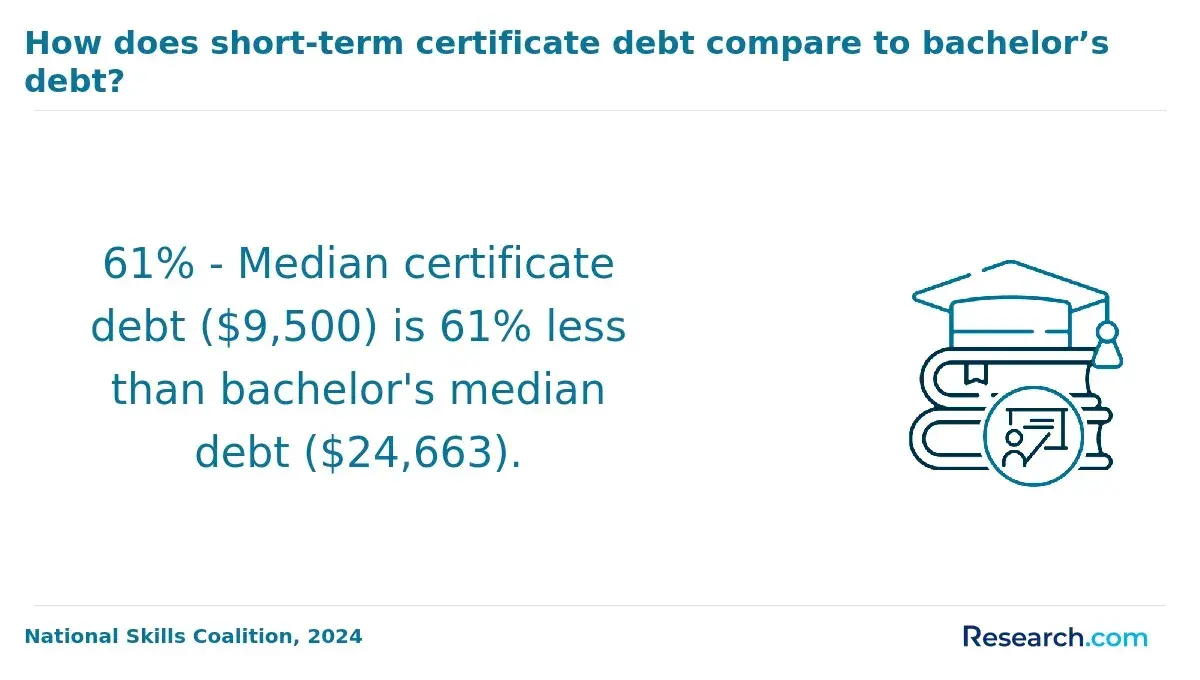
A no-application-fee policy saves money at the point of applying, but it rarely determines whether a degree is affordable overall. If a student applies to five programs that each charge a $50 fee, avoiding those fees would save $250; that is useful, but it is small compared with tuition, textbooks, technology fees, and possible proctoring charges.
Use the waived application fee strategically. It can help you apply to more than one credible option without increasing upfront costs, but it should not override stronger indicators of value such as accreditation, course quality, faculty expertise, transfer-credit acceptance, and career relevance.
Before you treat a no-fee program as the cheaper choice, compare the costs below across all schools on your list.
- Tuition per credit: Multiply the published rate by the number of required credits, and confirm whether rates differ for undergraduate, graduate, military, out-of-state, or international students.
- Mandatory fees: Ask about technology, graduation, library, transcript, lab, proctoring, and course-material charges that may not appear in headline tuition.
- Transfer-credit policy: A higher-tuition program that accepts more prior credit may cost less than a lower-tuition program that requires more credits in residence.
- Time to completion: Longer completion timelines can increase opportunity cost, especially for students using employer benefits with annual limits.
- Financial aid fit: Confirm whether the program is eligible for federal aid, military education benefits, institutional scholarships, or employer tuition assistance.
The common mistake is assuming "free to apply" means "low cost to attend." The smarter approach is to use the free application to compare official aid offers and transfer evaluations before committing.
What Are the Admission Requirements for No-Fee Online Space Studies Degree Programs?
Admission requirements vary by degree level. Undergraduate space studies programs are usually more accessible to first-time and transfer students, while master's programs may expect prior college-level math, science, engineering, aviation, computer science, or military technical experience.
The table below summarizes common requirements so you can prepare a complete application before your preferred start date. Requirements can vary by school, so use this as a planning checklist rather than a guarantee.
| Requirement | Bachelor's-level programs | Master's-level programs | Why it matters |
| Prior education | High school diploma, GED, or transfer credits | Accredited bachelor's degree | Determines basic eligibility and transfer pathway |
| Transcripts | High school and college transcripts if applicable | Official transcripts from all colleges attended | Incomplete transcripts are a common cause of delayed admission |
| GPA review | May be flexible, especially for adult learners | Often reviewed more closely for graduate admission | Can affect full admission, provisional admission, or required prerequisites |
| Math and science readiness | Helpful for astronomy, physics, and orbital concepts | Important for advanced space systems and research courses | Weak preparation can slow progress even after admission |
| Statement or goals essay | Sometimes optional | More commonly requested | Helps explain career goals and readiness for online study |
Students comparing admissions flexibility across fields may notice that some career programs have clearer professional standards than space studies. For example, counseling students often check CACREP programs because field-specific accreditation can affect licensure pathways; space studies students instead need to focus on institutional accreditation, technical coursework, and employer expectations.
Before applying, gather documents early. Rolling admissions only helps if your file becomes complete before the school's registration, financial aid, and advising cutoffs.
When Should Students Apply to Online Space Studies Degree Programs With Rolling Admissions?
The best time to apply is usually several weeks before your target start date, even when the school advertises rolling admissions. This gives you enough time for transcript delivery, transfer-credit review, financial aid processing, advising, and course registration.
A practical application timeline helps you avoid the most common rolling-admission mistake: assuming you can apply at the last minute because applications are accepted year-round. Use the sequence below when planning around a specific enrollment date.
- Choose a target start date and ask the school for the last date to submit a complete application, not just the first inquiry form.
- Request official transcripts from every prior institution, including community colleges, military education records, and dual-enrollment coursework.
- Confirm whether required courses are available in your first term, especially math, astronomy, space systems, or research methods courses.
- Submit the FAFSA, military benefit paperwork, employer tuition forms, or scholarship applications before their separate deadlines.
- Ask for a written transfer-credit estimate before enrolling if prior credits could reduce your total cost.
- Register early enough to secure required courses, books, software, and any online proctoring setup.
Applying early in a rolling-admission cycle may not guarantee admission, but it can improve your scheduling options. It also gives you time to fix missing documents instead of being pushed into a later term.
How Can Students Strengthen an Online Space Studies Degree Application?
A strong space studies application shows that you understand the academic demands of the field and have a realistic goal for using the degree. Admissions committees and advisors may look for readiness in math, science, writing, research, and online learning, especially at the graduate level.
Focus on evidence that connects your background to the curriculum. The steps below are especially useful for working adults, veterans, aviation professionals, IT workers, and students moving from general science into space-focused study.
- Explain your career direction clearly: Connect the degree to roles such as space operations, aerospace project support, satellite systems, mission planning, science communication, defense contracting, or graduate research preparation.
- Highlight technical readiness: Mention coursework or experience in physics, calculus, statistics, programming, GIS, astronomy, aviation, systems engineering, or data analysis when relevant.
- Address academic gaps directly: If your GPA is uneven or your science background is limited, explain what has changed and identify courses or certifications that show current readiness.
- Show online learning discipline: Describe how you manage deadlines, independent study, remote collaboration, and asynchronous coursework.
- Use recommendations strategically: Choose recommenders who can speak to analytical ability, technical work, research habits, leadership, or mission-focused teamwork.
Current employer expectations increasingly favor graduates who can work across technical and operational teams. A space studies application is stronger when it shows not only enthusiasm for space but also practical skills in analysis, communication, and problem solving.
Are Online Space Studies Degree Programs With No Application Fees Accredited and Legitimate?
A no-application-fee policy does not make a program less legitimate by itself. Many accredited online universities waive fees to reduce barriers for adult learners, military students, and transfer applicants. The real question is whether the institution is properly accredited and whether the degree aligns with your intended career path.
For U.S. students, institutional accreditation is the baseline. It affects federal financial aid eligibility, transfer-credit recognition, employer acceptance, and graduate-school options. Space studies programs may not have a single field-specific accreditor in the way some professional programs do, so students need to look closely at the institution, curriculum, faculty, and outcomes.
Use the following red-flag checklist before enrolling.
- No recognized institutional accreditation: Avoid programs that cannot clearly identify accreditation from an agency recognized by the U.S. Department of Education or CHEA.
- Pressure to enroll immediately: Rolling admissions should provide flexibility, not high-pressure sales tactics.
- Unclear total cost: Be cautious if tuition, fees, transfer-credit rules, or refund policies are hard to find.
- Vague curriculum: A credible space studies degree should clearly list courses in areas such as astronomy, orbital mechanics, space policy, remote sensing, propulsion, mission design, or research methods.
- Unrealistic career promises: No degree can guarantee NASA employment, astronaut selection, or a specific salary.
Students comparing fast or low-cost advanced credentials should be especially careful with marketing claims. Guides to options such as 1 year PhD programs online free can be useful for understanding how to evaluate speed and cost claims, but space studies students should still prioritize accreditation and career fit over shortcuts.
How Do Financial Aid and Total Costs Compare Among Online Space Studies Degree Programs?
Financial aid can matter more than the application fee. Federal Student Aid set the maximum Pell Grant at $7,395 for the 2024-25 award year, which illustrates why students should look beyond a waived fee and calculate how grants, loans, military benefits, scholarships, and employer support affect net cost.
Graduate students should also pay attention to borrowing limits. Federal unsubsidized loans for eligible graduate and professional students generally have an annual limit of $20,500, so a program's annual tuition pace can affect whether students need additional financing.
The table below shows the main cost categories to compare before enrolling. It is designed to help you request comparable numbers from each school instead of relying on advertised tuition alone.
| Cost or aid factor | What to ask the school | Why it affects value |
| Tuition per credit | What is the current rate for my program and student category? | It is usually the largest direct cost |
| Required credits | How many credits must I complete after transfer review? | Fewer accepted transfer credits can raise total cost |
| Online fees | Are there technology, proctoring, course-material, or graduation fees? | Fees can reduce the value of a waived application fee |
| Financial aid deadlines | Do aid, scholarships, or military benefits have separate deadlines from admission? | Rolling admission does not always mean rolling aid priority |
| Employer or military benefits | Does the school coordinate with tuition assistance, GI Bill benefits, or reimbursement plans? | Benefit timing can influence start-date choice |
Students considering space studies alongside human-services or career-change degrees should compare funding rules by field. For example, someone researching the easiest MSW online program may face different practicum, licensure, and aid considerations than a student pursuing space operations or aerospace support roles.
The best financial choice is not always the program with the lowest advertised tuition or the free application. It is the accredited program that offers the right curriculum, the strongest usable aid package, and the shortest realistic path to completion.
Which Students Benefit Most From No-Fee, Rolling-Admission Online Space Studies Degrees?
No-fee, rolling-admission space studies programs are most valuable for students who need flexibility but still have a clear academic or career goal. They are less useful for students who want a highly sequenced engineering curriculum, a research-heavy doctoral pathway, or a program tied to a specific campus lab.
The strongest fit is usually a student who can benefit from frequent start dates and lower application friction without confusing those features with program quality. The profiles below show who should consider this path carefully.
- Working adults: Rolling admissions can help align school with work schedules, promotion timelines, and employer tuition-assistance windows.
- Military-affiliated learners: Frequent starts can be helpful for students managing deployments, relocations, or military education benefits.
- Transfer students: A no-fee application makes it easier to request a transfer-credit review before deciding whether the degree is affordable.
- STEM-adjacent career changers: Students from aviation, IT, data analysis, physics, environmental science, or defense-support roles may use space studies to focus their existing skills.
- Exploratory applicants: Students comparing several credible programs can apply without spending heavily on application fees, as long as they still compare total cost.
Some students may be better served by another credential. A student who wants a fast office career pathway might compare an admin assistant degree. The right choice depends on the occupation you want, not just the admissions model.
How Should Students Choose Among No-Fee Online Space Studies Degree Programs?
Students should choose by comparing the whole enrollment and career picture, not by ranking programs only on application fees. A free application and rolling admissions are useful advantages when they help you get official answers sooner, but they do not replace due diligence.
Use this decision process before you apply or enroll.
- Define your goal first: Decide whether you want space operations, aerospace project support, satellite technology, science education, defense contracting, graduate research preparation, or personal enrichment.
- Match the curriculum to that goal: Look for courses that build relevant skills in physics, astronomy, systems thinking, data analysis, policy, remote sensing, orbital mechanics, or mission planning.
- Confirm no-fee status in writing: Ask whether the application fee is permanently waived, temporarily waived, or waived only for certain applicants.
- Confirm rolling admission details: Ask when applications are reviewed, when decisions are released, and whether your desired start term still has course availability.
- Request a total-cost estimate: Include tuition, fees, books, transfer credits, aid, military benefits, and expected time to completion.
- Verify accreditation: Check institutional accreditation and whether the degree will be recognized by employers, graduate schools, or benefit providers relevant to your goal.
- Compare opportunity cost: Consider whether a higher-cost space studies degree offers enough career value compared with a certificate, employer training, engineering degree, or related STEM program.
Also ask practical advisor questions before submitting an enrollment deposit.
- How many start dates are available each year for this exact program?
- Are core space studies courses available every term or only during certain sessions?
- What is the maximum number of transfer credits accepted?
- Are there synchronous sessions, proctored exams, labs, residencies, or software requirements?
- What career services, alumni networks, research opportunities, or employer partnerships support space-related career goals?
A no-fee, rolling-admission online space studies degree is worth considering when it is accredited, affordable after aid, aligned with your career goal, and flexible enough for your schedule. It is not worth choosing solely because the application is free. A teacher considering a clinical career change may research how to become a speech pathologist.
Other Things You Should Know About Space Studies
No. Space studies is usually broader and may cover astronomy, space policy, space operations, remote sensing, planetary science, and mission concepts. Aerospace engineering is more engineering-intensive and typically requires deeper coursework in calculus, physics, mechanics, and design.
It can support preparation for some space-related roles, but it does not guarantee employment at NASA or any contractor. Students should compare job postings and look for required skills such as programming, systems engineering, data analysis, project management, or scientific research experience.
Usually no. A pilot license may be useful for aviation-related careers, but space studies programs typically focus on space science, operations, policy, technology, or research rather than flight training.
Helpful skills include algebra, physics fundamentals, spreadsheet analysis, scientific writing, introductory programming, statistics, and comfort with online research tools. Graduate students may benefit from stronger preparation in calculus, data analysis, or engineering concepts.
References
- College Admissions on Your Timeline - TheCollegeTour.com https://www.thecollegetour.com/blog/college-admissions-on-your-timeline/
- Rolling Admissions Explained: How It Works and When You Should Apply https://riseglobaleducation.com/blogs/rolling-admissions-explained-how-it-works-and-when-you-should-apply
- Free Study Abroad: Complete List of Countries with No Tuition Fees for International Students - Spain Internship https://spain-internship.com/blog/list-country-free-study-abroad/
- Applying & Admissions | Spacemaster https://www.spacemaster.eu/spacemaster/applying--admissions
- Online Colleges No Application Fee: Schools With No Fees to Apply https://www.top10onlinecolleges.org/with-no-application-fee/
- Cost & Financial Aid https://www.semesteratsea.org/financial-aid/
- What Careers Are Possible With a BA in Space Studies? https://www.physicsforums.com/threads/what-careers-are-possible-with-a-ba-in-space-studies.335015/
- Rolling Admissions Guide: What, When, Why? https://www.ivywise.com/blog/what-does-rolling-admissions-mean/
- Space-related degrees - Space Training Catalogue https://training.spaceskills.org/degrees