
2027 How Long Does It Take to Get a Business Degree from Bachelor’s to Doctorate?

Co-Founder and Chief Data Scientist
A business degree can take less than a year or more than five years, depending on the credential, enrollment pace, transfer credits, delivery format, and whether the program includes internships, capstones, exams, or a dissertation. For students comparing programs in 2026, the real question is not only “How long does it take?” but also “Which timeline fits my career goal, budget, work schedule, and expected return?”
This guide explains the typical time required for bachelor’s, master’s, and doctorate-level business programs. It also shows how online, accelerated, part-time, executive, and transfer-friendly options can change your graduation date. If you are weighing a business major, planning a career change, or deciding whether to pursue graduate study, you will learn how to compare timelines without overlooking accreditation, cost, workload, career outcomes, and practical skills employers expect in business management careers.
Because business is a broad field, timelines can also vary by specialization. A student pursuing general business administration may follow a different path than someone focused on analytics, finance, entrepreneurship, or operations. Students interested in logistics-heavy roles, for example, may compare a general business degree with a more targeted supply chain management degree.
Length to Get a Business Degree Table of Contents
- What factors affect how long a business degree takes?
- What types of business degree programs are available?
- How long does a bachelor’s degree in business take?
- How long does a master’s degree in business take?
- How long does a doctorate in business take?
- How should you choose a business program that fits your timeline?
- Timeline planning checklist
- What are the fastest ways to complete a business degree?
- How can you balance work, life, and school?
- How can you control the cost of a business degree?
- Is an accelerated online business degree worth considering?
- Can an accelerated business degree support faster career movement?
- Should you add business law to your business studies?
- Which business degree may offer stronger ROI?
- Is an online business degree realistic for working adults?
- How can you choose an affordable MBA without lowering quality?
- Is a doctorate in business worth the time investment?
Quick Answer: How Long Does It Take to Get a Business Degree?
A bachelor’s degree in business commonly takes 3-4 years for full-time students. A master’s degree in business usually takes 1-2 years, although accelerated options may take nine to 12 months and part-time or executive formats may take two to three years or longer. A doctorate in business commonly takes 3-5 years excluding the dissertation, and the dissertation can add several months to years depending on the research process.
| Business credential | Typical completion time | Best fit | Timeline factors to check |
| Bachelor’s degree in business | 3-4 years | Students seeking entry-level business roles or a foundation for graduate study | Transfer credits, full-time vs. part-time enrollment, internships, capstone requirements, summer terms |
| Master’s degree in business | 1-2 years | Professionals seeking advancement, specialization, management training, or career change | Program format, prerequisites, GMAT policies, cohort schedule, work experience requirements |
| Doctorate degree in business | 3-5 years, excluding dissertation | Experienced professionals, researchers, executives, or aspiring faculty | Research scope, dissertation committee feedback, residency requirements, teaching or research expectations |
Factors Affecting the Timeline of Completing a Business Degree
The answer to how long it takes to earn a bachelor’s degree in business depends on more than the catalog description. Two students in the same major can graduate at different times because their credit history, course load, personal obligations, and program structure are different.
In a traditional full-time bachelor’s program, students often finish in 3-4 years. A common structure includes 30-36 credit hours per academic year. Students who enter with transfer credits, Advanced Placement credit, dual-enrollment coursework, or prior college experience may shorten that timeline. Students who enroll part time, pause their studies, change majors, or repeat courses may need longer.
Work and family obligations also matter. A student’s ability to attend required classes, manage assignments, and maintain a realistic course load can affect completion speed. Research and reporting on working while in college show that employment can create different pressures for different students, especially when hours are high or financial need is significant; students should be careful about assuming that work and school will automatically balance smoothly. A useful starting point is reviewing how work commitments can affect college progress through sources such as CNBC’s coverage of students working while enrolled.
A business degree timeline also depends on what level of education you actually need. A bachelor’s degree may be enough for many entry-level roles, while some leadership, analytics, finance, consulting, accounting, academic, or executive paths may require or strongly favor graduate education.
| Timeline factor | How it can shorten the degree | How it can extend the degree |
| Enrollment pace | Full-time study and summer terms can help students complete credits faster. | Part-time study usually spreads the same curriculum over more terms. |
| Transfer credits | Accepted credits can reduce the number of remaining courses. | Credits that do not transfer may force students to retake similar coursework. |
| Program format | Accelerated and online programs may offer shorter sessions or more start dates. | Cohort-based or lockstep programs may delay progress if a course is missed. |
| Internships and capstones | Well-planned experiential requirements can be completed on schedule. | Required placements, approvals, or project delays can add time. |
| Work and personal responsibilities | Flexible scheduling can help working adults continue consistently. | Heavy work hours, caregiving, or financial interruptions can slow completion. |
Overview of Business Degree Programs
Business education is organized by degree level, specialization, and delivery format. Students comparing the best online business schools should look beyond the advertised completion time and ask how the curriculum is structured, whether the school is accredited, how credits transfer, and what career services are available.
Business programs generally build from broad undergraduate foundations to specialized graduate training and advanced research or executive-level study. That progression is important: a shorter program is not always better if it does not match the role you want.
Types of Business Degree Programs
- Bachelor’s Degree in Business: This undergraduate option commonly takes 3-4 years and introduces core topics such as management, accounting, marketing, finance, economics, business law, ethics, and communication. It is often the standard starting point for entry-level business roles.
- Master’s Degree in Business: A graduate business degree commonly takes 1-2 years and is designed for students who already hold a bachelor’s degree. Although the linked guide explains what a master’s degree can mean in graduate education, business master’s programs typically focus on leadership, analysis, strategy, finance, marketing, operations, entrepreneurship, or another defined area.
- Doctorate Degree in Business: A doctorate is the highest business credential discussed here and typically takes 3-5 years before dissertation completion is factored in. It is most relevant for advanced research, teaching, consulting, executive strategy, or applied leadership scholarship.
Common Business Specializations and How They Affect Planning
Specialization can influence both your course sequence and your career preparation. A general business administration track may offer broad flexibility, while a focused track may require specific electives, quantitative courses, internships, labs, or capstone projects.
| Specialization | What students usually study | When it may be a strong choice |
| Finance | Investment analysis, financial management, risk assessment, financial planning, and related quantitative topics | Choose this path if you want roles connected to banking, corporate finance, investment management, financial planning, or risk analysis. |
| Marketing | Consumer behavior, market research, advertising, branding, digital marketing, and marketing strategy | This can fit students who want brand, advertising, digital marketing, market research, or customer strategy roles. |
| Management | Organizational behavior, leadership, strategy, human resources, and operations management | This is useful for students who want supervisory, operations, team leadership, or general management pathways. |
| Entrepreneurship | Business planning, innovation, venture funding, startup strategy, and growth management | This may suit students who want to launch a business, join a startup, or work in innovation-focused environments. |
Students can also strengthen a business degree with complementary skills. Strong writing supports reporting, proposals, sales presentations, and executive communication, which is why some students explore communication-heavy options such as online creative writing degree programs. Data skills are also increasingly valuable for forecasting, market analysis, and performance measurement, making a master’s in data science online relevant for some business professionals.
Traditional, Online, and Executive Business Programs Compared
The same degree title can feel very different depending on delivery format. Before choosing, compare how each model affects time, networking, flexibility, and workload.
| Program format | How it usually works | Best for | Possible drawback |
| Traditional campus program | Students attend classes in person at a college or university. | Learners who want campus networking, face-to-face instruction, student organizations, and local recruiting. | Less flexible for students with full-time work, commuting limits, or family responsibilities. |
| Online business program | Courses are completed remotely, either fully online or through a hybrid model. | Working adults, transfer students, military students, caregivers, and students outside commuting range. | Requires strong self-management and careful verification of accreditation and student support. |
| Executive business program | Programs are built for experienced professionals and often use weekend, evening, hybrid, or part-time schedules. | Mid-career professionals, managers, and executives who want graduate study without leaving work. | Programs may take longer than full-time study and can be intensive despite flexible scheduling. |
Length to Get a Bachelor’s Degree in Business
A bachelor’s degree in business usually takes about 3-4 years. Many programs are built around 120-credit hours, with students completing general education, business core courses, electives, and often an internship or capstone experience.
A four-year plan is not the only option. Students with accepted transfer credits may finish sooner, while part-time students may need more time. If speed is a priority, review the academic calendar, transfer policy, maximum credits per term, and whether required courses are offered every semester.
Typical Bachelor’s Degree Timeline
| Program component | Common timing | What to expect |
| Core business courses | 1-2 years, often in the first or second year | Introductory and intermediate coursework in business foundations |
| Electives | About 2 years during the second and junior years or spread across the full program | Courses that support a specialization, minor, general education requirement, or personal interest |
| Internship | 1 semester or 1 academic year, depending on the school | Practical experience that may be required or optional, often during the junior or senior year |
| Capstone project | Often 1 year during the senior year | A final applied project, simulation, consulting assignment, case analysis, or business plan |
Common Core Courses in a Business Bachelor’s Program
Although course names differ by institution, many bachelor’s programs include foundational subjects such as:
- Introduction to Business
- Principles of Marketing
- Financial Accounting
- Managerial Accounting
- Principles of Management
- Business Ethics
- Business Law
- Business Communication
- Business Statistics
- Business Finance
- Microeconomics
- Macroeconomics
Electives: Where You Shape the Degree
- Business electives: These let students build depth in areas such as financial management, international business, human resource management, marketing strategy, or business analytics.
- General education electives: These broaden academic preparation through subjects such as composition, history, psychology, sociology, and philosophy.
- Free electives: These can support personal or career goals in areas such as foreign language, personal finance, public speaking, leadership development, or computer programming.
Internships: Why They Can Affect Both Time and Employability
Business internships can help students apply classroom learning, build professional contacts, and test career interests before graduation. However, they can also affect scheduling. Some internships require daytime availability, minimum hours, employer approval, or relocation.
Common internship areas include:
- Marketing internship: Students may support market research, content creation, social media, campaign planning, or promotional work.
- Finance internship: Students may work with financial statements, budgeting, forecasting, financial data, or operational finance tasks.
- Human resources internship: Students may assist with recruiting, onboarding, benefits, employee relations, or HR policy work.
- Operations internship: Students may contribute to process improvement, supply chain coordination, inventory management, or production planning.
- Sales internship: Students may help with sales support, customer relationship management, prospect research, market analysis, or sales strategy.
Capstone Projects: The Final Proof of Learning
A capstone is usually a culminating academic experience that asks students to apply business concepts to a complex problem. Capstones vary, but common examples include:
- Business plan: Students design a plan for a startup or existing company, often including market research, marketing strategy, operational planning, and financial projections.
- Consulting project: Students work on a defined business problem for a client or simulated client.
- Case study analysis: Students evaluate a business scenario, identify problems, apply business frameworks, and recommend action.
- Strategic management project: Students build a strategy plan that considers opportunities, risks, and implementation priorities.
- Business simulation: Students make decisions in a simulated business environment and analyze the consequences of those choices.
Is a 4-Year Business Degree Worth It?
The value of a four-year business degree depends on cost, school quality, major, career direction, financial aid, and how effectively the student uses internships and networking. It should not be treated as an automatic guarantee of a high salary.
According to research from The Foundation for Research on Equal Opportunity, the financial value of a bachelor’s degree varies substantially by field. Engineering, computer science, nursing, and economics are examples of fields with high returns on investment, often exceeding $500,000 or more, while music, art, psychology, and religion often show little to no net financial value and may even produce negative ROI.
Institution and major choice can also influence returns. One example cited in the original research discussion is the finance major at the University of Pennsylvania’s Wharton School, where the five-year ROI is reported as $226,633. That example should not be read as a typical outcome for all finance majors or all business schools; it shows why program-level outcomes matter.
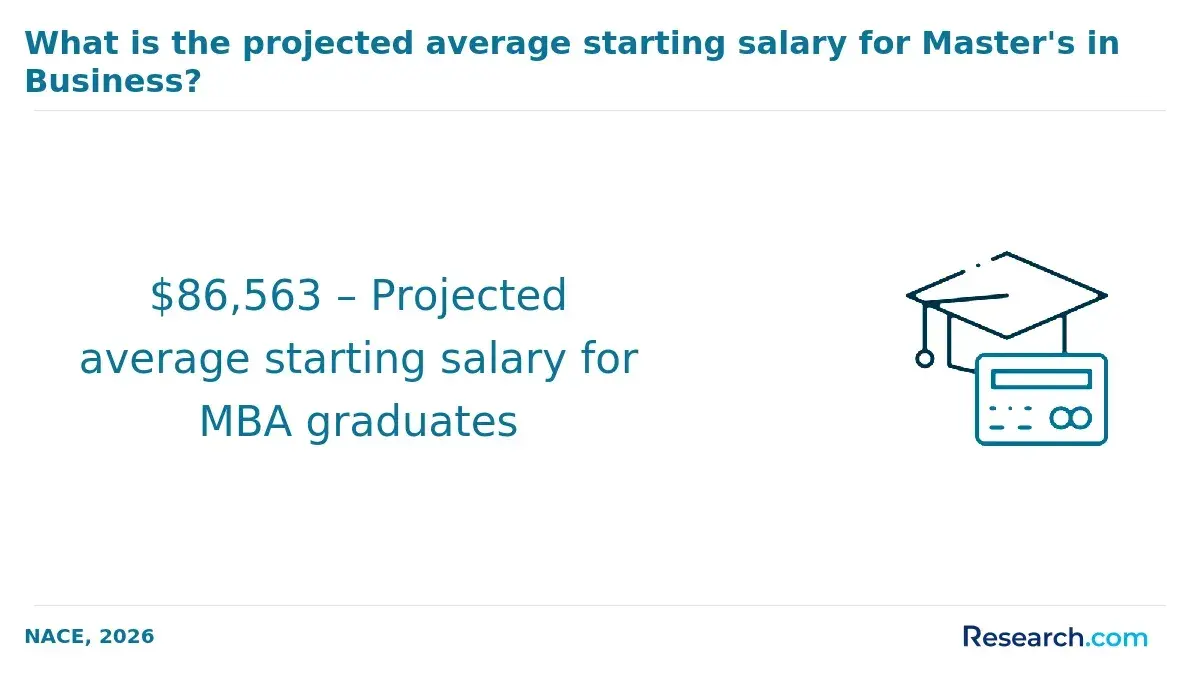
Length to Get a Master’s Degree in Business
Typical duration: 1-2 years.
A full-time master’s degree in business is commonly completed in two years. Part-time schedules may take two to three years or longer. Some accelerated programs compress the timeline to as little as nine to 12 months, while Executive MBA programs for working professionals may also extend across two to three years because they are designed around professional schedules.
The best timeline depends on your goal. A one-year program may help you return to the workforce faster, but it can be intense and may offer less time for internships or career exploration. A two-year program may provide more room for networking, recruiting, electives, and internships. A part-time or executive model may be better if you cannot pause your income.
Types of Master’s in Business Programs
- Master of Business Administration (MBA): A broad graduate business degree covering leadership, strategy, finance, marketing, operations, and management. It is commonly chosen by professionals seeking advancement or career flexibility.
- Master of Science in Business (MSB or MS): A more specialized graduate option that focuses on a defined field such as finance, marketing, analytics, or management.
- Executive Master of Business Administration (EMBA): A program structured for experienced professionals, executives, and senior managers who need part-time or executive-format study.
- Master of Accounting (MAcc): A specialized accounting degree that prepares students for advanced accounting roles and may support preparation for Certified Public Accountant pathways, depending on state requirements.
- Master of International Business (MIB): A graduate program focused on global strategy, cross-cultural management, international trade, and business across borders.
| Master’s option | Timeline | Choose it if... | Be careful if... |
| Full-time MBA | Often 1-2 years | You can study intensively and want broad management preparation. | You need to keep working full time. |
| Accelerated MBA or business master’s | As little as nine to 12 months in some programs | You want the fastest possible graduate route and can handle a compressed workload. | You need more time for internships, recruiting, or academic adjustment. |
| Part-time MBA | Two to three years or longer | You want to continue working while studying. | You need a very fast credential for an immediate career pivot. |
| Executive MBA | Often two to three years | You have substantial work experience and want a schedule built for professionals. | You are early in your career and do not yet meet experience expectations. |
| Specialized master’s | Often 1-2 years | You want depth in a targeted area such as accounting, finance, marketing, or international business. | You need the broad flexibility of a general MBA. |
Typical Coursework in Master’s Degree in Business Programs
Graduate business coursework usually moves beyond basic business literacy into more advanced analysis, leadership, strategy, and decision-making. Depending on the program, students may study:
- Advanced Financial Management: Topics may include derivatives, mergers and acquisitions, risk management, international finance, and more sophisticated financial decision-making.
- Strategic Leadership: Students examine leadership theory, organizational change, strategic decisions, and management in complex business environments.
- Business Analytics: Coursework may cover predictive analytics, big data analytics, data-driven strategy, and tools for evidence-based decisions.
- Advanced Marketing Strategies: Students may study branding, digital marketing, social media marketing, marketing analytics, and strategic campaign planning.
- Global Business Strategy: Topics may include market entry, international negotiation, global supply chains, and cross-cultural management.
- Innovation and Entrepreneurship: Courses may focus on new venture creation, technology management, entrepreneurial ecosystems, innovation strategy, and growth.
- Business Ethics and Corporate Social Responsibility: Students examine ethical judgment, sustainability, stakeholder management, and social responsibility in business settings.
Length to Get a Doctorate Degree in Business
Typical duration: 3-5 years, excluding dissertation.
A doctorate in business can refer to a Doctor of Business Administration (DBA) or a Doctor of Philosophy (PhD) in Business. Coursework and research requirements often take around three to five years. The dissertation or thesis stage can add several months to years because research design, data collection, analysis, writing, committee review, and revisions can take time.
DBA vs. PhD in Business
| Degree | Main emphasis | Common audience | Typical outcome |
| Doctor of Business Administration (DBA) | Applied business research and practical leadership problems | Experienced professionals, executives, consultants, and senior managers | Advanced professional practice, executive strategy, consulting, or applied research |
| Doctor of Philosophy in Business (PhD) | Theory, research methods, scholarly contribution, and academic inquiry | Future faculty, researchers, and students pursuing advanced scholarly work | Academic research, university teaching, or advanced research roles |
Typical Coursework in Doctorate in Business Programs
Doctoral business programs are more research-intensive than master’s programs. Students are expected to build expertise in theory, research design, empirical methods, and independent inquiry. Many programs also require a dissertation that contributes original knowledge to the field.
Common doctoral coursework may include:
- advanced research methods
- statistical analysis
- qualitative research
- advanced topics in business theory and strategy
- leadership and organizational behavior
- specialized courses in the student’s area of research interest
Some doctoral programs also include teaching preparation, especially when the program is designed to prepare future business faculty.
How to Choose the Right Program for Your Timeline
The right business degree timeline is the one that fits your career target, financial situation, academic background, and weekly availability. A fast program is not always the best program; a slower program is not always safer. Compare the actual structure, not just the marketing claim.
- Start with the role you want. Entry-level business roles may require a bachelor’s degree, while some management, consulting, finance, analytics, accounting, executive, or academic paths may call for graduate education.
- Map the required credential. Do not enroll in a doctorate if a specialized master’s would meet your goal. Do not choose a general degree if a focused program is more aligned with your target role.
- Check total credits and sequencing. Some courses must be taken in order. If a required course is offered only once per year, missing it can delay graduation.
- Review transfer and prior learning policies. Ask how many credits can transfer, what grades are required, and whether professional credentials or work experience can be evaluated.
- Compare online, campus, and hybrid formats. Online study can add flexibility, while campus programs may offer stronger in-person networking and recruiting opportunities.
- Confirm accreditation. Accreditation affects credit transfer, graduate school eligibility, employer recognition, and access to certain financial aid options.
- Look at student support. Academic advising, tutoring, career services, internship support, and tech help can affect whether you finish on time.
- Choose realistic speed. Students seeking a streamlined path may compare easier business degree options, but the simplest curriculum should still match career goals and meet quality standards.
Questions to Ask Before Enrolling
| Question | Why it matters |
| How many credits do I need after transfer evaluation? | The advertised timeline may not apply to your actual remaining requirements. |
| Can I attend part time, full time, or switch between the two? | Flexibility can protect your progress if work or family demands change. |
| Are courses asynchronous, synchronous, or both? | Live class times may affect working adults and students in different time zones. |
| Are internships, residencies, or capstones required? | Experiential requirements can improve learning but may affect scheduling. |
| What happens if I fail, withdraw from, or miss a required course? | Some programs allow quick retakes; others may delay students by a full term or year. |
| What career outcomes does the program report? | Completion time means less if the program does not support your career goal. |
What are the fastest ways to complete a business degree?
Students who want to finish quickly should focus on legitimate acceleration, not shortcuts that weaken transferability or recognition. The fastest practical path usually combines accepted prior credit, a flexible academic calendar, a manageable course load, and a program designed for adult learners or motivated full-time students.
- Use prior learning and transfer credits. Colleges may evaluate previous coursework, professional certifications, military training, or documented experience through prior learning assessments. Policies vary, so request a formal credit review before enrolling.
- Choose an accelerated program. Some programs use shorter terms, year-round enrollment, or compressed schedules. Graduate students seeking flexible admission structures may compare options such as online MBA programs with no GMAT requirement.
- Take courses year-round. Summer or winter terms can help students complete prerequisites, electives, or general education requirements faster.
- Pick a school with multiple start dates. More start dates can reduce waiting time between terms.
- Avoid changing majors late. Switching concentrations can add requirements and delay graduation.
- Consider combined bachelor’s-to-master’s pathways. Some institutions offer dual or combined programs that reduce total time by allowing overlapping requirements.
| Acceleration strategy | Potential benefit | Risk to watch |
| Transfer credits | Can reduce remaining coursework | Not all credits apply to major requirements |
| Accelerated terms | Can shorten calendar time | Workload can be intense |
| Year-round study | Reduces downtime between semesters | Less time for work, rest, or internships |
| Online format | May allow more scheduling flexibility | Requires discipline and strong time management |
| Combined degree | Can reduce total time across bachelor’s and master’s study | May require early planning and strong academic performance |
How to balance work, life, and school while earning a business degree?
Many business students are working adults, parents, caregivers, or career changers. Finishing on time requires a plan that protects study hours and prevents overload.
- Build a weekly time budget before classes begin. Block work, commuting, caregiving, class meetings, assignments, meals, sleep, and personal obligations. If the schedule only works on paper, reduce your course load.
- Set short academic targets. Break large goals into weekly tasks: reading, discussion posts, quizzes, project milestones, and exam preparation.
- Choose flexibility for the right reason. Online programs can help working students, but they still require consistent time. Students comparing affordability and flexibility may review low-cost online business administration degree programs.
- Use support early. Contact advisors, instructors, tutoring services, writing centers, and career offices before problems become emergencies.
- Protect recovery time. Burnout can extend your degree more than a lighter course load would. Sustainable pacing matters.
Can Your Business Degree Hold Up to AI?
AI is changing how business work is organized. It can support analysis, drafting, forecasting, customer communication, workflow automation, coding support, document review, and decision support. That does not make a business degree obsolete, but it does raise the bar. Graduates increasingly need to understand how to use AI tools responsibly, interpret outputs, protect data, and make judgment-based decisions that tools cannot fully replace.
Reporting in Forbes has discussed how AI may affect middle management by automating some coordination and decision-support tasks; readers can review the discussion on AI and management roles. McKinsey has also described ways generative AI may affect business functions such as marketing and sales, operations, IT/engineering, risk and legal, and R&D.
Pega reported in an earlier global survey that 42% of executives expressed concern that AI would take their jobs. That figure should be interpreted carefully: concern is not the same as actual job loss, but it does show why AI literacy is becoming relevant for business students and managers.
How Business Students Can Prepare for AI-Influenced Work
- Learn analytics fundamentals. Business graduates should be comfortable with data interpretation, dashboards, metrics, and evidence-based decisions.
- Understand AI limits. AI tools can produce errors, bias, hallucinated outputs, or incomplete analysis. Human review remains essential.
- Build communication skills. Managers still need to explain decisions, persuade stakeholders, write clearly, and lead teams.
- Study ethics and risk. AI use raises issues involving privacy, compliance, intellectual property, transparency, and accountability.
- Choose programs that update curriculum. Ask whether business analytics, AI applications, digital transformation, and responsible technology use are included.
Incorporating AI into Graduate Studies
In The International Journal of Management Education, Xu and Babaian argued that business professionals need enough AI knowledge to evaluate both opportunities and risks. Their work also noted that business school deans have faced challenges incorporating AI training into business and management education.
The paper, “Artificial intelligence in business curriculum: The pedagogy and learning outcomes,” described an introductory AI course at a northeastern business university in the United States. The course was a three-credit, graduate-level class designed for a regular 15-week semester.
-
: "
“We have shown that it is possible and feasible to provide business students with AI training, which is perceived to be highly relevant to students’ future careers … by presenting the process and product of our curriculum design, we demonstrate what an introductory AI course may cover in term of contents….”
"
How can you manage the costs of earning a business degree?
Cost should be evaluated alongside time. A shorter program may save living expenses or reduce time away from work, but it may also require heavier course loads. A longer part-time program may preserve income but extend tuition payments and fees.
Start by calculating the full cost: tuition, fees, books, software, commuting, housing, meals, lost wages, technology, and graduation fees. Then compare financial aid, scholarships, employer tuition assistance, military benefits, payment plans, and transfer-credit savings. Students looking for lower-cost online undergraduate options may compare resources such as the most affordable online bachelor’s degree programs.
| Cost factor | What to ask | Why it matters |
| Tuition structure | Is tuition charged per credit, per term, or as a flat rate? | Flat-rate tuition can benefit students who take heavier loads, while per-credit pricing may suit part-time learners. |
| Fees | Are there technology, graduation, residency, lab, or online course fees? | Fees can make two programs with similar tuition cost very different amounts. |
| Transfer credits | How many credits will be accepted into the degree plan? | Accepted credits can reduce both time and cost. |
| Employer support | Does your employer offer tuition reimbursement or scheduling flexibility? | Employer support can make part-time study more affordable and sustainable. |
| Career services | Does the program support internships, recruiting, resumes, interviews, and alumni networking? | Career support can influence the practical value of the degree. |
Is an Accelerated Online Business Degree Program a Smart Investment?
An accelerated online business program can be a smart option when the school is properly accredited, the curriculum matches your career goal, transfer policies are transparent, and you can realistically handle a compressed schedule. It is less suitable if you need a slower pace, extensive in-person networking, or more time to explore career options.
Students comparing faster pathways can review accelerated business administration degree options. When comparing programs, ask whether acceleration comes from legitimate scheduling efficiencies, transfer credit, shorter sessions, or year-round study rather than reduced academic expectations.
Is an Accelerated Business Degree the Catalyst for Rapid Career Advancement?
An accelerated business degree may support faster advancement if you already know your goal and need the credential to qualify for promotion, enter a new field, or meet employer expectations. It is not a guaranteed shortcut to a better job. Career progress still depends on experience, skill level, networking, job market conditions, and how well the program aligns with your target role.
For students who want a shorter online route, accelerated online business administration degree programs can be worth comparing. Focus on outcomes, advising, course intensity, and whether the program includes applied projects that help you demonstrate skills.
Should Business Law Specializations Enhance a Business Degree?
Business law can be a valuable complement to business training, especially for students interested in compliance, contracts, risk management, corporate governance, entrepreneurship, human resources, procurement, or regulated industries. Legal knowledge can help business professionals identify risks earlier and communicate more effectively with legal teams.
Students seeking graduate-level legal and business training can explore online master’s in business law programs. Before enrolling, confirm whether the program is designed for business professionals, aspiring legal specialists, or students preparing for a different legal education path.
Which Business Degree Offers the Highest ROI?
The highest-ROI business degree is not the same for every student. ROI depends on tuition, financial aid, lost income, school reputation, location, work experience, specialization, employer demand, and post-graduation outcomes. A low-cost program with strong completion and career support may be a better investment than a higher-priced program with weak fit.
Specialized graduate business degrees may produce stronger returns when they align with high-demand skills and clear career pathways. Students comparing advanced options can review business master’s degrees associated with higher-paying paths. Use salary information cautiously, because individual outcomes are never guaranteed.
How to Evaluate ROI Before You Enroll
- Estimate total cost, including tuition, fees, materials, travel, and lost wages.
- Review program-level career outcomes where available.
- Compare the degree to cheaper or faster alternatives, including certificates or employer training.
- Ask whether the curriculum builds skills used in your target job.
- Check internship access, alumni networks, employer partnerships, and career coaching.
- Consider your current experience level; a degree often works best when paired with relevant work experience.
Is an Online Business Degree a Viable Option for Busy Professionals?
Yes, an online business degree can be practical for busy professionals when the program is accredited, well-supported, and designed for working students. Online study can reduce commuting and create more scheduling flexibility, especially when courses are asynchronous. However, online does not mean easy. Students still need regular study time, reliable technology, and strong self-discipline.
Cost-conscious learners can compare options such as affordable online business management degree programs. When evaluating online programs, ask about faculty access, group projects, tutoring, career services, internship support, and whether online students receive the same diploma and institutional support as campus students.
How can I choose an affordable MBA program without compromising on quality?
An affordable MBA should still meet basic quality tests: recognized accreditation, rigorous curriculum, qualified faculty, relevant concentrations, active career services, transparent costs, and outcomes that match your goals. Do not choose solely by the lowest tuition figure.
To compare lower-cost graduate options, review affordable online MBA programs. Then contact admissions and ask for a full cost breakdown, average time to completion, transfer policy, course delivery format, networking opportunities, and career support for online students.
Is a Doctorate in Business a Worthwhile Investment for Career Advancement?
A doctorate in business can be worthwhile for professionals pursuing academic careers, advanced research, high-level consulting, executive thought leadership, or specialized applied research. It is usually not the fastest or most practical choice for someone who simply wants a general management promotion.
Because doctoral study requires years of coursework and dissertation work, prospective students should compare faculty mentorship, research fit, dissertation support, residency expectations, tuition, and completion structure. Students balancing cost and advanced study can review affordable online DBA programs.
Common Mistakes to Avoid When Planning a Business Degree Timeline
| Mistake | Why it causes problems | Better approach |
| Choosing only by advertised speed | A fast program may be too intense or poorly matched to your goal. | Compare curriculum, accreditation, support, workload, and outcomes. |
| Ignoring accreditation | Accreditation can affect credit transfer, financial aid, employer recognition, and graduate study. | Verify institutional and relevant programmatic accreditation before applying. |
| Assuming all credits will transfer | Schools may accept credits as electives but not major requirements. | Request a written transfer evaluation tied to your degree plan. |
| Underestimating part-time timelines | Taking fewer courses per term can extend graduation significantly. | Ask advisors for a term-by-term plan based on your actual availability. |
| Focusing only on tuition | Fees, books, technology, travel, and lost wages can change the real cost. | Calculate total cost of attendance and compare financial aid options. |
| Assuming salary outcomes are guaranteed | Pay depends on location, experience, industry, school, specialization, and job market conditions. | Use outcomes data as one input, not a promise. |
Preparing for the Future of Business Education
Business education is changing as AI, analytics, remote work, digital operations, and automation reshape organizations. The core timeline for a business degree may still look familiar, but the most useful programs are those that help students build adaptable skills: quantitative reasoning, communication, ethical judgment, technology literacy, leadership, and practical problem-solving.
The Fourth Industrial Revolution continues to affect how companies operate and how professionals learn. Instead of asking only how quickly you can finish, ask whether the program will still be relevant when you graduate.
Key Insights
- Most business degrees follow predictable ranges: A bachelor’s degree commonly takes 3-4 years, a master’s degree usually takes 1-2 years, and a doctorate often takes 3-5 years before dissertation time is added.
- Your actual timeline may differ: Transfer credits, enrollment pace, course sequencing, internships, capstones, work obligations, and dissertation progress can all change the graduation date.
- Fast is not always best: Accelerated programs can work well for focused students, but they require discipline and may leave less room for internships, networking, or career exploration.
- Online programs can help working adults: Flexible delivery can make school more manageable, but students should verify accreditation, support services, total cost, and career resources.
- Graduate study should match a clear goal: An MBA, specialized master’s, EMBA, DBA, or PhD serves different purposes. Choose based on the role you want, not prestige alone.
- ROI depends on more than the degree title: Cost, aid, school reputation, specialization, experience, internships, and employer demand all shape value.
- AI literacy now matters: Business students should understand analytics, automation, ethical technology use, and how to make human judgments alongside AI-supported tools.
References:
- Bleizeffer, K. (2024, February 18). The ROI Of P&Q’s Top-Ranked Business Schools. Poets & Quants. https://poetsandquantsforundergrads.com/admissions/the-roi-of-pqs-top-ranked-business-schools/2/
- Cooper, P. (n.d.). Does College Pay Off? A Comprehensive Return On Investment Analysis. The Foundation for Research on Equal Opportunity. https://freopp.org/whitepapers/does-college-pay-off-a-comprehensive-return-on-investment-analysis/
- The Foundation for Research on Equal Opportunity. Is college worth it? A comprehensive return on investment analysis.
- McKinsey. Generative AI is here: How tools like ChatGPT could change your business.
- Xu and Babaian. The International Journal of Management Education. Artificial intelligence in business curriculum: The pedagogy and learning outcomes.
- MIT Sloan School of Management. (2025, December). 2025-2026 MBA Employment Report. https://mitsloan.mit.edu/sites/default/files/2025-12/2025-2026-MBA-Employment-Report.pdf
- National Association of Colleges and Employers. (2025, January). NACE 2025 Winter Salary Survey. NACEWeb. https://www.wcupa.edu/_services/careerDevelopment/facultyStaff/documents/NACE%202025%20Winter%20Salary%20Survey.pdf
- Pega. (2024, June 10). Gen AI Inspiring Greater Enterprise Adoption of Other AI Types, Says Research. https://www.pega.com/about/news/press-releases/gen-ai-inspiring-greater-enterprise-adoption-other-ai-types-says-research
- Pega. (n.d.). The future of work. https://www.pega.com/the-future-of-work
Other Things You Should Know About a Business Degree
A bachelor's degree in business typically takes 3-4 years to complete for full-time students. This duration may vary based on the program structure, credit requirements, and individual circumstances such as transfer credits or part-time enrollment.
A dissertation can add 1 to 3 years after coursework ends. Most PhD and DBA programs require proposal approval, original research, and a final oral defense before graduation. Universities set the dissertation rules, and many require a faculty committee and institutional review board approval for human-subject research.
To enroll in a doctoral business program in 2027, candidates must typically hold a master's degree in a related field, provide GRE or GMAT scores, and demonstrate relevant work experience. Specific requirements can vary by institution, but these are the common prerequisites.
Common specializations include finance, marketing, management, and entrepreneurship, allowing students to focus their studies on specific career interests.
A full-time doctoral business student in 2027 typically takes 9 to 12 credit hours per semester. This workload might include core courses, electives, and research projects, all contributing towards the overall completion timeline of the degree.


