
2027 BBA vs. BS in Business Administration Degree Programs: Explaining the Difference

Co-Founder and Chief Data Scientist
Choosing between a Bachelor of Business Administration (BBA) and a Bachelor of Science in Business Administration (BSBA) is not just a naming issue. The two degrees often share core business courses, but they can lead students toward different strengths: broader management preparation in a BBA and more quantitative, technical preparation in a BSBA.
This matters because business continues to be the most popular undergraduate major, ahead of health professions and social sciences, according to the National Center for Education Statistics (2024). At the same time, employers increasingly expect business graduates to understand leadership, finance, technology, analytics, communication, and ethical decision-making. The right degree should match how you learn, what kind of work you want to do, and whether you plan to enter the workforce immediately or continue to graduate school.
This guide explains the practical differences between BBA and BSBA programs, including coursework, cost, timeline, specializations, skills, career paths, salary expectations, MBA preparation, and decision factors. It is designed to help prospective students, transfer students, working adults, and career changers compare both options clearly before choosing a business administration degree.
Quick Answer: BBA vs. BSBA
A BBA is usually the better fit for students who want a broad business education focused on management, communication, entrepreneurship, marketing, and leadership. A BSBA is often better for students who prefer analytics, finance, operations, information systems, statistics, or data-informed decision-making. Both degrees can lead to business careers, graduate study, and advancement opportunities, but the better choice depends on your preferred skill set and target roles.
| Decision Factor | BBA | BSBA |
| Best for | Students interested in leadership, management, marketing, HR, sales, entrepreneurship, or general business roles | Students interested in finance, analytics, operations, information systems, accounting, logistics, or technical business roles |
| Academic emphasis | Broad business knowledge, liberal arts, communication, organizational behavior, and practical management | Quantitative methods, data analysis, financial modeling, technology, operations, and analytical problem-solving |
| Typical learning style | Discussion, case studies, presentations, teamwork, applied management projects | Data analysis, modeling, statistics, technical tools, systems thinking, structured problem-solving |
| Common next steps | Entry-level management, marketing, HR, sales, entrepreneurship, or MBA study | Finance, business analytics, operations, accounting, risk management, or specialized MBA study |
Key Things You Should Know About BBA vs. BS in Business Administration Degree Programs
- A BBA generally offers wider exposure to management, entrepreneurship, communication, and business functions, while a BSBA usually places more weight on analytics, quantitative methods, finance, operations, or technology.
- Both degrees can prepare graduates for roles across finance, marketing, healthcare, technology, logistics, consulting, human resources, and general management.
- Specialized business roles can offer competitive salaries, often ranging from $60,000 to $90,000 yearly or more, depending on role, industry, location, experience, and credentials.
- What is a BBA?
- What is a BS in Business Administration?
- What coursework should you expect in BBA and BSBA programs?
- How long does it take to finish a BBA or BSBA in 2027?
- How much does a BBA or BSBA cost?
- Which specializations are available in BBA and BSBA programs?
- What skills do BBA and BSBA students develop?
- What is the ROI of a BBA vs. BSBA degree?
- How do internships and networking differ in BBA and BSBA programs?
- Should you pursue a Doctorate in Business Administration after a business degree?
- Can a one-year online MBA improve your options after a business degree?
- What are the admission requirements for BBA and BSBA programs?
- Can finance specializations strengthen a business degree?
- Can a master's in economics build on a business degree?
- How can project management training support business careers?
- What jobs can BBA and BSBA graduates pursue?
- Are BBA and BSBA degrees good preparation for an MBA?
- BBA vs. BSBA: which degree should you choose?
What is a BBA?
A Bachelor of Business Administration is an undergraduate business degree built around broad preparation for business, management, and organizational leadership. It is usually a strong match for students who want to understand how companies operate across departments rather than focus primarily on technical analysis.
BBA programs typically combine core business courses with general education and liberal arts coursework. That mix can help students build communication, critical thinking, ethical reasoning, teamwork, and leadership skills alongside business fundamentals.
- Broad business foundation: A BBA normally introduces students to management, marketing, finance, accounting, business law, entrepreneurship, and organizational behavior. The goal is to understand how major business functions work together.
- People and leadership emphasis: Students often spend significant time on team leadership, communication, decision-making, negotiation, and workplace dynamics. These skills are useful in management-track, client-facing, sales, HR, and entrepreneurial roles.
- Liberal arts integration: Many BBA curricula include humanities, social sciences, natural sciences, mathematics, and writing requirements. This can help students interpret business problems from social, economic, ethical, and cultural perspectives.
- Flexible career direction: A BBA can support entry into marketing, management, human resources, sales, business development, operations support, consulting, or entrepreneurship.
Students comparing options and asking what is the easiest business degree to get should be careful with the word “easy.” A BBA may feel more manageable for students who prefer writing, presentations, projects, and management topics over heavy quantitative coursework, but program difficulty depends on the school, concentration, faculty expectations, and the student’s strengths.
What is a BS in Business Administration (BSBA)?
A Bachelor of Science in Business Administration is an undergraduate business degree that typically gives more attention to analytical, quantitative, technical, and systems-based business decision-making. It still covers business fundamentals, but it often requires more coursework in statistics, finance, economics, information systems, analytics, operations, or applied mathematics.
A BSBA can be a good fit for students who like numbers, structured problem-solving, technology, financial analysis, and data-supported decisions. It can also be useful for students targeting business roles that require stronger technical fluency.
- Analytics and quantitative focus: BSBA students often study statistics, business analytics, financial analysis, economics, operations research, and data tools. These courses help students evaluate evidence before recommending business decisions.
- Technical business preparation: The degree may align well with roles in finance, business intelligence, accounting, operations, logistics, supply chain management, and information systems.
- STEM-adjacent coursework: Many BSBA programs include technology, data, modeling, and quantitative components that can be valuable in industries where business teams rely heavily on analytics platforms and digital systems.
- Problem-solving orientation: BSBA coursework often asks students to identify inefficiencies, interpret data, model scenarios, measure risk, and recommend improvements.
Compared with a BBA, a BSBA usually asks students to go deeper into the technical side of business. It can also support entrepreneurial goals, especially for students considering what to study to become an entrepreneur and who want to build stronger skills in finance, analytics, operations, or technology-enabled business models.
What are the core subjects in a BBA vs. BSBA program?
BBA and BSBA programs often overlap in foundational business topics, but the emphasis differs. A BBA tends to prioritize management breadth and applied leadership, while a BSBA usually adds more quantitative and technical depth.
| Area | Common BBA Focus | Common BSBA Focus |
| Management | Leadership, organizational behavior, team dynamics, employee motivation, and practical supervision | Management decisions supported by data, operations metrics, and process analysis |
| Marketing | Consumer behavior, branding, campaign planning, market research, and customer strategy | Marketing analytics, segmentation data, performance measurement, and quantitative market evaluation |
| Finance and accounting | Budgeting, managerial finance, accounting basics, and financial decision-making for managers | Financial accounting, analysis, modeling, forecasting, and risk assessment |
| Operations | Business processes, project coordination, resource planning, and organizational efficiency | Operations research, optimization, logistics, statistical methods, and systems improvement |
| Technology | Business software, communication tools, and technology’s role in organizations | Information systems, data management, cybersecurity concepts, analytics platforms, and technical infrastructure |
| Entrepreneurship | Business planning, innovation, market opportunity, leadership, and venture development | Startup finance, analytics, operations design, scalability, and technology-driven business models |
Common BBA subjects may include management and organizational behavior, marketing principles, business ethics and law, entrepreneurship and innovation, and human resource management. These courses prepare students to lead teams, communicate with stakeholders, understand customers, and make practical business decisions.
Common BSBA subjects may include business analytics and data science, financial accounting and analysis, operations research, information systems management, and econometrics or quantitative methods. These courses prepare students to interpret data, evaluate financial performance, improve processes, and use technology in business planning.
Students researching what is a bachelor's degree in management will notice that both BBA and BSBA programs can include management coursework. The difference is usually whether the program frames management as a broad leadership discipline or as a function supported by data, systems, and measurable performance indicators.
How long does it take to complete a BBA vs. a BSBA program for 2027?
Most full-time BBA and BSBA programs are designed to take four years and require about 120 credit hours across eight semesters. Part-time students usually take longer, while students with transfer credits, dual-enrollment credits, summer courses, or accelerated schedules may finish sooner.
Some schools offer accelerated pathways, including the fastest online business degree options, that may allow students to complete the degree in as little as two to three years. These programs may use shorter terms, year-round enrollment, multiple start dates, or heavier course loads. They can be useful for motivated students, but they require strong time management.
| Student Situation | How It May Affect Completion Time | What to Check Before Enrolling |
| First-time full-time student | Usually follows the standard four-year, 120-credit path | Degree map, course sequencing, general education requirements, and concentration availability |
| Transfer student | May finish faster if prior credits apply to the degree | Transfer credit limits, articulation agreements, residency requirements, and accepted course equivalents |
| Working adult | May need a part-time or flexible format | Evening, online, asynchronous, hybrid, and accelerated course options |
| Accelerated student | May complete faster through condensed terms or year-round study | Weekly workload, course availability, tuition structure, and academic support |
According to the National Student Clearinghouse Research Center (2025), enrollment in four-year undergraduate business programs nationwide rose by 5.9% from 2023 to 2024, reaching approximately 1.7 million students. That growth shows that both BBA and BSBA pathways continue to attract students who want flexible business preparation.
The chart below shows annual enrollment in business, management, marketing, and related fields in the U.S.
What is the average tuition of a BBA vs. a BSBA program?
Tuition for a BBA or BSBA depends more on the institution than on the degree title. Public, private, online, in-state, and out-of-state tuition structures can vary widely. On average, tuition ranges from $9,000 to over $50,000 annually. According to the College Board (Ma et al., 2024), public universities charge $11,610 for in-state students and $30,780 for out-of-state students, while private institutions may charge up to $43,350.
Students should also budget for expenses beyond tuition, including books, technology, course materials, fees, transportation, housing, and lost work hours if the program reduces their ability to work.
| Cost Factor | Why It Matters | Questions to Ask |
| Tuition rate | The listed per-credit or annual price is the largest visible cost, but it may not reflect your final net cost after aid. | Is tuition charged per credit, per term, or as a flat rate? Are online students charged different rates? |
| Residency status | Public universities may charge different rates for in-state and out-of-state students. | Do online students pay the same tuition regardless of location? |
| Fees | Technology, online learning, course, lab, graduation, and student service fees can add to the total cost. | What mandatory fees are charged each term? |
| Transfer credits | Accepted credits can reduce the number of courses you need to pay for. | How many credits can transfer, and will they count toward major requirements? |
| Financial aid | Grants, scholarships, employer tuition assistance, and other aid can improve affordability. | What percentage of students receive aid, and what scholarships are available for business majors? |
Online business programs may reduce commuting and housing expenses, although some charge distance learning or technology fees. Students seeking a lower-cost route can compare the cheapest online business administration degree options, but price should not be the only factor. Accreditation, transfer policy, student support, internship access, and employer recognition also affect value.
What specializations can you choose in the BBA and BSBA programs?
Many BBA and BSBA programs allow students to choose a concentration. The available options may look similar across both degrees, but the coursework inside the specialization may differ. For example, a BBA marketing concentration may emphasize brand strategy and consumer behavior, while a BSBA marketing concentration may include more analytics and performance measurement.
- Accounting: This concentration covers financial reporting, auditing, taxation, budgeting, and compliance. Students who need a flexible path can also explore an accounting degree online, especially if they want accounting-focused coursework in a remote format.
- Marketing: Students study customer behavior, market research, digital campaigns, branding, and communication strategy. This path can fit creative, analytical, and client-facing roles depending on the program’s emphasis.
- Finance: Finance concentrations focus on corporate finance, investments, risk, financial planning, and capital decisions. This path is often useful for students interested in analyst, banking, investment, treasury, or corporate finance roles.
- Human Resource Management: HR students learn about recruiting, training, employee relations, performance management, compensation, labor regulations, and organizational culture.
- Information Systems Management: This specialization connects business strategy with technology, including data systems, cybersecurity, analytics, and systems integration. Some of these skills overlap with technical career pathways; for example, geospatial analyst job requirements often include data systems, specialized software, and analytical thinking.
- International Business: Students examine global trade, international markets, cross-cultural communication, supply chains, and multinational operations.
- Supply Chain Management: This area focuses on sourcing, logistics, inventory, transportation, distribution, supplier relationships, and process improvement.
- Entrepreneurship: Students study opportunity recognition, business models, venture planning, market validation, small business finance, and innovation management.
The National Student Clearinghouse Research Center reported that business administration was the most common major within business specializations, with 672,825 enrollees in 2024. Accounting, finance and financial management, commerce, and marketing followed.
The chart below shows enrollment across business specializations.
What skills will you develop in a BBA vs. a BSBA program?
Both degrees develop business judgment, communication, problem-solving, ethical reasoning, and project coordination. The difference is usually the balance between people-centered management skills and technical analysis skills.
| Skill Area | BBA Emphasis | BSBA Emphasis |
| Leadership | Leading teams, resolving conflict, motivating employees, managing change, and communicating across departments | Using performance data, operational metrics, and analysis to support management decisions |
| Communication | Presentations, business writing, persuasion, negotiation, and stakeholder communication | Explaining analytical findings, preparing reports, and translating data into business recommendations |
| Strategy | Market positioning, competitive analysis, entrepreneurship, organizational goals, and business development | Scenario analysis, forecasting, financial modeling, operational planning, and risk evaluation |
| Technical ability | Business software, collaboration tools, customer relationship systems, and practical management platforms | Data tools, spreadsheets, information systems, statistics, analytics dashboards, and quantitative methods |
| Finance and economics | Managerial budgeting, financial literacy, and business decision-making | Financial analysis, markets, economic modeling, and data-supported financial strategy |
BBA students often build stronger preparation in leadership, team management, marketing strategy, organizational communication, and entrepreneurship. BSBA students usually develop more advanced quantitative, financial, analytical, and technical skills.
Students comparing business fields may also want to understand the difference between an economics vs finance degree. Economics often examines markets, policy, incentives, and broad economic behavior, while finance usually focuses more directly on investments, risk, capital, and corporate financial decisions.
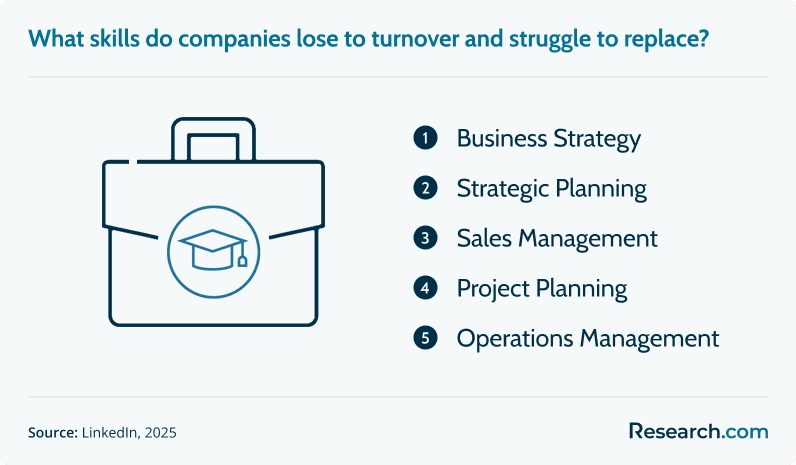
Business strategy, strategic planning, and sales management are also important retention-related skills. LinkedIn (2025) identified business strategy, strategic planning, and sales management as the top three skills lost to employee turnover. That makes business graduates who can combine strategy, execution, and communication valuable across many organizations.
What is the ROI of a BBA vs. BSBA Degree?
The return on investment for a BBA or BSBA depends on total cost, financial aid, time to graduation, debt, work experience, career path, geographic location, and the reputation and accreditation of the program. The degree title alone does not determine ROI.
A lower-cost program can improve ROI if it still offers recognized accreditation, strong advising, relevant coursework, internship access, employer connections, and transfer-friendly policies. Students comparing affordability may want to review cheap business degree online options, but they should calculate the full cost rather than looking only at advertised tuition.
| ROI Factor | Why It Matters | How to Evaluate It |
| Net price | Your real cost after grants, scholarships, and tuition assistance matters more than sticker price. | Ask for a program-specific cost estimate that includes fees and typical aid. |
| Time to completion | Extra semesters can increase tuition and delay full-time earnings. | Review course availability, prerequisites, and graduation rates when available. |
| Career alignment | A degree has stronger value when its curriculum matches your intended field. | Compare concentrations, electives, internships, and job placement support. |
| Transfer policy | Accepted credits can reduce both cost and completion time. | Request a written transfer evaluation before enrolling. |
| Graduate study plans | If you plan to pursue an MBA, finance master’s, or DBA, your undergraduate preparation should support that path. | Ask whether graduates enter accredited graduate business programs. |
What are the internship and networking opportunities in BBA vs. BSBA programs?
Internships, employer projects, career fairs, alumni networks, student business organizations, case competitions, and faculty connections can matter as much as the degree name. A strong program should help students apply classroom learning before graduation.
BBA programs often emphasize internships in management, marketing, sales, HR, nonprofit administration, entrepreneurship, and client-facing business roles. BSBA programs may offer more opportunities tied to analytics, finance, accounting, operations, technology, logistics, or data-heavy projects.
Students interested in advanced finance roles after a business degree may later compare graduate options such as the cheapest online masters in finance. However, before jumping into graduate school, it is wise to use internships and entry-level work to confirm which business function fits your strengths.
Should I Pursue a Doctorate in Business Administration (DBA) After My Business Degree?
A Doctorate in Business Administration is not usually the immediate next step after a BBA or BSBA. It is generally more relevant for experienced professionals who want to move into senior leadership, consulting, applied research, or teaching-oriented roles. A DBA emphasizes advanced business problem-solving, evidence-based decision-making, organizational change, and strategy.
If a DBA is part of your long-term plan, focus first on building work experience, leadership responsibility, research ability, and a clear professional problem you want to study. Cost also matters, so working professionals may eventually compare options such as a cheap online DBA if they need a flexible and more affordable route.
Can a 1 Year Online MBA Program Enhance Your Career Opportunities After Your Business Degree?
A 1 year online MBA program may help some business graduates accelerate their transition into higher-level management, specialized business roles, or broader strategic responsibilities. The shorter format can be attractive for working professionals, but it is intensive and may be best for students who already have a clear career direction and some professional experience.
Before choosing a one-year MBA, compare accreditation, workload, employer recognition, career support, networking access, concentration options, and whether the condensed schedule gives you enough time to absorb advanced material.
What are the admission requirements for BBA vs. BSBA programs?
Admission requirements vary by school, but BBA and BSBA programs commonly ask for a high school diploma or GED, transcripts, and a competitive GPA. Some institutions may also request standardized test scores, essays, letters of recommendation, or evidence of extracurricular involvement.
BSBA programs may place greater attention on math readiness, science preparation, statistics background, or prerequisite coursework because the curriculum can be more quantitative. BBA programs may give more weight to communication ability, leadership experience, service, entrepreneurship, or broad academic readiness, depending on the institution.
| Requirement | BBA Applicants | BSBA Applicants |
| Academic record | High school or prior college transcripts are typically required. | Transcripts are typically required, with close attention to math-related coursework in some programs. |
| Test scores | Some schools require or consider standardized tests; others use test-optional policies. | Some schools may consider test scores, especially for quantitative readiness. |
| Personal statement | May highlight leadership, business interest, communication skills, or career goals. | May highlight analytical ability, technical interests, finance goals, or problem-solving experience. |
| Transfer students | Should confirm which business, general education, and elective credits apply. | Should confirm whether prior math, economics, statistics, or technology courses meet requirements. |
Students who already know they want executive-level graduate study later can also compare options such as an affordable online MBA executive program, but undergraduate applicants should first choose the bachelor’s pathway that builds the right foundation.
Can Supplementary Finance Specializations Enhance Your Business Degree?
Finance can strengthen either a BBA or BSBA because financial decision-making affects nearly every organization. A finance concentration or additional finance coursework can help students build skills in budgeting, valuation, risk, investments, capital planning, and financial analysis.
Students who want a more finance-focused credential may compare an online bachelor s degree in finance with a general business administration degree. A finance degree may be a better match for students targeting investment analysis, financial planning, banking, corporate finance, or risk roles, while a BBA or BSBA may offer broader management flexibility.
Can a Master's in Economics Enhance Your Business Degree?
A master’s in economics can add depth for business graduates who want stronger training in markets, policy, forecasting, incentives, economic modeling, and strategic analysis. It may be especially useful for careers involving financial analysis, research, consulting, policy advising, market intelligence, or data-driven planning.
For students who want graduate-level economics training without overspending, comparing affordable online masters in economics programs can be a practical next step. Before enrolling, confirm whether the program expects prior coursework in calculus, statistics, econometrics, or intermediate economic theory.
What Role Does Project Management Training Play in Elevating Business Careers?
Project management skills are useful for both BBA and BSBA graduates because many business roles involve coordinating people, budgets, timelines, vendors, and deliverables. Training in project management can help graduates move from individual contributor roles into roles that require planning, execution, risk management, and cross-functional leadership.
An accelerated project management degree may be useful for students or professionals who want focused preparation in scheduling, resource allocation, agile methods, process improvement, and stakeholder communication. It can complement a business degree, especially for careers in operations, consulting, technology, healthcare administration, construction management, or corporate strategy.
What are the career paths for BBA vs. BSBA graduates?
Business graduates work in many industries because organizations need people who can manage money, customers, operations, employees, projects, and data. The U.S. Bureau of Labor Statistics (2024) reported 13,544,480 employees in the workforce with a business degree in 2022.
Career outcomes depend on concentration, internships, experience, location, industry, and technical skills. The salaries below come from various BLS and PayScale reports cited in the original article and should be treated as reference points, not guarantees.
| Common BBA Career | Salary Figure | Why a BBA Can Fit |
| Marketing Manager | $166,410 | BBA coursework in marketing, consumer behavior, communication, and strategy can support campaign and brand leadership. |
| Human Resources Specialist | $76,060 | Organizational behavior, employee relations, business law, and communication skills are useful in HR roles. |
| Sales Representative | $50,784 | Sales roles rely on communication, customer understanding, negotiation, product knowledge, and business development. |
| Business Consultant | $82,391 | A broad understanding of operations, strategy, management, and problem-solving can support consulting work. |
| Entrepreneur/Small Business Owner | $72,489 | BBA training in marketing, finance, management, and planning can help students launch or manage ventures. |
| General Project Manager | $80,868 | Leadership, communication, budgeting, scheduling, and coordination skills are central to project-based work. |
| Common BSBA Career | Salary Figure | Why a BSBA Can Fit |
| Financial Analyst | $112,950 | BSBA coursework in finance, accounting, data analysis, and modeling can support investment and business analysis. |
| Operations Manager | $123,030 | Operations, analytics, process improvement, and systems thinking are useful for managing workflows and performance. |
| Data Analyst | $68,359 | Statistics, analytics, data visualization, and technical tools can prepare students for data-supported business roles. |
| Logistics Manager | $75,350 | Supply chain, transportation, distribution, and optimization coursework can support logistics careers. |
| Corporate Accountant | $90,780 | Accounting, financial reporting, compliance, and analytical precision are central to corporate accounting work. |
| Risk Management Analyst | $78,169 | Risk roles require data analysis, financial judgment, modeling, and the ability to identify threats to business assets. |
Students considering online study should verify that programs are properly accredited. Comparing online business degree programs accredited by recognized agencies can help students avoid programs that may not be well understood by employers or graduate schools.
The chart below outlines wages for selected business graduate career paths as of 2024.
Are BBA and BSBA degrees good foundations for an MBA?
Yes. Both a BBA and a BSBA can prepare students for MBA study because both cover core business concepts such as management, finance, accounting, marketing, economics, strategy, and organizational decision-making.
A BBA may provide a smooth transition into MBA coursework focused on leadership, management, strategy, entrepreneurship, and organizational behavior. A BSBA may be especially useful for MBA concentrations in business analytics, finance, operations, information systems, or quantitative management.
Students seeking flexible graduate study may consider an AACSB online MBA. AACSB accreditation is one recognized marker of business school quality. Students may also encounter online MBA programs accredited by the Accreditation Council for Business Schools and Programs (ACBSP) or the International Accreditation Council for Business Education (IACBE).
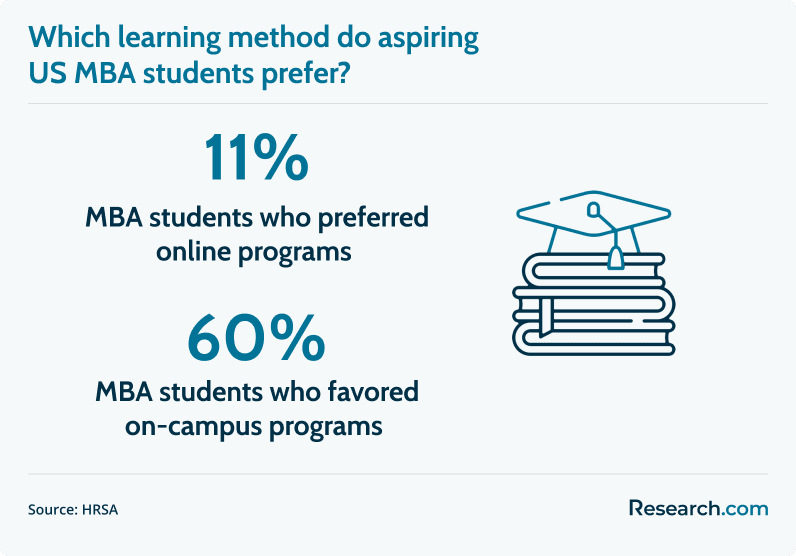
A survey by the Graduate Management Admission Council (2024) found that in the U.S., 11% of MBA candidates preferred online programs, 24% chose hybrid formats, and 60% preferred in-person learning. This shows that format matters, and students should choose an MBA delivery model that fits their work schedule, learning style, and networking goals.
BBA vs. BSBA: Which Is Better for You?
The better degree is the one that fits your strengths and career target. A BBA is usually better for students who want broad business preparation and expect to work in management, marketing, HR, sales, entrepreneurship, or client-facing roles. A BSBA is usually better for students who want stronger preparation in analytics, finance, operations, accounting, information systems, logistics, or risk-related roles.
Students considering healthcare leadership, for example, may want to understand what is a healthcare administrator and then choose the business degree and concentration that best supports management in healthcare settings.
| Choose a BBA If... | Choose a BSBA If... |
| You enjoy leadership, communication, teamwork, presentations, and organizational strategy. | You enjoy numbers, systems, analytics, financial models, statistics, or technical problem-solving. |
| You want career flexibility across management, marketing, HR, sales, or entrepreneurship. | You want preparation for finance, operations, analytics, accounting, logistics, risk, or information systems. |
| You prefer a broader business degree with liberal arts and applied management exposure. | You prefer a more quantitative business degree with technical and analytical coursework. |
| You may pursue an MBA focused on leadership, management, strategy, or entrepreneurship. | You may pursue an MBA or graduate degree focused on analytics, finance, economics, operations, or technology. |
Questions to Ask Before Choosing a BBA or BSBA
- Do I prefer people-centered business problems or data-centered business problems?
- Which courses do I perform better in: writing, communication, and management courses, or math, statistics, finance, and technology courses?
- What concentration does the school offer, and is it available online, on campus, or in my preferred format?
- Does the program include internships, employer projects, career coaching, or alumni networking?
- Is the institution properly accredited, and does the business school hold programmatic accreditation?
- How many transfer credits will the school accept, and will they apply to the major?
- What is the total estimated cost after aid, fees, books, and required technology?
- Do graduates enter the kinds of roles I want, and what support does the school provide for job searches?
Common Mistakes to Avoid
- Choosing based only on the degree title: BBA and BSBA curricula vary by school. Always compare actual courses, concentrations, and requirements.
- Ignoring accreditation: Accreditation can affect credit transfer, graduate school admission, employer recognition, and financial aid eligibility.
- Focusing only on tuition: Fees, transfer credits, time to completion, financial aid, and lost income can change the real cost.
- Assuming online programs are automatically easier: Online business degrees can be rigorous and require discipline, planning, and consistent participation.
- Skipping internship research: Practical experience can be critical for business graduates, especially in competitive fields such as finance, analytics, marketing, and consulting.
- Choosing a concentration too late: Some specializations have sequenced prerequisites. Waiting too long can delay graduation.
- Assuming salary outcomes are guaranteed: Earnings depend on experience, industry, location, employer, performance, and economic conditions.
Key Insights
- A BBA is generally the stronger choice for students who want broad business training with emphasis on leadership, communication, management, marketing, HR, sales, or entrepreneurship.
- A BSBA is generally the stronger choice for students who want deeper preparation in analytics, finance, operations, accounting, information systems, logistics, or technical business decision-making.
- Both degrees typically take four years and about 120 credit hours for full-time students, though transfer credits, accelerated formats, and part-time enrollment can change the timeline.
- Tuition varies widely by institution and format, with annual tuition ranging from $9,000 to over $50,000; public universities charge $11,610 for in-state students and $30,780 for out-of-state students, while private institutions may charge up to $43,350.
- Business administration remains the most common business major, with 672,825 enrollees in 2024, and four-year undergraduate business enrollment reached approximately 1.7 million students after growing 5.9% from 2023 to 2024.
- Career fit matters more than the label. BBA graduates often pursue roles such as marketing manager, HR specialist, sales representative, consultant, entrepreneur, or project manager, while BSBA graduates often pursue roles such as financial analyst, operations manager, data analyst, logistics manager, corporate accountant, or risk management analyst.
- Both BBA and BSBA degrees can prepare students for MBA study. The best undergraduate choice depends on whether you want a leadership-oriented foundation or a more analytical and technical foundation.
- Before enrolling, compare accreditation, curriculum, concentration options, internship access, transfer policies, total cost, and career support. Those factors often have a larger impact on outcomes than whether the degree is called a BBA or BSBA.
References:
- Ma, J., Pender, M., & Oster, M. (2024). Trends in College Pricing and Student Aid 2024. The College Board. https://research.collegeboard.org/trends/college-pricing
- National Center for Education Statistics. (2024, May). Undergraduate Degree Fields. Condition of Education. https://nces.ed.gov/programs/coe/indicator/cta
- National Student Clearinghouse Research Center. (2025, January 23). Current Term Enrollment Estimates: Fall 2024. https://nscresearchcenter.org/current-term-enrollment-estimates
- U.S. Bureau of Labor Statistics. (2024, August 29). Field of degree: Business. Occupational Outlook Handbook. https://www.bls.gov/ooh/field-of-degree/business/business-field-of-degree.htm
- U.S. Bureau of Labor Statistics. (2025, January 17). Business and Financial Occupations. Occupational Outlook Handbook. https://www.bls.gov/ooh/business-and-financial
Other Things You Should Know About BBA vs. BS in Business Administration Degree Programs
Yes, in 2027, look for BBA and BS in Business Administration programs accredited by bodies like AACSB or ACBSP. These accreditations ensure the program meets high standards of quality and can enhance your career prospects.
A BBA usually requires more management, marketing, finance, and operations courses, while a BS in Business Administration includes more quantitative work such as statistics, economics, accounting, and business analytics. Many U.S. programs require about 120 credit hours, with upper-division business courses starting after lower-division prerequisites.
BBA programs generally require around 120 credit hours, with a focus on practical business skills. BS in Business Administration programs might also require 120 credit hours but emphasize analytical skills and quantitative courses. Both degrees can take about four years to complete.


