
2027 Best Online Technology Management Degree Programs

Co-Founder and Chief Data Scientist
It’s a frustrating reality for many top technical professionals: your expertise gets you to a senior role, but it won’t get you into leadership. The tech industry has a critical shortage of leaders who can bridge the gap between technical teams and business strategy. In fact, IT skills shortages are projected to affect 90% of organizations by 2026.
This is where an online technology management degree becomes essential. It’s specifically designed to build on your technical foundation, providing you with the business and management skills to transition from doing to leading. To help you make a confident decision, our career planning experts with over a decade of experience have created this comprehensive guide.
What are the benefits of getting an online technology management degree?
- It provides a direct pathway to move out of a purely technical role and into a management or leadership position.
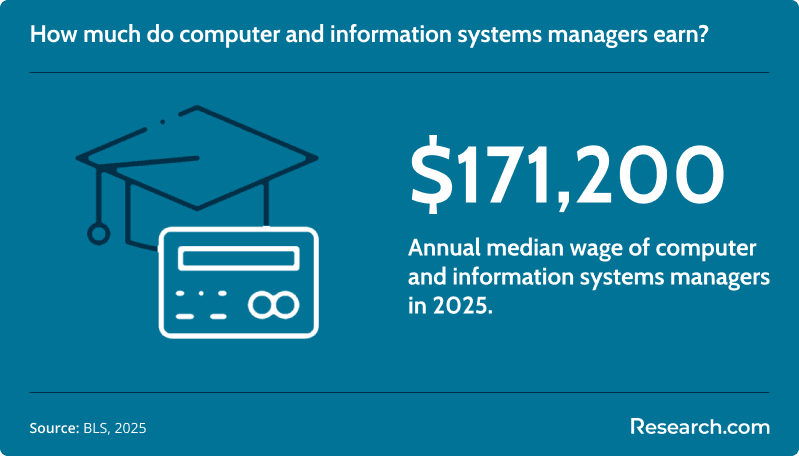
- You can significantly increase your earning potential, as computer and information systems managers earn a median annual wage of $171,200.
- The online format offers the flexibility to gain these new skills without having to step away from your current job or business venture.
What can I expect from an online technology management program?
You can expect a curriculum that blends essential business principles with technology-focused management strategies, all designed for working professionals. Many professionals wonder if leadership skills can truly be learned in an online format. The answer is yes.
A quality online technology management degree program does more than just deliver lectures; it intentionally builds these competencies through hands-on work. You’ll be placed in virtual teams to complete major projects, requiring you to manage deadlines, personalities, and deliverables remotely.
You’ll also be expected to present your findings and strategies, often to panels of faculty and peers, and provide structured feedback on their work. This process enables a modern, flexible program to develop the real-world leadership and communication skills that employers are seeking.
Where can I work with an online technology management degree?
With this degree, you can work in leadership roles across almost any industry you can think of. It’s essential to understand the difference between this and a technical certification. Certifications enhance your technical expertise, while this degree qualifies you to become a strategic leader.
This is why graduates are so valuable in industries far beyond big tech. Sectors such as finance, healthcare, and manufacturing are undergoing massive digital transformations, and they need leaders who understand both technology and business objectives. The demand is so high that some of the top-paying industries for these roles are outside the traditional tech bubble, including web search portals (with an annual median salary of $209,350) and even oil and gas extraction ($156,570).
How much can I make with an online technology management degree?
By moving into leadership, you can expect a significant salary increase. IT executives earn a median annual salary of $163,611, while project management roles typically command around $129,750. This represents a substantial increase from the median wage for general computer occupations, which stands at approximately $108,970.
For entrepreneurs, the financial value isn't measured in salary. Instead, it stems from acquiring the business acumen necessary to secure investor funding and establish a viable, successful company.
- List of the Best Online Technology Management Programs for 2027 List of Programs
- How long does it take to complete an online technology management degree program? Completion Time
- How does an online technology management degree program compare to an on-campus program? How does an online technology management degree program compare to an on-campus program?
- What is the average cost of an online technology management degree program? Program Cost
- What are the financial aid options for students enrolling in an online technology management degree program? Financial Aid
- What are the prerequisites for enrolling in an online technology management degree program? What are the prerequisites for enrolling in an online technology management degree program?
- What courses are typically in an online technology management degree program? What courses are typically in an online technology management degree program?
- What types of specializations are available in an online technology management degree program? What types of specializations are available in an online technology management degree program?
- How to choose the best online technology management degree program? How to choose the best online technology management degree program?
- What career paths are available for graduates of an online technology management degree program? Career Paths
- What role do industry partnerships play in enhancing an online technology management degree program? What role do industry partnerships play in enhancing an online technology management degree program?
- What is the job market for graduates with an online technology management degree program? Job Market
- What emerging trends are reshaping online technology management education? What emerging trends are reshaping online technology management education?
Best Online Technology Management Programs for 2027: Compare Costs, Credits, Formats, and Career Fit
A technology management degree is designed for professionals who understand technology but want to move into strategy, budgeting, team leadership, product delivery, IT governance, or executive decision-making. It can be especially useful if you are a developer, engineer, analyst, project lead, systems professional, or entrepreneur who needs stronger business and leadership training to manage technical work at scale.
This guide explains how online technology management programs differ, what they cost, how long they take, which schools stand out, and how to decide whether this degree is the right next step. It also covers admissions requirements, common courses, specializations, career paths, job outlook, financial aid, and mistakes to avoid before enrolling. If you are comparing technology leadership programs with related options such as the best online mobile app development degrees, use this guide to focus on value, accreditation, curriculum fit, and long-term career utility rather than name recognition alone.
Quick Answer: Is an Online Technology Management Degree Worth Considering?
An online technology management degree can be worth considering if your goal is to move from technical execution into leadership. The strongest candidates are working professionals who already have technical, operations, engineering, analytics, cybersecurity, or IT experience and want formal training in management, finance, strategy, project delivery, innovation, and technology governance.
Most master’s programs take about 1.5 to 2 years for full-time students, while part-time students often need 3 to 4 years. Tuition varies widely, with an average total tuition of about $40,000 and programs ranging from around $15,000 to over $87,000. Career outcomes are not guaranteed, but the degree aligns closely with roles such as IT manager, information systems manager, technical project manager, IT director, CIO, and CTO.
How do we rank schools?
Rankings should help you build a shortlist, not make the decision for you. To evaluate online technology management programs, we consider institutional credibility, program structure, available concentrations, affordability, completion requirements, and the kind of leadership preparation the curriculum provides.
Our rankings draw from official and widely used education datasets, including the U.S. Department of Education’s IPEDS database and College Scorecard, as well as Peterson's database and information from the National Center for Education Statistics (NCES). These sources help us compare programs using consistent institutional and academic data. You can read more about how Research.com evaluates schools in our full methodology.
| School | Program | Program Length | Credits | Cost per Credit | Accreditation |
| University of Arizona | M.S. in Technology Management | 2 years | 36 | $740 | WASC Senior College and University Commission (WSCUC) |
| New York University | M.S. in Management of Technology | 2 years | 36 | $2,428 | Middle States Commission on Higher Education (MSCHE) |
| Oklahoma State University | M.S. in Engineering and Technology Management | 18 months | 32 | $489 (in-state); $530 (out-of-state) | Higher Learning Commission (HLC) |
| Georgetown University | Master of Professional Studies in Information Technology Management | 2-5 years | 36 | $1,685 | Middle States Commission on Higher Education (MSCHE) |
| University of Massachusetts Dartmouth | M.S. in Technology Management | 2 years | 30 | $617 | Association to Advance Collegiate Schools of Business (AACSB) |
| Florida Institute of Technology | MBA in Information Technology Management | 15 months | 36 | $937 | International Accreditation Council for Business Education (IACBE) |
| Rivier University | MBA in Information Technology Management | 1-2 years | 36 | $712 | Accreditation Council for Business Schools and Programs (ACBSP) |
| Keiser University | MBA in Technology Management | 15-30 months | 45 | $715 | Accreditation Council for Business Schools and Programs (ACBSP) |
| Indiana State University | Ph.D. in Technology Management | 4.5 years (part-time) | 54 | $462 (in-state); $603 (out-of-state) | Higher Learning Commission (HLC) |
| National University | Ph.D. in Technology Management | 39 months | 60 | $1,036 | Higher Learning Commission (HLC) |
1. University of Arizona - M.S. in Technology Management
The University of Arizona offers a graduate program for students who want to connect technology planning with organizational performance. The curriculum emphasizes how technology can support better decisions, stronger operations, product and service development, and business growth in an accelerated format.
- Program Length: 2 years
- Required Credits to Graduate: 36
- Cost per Credit: $740
- Accreditation: WASC Senior College and University Commission (WSCUC)
2. New York University - M.S. in Management of Technology
New York University structures its program around the intersection of technology innovation and business decision-making. Students can build applied leadership skills through practical coursework while choosing from concentration areas that support specialized management goals.
- Program Length: 2 years
- Concentrations: Cybersecurity Management; Digital Strategies and Innovation; Project Management; and People Analytics
- Required Credits to Graduate: 36
- Cost per Credit: $2,428
- Accreditation: Middle States Commission on Higher Education (MSCHE)
3. Oklahoma State University - M.S. in Engineering and Technology Management
Oklahoma State University is a strong fit for engineers and scientists who want to expand into management. The program focuses on leading technical teams, managing technology-centered operations, and making decisions in fast-moving global business environments.
- Program Length: 18 months
- Required Credits to Graduate: 32
- Cost per Credit: $489 (in-state); $530 (out-of-state)
- Accreditation: Higher Learning Commission (HLC)
4. Georgetown University - Master of Professional Studies in Information Technology Management
Georgetown University offers an online professional studies program for learners who want to lead at the boundary of IT and business. Coursework blends management fundamentals with technology leadership topics such as enterprise modernization, planning, and organizational change.
- Program Length: 2-5 years
- Required Credits to Graduate: 36
- Cost per Credit: $1,685
- Accreditation: Middle States Commission on Higher Education (MSCHE)
5. University of Massachusetts Dartmouth - M.S. in Technology Management
The University of Massachusetts Dartmouth combines operations management and information systems coursework to prepare students for technology-driven problem solving. The program is intended for professionals who want to respond to operational challenges with practical, innovative solutions.
- Program Length: 2 years
- Required Credits to Graduate: 30
- Cost per Credit: $617
- Accreditation: Association to Advance Collegiate Schools of Business (AACSB)
6. Florida Institute of Technology - MBA in Information Technology Management
The Florida Institute of Technology MBA option is designed for students who want business administration training with an IT management focus. Its STEM-oriented approach and collaborative projects help students connect technical systems knowledge with leadership, finance, and organizational decision-making.
- Program Length: 15 months
- Required Credits to Graduate: 36
- Cost per Credit: $937
- Accreditation: International Accreditation Council for Business Education (IACBE)
7. Rivier University - MBA in Information Technology Management
Rivier University offers an online MBA that pairs broad business administration study with IT management coursework. The program may appeal to professionals who need to manage digital operations, distributed teams, vendor relationships, and technology-supported business processes.
- Program Length: 1-2 years
- Required Credits to Graduate: 36
- Cost per Credit: $712
- Accreditation: Accreditation Council for Business Schools and Programs (ACBSP)
8. Keiser University - MBA in Technology Management
Keiser University provides an MBA pathway that begins with business fundamentals and moves into advanced technology management topics. The curriculum is built for students who want to evaluate new technologies, understand business impact, and guide technology adoption.
- Program Length: 15-30 months
- Required Credits to Graduate: 45
- Cost per Credit: $715
- Accreditation: Accreditation Council for Business Schools and Programs (ACBSP)
9. Indiana State University - Ph.D. in Technology Management
Indiana State University offers a doctoral pathway for students who want advanced study in technology management, research, and senior leadership. Delivered through a four-university consortium, the program lets students shape a specialized plan of study around their professional and academic interests.
- Program Length: 4.5 years (part-time)
- Specializations: Manufacturing Systems; Construction Management; Quality Systems; Digital Communications; and Human Resource Development and Industrial Training
- Required Credits to Graduate: 54
- Cost per Credit: $462 (in-state); $603 (out-of-state)
- Accreditation: Higher Learning Commission (HLC)
10. National University - Ph.D. in Technology Management
National University offers a fully online doctoral program focused on applying technology management knowledge in professional settings. Its one-to-one learning model is designed to provide individualized faculty interaction from all-doctoral instructors with professional experience.
- Program Length: 39 months
- Specializations: Computer Science; IT Project Management; Information Systems; Engineering Management; Data Science; and Cybersecurity
- Required Credits to Graduate: 60
- Cost per Credit: $1,036
- Accreditation: Higher Learning Commission (HLC)
How Long Does It Take to Complete an Online Technology Management Degree?
Most online master’s programs in technology management take about 1.5 to 2 years when completed full-time. Students who keep working while enrolled often choose part-time study and should expect a longer timeline, commonly 3 to 4 years.
Doctoral programs require a larger academic commitment. A post-baccalaureate doctorate, meaning a doctoral path entered after a bachelor’s degree, can often take 5 to 7 years because it includes more credits, advanced research, and a dissertation or equivalent doctoral requirement.
| Program Type | Typical Student Profile | Common Timeline | Best For |
| Master’s in Technology Management | Working technical or business professionals | 1.5 to 2 years full-time; 3 to 4 years part-time | Moving into IT leadership, product leadership, operations, or technical management |
| MBA in Information Technology Management | Professionals who want broader business training with an IT focus | Varies by school and pace | Management roles that require finance, marketing, strategy, and technology oversight |
| Ph.D. in Technology Management | Students pursuing research, executive leadership, consulting, or academic roles | Can often take 5 to 7 years in post-baccalaureate formats | Advanced research, senior leadership, specialized expertise, or teaching |
Ways to Shorten or Manage the Timeline
Online programs are often built for adults with full-time jobs, family obligations, and uneven schedules. Before enrolling, ask whether the program uses asynchronous courses, accelerated terms, part-time sequencing, or multiple start dates.
You should also ask whether the school awards graduate credit or course waivers for advanced professional certifications. Credentials such as PMP or CISSP may help some students reduce required coursework, depending on school policy. This is similar in principle to how some online educational counseling master’s programs evaluate relevant prior learning or professional preparation.
Online vs. On-Campus Technology Management Programs: What Actually Changes?
At a properly accredited institution, an online technology management degree usually follows the same academic standards as the campus version. Employers typically pay more attention to the school’s reputation, accreditation, curriculum, and your experience than to whether you attended live classes in a physical classroom.
The biggest differences are practical: schedule flexibility, travel requirements, networking format, access to campus resources, and how much structure you want each week.
| Factor | Online Program | On-Campus Program |
| Schedule | Often better for working professionals who need evening, weekend, or asynchronous study options | Better for students who prefer fixed class times and in-person accountability |
| Networking | Usually built through virtual teams, discussion boards, online events, and remote collaboration | Often easier through campus events, in-person group work, and local employer connections |
| Cost considerations | May reduce relocation and commuting costs, though tuition can still be high | May involve commuting, housing, parking, or relocation costs |
| Learning environment | Works best for self-directed students who communicate well online | Works best for students who want face-to-face interaction and campus routines |
| Career relevance | Strong fit for distributed, remote, and hybrid technology leadership environments | Strong fit for students who want local recruiting access and in-person collaboration |
Why Online Study Can Build Relevant Leadership Skills
Technology managers increasingly lead across locations, time zones, departments, vendors, and hybrid work arrangements. Online coursework can mirror that environment. Group projects, virtual presentations, shared documents, remote feedback, and asynchronous decision-making are not just class activities; they are common features of modern technology work.
This makes the online format especially useful for students who want to strengthen remote leadership and digital collaboration skills. Similar online collaboration models also appear in people-centered graduate programs such as the best online counselor education programs, where communication, trust, and structured supervision matter even when learning happens at a distance.
What Is the Average Cost of an Online Technology Management Degree?
The average total tuition for an online technology management degree is about $40,000. However, program prices vary substantially, with some options ranging from around $15,000 to over $87,000.
Do not compare programs by tuition alone. A lower-cost program may be the better value, but only if it also has appropriate accreditation, relevant coursework, strong faculty, useful career support, and a format you can realistically complete.
How to Think About Return on Investment
The degree may help you qualify for leadership roles, but no program can guarantee a promotion or salary increase. Your return depends on your prior experience, industry, location, employer, specialization, and ability to convert the credential into higher-level responsibility.
That said, the target roles can be financially attractive. Managers in this field can expect to earn a median annual wage of around $171,200. When you compare that earning potential with the one-time cost of graduate education, the degree may make sense for professionals already close to management-level opportunities. The logic is similar for specialized graduate credentials in other fields, such as the best online EdS in special education programs, where students often weigh tuition against access to more advanced roles.
| Cost Factor | Why It Matters | Question to Ask |
| Tuition per credit | This is the main advertised price, but it does not always show the full cost | How many credits are required, and is the tuition rate locked in? |
| Fees | Technology, graduation, course, and distance learning fees can increase total cost | What fees are required each term? |
| Transfer or waiver policy | Accepted credits or waived courses may reduce cost and time | Can certifications, prior graduate credits, or professional training count? |
| Employer support | Tuition reimbursement can significantly reduce out-of-pocket cost | Does my employer cover graduate technology or business programs? |
| Career services | Strong career support can improve the practical value of the degree | Does the program offer coaching, employer events, alumni connections, or portfolio support? |
What Financial Aid Options Are Available for Online Technology Management Students?
Students commonly pay for online technology management programs through employer benefits, federal aid, private loans, scholarships, grants, savings, or a combination of these options. Start with the lowest-cost funding sources before taking on debt.
- Employer tuition assistance: Ask your HR department whether your company reimburses tuition for graduate business, IT, cybersecurity, analytics, engineering, or leadership programs. Some employers require you to earn a minimum grade or remain with the company for a set period after reimbursement.
- Federal and private loans: The Free Application for Federal Student Aid (FAFSA) is the starting point for federal student aid. Private lenders may also offer education loans, but compare interest rates, repayment terms, and borrower protections carefully.
- Scholarships and grants: Look at school-based scholarships, graduate assistantships where available, professional association awards, employer-sponsored grants, and scholarships tied to technology, engineering, business, cybersecurity, or women in technology.
Funding Tips for Consultants, Contractors, and Self-Employed Professionals
If you are self-employed, you will not have employer reimbursement, but you can still complete the FAFSA and search for scholarships connected to your industry. Professional organizations, technology associations, and field-specific groups may offer awards for graduate students or working professionals.
You should also speak with a qualified tax professional before assuming education costs are deductible. In some situations, education connected to maintaining or improving professional skills may have tax implications, but eligibility depends on your circumstances and current tax rules.
What Are the Prerequisites for an Online Technology Management Degree?
Most graduate-level technology management programs require a bachelor’s degree, a minimum GPA of around 3.0, and some professional experience. Programs aimed at engineers, IT professionals, or technical managers may prefer applicants with a STEM, business, analytics, cybersecurity, or operations background.
GMAT or GRE requirements vary. Many schools now waive standardized tests for applicants with meaningful professional experience, strong undergraduate records, prior graduate coursework, or relevant technical credentials. Always confirm the current admissions policy with the school before applying.
| Requirement | What Schools Commonly Look For | How to Strengthen Your Application |
| Bachelor’s degree | Completion of an accredited undergraduate program | Highlight coursework in technology, business, math, engineering, analytics, or leadership |
| Minimum GPA | Often around 3.0 | Use your statement of purpose to explain academic growth or relevant professional achievement |
| Work experience | Professional exposure to IT, engineering, operations, product, project work, or business systems | Show measurable results, leadership responsibilities, technical projects, or process improvements |
| Test scores | GMAT or GRE may be required, optional, or waived | Ask whether your work experience, certifications, or prior graduate coursework qualify for a waiver |
| Professional goals | A clear reason for pursuing technology management | Connect the program directly to your target role, industry, or leadership path |
What If You Are Not Ready for Graduate Admission?
If you do not yet have a bachelor’s degree, build the required academic foundation first. For example, students interested in security leadership may begin with an accelerated online cybersecurity bachelor’s degree before applying to a graduate program in technology management.
If you already have a bachelor’s degree but lack technical depth, consider filling gaps with targeted coursework, certifications, or project experience before applying. Admissions committees are often more persuaded by a coherent professional plan than by a disconnected list of credentials.
What Courses Are Included in an Online Technology Management Degree?
Technology management programs combine business leadership with applied technology strategy. Instead of studying finance, operations, cybersecurity, or project management in isolation, students learn how those areas affect technology budgets, product roadmaps, enterprise systems, digital transformation, risk management, and team performance.
Course titles vary by school, but most programs include two broad categories:
- Business and leadership courses: These may include managerial finance, strategic leadership, organizational behavior, project management, innovation, operations, marketing, or decision analysis. Students who have previously completed an accelerated online bachelor’s degree in organizational leadership may already have useful preparation for this portion of the curriculum.
- Technology management courses: These usually address IT governance, systems analysis and design, cybersecurity policy, enterprise architecture, data-informed decision-making, technology commercialization, vendor management, and digital strategy.
| Course Area | What You Learn | Why It Matters in Management |
| IT governance | How organizations set technology policies, priorities, accountability, and controls | Managers need governance structures to reduce risk and align IT with business goals |
| Project management | Planning, scheduling, budgeting, stakeholder communication, and delivery methods | Technology leaders are often judged by whether projects finish on time and deliver value |
| Cybersecurity policy | Risk management, compliance, incident planning, and security leadership | Security decisions increasingly affect operations, budgets, reputation, and legal exposure |
| Managerial finance | Budgets, forecasting, cost-benefit analysis, and financial decision-making | Leaders must justify technology spending and measure business impact |
| Systems analysis and design | How technical systems are planned, evaluated, improved, and implemented | Managers need to understand system trade-offs even when they are not coding or configuring tools directly |
Where Technology Management Skills Are Used
Technology management skills are valuable in organizations that depend on reliable systems, digital products, data, cybersecurity, infrastructure, cloud services, automation, and technology-enabled operations. Employers in computer systems design, information, finance, healthcare, manufacturing, logistics, government, consulting, and education may all need leaders who can translate technical complexity into business decisions.
What Specializations Are Available in Online Technology Management Programs?
Specializations help you align the degree with a specific leadership lane. A general technology management curriculum can prepare you for broad management roles, while a concentration can signal deeper preparation in a targeted area.
- Cybersecurity Management
- Data Analytics and Business Intelligence
- Project Management
- Technology Entrepreneurship
| Specialization | Best Fit | Career Direction |
| Cybersecurity Management | Students who want to manage risk, compliance, security teams, or incident response strategy | Security manager, cybersecurity program lead, risk manager, IT governance leader |
| Data Analytics and Business Intelligence | Students who want to turn data into operational, product, or executive decisions | Analytics manager, BI manager, data strategy lead, decision-support manager |
| Project Management | Students who want to lead complex technical initiatives across teams and departments | Technical project manager, program manager, PMO leader, implementation manager |
| Technology Entrepreneurship | Students building products, startups, consulting practices, or innovation teams | Founder, product strategist, innovation manager, technology consultant |
How to Choose a Specialization
Choose a specialization based on the role you want next, not only on the topic you find interesting. If your target job involves leading technical delivery, a project management concentration may be more useful than a general innovation track. If your organization is heavily regulated, cybersecurity management or governance coursework may offer stronger value.
For students who want to manage complex initiatives, project management coursework can map directly to responsibilities described in a project management specialist role, including planning, coordination, stakeholder communication, and delivery accountability.
How to Choose the Best Online Technology Management Degree Program
The best online technology management program is the one that matches your career target, schedule, budget, academic background, and preferred learning style. A prestigious school is not always the best choice if the curriculum does not fit your industry or if the cost creates unnecessary financial strain.
- Verify accreditation first: Make sure the institution is properly accredited. If the program is business-focused, also check whether it has programmatic accreditation from recognized organizations such as the AACSB or ABET, when relevant.
- Compare the curriculum to your target role: A future cybersecurity manager, product leader, engineering manager, and startup founder may need different courses.
- Review faculty backgrounds: Look for instructors with current or recent experience in IT management, engineering leadership, cybersecurity, analytics, consulting, product development, or enterprise systems.
- Ask about career support: Strong programs may offer coaching, alumni networking, employer sessions, portfolio projects, or capstone experiences tied to real organizations.
- Calculate the full cost: Include tuition, fees, books, technology requirements, travel for any residencies, loan interest, and the opportunity cost of time.
- Check flexibility carefully: Confirm whether courses are synchronous or asynchronous, how group work is handled, and whether you can slow down if work becomes demanding.
Who Should Choose This Degree?
- Technical professionals who want to become managers or directors
- Project leads who need stronger finance, strategy, and governance skills
- Engineers or scientists preparing for leadership roles
- IT professionals who want to manage teams, budgets, vendors, or enterprise systems
- Entrepreneurs who need a structured understanding of product, finance, operations, and technology strategy
Who Should Consider a Different Path?
- Students who want to become software developers may be better served by a computer science or software engineering program.
- Students focused only on cybersecurity operations may prefer a cybersecurity degree or certification pathway.
- Students who want broad executive business training with limited technology emphasis may prefer a general MBA.
- Students who want academic research or university teaching may need a Ph.D. rather than a professional master’s degree.
Questions to Ask Before You Enroll
- Is the institution accredited, and is the accreditation recognized by employers or licensing bodies in my field?
- Does the program’s curriculum match the role I want within the next 2 to 5 years?
- How many credits are required, and are there any hidden fees?
- Can I complete the program while working full-time?
- Are classes live, asynchronous, or a mix of both?
- Does the school accept transfer credits or recognize professional certifications?
- What career services are available to online students?
- Does the capstone or final project produce something I can show employers?
- How active is the alumni network in technology, consulting, engineering, or IT leadership?
- What happens if I need to pause enrollment for work, health, or family reasons?
Common Mistakes to Avoid
| Mistake | Why It Can Hurt You | Better Approach |
| Choosing only by ranking | A highly ranked program may not fit your goals, budget, or schedule | Use rankings as a starting point, then compare curriculum, cost, flexibility, and outcomes |
| Ignoring accreditation | Unaccredited or poorly recognized programs can weaken employer confidence | Confirm institutional accreditation before applying |
| Focusing only on tuition | Fees, time to completion, and weak career support can reduce value | Calculate total cost and compare it with program quality and career relevance |
| Assuming online means easier | Online graduate study requires discipline, writing, collaboration, and time management | Review workload expectations and weekly time requirements before enrolling |
| Picking the wrong specialization | A concentration that does not match your target role may limit practical value | Work backward from job postings and promotion requirements |
| Expecting a salary guarantee | Degrees can support advancement, but outcomes depend on experience, market, and performance | Use the degree alongside networking, measurable projects, and leadership experience |
What Careers Can You Pursue With an Online Technology Management Degree?
Graduates typically pursue roles that require both technical understanding and leadership judgment. These jobs often involve supervising teams, setting technology priorities, managing budgets, communicating with executives, evaluating vendors, guiding digital transformation, and translating business needs into technical action.
Common roles include IT manager, information systems manager, technical project manager, technology consultant, product manager, program manager, IT director, CIO, and CTO. The degree can help technical professionals make the shift from individual contributor to strategic leader.
| Career Path | Main Responsibilities | Best Preparation |
| IT Manager | Oversees IT staff, systems, support operations, budgets, and service reliability | IT governance, leadership, budgeting, cybersecurity policy, operations management |
| Information Systems Manager | Plans and manages systems that support business processes and data flows | Systems analysis, enterprise architecture, data management, vendor coordination |
| Technical Project Manager | Coordinates teams, timelines, stakeholders, risks, and deliverables for technical projects | Project management, agile methods, communication, finance, risk management |
| Technology Consultant | Advises organizations on technology strategy, implementation, modernization, or process improvement | Strategy, analytics, communication, systems thinking, industry specialization |
| IT Director | Leads department-level technology strategy, staffing, budgets, and organizational priorities | Executive communication, portfolio management, governance, finance, change leadership |
| CIO or CTO | Sets enterprise technology direction and aligns technology decisions with business strategy | Advanced leadership, strategy, finance, innovation, cybersecurity, organizational transformation |
Career Growth and Earning Potential
Technology management roles can create a path from hands-on technical work into department leadership and executive-level responsibility. Many professionals begin with team lead, project lead, or manager roles before moving into director-level and C-suite positions.
Leadership jobs in technology can be highly compensated. IT executives earn a median of over $163,000, which is why these positions are frequently discussed among the highest-paying jobs in IT and technology. Salary outcomes still depend on experience, employer, industry, geography, and performance.
How Do Industry Partnerships Improve Online Technology Management Programs?
Industry partnerships can make an online technology management program more practical. When schools work with employers, consulting firms, technology companies, government agencies, or professional associations, students may gain access to applied projects, guest speakers, case studies, mentorship, internship pathways, or networking opportunities.
These partnerships also help programs keep coursework closer to current employer expectations. For example, a school with strong industry input may update assignments around cloud migration, cybersecurity governance, analytics, agile delivery, AI adoption, or digital product strategy. This industry-aligned approach is also important in technical programs such as an online accelerated computer science degree, where market relevance can affect how useful the curriculum is after graduation.
What Is the Job Market for Online Technology Management Graduates?
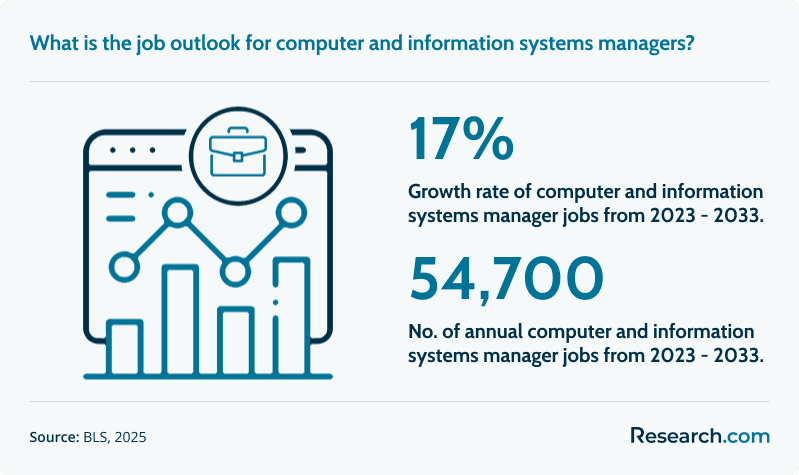
The labor market for technology managers remains strong. According to the U.S. Bureau of Labor Statistics, employment for computer and information systems managers is projected to grow by 17% between 2023 and 2033, which is much faster than the average for all occupations.
The BLS also estimates 54,700 job openings for computer and information systems managers each year over the decade. These openings can come from business growth, technology expansion, retirements, promotions, and workers moving into other roles.
Why Demand Is Likely to Continue
Organizations need leaders who can make sense of complex technology decisions. AI, automation, cybersecurity threats, cloud infrastructure, data governance, privacy concerns, remote work, and digital transformation all increase the need for managers who understand both systems and strategy.
AI may automate some routine technical tasks, but it does not remove the need for human judgment, stakeholder management, risk assessment, budget decisions, ethical oversight, and organizational leadership. Professionals who can guide technology adoption responsibly may become even more important as tools evolve.
Some students also use technology management training to enter specialized sectors. For example, professionals interested in healthcare technology leadership may compare this degree with options such as the shortest online MBA programs in healthcare administration to decide whether they need a technology-first or healthcare-administration-first credential.
What Emerging Trends Are Reshaping Online Technology Management Education?
Online technology management programs are changing because the work of technology leaders is changing. Curricula increasingly address artificial intelligence, cybersecurity strategy, data analytics, digital transformation, agile project management, remote leadership, technology ethics, and innovation management.
Programs are also becoming more interdisciplinary. Technology managers may need to understand legal risk, privacy, workforce development, supply chains, product strategy, and specialized technical domains. In emerging fields, students may compare technology management with niche programs such as a space systems online degree if they want leadership roles in a highly specialized sector.
Trends to Watch Before Choosing a Program
- AI in management: Look for programs that address AI adoption, governance, productivity, risk, and ethical decision-making rather than only technical tool use.
- Cybersecurity leadership: Security is now a board-level and executive issue, so managers need policy, risk, and incident-response awareness.
- Data-driven strategy: Employers increasingly expect leaders to use analytics to support decisions, measure outcomes, and prioritize investments.
- Remote and hybrid leadership: Online programs that require virtual collaboration can help students practice the communication habits needed in distributed teams.
- Credential stacking: Some professionals combine a degree with certifications in project management, cybersecurity, cloud, analytics, or product management to show both breadth and practical expertise.
What Graduates Say About Online Technology Management Programs
- : "I started with a product concept but did not understand how to turn it into a company. The program gave me the structure I was missing. Finance helped me understand the numbers, marketing helped me think about customers, and my capstone became the business plan I now use every day. — Chika"
- : "I had been a senior developer for years, but management roles kept going to other people. The online format let me keep working while I built the business and leadership skills I needed. After finishing the program, I moved into an IT Director role and finally stepped into the kind of responsibility I had been aiming for. — Aisha"
- : "The faculty were helpful, but the peer network surprised me the most. My project team included someone from banking cybersecurity and someone leading logistics for a major retailer. Their experience changed how I thought about technology problems, and one of them later became an advisor to my startup. — Gideon"
Key Insights
- An online technology management degree is best for professionals who want to move from technical work into leadership, strategy, budgeting, governance, project delivery, or executive decision-making.
- Most full-time master’s students finish in about 1.5 to 2 years, while part-time students often need 3 to 4 years. Doctoral pathways require a longer commitment.
- The average total tuition is about $40,000, but programs can range from around $15,000 to over $87,000, so total cost and return on investment should be evaluated carefully.
- Accreditation is non-negotiable. Before enrolling, confirm institutional accreditation and review any relevant business or programmatic accreditation.
- Online programs can be highly relevant for modern technology leadership because they often require remote teamwork, virtual presentations, asynchronous communication, and digital collaboration.
- Specializations matter. Cybersecurity management, data analytics, project management, and technology entrepreneurship can each lead to different career opportunities.
- The job outlook is strong: computer and information systems managers are projected to grow by 17% between 2023 and 2033, with 54,700 estimated openings each year over the decade.
- A degree alone does not guarantee a salary increase. The strongest outcomes usually come when students combine graduate study with relevant experience, measurable projects, leadership practice, networking, and a clear career target.
References:
- Bureau of Labor Statistics. (2024). Field of degree: Computer and information technology. U.S. Department of Labor. Retrieved July 28, 2025, from BLS.
- Bureau of Labor Statistics. (2025a). 15-1299 Computer occupations, all other - Occupational employment and wage statistics (OEWS) profiles. U.S. Department of Labor. Retrieved July 28, 2025, from BLS.
- Bureau of Labor Statistics. (2025b). Computer and information systems managers. U.S. Department of Labor. Retrieved July 28, 2025, from BLS.
- Bureau of Labor Statistics. (2025c). Computer and information technology occupations. U.S. Department of Labor. Retrieved July 28, 2025, from BLS.
- Bureau of Labor Statistics. (2025d). Computer programmers. U.S. Department of Labor. Retrieved July 28, 2025, from BLS.
- IDC. (2024). IT skills shortage expected to impact nine out of ten organizations by 2026 with a cost of $5.5 trillion in delays, quality issues and revenue loss, according to IDC. Retrieved July 28, 2025, from IDC.
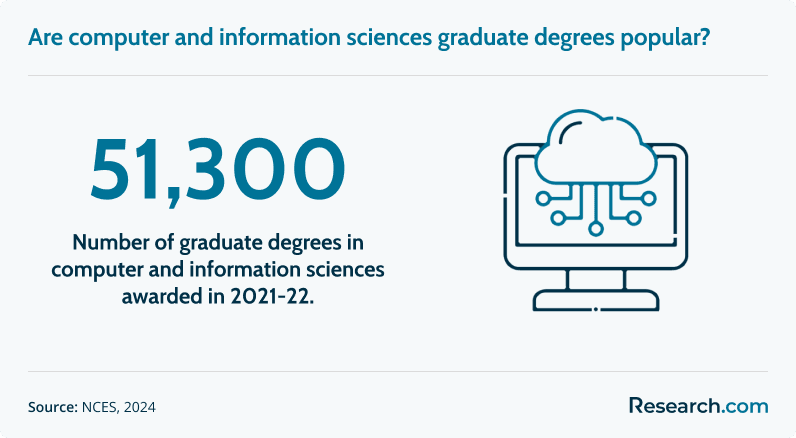
- National Center for Education Statistics. (2024). Graduate degree fields. U.S. Department of Education, Institute of Education Sciences. Retrieved July 28, 2025, from NCES.
- Skillsoft. (2024). 2024-25 IT skills & salary report. Retrieved July 28, 2025, from Skillsoft.
- World Economic Forum. (2025). Future of jobs report 2025: Insight report. Retrieved July 28, 2025, from WEF.
Other Things You Should Know About Online Technology Management Programs
In 2027, leading online technology management degree programs are offered by institutions like Arizona State University, Purdue University Global, and Western Governors University. These programs are highly regarded for their comprehensive curricula and flexibility tailored for working professionals.
Yes, some programs accept students without a deep technical background by offering foundational bridge courses to prepare them for the core curriculum. These programs are often designed for career changers who have substantial business experience and want to pivot into technology leadership. Always check the specific admission requirements for each university.
Yes, most online technology management degrees are designed for working professionals and offer flexible part-time schedules. Some schools also provide executive formats tailored for senior leaders, which may include intensive weekend sessions. These options allow you to earn your degree while continuing in your career.


