
2027 Fastest Online Bachelor's Degree in Organizational Leadership

Co-Founder and Chief Data Scientist
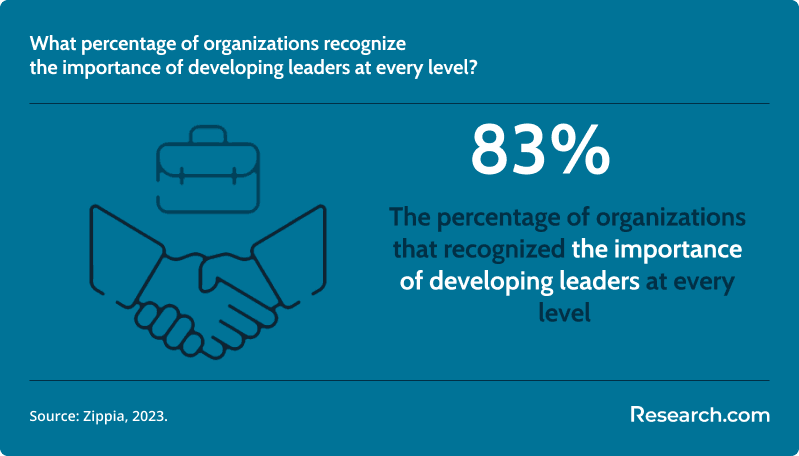
Choosing an online bachelor’s degree in organizational leadership is not just a question of which school is fastest. Students also need to compare cost, transfer credit policies, accreditation, course format, career fit, and whether the degree will help them move into management, human resources, operations, project coordination, nonprofit leadership, or another people-centered role. This matters because leadership training is no longer limited to executives: 83% of organizations recognize the importance of developing leaders at every level.
This guide is designed for high-school graduates, working adults, military learners, transfer students, and career changers who want a flexible undergraduate program that can build practical management and leadership skills. You will learn what an online bachelor’s in organizational leadership includes, how long it can take, what it may cost, which programs stand out for 2027, and how to decide whether this degree is the right investment for your goals.
Quick Answer: Is an Online Bachelor’s in Organizational Leadership Worth Considering?
An online bachelor’s degree in organizational leadership can be a strong choice for students who want broad leadership training rather than a narrow technical major. Most programs require around 120 credits and cover communication, organizational behavior, leadership theory, conflict resolution, ethics, team development, and change management. The degree can support roles in human resources, operations, project coordination, nonprofit administration, healthcare administration, and business management, but outcomes depend heavily on work experience, industry, location, and the reputation and accreditation of the school.
What are the benefits of getting an online bachelor’s degree in organizational leadership?
- It prepares students for many leadership-focused roles. Graduates may pursue positions such as Human Resources Manager, Operations Manager, Executive Director, Change Management Specialist, project coordinator, or management analyst, depending on experience and industry requirements.
- It can lead to competitive management-track earnings. The median annual salary for organizational leadership professionals is approximately $112,050, while top earners make up to $163,000.
- It offers flexibility for students with work or family responsibilities. Online programs often allow learners to complete assignments from any location, access instructor support virtually, and continue working while earning a degree.
What can I expect from an online bachelor’s degree in organizational leadership?
An online bachelor’s degree in organizational leadership is usually a 120-credit undergraduate program that blends general education, business-related coursework, communication training, and applied leadership study. Students learn how organizations function, how teams make decisions, how workplace conflict develops, and how leaders guide people through change.
Common learning experiences include case studies, group projects, discussion boards, written leadership analyses, presentations, exams, and final capstone projects. Some programs also include internship hours or applied projects that ask students to solve a workplace challenge using leadership concepts.
Tuition can vary widely. The programs discussed in this guide show per-credit costs ranging from about $299 to $678 per credit, depending on the institution, residency classification, and fee structure.
Online courses are typically delivered through video lessons, assigned readings, recorded lectures, quizzes, projects, discussion forums, and instructor feedback. Faculty support may be available through email, online office hours, learning management systems, and scheduled virtual meetings.
| Program feature | What students should expect | Why it matters |
| Typical credit load | Around 120 credits | Determines total time to graduation and total tuition cost |
| Core focus | Leadership, communication, organizational behavior, team building, ethics, and change management | Helps students build transferable management skills |
| Applied learning | Capstone projects, case studies, internships, or workplace-based assignments | Allows students to connect theory to real organizational problems |
| Online format | Video lectures, readings, forums, assignments, exams, and virtual faculty support | Supports learners who need schedule flexibility |
| Cost range | About $299 to $678 per credit | Shows why comparing tuition, fees, and transfer credits is essential |
Where can I work with an online bachelor’s degree in organizational leadership?
Organizational leadership is a broad degree, so graduates are not limited to one industry. The program is most useful for students who want to lead people, improve operations, coordinate projects, manage teams, support employee development, or help organizations handle change.
Graduates may work in corporations, small businesses, government agencies, schools, healthcare organizations, nonprofit groups, technology companies, or entrepreneurial ventures. Common roles include project coordinator, human resources director, management analyst, operations manager, team lead, training coordinator, and nonprofit program manager.
The degree emphasizes problem-solving, communication, critical thinking, collaboration, and decision-making. These skills are portable, which can help graduates adapt across industries. U.S. businesses invest $166 billion annually in leadership development, which reflects the continuing demand for employees who can guide teams and improve performance.
Management positions are expected to grow faster than average, with median salaries around $116,880. Students should still evaluate job postings in their target region because some leadership jobs require industry experience, technical knowledge, certifications, or graduate education in addition to a bachelor’s degree.
How much can I make with an online bachelor’s degree in organizational leadership?
Salary outcomes for organizational leadership graduates vary by role, employer, industry, location, and work history. Professionals with an online bachelor’s degree in organizational leadership can expect an average salary of around $74,500 to $112,050 per year, or about $54 per hour.
Entry-level roles usually pay less, with starting salaries near $46,800 annually. Experienced managers, directors, and executives can earn up to $163,000 or more, especially when they move into higher-responsibility leadership roles.
Human resource managers with leadership backgrounds earn a median of $140,030 annually. Advanced degrees, professional certifications, and documented management experience can improve advancement potential, but students should avoid assuming that a degree alone guarantees a specific salary.
| Career stage | Salary information stated in available sources | What affects earnings |
| Entry-level roles | Near $46,800 annually | Prior experience, internships, location, and industry |
| Broad organizational leadership roles | Around $74,500 to $112,050 per year, or about $54 per hour | Job title, employer size, management responsibility, and specialization |
| Human resources management | Median of $140,030 annually | HR experience, certifications, industry, and department size |
| Senior leadership and executive roles | Up to $163,000 or more | Years of leadership experience, organizational scope, and executive responsibility |
- Best Online Bachelor’s Degrees in Organizational Leadership for 2027
- How long does it take to complete an online bachelor’s degree in organizational leadership?
- How does an online bachelor’s degree in organizational leadership program compare to an on-campus program?
- What is the average cost of an online bachelor’s degree in organizational leadership?
- What are the financial aid options for students enrolling in an online bachelor’s degree in organizational leadership?
- What are the prerequisites for enrolling in an online bachelor’s degree in organizational leadership?
- What courses are typically in an online bachelor’s degree in organizational leadership?
- What types of specializations are available in an online bachelor’s degree in organizational leadership?
- Is the Online Bachelor’s Program Accredited and Why Does It Matter?
- Does an Online Bachelor’s Degree in Organizational Leadership Deliver a Strong Return on Investment?
- How are emerging workplace trends shaping online Organizational Leadership programs?
- How to Choose the Best Online Bachelor’s Degree in Organizational Leadership
- What career paths are available for graduates of an online bachelor’s degree in organizational leadership?
- What is the job market for graduates with an online bachelor’s degree in organizational leadership?
List of the Best Online Bachelor’s Degree in Organizational Leadership Programs for 2027
Because a bachelor’s degree requires a major financial and time commitment, this ranking focuses on transparent, decision-useful information. Research.com reviews data from reliable sources including the IPEDS database, Peterson's database, the College Scorecard database, and the National Center for Education Statistics.
These datasets help evaluate online bachelor’s degrees in organizational leadership using institutional, cost, and student-outcome information where available. Students who want to understand how rankings are created can review Research.com's methodology page.
| School | Degree | Credits | Cost per credit | Accreditation |
| Arkansas State University | Bachelor of Arts in Organizational Leadership Online | 120 | $282 | Higher Learning Commission (HLC) |
| Cameron University | Bachelor of Science in Organizational Leadership | 124 | $283.97 (Resident); $619.56 (Non-Resident) | HLC |
| College of Biblical Studies | Bachelor of Science in Organizational Leadership | 120 | $385 | Southern Association of Colleges and Schools Commission on Colleges (SACSCOC) |
| Fort Hays State University | Bachelor of Arts/Science in Organizational Leadership | 120 | $257.33 | HLC |
| John Brown University | Organizational Leadership, B.S. | 120 | $335 | HLC |
| South Texas College | Bachelor of Applied Science in Organizational Leadership | 120 | $90 (in-state), $200 (out-of-state), $260 (out-of-country) | SACSCOC |
| Thomas Edison State University | Bachelor of Science (B.S.) in Organizational Leadership | 120 | $408 (New Jersey residents); $533 (out-of-state) | Middle States Commission on Higher Education (MSCHE) |
| University of Iowa | Enterprise Leadership, BA | 120 | $350 (non-resident undergraduate distance education) | HLC |
| Valdosta State University | B.S. Degree with a Major in Organizational Leadership | 120 | $339 (eMajor rate) | SACSCOC |
| Waldorf University | Bachelor of Science in Organizational Leadership | 120 | $325 | HLC |
1. Arkansas State University - Bachelor of Arts in Organizational Leadership Online
Arkansas State University offers a fully online Bachelor of Arts in Organizational Leadership for students who want to strengthen their ability to work with people, teams, and organizational systems. The curriculum emphasizes workplace communication, conflict resolution, change management, and the human side of leadership. Students may also be able to receive credit for prior knowledge and experience, which can be valuable for working adults.
- Program length: Varies (accelerated options available)
- Cost per credit: $282
- Total credits: 120
- Accreditation: Higher Learning Commission (HLC)
2. Cameron University - Bachelor of Science in Organizational Leadership
Cameron University provides a fully online Bachelor of Science in Organizational Leadership for students who want to lead change in modern workplaces. The program develops practical skills in communication, data analysis, fiscal management, and organizational culture. Graduates may apply this preparation to supervisory, human resources, operations, and other management-related roles.
- Program length: Typically 4 years
- Cost per credit: $283.97 (Resident); $619.56 (Non-Resident)
- Total credits: 124
- Accreditation: HLC
3. College of Biblical Studies - Bachelor of Science in Organizational Leadership
College of Biblical Studies offers a 100% online Bachelor of Science in Organizational Leadership that combines leadership education with a biblical worldview. The program is built for students who want to connect Christian ethics with organizational decision-making, communication, conflict management, and strategic leadership.
- Program length: Not specified
- Cost per credit: $385
- Total credits: 120
- Accreditation: Southern Association of Colleges and Schools Commission on Colleges (SACSCOC)
4. Fort Hays State University - Bachelor of Arts/Science in Organizational Leadership
Fort Hays State University offers a 100% online organizational leadership program with an interdisciplinary structure. Students study leadership through communication, collaboration, critical thinking, and organizational problem-solving. The program is designed for learners who want flexible preparation for supervisory and team-based roles rather than a degree tied to only one occupation.
- Program length: Typically 4 years
- Cost per credit: $257.33
- Total credits: 120
- Accreditation: HLC
5. John Brown University - Organizational Leadership, B.S.
John Brown University delivers a 100% online Bachelor of Science in Organizational Leadership for students interested in values-based leadership. The program uses a Christian leadership model and helps learners examine their own leadership style, influence, and professional impact. It also offers flexibility for working adults and includes an accelerated path to an MBA.
- Program length: Can be completed in 5 years with MBA
- Cost per credit: $335
- Total credits: 120
- Accreditation: HLC
6. South Texas College - Bachelor of Applied Science in Organizational Leadership
South Texas College offers a 100% online competency-based Bachelor of Applied Science in Organizational Leadership, described as the first of its kind from a Texas public institution. The program is especially relevant for students with prior learning or workplace experience because it focuses on practical skills, applied problem-solving, and a final project tied to real organizational needs.
- Program length: Three to Four Years (six seven-week terms per year)
- Cost per credit: $90 (in-state), $200 (out-of-state), $260 (out-of-country)
- Total credits: 120
- Accreditation: SACSCOC
7. Thomas Edison State University - Bachelor of Science (B.S.) in Organizational Leadership
Thomas Edison State University offers New Jersey's inaugural 100% online program of its kind. The B.S. in Organizational Leadership is designed for adult learners who want a foundation in liberal arts, business, applied leadership, behavioral dynamics, and organizational management for public, private, or nonprofit settings.
- Program length: Not specified
- Cost per credit: $408 (New Jersey residents); $533 (out-of-state)
- Total credits: 120
- Accreditation: Middle States Commission on Higher Education (MSCHE)
8. University of Iowa - Enterprise Leadership, BA
The University of Iowa offers an Enterprise Leadership BA that combines leadership, entrepreneurship, management, and professional communication. Students learn to approach organizational and consumer problems through innovation, strategic thinking, and team development. The degree may appeal to learners who want leadership preparation with an entrepreneurial and business-building perspective.
- Program length: Not specified
- Cost per credit: $350 (non-resident undergraduate distance education)
- Total credits: 120
- Accreditation: HLC
9. Valdosta State University - B.S. Degree with a Major in Organizational Leadership
Valdosta State University offers an online multidisciplinary organizational leadership major for working professionals, military students, and transfer learners. The curriculum covers leadership theory, management, human resources, technology, and organizational challenges. Students can also pursue areas such as public service or law enforcement leadership.
- Program length: Not specified
- Cost per credit: $339 (eMajor rate)
- Total credits: 120
- Accreditation: SACSCOC
10. Waldorf University - Bachelor of Science in Organizational Leadership
Waldorf University provides a 100% online Bachelor of Science in Organizational Leadership for students preparing for supervisory or leadership responsibilities. The program includes business ethics, organizational behavior, conflict resolution, and applied leadership study. Students may customize their path through five specialized concentrations.
- Program length: 4 years (full-time)
- Cost per credit: $325
- Total credits: 120
- Accreditation: HLC
The following chart illustrates the educational attainment of U.S. Chief Executive Officers (CEOs).
How long does it take to complete an online bachelor’s degree in organizational leadership?
Students entering with no prior college credit usually need about four years to complete an online bachelor’s in organizational leadership because most programs require a standard 120-credit curriculum.
The timeline can be shorter for students who transfer credits, enroll year-round, choose accelerated terms, or receive credit for prior learning or work experience. Some accelerated options may allow motivated learners to finish in as little as 18 to 24 months.
Many online programs use flexible calendars, such as 8-week terms or continuous enrollment. This structure can help working adults maintain steady progress without taking a full traditional semester load. Similar flexibility appears in the shortest master's of public administration online programs, which are also designed for efficient completion.
| Student situation | Likely timeline | What can shorten or extend completion |
| First-time college student | About four years | Full-time enrollment, summer study, and course availability |
| Transfer student | Varies based on accepted credits | Transfer credit limits, articulation agreements, and prior GPA |
| Working adult with prior learning | May be faster in programs that award credit for experience | Portfolio assessment, military credit, professional training, or competency-based formats |
| Accelerated student | As little as 18 to 24 months in some cases | Heavy course loads, year-round study, and previous credits |
How does an online bachelor’s degree in organizational leadership program compare to an on-campus program?
An online organizational leadership bachelor’s degree and an on-campus version usually cover similar academic content: leadership theories, organizational behavior, communication, strategic planning, team development, ethics, and change management. The main difference is how students learn and interact.
Online programs are often better for learners who need flexibility, live far from campus, work full time, serve in the military, or manage family responsibilities. On-campus programs may be a better fit for students who want in-person networking, live classroom discussion, student organizations, campus career fairs, and face-to-face access to faculty.
Both online and traditional degrees can build practical leadership skills. The better choice depends on your schedule, learning style, budget, location, and need for campus-based support.
| Factor | Online program | On-campus program |
| Schedule | Often asynchronous or flexible | Usually tied to set class times |
| Location | Can be completed from anywhere with approved access | Requires regular campus attendance |
| Networking | Virtual discussions, group projects, online events | In-person classmates, clubs, events, and career fairs |
| Best for | Working adults, remote learners, military students, and parents | Students who prefer face-to-face learning and campus life |
| Potential drawback | Requires strong self-discipline and time management | Less flexible for students with work or family commitments |
What is the average cost of an online bachelor’s degree in organizational leadership?
The average total tuition cost for an online bachelor’s in organizational leadership typically ranges between $30,000 and $60,000. Per-credit rates generally fall between $250 and $500, though the exact amount depends on the school, residency status, fees, and number of credits transferred.
Some programs may cost closer to $20,000, while others can exceed $60,000. Students should compare total program price rather than only the advertised per-credit rate because technology fees, online course fees, books, transfer credit policies, and required campus visits can affect the final cost.
Online programs may reduce expenses related to housing, commuting, and relocation. However, the best value usually comes from combining reasonable tuition with strong transfer credit acceptance, accreditation, financial aid, and clear career outcomes. Students considering graduate study can also compare undergraduate costs with a low cost MS in Organizational Leadership online when planning long-term education expenses.
| Cost factor | What to check before enrolling |
| Tuition rate | Confirm the per-credit price and whether it differs for residents and nonresidents |
| Total credits required | Ask how many credits you must complete after transfer evaluation |
| Fees | Review online, technology, graduation, and course-specific fees |
| Books and materials | Ask whether courses use open educational resources or paid materials |
| Transfer credits | Request a written transfer credit estimate before committing |
| Financial aid | Compare grants, scholarships, employer aid, and loan amounts |
What are the financial aid options for students enrolling in an online bachelor’s degree in organizational leadership?
Online organizational leadership students may qualify for several forms of financial aid. Eligibility depends on the institution, enrollment status, program accreditation, income, prior credits, and other factors.
- Federal Student Aid: Submit the Free Application for Federal Student Aid (FAFSA) to be considered for Pell Grants, Direct Subsidized and Unsubsidized Loans, and work-study options.
- Scholarships: Search for awards from universities, employers, professional associations, nonprofits, and community organizations. Some scholarships are intended for business, leadership, adult, military, or nontraditional students.
- Institutional Aid: Ask each school whether online students qualify for institutional grants, tuition discounts, completion scholarships, or merit awards.
- Transfer Credits: Bringing in prior college credits can lower the number of credits you must pay for at the new institution.
- Employer Reimbursement: Many working adults reduce costs through employer tuition assistance or reimbursement programs.
- Private Student Loans: Private loans may fill funding gaps, but they must be repaid with interest and should be compared carefully with federal loan options.
What are the prerequisites for enrolling in an online bachelor’s degree in organizational leadership?
Admission requirements for an online bachelor’s in organizational leadership are usually straightforward. Like many undergraduate programs, including the fastest online esports business degree programs, applicants typically need a high school diploma or GED, official transcripts, and a completed application.
Many schools expect a minimum GPA between 2.0 and 2.7. Some may also request an essay, statement of purpose, resume, or letters of recommendation. Transfer students are often evaluated separately and may need a minimum cumulative GPA of 2.0 for previously completed college coursework.
Some programs require applicants to complete general education courses such as communication, critical thinking, and math before full admission. Others offer alternative pathways such as "Earned Admission," where students prove readiness by completing initial courses with a satisfactory GPA. Certain online programs may also restrict enrollment based on approved state residency.
- High school diploma or GED
- Minimum GPA, usually 2.0 or higher
- Official high school or college transcripts
- Completed application, sometimes with an essay or recommendations
- General education prerequisites when required
- Transfer credit review for applicants with prior college coursework
- Residency eligibility if the program is not approved in every state
What courses are typically in an online bachelor’s degree in organizational leadership?
Coursework in organizational leadership is designed to help students understand how people, teams, and systems operate inside organizations. While course titles vary by school, most programs include leadership theory, communication, management, organizational behavior, conflict resolution, ethics, and applied decision-making.
Introduction to Organizational Leadership
This course introduces students to leadership as a practical and academic field. Topics often include group decision-making, organizational culture, team dynamics, leadership challenges, and the differences between authority, influence, and management.
Students who later want to specialize in workforce strategy may continue into graduate programs such as an accelerated online MBA in HR management, where leadership concepts are applied to talent management and human capital planning.
Leadership Theories and Practices
Students compare major leadership approaches and examine how leaders motivate people, handle uncertainty, build trust, and make ethical decisions. The course often asks students to evaluate their own leadership style and apply theory to real workplace scenarios.
Conflict Resolution and Negotiation
This course teaches methods for identifying, managing, and resolving workplace conflict. Students may study negotiation strategies, mediation techniques, difficult conversations, and collaboration across departments or stakeholder groups.
Organizational Behavior
Organizational behavior examines how individuals and groups act in the workplace. Topics commonly include motivation, culture, power, team performance, employee engagement, and organizational change.
Students interested in mission-driven leadership may eventually consider the fastest online master's degree in nonprofit management, which builds advanced skills in nonprofit strategy, fundraising, program evaluation, and organizational leadership.
What types of specializations are available in an online bachelor’s degree in organizational leadership?
Specializations allow students to connect broad leadership training with a more specific career direction. Not every program offers concentrations, so students should compare curriculum options before applying.
- Management: This path emphasizes project management, operations, financial decision-making, strategic planning, and team supervision. It is useful for students who want general management preparation. Students focused specifically on how to get into investment management will likely need additional finance, economics, or investment-focused education after the bachelor’s degree.
- Human Resources: This concentration focuses on workforce planning, compensation, conflict resolution, employee development, training, and performance improvement. Students who want deeper HR preparation may later pursue an accelerated online master's in HR management.
- Professional Studies: This option gives students more freedom to select electives from management, human resources, communication, public service, or other areas that match their career goals.
| Specialization | Best fit | Possible career direction |
| Management | Students who want broad supervisory and operations preparation | Team lead, operations coordinator, project coordinator, assistant manager |
| Human Resources | Students interested in employee relations, hiring, training, and workforce development | HR coordinator, training specialist, benefits assistant, HR manager with experience |
| Professional Studies | Students who want a customized degree plan | Roles vary based on elective choices and prior work experience |
Is the Online Bachelor’s Program Accredited and Why Does It Matter?
Accreditation is one of the first things students should verify before applying. A recognized accreditor helps confirm that the institution meets academic and operational standards. It can also affect federal financial aid eligibility, credit transfer, employer recognition, graduate school admission, and overall degree credibility.
Students should confirm that the school is accredited by an agency recognized by the U.S. Department of Education or an equivalent accrediting body. Do not rely only on marketing language. Check the accreditor listed on the school’s website and verify it through official sources when possible.
Accreditation is especially important for students who may later pursue graduate business education, including options such as a cheap MBA online. Graduate schools and employers may review whether the bachelor’s degree came from an accredited institution.
Does an Online Bachelor’s Degree in Organizational Leadership Deliver a Strong Return on Investment?
The return on investment depends on how much you pay, how many credits you transfer, whether you keep working while enrolled, and how the degree supports your next career move. A lower tuition program is not automatically the best choice if it has weak student support, limited course availability, or poor credit transfer policies.
Students should compare the total cost of the degree against realistic career goals. For example, the degree may deliver strong value for a working adult who already has supervisory experience and needs a bachelor’s credential to qualify for promotion. It may be less direct for a student who wants a highly specialized role requiring technical, licensure-based, or finance-specific training.
It can also help to compare organizational leadership with adjacent fields. For instance, students interested in business roles tied to athletics may review the fastest online bachelor degree programs in sports management to see whether a more industry-specific degree better fits their goals.
| ROI question | Why it matters |
| How many credits will transfer? | Accepted credits can reduce both cost and time to graduation |
| Will I work while studying? | Keeping income can improve affordability and reduce borrowing |
| Does the curriculum match my target role? | A mismatch can weaken the career value of the degree |
| What support does the school offer online students? | Advising, tutoring, and career services can affect completion and job readiness |
| Will I need graduate school or certifications? | Additional credentials can change the total cost of reaching your career goal |
How are emerging workplace trends shaping online Organizational Leadership programs?
Workplaces have changed significantly as remote work, hybrid teams, digital collaboration, and data-supported decision-making have become more common. Online organizational leadership programs increasingly respond by emphasizing virtual communication, remote team management, technology-supported collaboration, and adaptive leadership.
Students should look for courses or assignments that address modern workplace realities: leading dispersed teams, communicating across cultures, using data to inform decisions, managing change, supporting employee engagement, and building trust without relying only on in-person interaction.
Technology is also changing what employers expect from leaders. Graduates may need to be comfortable with collaboration platforms, digital workflows, analytics dashboards, and AI-supported productivity tools. Students who want broader graduate business options can compare this degree with the top online MBA program guide to understand how advanced business education may build on undergraduate leadership training.
How to Choose the Best Online Bachelor’s Degree in Organizational Leadership
The best online organizational leadership program is the one that fits your career goals, budget, transfer history, learning style, and schedule. Rankings can help you build a shortlist, but they should not replace your own program comparison.
- Verify accreditation: Make sure the institution is accredited by a recognized agency so you can protect financial aid eligibility, transfer options, and degree recognition.
- Compare flexibility: Look for asynchronous courses, multiple start dates, part-time options, and clear policies for students who work full time.
- Calculate the real cost: Compare tuition, fees, books, technology costs, and the number of credits you must complete after transfer evaluation.
- Review the curriculum: Choose a program with courses and specializations that match your career direction. Students planning to combine leadership with technology may later explore a fast-track master's in management information systems online.
- Check student support: Online learners should have access to academic advising, career coaching, tutoring, library resources, and technical help.
- Look for evidence of outcomes: Review graduation rates, retention, student reviews, alumni stories, and career services information.
Students planning long-term graduate study should also understand the difference between an MS in Organizational Leadership vs MBA. An MBA generally provides broader business training, while organizational leadership programs often focus more deeply on people, culture, change, and leadership behavior.
Common mistakes to avoid when choosing a program
| Mistake | Why it can hurt you | Better approach |
| Choosing based only on speed | A fast program may not be affordable, well-supported, or aligned with your goals | Balance completion time with accreditation, cost, transfer credits, and career fit |
| Looking only at tuition per credit | Fees and unaccepted transfer credits can raise the final price | Ask for a full cost estimate after transcript evaluation |
| Ignoring accreditation | Unrecognized accreditation can limit financial aid, transfer, and graduate school options | Verify institutional accreditation before applying |
| Assuming online means self-paced | Many online courses still have weekly deadlines and group work | Ask whether courses are asynchronous, synchronous, self-paced, or cohort-based |
| Assuming the degree guarantees a management job | Many leadership roles require experience in addition to education | Build experience through internships, projects, supervision, volunteering, or current workplace responsibilities |
| Not checking state restrictions | Some online programs are not authorized in every state | Confirm your eligibility based on your state of residence |
Questions to ask admissions advisors before enrolling
- How many of my transfer credits will count toward the degree?
- Are courses asynchronous, synchronous, or a mix of both?
- How often are required courses offered?
- What is the total estimated cost after fees and transfer credits?
- Do online students qualify for the same financial aid and scholarships as campus students?
- What career services are available to online learners?
- Does the program include a capstone, internship, portfolio, or applied workplace project?
- Are there concentrations that match my career goals?
- What happens if I need to pause enrollment for work, military service, or family reasons?
What career paths are available for graduates of an online bachelor’s degree in organizational leadership?
An online bachelor’s in organizational leadership can support several career paths because it focuses on leading people, coordinating work, improving systems, and communicating across teams. It is especially useful when paired with industry experience, internships, military leadership, volunteer management, or previous supervisory responsibilities.
- Human Resources Manager/Director: HR leaders manage recruiting, employee relations, training, benefits, compliance, and workforce planning. Students interested in this area may also want to understand how long does it take to get a degree in human resources? because organizational leadership and HR programs can overlap but are not identical.
- Project Manager/Coordinator: Project professionals coordinate timelines, teams, budgets, deliverables, and stakeholder communication from planning through completion.
- Management Analyst/Consultant: Analysts and consultants study organizational processes, identify inefficiencies, and recommend improvements that can increase performance or reduce waste.
- Education Administrator/School Principal: Education leaders oversee school operations, staff, student services, and institutional planning. Students researching how to become a school principal should note that this role typically also requires a master's degree in educational leadership and teaching experience.
- Medical and Health Services Manager/Administrator: Healthcare administrators manage staff, budgets, patient care processes, compliance, and facility operations. Some professionals later pursue the shortest online MBA programs in healthcare administration to add healthcare-specific business training.
| Career path | How organizational leadership helps | Additional preparation that may be useful |
| Human resources | Builds communication, employee relations, and conflict-resolution skills | HR internships, HR certifications, labor law coursework |
| Operations management | Develops process improvement, team coordination, and decision-making skills | Industry experience, analytics, supply chain or operations courses |
| Project coordination | Strengthens planning, stakeholder communication, and team leadership | Project management training or certification |
| Nonprofit leadership | Supports mission-driven management, volunteer coordination, and organizational change | Grant writing, fundraising, program evaluation experience |
| Healthcare administration | Provides leadership and management foundations | Healthcare policy, finance, compliance, or graduate education |
Although women generally have less access to leadership positions, certain industries show higher rates of women in such roles. The chart below shows the percentage of women in selected management roles:
What is the job market for graduates with an online bachelor’s degree in organizational leadership?
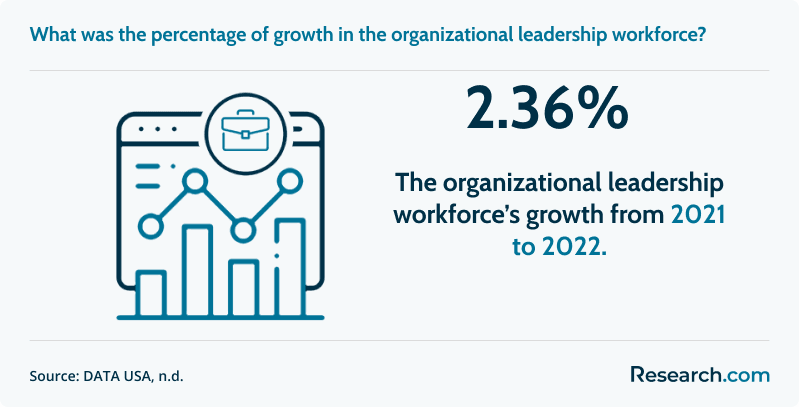
Graduates with an online bachelor’s in organizational leadership enter a job market where leadership, communication, and management skills are useful across many sectors. The organizational leadership workforce grew by 2.36%, from 11.7 million in 2021 to 11.9 million in 2022.
Business majors work in a wide range of industries, including elementary and secondary schools, accounting, tax preparation, bookkeeping, payroll services, and computer systems design. These sectors show how broadly business and leadership skills can be applied.
The internet publishing, broadcasting, and web search portals industry stands out for offering the highest average wages for business majors. Similar cross-functional leadership opportunities are also appearing in data-heavy fields such as sports analytics, where graduates of the fastest online master's degree in sports analytics programs combine business judgment with analytics skills.
Students should treat labor market data as a starting point rather than a promise. To evaluate local opportunity, review job postings in your region, identify common requirements, note whether employers ask for a specific major, and look for internships or entry-level roles that can build management experience.
The chart below further illustrates the most common industries that hire business majors in 2022:
Here’s What Graduates Have to Say About Online Bachelor’s Degree in Organizational Leadership
Balancing work and school felt intimidating at first, but the online organizational leadership format made the goal manageable. The courses helped me improve team communication, project planning, and strategic thinking, and I was able to use those lessons immediately in my job. The flexibility let me keep working while building confidence as a leader. - Ralph
I was unsure whether an online program would feel engaging, but the virtual discussions and instructor support were stronger than I expected. The coursework helped me understand organizational behavior and workplace motivation in a much deeper way. I now approach team challenges with more structure and empathy. - Ashton
Earning my bachelor’s in organizational leadership online was a practical career decision. The program gave me a stronger foundation in leadership theory, decision-making, and modern workplace challenges. I appreciated being able to study at my own pace while applying new ideas directly to my professional responsibilities. - Raiza
Key Insights
- Online bachelor’s degrees in organizational leadership are best for students who want broad, people-centered leadership training rather than a narrow technical major.
- Most programs require around 120 credits, but transfer credits, prior learning credit, accelerated terms, and competency-based formats can shorten the timeline.
- Costs vary significantly. The average total tuition cost for an online bachelor's in organizational leadership ranges between $30,000 and $60,000, so students should compare total program cost rather than only per-credit tuition.
- Accreditation matters for financial aid, credit transfer, employer recognition, and graduate school options. Always verify accreditation before applying.
- Career outcomes depend on experience as much as the degree. The credential can support paths in HR, operations, project coordination, nonprofit leadership, healthcare administration, and management analysis, but many higher-level roles require proven leadership experience.
- Salary potential can be strong, with the median annual salary for organizational leadership professionals approximately $112,050 and top earners making up to $163,000, but no program can guarantee earnings.
- The organizational leadership workforce grew by 2.36% from 2021 to 2022, from 11.7 million to 11.9 million, showing continued relevance for leadership-focused education.
- The best program choice balances accreditation, affordability, transfer credit acceptance, course flexibility, student support, and alignment with your target career path.
References:
- Human resources managers. (2025, April 18). Bureau of Labor Statistics. https://www.bls.gov/ooh/management/human-resources-managers.htm#tab-5
- Kizer, K. (2023, June 30). 35+ Powerful Leadership Statistics [2023]: Things All aspiring Leaders should know. Zippia. https://www.zippia.com/advice/leadership-statistics
- Organizational Leadership | Data USA. (n.d.). Data USA. https://datausa.io/profile/cip/organizational-leadership
- Organizational leadership salary. (2025). ZipRecruiter. Retrieved June 23, 2025, from https://www.ziprecruiter.com/Salaries/Organizational-Leadership-Salary
- Scs, G. (2022, October 24). Is an Online Degree as Good as a Traditional One? Georgetown SCS. https://scs.georgetown.edu/news-and-events/article/8050/is-an-online-degree-as-good-as-a-traditional-one
Other Things You Should Know About Online Bachelor’s Degrees in Organizational Leadership
To complete an online Bachelor's degree in Organizational Leadership swiftly in 2027, prioritize enrolling in accelerated programs, leverage prior learning credits such as CLEP or work experience, and maximize course loads when possible. Consider schools with flexible transfer policies to reduce time toward degree completion.
To complete an online Bachelor's degree in Organizational Leadership quickly in 2027, look for programs offering accelerated courses, transfer credits, and prior learning assessments. Opt for self-paced, competency-based programs that allow you to progress at your own speed, thereby reducing overall completion time.


