2027 Fastest Online Bachelor's Degree in Sports Management Programs

Co-Founder and Chief Data Scientist
Choosing a fast online bachelor’s degree in sports management is usually a practical decision, not just an academic one. You may already work full time, have prior college credits, or want to move into sports business without spending four more years on campus. The challenge is finding a program that is legitimately accelerated, properly accredited, affordable, and useful for the jobs you actually want.
This guide explains how the fastest online sports management bachelor’s programs work, who they fit best, what they cost, how transfer credits affect completion time, and which career paths they can support. It also shows how to compare programs beyond speed so you do not choose a fast degree that lacks the internship access, advising, business coursework, or industry recognition needed to compete in the sports job market.
Quick Answer: What Is the Fastest Online Bachelor’s Degree in Sports Management?
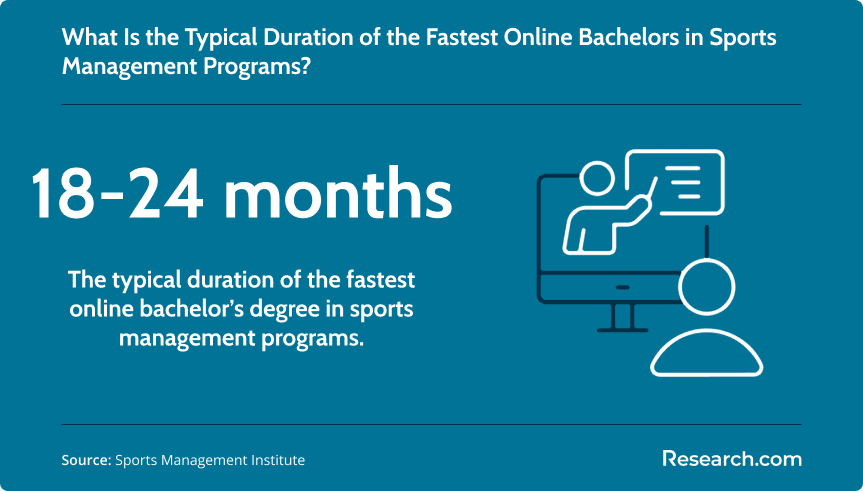
The fastest online bachelor’s degrees in sports management are usually accelerated or degree-completion programs. They often use 7-week or 8-week courses, year-round enrollment, and generous transfer credit policies. Students who already have substantial college credit may finish in as little as 18 months to two years, while students starting with no credits should expect a timeline closer to a traditional four-year bachelor’s degree.
The best fast option is not always the shortest one advertised. A strong program should be accredited, transparent about transfer credits and total cost, include business-focused sports coursework, and offer internship or experiential learning opportunities.
What are the benefits of getting the fastest online bachelor's degree in sports management?
- Faster access to sports business careers: Graduates can prepare for roles in sports marketing, event coordination, athletic administration, facility operations, recreation management, and emerging areas such as esports. The degree is most useful for students who want business, operations, sales, marketing, or administrative roles connected to athletics and entertainment.
- Career mobility with room for specialization: The median annual salary for sports management professionals is around $50,564 per year, although pay varies widely by title, employer, location, and experience. Specialized or senior roles can pay more, including sports agents with a $132,810 median and sports marketing directors with a $144,579 national average.
- Flexibility for adults and transfer students: Online accelerated programs let students continue working while completing courses. For students with transfer credits, some programs may reduce the time to graduation to under two years, which can lower opportunity cost compared with a traditional full-time campus pathway.
What can I expect from the fastest online bachelor's degree in sports management?
A fast online Bachelor of Science or Bachelor of Business Administration in Sports Management is an undergraduate business-focused degree built around the operations, marketing, finance, law, leadership, and event-management side of sports. It is designed for students who want to work behind the scenes in sports organizations rather than as athletes or coaches only.
Most accelerated programs compress learning through short academic terms, frequent start dates, and intensive course pacing. Many are strongest for students who already completed general education courses elsewhere because the remaining curriculum can focus more heavily on upper-division sports management and business requirements.
Students should expect the workload to move quickly. A 7-week or 8-week course can require steady weekly reading, assignments, projects, and discussion participation. The format can be efficient, but it is not easier than a traditional semester. It simply concentrates the same academic expectations into a shorter period.
Where can I work with the fastest online bachelor's degree in sports management?
Sports management graduates work wherever sports, recreation, entertainment, business, and fan engagement overlap. Some graduates pursue jobs with professional teams or leagues such as the NBA, NFL, and FIFA, but many opportunities are also found in schools, universities, youth sports, community recreation, fitness organizations, event companies, and sports-related businesses.
Common employment settings include:
- Professional sports teams, leagues, and associations in operations, ticketing, marketing, sponsorship, sales, or player support
- College, university, and high school athletic departments in compliance, event management, athletic administration, or student-athlete services
- Sports marketing, media, public relations, and sponsorship agencies
- Stadiums, arenas, recreation centers, fitness facilities, and event venues
- Esports organizations, tournament operators, content teams, and gaming-related event companies
- Community recreation departments, nonprofit sports organizations, and youth leagues
- Sporting goods manufacturers, retailers, and sports technology companies in sales, marketing, product, or operations roles
The strongest candidates usually combine the degree with internships, volunteer experience, event work, sales experience, analytics skills, or prior employment in athletics or recreation.
How much can I make with the fastest online bachelor's degree in sports management?
Salary outcomes in sports management vary sharply because the field includes entry-level coordinator jobs, public-sector recreation roles, college athletics positions, corporate marketing roles, facility management, and high-income athlete representation. An accelerated online degree can help you qualify for jobs, but it does not guarantee a specific salary.
As of mid-2025, the average annual salary for a sports management professional in the US is around $50,654. Some sources report an average of $55,000 for professionals with a Bachelor of Science in Sports Management.
Entry-level roles often begin in the $35,000 to $50,000 range. Pay can rise with experience, employer size, market location, and specialization. For example, a Sports Marketing Director can earn a national average of around $144,579, while a Facilities Manager's median salary is approximately $104,900. Highly specialized roles such as Sports Agents can reach a median annual pay of $132,810.
| Career area | Typical fit for sports management graduates | Salary note from available data |
| Entry-level sports business roles | Ticketing, event operations, marketing support, recreation coordination, facility support | Often starts in the $35,000 to $50,000 range |
| Sports management professional | Broad business, operations, and administrative roles in sports organizations | Around $50,654 as of mid-2025; some sources indicate $55,000 for BS in Sports Management graduates |
| Facilities Manager | Venue operations, maintenance, scheduling, staffing, and safety oversight | Approximately $104,900 median salary |
| Sports Marketing Director | Brand strategy, sponsorship campaigns, fan engagement, media promotion | Around $144,579 national average |
| Sports Agent | Athlete representation, contracts, endorsements, personal brand management | $132,810 median annual pay |
- Fastest Online Bachelor's Degree in Sports Management Programs for 2027
- How long does the fastest online bachelor’s in sports management take?
- Online vs. on-campus sports management bachelor’s programs
- Average cost of a bachelor’s degree in sports management
- Financial aid options for accelerated online sports management students
- Admission prerequisites for fast online sports management degrees
- Common courses in accelerated online sports management programs
- Sports management specializations and concentrations
- Using a sports management degree as a pathway to graduate business education
- Accreditation and industry recognition
- Challenges of accelerated online sports management programs
- How to choose the best fast online sports management program
- Career paths after an online bachelor’s in sports management
- Sports management job market outlook
List of the Fastest Online Bachelor's Degree in Sports Management Programs for 2027
How do we rank schools?
Selecting a fast online sports management bachelor’s program requires more than comparing advertised completion times. Research.com evaluates programs with attention to flexibility, affordability, transfer policies, accreditation, online delivery, and student-relevant outcomes.
Our ranking process follows a transparent Research.com methodology and uses data from established sources, including the Integrated Postsecondary Education Data System (IPEDS), Peterson's databases and its Distance Learning Licensed Data Set, and the College Scorecard from the National Center for Education Statistics.
Use this list as a starting point, not a final answer. Before enrolling, ask each school to evaluate your transfer credits, confirm the total cost based on your situation, and explain internship or field experience requirements.
1. McKendree University
McKendree University offers an online Bachelor of Business Administration in Sport Management for students who want business training connected to athletics and sport organizations. The curriculum includes facility management, marketing, and sport management topics, and students complete an internship to apply classroom learning in a professional setting. Courses are fully online and delivered in accelerated 8-week sessions, with some students taking two courses per session to move faster.
- Program Length: Accelerated 8-week course sessions
- Tracks/concentrations: BBA in Sport Management
- Cost per Credit: $420 per credit hour
- Required Credits to Graduate: 124 credit hours
- Accreditation: Higher Learning Commission (HLC).
2. California Baptist University
California Baptist University offers an online Bachelor of Science in Sport Management for students preparing for administrative and business roles in athletics, fitness, recreation, sport, and tourism. The program is transfer-friendly, uses rolling admissions, and offers sessions that begin every 8 weeks. Coursework blends kinesiology-related content with sport industry and management topics.
- Program Length: 8-week sessions, completion time depends on transfer credits
- Tracks/concentrations: Bachelor of Science (BS) in Sport Management
- Cost per Credit: $520
- Required Credits to Graduate: The major requires 50 units
- Accreditation: WASC Senior College and University Commission (WSCUC).
3. Eastern Kentucky University
Eastern Kentucky University offers a fully online Bachelor of Science in Sport Management focused on the business operations of the sports industry. Its accelerated 7-week terms allow students to complete coursework in shorter blocks while maintaining progress toward graduation. Students can pursue concentrations in Management and Applied Professional Studies.
- Program Length: Accelerated 7-week terms
- Tracks/concentrations: Management and Applied Professional Studies.
- Cost per Credit: $443 per credit hour
- Required Credits to Graduate: 120 credit hours
- Accreditation: Southern Association of Colleges and Schools Commission on Colleges (SACSCOC).
4. Averett University
Averett University offers online bachelor’s programs through its Graduate and Professional Studies division, which is designed for adult learners and working professionals. Its online format emphasizes convenience, asynchronous learning, and accelerated completion. Students considering this option should confirm current sport management course availability, transfer policies, and internship expectations directly with the university.
- Program Length: Accelerated format designed for working adults
- Tracks/concentrations: BS in Sports Management
- Cost per Credit: $250
- Required Credits to Graduate: 120 credits
- Accreditation: Southern Association of Colleges and Schools Commission on Colleges (SACSCOC).
5. Missouri Baptist University
Missouri Baptist University offers an online Bachelor of Science in Sport Management in an accelerated learning format. The program combines management, marketing, and sport-related coursework for students pursuing administrative, operations, or promotional roles in the sports field. Transfer students may be able to shorten their timeline significantly.
- Program Length: Accelerated learning format, students can transfer up to 96 existing credits to speed up completion.
- Tracks/concentrations: BS in Sport Management
- Cost per Credit: $548
- Required Credits to Graduate: 120 semester hours
- Accreditation: Higher Learning Commission (HLC)
6. Columbia Southern University
Columbia Southern University offers an online Bachelor of Science in Sports Management for adult learners seeking a flexible business-oriented sports degree. The program is delivered online and combines sport industry topics with business fundamentals. Students should review how transfer credits affect their completion plan because the program structure is designed for online pacing and flexibility.
- Program Length: 3 to 10 weeks, depending on transfer credits
- Tracks/concentrations: BS in Sports Management
- Cost per Credit: $278
- Required Credits to Graduate: 20 credits
- Accreditation: Distance Education Accrediting Commission (DEAC)
7. Grand Canyon University
Grand Canyon University offers a Bachelor of Science in Sports and Entertainment Management online and on campus. The online option is built for students who need remote access to coursework while studying business, sports, entertainment, laws, and analytics. This program may be especially relevant for students interested in the overlap between live events, entertainment venues, and sports organizations.
- Program Length: 15 weeks
- Tracks/concentrations: Sports and Entertainment Management
- Cost per Credit: $485 per credit
- Required Credits to Graduate: 120 credits
- Accreditation: Higher Learning Commission (HLC), Accreditation Council for Business Schools and Programs (ACBSP).
8. Mercy University
Mercy University offers an online Bachelor of Science in Sport Management that pairs business coursework with sport-specific study. The program includes internships, which can be valuable for students who need practical experience and industry contacts before applying for sports business jobs.
- Program Length: 5 to 10 weeks
- Tracks/concentrations: BS in Sport Management
- Cost per Credit: $957.00 per credit, $11,375.00 per term
- Required Credits to Graduate: 120 credit hours
- Accreditation: Middle States Commission on Higher Education (MSCHE).
9. Colorado Mesa University
Colorado Mesa University offers a fully online Bachelor of Science in Sport Management. The curriculum applies business concepts such as planning, organizing, leadership, and evaluation to sport organizations. Students interested in youth, amateur, collegiate, professional, fitness, or recreation settings should ask how online course rotation may affect their expected graduation date.
- Program Length: 2 to 3 years depending on transfer credentials
- Tracks/concentrations: BS in Sports Management
- Cost per Credit: $463
- Required Credits to Graduate: 120 credits
- Accreditation: Higher Learning Commission (HLC)
10. Liberty University
Liberty University offers an online Bachelor of Science in Sport Management using accelerated 8-week courses and rolling start dates. The program is notable for its range of specialization options, which can help students align coursework with event management, administration, communications, outreach, or venue operations goals.
- Program Length: Accelerated 8-week course formats
- Tracks/concentrations: Conference and Event Management, General, Sport Administration, Sport Communications and Public Relations, Sport Outreach, and Sport Venue Management.
- Cost per Credit: $390 per credit. For part-time, it's $455 per credit
- Required Credits to Graduate: 120 credit hours
- Accreditation: Southern Association of Colleges and Schools Commission on Colleges (SACSCOC), Commission on Sport Management Accreditation (COSMA).
How long does it take to complete the fastest online bachelor’s degree in sports management program?
The fastest online bachelor’s degree in sports management programs may be completed in as little as 18 months to two years for students who transfer in substantial previous coursework. Students beginning with no college credits usually need closer to the standard four-year bachelor’s timeline, even if courses are online.
What determines your actual graduation timeline?
| Factor | How it affects speed | What to ask before enrolling |
| Transfer credits | The more accepted credits you bring in, the fewer courses you need to complete. | How many of my credits will apply to general education, major, and elective requirements? |
| Term length | 7-week or 8-week courses allow students to complete more classes during a calendar year. | How many sessions are offered each year? |
| Course load | Taking multiple courses per term can shorten completion time but increases weekly workload. | What course load do successful working adults usually take? |
| Year-round enrollment | Summer and winter courses can reduce time to graduation. | Are required sport management courses available every term or only in certain sessions? |
| Internship requirement | Internships can strengthen employability but may add planning time. | Can internships be completed locally or remotely? |
Transfer Credits
Transfer credit is usually the most important variable. Many accelerated programs are built for students who already completed an associate degree or previous college coursework. Before choosing a school, request a transcript evaluation and review how the institution applies prior credits. General guidance on transfer credit can help you understand why some courses transfer as major requirements while others count only as electives.
Program Structure
Fast programs typically shorten the calendar timeline through compressed academic terms, continuous enrollment, and a heavier pace. That can be helpful if you are organized, but it can be difficult if you work unpredictable hours or have limited study time.
- Shorter terms: Instead of 15-week semesters, many accelerated programs use 8-week, 7-week, or 6-week modules.
- Year-round study: Students may continue through summer or winter sessions instead of taking long breaks.
- Higher course load: Finishing quickly often means taking more credits per year than a standard part-time student.
Credit Requirements
A bachelor’s degree commonly requires around 120 credit hours. Accelerated delivery changes the schedule, not the academic level of the degree. If a school promises an unusually short timeline, ask exactly how many transfer credits are assumed in that estimate.
How does an online bachelor’s degree in sports management program compare to an on-campus program?
An online sports management bachelor’s degree is usually best for students who need scheduling flexibility, cannot relocate, or want to keep working while studying. Many online programs use asynchronous coursework, accelerated terms, and multiple start dates. Similar flexibility is also common at the graduate level in programs such as the fastest online MBA in human resource management programs.
An on-campus sports management program may be better for students who want in-person networking, campus athletic department access, student organizations, and face-to-face mentoring. Campus students may find it easier to volunteer at games, work in athletic facilities, or build local sports connections. However, they often have less scheduling control and may face housing, commuting, and relocation costs.
Students comparing formats should also consider broader accelerated options, including an accelerated college degree, if they are open to related majors such as business, organizational leadership, recreation, marketing, or management.
| Program format | Best for | Potential drawbacks |
| Online accelerated | Working adults, transfer students, military students, caregivers, and students outside major sports markets | Requires strong self-management and intentional networking |
| Online traditional pace | Students who need flexibility but do not want an intense course load | May take longer and may not offer as many accelerated sessions |
| On-campus | Students seeking in-person internships, campus athletics access, and local networking | Less flexible and often higher total cost due to living and commuting expenses |
| Hybrid | Students who want some in-person engagement without a full campus schedule | May still require travel or fixed class times |
What is the average cost of bachelor’s degree in sports management program?
Cost depends on school type, transfer credits, residency status, tuition model, required fees, and whether you study online or on campus. Among sports team managers, 57% have a bachelor's degree, which shows that a bachelor’s credential remains common in this field, but students should still compare the full cost against realistic career outcomes.
For online bachelor’s degrees in sports management, the average cost for a four-year program is around $42,000 in total tuition. Financial aid can reduce the net cost to closer to $23,600 for some students. Lower-cost online options may be available for as low as $15,500, while other programs can exceed $55,000. Per-credit tuition for online programs can range from approximately $280 to over $900.
On-campus sports management degrees can vary even more, especially at public universities where in-state vs. out-of-state tuition can significantly change the price. Some more affordable campus options may fall in the $13,000-$19,000 per year range, while others may exceed $30,000-$50,000 annually. Campus students also need to budget for housing, meals, transportation, and other living expenses.
Students who plan to continue into graduate education should account for long-term cost. Some graduates later pursue business or leadership degrees, including the shortest master's programs in HR management, to strengthen management and personnel skills.
| Cost item | Why it matters | How to evaluate it |
| Tuition | The largest direct academic cost for most students | Compare total program cost, not only cost per credit |
| Transfer credit acceptance | Accepted credits can reduce the number of courses you must pay for | Request a written transfer evaluation before committing |
| Fees | Online, technology, graduation, and course fees can add up | Ask for a full cost-of-attendance estimate |
| Books and materials | Some courses require textbooks, software, or event-related resources | Ask whether digital resources are included in tuition |
| Internship costs | Internships may require travel, time away from paid work, or unpaid hours | Ask whether local or remote internships are allowed |
The following chart shows the most common degrees held by sports team managers and can help students understand the educational backgrounds often found in this occupation.
What are the financial aid options for students enrolling in the fastest online bachelor’s degree in sports management program?
Students in accredited online sports management bachelor’s programs may qualify for many of the same financial aid options as campus-based students. The key is institutional eligibility. Confirm that the school is accredited and participates in the financial aid programs you plan to use.
Students considering adjacent leadership degrees, such as a fast-track organizational leadership bachelor's degree online, should use the same financial aid checklist: accreditation, total cost, transfer policy, and aid eligibility.
Federal Student Aid
Most students should begin with the FAFSA® because it determines eligibility for federal grants, federal student loans, and work-study. Federal loans generally offer borrower protections that private loans may not provide.
- Grants: Need-based aid that does not usually require repayment.
- Federal student loans: Borrowed funds that must be repaid with interest, often with fixed rates and federal repayment options.
- Federal work-study: Part-time work for eligible students with financial need; online students should ask whether remote or local options are available.
Scholarships
- School scholarships: Universities may offer merit-based, need-based, transfer, adult learner, military, or major-specific awards.
- Sports management scholarships: Industry groups, foundations, athletic organizations, and professional associations may support students pursuing sport business careers.
- General scholarships: Private organizations and community groups often offer awards that can apply to online students if eligibility requirements are met.
Private Student Loans
- Private loans are offered by banks, credit unions, and other lenders.
- Eligibility and rates often depend on credit history or a co-signer.
- Students should usually review federal aid, scholarships, employer benefits, and payment plans before relying on private loans.
Employer Tuition Assistance
If you work in athletics, recreation, fitness, education, hospitality, marketing, or business operations, ask your employer whether tuition reimbursement is available. Some employers pay only after successful course completion, so review reimbursement timing before enrolling.
Military and Veteran Benefits
Active-duty service members, veterans, and eligible dependents may be able to use education benefits such as the Post-9/11 GI Bill or Yellow Ribbon Program. These benefits are also commonly relevant in other accelerated online fields, including the fastest online master’s degree in homeland security programs.
What are the prerequisites for enrolling in the fastest online bachelor’s degree in sports management program?
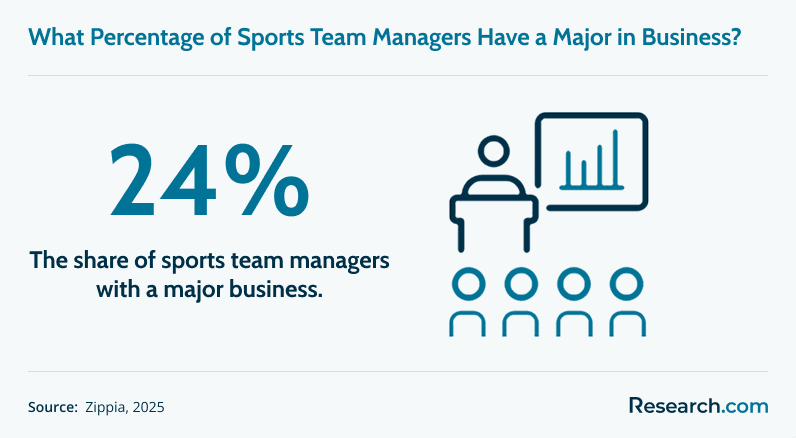
Admission requirements vary, but the fastest sports management bachelor’s programs are often built for transfer students. That means applicants with prior college coursework, an associate degree, or a business background may have the clearest path to quick completion. The fact that 24% of sports team managers have a background in business also reflects how useful business preparation can be in this field.
Before applying, make sure you understand the difference between sports management and sports administration. Sports management often emphasizes business operations, marketing, finance, and organizational leadership, while sports administration may lean more toward program oversight, athletic departments, and institutional operations.
Common admission requirements
| Requirement | What it means | Why it matters for accelerated programs |
| High school diploma or GED | Required for bachelor’s admission | Applies to nearly all undergraduate applicants |
| Transferable college credits | Prior courses from accredited colleges may count toward degree requirements | Can sharply reduce completion time |
| Prior college GPA | Schools often require a minimum GPA, commonly around 2.0 on a 4.0 scale, with some programs asking for 2.2 or 2.5 | Determines admission and sometimes transfer eligibility |
| Specific prerequisite courses | Examples may include English composition, college algebra, financial accounting, or introduction to business | Missing prerequisites can delay major coursework |
| Application materials | Application form, transcripts, fee, resume, essay, or recommendations depending on school | Incomplete files can delay admission and credit review |
| English proficiency | TOEFL or IELTS may be required for some international applicants | Needed for full admission if prior study was not in English |
Transferable College Credits
Many fast online programs require or strongly prefer previous college credit. Some may expect 15 to 60+ transferable credits, while others are built for students who already hold an Associate of Arts or Associate of Science degree.
Academic Standing and Test Scores
If you have limited college experience, admissions teams may place more weight on your high school GPA. A minimum of 2.5 to 3.0 is often expected. SAT or ACT scores are less common in adult-focused online programs, but some schools may request them for recent high school graduates or applicants with few transfer credits.
Application Documents
- Completed online application
- Official transcripts from all colleges and high schools attended
- Application fee, unless waived
- Personal statement or career-goal essay, if required
- Resume or CV, especially if you have experience in athletics, recreation, business, or events
- Letters of recommendation, if requested
The more credits you can transfer into general education and elective categories, the faster you can focus on upper-level sports management coursework. Always ask for a written degree plan before assuming you can finish on an advertised accelerated timeline.
What courses are typically in the fastest online bachelor’s degree in sports management program?
Accelerated online sports management programs usually include the same core subject areas as traditional programs, but courses are delivered in shorter sessions. Transfer students may complete fewer general education courses at the new institution and focus more heavily on major requirements.
| Course area | What students learn | Career relevance |
| Sport Administration or Sport Management | Structure of sport organizations, leadership functions, and management responsibilities | Useful for athletic departments, teams, recreation programs, and sport organizations |
| Sport Marketing | Branding, fan engagement, sponsorship, promotion, digital marketing, and sport consumer behavior | Supports marketing, sales, social media, and sponsorship roles |
| Sport Law and Ethics | Contracts, liability, labor issues, intellectual property, risk management, and ethical decision-making | Important for compliance, operations, athlete services, and administration |
| Sport Event and Facility Management | Event planning, venue operations, logistics, staffing, safety, and scheduling | Prepares students for game-day operations, facility management, and event coordination |
| Sport Finance and Economics | Budgeting, revenue, financial analysis, and economic impact of sports | Relevant for management, operations, fundraising, and business planning |
| Sport Governance and Policy | Rules, governing bodies, NCAA-related concepts, league structures, and institutional policies | Helpful for athletic administration and compliance |
| Sport Communication and Media Relations | Public relations, media strategy, crisis response, and communication planning | Supports media, PR, communications, and brand roles |
| Sport Sales and Sponsorship | Ticketing, corporate partnerships, merchandise, and revenue development | Highly relevant for entry-level sales and partnership roles |
Students who later want executive-level or academic leadership roles may continue into doctoral-level management study, including the shortest management DBA online programs.
What types of specializations are available in the fastest online bachelor’s degree in sports management program?
Specializations help students turn a broad sports management degree into a more targeted career plan. Not every fast program offers concentrations, so students with specific goals should review electives, internship placements, and faculty expertise before enrolling.
On average, graduates with a bachelor's degree in sports management earn a salary of $44,890. Students who want to launch a sports-related business, training company, event venture, or digital media brand may also compare this pathway with an accelerated entrepreneurship bachelor's degree online.
- Sports Marketing and Sponsorship: Best for students interested in campaigns, brand partnerships, ticket sales, promotions, and fan engagement.
- Sport Event and Facility Management: Strong fit for students who want to coordinate games, tournaments, venue operations, and large-scale events.
- Athletics Administration or Collegiate Athletics: Useful for students targeting high school, college, or university athletic departments.
- Sport Analytics: Focuses on data for performance, strategy, business operations, ticketing, and fan behavior.
- Sport Communications and Public Relations: Fits students interested in media relations, crisis communication, social media, and athlete or team branding.
- Sports Law and Ethics: Helpful for students interested in compliance, contracts, governance, athlete representation, or risk management.
- Esports Management: A newer specialization focused on competitive gaming business, events, teams, sponsorship, and digital audiences. Related business roles can also appear among business jobs that pay well.
- Recreation and Leisure Management: Best for students who want to manage community sports, fitness facilities, parks, recreation programs, or wellness initiatives.
The chart below compares average salaries for sports team managers by highest level of education and illustrates how educational attainment may relate to earnings in this occupation.
Can an accelerated sports management degree facilitate affordable advanced business education?
An accelerated sports management bachelor’s degree can be a practical foundation for graduate business study because it covers management, marketing, finance, communication, operations, and organizational leadership. Graduates who want senior roles in athletics, venues, sports marketing, or administration may later consider MBA options, including the cheapest MBA online programs, if they want to control graduate education costs.
Before planning a graduate pathway, ask whether your bachelor’s institution has articulation agreements, alumni tuition discounts, preferred admission pathways, or graduate credit opportunities. These features can reduce duplication and make advanced business education more affordable.
Are accelerated online sports management programs accredited and industry recognized?
Accreditation is one of the most important checks before enrolling. A fast program should be offered by an institution accredited by an agency recognized by the Council for Higher Education Accreditation or the U.S. Department of Education. Accreditation affects financial aid eligibility, credit transfer, graduate admission, and employer confidence.
Some sports management programs may also hold sport management-specific recognition, such as COSMA accreditation. Business accreditation, such as ACBSP, can also be relevant when the program sits within a business school. Students comparing sport management with adjacent professional degrees, such as a 2 year construction management degree online, should use the same quality checks: accreditation, outcomes, faculty, curriculum, support services, and employer relevance.
Questions to ask about accreditation and recognition
- Is the institution regionally or nationally accredited by a recognized accreditor?
- Is the sports management program separately accredited or recognized by a sport management body?
- Will credits transfer to graduate programs?
- Does the degree qualify students for federal financial aid?
- Are internships, practicum experiences, or industry partnerships built into the program?
- Does the school publish career services, alumni network, or employment support information?
Are there challenges unique to accelerated online sports management programs?
Accelerated online programs can save time, but they demand consistent effort. Students must learn quickly, meet frequent deadlines, and manage projects without the daily structure of a campus classroom. Networking can also require more initiative because relationships with faculty, classmates, alumni, and industry contacts may not happen organically.
The same intensity that makes these programs efficient can also prepare students for continued online graduate study, including pathways such as the best online MBA degrees. However, students should not underestimate the time commitment.
| Common challenge | Why it happens | Better approach |
| Underestimating weekly workload | Short terms compress assignments and readings | Block study time before the term begins |
| Weak networking | Online students may not attend campus events | Use alumni networks, LinkedIn, virtual panels, internships, and professional associations |
| Limited internship planning | Sports opportunities can be seasonal and competitive | Start contacting local teams, schools, recreation departments, and venues early |
| Choosing only by speed | Fast completion can distract from accreditation, cost, and career support | Compare programs using total value, not completion time alone |
| Poor transfer credit assumptions | Not all credits apply to major or degree requirements | Request an official or written unofficial credit evaluation |
How do you choose the best among the fastest online bachelor’s degree in sports management programs?
The best fast online sports management degree is the one that gets you to graduation efficiently while still supporting your career goals. Speed matters, but it should not outrank accreditation, affordability, internship access, course quality, or employer relevance.
- Start with your transfer credits: Collect transcripts from every college you attended and ask schools for a transfer review before applying.
- Check accreditation first: Focus on accredited online degree programs and confirm whether accreditation supports financial aid and future graduate study.
- Compare total completion cost: Include tuition, fees, books, technology charges, and the number of credits you still need after transfer evaluation.
- Review the curriculum carefully: Look for sport law, sport marketing, finance, event management, facility operations, communication, and internship or practicum options.
- Ask about course availability: A program cannot be truly fast for you if required courses are offered only once per year.
- Evaluate career support: Strong programs help online students find internships, connect with alumni, prepare resumes, and identify sports industry opportunities.
- Match specialization to career goals: Choose marketing, facility management, collegiate athletics, analytics, esports, or communications based on the roles you want after graduation.
- Talk to an advisor: Ask for a term-by-term plan showing exactly when you can graduate based on your transfer credits and preferred course load.
Questions to ask admissions before enrolling
- How many of my credits will transfer into the degree?
- How many credits will I still need to graduate?
- What is my estimated total cost after transfer credits and aid?
- Are courses asynchronous, synchronous, or a mix of both?
- How often do major courses run?
- Is an internship required, optional, or recommended?
- Can online students complete internships in their local area?
- What sports organizations have hosted your students or graduates?
- What career services are available specifically to online students?
- Does the program have sport management-specific accreditation or business accreditation?
What career paths are available for graduates of the fastest online bachelor’s degree in sports management program?
Graduates of accelerated online sports management programs can pursue many of the same entry-level and advancement-oriented pathways as graduates of traditional programs, assuming the curriculum is comparable and the institution is accredited. The degree format matters less than the skills, experience, internships, and networks students build while enrolled.
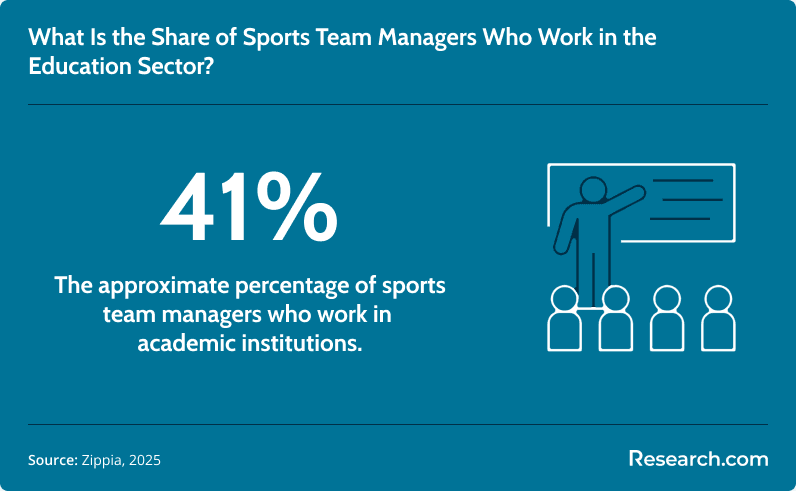
Notably, 41% of sports team managers work in the education sector, which makes schools, colleges, universities, and athletic departments important employment targets for graduates.
Team and League Operations
- Team or club operations: Supports logistics, scheduling, travel, budgets, communications, and daily business activity for teams.
- Player personnel or scouting support: Assists with recruitment, evaluation, player development, or roster-related operations.
- Game-day operations: Coordinates staffing, security, fan experience, vendors, and event flow during games.
- Ticketing and sales: Manages ticket inventory, sales campaigns, group sales, and customer relationships.
- Fan engagement: Develops experiences, loyalty programs, promotions, and community initiatives to increase attendance and engagement.
Students targeting senior team management roles may eventually pursue graduate business training, including an accelerated MBA.
Marketing, Sponsorship and Public Relations
- Sports marketing coordinator or manager: Plans campaigns for teams, events, athletes, leagues, facilities, or sport products.
- Sponsorship sales and activation: Identifies partners, supports proposals, manages sponsor deliverables, and measures partnership value.
- Public relations or media relations: Handles media requests, announcements, press materials, and public image management.
- Brand management: Builds and protects the identity of sports organizations, events, or related products.
Event and Facility Management
- Event coordinator: Plans tournaments, races, competitions, camps, showcases, and community sports events.
- Sports facility manager: Oversees scheduling, staffing, maintenance, safety, operations, and customer experience in venues.
- Operations coordinator: Helps improve day-to-day efficiency for sports facilities, event companies, or athletic departments.
Collegiate and Interscholastic Athletics
- Athletic director: Oversees athletic programs, budgets, staff, fundraising, facilities, and compliance. Larger college programs often prefer or require a master’s degree for this role.
- Assistant or associate athletic director: Supports athletic department leadership and may specialize in compliance, academics, events, communications, or fundraising.
- Compliance officer: Helps programs follow NCAA, conference, school, and institutional rules.
- Academic support services: Works with student-athletes on academic progress, eligibility, and support resources.
Athlete Representation and Player Development
- Sports agent: Represents athletes in contracts, endorsements, branding, and business opportunities. This path often requires additional legal education, certification, or specialized experience.
- Athlete development specialist: Supports athletes’ professional growth, off-field preparation, career planning, wellness, and life skills.
What is the job market like for graduates of the fastest online bachelor’s degree in sports management program?
The sports management job market is active but competitive. Many people want to work in sports, so entry-level candidates need more than a degree. Internships, event experience, sales skills, analytics, communication ability, and networking often make the difference.
Growth in the Sports Industry
Sports organizations are adapting to streaming, digital fan engagement, sponsorship changes, esports growth, and AI-enabled media delivery. PwC's 2025 Sports Industry Outlook predicts continued growth in sports sponsorship and the increasing dominance of AI in media delivery. Students interested in gaming and digital competition may also compare sport management with the fastest online esports business degree programs.
Job Outlook for Related Occupations
The U.S. Bureau of Labor Statistics projects growth for several occupations connected to sports management:
- Coaches and Scouts: Projected to grow 6% from 2024 to 2034, much faster than the average for all occupations.
- Meeting, Convention, and Event Planners: Expected to grow 5% between 2024 and 2034.
- Facilities Managers: Projected to grow 4% between 2024 and 2034.
- Advertising and Promotions Managers: Related to sports marketing and expected to experience above-average growth.
- Entertainment and Sports Occupations overall: Projected to grow faster than the average for all occupations from 2024 to 2034.
Where graduates can find opportunities
- Education: High schools, colleges, universities, athletic departments, and student-athlete support offices
- Professional sports: Teams, leagues, associations, and governing bodies such as the NFL, NBA, MLB, NCAA, and IOC
- Fitness and health clubs: Management, membership services, marketing, and operations roles
- Recreational sports: Community leagues, youth sports, municipal recreation, camps, and tournaments
- Sports marketing and media: Agencies, digital platforms, sponsorship firms, and communications teams
- Nonprofit sports organizations: Youth development, community engagement, adaptive sports, and social impact programs
- Sporting goods companies: Sales, marketing, product development, and customer experience roles
How to become more competitive
- Complete internships: Internships are often essential for breaking into the field, especially for online students who need direct industry exposure.
- Build a network early: Connect with alumni, local athletic departments, minor league teams, recreation offices, event companies, and professional associations.
- Choose a practical specialization: Sports analytics, esports, facility management, sponsorship, and marketing can help applicants stand out for targeted roles.
- Strengthen business skills: Employers value communication, sales, leadership, budgeting, data analysis, problem-solving, and ethical judgment.
- Consider adjacent careers: Students interested in athlete performance, behavior, and mental skills may also review the sports psychologist job outlook.
Will an accelerated online degree hurt my job prospects?
An accelerated online degree should not be a disadvantage if the school is properly accredited, the curriculum is rigorous, and you graduate with relevant experience. Employers are more likely to care about what you can do, what internships or projects you completed, how well you communicate, and whether your degree came from a legitimate institution.
Graduates who want higher-level leadership roles may continue with a fast-track online MBA in sports management, which can expand business knowledge, strengthen management skills, and broaden professional networks.
Common Mistakes to Avoid When Choosing a Fast Online Sports Management Degree
- Choosing the shortest advertised timeline without a transfer review: Fast completion estimates often assume you already have many accepted credits.
- Ignoring accreditation: Accreditation affects financial aid, credit transfer, graduate school options, and employer confidence.
- Comparing only tuition per credit: Total cost depends on required credits, fees, books, transfer credits, and time to completion.
- Overlooking internship access: Sports careers are experience-driven. A flexible online program should still help you gain practical exposure.
- Assuming online means easy: Accelerated courses can be demanding because they compress assignments and deadlines.
- Failing to build a network: Online students need to be proactive about connecting with faculty, alumni, classmates, and local sports organizations.
- Picking a specialization too late: Your electives, internship, and projects should align with your target career area early in the program.
Key Insights
- The fastest online bachelor’s in sports management programs are usually best for transfer students; completion in as little as 18 months to two years typically depends on how many credits a school accepts.
- Online sports management programs can be flexible and cost-efficient, but students should verify accreditation, total cost, internship options, and course availability before enrolling.
- For online bachelor’s degrees in sports management, the average cost is around $42,000, with some affordable options as low as $15,500 and other programs exceeding $55,000.
- Career outcomes vary widely. Entry-level roles often start in the $35,000 to $50,000 range, while specialized or senior roles such as Sports Agent, Facilities Manager, or Sports Marketing Director can pay significantly more.
- Experience matters. Internships, event work, sales ability, communication skills, and networking are often as important as the degree itself in a competitive sports job market.
- Sports management is a business degree applied to sports. Students should choose specializations such as marketing, facility management, athletics administration, analytics, esports, or communications based on the roles they want after graduation.
- Do not choose a program based on speed alone. The best fast degree is accredited, affordable for your situation, aligned with your career goals, and realistic about the workload required to finish quickly.
References:
- AlixPartners. (2024). 2024 global sports survey.
- Bureau of Labor Statistics. (2024). 13-1011 agents and business managers of artists, performers, and athletes. U.S. Department of Labor.
- Deloitte. (n.d.). The future of sport.
- PwC. (2024). Global sports survey 2024.
- Reading University. (2025,). Summary of the Sport and Active Wellbeing Survey (SAWS).
- U.S. Center for SafeSport. (2024). Culture & climate survey external report.
- Zippia. (n.d.). Sports team manager demographics and statistics [2024].
Other Things You Should Know About the Fastest Online Bachelor's Degree in Sports Management Programs
To complete the fastest online bachelor's degree in sports management in 2027, students typically need around 120 credit hours. These programs often allow transfer credits from accredited institutions, which can shorten the completion time significantly.
Yes, prerequisites may include a high school diploma or equivalent, specific GPA requirements, and completed coursework in business or management. Some programs might also require previous work experience in sports-related fields to ensure readiness for accelerated study.
Yes. Many accelerated online bachelor’s programs in sports management accept up to 90 transfer credits, but most require at least 30 upper-division credits earned at the degree-granting school. Regionally accredited coursework is usually required, and a transcript evaluation is completed before admission.