2027 Sport Administration vs. Sport Management Degree: Explaining the Difference

Co-Founder and Chief Data Scientist
Choosing between a sport administration degree and a sport management degree is really a choice between two different ways of working in sports. One path is usually better for people who want to run athletic programs, manage compliance, support school athletics, or lead community recreation systems. The other is usually stronger for students who want to work in the commercial side of sports, including marketing, sponsorships, ticketing, events, media, and professional teams.
The distinction matters because the sports industry is broad, competitive, and increasingly business-driven. The U.S. Bureau of Labor Statistics reported that the median annual wage for managers in sports and entertainment was $75,000, but reaching management-level roles depends heavily on experience, internships, networking, graduate education, and the type of sports organization you want to work for.
This guide explains how sport administration and sport management degrees differ, which careers each one supports, what students typically study, how online programs compare, when a master’s degree is worth considering, and how to choose the better option for your career goals.
Quick answer: Sport administration vs. sport management
A sport administration degree is usually the better fit for students who want to manage athletic departments, school sports programs, recreation systems, compliance, facilities, or public-sector sports organizations. A sport management degree is usually the better fit for students who want broader business-facing roles in professional sports, sports marketing, sponsorships, event operations, ticket sales, branding, media, or sports agencies.
| Question | Better fit | Why it matters |
| You want to work in school athletics or campus recreation | Sport administration | It emphasizes program leadership, governance, compliance, and operations. |
| You want to work for a professional team, league, agency, or sports brand | Sport management | It focuses more on marketing, sponsorships, events, sales, finance, and business strategy. |
| You want the broadest range of private-sector options | Sport management | Business skills can transfer into sports media, retail, fitness, events, and corporate partnerships. |
| You want to become an athletic director or lead a public recreation program | Sport administration | The curriculum more directly supports leadership in structured athletics systems. |
| You are unsure and want maximum flexibility | Sport management | It generally offers a wider business foundation, especially when paired with internships. |
Key things to know before choosing a sports degree
- A sport management degree can lead to broader business-oriented career paths, and sports managers earned a median annual salary of $75,000 in 2023.
- Sport administration graduates often target leadership, operations, and compliance roles in school athletics, public recreation, youth sports, and governing bodies.
- Sport management is usually more aligned with professional sports careers, including sponsorship management, event operations, marketing, ticket sales, and brand partnerships.
- Neither degree guarantees a job in sports. Internships, industry contacts, practical experience, and location often matter as much as the degree title.
- The best program is not always the most famous one. Students should compare curriculum, accreditation, internship access, alumni outcomes, cost, and employer connections.
- How sport administration and sport management degrees differ
- Which degree has stronger career options?
- What students study in each program
- Which degree is better for professional sports?
- Graduate outcomes by degree type
- Leadership focus vs. business focus
- Best degree for school athletics
- Career advancement after each degree
- Certifications and training that can improve career mobility
- Online sport administration and sport management programs
- Tuition and admissions comparison
- Sports administration and healthcare management pathways
- Best schools for sport administration and sport management degrees in 2027
- Whether a master’s degree is necessary
- Combining sports degrees with nutrition studies
How do sport administration and sport management degrees differ?
Sport administration and sport management overlap, but they are not identical. Sport administration is typically more concerned with how athletic programs, recreation systems, departments, and governing structures are organized and led. Sport management is usually more focused on the business side of sports, including revenue, marketing, sponsorships, events, fan engagement, and brand growth.
A sport administration program often prepares students for roles in athletic departments, public recreation agencies, collegiate sports, school athletics, youth sports organizations, or sports governing bodies. Coursework commonly covers sports law, compliance, governance, leadership, facility operations, ethics, and program administration.
A sport management program usually takes a broader business approach. Students learn how sports organizations attract audiences, sell tickets, secure sponsors, manage events, build brands, analyze consumers, and operate in competitive markets. Graduates often pursue jobs with professional teams, sports agencies, event companies, fitness companies, sporting goods brands, media organizations, or corporate partnership departments.
The two degrees may include some of the same topics, such as ethics, finance, event planning, sports marketing, communication, and facility management. The difference is emphasis. Administration asks, “How do we run and govern the program effectively?” Management asks, “How do we grow, market, finance, and operate the sports business?”
| Category | Sport administration | Sport management |
| Main focus | Program leadership, operations, compliance, governance, and public or educational athletics | Business operations, marketing, sponsorships, revenue, branding, events, and fan engagement |
| Common work settings | Schools, colleges, recreation departments, youth sports, nonprofits, governing bodies | Professional teams, leagues, agencies, event firms, sports brands, media, fitness companies |
| Best for students who enjoy | Policy, leadership, coordination, rules, scheduling, facilities, and athlete support systems | Sales, marketing, partnerships, analytics, promotions, events, and business strategy |
| Typical career direction | Athletic administration, program direction, compliance, recreation leadership | Sports marketing, sponsorships, event operations, ticket sales, brand management |
Which has better career options: sport administration or sport management degree?
Sport management generally offers more varied career options because its business curriculum can apply to many parts of the sports economy and sometimes to roles outside sports. Students who study sport management may pursue marketing, sales, sponsorships, operations, events, merchandise, media, licensing, analytics, customer experience, or corporate partnerships.
Sport administration is more specialized. It is highly relevant for students who want to lead athletic programs, coordinate recreation services, manage compliance, support eligibility processes, or work inside school and college athletics. These jobs are important, but they tend to be concentrated in education, public agencies, nonprofits, and organized athletics systems.
For students deciding between flexibility and specialization, sport management is usually the broader option. For students who already know they want school athletics, recreation leadership, athletic department operations, or governance-focused work, sport administration may be the more targeted choice.
Some students also use either degree as a foundation for graduate business study. For example, students comparing business pathways may ask whether they can get an MBA in finance after a sports-related undergraduate program. In many cases, a sports degree plus business graduate training can support movement into finance, analytics, operations, or leadership roles beyond athletics.
Students comparing professional degree flexibility in other fields may also look at options such as PsyD online programs, but the key lesson is the same across disciplines: the best degree is the one that matches the work setting, licensing or credential expectations, and long-term career goal.
What do students learn in a sport administration vs. sport management degree?
The curriculum differences are easiest to understand by looking at what each degree trains students to solve. Sport administration trains students to operate and lead sports programs. Sport management trains students to build, market, finance, and manage sports-related businesses and events.
Sport administration curriculum
Sport administration programs usually emphasize leadership within organized athletics environments. Students learn how to coordinate people, programs, policies, schedules, facilities, and compliance responsibilities.
- Sports law and compliance
- Athletic program leadership
- Event and facility management
- Ethics in sports
- Sports governance and policy
- Budgeting for athletic or recreation programs
- Risk management and student-athlete support
This degree is often practical for students who want to work in educational athletics, public recreation, youth sports systems, or organizations where rules, safety, and program oversight are central to the job.
Sport management curriculum
Sport management programs usually apply business concepts to sports organizations. Students study how sports properties generate revenue, attract audiences, manage brands, promote events, and build partnerships.
- Sports marketing and promotion
- Sales and sponsorship
- Public relations in sports
- Finance and budgeting
- Event and brand management
- Ticketing and fan engagement
- Sports analytics, media, or digital content, depending on the program
Both degrees require strong communication and leadership skills. Students can strengthen those abilities by practicing clear writing, public speaking, negotiation, and team coordination; professional resources on leadership and communication training can also help students understand why these skills matter in management roles.
Is a sport administration or sport management degree better for working in pro sports?
Sport management is usually the stronger choice for students who want to work in professional sports. Pro teams, leagues, and agencies operate as entertainment and business organizations, so they need people who understand sponsorships, marketing campaigns, ticket sales, premium seating, events, brand partnerships, digital media, and revenue operations.
Common pro sports pathways for sport management graduates include:
- Sports marketing coordinator
- Sponsorship manager
- Event operations specialist
- Ticket sales manager
- Brand partnership executive
- Client services representative
- Merchandising or licensing coordinator
Sport administration can still lead to professional sports opportunities, especially in operations, facilities, compliance-adjacent roles, youth academy administration, or community relations. However, students targeting front-office business roles with teams or leagues will usually find a sport management curriculum more directly aligned with employer needs.
Salary research should be handled carefully because sports jobs vary widely by market, organization size, role, and experience. Just as students exploring unrelated career fields might evaluate a gerontology salary before choosing a pathway, sports students should compare realistic entry-level pay, internship expectations, advancement timelines, and regional competition rather than relying only on headline salary figures.
What are the graduate outcomes of a sport administration vs. sport management degree?
Graduate outcomes depend on the student’s experience, internships, location, network, program reputation, and willingness to start in entry-level operations, sales, events, or support roles. The degree title helps shape the direction, but it does not determine the result by itself.
Sport administration graduate outcomes
Sport administration graduates often move into roles that support organized athletics, recreation programs, or student-athlete services. These jobs may involve scheduling, eligibility, facility use, staff coordination, program budgeting, or compliance support.
- Youth sports program director
- Intramural or campus recreation coordinator
- Sports scheduler or operations assistant
- Community outreach coordinator
- Athlete eligibility specialist
- Assistant athletic administrator
- Recreation program supervisor
Students interested in school-based leadership may later consider education-focused graduate study. For example, understanding what a MEd degree is can be useful for graduates who want to combine athletics administration with educational leadership, student development, or school policy work.
Sport management graduate outcomes
Sport management graduates are more likely to pursue roles tied to audience growth, revenue generation, fan experience, media, brand activity, and commercial operations.
- Sports data analyst
- Merchandising coordinator
- Digital content manager for sports brands
- Client services representative
- Licensing or product manager
- Ticket sales or service representative
- Sponsorship activation coordinator
Some of these roles require creativity and communication; others require sales discipline, data skills, financial awareness, or event logistics experience. Students who want stronger outcomes should complete internships, build a portfolio of projects, volunteer at events, learn basic analytics tools, and develop professional contacts before graduation.
Which is more leadership- or business-focused: sport administration or sport management degree?
Sport administration is generally more leadership- and operations-focused. Sport management is generally more business- and market-focused. Both require management skills, but they apply those skills in different environments.
Sport administration: leadership, policy, and operations
Sport administration students learn how to run programs and departments responsibly. The work often involves internal coordination, policy implementation, athlete support, scheduling, facility supervision, and compliance with organizational or governing rules.
- Program and staff leadership
- Organizational planning
- Policy development and implementation
- Facility and event coordination
- Compliance and risk awareness
This pathway can appeal to students who want to guide teams, departments, or recreation programs rather than sell sponsorships or manage external marketing campaigns. Students comparing leadership-oriented professional degrees in other fields may also review options such as an online pharmacy doctorate, but sports students should focus first on whether their target jobs require athletics, education, compliance, or business expertise.
Sport management: business, revenue, and audience growth
Sport management students learn how sports organizations compete for attention, revenue, sponsors, and fans. The program is usually closer to a business degree with a sports industry focus.
- Marketing and promotions
- Revenue generation
- Sponsorship and sales strategy
- Financial planning
- Brand management and fan engagement
Students who enjoy business strategy, consumer behavior, media, sales, analytics, and event promotion are often better aligned with sport management.
Which degree is better for school athletics: sport administration or sport management?
Sport administration is usually the better degree for students who want to work in school athletics, especially if the goal is to manage athletic departments, coordinate compliance, supervise facilities, support eligibility processes, or move toward athletic director roles. Sport management can still be useful in school athletics, particularly for events, fundraising, promotions, ticketing, communications, or sponsorship support.
| School athletics goal | Recommended degree | Reason |
| Become an athletic director or assistant athletic director | Sport administration | The program usually emphasizes leadership, governance, compliance, and department operations. |
| Manage game-day events, promotions, or fan engagement | Sport management | The curriculum is more connected to marketing, event planning, and audience experience. |
| Coordinate eligibility, scheduling, or compliance | Sport administration | These responsibilities fit administrative and policy-oriented training. |
| Work on fundraising, sponsorships, or school athletics branding | Sport management | Business, sales, and promotion skills are more central to this work. |
| Lead recreation, intramurals, or youth sports programs | Sport administration | The degree is better aligned with program delivery and public or educational athletics. |
The right choice depends on which side of school athletics interests you most. If you want to oversee systems, people, policies, and department operations, choose sport administration. If you want to grow attendance, market events, support sponsorships, or improve the game-day experience, sport management may be a better match.
Students considering specialized careers in any field should map the education path before enrolling. For example, someone researching how to become a psychiatrist needs to understand the required sequence of education and specialization; sports students should do the same by checking whether their target roles value administration, business, coaching, education credentials, or graduate study.
How do career advancement opportunities compare between sport administration and sport management degrees?
Both degrees can support advancement, but the promotion paths differ. Sport administration graduates typically move upward by gaining responsibility for larger programs, bigger budgets, more staff, compliance functions, facilities, or entire athletic departments. Sport management graduates often advance by proving they can grow revenue, manage sponsors, improve fan engagement, lead events, supervise sales teams, or develop marketable partnerships.
In sport administration, advancement may lead from coordinator or assistant roles to program director, recreation manager, assistant athletic director, athletic director, or senior administrator. In sport management, advancement may lead from sales representative, marketing assistant, event coordinator, or client services associate to account executive, sponsorship manager, director of marketing, event operations leader, or team business executive.
Graduate business education can help professionals who want to move into senior leadership, budgeting, strategy, or executive operations. Students comparing lower-cost graduate options may review an affordable online MBA, especially if they want broader business training beyond the sports industry.
Are additional certifications or professional trainings advantageous for career advancement?
Additional training can be valuable when it fills a specific skills gap. In sports, employers often value practical ability more than a long list of credentials, so students should choose certifications that directly support their target roles.
| Career goal | Useful training area | Why it can help |
| Sports marketing or sponsorships | Digital marketing, sales, customer relationship management, sponsorship activation | These skills support revenue generation and partner management. |
| Event operations | Event planning, facility operations, risk management, crowd management | Sports events require logistics, safety awareness, and coordination under pressure. |
| Athletic administration | Compliance, leadership, budgeting, student-athlete support | Administrative roles require policy knowledge and responsible program oversight. |
| Sports analytics | Data analysis, spreadsheet modeling, visualization tools, business analytics | Teams and sports organizations increasingly use data to guide decisions. |
| Health, wellness, or facility leadership | Healthcare management, athlete wellness, safety operations | These skills can support roles in performance centers, wellness programs, and recreation facilities. |
Some professionals also combine sports expertise with adjacent graduate training. For instance, a most affordable online MBA in healthcare management may be relevant for students interested in wellness facilities, sports medicine operations, athlete health programs, or complex health-focused sports organizations.
Are online programs a reliable alternative for sport administration and sport management degrees?
Online sport administration and sport management programs can be reliable if they are offered by properly accredited institutions and include meaningful practical experience. The main question is not whether a program is online. The better question is whether the program provides strong coursework, career support, internship access, faculty expertise, employer connections, and a credible credential.
Online programs may work well for working adults, transfer students, military-affiliated students, and students who cannot relocate. However, sports careers often depend on networking and hands-on experience, so online students should be especially intentional about finding internships, volunteering at events, joining professional associations, and building relationships with local teams, schools, recreation departments, or sports businesses.
When evaluating an online sports program, ask the following:
- Is the college or university institutionally accredited?
- Does the curriculum match sport administration, sport management, or both?
- Are internships required, optional, or difficult to arrange online?
- Does the school have employer relationships in sports, athletics, recreation, or events?
- Are courses taught by faculty with sports industry experience?
- What career services are available to online students?
- Do graduates work in the types of roles you want?
Students who have compared online programs in other regulated or professional areas, such as Pharm D online programs, will recognize the importance of checking quality, accreditation, practical requirements, and career support before enrolling.
How do tuition costs and admissions compare for sport administration and sport management degrees?
Tuition and admissions requirements are usually similar for sport administration and sport management programs. The bigger cost differences come from the institution, residency status, delivery format, program level, transfer credit policy, fees, and whether the student attends full time or part time.
Tuition costs
- Undergraduate programs: Bachelor’s programs in sport administration and sport management commonly range from $8,000 to $25,000 per year at public universities for in-state students, and from $25,000 to $50,000+ at private institutions.
- Graduate programs: Master’s programs in either field usually range from $15,000 to $40,000 total, depending on whether the program is online, hybrid, or on campus.
- Program title is not the main cost driver: A sport administration program is not automatically cheaper or more expensive than sport management. Cost is more often shaped by the school, location, ranking, fees, and delivery format.
Admissions requirements
- Bachelor’s programs usually require a high school diploma, minimum GPA, and sometimes standardized test scores, although many schools are test-optional.
- Master’s programs may require a bachelor’s degree, letters of recommendation, a personal statement, and sometimes relevant work or internship experience.
- Sport management programs may value business, marketing, sales, or event experience.
- Sport administration programs may value leadership, coaching, education, recreation, or athletics experience.
Students comparing affordability across fields may also look at unrelated online options, such as the cheapest online web development degree, to understand how tuition varies by discipline and delivery format. For sports degrees, the most important step is to calculate total cost, not just tuition.
| Cost factor | Why it matters |
| Tuition and mandatory fees | Published tuition may not include technology, athletics, student services, or course fees. |
| Transfer credits | Generous transfer policies can reduce time to graduation and total cost. |
| Internship expenses | Some internships are unpaid or require travel, relocation, or reduced work hours. |
| Online vs. campus format | Online programs may reduce commuting or housing costs but can still charge distance-learning fees. |
| Career outcomes | A lower-cost program with strong internships may offer better value than a more expensive program with weak industry connections. |
Can integrating healthcare management with sports administration open new career pathways?
Combining sports administration or sport management with healthcare management can make sense for students interested in athlete wellness, sports medicine operations, performance facilities, rehabilitation centers, recreation therapy settings, or health-focused athletic programs. This combination is especially relevant where sports organizations must coordinate safety, health services, facility operations, compliance, and athlete support.
Students considering this direction should look for coursework or experience in healthcare operations, risk management, wellness programming, facility administration, and interprofessional communication. A health administration degree online may be useful for professionals who want to move more quickly into health-focused operations roles connected to sports, recreation, or athlete services.
What are the best schools for sport administration and sport management degrees in 2027?
The best school depends on your target career, budget, location, internship needs, and preferred learning format. A strong sport administration or sport management program should offer relevant coursework, experienced faculty, practical projects, internship access, alumni connections, and career support in the part of the sports industry you want to enter.
Some students compare sports programs the same way they compare other professional programs, such as licensed clinical social worker programs: they look beyond the degree title and evaluate supervised experience, employer connections, outcomes, cost, and credential value.
Notable U.S. schools for sport management and related sports programs
- University of Florida (UF). UF offers undergraduate and graduate study in sport management. Students can pursue foundational sport business coursework at the undergraduate level and more advanced study and research opportunities at the graduate level.
- University of Texas at Austin (UT Austin). UT Austin offers sport management through the College of Education, with attention to leadership, ethics, and business issues in sports. Its location can also support access to sports-related internships and networking in Texas.
- University of Iowa. The University of Iowa offers a Bachelor of Science in Sport Studies with coursework connected to sports organizations, events, and practical career preparation.
- University of Michigan-Dearborn. The University of Michigan offers sport management study through the School of Kinesiology, with attention to the business and administrative sides of sports.
- Texas A&M University. Texas A&M offers a Bachelor of Science in Sport Management and a Master of Science in Sport Management, with coursework that includes leadership, ethics, business, internships, and research opportunities.
How to choose a sport administration or sport management program
- Review the curriculum and confirm whether it leans more toward administration, management, business, education, recreation, or kinesiology.
- Ask where students complete internships and whether online students receive the same support as campus students.
- Check whether faculty have current sports industry experience or active research in your area of interest.
- Compare total cost, financial aid, transfer credits, and time to completion.
- Look for alumni working in your target roles, not just general employment claims.
- Ask whether the program offers career preparation in resumes, interviews, networking, and internship placement.
Is a master’s degree needed after a sport administration or sport management degree?
A master’s degree is not always required after a sport administration or sport management bachelor’s degree. Many graduates begin in entry-level roles in operations, sales, events, recreation, administration, ticketing, or marketing. However, graduate study can help professionals who want to move into senior leadership, specialized business roles, college athletics administration, analytics, policy, or executive management.
When a master’s degree may help sport administration graduates
Sport administration graduates may consider a master’s degree if they want to manage larger athletic departments, move into senior school or college athletics roles, work in policy or governance, or compete for leadership positions that prefer advanced education. A Master of Science in Sport Administration can strengthen knowledge in leadership, compliance, budgeting, and program oversight.
When a master’s degree may help sport management graduates
Sport management graduates may consider a master’s degree if they want higher-level roles in sponsorship, marketing, team operations, analytics, or executive management. A Master’s in Sports Management or an MBA with a sports focus can support advancement into more strategic business roles. Students exploring sports marketing careers can review examples of high-level roles in sports marketing to understand how responsibilities can change with experience and education.
Some graduates ask why get an MBA after a sports degree. The strongest reason is not simply the credential itself. An MBA may be useful when a student needs deeper training in finance, strategy, leadership, operations, analytics, or organizational management.
| Situation | Master’s degree value | Better decision |
| You want an entry-level sports job quickly | May be limited | Prioritize internships, networking, and practical experience first. |
| You want senior athletics administration | Often useful | Consider graduate study after gaining relevant experience. |
| You want business leadership in sports | Can be useful | Compare sports management master’s programs with MBA options. |
| You are unsure about your career direction | Risky | Work in the field first before paying for another degree. |
| Your employer offers tuition support | Potentially high value | Use employer funding if the degree aligns with promotion goals. |
Can combining sports degrees with nutrition studies enhance career prospects?
Pairing a sports degree with nutrition or wellness training can be useful for students interested in athlete support, performance programs, fitness facilities, recreation wellness, sports health education, or community health initiatives. This combination is not necessary for every sports career, but it can help students who want to work closer to athlete care, wellness programming, or performance support.
Students should be careful not to assume that nutrition coursework alone qualifies them for licensed nutrition or dietetics roles. Requirements vary by role and jurisdiction. However, a sports background plus a bachelor of science in nutrition and dietetics online may help students explore careers that connect sports, health, wellness, and performance services.
Common mistakes when choosing between sport administration and sport management
- Choosing by degree title alone. Two programs with the same name can have very different curricula, internship options, and industry connections.
- Ignoring internships. Sports employers often value experience, event work, sales exposure, and networking. A degree without practical experience may not be enough.
- Assuming pro sports jobs are easy to get. Professional teams and leagues are competitive, and many graduates start in sales, operations, service, or event roles.
- Looking only at tuition. Fees, internship costs, housing, transportation, transfer policies, and lost work hours can change the real price of a program.
- Overlooking accreditation. Students should verify institutional accreditation before enrolling, especially in online programs.
- Assuming online programs automatically provide local internships. Online students may need to be proactive in arranging practical experience near where they live.
- Using rankings as the only decision tool. Rankings can be useful, but curriculum fit, cost, location, alumni outcomes, and employer relationships may matter more.
- Expecting salary outcomes to be guaranteed. Pay depends on role, location, organization, experience, and career progression.
Questions to ask before enrolling
- Does the program lean more toward administration, business management, recreation, education, or kinesiology?
- What types of internships have recent students completed?
- Do graduates work in school athletics, professional sports, recreation, marketing, sales, or other areas?
- Are online students eligible for the same career services as campus students?
- How much will the full degree cost after fees, books, travel, and internship-related expenses?
- Can you transfer previous credits to reduce cost and time?
- Does the program help students build resumes, portfolios, interview skills, and industry contacts?
- Are faculty connected to the sports sector you want to enter?
- Will the degree support graduate study if you later pursue a master’s or MBA?
Student perspective examples
-
: "
My sport administration program helped me understand leadership, budgeting, compliance, and the daily realities of running an athletic department. That preparation made the transition into athletic administration much more manageable. – Alex
"
-
: "
I chose sport management because I wanted a role connected to marketing, events, and sponsorships. The coursework helped me understand partnerships and event execution, which became useful in managing sponsorship activity for school athletic events. – Jerry
"
-
: "
Sport administration gave me a clearer view of compliance, facilities, and internal operations. Those skills helped me move into a role supporting athletic department operations after graduation. – Sam
"
Key insights
- Sport administration is the stronger fit for students who want to lead athletic programs, manage compliance, coordinate recreation systems, or work in school and public-sector athletics.
- Sport management is usually better for students who want broader business careers in sports, including marketing, sponsorships, ticket sales, events, branding, and professional team operations.
- Sports managers earned a median annual salary of $75,000 in 2023, but salary outcomes vary widely by role, location, employer, and experience.
- Sport management generally provides broader private-sector flexibility, while sport administration offers a more targeted pathway into organized athletics leadership.
- Internships, networking, event experience, and practical projects are essential. In sports careers, the degree is only one part of the hiring equation.
- Online programs can be worthwhile when they are accredited and provide real internship support, career services, and strong employer connections.
- A master’s degree is not mandatory for every graduate, but it can help students pursuing senior administration, executive leadership, analytics, sponsorship strategy, or business management roles.
- The best choice comes down to your target work environment: choose sport administration for program leadership and athletics systems; choose sport management for business, revenue, and market-facing sports roles.
Selected findings and data points
- In 2023, the median annual salary for sports and entertainment managers was $75,000, according to the U.S. Bureau of Labor Statistics.
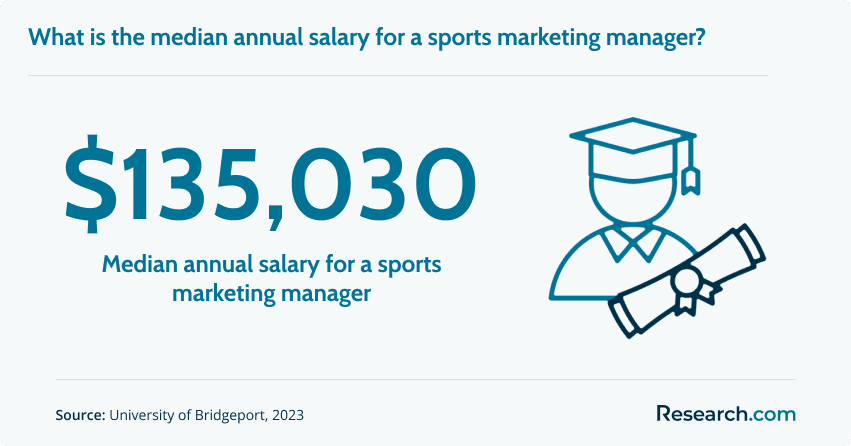
- Sports Marketing Managers earned up to $135,030/year, while Athletic Directors averaged $86,490/year, according to University of Bridgeport, 2023.
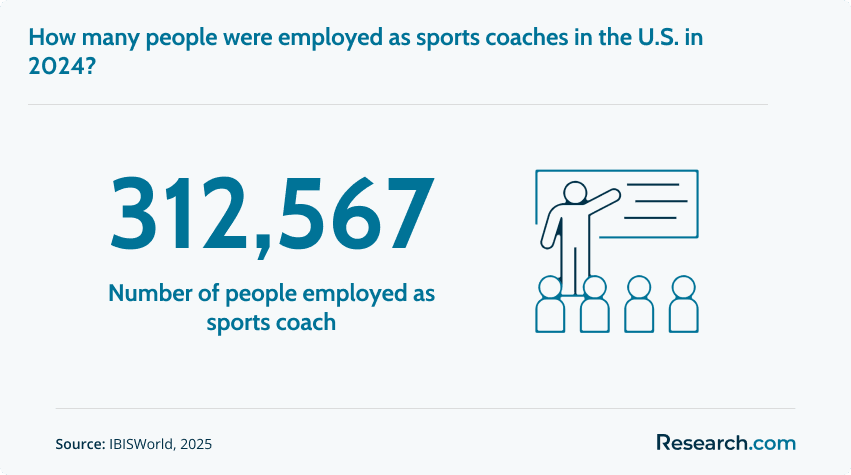
- 312,567 people were employed as sports coaches in the U.S. in 2024.
- The full-time employment rate for 2023 sport management graduates was 34%, with 40% pursuing further education, according to the University of Georgia.
- 30% of umpires and referees were self-employed, followed by 17% in recreation industries and 16% in spectator sports, according to BLS, 2024.
References
- Data USA. (2023). Sport & fitness management. Data USA.
- IBISWorld. (2025). Sports coaching in the US - Employment statistics. IBISWorld.
- University of Bridgeport. (2023, April 5). Sports management salary information. University of Bridgeport.
- University of Georgia Career Center. (2023). Sport management – Bachelor's class of 2023. University of Georgia Career Center.
- U.S. Bureau of Labor Statistics. (2024). Umpires, referees, and other sports officials. Occupational Outlook Handbook. U.S. Bureau of Labor Statistics.
Other Things You Should Know About Sport Administration vs. Sport Management Degree
Graduates of 2027 sport administration programs often pursue careers in facility management, sports marketing, and event coordination. On the other hand, sport management graduates typically find roles in team management, sports analytics, and financial operations in sports organizations. Both fields offer diverse opportunities in professional and amateur sports sectors.
A sport management degree fits most graduate admissions better because it usually includes marketing, finance, and analytics courses that align with MBA and M.S. programs. Sport administration can still qualify, but applicants often need at least 18 semester hours in business-related coursework for admission.