2027 Best Business Schools in Wisconsin – Accredited Colleges & Programs

Co-Founder and Chief Data Scientist
Choosing a business school in Wisconsin is not only a question of which campus has the strongest name recognition. Students also need to compare accreditation, total cost, online flexibility, internship access, employer connections, and whether a program fits their intended career path in accounting, finance, marketing, management, analytics, entrepreneurship, or graduate study. Wisconsin has 57 colleges offering business programs, according to the National Center for Education Statistics, giving students many options but also making comparison more important.
This guide explains how to evaluate the best business schools in Wisconsin, what business majors can lead to, how long programs usually take, what costs to expect, and which factors matter most before enrolling. If you are still asking what a business administration major can lead to, the short answer is that it can support careers across finance, operations, marketing, accounting, management, consulting, entrepreneurship, and nonprofit leadership—provided you choose a program that matches your goals and gives you practical experience.
Our research team reviewed available information on Wisconsin business schools, program formats, costs, duration, accreditation, and salary outlook so students can compare options with a clearer decision framework.
Best Business Schools in Wisconsin: Guide Contents
- Is business a strong major choice in Wisconsin?
- How long do business programs take in Wisconsin?
- What do Wisconsin business schools cost?
- Best Business Schools in Wisconsin for 2027
- How to compare Wisconsin business schools
- Online business degree options in WisconsinProgram comparison factors
- Networking opportunities for Wisconsin business students
- When accelerated MBA programs make sense
- How psychology can strengthen business leadership
- Global opportunities for business graduates
- Industry connections for business students in Wisconsin
- Career challenges and opportunities in Wisconsin business roles
- Business careers connected to urban planning
- Forensic science pathways for business graduates
- Healthcare and pharmaceutical business pathways
- Business specializations in Wisconsin
- Certifications that can broaden business careers
- Health and wellness careers for business graduates
- Legal skills for business professionals
- Social impact and nonprofit pathwaysLegal career crossoverHealth and wellness crossoverSpecialization options
Quick Answer: Are Wisconsin Business Schools Worth Considering?
Yes, Wisconsin can be a practical place to study business if the program is accredited, affordable for your residency status, and connected to internships or employers in your target field. The state’s economy includes manufacturing, healthcare, technology, agriculture, finance, and retail, which gives business students multiple directions after graduation. Business and financial occupations in Wisconsin report a mean hourly wage of $40.45 and an average annual pay of $84,130, while the national median annual wage for similar roles is $80,920.
The best choice depends on your goal. Students seeking CPA preparation should prioritize accounting programs with strong exam support. Working professionals may benefit from online or part-time MBA formats. Students who want broad business training should compare bachelor’s programs with concentrations, internship access, and career services rather than choosing by tuition alone.
Is business a good major in Wisconsin?
A business major can be a good fit in Wisconsin for students who want a flexible degree connected to multiple industries. Business programs can prepare graduates for roles in accounting, financial analysis, sales, marketing, operations, management, entrepreneurship, and business analytics. Students interested in market behavior, policy, and data-driven decision-making may also consider a degree path in economics as a business-adjacent option.
Wisconsin’s employment environment gives business graduates several advantages. The state has a 3.1% unemployment rate and an economy that spans manufacturing, healthcare, technology, agriculture, retail, and financial services. That mix matters because business graduates are not limited to one sector; they can apply finance, management, communication, and analytical skills in many settings.
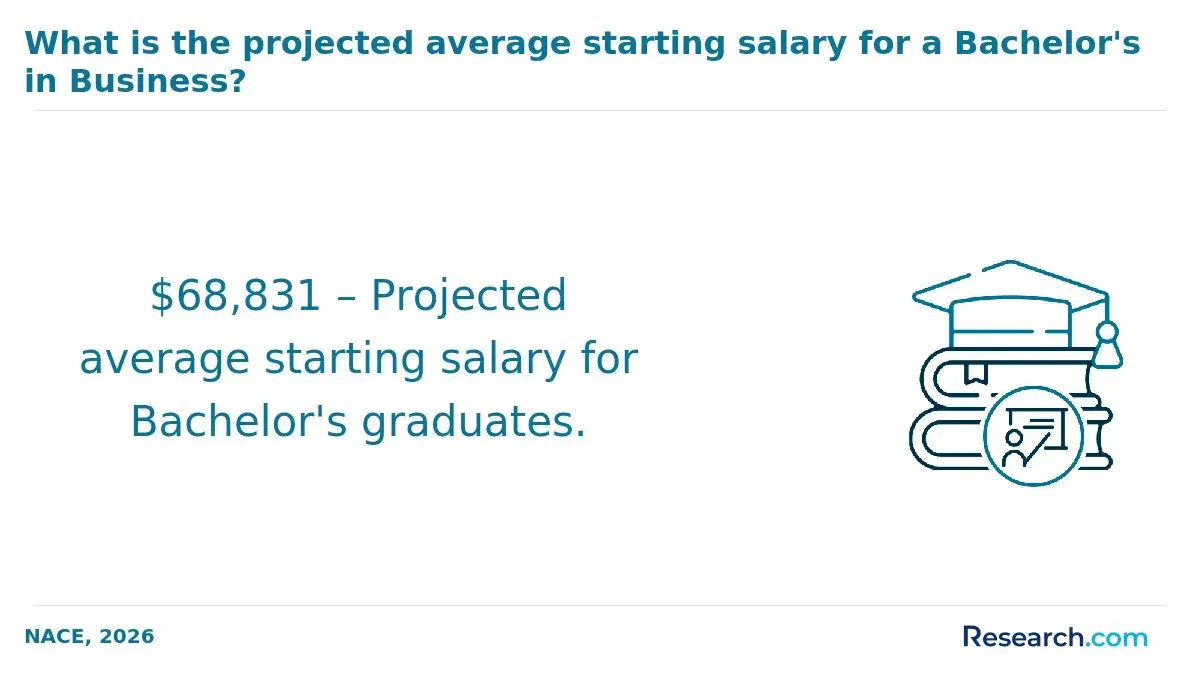
Salary potential is another reason students consider business. In Wisconsin, Business and Financial Occupations have a mean hourly salary of $40.45, equal to an average annual pay of $84,130. This compares closely with the national median annual wage of $80,920 for similar occupations. Business and financial occupations are also projected to grow 5.2% from 2024 to 2034, which suggests continued demand for professionals who can manage budgets, analyze data, support compliance, develop markets, and guide organizational decisions.
Wisconsin also has a useful business ecosystem for students who want internships, mentorship, or startup support. Major companies such as Kohl’s, Harley-Davidson, and Johnson Controls operate in the state, while entrepreneurship resources such as the Wisconsin Small Business Development Center can help students and graduates explore business ownership, consulting, and startup development.
Still, a business degree is not automatically valuable on its own. Employers often look for evidence of applied skills: internships, accounting software experience, spreadsheet and data analysis ability, communication skills, leadership experience, and project work. The strongest Wisconsin business programs help students build those assets before graduation.
How Long Do Business Programs Take in Wisconsin?
Business program length depends on the credential level, enrollment pace, transfer credits, and whether the student chooses an accelerated or part-time format. According to the United States Department of Education College Scorecard, Wisconsin recorded the conferral of over 700 business degrees. Students entering the field may begin with an associate degree, a bachelor’s degree, a master’s degree, or a doctorate depending on their goals.
An associate degree in business usually takes two years and can support entry-level office, sales, bookkeeping, or transfer pathways. Students who need flexibility can compare online bachelor’s degrees in business administration after completing general education or transfer coursework. A bachelor’s degree typically takes four years, though some accelerated formats may shorten the timeline to three years.
Graduate business education is usually designed for career advancement. A master’s degree in business often takes one to two years, with some accelerated formats allowing completion in one year. A business doctorate generally takes three to five years, although some expedited paths may take two years. Students should also account for any additional time needed to prepare for certification or licensure exams, especially in fields such as accounting.
| Business credential | Typical time frame stated | Best fit | Important planning note |
| Associate degree | Two years; accelerated options may take one year | Students seeking entry-level roles or a lower-cost transfer route | Confirm whether credits transfer into a bachelor’s program |
| Bachelor’s degree | Four years; accelerated tracks may take three years | Students targeting management-track, analyst, accounting, marketing, or finance roles | Prioritize internships, career support, and concentration options |
| Master’s degree | One to two years; accelerated options may take one year | Working professionals seeking leadership, specialization, or career change opportunities | Compare online, part-time, and employer tuition support options |
| Doctorate | Three to five years; expedited paths may take two years | Students interested in research, teaching, executive consulting, or advanced leadership | Review dissertation, residency, and research expectations before enrolling |
Tuition and Costs of Business Schools in Wisconsin
The cost of attending a business school in Wisconsin can differ widely by institution type, degree level, residency status, delivery format, and financial aid. A public university, private university, two-year college, online program, and MBA program can all have different pricing structures. Students should compare total cost of attendance, not just the advertised tuition rate.
Residency is one of the biggest cost variables. Many public institutions charge different tuition rates for Wisconsin residents and non-residents, while some programs use a flat tuition model. Additional expenses can include fees, housing, meals, transportation, books, software, technology requirements, parking, and lost income if a student reduces work hours. For the 2025-26 academic year, attending a public four-year institution in-state amounts to $12,166 in tuition and fees at UW-Madison. Private four-year out-of-state education costs more at comparable rates. Public two-year colleges generally remain significantly lower for in-state students, while out-of-state students pay substantially more for a two-year program.
| Cost factor | Why it matters | Question to ask before enrolling |
| Tuition and fees | This is the most visible cost, but not always the full price | Is the listed tuition per credit, per semester, per year, or total program cost? |
| Residency status | Public institutions often charge different rates for in-state and out-of-state students | Will I qualify for Wisconsin resident tuition? |
| Program format | Online, hybrid, evening, and campus programs may carry different fees | Are there online course fees, technology fees, or residency requirements? |
| Transfer credits | Accepted credits can reduce both time and cost | How many of my credits apply directly to the business major? |
| Financial aid | Scholarships, grants, loans, and employer support can change net cost | What is my estimated net price after aid, not just sticker price? |
| Career outcomes | A lower-cost program is not always better if it lacks career support | What internship, placement, and alumni resources are available? |
Best Business Schools in Wisconsin for 2027
Wisconsin students can choose from traditional campus programs, online business degrees, MBAs, and specialized undergraduate majors. Research.com reviewed business school options in the state with attention to affordability, academic quality, accreditation, program structure, and student experience. Students comparing Wisconsin programs may also want to review broader online business degree programs if flexibility is a priority.
The schools below represent notable Wisconsin options, but the best program for one student may not be the best program for another. Use the program details as a starting point, then confirm current tuition, admissions requirements, transfer policies, and concentration availability directly with each institution.
| School | Program highlighted | Program length | Cost information stated | Accreditation stated |
| Marquette University | BBA Economics | Four years | $810 per credit | Association to Advance Collegiate Schools of Business (AACSB) |
| University of Wisconsin Madison | BBA Accounting | Four years | $502.13 to $1727.01 per credit | AACSB |
| Lawrence University | Business and Entrepreneurship | Four years | $67,299 total tuition cost per year | Higher Learning Commission (HLC) |
| Viterbo University | MBA | One to two years | $690 per credit | Accreditation Council for Business Schools and Programs (ACBSP) |
| University of Wisconsin Oshkosh | MBA | Three and a half to four years | $810.23 to $1,359.32 per credit | AACSB |
1. Marquette University
Marquette University offers a BBA Economics program focused on how economic reasoning supports business decisions. Students study opportunity cost, marginal analysis, market behavior, unemployment, inflation, economic growth, and business communication. The program also emphasizes ethical decision-making, critical thinking, and analysis of local and global business conditions.
- Program Length: Four years
- Cost per Credit: $810
- Tracks/concentrations: Business Economics, Economics
- Required Credits to Graduate: 120
- Accreditation: Association to Advance Collegiate Schools of Business (AACSB)
2. University of Wisconsin Madison
The University of Wisconsin Madison offers a BBA Accounting program designed to build technical accounting knowledge and professional judgment. Students examine accounting in a global and diverse business environment, study how emerging technologies influence business practice, and develop communication, problem-solving, analysis, and teamwork skills.
- Program Length: Four years
- Cost per Credit: $502.13 to $1727.01
- Tracks/concentrations: Corporate Accounting, Public Accounting
- Required Credits to Graduate: 120
- Accreditation: AACSB
3. Lawrence University
Lawrence University offers a Business and Entrepreneurship program that combines business training with a liberal arts foundation. The major is connected to the Innovation and Entrepreneurship program and prepares students to think strategically across for-profit and nonprofit settings. Coursework includes business fundamentals along with broader study of commerce, society, history, and diverse perspectives.
- Program Length: Four years
- Total Tuition Cost per Year: $67,299
- Tracks/concentrations: Business Manager, Sales, Marketing, Business Consultant
- Required Credits to Graduate: 120
- Accreditation: Higher Learning Commission (HLC)
4. Viterbo University
Viterbo University offers an MBA through the Dahl School of Business for students from varied academic and professional backgrounds. The program is structured to support ethical leadership, collaboration, and applied management development. It is designed so that students with non-business backgrounds and those with previous business education can pursue an accredited master’s degree without additional prerequisites or evaluations.
- Program Length: One to two years
- Cost per Credit: $690
- Tracks/concentrations: General Management, Healthcare Leadership
- Required Credits to Graduate: 34
- Accreditation: Accreditation Council for Business Schools and Programs (ACBSP)
5. University of Wisconsin Oshkosh
The University of Wisconsin Oshkosh offers an MBA for working professionals who want to advance in business leadership. The curriculum includes Accounting, Finance, Marketing, Management, and Operations, with options that support career growth in analytics, entrepreneurship, and finance. Its structure is especially relevant for students who need a graduate program compatible with professional responsibilities.
- Program Length: Three and a half to four years
- Cost per Credit: $810.23 to $1,359.32
- Tracks/concentrations: Business Analytics, Entrepreneurship, Finance
- Required Credits to Graduate: 36
- Accreditation: AACSB
What To Look For in the Best Business Schools in Wisconsin
The right Wisconsin business school should match your career target, budget, schedule, and preferred learning environment. A prestigious program is not always the best fit if it lacks your concentration, requires a commute you cannot manage, or does not provide the career support you need. Compare schools using evidence rather than reputation alone.
Accreditation
Start with institutional and business accreditation. Regional accreditation from the Higher Learning Commission (HLC) supports credit transfer, graduate school eligibility, and access to federal financial aid. Business-specific accreditation from AACSB, ACBSP, or the International Accreditation Council for Business Education (IACBE) can signal that a program has been reviewed against recognized business education standards.
Cost, Net Price, and Financial Aid
Do not compare tuition in isolation. Look at total cost of attendance, available scholarships, grants, loans, employer reimbursement, and whether you can reduce costs through transfer credits or part-time enrollment. Wisconsin students can also review state aid information through the Higher Educational Aids Board (HEAB), which oversees Wisconsin’s student financial aid system.
Program Offerings and Concentrations
Business is broad, so program fit matters. A student aiming for CPA licensure should not choose the same program criteria as someone focused on entrepreneurship or healthcare leadership. Compare majors, concentrations, electives, internship options, capstone projects, and whether undergraduate students can access graduate-level pathways.
Student Outcomes
Ask for graduation rates, placement information, internship participation, employer partnerships, alumni outcomes, and exam preparation results where relevant. Accounting students should pay special attention to CPA preparation. Wisconsin stands out in the Uniform CPA Examination data with a pass rate of 57.4%, tied with Montana and behind Nebraska at 61.9% (NASBA, 2024).
Student Support
Strong business schools provide more than lectures. Look for advising, tutoring, career coaching, internship placement support, resume review, mock interviews, student business organizations, employer events, and alumni mentoring. These services can make a major difference for first-generation students, transfer students, online learners, and working adults.
| Selection factor | Strong sign | Warning sign |
| Accreditation | Clear HLC accreditation and relevant business accreditation such as AACSB or ACBSP | Unclear accreditation status or vague claims without named accrediting bodies |
| Career preparation | Internships, employer projects, career coaching, and alumni access | Program focuses only on coursework with little applied experience |
| Cost transparency | Published tuition, fees, aid options, and net price guidance | Students must search across multiple pages to estimate total cost |
| Program fit | Concentrations align with accounting, finance, analytics, marketing, entrepreneurship, or management goals | Limited electives or no pathway related to your intended role |
| Flexibility | Online, evening, part-time, or accelerated options are clearly explained | Format sounds flexible but still requires frequent campus attendance |
Exploring Online Education Options in Wisconsin's Business Schools
Online business education can be a practical choice for Wisconsin students who work full time, live far from campus, care for family members, or need a program that fits around changing schedules. Many online business programs now offer bachelor’s degrees, MBAs, graduate certificates, and specialized master’s options.
Students should not assume that “online” means easier or lower quality. A well-designed online program should use the same academic standards as the campus version while providing structured interaction, digital resources, group projects, faculty access, and clear technical support. Some MBA programs also do not require GMAT scores, which may reduce one admissions barrier for experienced professionals.
Students comparing flexible graduate options may want to review affordable online MBA programs with no GMAT required while also checking accreditation, total cost, course schedule, and employer recognition.
| Online business program feature | Why it helps | What to verify |
| Flexible scheduling | Supports students balancing school with work or family obligations | Are courses asynchronous, synchronous, or a mix of both? |
| Remote access | Allows rural and commuting students to participate without relocating | Are any campus visits, residencies, or proctored exams required? |
| Range of credentials | Students can choose bachelor’s, MBA, certificate, or specialized master’s pathways | Does the program offer the concentration you need? |
| Interactive tools | Discussion boards, video sessions, and group projects can support engagement | How do students communicate with faculty and classmates? |
| Career services | Online students still need internships, networking, and job support | Are online learners eligible for the same career services as campus students? |
What networking opportunities are available for business students in Wisconsin?
Networking is one of the practical advantages of attending a business school with strong regional connections. Wisconsin students should look for opportunities that help them meet employers, alumni, entrepreneurs, and industry mentors before graduation.
- Career fairs and employer expos: These events can introduce students to internships, entry-level roles, rotational programs, and hiring managers across multiple sectors.
- Alumni events: Schools such as Marquette University and the University of Wisconsin-Madison have established alumni communities that can provide career advice, referrals, and industry perspective.
- Guest speakers and workshops: Sessions led by executives, founders, analysts, accountants, and consultants can help students connect classroom concepts to current business problems.
- Internships and mentorship: Programs with local employer partnerships can help students build experience and professional references before entering the job market.
- Student organizations: Clubs in entrepreneurship, finance, marketing, accounting, analytics, or supply chain management allow students to lead projects and meet peers with similar goals.
- Wisconsin’s employer base: Companies such as Harley-Davidson, Kohl’s, and Johnson Controls can create opportunities for site visits, case projects, internships, and employer-led learning.
Are accelerated MBA programs a strategic advantage for career advancement?
An accelerated MBA can be useful for professionals who already have work experience, a clear career goal, and the time to handle an intensive course load. These programs compress business graduate study into a shorter schedule, which can help students return to the workforce faster or apply new management skills sooner.
The trade-off is workload. Accelerated formats may leave less time for reflection, networking, internships, or career exploration. They are usually best for students who know why they need the degree—such as promotion eligibility, leadership development, business ownership, or a targeted career pivot. Students who need more flexibility can compare part-time, evening, or accelerated MBA program options before deciding.
How can psychology empower business leadership in Wisconsin?
Psychology can strengthen business leadership by helping professionals understand motivation, decision-making, team behavior, communication, conflict, and consumer response. These skills are relevant in management, marketing, human resources, sales, organizational development, and customer experience roles.
Business students interested in leadership or people-centered strategy may benefit from electives or dual interests in behavioral science. Students who want a stronger foundation can explore the best colleges for psychology in Wisconsin and consider how psychology coursework might complement business training.
How Can Business Graduates Expand Their Global Opportunities?
Business graduates who want international careers should develop cross-cultural communication, global market analysis, supply chain awareness, and knowledge of different regulatory environments. These skills can matter in multinational corporations, export-oriented firms, consulting, logistics, finance, and international marketing.
A focused international business major can help students study global strategy, trade, cultural differences, and international market entry. Wisconsin students should also look for study abroad options, global case competitions, language study, and internships with companies that operate beyond the United States.
What are the key industry connections for business students in Wisconsin?
Industry connections are especially important in business education because many roles reward applied experience and referrals. Wisconsin business students should compare how each school connects coursework to employers in the state’s major industries.
- Major state industries: Manufacturing, agriculture, healthcare, finance, technology, and retail create varied opportunities for business internships and early-career roles.
- Corporate partnerships: Schools with relationships involving companies such as Harley-Davidson, Kohl’s, and Johnson Controls may offer stronger access to projects, networking, and hiring pipelines.
- Business networking events: Career fairs, industry panels, and employer visits can help students from rigorous or more accessible business degree pathways connect with professionals.
- Student clubs by industry: Finance, marketing, entrepreneurship, accounting, and supply chain clubs can help students build leadership experience and industry fluency.
- Startup connections: Entrepreneurial programs and incubator relationships can help students meet founders, investors, and small business advisors.
- Alumni networks: Alumni can provide informational interviews, mentorship, job leads, and realistic feedback about entering Wisconsin’s business sectors.
What challenges and opportunities shape business career trajectories in Wisconsin?
Business graduates in Wisconsin face a labor market shaped by technology adoption, data-driven decision-making, compliance needs, competition, and changing employer expectations. Analytical ability, communication, adaptability, and comfort with digital tools are increasingly important across finance, marketing, operations, and management roles.
Specialized fields require additional planning. Accounting students, for example, should understand exam and licensure expectations early rather than waiting until senior year. Those pursuing public accounting can review how to become a CPA in Wisconsin to plan coursework, exam preparation, and professional requirements. Students in other fields should identify relevant certifications, software skills, internships, and portfolio projects that make their degree more job-ready.
What career paths are available for business graduates interested in urban planning?
Business graduates interested in urban planning may find crossover opportunities in economic development, real estate analysis, public budgeting, transportation finance, community development, grant administration, and project management. A business background can be useful when planning projects require budgeting, stakeholder coordination, cost-benefit analysis, or public-private partnership management.
Students considering this direction should study planning requirements carefully because urban planning roles may require specialized education. The guide to urban planning schools in Wisconsin can help students understand educational pathways and requirements for this field.
Can business graduates pivot into forensic science careers?
A business graduate is unlikely to move into laboratory forensic science without additional scientific education, but business training can be highly relevant in fraud investigation, financial forensics, forensic accounting, compliance, insurance investigation, and risk management. These roles rely on documentation, data analysis, audit trails, internal controls, and investigative reasoning.
Students interested in forensic work should identify whether their goal is scientific analysis, financial investigation, or compliance-related investigation. Those exploring science-based paths can review forensic scientist education requirements in Wisconsin before committing to a transition.
How can business graduates leverage regulated healthcare and pharmaceutical expertise?
Healthcare and pharmaceutical organizations need professionals who understand budgets, operations, compliance, supply chains, staffing, patient experience, and strategic planning. Business graduates can contribute in administrative, analytics, revenue cycle, project management, and operations roles, especially if they learn the regulatory environment of the industry.
Students should distinguish between business roles in healthcare and licensed clinical or pharmaceutical roles. For example, pharmacist roles require specific professional education and licensure. Reviewing pharmacist licensure requirements in Wisconsin can help business graduates understand where their skills fit and where additional credentialing would be necessary.
What are the career specializations for business graduates in Wisconsin?
Choosing a specialization can make a business degree more focused and marketable. Wisconsin students should select concentrations based on career goals, employer demand in their target region, and the skills they want to build before graduation.
| Specialization | Common career direction | Why it may fit Wisconsin students |
| Accounting | Public accounting, corporate accounting, auditing, tax, financial reporting | Strong option for students who want a structured professional path and CPA preparation |
| Finance | Financial analysis, banking, investment support, corporate finance | Useful across corporations, healthcare systems, manufacturing firms, and financial institutions |
| Marketing | Brand strategy, digital marketing, market research, sales strategy | Relevant for retail, startups, consumer goods, healthcare, and service organizations |
| Supply chain management | Logistics, procurement, operations, inventory planning | Important in manufacturing, agriculture, distribution, and industrial sectors |
| Entrepreneurship | Startup development, small business ownership, innovation management | Fits students interested in launching ventures or working in growth-stage businesses |
| Business analytics | Data analysis, reporting, operations insight, decision support | Increasingly useful as employers rely on data to guide strategy and efficiency |
Accounting remains one of the most structured business pathways. Students who want this route should compare coursework, CPA exam preparation, internships, and licensure alignment. A guide to the best accounting schools in Wisconsin can help students understand program options and professional preparation.
How can business graduates leverage specialized certifications to diversify their career paths?
Specialized certifications can help business graduates move into adjacent fields, but they should be chosen strategically. A credential is most useful when it supports a clear role, fills a skill gap, or satisfies a regulatory requirement. Otherwise, students may spend time and money on credentials employers do not value.
Some business graduates may explore behavioral health administration, nonprofit program management, or client services operations. Those considering counseling-related work should understand that direct practice roles have specific education and licensing expectations. Reviewing how to become a licensed substance abuse counselor in Wisconsin can clarify what is required for that transition.
How can business graduates transition into health and wellness careers?
Business skills can transfer into health and wellness through roles in wellness program management, clinic operations, health entrepreneurship, employer wellness benefits, marketing, consulting, and program evaluation. These careers often require a mix of business planning, communication, budgeting, and knowledge of consumer health trends.
Students should separate business-side roles from licensed or clinical roles. If the goal involves nutrition counseling or regulated practice, additional education may be required. The guide on how to become a nutritionist in Wisconsin can help students understand the requirements before making a career pivot.
Can business graduates leverage legal expertise to enhance their career prospects?
Legal knowledge can strengthen business careers in compliance, contracts, risk management, corporate governance, human resources, procurement, insurance, and regulatory affairs. Business graduates do not need to become attorneys to benefit from understanding legal processes, documentation, and organizational risk.
Students interested in legal support roles can explore paralegal training as one possible path. Learning how to become a paralegal in Wisconsin can help business graduates evaluate whether legal operations, compliance support, or law office administration aligns with their goals.
How can business graduates integrate social work to drive community impact?
Business graduates can contribute to social impact through nonprofit management, grant administration, program budgeting, workforce development, community partnerships, public policy operations, and social enterprise leadership. These roles require practical management skills and a strong understanding of community needs.
Students who want to provide direct social work services should review formal education and credentialing requirements. The guide on how to become a social worker in Wisconsin can help clarify where business skills apply and where additional social work preparation is required.
Common Mistakes to Avoid When Choosing a Wisconsin Business School
| Mistake | Why it can hurt you | Better approach |
| Choosing only by school name | A well-known school may not offer your preferred concentration or schedule | Compare accreditation, cost, outcomes, curriculum, and career support |
| Looking only at tuition | Fees, housing, transportation, and lost work hours can change the real cost | Calculate total cost of attendance and net price after aid |
| Ignoring accreditation | Accreditation can affect transfer, aid, employer recognition, and graduate study | Verify institutional accreditation and business-specific accreditation when relevant |
| Assuming online programs are automatically flexible | Some online programs still require live sessions, campus visits, or fixed schedules | Ask about course delivery, residency requirements, and testing rules |
| Waiting too long to plan internships | Graduating without experience can weaken job competitiveness | Start career planning in the first year and use career services early |
| Assuming salary outcomes are guaranteed | Pay depends on role, location, experience, industry, and performance | Review role-specific outcomes and build marketable technical skills |
How to Choose the Best Business School in Wisconsin for Your Goals
- Define your target career first. Decide whether you are aiming for accounting, finance, analytics, marketing, entrepreneurship, management, healthcare leadership, or another path.
- Check accreditation. Confirm HLC institutional accreditation and look for AACSB, ACBSP, or IACBE business accreditation when it matters for your goals.
- Compare total cost. Include tuition, fees, housing, books, technology, transportation, and the effect of full-time or part-time study on your income.
- Review the curriculum. Look for concentrations, electives, experiential learning, capstones, internships, and software or analytics training.
- Ask about outcomes. Request information on placement, internships, graduation rates, alumni roles, and CPA exam preparation if relevant.
- Evaluate flexibility honestly. If you work or have family obligations, compare online, hybrid, evening, part-time, and accelerated options.
- Talk to current students or alumni. Ask what career support is actually like, how responsive faculty are, and whether networking opportunities are accessible.
- Make a return-on-investment comparison. Balance cost against career services, employer access, accreditation, program reputation, and your expected career path.
Final Thoughts: Building a Strong Business Education in Wisconsin
The best business schools in Wisconsin offer more than a business curriculum. They provide accreditation, employer connections, practical projects, faculty support, and pathways into industries that matter in the state. Students can choose from undergraduate business majors, specialized accounting and economics programs, online degrees, and MBA options designed for working professionals.
As you compare Wisconsin business colleges, focus on fit. A traditional campus program may be ideal for students who want in-person networking and internships, while online or accelerated formats may better serve adults balancing work and school. Students seeking graduate flexibility can also compare fast online MBA degree programs, but speed should not replace quality, accreditation, or career alignment.
Key Insights
- Wisconsin offers many business education choices: The state has 57 colleges with business programs, so students should compare fit carefully rather than relying on name recognition alone.
- Business can be a practical major in Wisconsin: The state’s economy includes manufacturing, healthcare, technology, agriculture, finance, and retail, giving business graduates several possible career directions.
- Salary outlook is competitive but not guaranteed: Business and Financial Occupations in Wisconsin report a mean hourly wage of $40.45 and an average annual pay of $84,130, compared with a national median annual wage of $80,920 for similar roles.
- Accreditation should be a first filter: Look for institutional accreditation through HLC and, when relevant, business accreditation such as AACSB, ACBSP, or IACBE.
- Total cost matters more than tuition alone: Residency status, fees, housing, transportation, transfer credits, and aid can significantly change affordability.
- Career preparation separates stronger programs from weaker ones: Internships, employer projects, career coaching, student organizations, and alumni networks can make a business degree more valuable.
- Online and accelerated programs can work well for adults: They are best for students who understand the workload, schedule, accreditation, and career support before enrolling.
- Specialization improves focus: Accounting, finance, analytics, marketing, supply chain, entrepreneurship, and healthcare leadership each lead to different opportunities, so choose a concentration based on your intended role.
Related Articles for Nearby States
- 2027 Best Business Schools in Minnesota – Accredited Colleges & Programs
- 2027 Best Business Schools in Iowa – Accredited Colleges & Programs
- 2027 Best Business Schools in Illinois – Accredited Colleges & Programs
- 2027 Best Business Schools in Michigan – Accredited Colleges & Programs
- 2027 Best Business Schools in Indiana – Accredited Colleges & Programs
- 2027 Best Business Schools in Missouri – Accredited Colleges & Programs
- 2027 Best Business Schools in Ohio – Accredited Colleges & Programs
- 2027 Best Business Schools in South Dakota – Accredited Colleges & Programs
- 2027 Best Business Schools in Nebraska – Accredited Colleges & Programs
- 2027 Best Business Schools in Kentucky – Accredited Colleges & Programs
References:
- Education Data Initiative. (2025). Average Cost of College by State. https://educationdata.org/average-cost-of-college-by-state
- Fox6 (2025). Universities of Wisconsin tuition increase approved for 2025-26. https://www.fox6now.com/news/universities-wisconsin-tuition-increase-approved-071025 Education Data Initiative cost data
- National Association of State Boards Accoutancy (2024). Explore the Numbers Behind CPA Exam Success: 2024 NASBA Report Released.; https://nasba.org/blog/2025/08/18/explore-the-numbers-behind-cpa-exam-success-2024-nasba-report-released/
- National Center for Education Statistics. (n.d.). College Navigator. https://nces.ed.gov/collegenavigator/
- United States Department of Education. (n.d.). College Scorecard. https://collegescorecard.ed.gov/
- United States Department of Education. (n.d.). College Scorecard. https://collegescorecard.ed.gov/school/
- US BLS. (2025). Business and Financial Occupations. https://www.bls.gov/ooh/business-and-financial/home.htm
- US BLS. (2024). Occupational Employment and Wage Statistics. Area: Wisconsin. https://data.bls.gov/oes/#/area/5500000
- Wisconsin occupational wage dataWisconsin Department of Workforce Development (2025). BLS Data: Wisconsin Employment Numbers Released. https://dwd.wisconsin.gov/press/2026/260107-november-state.htm
Other Things You Should Know About the Best Business Schools in Wisconsin
In 2027, top accredited business schools in Wisconsin include the University of Wisconsin-Madison, Marquette University, and the University of Wisconsin-Whitewater. These institutions are highly regarded for their comprehensive business programs and hold accreditations from organizations such as AACSB International, ensuring rigorous academic standards.
The cost of a business program in Wisconsin varies by institution and residency status. Public two-year colleges charge in-state tuition around $4,344 per year, while public four-year institutions charge about $22,242 for in-state students. Private four-year institutions may cost around $22,446 annually.
The duration of business programs in Wisconsin depends on the degree type. Associate degrees typically take two years, bachelor’s degrees around four years, master’s degrees one to two years, and doctoral degrees three to five years.
Look for business schools accredited by AACSB, ACBSP, or IACBE, as well as regional accreditation from the Higher Learning Commission (HLC). These accreditations ensure the quality and rigor of the business programs.
Business graduates in Wisconsin can expect a strong job market with opportunities in various fields such as finance, marketing, and management. The state's strong economy, coupled with a network of thriving industries, results in robust career prospects for graduates armed with a business degree in 2027.