2027 Best Online Master's in Engineering Management Programs

Co-Founder and Chief Data Scientist
Engineering firms do more than just develop and improve products and systems—they also manage complex client relationships and projects. On average, about 62% of their revenue comes from public-sector clients and 38% from private-sector ones, requiring tailored management systems and workflows to meet diverse needs. Engineering managers make this possible by combining technical expertise with leadership skills.
This guide helps aspiring engineering managers achieve the best possible professional outcomes by presenting the best online master's in engineering management (MEM) programs on the market. It also navigates various areas of online engineering management programs that prospective students need to know, such as potential costs, careers, and time spent studying.
What are the benefits of getting an online master's in engineering management program?
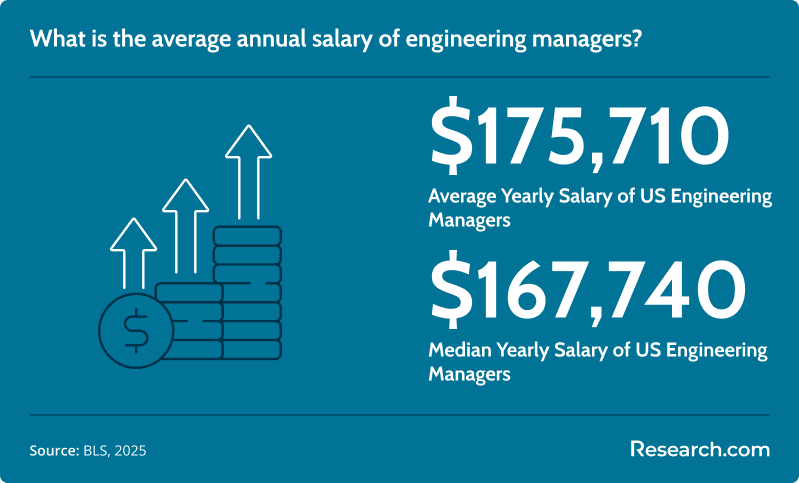
- The average yearly salary of engineering managers in the United States is $175,710, while their median yearly salary is $167,740.
- By completing an online engineering management program, graduates can pursue careers as engineering managers, systems engineers, engineering project managers, or product managers.
- Students enjoy more flexible schedules, lower expenses, and more convenient learning experiences with online engineering management programs.
What can I expect from an online master's in engineering management program?
Students enrolled in an online master's in engineering management program can expect a rigorous curriculum that integrates advanced engineering principles with essential management and leadership skills. Typically, the program requires around 30 to 34 credit hours, completed over one and a half to two years, allowing for flexible part-time study alongside professional commitments.
Core courses include engineering management fundamentals, project management, financial analysis, operations, and quality control, complemented by leadership development and innovation.
Many programs also offer specialized tracks such as data analytics or supply chain management to align with industry needs. A capstone project or real-world case study usually serves as a culminating experience, enabling students to apply their knowledge in practical settings.
The learning experience is designed to be interactive and practical, featuring video lectures, assignments, simulations, and collaborative projects that encourage peer interaction and networking. Students develop critical skills in problem-solving, strategic decision-making, and team management, preparing them to lead complex engineering projects and teams.
Where can I work with an online master's in engineering management program?
Graduates of an online master’s in engineering management program can work in a variety of industries where technical expertise intersects with leadership and organizational strategy. This degree prepares professionals to bridge the gap between engineering and business, opening doors to diverse management opportunities.
Here are some of the common settings:
- Engineering and Technology Firms: Graduates often take on leadership roles in companies that design, develop, and implement engineering solutions.
- Manufacturing Industries: They may oversee production processes, quality assurance, and operational efficiency.
- Construction and Infrastructure Projects: Many work in planning, project management, and resource coordination for large-scale construction efforts.
- Energy and Utilities: Graduates can manage projects in renewable energy, oil and gas, or sustainable energy systems.
- Healthcare Systems and Medical Technology: They may lead engineering projects that improve healthcare delivery, medical devices, and hospital operations.
- Consulting Firms: Some serve as engineering management consultants, advising organizations on improving efficiency, innovation, and project execution.
- Government Agencies: Opportunities exist in overseeing public infrastructure, defense projects, or environmental systems.
- Research and Development Organizations: Graduates may guide innovation teams to develop new products and technologies.
- Information Technology Companies: Many work in roles managing software development, systems engineering, and technology integration.
How much can I make with an online master's in engineering management program?
Aspirants who have completed graduate online engineering management programs will most likely earn six-figure salaries thereafter. According to the United States Bureau of Labor Statistics (BLS), the average yearly salary of engineering managers is $175,710, while their median yearly salary is $167,740.
They earn a higher average annual salary than engineers ($116,760), who are directly under them in company hierarchies, and management occupations in general in the United States ($141,760). In addition, their position is in demand, given that they supervise engineering projects and lead teams of engineers.
Engineering managers typically earn between $111,450 and $239,200 annually. Even in early management roles, salaries are high because most professionals already bring significant engineering experience to the position. Those employed at large enterprises or in high-demand industries often earn well above the national average.
- Best Online Master's in Engineering Management Programs for 2027 List of Programs
- How long does it take to complete an online master's in engineering management program? Completion Time
- How does an online master's in engineering management program compare to an on-campus program? How does an online master's in engineering management program compare to an on-campus program?
- What is the average cost of an online master's in engineering management program? Average Cost
- What are the financial aid options for students enrolling in an online master's in engineering management program? Financial Aid
- What are the prerequisites for enrolling in an online master's in engineering management program? Requirements
- What courses are typically in an online master's in engineering management program? What courses are typically in an online master's in engineering management program?
- What types of specializations are available in online master's in engineering management programs? What types of specializations are available in online master's in engineering management programs?
- How to choose the best online master's in engineering management program? How to choose the best online master's in engineering management program?
- What career paths are available for graduates of online master's in engineering management programs? Career Paths
- Is an Online Master's in Engineering Management Worth the Investment? Is an Online Master's in Engineering Management Worth the Investment?
- What is the job market for graduates with an online master's in engineering management program? Job Market
Best Online Master's in Engineering Management Programs for 2027
Choosing an online master’s in engineering management is usually a career decision, not just an academic one. Most applicants are engineers, technical specialists, project leads, or STEM professionals who want to move into management without stepping away from full-time work. The right program can help you build leadership, finance, operations, analytics, and systems-thinking skills; the wrong one can leave you with a costly credential that does not match your goals.
This guide explains how online engineering management master’s programs work, how long they take, what they cost, how they compare with campus programs, and which career paths they can support. It also highlights ranked programs, admissions requirements, common courses, specialization options, financial aid routes, and practical questions to ask before enrolling.
Quick answer: What is an online master's in engineering management?
An online master’s in engineering management is a graduate degree for engineers and technical professionals who want to lead teams, projects, operations, products, or technology-driven organizations. Most programs require about 30 to 36 credits and can often be completed in 12 to 24 months, depending on course load and format. The degree typically combines engineering project management, systems engineering, operations, finance, data analytics, leadership, and strategy.
It is usually best suited for professionals who already have a technical background and want to move toward engineering manager, project manager, product manager, operations manager, systems engineer, or technical consultant roles.
How this ranking was developed
Because a graduate engineering management degree can require a major investment of time and tuition, our ranking process emphasizes transparent, verifiable information rather than promotional claims. Program details were reviewed using sources such as the IPEDS database, College Scorecard, Peterson's database, and the National Center for Education Statistics. Accreditation was treated as a key quality indicator because it affects institutional credibility, federal financial aid eligibility, and transferability of credits. You can review the broader ranking process on our methodology page.
| Rank | School and Program | Program Length | Credits | Cost per Credit | Accreditation |
| 1 | Duke University — Online Master of Engineering Management | 2 years | 30 | $2,144 | Southern Association of Colleges and Schools Commission on Colleges |
| 2 | Lawrence Technological University — Master of Engineering Management – Online | 2 years | 36 | $1,410 | Higher Learning Commission |
| 3 | University of Central Florida — Online Master of Science in Engineering Management | 2 years | 30 | $327.32 (in-state); $1,234.15 (out-of-state) | Southern Association of Colleges and Schools Commission on Colleges |
| 4 | University of South Florida — MS in Engineering Management | 2 years | 30 | $380 (resident); $805 (non-resident) | Southern Association of Colleges and Schools Commission on Colleges |
| 5 | Penn State — Master of Engineering Management | 2 years | 33 | $1,017 | Middle States Commission on Higher Education |
| 6 | Drexel University — Online Master’s in Engineering Management Degree | 2 years | 45 | $1,342 | Middle States Commission on Higher Education |
| 7 | Stanford University — Management Science and Engineering MS Degree | 2 to 3 years | 30 | $1,456 | Western Association of Schools and Colleges Senior College and University Commission |
| 8 | Arkansas State University — Master of Science in Engineering Management | 1 year | 30 | $350 | Higher Learning Commission |
| 9 | Ohio University — Online Master of Engineering Management | 2 to 3 years | 34 | $737 (resident); $756 (non-resident) | Higher Learning Commission |
| 10 | George Washington University — Online Master of Science in Engineering Management | 2 to 3 years | 30 | $1,250 | Middle States Commission on Higher Education |
1. Duke University Online Master of Engineering Management
Duke University’s online Master of Engineering Management is built for professionals who want a graduate program that combines technical depth with leadership training. The curriculum includes management coursework, technical electives, residency experiences, and a capstone project. Its focus on technology-centered industries, entrepreneurship, and global business issues makes it a strong option for engineers preparing for leadership in innovation-driven environments.
- Program Length: 2 years
- Required Credits to Graduate: 30
- Cost per Credit: $2,144
- Accreditation: Southern Association of Colleges and Schools Commission on Colleges
2. Lawrence Technological University Master of Engineering Management – Online
Lawrence Technological University’s online Master of Engineering Management is designed for engineers who want to strengthen both technical decision-making and people-management skills. With input from industry professionals connected to Automation Alley, the program emphasizes leadership, communication, and practical management capabilities for technical workplaces.
- Program Length: 2 years
- Required Credits to Graduate: 36
- Cost per Credit: $1,410
- Accreditation: Higher Learning Commission
3. University of Central Florida Online Master of Science in Engineering Management
The University of Central Florida offers a 30-credit online MS in Engineering Management for applicants with an undergraduate background in engineering or a related field. The program is structured around managing technical teams, processes, systems, and engineering-driven decisions, with coursework that supports leadership, project management, and organizational problem-solving.
- Program Length: 2 years
- Required Credits to Graduate: 30
- Cost per Credit: $327.32 (in-state); $1,234.15 (out-of-state)
- Accreditation: Southern Association of Colleges and Schools Commission on Colleges
4. University of South Florida MS in Engineering Management
The University of South Florida’s MS in Engineering Management is a multidisciplinary option for engineers and technical professionals who want to move into senior management or executive-track roles. The curriculum blends quantitative and qualitative management tools and may cover technical management, process improvement, quality, safety, entrepreneurship, and engineering analytics.
- Program Length: 2 years
- Required Credits to Graduate: 30
- Cost per Credit: $380 (resident); $805 (non-resident)
- Accreditation: Southern Association of Colleges and Schools Commission on Colleges
5. Pennsylvania State University Master of Engineering Management
Penn State’s online Master of Engineering Management focuses on technical leadership, peer collaboration, and applied engineering management practice. Students study business strategy, project management, and engineering-focused topics, with options to pursue up to three stackable graduate certificates or a minor in Engineering Leadership and Innovation Management.
- Program Length: 2 years
- Required Credits to Graduate: 33
- Cost per Credit: $1,017
- Accreditation: Middle States Commission on Higher Education
6. Drexel University Online Master’s in Engineering Management Degree
Drexel University’s online engineering management master’s program offers customizable electives and dual degree options for students who want a flexible graduate pathway. Graduates qualify automatically for the Certified Associate in Engineering Management (CAEM) credential and may use the degree to prepare for work as engineering consultants, managers, analysts, or entrepreneurs.
- Program Length: 2 years
- Required Credits to Graduate: 45
- Cost per Credit: $1,342
- Accreditation: Middle States Commission on Higher Education
7. Stanford University Management Science and Engineering MS Degree
Stanford University’s MS in Management Science and Engineering emphasizes quantitative problem-solving, organizational analysis, and leadership for complex technical settings. The program can support careers in both public and private organizations where professionals must connect engineering expertise with managerial judgment.
- Program Length: 2 to 3 years
- Required Credits to Graduate: 30
- Cost per Credit: $1,456
- Accreditation: Western Association of Schools and Colleges Senior College and University Commission
8. Arkansas State University Master of Science in Engineering Management
Arkansas State University offers a 100% online MS in Engineering Management for engineers who want to prepare for leadership responsibilities or pursue professional licensure-related goals. Coursework emphasizes analytical problem-solving, project management, statistics, and communication skills.
- Program Length: 1 year
- Required Credits to Graduate: 30
- Cost per Credit: $350
- Accreditation: Higher Learning Commission
9. Ohio University Online Master of Engineering Management
Ohio University’s online Master of Engineering Management combines advanced engineering concepts with graduate leadership and management coursework. Students build skills in project management, data analytics, and technical leadership, which can support roles such as engineering manager, training and development manager, or industrial production manager.
- Program Length: 2 to 3 years
- Required Credits to Graduate: 34
- Cost per Credit: $737 (resident); $756 (non-resident)
- Accreditation: Higher Learning Commission
10. George Washington University Online Master of Science in Engineering Management
George Washington University’s online MS in Engineering Management is a 30-credit program for students who want to combine engineering knowledge with management, systems, and organizational decision-making. Coursework emphasizes project management, organizational behavior, engineering law, systems engineering, and decisions made under uncertainty.
- Program Length: 2 to 3 years
- Required Credits to Graduate: 30
- Cost per Credit: $1,250
- Accreditation: Middle States Commission on Higher Education
How Long Does It Take to Complete an Online Master's in Engineering Management?
Most online master’s in engineering management programs take 12 to 24 months to finish. The exact timeline depends on whether you study full time or part time, how many courses you take each term, whether the school uses accelerated sessions, and whether you can transfer or stack prior graduate credits. Many programs require about 30 to 34 credit hours across roughly 10 to 12 courses.
| Enrollment Path | Typical Completion Time | Best For | Trade-Off |
| Accelerated full-time | About 1 year | Students who can handle intensive 7- or 8-week courses | Less room for work, travel, or family obligations |
| Standard full-time | 12 to 24 months | Students who want steady progress without stretching the degree too long | Requires consistent weekly time for coursework and projects |
| Part-time | 18 to 24 months | Working professionals balancing employment and graduate study | Longer time before graduation and career payoff |
| Stackable certificate pathway | Varies by school | Students who want to earn graduate credentials in stages | Requires careful planning so certificate credits apply to the full master’s degree |
If finishing quickly is your top priority, compare the credit load, course calendar, and workload expectations of a fast track online master's program in engineering management before applying.
A bachelor’s degree in engineering can be enough for some engineering management roles, but graduate education is common among people in the field. College Board reports that 51.04% of engineering managers hold a master’s or professional degree, while 46.67% hold a bachelor’s degree. That does not mean a master’s degree guarantees advancement, but it does show that many professionals in this occupation pursue education beyond the undergraduate level.
Online vs. On-Campus Master's in Engineering Management: Which Format Fits You?
Online and campus-based engineering management master’s programs usually cover similar core areas: project management, leadership, systems thinking, analytics, operations, and business strategy for technical organizations. Some students also compare these programs with an online MBA engineering management option, especially if they want a broader business curriculum.
The best format depends on your work schedule, need for flexibility, preferred learning style, networking goals, and access to local universities.
| Factor | Online Program | On-Campus Program | Choose This If... |
| Schedule | Often asynchronous, hybrid, or designed for working professionals | Usually follows scheduled class times and in-person attendance | Choose online if you need flexibility; choose campus if you want more structure |
| Learning environment | Uses digital platforms, recorded lectures, online discussions, and virtual teamwork | Relies on classroom discussion, face-to-face collaboration, and in-person meetings | Choose online if you work well independently; choose campus if you value direct interaction |
| Student resources | May include virtual advising, online libraries, remote career services, and video office hours | Provides physical access to labs, research centers, innovation spaces, and campus events | Choose campus if specialized facilities are central to your goals |
| Applied experience | May allow workplace-based projects, simulations, and remote case studies | May offer more direct research, lab, internship, or local industry access | Choose online if you can apply coursework at your current job |
| Cost and access | Can reduce commuting, relocation, and housing expenses | May require relocation, transportation, housing, or campus fees | Choose online if geography or total cost is a major constraint |
This same format comparison can also help students evaluating the best online technical communication programs, where flexibility and career alignment are also important.
How Much Does an Online Master's in Engineering Management Cost?
Total tuition for an online MEM program can vary significantly, but many programs fall between $25,000 and over $80,000. The wide range is usually driven by institution type, tuition residency rules, credit requirements, fees, and whether the university is public, private, or highly selective. Similar cost variation appears in other graduate and professional programs, including nurse administrator graduate certificate online programs.
- Public universities: These programs often charge lower per-credit tuition, and some total degree costs may fall between $10,000 and $30,000. However, residency rules can create a major difference between in-state and out-of-state tuition.
- Private universities and highly selective institutions: These programs may charge higher tuition, with some total costs reaching upwards of $60,000 to over $80,000.
Cost factors to compare before enrolling
| Cost Factor | Why It Matters | Question to Ask |
| Per-credit tuition | The posted rate is the largest cost driver, especially in programs requiring more credits | Is tuition charged per credit, per term, or by program? |
| Number of required credits | A lower per-credit price may not be cheaper if the program requires more credits | How many credits are required to graduate? |
| Residency status | Some public universities charge different rates for resident and non-resident students | Do online students qualify for in-state, out-of-state, or special online tuition? |
| Fees | Technology, distance learning, graduation, and course fees can raise the real cost | What fees are not included in advertised tuition? |
| Employer support | Tuition reimbursement can change the return on investment substantially | Will my employer cover part of the degree, and what conditions apply? |
| Time to completion | Taking longer can spread out payments but may delay the career benefits of the degree | Can I complete the program at a pace that fits my budget and schedule? |
One way graduates may recover education costs is by moving into higher-paying technical leadership roles, although salary outcomes are never guaranteed. The highest average yearly salaries shown in the chart below are in media streaming distribution services, social networks, and other content providers ($268,310); spectator sports ($259,590); and oil and gas extraction ($257,060).
Financial Aid Options for Online Engineering Management Master's Students
Online graduate students may be eligible for several types of aid, but availability depends on the school, enrollment status, citizenship or residency status, employer policies, and the student’s financial profile. As with an environmental engineering online degree, the best approach is to compare the total cost after aid, not just the advertised tuition rate.
| Aid Option | How It Can Help | Important Limitation |
| Federal financial aid | Eligible students can submit the FAFSA and may use Direct Unsubsidized Loans | Borrowing limits now cap annual amounts at $20,500, with a lifetime maximum of $100,000 |
| Scholarships and fellowships | Universities and professional organizations may offer merit-based, need-based, or identity-based funding | Deadlines are often early, and awards may be competitive |
| Grants | Some federal or state programs may provide need-based aid that does not require repayment | Graduate grant options are usually more limited than undergraduate aid |
| Assistantships and work-study | Some schools provide stipends or tuition support for academic work | These opportunities are less common in fully online programs |
| Employer tuition assistance | Employers may reimburse tuition when the degree supports company needs | Students may need to maintain grades, stay with the company, or repay funds if they leave |
| Payment plans | Installment billing can make tuition easier to manage across the semester | Payment plans reduce timing pressure but do not lower total cost |
| Private loans | Can fill funding gaps after other aid is used | Terms may be less flexible and often depend on creditworthiness |
Many of these funding routes may also apply to students comparing fast track electrical engineering online degree programs.
Admissions Requirements for Online Master's in Engineering Management Programs
Admissions requirements vary by university, but most online engineering management master’s programs expect applicants to show technical preparation, quantitative readiness, and leadership potential. Unlike unrelated programs such as early childhood education online, engineering management is typically built for applicants with engineering, STEM, or technical work experience.
| Requirement | What Schools Usually Look For | Why It Matters |
| Bachelor’s degree | A degree in engineering, computer science, mathematics, or a related STEM field | Graduate engineering management courses assume technical fluency |
| Minimum GPA | Often a cumulative undergraduate GPA of 2.8 to 3.0 or higher | Programs use GPA as one indicator of graduate-level readiness |
| Work experience | Many programs prefer or require two to five years of engineering or technical experience | Class discussions and projects often draw on workplace problems |
| Foundational coursework | Prior study in calculus, statistics, physics, engineering fundamentals, or related areas | Students without prerequisites may need bridge or leveling courses |
| GRE or GMAT | Many schools are test-optional, but some still request scores | Scores may matter more if GPA or technical background is weaker |
| Recommendations | Usually two to three academic or professional letters | References help confirm leadership ability and readiness for graduate work |
| Statement of purpose | An essay explaining goals, fit, and interest in engineering management | Programs want to see a clear reason for choosing the degree |
| Resume or CV | A current record of education, technical roles, projects, and leadership experience | Professional history helps admissions teams assess preparation |
| English proficiency | TOEFL or IELTS scores for many non-native English speakers | Graduate programs require strong reading, writing, and communication skills |
Common Courses in an Online Master's in Engineering Management Program
An online engineering management master’s degree is not the same as a general MBA, although there can be overlap. The curriculum is usually designed for technical decision-makers who need to manage engineering projects, budgets, risk, teams, operations, innovation, and data-driven processes. Most programs require around 30 to 36 credit hours.
- Engineering Project Management: Covers planning, scheduling, budgeting, execution, monitoring, and quality control for engineering projects.
- Operations Management: Examines how organizations design, manage, and improve systems that produce products or services, including logistics and process optimization.
- Engineering Economics and Financial Management: Introduces cost estimation, budgeting, capital investment analysis, and financial decision-making for technical organizations.
- Systems Engineering and Integration: Teaches students how to design, coordinate, and manage complex systems made up of technical, organizational, and operational components.
- Leadership and Organizational Behavior: Focuses on managing technical teams, leading change, resolving conflict, and understanding workplace behavior. Students who want a broader business leadership path may also compare the best online MBA in management programs.
- Technology and Innovation Management: Explores how organizations manage research, development, product innovation, and competitive technology strategy.
- Quality Assurance and Risk Management: Covers quality systems, process control, compliance concerns, risk identification, and mitigation strategies.
- Data Analytics for Engineering Managers: Builds skills in using data, models, and analytical tools to support operational and engineering decisions.
- Strategic Management for Engineers: Connects engineering initiatives with organizational strategy, long-term planning, and competitive positioning.
- Capstone Project or Thesis: Gives students a final opportunity to apply engineering management concepts to a real or simulated industry problem.
Specializations Available in Online Engineering Management Master's Programs
Specializations can help you tailor the degree to your target role. Before choosing one, compare the required courses with job descriptions for the roles you want. A concentration is most useful when it builds skills that employers in your field actually request.
| Specialization | What It Emphasizes | Potential Fit |
| Project Management | Scheduling, budgeting, risk, scope, quality, and delivery of engineering projects | Engineers moving into project or program leadership |
| Systems Engineering | Designing, integrating, and managing complex technical systems | Professionals in aerospace, defense, technology, manufacturing, or infrastructure |
| Supply Chain and Logistics | Movement of goods, services, data, materials, and operational resources | Students targeting operations, logistics, or manufacturing leadership |
| Data Analytics and Decision Science | Data modeling, optimization, predictive analytics, and quantitative decision-making | Technical professionals who want analytics-heavy management roles; those focused outside engineering can also review the best online MBA in analytics programs |
| Technology and Innovation Management | R&D, innovation strategy, technology commercialization, and product-driven growth | Students interested in technology leadership or entrepreneurship |
| Sustainability and Energy Management | Renewable energy, sustainable design, environmental responsibility, and energy systems | Engineers working in energy, infrastructure, utilities, or sustainability-focused roles |
| Construction Management | Contracts, safety, design coordination, scheduling, and construction project delivery | Students pursuing leadership in construction or infrastructure projects |
| Healthcare Systems Engineering | Healthcare operations, systems optimization, technology, and patient-care delivery processes | Engineers interested in hospitals, health systems, or healthcare technology |
| Product Development and Manufacturing | Product design, development, production, and market-focused engineering strategy | Professionals aiming for manufacturing, product, or technical operations roles |
How to Choose the Best Online Master's in Engineering Management Program
The best program is not automatically the most expensive, the most selective, or the highest ranked. It is the program that fits your technical background, career target, budget, schedule, and preferred learning format. Use the following criteria before applying.
- Verify accreditation first: Confirm that the university is accredited by a recognized regional accreditor or another appropriate accrediting body. Accreditation can affect federal financial aid, employer recognition, and transfer credit. This same check matters when evaluating programs such as the best online master's in intelligence studies.
- Match the curriculum to your target job: Review whether the program emphasizes project management, systems engineering, analytics, product development, supply chain, finance, or leadership.
- Review faculty backgrounds: Faculty with academic and industry experience can help connect theory to real engineering management problems.
- Compare format and workload: Look at synchronous requirements, asynchronous flexibility, part-time options, accelerated sessions, and expected weekly study time.
- Assess industry connections: Career services, alumni networks, employer partnerships, residencies, and capstone sponsors can influence your professional opportunities.
- Calculate total cost: Include tuition, fees, books, travel for residencies, lost time, and financing costs. Then subtract scholarships, employer tuition support, or other aid.
- Ask for career outcome data: Look for job placement support, alumni roles, salary reporting methods, and whether outcomes apply specifically to online students.
- Use rankings carefully: Rankings can help you build a shortlist, but they should not replace accreditation checks, curriculum review, cost comparison, or conversations with admissions advisors and alumni.
Questions to ask before you enroll
| Question | Why It Matters |
| Is the program fully online, or are campus visits required? | Residencies can add travel costs and scheduling constraints. |
| Are courses asynchronous, synchronous, or both? | This determines whether the program fits your work schedule. |
| Can I apply transfer credits or stackable certificates? | Transfer policies can reduce time and cost if you already have graduate credits. |
| What career services are available to online students? | Online learners should receive meaningful advising, resume support, and networking access. |
| Does the program support my intended industry? | A strong program for manufacturing may not be the best fit for software, construction, energy, or healthcare systems. |
| What is the total program cost after fees? | Advertised tuition may not include all required charges. |
Career Paths for Graduates of Online Master's in Engineering Management Programs
An online Master of Engineering Management can help technical professionals move from individual contributor roles into positions that require leadership, budgeting, project oversight, process improvement, and cross-functional communication. It can also support advancement within a technical specialty when senior roles require more management responsibility.
| Career Path | Typical Responsibilities | Why the MEM Can Help |
| Engineering Manager | Leads engineering teams, manages budgets, oversees technical projects, and aligns work with organizational goals | The degree directly develops technical leadership, planning, and management skills |
| Project Manager or Program Manager | Plans, coordinates, tracks, and delivers complex engineering projects | Coursework in project management, risk, finance, and operations is highly relevant |
| Product Manager | Guides products from concept and design through launch and improvement | The degree helps bridge engineering, customer needs, business strategy, and market timing |
| Operations Manager or Plant Manager | Improves production, staffing, workflow, quality, and efficiency in industrial or manufacturing settings | Operations, quality, analytics, and process improvement courses support this path |
| Systems Engineer | Designs and coordinates complex systems across technical, business, and lifecycle requirements | Systems thinking and integration coursework are central to many MEM programs |
| Technical Consultant | Advises organizations on engineering processes, technology adoption, production improvement, or systems optimization | The degree builds credibility across technical and business conversations |
| Senior-Level Engineering Roles | Takes on advanced technical leadership, mentoring, planning, and decision-making within a discipline | Management training can support promotion to senior, principal, or lead engineering roles |
Is an Online Master's in Engineering Management Worth the Investment?
An online master’s in engineering management can be worth it if it helps you move into a role with more leadership responsibility, better long-term earning potential, or stronger access to technical management opportunities. The value is strongest when the degree matches your industry, your employer recognizes it, the total cost is manageable, and you can apply the coursework directly at work.
It may not be the right investment if you are early in your technical career and still need deeper engineering experience, if you want a purely business-focused leadership path, or if the program’s tuition would require heavy borrowing without a realistic advancement plan. Students comparing alternatives should look closely at cost-effectiveness and long-term career fit, just as they would when evaluating affordable online software engineering options.
| An Online MEM May Be Worth It If... | Consider a Different Path If... |
| You already work in engineering, technology, manufacturing, construction, energy, or another technical field | You are looking for an entry-level technical credential rather than management preparation |
| Your target roles require project leadership, operations, systems, finance, or people management | You want a general business degree with less emphasis on engineering contexts |
| Your employer offers tuition assistance or values graduate engineering management credentials | The program cost would require borrowing without a clear return-on-investment plan |
| You can balance graduate coursework with work and personal commitments | You need in-person lab access, campus networking, or research opportunities that the online program does not provide |
Job Market Outlook for Engineering Management Graduates
Engineering managers remain in demand across industries that depend on technical teams, product development, manufacturing, infrastructure, systems integration, and operational improvement. According to the BLS, employment for architectural and engineering managers is projected to grow by 6% from 2023 to 2033, which is slightly faster than the national average of 4%.
Indeed currently lists over 15,000 job openings for engineering management roles in the United States. This figure does not include adjacent job titles that MEM graduates may also pursue, such as project manager, systems engineer, product manager, operations manager, or technical consultant.
The industries with the largest share of engineering management employment, shown in the chart below, are manufacturing (36%); architectural, engineering, and related services (26%); and government offices (8%). The states with the highest employment levels for engineering managers are California (35,630), Texas (18,540), and Michigan (13,300).
What Online Engineering Management Graduates Say
- Cody: "My online engineering management program introduced me to classmates working in different industries and countries. That range of perspectives helped me think more globally and strengthened the way I lead technical teams."
- Roman: "The online format worked well with my travel-heavy schedule. I could watch lectures asynchronously, complete assignments from different time zones, and apply operations and supply chain concepts directly to my company’s processes. That practical connection made the degree feel immediately useful."
- Rhea: "Completing my master’s in engineering management online helped me prepare for a promotion. The project management and financial analysis coursework gave me tools I could use right away on a complex work project, which contributed to a 15% increase in efficiency."
Common Mistakes to Avoid When Choosing an Online MEM Program
| Mistake | Why It Can Hurt You | Better Approach |
| Choosing a program without checking accreditation | Accreditation affects credibility, aid eligibility, and transfer options | Verify institutional accreditation before applying |
| Looking only at tuition per credit | Fees, credit requirements, and residency rates can change the total cost | Calculate the full degree cost from start to finish |
| Assuming all online programs are fully asynchronous | Some programs require live sessions, residencies, or group meetings | Ask for the course delivery format before enrolling |
| Ignoring specialization fit | A general curriculum may not support your target industry or role | Match electives and concentrations to job postings you want |
| Relying only on rankings | A highly ranked program may still be too expensive or poorly aligned with your goals | Use rankings as one input, not the final decision |
| Assuming salary gains are automatic | A degree alone does not guarantee a raise, promotion, or job offer | Build a career plan that includes networking, projects, skills, and employer demand |
References:
- BLS (2024, April 3). 11-9041 Architectural and Engineering Managers. BLS
- BLS (2025, April 18). Architectural and Engineering Managers. BLS
- BLS (2025, August 21). Industry: Cross-industry, Private, Federal, State, and Local Government Period: May 2024. BLS
- College Board. What education level do Architectural and Engineering Managers have? College Board
- Contractor (2024, March 8). New Engineering Business Sentiment Report Finds Executives’ Optimism About the US Economy Growing. Contractor
Key Insights
- An online MEM is best for technical professionals moving toward leadership. It is strongest for engineers and STEM professionals who want roles involving project oversight, operations, systems, analytics, product leadership, or team management.
- Most programs take 12 to 24 months. Accelerated options can be faster, while part-time formats are often better for working professionals who need flexibility.
- Costs vary widely. Online MEM tuition can range from $25,000 to over $80,000, and some public programs may cost as little as $10,000 to $30,000 for the full degree.
- Accreditation should be a non-negotiable filter. It supports institutional credibility, federal aid eligibility, and the long-term value of the credential.
- Online and campus programs can lead to similar academic outcomes, but the experience differs. Online programs offer flexibility; campus programs may offer stronger in-person networking, lab access, and research opportunities.
- Career value depends on fit, not the degree name alone. Compare curriculum, specialization options, employer recognition, total cost, and career services before enrolling.
- The labor market is positive but not guaranteed. BLS projects 6% employment growth for architectural and engineering managers from 2023 to 2033, but individual outcomes depend on experience, industry, location, and how well students use the degree.
Other Things You Should Know About Online Master's in Engineering Management Programs
Most programs use a learning management system such as Canvas, Blackboard, or Brightspace, plus video tools like Zoom or Microsoft Teams. Students usually submit assignments online, join recorded or live lectures, and work in shared folders for group projects and presentations.
Yes, many of the top 2027 online Master's in Engineering Management programs offer part-time study options. This flexibility allows working professionals to balance their studies with their careers, typically extending the program duration beyond the standard two years.
In 2027, leading online Master's in Engineering Management programs are incorporating courses on emerging topics such as sustainable engineering practices, artificial intelligence in engineering, and data-driven decision-making to equip students with cutting-edge skills demanded by the industry.