2027 Best Online MBA in Analytics Programs

Co-Founder and Chief Data Scientist
Analytics has become a necessity in the modern business landscape, with up to 60% of large organizations adopting big data analytics. After all, data can reflect various aspects of a business, including sales, employee performance, and marketing opportunities. An online MBA in analytics teaches learners to find insights in masses of information, paving the way for them to become management analysts.
In this guide, prospective students can achieve the most ideal outcomes by learning about the best online MBA in analytics programs on the market along with key facts for each program. The article also navigates various aspects of the degree, including the costs, courses, specializations, and admission requirements to expect.
What are the benefits of getting an online MBA in analytics?
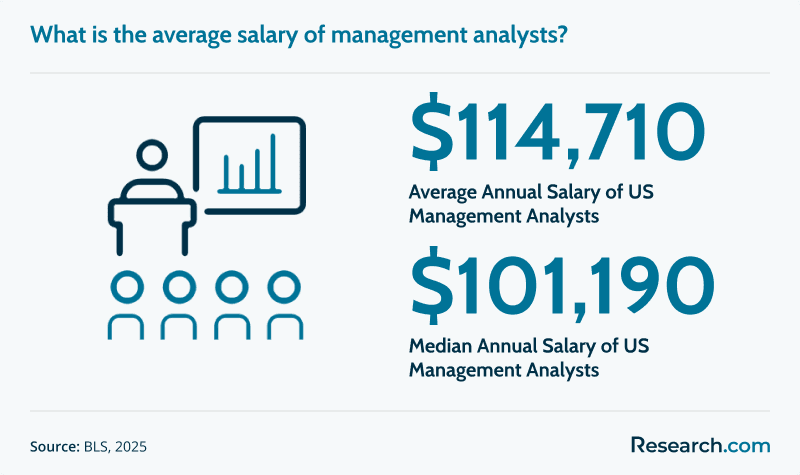
- The average yearly salary of management analysts is a notable $114,710, while their median yearly salary is $101,190.
- Completing an online MBA in analytics enables graduates to become management analysts, data analysts, business intelligence analysts, or marketing analysts.
- An online MBA in analytics is more accessible, has more dynamic digital learning experiences, and offers more flexible schedules than on-campus programs.
What can I expect from an online MBA in analytics?
An online MBA in analytics provides a comprehensive business education coupled with specialized training in data analysis, predictive modeling, and decision-making skills. Students can expect to study core business disciplines like marketing, finance, and management alongside analytics-focused courses in data mining, business intelligence, machine learning, and data visualization using tools such as Python, R, and Tableau.
The flexible, fully online format is designed to accommodate working professionals, offering asynchronous classes, virtual collaboration, and opportunities to apply learning through capstone projects or real-world case studies.
Graduates develop a valuable combination of technical and leadership skills, enabling them to translate complex data into actionable business strategies and communicate insights effectively across diverse audiences.
The program emphasizes a blend of analytical methods and business acumen to prepare students for roles in high-demand careers such as data analyst, business intelligence manager, operations analyst, and other leadership positions across various industries, including healthcare, finance, technology, and retail.
Students also benefit from career services, networking opportunities, and professional certificates (often included, such as SAS certification) that enhance employability and career advancement.
Where can I work with an online MBA in analytics?
Graduates with an online MBA in analytics can work in a wide range of professional settings where data-driven decision-making is valued. These settings span industries such as finance, healthcare, technology, retail, and government, and often involve roles that combine business strategy with analytical expertise. The common work settings include the following:
- Corporate Offices: Graduates may work in business intelligence, strategy, or operations departments within large companies, helping leadership teams make data-informed decisions.
- Financial Institutions: Banks, investment firms, and insurance companies hire analytics professionals to manage risk, forecast market trends, and optimize financial strategies.
- Healthcare Organizations: Hospitals, health systems, and pharmaceutical companies use analytics to improve patient outcomes, streamline operations, and manage costs.
- Technology Companies: Tech firms employ analytics experts to enhance product development, user experience, and digital marketing through data insights.
- Retail and E-commerce: Businesses in these sectors rely on analytics to understand customer behavior, optimize pricing, and manage inventory and supply chains.
- Consulting Firms: Management and analytics consultants work with a variety of clients to solve complex business problems using data and modeling techniques.
- Government and Public Sector: Agencies at the federal, state, or local level use data analytics to inform policy decisions, improve services, and increase efficiency.
- Manufacturing and Logistics: Companies in these sectors leverage analytics for process optimization, quality control, and supply chain management.Startups and Small Businesses: Even smaller companies value analytics to drive growth, improve customer targeting, and make strategic decisions with limited resources.
- Higher Education and Research Institutions: Some graduates work in institutional research or data strategy roles to support academic planning, enrollment management, and policy evaluation.
How much can I make with an online MBA in analytics?
Graduates of online MBA programs in analytics usually become management analysts or data analysts. According to the United States Bureau of Labor Statistics (BLS), the average yearly salary of management analysts is a notable $114,710, while their median yearly salary is $101,190. These figures are significantly higher than the collective median annual pay for all jobs in the country ($49,500).
Management analysts usually earn around $59,720 to $174,140 each year in their careers. The salaries of entry-level roles typically fall within the lower end of the spectrum. On the other hand, seasoned analysts who work in a reputable enterprise are likely to take home sums that are considerably higher than the given average yearly salary.
- Best Online MBA in Analytics Programs for 2027 List of Programs
- How long does it take to complete an online MBA in analytics? Completion Time
- How does an online MBA in analytics compare to an on-campus program? How does an online MBA in analytics compare to an on-campus program?
- What is the average cost of an online MBA in analytics? Average Cost
- What are the financial aid options for students enrolling in an online MBA in analytics? Financial Aid
- What are the prerequisites for enrolling in an online MBA in analytics? Requirements
- What courses are typically in an online MBA in analytics? What courses are typically in an online MBA in analytics?
- What types of specializations are available in online MBA in analytics programs? What types of specializations are available in online MBA in analytics programs?
- How to choose the best online MBA in analytics? How to choose the best online MBA in analytics?
- What career paths are available for graduates of online MBA in analytics programs? Career Paths
- What is the job market for graduates with an online MBA in analytics? Job Market
- How do I ensure the quality of my online MBA in analytics program? How do I ensure the quality of my online MBA in analytics program?
- Is the Investment in an Online MBA in Analytics Worth It? Is the Investment in an Online MBA in Analytics Worth It?
Best Online MBA in Analytics Programs for 2027: Compare Costs, Timelines, and Career Fit
Choosing an online MBA in analytics is not only a school-selection decision. It is also a career strategy decision. The right program can help you move from reporting data to using analytics in management, consulting, operations, finance, marketing, product, or executive decision-making. The wrong program can leave you with high debt, limited technical depth, or a credential that does not match your career target.
This guide is designed for working professionals, career changers, and business graduates who want a flexible MBA with stronger data, business intelligence, and decision analytics training. You will learn how leading online MBA in analytics programs compare, how long they take, what they cost, what admissions requirements to expect, which courses and specializations matter, and how to evaluate career outcomes before enrolling.
Quick Answer: What Is the Best Online MBA in Analytics?
The best online MBA in analytics is the program that combines recognized accreditation, rigorous MBA coursework, applied analytics training, flexible scheduling, transparent costs, and career support aligned with your goals. For most students, AACSB-accredited programs with hands-on exposure to Python, R, SQL, Tableau, Power BI, predictive modeling, business intelligence, and capstone projects offer the strongest balance of business leadership and analytical skill development.
If you want a management-focused analytics credential, an online MBA in analytics can make sense. If you want to become a highly technical data scientist, a specialized analytics, statistics, computer science, or data science degree may be a better fit.
How We Rank Schools
Online MBA programs require major commitments of time, money, and attention. Many students continue working while enrolled, so program structure, cost transparency, and academic quality matter. This ranking was created to help prospective students compare programs using practical factors that affect both learning experience and long-term value.
Our research team reviewed information from trusted education data sources, including the IPEDS database, College Scorecard, Peterson's database, and the National Center for Education Statistics. Accredited programs were prioritized because accreditation helps signal institutional quality and recognized academic standards. You can review our full ranking process on the Research.com methodology page.
Best Online MBA in Analytics Programs at a Glance
| Rank | School and Program | Length | Credits | Published Cost | Accreditation |
| 1 | Carnegie Mellon University Tepper Online Hybrid MBA | 2 to 3 years | 64 | $769 per credit | Association to Advance Collegiate Schools of Business |
| 2 | University of North Carolina at Chapel Hill Online MBA with a concentration in Data Analytics and Decision Making | 1.5 to 3 years | 62 | $2,899.23 per credit | Association to Advance Collegiate Schools of Business |
| 3 | University of Texas at Dallas Professional MBA Online with a Business Analytics Concentration | 2 to 6 Years | 43 | $918.67 in-state; $1,626.83 out-of-state per credit | Advance Collegiate Schools of Business |
| 4 | College of William & Mary Online MBA with Business Analytics Courses | 2 years | 49 | $1,468 per credit | Association to Advance Collegiate Schools of Business |
| 5 | Indiana University-Bloomington Online MBA in Business Analytics | 2 to 3 years | 54 | $94,944.42 total cost | Association to Advance Collegiate Schools of Business |
| 6 | Arizona State University Online MBA with a Business Analytics Concentration | 2 years | 49 | $72,000 total cost | Association to Advance Collegiate Schools of Business |
| 7 | University of Massachusetts-Amherst Online MBA with a Business Analytics Concentration | 2 to 4 years | 45 | $925 per credit | Association to Advance Collegiate Schools of Business |
| 8 | Syracuse University Online MBA with Business Analytics Specialization | 2 years | 54 | $108,810 total cost | Association to Advance Collegiate Schools of Business |
| 9 | Auburn University Online MBA with a Business Analytics Concentration | 2.5 years | 39 | $1,000 per credit | Association to Advance Collegiate Schools of Business |
| 10 | Stevens Institute of Technology Analytics MBA | 2.5 to 3 years | 48 | $1,993 per credit | Association to Advance Collegiate Schools of Business |
1. Carnegie Mellon University Tepper Online Hybrid MBA
The Tepper Online Hybrid MBA at Carnegie Mellon University is a part-time, STEM-designated MBA for professionals who want a demanding business program with online flexibility and structured in-person engagement. Students participate in live online classes twice weekly, complete independent coursework between sessions, and attend Access Weekends that support networking, experiential learning, and cohort connection.
- Program Length: 2 to 3 years
- Required Credits to Graduate: 64
- Cost per Credit: $769
- Accreditation: Association to Advance Collegiate Schools of Business
2. University of North Carolina at Chapel Hill Online MBA with a Concentration in Data Analytics and Decision Making
The University of North Carolina at Chapel Hill offers a STEM-designated online MBA concentration in Data Analytics and Decision Making for students who want to connect analytics tools with strategic business judgment. The program includes coursework in analytics, modeling, and Python, along with weekly live classes, optional in-person summits, and international immersive experiences.
- Program Length: 1.5 to 3 years
- Required Credits to Graduate: 62
- Cost per Credit: $2,899.23
- Accreditation: Association to Advance Collegiate Schools of Business
3. University of Texas at Dallas Professional MBA Online with a Business Analytics Concentration
The University of Texas at Dallas offers an online Professional MBA in Business Analytics through the Naveen Jindal School of Management. The 43-credit program is built for flexibility, with a completion window that ranges from as little as 21 months to up to 6 years. Students can pursue analytics-focused study in areas such as predictive modeling, prescriptive analytics, and data management.
- Program Length: 2 to 6 Years
- Required Credits to Graduate: 43
- Cost per Credit: $918.67 (in-state); $1,626.83 (out-of-state)
- Accreditation: Advance Collegiate Schools of Business
4. College of William & Mary Online MBA with Business Analytics Courses
William & Mary’s Online MBA is a 49-credit AACSB-accredited program that can be completed in two years. It is designed for working professionals who want broader leadership preparation with data-informed decision-making skills. The curriculum includes MBA core courses, business analytics electives, exposure to R and Python, and a residency weekend focused on leadership development and professional connection.
- Program Length: 2 years
- Required Credits to Graduate: 49
- Cost per Credit: $1,468
- Accreditation: Association to Advance Collegiate Schools of Business
5. Indiana University-Bloomington Online MBA in Business Analytics
Indiana University-Bloomington’s Online MBA in Business Analytics is a 54-credit program that typically takes 2 to 3 years. Students complete core MBA work and choose analytics electives in subjects such as machine learning, data mining, and econometrics. The experience also includes two in-person residencies, optional global immersions, live virtual classes, and a capstone case analysis of a real company.
- Program Length: 2 to 3 years
- Required Credits to Graduate: 54
- Total Cost: $94,944.42
- Accreditation: Association to Advance Collegiate Schools of Business
6. Arizona State University Online MBA with a Business Analytics Concentration
Arizona State University’s Online MBA with a Business Analytics concentration is a 49-credit, 2-year program delivered through the W.P. Carey School of Business. The program is offered entirely online and includes optional global experiences and workshops. Analytics electives cover areas such as data mining, regression modeling, and marketing analytics, while the program concludes with a strategic management capstone.
- Program Length: 2 years
- Required Credits to Graduate: 49
- Total Cost: $72,000
- Accreditation: Association to Advance Collegiate Schools of Business
7. University of Massachusetts-Amherst Online MBA with a Business Analytics Concentration
The University of Massachusetts-Amherst offers an MBA that can be completed online or in a hybrid format. The Business Analytics concentration requires 45 credits and can be completed over a two- to four-year period. Students personalize the analytics portion by choosing three electives from options such as AI in business, web analytics, supply chain analytics, and healthcare data analytics.
- Program Length: 2 to 4 years
- Required Credits to Graduate: 45
- Cost per Credit: $925
- Accreditation: Association to Advance Collegiate Schools of Business
8. Syracuse University Online MBA with Business Analytics Specialization
Syracuse University’s Online MBA with a Business Analytics specialization is a 54-credit program combining online coursework with three required in-person residencies. Students build the specialization by completing 15 credits from technical and business-oriented analytics electives, including Big Data Analytics, Accounting Analytics, and Financial Analytics.
- Program Length: 2 years
- Required Credits to Graduate: 54
- Total Cost: $108,810
- Accreditation: Association to Advance Collegiate Schools of Business
9. Auburn University Online MBA with a Business Analytics Concentration
Auburn University’s Online MBA with a Business Analytics concentration is a 39-credit program delivered fully online. Students complete the program in about 2.5 years on average and may choose an optional campus visit for a team-based consulting project. The concentration includes four electives in areas such as predictive modeling, big data, and international operations, with additional opportunities to customize through certificates or dual degrees in fields like finance or information systems.
- Program Length: 2.5 years
- Required Credits to Graduate: 39
- Cost per Credit: $1,000
- Accreditation: Association to Advance Collegiate Schools of Business
10. Stevens Institute of Technology Analytics MBA
Stevens Institute of Technology’s Analytics MBA places analytics coursework early in the program so students build technical and analytical foundations before moving into electives. The 48-credit program usually takes 2.5 to 3 years and includes elective options in BI, financial analytics, and related areas. Students also complete two in-person immersions in NYC that support networking, workshops, and industry-focused discussions.
- Program Length: 2.5 to 3 years
- Required Credits to Graduate: 48
- Cost per Credit: $1,993
- Accreditation: Association to Advance Collegiate Schools of Business
How Long Does It Take to Complete an Online MBA in Analytics?
Most online MBA in analytics programs take 18 to 36 months, although the exact timeline depends on credit requirements, course pacing, enrollment intensity, transfer policies, and whether the program includes residencies or cohort-based sequencing. Working professionals often choose part-time enrollment, while students with more schedule flexibility may prefer accelerated or heavier course loads.
| Enrollment Format | Typical Completion Time | Best For | Trade-Off |
| Full-time online MBA | 18 to 24 months | Students who can handle a demanding weekly workload | Less room for work, caregiving, or travel disruptions |
| Part-time online MBA | 28 to 36 months, or longer in highly flexible formats | Professionals balancing school with a full-time job | Slower completion and a longer period of tuition payments |
| Accelerated MBA pathway | 12 to 18 months in some formats | Students with strong time management and prior business preparation | Fast pacing can reduce time for networking, internships, and deep technical practice |
| Self-paced or competency-based option | Varies by student progress | Independent learners who can move quickly through familiar material | Requires discipline and may offer less cohort interaction |
Students comparing faster graduate options may also want to review fast-track online entrepreneurship master's degree programs, especially if their main goal is venture creation rather than analytics leadership.
College Board data shown in the chart below reports that 66.66% of management analysts earned a bachelor's degree, 23.81% completed a master's or professional degree, and 9.52% had some college experience.
Online MBA in Analytics vs. On-Campus MBA: Which Format Is Better?
Online and on-campus MBA in analytics programs usually pursue the same academic goal: helping students combine business strategy with data-based decision-making. The better option depends on your schedule, learning style, networking goals, access to employers, and need for campus resources.
| Factor | Online MBA in Analytics | On-Campus MBA in Analytics |
| Schedule | Often designed for working adults, with asynchronous work, live sessions, or hybrid requirements | Usually follows a more fixed class schedule with regular in-person attendance |
| Learning experience | Uses video lectures, virtual discussions, case platforms, analytics software, and remote team projects | Offers face-to-face classroom discussion, in-person group work, and direct campus interaction |
| Networking | Can include online cohorts, virtual events, residencies, and national or international peer groups | May provide easier access to campus recruiting, clubs, local employers, and informal faculty contact |
| Hands-on analytics work | Often delivered through remote projects, simulations, dashboards, and applied case studies | May include labs, employer-sponsored projects, local internships, and campus workshops |
| Cost considerations | May reduce relocation, commuting, and housing expenses | Can require relocation, transportation, or higher living costs, depending on the school |
| Best fit | Students who need flexibility and can stay organized without daily campus structure | Students who value in-person learning, campus culture, and direct recruiting access |
When an Online MBA Makes More Sense
- You plan to keep working full-time while studying.
- You already have access to professional projects where you can apply analytics skills.
- You want to compare schools nationally without moving.
- You are comfortable learning software and quantitative concepts through online platforms.
When an On-Campus MBA May Be Better
- You want a traditional campus-based MBA experience with frequent in-person networking.
- You are making a major career pivot and need structured recruiting support.
- You learn best through live classroom interaction and immediate feedback.
- You want easy access to labs, incubators, student organizations, and local employer events.
Professionals in specialized healthcare leadership roles may also compare analytics MBAs with field-specific credentials, including accelerated nurse administrator online graduate programs, when their primary goal is clinical administration rather than general business analytics.
What Is the Average Cost of an Online MBA in Analytics?
An online MBA in Analytics typically costs between $20,000 and $60,000 for the full program, although prestigious universities may charge more. The total amount you pay depends on tuition structure, public or private status, residency rules, program length, fees, books, software, and required travel for residencies.
| Cost Category | Typical Range or Issue | What to Check Before Enrolling |
| Public universities | Programs commonly cost between $20,000 and $40,000 | Ask whether online students pay in-state, out-of-state, or flat-rate tuition |
| Private universities | Program totals often range from $40,000 to $60,000 or more | Compare tuition against scholarships, alumni network access, and career support |
| Accelerated or competency-based formats | May reduce total cost if you finish faster | Confirm whether pricing is per credit, per term, subscription-based, or flat-rate |
| Additional expenses | Fees, books, analytics software, technology, and residency travel can add several thousand dollars | Request a full cost-of-attendance estimate, not only tuition |
Do not choose a program by tuition alone. A lower-cost program can be a poor value if it lacks accreditation, relevant analytics coursework, or employer-recognized training. A higher-cost program can be worthwhile only if its outcomes, network, flexibility, and curriculum support your specific career plan.
Students comparing healthcare graduate paths with online business programs may also look at the shortest women's health NP MSN online options, but those programs prepare students for a different professional track.
One way students evaluate return on investment is by comparing program cost with potential earnings in target roles and locations. As shown in the chart below, BLS data reports that Massachusetts ($134,350), Wyoming ($126,840), and New York ($126,450) offer the highest average yearly salaries to management analysts.
Financial Aid Options for Online MBA in Analytics Students
Online MBA students may qualify for many of the same financial aid options available to campus-based graduate students, provided the institution and program meet eligibility requirements. Aid availability varies by school, student status, enrollment level, employer policy, and military or veteran eligibility.
- Federal financial aid: Eligible graduate students can complete the Free Application for Federal Student Aid (FAFSA) to be considered for federal loans such as Direct Unsubsidized Loans or Graduate PLUS Loans.
- University scholarships and grants: Schools may offer merit awards, need-based grants, MBA scholarships, or online student funding. Some awards are automatic with admission, while others require separate applications.
- Employer tuition assistance: Many working professionals use tuition reimbursement or employer sponsorship when the degree supports business, analytics, technology, or leadership responsibilities.
- Graduate assistantships: Online MBA assistantships are less common than campus-based assistantships, but some universities may offer remote research, administrative, or teaching support roles.
- Private scholarships: External foundations, business groups, professional associations, and analytics-related organizations may fund graduate students pursuing analytics or management training.
- Military and veterans benefits: Active-duty service members, veterans, and eligible dependents may be able to use tuition assistance, GI Bill® benefits, or Yellow Ribbon Program support.
- State aid: Some states provide aid to residents enrolled in eligible accredited online programs, especially when the institution participates in state or reciprocity arrangements.
- Payment plans: Many schools allow students to divide tuition into installments across a semester or academic year, which can help reduce short-term cash flow pressure.
Questions to Ask the Financial Aid Office
- Is the online MBA eligible for federal financial aid?
- Are scholarships available for part-time or online MBA students?
- Does the school charge separate online, technology, residency, or program fees?
- Can employer tuition reimbursement be billed directly or deferred until after grades are posted?
- Will taking fewer credits affect financial aid eligibility?
Admissions Requirements for an Online MBA in Analytics
Admission requirements differ by school, but most online MBA in analytics programs review academic preparation, professional experience, quantitative readiness, and career goals. The strongest applicants usually show evidence that they can handle graduate business coursework and analytics-heavy assignments.
| Requirement | What Programs Commonly Expect | How to Strengthen Your Application |
| Bachelor’s degree | A degree from an accredited institution; business, economics, mathematics, computer science, or engineering backgrounds may be helpful | If you need undergraduate preparation first, compare options such as an accelerated online bachelor's in analytics |
| Minimum GPA | Many programs set minimums around 2.5 to 3.0, while more selective programs may expect stronger records | Use optional essays, recent coursework, or professional achievements to address weaknesses |
| Work experience | Many programs prefer or require 1–3 years of professional experience, often in business, technology, or data-related work | Highlight leadership, process improvement, reporting, analytics, budgeting, or project management responsibilities |
| GMAT or GRE | Some schools require scores, while others offer test-optional admissions or waivers | Ask whether your GPA, graduate coursework, certifications, or experience qualify you for a waiver |
| Quantitative preparation | Schools may expect statistics, calculus, economics, accounting, or business foundations | Complete bridge courses or refreshers before starting if your quantitative background is limited |
| Resume or CV | A professional record showing responsibilities, progression, and relevant technical or leadership skills | Quantify results when possible and include software exposure such as Excel, SQL, Python, R, Tableau, or Power BI |
| Statement of purpose | An explanation of why you want an MBA in analytics and how the program supports your goals | Connect the degree to a realistic career path instead of writing a generic leadership essay |
| Letters of recommendation | One to three references from supervisors, professors, or professional mentors | Choose recommenders who can discuss your analytical thinking, work ethic, and leadership potential |
| English proficiency | International applicants who are non-native English speakers may need TOEFL or IELTS scores | Confirm score rules, exemptions, and deadlines early |
Applicants switching from another field may benefit from focused preparation before applying. A professional coming from psychology, for example, should not assume MBA admissions works the same way as PsyD in clinical psychology admission requirements. The MBA application typically emphasizes business readiness, leadership potential, quantitative ability, and professional goals.
Career changers who want a lower-commitment introduction to analytics before applying can consider fast-track online data analytics bootcamps. A bootcamp can help build practical familiarity with data tools, although it does not replace a graduate business degree.
Common Courses in an Online MBA in Analytics
An online MBA in analytics combines standard MBA training with courses that teach students how to interpret data, manage analytics projects, and translate technical findings into business decisions. The best programs do not treat analytics as an isolated technical add-on. They connect analytics to finance, marketing, operations, strategy, leadership, and organizational performance.
- Managerial Economics: Students use economic concepts to evaluate pricing, competition, demand, cost behavior, and strategic market decisions.
- Accounting for Managers: This course teaches students how to read, interpret, and use financial and managerial accounting information for planning and internal decision-making.
- Financial Management: Coursework typically covers capital budgeting, valuation, financing decisions, risk analysis, and investment choices.
- Marketing Strategy and Analytics: Students learn how to use customer, campaign, and market data to improve segmentation, targeting, positioning, and performance measurement.
- Operations and Supply Chain Analytics: This subject focuses on forecasting, logistics, inventory, process improvement, and data-based operational efficiency.
- Business Intelligence and Data Visualization: Students learn how to convert raw data into dashboards, reports, and decision-ready visuals using tools such as Tableau or Power BI.
- Predictive Analytics: This course introduces statistical and machine learning methods used to forecast outcomes, detect patterns, and support planning.
- Data Management and Warehousing: Students examine how organizations store, organize, retrieve, and govern data for analysis and reporting.
- Strategic Management: Coursework integrates analytics with broader competitive strategy, organizational goals, and executive decision-making.
- Capstone or Applied Analytics Project: Students apply business and analytics skills to a real organizational problem and present recommendations supported by data.
Healthcare professionals seeking leadership preparation rather than a general business analytics degree may compare MBA coursework with fastest online nurse executive leadership MSN programs.
Online MBA in Analytics Specializations
Some online MBA programs offer a dedicated analytics concentration, while others let students build expertise through electives. The best specialization depends on the industry or function you want to enter after graduation.
| Specialization | What You Study | Good Fit For |
| Marketing Analytics | Customer behavior, campaign measurement, targeting, segmentation, and digital performance | Marketing managers, growth analysts, brand strategists, and customer insights professionals |
| Financial Analytics | Financial modeling, risk analysis, investment evaluation, forecasting, and planning | Finance professionals, analysts, consultants, and corporate strategy roles |
| Healthcare Analytics | Clinical, operational, and administrative data used to improve healthcare decisions | Healthcare administrators, operations managers, and professionals in medical organizations |
| Supply Chain and Operations Analytics | Demand forecasting, logistics, workflow optimization, production systems, and efficiency improvement | Operations leaders, supply chain analysts, procurement managers, and logistics professionals |
| Human Resources Analytics | Hiring, retention, workforce planning, performance metrics, and employee engagement data | HR leaders, talent analytics professionals, and workforce strategy teams |
| Artificial Intelligence and Machine Learning | AI applications, automation, algorithms, modeling, and advanced analytics methods | Managers who lead AI-enabled projects or work closely with technical teams |
| Data Science and Big Data | Programming, large datasets, data engineering concepts, Python, R, and SQL | Students who want a more technical analytics pathway; deeper preparation may also come from fast-track online data science bootcamps |
| Business Intelligence and Strategy | Dashboards, executive reporting, performance management, and insight-based strategy | BI analysts, strategy analysts, managers, and decision-support professionals |
| Cybersecurity Analytics | Threat data, security metrics, risk patterns, vulnerabilities, and information protection strategy | Technology managers, risk professionals, and security-focused business leaders |
| Retail or E-Commerce Analytics | Pricing, digital customer behavior, product recommendations, conversion, and online merchandising | Retail managers, e-commerce strategists, and consumer analytics professionals |
How to Choose the Best Online MBA in Analytics
The best program is not automatically the highest-ranked or most expensive one. It is the program that matches your career target, budget, learning style, time constraints, and technical goals. Use the following factors to compare options carefully.
- Accreditation: Choose a regionally accredited institution. Business accreditation from AACSB, ACBSP, or IACBE can provide additional assurance that the program meets recognized business education standards. This is also important when comparing related options such as an accelerated online MBA in marketing.
- Analytics depth: Review whether the program includes real analytics coursework or only one or two data-related electives. Look for predictive analytics, data visualization, SQL, Python, R, statistics, BI, and applied projects.
- Business leadership balance: An MBA should still build management, finance, strategy, marketing, operations, and leadership skills. If the curriculum is almost entirely technical, it may be closer to a data science degree than an MBA.
- Flexibility: Confirm whether courses are asynchronous, synchronous, cohort-based, self-paced, full-time, part-time, or accelerated. Also ask about required campus visits.
- Technology tools: Programs that include hands-on work with SQL, Python, R, Tableau, and Power BI may better support applied learning and portfolio development.
- Faculty experience: Look for instructors with academic expertise, industry experience, consulting work, or research in business analytics, data strategy, operations, finance, or technology management.
- Total cost: Compare tuition, fees, software, travel, books, and lost income. Do not rely only on advertised per-credit tuition.
- Career services: Ask whether online students receive resume support, interview preparation, networking opportunities, employer events, alumni access, and job search guidance.
- Applied learning: Capstones, practicums, simulations, consulting projects, and employer-sponsored analytics assignments can help convert coursework into demonstrable experience.
Questions to Ask Before You Apply
- Is the program accredited at the institutional and business-school level?
- How many analytics courses are required, and which are only electives?
- Will I graduate with hands-on experience using current analytics tools?
- Are live classes required, and do they fit my time zone and work schedule?
- Are campus residencies mandatory, optional, or unavailable?
- What is the full estimated cost, including fees and travel?
- What career outcomes does the school report for online MBA students?
- Do online students receive the same career services as campus MBA students?
- Can I complete a capstone using a problem from my current employer?
- How often is the analytics curriculum updated?
Career Paths for Online MBA in Analytics Graduates
Graduates of online MBA in analytics programs often pursue roles that sit between business leadership and data analysis. They may not always write production-level code, but they should be able to ask better business questions, interpret analytical output, manage data-informed projects, and communicate insights to decision-makers.
| Role | What the Role Does | Why an MBA in Analytics Helps |
| Management Analyst | Reviews organizational processes and recommends improvements in efficiency, cost control, and performance | Combines business strategy, operations knowledge, and analytical problem-solving |
| Data Analyst | Collects, cleans, analyzes, and explains data using tools such as SQL, Python, Excel, and visualization platforms | Adds business context and communication skills to technical analysis |
| Business Intelligence Analyst | Builds dashboards, reports, and performance metrics for leaders and teams | Connects reporting work to management goals and strategic decisions |
| Data Scientist | Uses statistical modeling, machine learning, and predictive analytics to identify patterns and forecast outcomes | Useful for students with stronger technical preparation who also want management credibility |
| Marketing Analyst | Evaluates customer behavior, campaign performance, market trends, and engagement data | Links analytics to brand strategy, revenue growth, and customer decisions |
| Financial Analyst | Analyzes financial performance, forecasts, budgets, investments, and market conditions | Strengthens modeling, decision-making, and strategic finance skills |
| Operations Analyst | Studies workflows, supply chains, resource use, and process performance | Supports process improvement and operational strategy with data |
| Product Manager | Uses market, user, and performance data to guide product decisions and cross-functional teams | Builds the mix of analytics, leadership, finance, and customer strategy needed for product work |
| Analytics Manager or Director | Leads analytics teams, manages data strategy, and aligns insights with business priorities | Prepares professionals to supervise analysts and communicate with executives |
| Chief Data Officer or Chief Analytics Officer | Sets organization-wide data strategy, governance, analytics adoption, and data-driven culture | Supports senior leadership development for professionals with substantial prior experience |
Students interested in defense, public service, or military-adjacent leadership roles may compare analytics training with fast track military studies online pathways.
Job Market Outlook for Online MBA in Analytics Graduates
Analytics-focused MBA graduates may pursue a wide range of business and data-informed roles, but management analyst is one of the clearest labor-market reference points. According to the BLS, employment of management analysts in the United States is projected to grow by 11% from 2023 to 2033, nearly three times the national average of 4%. The number of management analysts is expected to rise from 1,018,300 in 2023 to 1,126,200 by 2033.
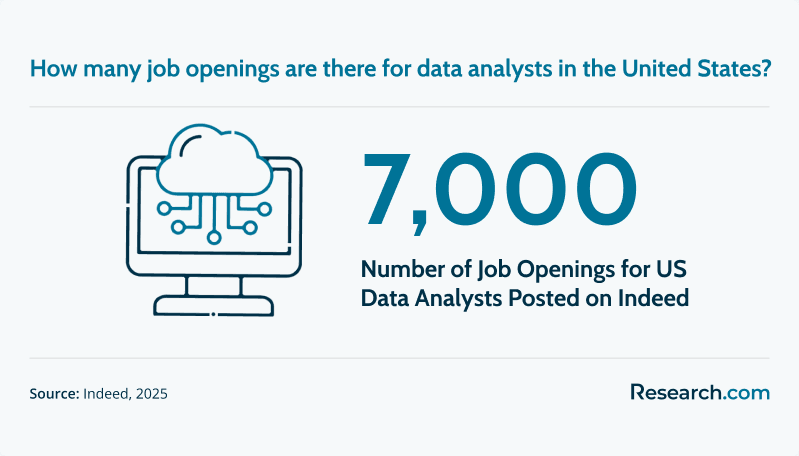
Indeed currently lists more than 3,000 job openings for management analysts and over 7,000 for data analysts in the United States. These figures do not include related openings for business intelligence analysts, marketing analysts, operations analysts, product analysts, analytics managers, or consultants.
BLS data shows that the industries employing the most management analysts are management, scientific, and technical consulting services (220,090); government offices (72,520); and computer systems design and related services (62,570).
The states with the highest employment levels for management analysts are California (110,430), Florida (68,540), and Virginia (66,840), as shown in the chart below.
How to Verify the Quality of an Online MBA in Analytics Program
Program quality should be evaluated before you apply, not after you enroll. Start with accreditation, then review curriculum relevance, faculty qualifications, online student support, career services, technology infrastructure, and employer connections. A strong analytics MBA should update its coursework as tools, platforms, and employer expectations change.
- Check accreditation: Confirm institutional accreditation and look for recognized business-school accreditation when available.
- Review the actual course list: Do not rely only on the word “analytics” in the program title. Verify required analytics coursework, not just elective options.
- Ask about software access: Students should know whether the school provides required tools or expects students to pay separately.
- Compare career support: Online students should have meaningful access to advising, networking, job search resources, and alumni connections.
- Look for applied projects: Capstones, consulting projects, and portfolio-ready assignments can be more valuable than exams alone.
- Read outcome information carefully: Salary and placement results may vary by prior experience, geography, industry, and job function.
For a broader comparison of accredited MBA options, review Research.com’s guide to MBA online programs accredited.
Are Accelerated Programs a Smart Complement to an Online MBA in Analytics?
Accelerated programs can be useful when they fill a specific skills gap that an MBA does not cover deeply enough. For example, an MBA may teach analytics leadership and decision-making, while a shorter program may help you add industry-specific knowledge, project management skills, or technical practice. The key is to avoid stacking credentials without a clear career reason.
Professionals who work in built environments, operations, or project-heavy industries may compare analytics-focused MBA training with the quickest online construction management degree if their goal is to combine data-driven strategy with construction or infrastructure leadership.
What Graduates Say About Online MBA in Analytics Programs
- : "The online format let me practice tools like Python, Tableau, and Power BI while still applying what I learned at work. Collaborating virtually with classmates in different industries helped me understand how analytics decisions change across markets and business models. — Giorgio"
- : "What stood out most was the mix of accessibility and professional diversity. My classmates worked in different sectors and time zones, which made discussions much richer. The program helped me move beyond analytical methods and learn how to lead data initiatives and explain complex findings in ways executives could act on. — Coco"
- : "The strongest part of the program was the way it connected business strategy with technical analytics. Even though I studied remotely, faculty support and peer collaboration made the experience feel personal. Online study gave me room to stay present for my family while building skills for the next stage of my career. — Ralph"
Is an Online MBA in Analytics Worth It?
An online MBA in analytics can be worth it if it helps you qualify for better management, consulting, analytics, operations, finance, marketing, or strategy roles without forcing you to leave the workforce. It is most valuable for students who already have some professional experience and want to move into data-informed leadership rather than purely technical analytics work.
The degree may not be worth the cost if you only need a narrow technical skill, have no clear target role, choose a non-accredited program, or borrow heavily without comparing expected outcomes. Students focused mainly on affordability should compare total cost, employer assistance, and financial aid alongside online MBA programs affordable.
| An Online MBA in Analytics May Be Worth It If... | You May Want a Different Option If... |
| You want to manage analytics teams, lead data-informed projects, or move into consulting or strategy | You want to become a deeply technical data scientist and need intensive programming or machine learning preparation |
| You need a flexible degree that fits around full-time work | You need daily campus structure, in-person recruiting, or a residential MBA experience |
| Your employer offers tuition support or your expected career move justifies the cost | You would need to take on debt without a realistic salary, promotion, or career-change plan |
| The program is accredited and includes applied analytics projects | The curriculum uses the analytics label but offers little hands-on data work |
Common Mistakes to Avoid
- Choosing a program without checking accreditation: Accreditation affects credibility, financial aid eligibility, and employer recognition.
- Focusing only on tuition: Fees, software, books, travel, and lost work time can change the true cost.
- Assuming every analytics MBA is technical: Some programs emphasize strategy more than tools. Review course descriptions carefully.
- Ignoring residency requirements: Required campus visits can add travel costs and scheduling challenges.
- Overlooking career services for online students: Ask whether online learners receive the same support as campus students.
- Expecting guaranteed salary outcomes: Earnings depend on experience, location, industry, role, and performance, not the degree alone.
- Choosing by ranking alone: Rankings are useful starting points, but fit, cost, curriculum, and outcomes matter more for your decision.
- Skipping prerequisite preparation: Students weak in statistics, Excel, programming, or business fundamentals may struggle in analytics-heavy courses.
Current Trends Affecting Online MBA in Analytics Programs
- AI is changing analytics work: Managers increasingly need to understand how AI tools are used, where they create risk, and how to evaluate outputs responsibly.
- Employers expect applied data literacy: Business leaders are often expected to interpret dashboards, ask better data questions, and communicate insights clearly, even if they are not full-time analysts.
- Hybrid learning is becoming more common: Many online MBA programs combine virtual coursework with optional or required residencies to strengthen networking and applied learning.
- Tool fluency matters: Coursework that includes SQL, Python, R, Tableau, Power BI, data visualization, and predictive analytics can help students show practical ability.
- Analytics is spreading across functions: Marketing, finance, supply chain, HR, cybersecurity, healthcare, and product teams increasingly use data to guide decisions.
The adoption of analytics across sectors is also reflected in industry discussions such as Zoe Talent Solutions’ report on big data analytics adoption rates by sector.
Key Insights
- The best online MBA in analytics depends on fit, not prestige alone. Compare accreditation, analytics depth, cost, format, residencies, and career services before applying.
- Most programs take 18 to 36 months. Accelerated options can save time, but they require heavier workloads and may reduce time for networking or applied projects.
- Costs vary widely. Online MBA in Analytics programs typically range from $20,000 to $60,000, while some prestigious universities charge more.
- Analytics MBAs are management-focused. They are strongest for professionals who want to lead data-informed decisions, not necessarily those seeking highly technical data science roles.
- Accreditation and applied learning are essential. Look for recognized accreditation, current analytics tools, hands-on projects, and a curriculum that links data to business decisions.
- The labor market is favorable for related roles. BLS projects management analyst employment to grow by 11% from 2023 to 2033, with employment rising from 1,018,300 in 2023 to 1,126,200 by 2033.
- ROI is personal. The degree is more likely to pay off when it supports a defined career move, builds marketable analytics skills, and can be completed without unsustainable debt.
References:
- BLS (2024, April 3). 13-1111 Management Analysts. BLS occupational employment data
- BLS (2025, July 24). Industry: Cross-industry, Private, Federal, State, and Local Government Period: May 2024. BLS industry data
- BLS (2025, April 18). Management Analysts. BLS Occupational Outlook Handbook
- College Board. What education level do Management Analysts have? College Board career education data BLS management analyst outlook
- Zoe Talent Solutions (2025, May 26). Big Data Analytics Adoption Rates by Sector. Zoe Talent Solutions
Other Things You Should Know About Accelerated Online MBA in Analytics
In 2027, studying an online MBA in Analytics provides the flexibility to learn from anywhere, the ability to balance work and family commitments, and access to cutting-edge analytics tools and methodologies, all while building a strong professional network.
Graduates often gain a blend of analytical skills, strategic leadership, and technical proficiency. These programs enhance career prospects by positioning graduates for senior roles, offering a competitive edge in data-driven decision-making, and expanding professional networks across different industries.