
2027 How to Get a PsyD Degree in Clinical Psychology

Co-Founder and Chief Data Scientist
Choosing a PsyD degree in clinical psychology is a major academic, financial, and career decision. The degree can lead to licensure as a clinical psychologist, but it usually requires years of doctoral coursework, supervised clinical training, an internship, licensing exams, and careful planning around cost and state requirements. For students comparing psychology doctorates, the key question is not simply “Can I get into a PsyD program?” but “Is this the right path for the kind of psychologist I want to become?”
This guide explains what a PsyD in clinical psychology is, how it compares with a PhD, what online and hybrid options can realistically offer, how long the pathway takes, what it may cost, and how to evaluate program quality. It is written for psychology majors, master’s-level mental health professionals, and career changers who want a practical route into doctoral-level clinical practice.
Quick answer: Is a PsyD in clinical psychology worth considering?
A PsyD in clinical psychology is worth considering if your primary goal is to provide psychological assessment, diagnosis, therapy, and clinical supervision rather than build a career centered on academic research. Clinical and counseling psychologists are projected to see 13% employment growth from 2023 to 2033, with 10,200 additional jobs expected. The average annual salary for clinical and counseling psychologists in 2023 was $106,600, although earnings vary widely by employer, location, specialty, experience, and whether you enter private practice.
The trade-off is significant: PsyD programs can take four to seven years and may cost $30,000 to $50,000 per year, or approximately $120,000 to $350,000 overall. Before enrolling, confirm accreditation, licensure alignment in your state, internship outcomes, total cost, supervised training support, and graduate licensing success.
What are the main benefits of earning a PsyD in clinical psychology?
- Direct path toward clinical practice: A PsyD is designed for students who want to work with clients through assessment, diagnosis, treatment planning, psychotherapy, consultation, and supervision.
- Access to doctoral-level psychology roles: Graduates may pursue work as licensed clinical psychologists, therapists, assessment specialists, clinical supervisors, and mental health leaders, depending on licensure and state rules.
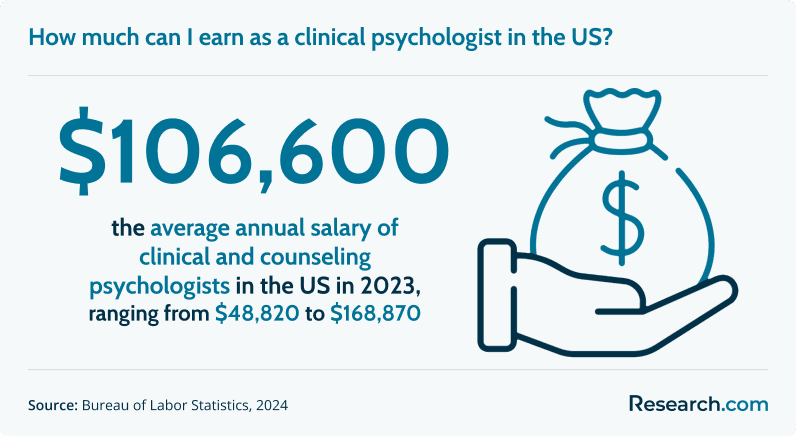
- Competitive earning potential: Clinical and counseling psychologists earned an average annual salary of $106,600 in 2023, with salaries ranging from $48,820 to $168,870.
- Flexible program formats: Some schools offer online or hybrid PsyD coursework, which can help working adults and students with family responsibilities, though clinical training and internships still require in-person participation.
- Training focused on applied care: PsyD programs typically emphasize evidence-based intervention, psychological testing, ethics, diversity, and supervised practice more than original research production.
What can I expect from a PsyD degree in clinical psychology?
A PsyD in clinical psychology is a professional doctorate built around preparing students for real-world mental health practice. You can expect coursework in diagnosis, assessment, psychotherapy, ethics, research interpretation, cultural competence, and clinical decision-making. Unlike a research-heavy doctorate, the PsyD usually places greater weight on supervised patient care and applied clinical skill development.
Most PsyD programs follow a practitioner-scholar model. That means students learn to use psychological research responsibly in clinical settings instead of making original research the center of the degree. Training commonly includes classroom instruction, practicum placements, psychological testing experience, supervised therapy, a doctoral project or dissertation, and a full-time clinical internship near the end of the program.
| What you will do | Why it matters | What to check before enrolling |
| Complete advanced psychology coursework | Builds the foundation for diagnosis, treatment, ethics, and assessment | Whether the curriculum supports your intended specialty and licensure goals |
| Participate in supervised practicums | Helps you develop clinical skills before internship and independent practice | Whether the school helps secure quality placements |
| Finish an internship | Often required for graduation and licensure preparation | Internship match support, site quality, and accreditation expectations |
| Complete a doctoral project or dissertation | Demonstrates ability to apply research and clinical knowledge to practice | Project format, faculty support, and typical completion timeline |
| Prepare for licensure | Licensure is required for independent clinical psychologist practice | State-specific requirements, exam preparation, and postdoctoral hour rules |
Where can I work with a PsyD degree in clinical psychology?
A PsyD can prepare graduates for clinical, supervisory, assessment, administrative, and consulting roles in settings where doctoral-level psychological expertise is needed. The specific roles you can hold depend on state licensure, supervised experience, specialization, and employer requirements.
- Private practices: Licensed psychologists may provide therapy, diagnostic evaluations, psychological testing, consultation, and supervision independently or as part of a group practice.
- Hospitals and outpatient clinics: Clinical psychologists often work alongside physicians, psychiatrists, nurses, social workers, and other providers to support patients with mental health and behavioral health needs.
- Community mental health centers: These organizations serve broad and often underserved populations, giving PsyD graduates opportunities in direct care, assessment, crisis intervention, and clinical supervision.
- Correctional facilities: Some psychologists evaluate and treat incarcerated individuals, conduct risk assessments, support rehabilitation planning, and consult with justice-system professionals.
- Academic and training institutions: PsyD graduates may teach, supervise trainees, direct clinical training, or support university counseling and assessment services.
- Nonprofit and advocacy organizations: Doctoral-level clinicians may help develop programs, deliver trauma-informed services, advise policy work, or lead mental health initiatives.
The strongest fit is usually a setting that matches both your clinical interests and your tolerance for administrative demands, caseload size, documentation, reimbursement issues, and supervision responsibilities.
How much can I make with a PsyD degree in clinical psychology?
Income for PsyD graduates depends on licensure status, years of experience, specialty area, geographic market, payer mix, employer type, and whether the psychologist works in private practice, healthcare, government, education, or nonprofit services. A PsyD does not guarantee a specific salary, but it can qualify graduates for roles that require doctoral-level clinical psychology training.
According to the US Bureau of Labor Statistics, clinical and counseling psychologists earned an average annual salary of $106,600 in 2023. The reported salary range was $48,820 for lower-earning positions to $168,870 for top earners. Psychologists in private practice, forensic services, specialized assessment, leadership, consulting, or high-demand markets may earn more, while early-career clinicians and those in lower-paying public service settings may earn less.
Some psychologists also add income through supervision, consulting, psychological testing, workshops, expert witness work, adjunct teaching, or specialized clinical services. These opportunities usually depend on licensure, experience, reputation, and state practice rules.
- What a PsyD in clinical psychology is
- How to earn a PsyD in clinical psychology in 2026
- Online and hybrid PsyD options
- Average cost and ROI considerations
- Financial aid options for PsyD students
- How long PsyD programs take
- Typical PsyD courses and clinical requirements
- Common clinical psychology specializations
- How to compare and choose PsyD programs
- Forensic psychology training and career flexibility
- Mentorship and professional networks
- Choosing an APA accredited PsyD program
- Challenges during the PsyD pathway
- Licensure after a PsyD
- Career paths for PsyD graduates
- Job market for clinical psychologists
What is a PsyD degree in clinical psychology?
A PsyD degree in clinical psychology is a professional doctoral degree for students who want to become doctoral-level clinical practitioners. The degree prepares students to assess, diagnose, and treat mental health conditions using evidence-based methods. While research literacy remains important, the typical PsyD curriculum is built around applied clinical training rather than preparing students primarily for research faculty careers.
Students who complete a PsyD still need to meet state licensure requirements before practicing independently as clinical psychologists. Program completion alone is not the same as licensure.
How is a PsyD different from a PhD in psychology?
A PsyD and a PhD can both lead to clinical psychologist licensure when the program meets state and accreditation requirements, but the training emphasis differs. A PsyD is usually the better match for students who want a practice-centered doctorate. A PhD is often a stronger fit for students who want extensive research training, university faculty roles, grant-funded research careers, or a balance of clinical practice and scholarship.
| Comparison point | PsyD in clinical psychology | PhD in psychology |
| Primary emphasis | Clinical practice and applied care | Research, scholarship, and often clinical training |
| Best fit for | Students who want to assess and treat clients | Students who want research, teaching, or academic careers |
| Training model | Often practitioner-scholar | Often scientist-practitioner or research-intensive |
| Research expectation | Research literacy and applied doctoral project or dissertation | Substantial original research and dissertation work |
| Career outcomes | Clinical practice, assessment, supervision, leadership | Research, academia, clinical practice, policy, consulting |
If you are still comparing these doctoral routes, Research.com’s guide to PhD versus PsyD salary and career differences in clinical psychology can help you evaluate the trade-offs more closely. You may also want to review what clinical psychologists do day to day in this clinical psychologist career guide.
What do clinical psychologists do?
Clinical psychologists evaluate and treat psychological, emotional, behavioral, and relational concerns. Their work may involve therapy, psychological testing, diagnosis, treatment planning, crisis response, consultation, supervision, and collaboration with other health professionals.
- Assess clients: Clinical psychologists use interviews, observation, standardized measures, records, and testing tools to understand a person’s symptoms, functioning, strengths, and treatment needs.
- Diagnose mental health conditions: They identify conditions such as anxiety disorders, depressive disorders, trauma-related conditions, personality disorders, substance-related concerns, and other psychological difficulties.
- Provide psychotherapy: Many use approaches such as cognitive-behavioral therapy, trauma-informed treatment, family-based interventions, psychodynamic therapy, or other evidence-based methods.
- Create treatment plans: Psychologists set goals, select interventions, monitor progress, document care, and adjust treatment based on client response.
- Coordinate with other professionals: They may work with psychiatrists, primary care physicians, social workers, school teams, case managers, and other clinicians to support comprehensive care.
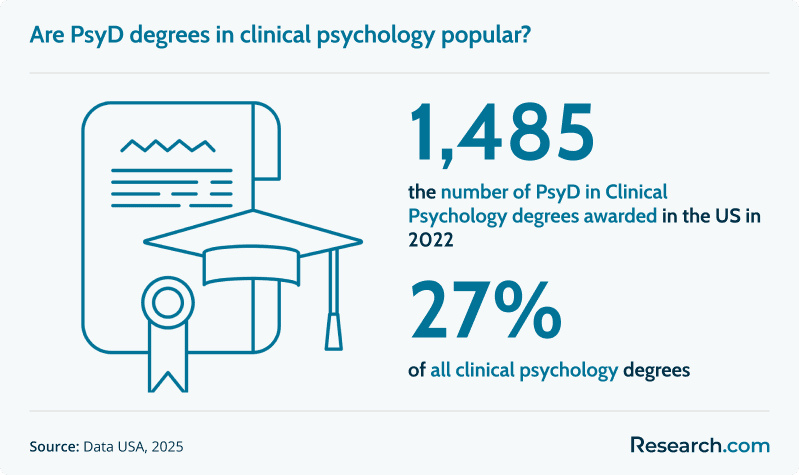
The best candidates for this career are comfortable with complex human problems, ethical responsibility, emotional intensity, documentation, supervision, and lifelong learning. In 2022, 1,485 PsyD degrees in clinical psychology were awarded in the United States, representing 27% of all clinical psychology degrees.
How to get a PsyD degree in clinical psychology in 2026
The path to a PsyD depends on your current education. Some applicants enter after a bachelor’s degree, while others apply after completing a psychology-related master’s. A master’s in clinical psychology can strengthen preparation and may satisfy some prerequisites, but it does not automatically shorten every PsyD program. Transfer credit and advanced standing policies vary by school.
The process usually includes completing prerequisite coursework, gaining relevant experience, identifying accredited programs, preparing application materials, interviewing, completing doctoral training, finishing internship requirements, and pursuing licensure.
Step-by-step PsyD admissions roadmap
- Clarify your goal: Decide whether you want doctoral-level clinical practice, assessment, supervision, and possible private practice, or whether a master’s-level counseling route may be enough for your goals.
- Review prerequisite coursework: Common expectations include general psychology, abnormal psychology, statistics, research methods, developmental psychology, and social psychology.
- Gain relevant experience: Volunteer, work, or train in mental health, crisis services, research labs, hospitals, schools, community agencies, or behavioral health programs.
- Build a program list: Compare accreditation, licensure alignment, faculty interests, practicum sites, internship outcomes, cost, funding, and location requirements.
- Prepare application materials: Most applications require transcripts, a personal statement, recommendation letters, a CV, and possibly standardized test scores.
- Interview carefully: Treat interviews as a two-way process. Ask about supervision, student support, attrition, internship placement, and graduate licensure outcomes.
- Plan financially before committing: Estimate tuition, fees, living costs, travel, unpaid clinical hours, internship relocation, and loan repayment obligations.
Common prerequisites for PsyD programs
- Bachelor’s degree: Applicants generally need at least an undergraduate degree. A psychology major is helpful, but some programs consider applicants from related fields if prerequisite courses are complete.
- Psychology coursework: Programs often expect preparation in core psychology areas such as abnormal psychology, statistics, developmental psychology, research methods, and social psychology.
- Clinical or research exposure: Admissions committees often look for evidence that applicants understand the field and are prepared for intensive training.
- Graduate preparation: A relevant master’s degree may strengthen an application and help demonstrate readiness for doctoral-level clinical work.
- Testing requirements: Some programs require the GRE or GRE Psychology Subject Test, while others have test-optional or test-free admissions policies. Always verify current requirements directly with each school.
Application materials to prepare
- Official transcripts: Schools use these to evaluate academic history, prerequisite completion, and readiness for doctoral study.
- Personal statement: This should explain why clinical psychology, why the PsyD route, what populations or problems you hope to serve, and why the program is a specific fit.
- Letters of recommendation: Strong letters usually come from faculty, supervisors, clinicians, or research mentors who can discuss your maturity, ethics, academic ability, and clinical potential.
- Curriculum vitae: Your CV should highlight education, clinical experience, research work, volunteer roles, presentations, publications, certifications, and relevant employment.
- Interview preparation: Be ready to discuss ethical awareness, cultural humility, resilience, clinical interests, and your understanding of the demands of doctoral training.
In 2023, there were around 71,730 clinical and counseling psychologists working in the United States.
Can you get a PsyD degree in clinical psychology online?
Yes, some PsyD programs offer online or hybrid coursework, but clinical psychology training cannot be entirely virtual in the practical sense. Even when didactic courses are online, students still need in-person supervised practicums, assessment training, internship experiences, and sometimes campus residencies. The most important question is whether the program meets accreditation and licensure expectations in the state where you plan to practice.
Students exploring online clinical psychology degree options should pay close attention to clinical placement support. Flexibility is valuable, but a flexible format is not useful if the program does not help you complete supervised hours that licensing boards will accept.
Online vs. on-campus PsyD programs
| Factor | Online or hybrid PsyD | On-campus PsyD |
| Course delivery | Some lectures and assignments may be completed remotely | Most learning takes place in person |
| Clinical training | Still requires in-person practicum and internship experiences | Often supported by established local clinical partnerships |
| Flexibility | May better support working adults or students far from campus | Less flexible but often more immersive |
| Networking | May rely on virtual events, residencies, and local placements | More frequent face-to-face contact with faculty, peers, and supervisors |
| Key risk | Weak placement support or licensure mismatch | Relocation, commuting, and less schedule control |
| Best for | Self-directed students who verify accreditation and local training access | Students who want structured in-person training and campus-based support |
Questions to ask before choosing an online PsyD
- Is the program accredited in a way that supports psychology licensure in my state?
- Who is responsible for finding practicum and internship placements?
- Are there required campus residencies, and how often do they occur?
- Do graduates from my state successfully obtain licensure?
- Are online students eligible for the same faculty advising, career services, and clinical placement support as campus students?
- What additional travel, lodging, technology, and residency costs should I expect?
What is the average cost of a PsyD degree in clinical psychology program?
A PsyD in clinical psychology can be expensive. Program costs commonly range from $30,000 to $50,000 per year. Across four to seven years, the total may reach approximately $120,000 to $350,000. The final amount depends on tuition, fees, program length, public or private institution type, residency requirements, books, assessment materials, living expenses, relocation, internship costs, and whether you can work during training.
Do not evaluate affordability by tuition alone. Clinical psychology students may face years of reduced work hours while completing practicums, internships, and dissertation or doctoral project requirements. A lower-tuition program with poor placement support can also become costly if it delays graduation or licensure.
What is the ROI of a PsyD degree in clinical psychology?
The return on investment can be positive for graduates who complete licensure, manage debt carefully, and enter roles that match their earning goals. However, ROI is not automatic. Students should compare expected loan payments with realistic early-career earnings, not only the top end of the salary range.
As of 2023, clinical and counseling psychologists earned an average annual salary of $106,600 in the United States, with salaries ranging from $48,820 to $168,870. Higher earnings may be possible in specialized practice areas, private practice, assessment-heavy work, forensic settings, consulting, or leadership, but these outcomes typically require experience, licensure, strong referral networks, and business or administrative skill.
| Cost factor | Why it affects affordability | What to ask the program |
| Tuition and fees | Main direct cost of enrollment | What is the full program cost, not just annual tuition? |
| Program length | Extra years add tuition and living expenses | What is the typical time to completion? |
| Clinical placement logistics | Travel, commuting, and relocation can increase costs | Where do students complete practicums and internships? |
| Funding | Scholarships, assistantships, and grants reduce borrowing | How many PsyD students receive institutional aid? |
| Licensure timeline | Delayed licensure can delay full earning potential | What are graduate licensure outcomes? |
What are the financial aid options for students enrolling in a PsyD degree in clinical psychology program?
Financial planning should begin before you apply, not after admission. PsyD students often combine loans, institutional aid, assistantships, scholarships, employer support, and state programs to reduce out-of-pocket cost. Because funding levels vary widely, applicants should ask each school for program-specific aid data.
- Federal Student Aid: Completing the Free Application for Federal Student Aid is the usual starting point for federal loan eligibility and other aid consideration.
- Institutional scholarships and grants: Some PsyD programs offer awards based on academic strength, financial need, service commitments, diversity goals, or specialization interests.
- Graduate assistantships: Assistantships may include stipends, tuition support, or professional experience in exchange for teaching, research, clinical, or administrative work.
- External scholarships and fellowships: Psychology associations, foundations, nonprofit organizations, and community health groups may support students focused on underserved populations or specialized mental health needs.
- Employer tuition assistance: Students already working in healthcare, education, social services, or behavioral health may be able to use employer reimbursement benefits.
- State-specific aid and service programs: Some states support behavioral health training or loan relief for graduates who serve shortage areas, rural communities, or public mental health systems.
How to reduce PsyD debt before you enroll
- Compare total program cost, not only tuition per credit.
- Ask whether aid is guaranteed every year or only offered at admission.
- Choose programs with strong internship and licensure support to reduce delay risk.
- Consider whether a master’s-level counseling career would meet your goals at lower cost.
- Look for paid clinical or assistantship opportunities when available.
- Estimate repayment using conservative salary assumptions.
How long does it take to finish a PsyD degree in clinical psychology?
Most PsyD programs take four to seven years, depending on entry point, transfer credits, clinical placement progress, internship timing, dissertation or doctoral project completion, and state licensure requirements. Students entering with only a bachelor’s degree typically need longer than those who already hold a related master’s degree.
| Stage | Typical time impact | What can delay progress |
| Foundational and advanced coursework | Several years within the doctoral program | Prerequisite gaps, part-time enrollment, course sequencing |
| Practicum training | Usually spread across multiple years | Limited placement availability or supervision problems |
| Doctoral project or dissertation | May require a year or more | Topic changes, data access, faculty availability, writing delays |
| Internship | Often a full-time final-year requirement | Competitive matching, relocation constraints, site availability |
| Postdoctoral supervision | May add time after graduation in some states | State rules, job market conditions, supervisor access |
- Entering after a bachelor’s degree: Students may need six to seven years because they complete foundational and doctoral-level training in sequence.
- Entering after a master’s degree: Students with relevant graduate preparation may finish in as little as four to five years if the program accepts prior coursework.
- Practicum hours: Many programs require at least 1,500 to 2,000 supervised practicum hours throughout training.
- Internship year: A full-time clinical internship often takes around 2,000 hours and is commonly completed near the end of the program.
- Doctoral project or dissertation: Applied research, clinical analysis, or dissertation work can extend the timeline if not planned early.
- Licensure requirements: Some states require postdoctoral supervised experience after graduation before independent practice.
The common pathway: earning a master’s before the PsyD
Many students complete a master’s degree in clinical psychology before applying to a PsyD program. A bachelor’s degree in clinical psychology is less common as a direct field-specific starting point. In 2022, only 278 bachelor’s degrees in clinical psychology were awarded, compared with 2,701 master’s degrees in the same field. A master’s degree often takes about two years, followed by four to seven years in the PsyD program, creating a total education timeline of around six to nine years for many students.
What courses are typically in a PsyD degree in clinical psychology program?
PsyD coursework is designed to build clinical judgment, ethical awareness, assessment competence, cultural responsiveness, and evidence-based treatment skills. Students should expect demanding reading, case conceptualization, role-play, supervision, clinical documentation, testing practice, and applied research assignments.
- Psychopathology and diagnosis: Students study mental health disorders, diagnostic criteria, differential diagnosis, and case formulation.
- Psychological assessment: Training includes administration, scoring, interpretation, and reporting for cognitive, personality, and neuropsychological measures.
- Clinical interviewing: Students learn how to gather relevant information, build rapport, assess risk, and structure intake and therapy conversations.
- Ethics and professional standards: Coursework covers confidentiality, informed consent, boundaries, mandated reporting, supervision, competence, and legal responsibilities.
- Research methods and statistics: PsyD students learn to evaluate research quality and apply findings to clinical practice, even when they are not preparing for research-centered careers.
- Cultural diversity in clinical practice: Students examine culture, identity, power, bias, systemic inequality, and culturally responsive treatment.
These doctoral-level requirements build on many of the courses commonly required for psychology degrees, but they apply them to advanced clinical decision-making. Electives may include trauma treatment, health psychology, forensic assessment, substance use, neuropsychology, child and adolescent practice, or family systems.
Clinical hours and hands-on training requirements
Clinical training is one of the defining features of a PsyD program. Students usually begin with supervised practicum experiences and gradually take on more complex responsibilities. These placements may occur in hospitals, university clinics, community mental health centers, schools, correctional settings, outpatient programs, or private practices.
Near the end of the program, students typically complete a full-time internship of about 2,000 hours. Many students also complete a doctoral project or clinical dissertation that integrates research, assessment, and practice. Together, these experiences help prepare graduates for licensure steps and supervised professional work after graduation.
Are there specializations in PsyD degree in clinical psychology programs?
Many PsyD programs allow students to focus their training on a population, treatment method, disorder area, or practice setting. A specialization does not replace the core clinical psychology curriculum. Instead, it helps students deepen expertise while still preparing for broad clinical psychologist competencies.
This distinction matters because doctoral-level clinical psychologists and master’s-level counselors are trained for different scopes of practice. If you are comparing careers, Research.com’s guide to the difference between clinical psychologists and clinical mental health counselors can help clarify the roles.
Common PsyD clinical psychology specializations
- Child and adolescent psychology: Focuses on development, family systems, school concerns, trauma, behavioral issues, and therapy with children and teens.
- Health psychology: Prepares students to work with the psychological aspects of illness, pain, chronic disease, treatment adherence, and integrated healthcare.
- Forensic psychology: Builds skills for clinical work in legal contexts, including competency evaluations, risk assessments, court-related consultation, and correctional mental health. Students considering this area can read more about what forensic psychologists do.
- Neuropsychology: Emphasizes brain-behavior relationships, cognitive assessment, neurological disorders, traumatic brain injury, dementia, stroke, and developmental conditions.
- Trauma and crisis intervention: Centers on PTSD, acute crisis care, disaster response, trauma-focused therapies, and recovery after violence, loss, or major stress.
- Substance use and addiction: Covers assessment and treatment for substance use disorders, co-occurring conditions, relapse prevention, harm reduction, and family impact. Students interested in counseling-focused addiction roles can review substance abuse counselor license requirements by state.
Some psychology graduates also consider family therapy careers. If that path interests you, see Research.com’s explanation of what licensed marriage and family therapists do.
How can I evaluate and select the best PsyD program in clinical psychology?
The best PsyD program is not always the most recognizable or the least expensive. It is the program that supports licensure in your intended state, provides strong supervised clinical training, fits your career goals, and is financially realistic. Accreditation, internship outcomes, faculty access, clinical placement quality, and total debt should carry more weight than marketing claims.
| Evaluation factor | Why it matters | Questions to ask |
| Accreditation | Can affect internship access, licensure eligibility, and employer confidence | Is the program accredited, and does it meet requirements in my state? |
| Licensure alignment | Each state sets its own psychologist licensing rules | Do graduates become licensed in the state where I plan to work? |
| Clinical placement support | Quality placements are essential for skill development and graduation progress | Does the school place students or require them to find sites independently? |
| Internship outcomes | Internship completion is a major milestone for practice readiness | Where do students match for internship, and how are they supported? |
| Faculty fit | Mentorship affects specialization, supervision, and doctoral project progress | Do faculty members have expertise in my clinical interest area? |
| Total cost | High debt can shape job choices after graduation | What is the full cost after aid, fees, travel, and living expenses? |
| Student support | Doctoral training is demanding and long | What advising, remediation, wellness, and career supports are available? |
Students prioritizing flexibility and cost can compare options such as the most affordable online doctorate in psychology programs, but affordability should never replace accreditation and licensure verification.
Could supplementary training in forensic psychology enhance my career prospects?
Additional forensic psychology training can be useful for PsyD students who want to work where mental health and the legal system overlap. This may include correctional settings, court-related evaluations, competency issues, risk assessment, child custody consultation, or expert testimony support. However, forensic work typically requires careful supervision, ethical training, and role clarity because clinical and legal responsibilities can differ.
Students who want a deeper forensic foundation can explore options such as affordable online master’s programs in forensic psychology. Before adding another credential, compare the cost with the specific skills and eligibility it provides.
How can mentorship and professional networks enhance clinical psychology careers?
Mentorship can influence practicum choices, internship preparation, specialization development, job opportunities, and long-term professional identity. Strong mentors help students understand how to handle difficult clinical situations, choose ethical training sites, prepare for licensure, and build sustainable careers.
Professional networks also matter because psychology careers often grow through referrals, supervision relationships, association involvement, conference participation, and specialty communities. Students still completing earlier psychology training may also compare alternative timelines, including an accelerated online psychology degree, before committing to a doctoral pathway.
How can I choose the right APA accredited PsyD program?
APA accreditation is an important quality marker for clinical psychology training and may affect internship competitiveness, licensure eligibility, and employer expectations. When choosing among APA accredited programs, compare curriculum, supervision model, practicum sequence, internship outcomes, faculty qualifications, student support, and state licensure fit.
Do not assume that every accredited program fits every student. Some programs are stronger in assessment, child psychology, trauma, integrated health, forensic work, or community mental health. Review Research.com’s guide to APA accredited PsyD programs for a deeper comparison of program options.
What challenges might I encounter during my PsyD journey?
PsyD training is rewarding but demanding. Students often underestimate the combined pressure of coursework, clinical hours, supervision, documentation, doctoral project deadlines, internship applications, emotional labor, and financial stress. The challenge is not only getting admitted; it is sustaining performance across several years of intensive training.
- Clinical placement competition: Strong training sites may be limited, especially in certain regions or specialties.
- Time pressure: Practicum, classes, supervision, writing, and personal obligations can quickly create overload.
- Financial strain: Tuition and reduced work capacity can increase borrowing.
- Licensure complexity: Requirements vary by state, so students must plan early if they may relocate.
- Emotional demands: Clinical training requires maturity, self-reflection, and support when working with trauma, crisis, and serious mental illness.
- Delayed milestones: Internship, doctoral project, or postdoctoral supervision delays can extend the timeline.
Students who need more foundational preparation before applying may consider options such as a one-year master’s in psychology, but they should confirm whether that degree will actually strengthen PsyD admission or licensure planning.
How do you become licensed after earning a PsyD degree in clinical psychology?
Licensure rules vary by state, but the general pathway includes completing an eligible doctoral program, finishing supervised clinical experience, passing required exams, submitting documentation to the state board, and maintaining continuing education after licensure. Students should review the licensing board rules in the state where they plan to practice before enrolling in any PsyD program.
1. Complete supervised clinical experience
Students usually complete supervised experience during practicum and internship training. After graduation, some states also require additional postdoctoral supervised hours. The exact requirement varies, but many states require 1,500 to 2,000 hours of supervised practice in settings such as hospitals, outpatient clinics, community agencies, or private practices.
2. Pass licensing examinations
Clinical psychologist licensure generally requires passing the Examination for Professional Practice in Psychology (EPPP), administered by the Association of State and Provincial Psychology Boards. The exam assesses broad psychology knowledge, including ethics, assessment, intervention, diagnosis, and professional practice.
Some states also require a jurisprudence exam, oral exam, or written test covering state laws, regulations, reporting duties, and professional standards.
3. Apply to the state licensing board
After completing the required education, supervised hours, and examinations, applicants submit materials to the state licensing board. This may include transcripts, verification of internship and supervision, exam scores, background checks, fees, and other documentation required by the board.
4. Maintain the license through continuing education
Licensed psychologists usually must renew their license regularly and complete continuing education. Requirements differ by state and may include ethics, risk management, cultural competence, telehealth, assessment, or specialty training.
Where can I work as a clinical psychologist?
Clinical psychologists work in many industries. The largest group works in private practice, with 28,960 positions and an average annual salary of $114,900. Outpatient care centers employ 7,430 professionals with an average salary of $107,500. Other employment settings include physician offices, general medical and surgical hospitals, and individual and family services.
The chart below provides additional employment and salary details by industry.
What career paths are available for graduates with a PsyD degree in clinical psychology?
A PsyD can lead to several careers, especially after licensure. The most common routes involve direct care, assessment, supervision, and mental health leadership, but some graduates move into teaching, consulting, nonprofit leadership, or interdisciplinary work.
- Private practice psychologist: Provides therapy, psychological assessment, consultation, and specialized services to individuals, couples, families, or groups.
- Clinical director or program director: Oversees mental health services, supervises clinicians, manages compliance, supports quality improvement, and leads clinical teams.
- Assessment specialist: Conducts psychological, cognitive, personality, forensic, educational, or neuropsychological evaluations depending on training and scope.
- Hospital or integrated care psychologist: Works with medical teams to support patients dealing with chronic illness, pain, behavioral health concerns, crisis needs, or treatment adherence.
- Academic or training role: Teaches, supervises trainees, contributes to curriculum, or supports clinical education in universities and training clinics.
- Government or nonprofit mental health professional: Supports public mental health programs, community services, policy initiatives, crisis response, or outreach programs.
- Corporate or organizational consultant: Advises on employee well-being, burnout, stress, behavior change, team dynamics, or workplace mental health.
- Interdisciplinary researcher or collaborator: Some graduates combine clinical psychology with health, neuroscience, or behavioral science. Students interested in brain and behavior may also explore biological science degree programs as part of a broader academic plan.
The American Psychological Association also describes clinical psychology education and training as a pathway to meaningful work in mental health and human services.
What is the job market for graduates with a PsyD degree in clinical psychology?
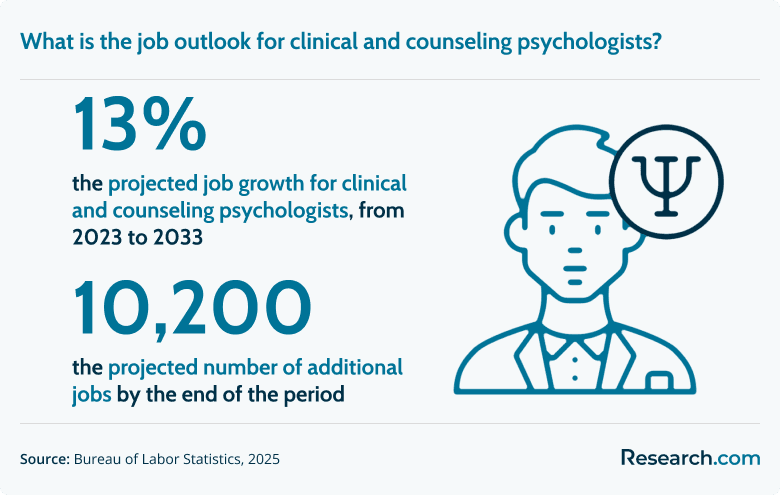
The job outlook for clinical and counseling psychologists is strong compared with several other psychology occupations. From 2023 to 2033, employment is projected to grow by 13%, with 10,200 additional jobs expected. This demand reflects continued need for mental health assessment, treatment, and integrated behavioral healthcare.
Clinical and counseling psychologists have higher projected growth than industrial-organizational psychologists, who are projected to grow by 6% and add 500 jobs. School psychologists are projected to grow by 1%, with 500 additional jobs, while psychologists in other categories are projected to grow by 5%, with 2,900 additional positions.
Even with favorable projections, competition can vary by region, specialty, licensure status, and setting. Graduates who complete licensure efficiently, gain strong supervised experience, and develop marketable assessment or treatment expertise may be better positioned than those who rely on the degree alone.
Common mistakes to avoid when choosing a PsyD program
- Choosing without checking accreditation: Accreditation can affect internship options, licensure eligibility, and employer confidence.
- Assuming online means fully remote: Clinical psychology requires in-person supervised experience, even in online or hybrid programs.
- Comparing tuition without calculating total cost: Fees, living expenses, travel, assessment materials, and unpaid training time can change affordability.
- Ignoring state licensure rules: A program may not automatically satisfy requirements in every state.
- Overlooking internship outcomes: Poor internship support can delay graduation and licensure progress.
- Assuming salary outcomes are guaranteed: Earnings depend on licensure, location, experience, specialty, employer, and business model.
- Choosing a specialization too early: A narrow focus can be helpful, but broad clinical competence is essential for licensure and long-term flexibility.
- Relying only on rankings: Rankings can be a starting point, but practicum quality, faculty fit, debt, licensure outcomes, and student support are more important for your decision.
Key Insights
- A PsyD in clinical psychology is best suited for students who want a practice-focused doctorate leading toward clinical psychologist licensure.
- The degree can support careers in therapy, assessment, supervision, private practice, hospitals, outpatient care, community mental health, corrections, academia, and nonprofit services.
- Clinical and counseling psychologists earned an average annual salary of $106,600 in 2023, with salaries ranging from $48,820 to $168,870.
- Employment for clinical and counseling psychologists is projected to grow 13% from 2023 to 2033, with 10,200 additional jobs expected.
- PsyD programs commonly take four to seven years and may cost $30,000 to $50,000 per year, or approximately $120,000 to $350,000 overall.
- Online and hybrid PsyD options can improve flexibility, but students still need in-person clinical training, practicum placements, and internships.
- Program choice should center on accreditation, licensure alignment, internship outcomes, clinical placement support, faculty fit, total cost, and graduate success.
- In 2022, 1,485 PsyD degrees in clinical psychology were awarded in the United States, representing 27% of all clinical psychology degrees.
- The number of clinical psychology degrees awarded in the US in 2022 included 2,701 master’s degrees, 1,485 PsyD degrees, and 875 PhD degrees.
- The strongest applicants plan early: they gain relevant experience, confirm prerequisites, compare programs carefully, and build a realistic financial strategy before enrolling.
References:
- American Psychological Association. (2025). Clinical psychology. Retrieved May 5, 2025, from APA.
- Bureau of Labor Statistics. (2025). Psychologists. Retrieved May 5, 2025, from BLS.
- Bureau of Labor Statistics. (2024). Occupational employment and wages, May 2023 - 19-3033 clinical and counseling psychologists. Retrieved May 5, 2025, from BLS.
- Data USA. (2025). Clinical psychology. Retrieved May 5, 2025, from Data USA.
Other Things You Should Know About How to Get a PsyD Degree in Clinical Psychology
To apply for a PsyD program in 2027, most institutions require a bachelor's degree in psychology or a related field. Additionally, you'll need to provide GRE scores, letters of recommendation, a personal statement, and relevant work or research experience. Some schools also require specific prerequisite coursework in psychology.
A PsyD program should be accredited by the American Psychological Association’s Commission on Accreditation, which is the main U.S. accreditor for doctoral psychology programs. APA accreditation supports eligibility for internship matching, licensure review, and some postdoctoral positions that require an accredited degree.
PsyD programs in 2027 typically offer clinical training through practica and internships, involving supervised clinical work. These placements are crucial for gaining hands-on experience, usually adhering to guidelines set by accrediting bodies like the American Psychological Association (APA).


