2027 How To Become A Clinical Psychologist

Co-Founder and Chief Data Scientist
Becoming a clinical psychologist is a long, structured path that usually requires a doctoral degree, supervised clinical training, state licensure, and a commitment to continuing education. The decision matters because this career affects not only your future income and workload, but also the clients, families, and communities who will rely on your clinical judgment.
This guide is for students comparing psychology degrees, career changers evaluating doctoral programs, and master’s-level professionals deciding whether clinical psychology is the right next step. You will learn what degree is required, how long the process takes, what it may cost, how licensure works, which specializations are available, and how to judge whether the career fits your goals.
Quick Answer: How Do You Become a Clinical Psychologist?
To become a clinical psychologist, you typically need to complete a bachelor’s degree, earn a doctoral degree such as a Ph.D. or Psy.D. in psychology, finish supervised clinical experience, pass the Examination for Professional Practice in Psychology, and meet your state’s licensing rules. Some students earn a master’s degree before applying to doctoral programs, but a doctorate is generally required for independent clinical psychology practice.
Key Things You Should Know About Becoming a Clinical Psychologist
- A clinical psychology background can lead to work as a clinical psychologist, counselor, psychotherapist, hospital-based mental health provider, or professional in community mental health organizations.
- The median annual salary for clinical psychologists is approximately $92,740, although earnings depend on setting, state, specialization, credentials, and years of experience.
- Online clinical psychology-related programs can make education more flexible, but students must verify accreditation, clinical placement requirements, and whether the program supports licensure in their state.
- Degree requirements for clinical psychologists
- Timeline for becoming a clinical psychologist
- Clinical psychology education costs
- Licensure and certification steps
- Clinical psychology specializations
- Skills and treatment methods used in practice
- Common clinical psychologist responsibilities
- Career paths and work settings
- Legal and ethical practice standards
- Salary potential and labor market outlook
- Technology trends in clinical psychology
- ABA techniques and clinical outcomes
- Building a private practice
- Forensic psychology training for clinicians
- Research training in clinical practice
- Accelerated master’s programs for career advancement
- Admission criteria for clinical psychology programs
What degree do you need to become a clinical psychologist?
Clinical psychologists usually need doctoral-level preparation because the role involves diagnosis, psychological assessment, psychotherapy, treatment planning, and legally regulated clinical practice. The exact sequence can vary, but most students move through undergraduate study, optional master’s-level preparation, and then a Ph.D. or Psy.D. program.
| Education stage | Purpose | When it makes sense |
| Bachelor’s degree in psychology or a related field | Builds a foundation in psychological theory, research methods, statistics, development, abnormal psychology, and human behavior. | Best for students starting the path toward graduate psychology training. |
| Master’s degree in psychology or a related field | Can strengthen research, counseling, assessment, or applied practice preparation before doctoral study. | Useful for applicants who need stronger academic credentials, want a specialized focus, or are not ready to enter a doctoral program immediately. |
| Doctoral degree, either Ph.D. or Psy.D. | Provides advanced clinical training, supervised experience, assessment preparation, and the academic qualifications typically required for licensure. | Essential for students who want to practice independently as licensed clinical psychologists. |
- Bachelor’s degree in psychology or a related field: Most students begin with a four-year undergraduate program in psychology, though related fields such as sociology, neuroscience, or human development may also support graduate study. Strong applicants usually complete coursework in research design, statistics, abnormal psychology, personality, cognition, and developmental psychology.
- Master’s degree in psychology: A master’s degree is not always required before doctoral admission, but it can help students develop stronger clinical, research, or specialization credentials. Students comparing adjacent helping-profession routes may also review accelerated MSW online programs, especially if their goal is social work licensure rather than psychologist licensure.
- Doctoral degree, Ph.D. or Psy.D.: A Ph.D. is often more research-intensive and may fit students interested in academia, research, or scientist-practitioner training. A Psy.D. generally emphasizes applied clinical practice. Students who want a licensure-oriented doctoral path should pay close attention to APA accredited clinical psychology programs, because accreditation can affect internship eligibility, licensure mobility, and employer recognition. These programs typically take 4–7 years and include coursework, clinical training, and a dissertation or comparable doctoral project.
The most important decision is not simply whether to earn a Ph.D. or Psy.D. It is whether the program’s accreditation, clinical placement structure, faculty expertise, internship outcomes, and state licensure alignment match the kind of psychologist you want to become.
How long does it take to complete a clinical psychologist program?
The full path to becoming a clinical psychologist commonly takes eight to 12 years. The timeline depends on whether you earn a separate master’s degree, enroll full time or part time, complete a funded research doctorate or a practice-focused doctorate, and how quickly you finish internship and supervised postdoctoral requirements.
| Step | Typical time | What happens during this stage |
| Bachelor’s degree | Four years | Students complete general education, psychology coursework, statistics, research methods, and often internships or lab experience. |
| Master’s degree, if required or chosen | Two years | Students may gain advanced training in counseling, assessment, research, or a specialty area before doctoral study. |
| Doctoral degree, Ph.D. or Psy.D. | Four to seven years | Doctoral students complete advanced coursework, practicum placements, research or dissertation requirements, and clinical preparation. |
| Internship or supervised training | One to two years | Students or graduates complete intensive supervised clinical work, often connected to doctoral training and licensure requirements. |
Students who need more flexibility may compare hybrid options, including hybrid APA accredited PsyD programs. However, hybrid or online coursework does not remove the need for in-person clinical training, supervised experience, and state licensure compliance.
What are the costs associated with a clinical psychologist education?
Clinical psychology training can be expensive because it involves several years of higher education. Tuition varies by institution, residency status, degree level, funding package, and program type. Students should compare total cost, not just annual tuition, because doctoral study may also involve fees, books, insurance, assessment materials, relocation, internship applications, and unpaid or lower-paid training periods.
| Education level | Cost details stated by source or example | Budget issue to evaluate |
| Undergraduate degree | Costs range from $20,000 to $50,000 annually for tuition. At the University of Illinois, an undergraduate psychology program costs around $35,862 for in-state students and around $55,322 for out-of-state students. | Compare public versus private tuition, residency rules, transfer credits, housing, and whether an accelerated format reduces time in school. |
| Master’s program | The psychology graduate program at Arizona State University costs around $42,436 for in-state students and $56,370 for out-of-state students annually and often lasts one to two years. | Decide whether the master’s degree improves doctoral admission chances, supports licensure in another field, or adds cost without clear benefit. |
| Doctoral program | Ph.D. programs may offer stipends or funding but can still cost $30,000–$50,000 annually for tuition, especially for Psy.D. programs. At Boston University, a PhD program costs around $66,670 for one academic year, excluding their student services fee. | Review funding, assistantships, internship match support, practicum costs, dissertation expenses, and expected debt at graduation. |
- Undergraduate costs: Students who want to shorten the undergraduate portion of the path may consider accelerated online bachelor degrees, but they should confirm transfer policies, psychology prerequisites, and graduate school expectations before enrolling.
- Graduate costs: A master’s degree can be valuable, but it should have a clear purpose. If it does not improve your readiness, research experience, licensure options, or doctoral competitiveness, it may add cost and time.
- Doctoral costs: Funded Ph.D. programs may reduce out-of-pocket costs, while some Psy.D. programs may require more tuition financing. The best financial choice depends on funding, completion rates, internship outcomes, and your intended career setting.
Books, exam fees, internship travel, background checks, liability insurance, technology, and possible relocation can add several thousand dollars to the total budget. The chart below provides additional cost context for students planning the education sequence.
How do you get certified as a clinical psychologist?
Clinical psychologists are licensed by state psychology boards. “Certification” is often used informally, but the required credential for independent practice is state licensure. Board certification is usually optional and may demonstrate advanced expertise after licensure.
- Earn the required doctoral degree: Students often ask, what can you do with a masters in clinical psychology? A master’s degree can support related mental health roles, but independent clinical psychologist licensure generally requires a doctorate such as a Ph.D. or Psy.D.
- Complete supervised clinical experience: Most states require supervised clinical hours, typically 1,500 to 2,000, through internship, residency, or postdoctoral supervised practice.
- Pass the licensing examination: Candidates generally take the Examination for Professional Practice in Psychology (EPPP), which evaluates core knowledge needed for professional psychology practice.
- Satisfy state-specific rules: Some states require jurisprudence exams, additional supervised hours, background checks, documentation of coursework, or specific internship standards.
- Consider optional board certification: Board certification through organizations such as the American Board of Professional Psychology can help demonstrate specialty competence, but it is not the same as state licensure.
Licensure questions to ask before choosing a program
- Is the doctoral program accredited by the appropriate professional body for clinical psychology training?
- Does the program publish internship match information and licensure outcomes?
- Will supervised practica and internships meet the requirements of the state where you plan to practice?
- Are online or hybrid courses accepted by the state board, and are there in-person clinical requirements?
- What support does the program provide for EPPP preparation, internship applications, and postdoctoral placement?
What are the different specializations within clinical psychology?
Clinical psychology includes many specialty areas. Choosing a specialization can shape your practicum placements, dissertation topic, internship options, postdoctoral training, and eventual work setting.
| Specialization | Focus | Best fit for students interested in |
| Child and adolescent psychology | Assessment and treatment for children, teens, and families. | Developmental concerns, school collaboration, behavioral issues, family systems, and youth mental health. |
| Neuropsychology | The relationship between brain function, cognition, behavior, and emotional functioning. | Traumatic brain injury, dementia, cognitive testing, learning disorders, and medical settings. |
| Health psychology | How psychological factors interact with physical health, chronic illness, pain, and health behavior. | Hospitals, integrated care, chronic disease management, and behavioral medicine. |
| Forensic psychology | Psychological work connected to courts, legal questions, risk assessment, and justice-involved populations. | Legal settings, offender assessment, expert testimony, and law enforcement collaboration. |
| Substance abuse and addiction psychology | Treatment planning, relapse prevention, family support, and recovery-focused care for substance use disorders. | Rehabilitation centers, outpatient addiction programs, and co-occurring disorders. |
| Trauma and PTSD psychology | Evidence-based care for people affected by abuse, combat, disasters, violence, or other traumatic events. | Trauma treatment, crisis recovery, resilience, and safety-focused interventions. |
| Clinical social psychology | The effect of relationships, culture, group dynamics, and social conditions on mental health. | Community interventions, group therapy, culturally responsive care, and social determinants of health. |
Students interested in legal and investigative contexts sometimes begin by exploring an online forensic science degree, although forensic science and forensic psychology are different fields with different training expectations.
What are the key skills and techniques used by clinical psychologists?
Clinical psychologists combine scientific reasoning, therapeutic skill, diagnostic judgment, and ethical decision-making. Their work requires both technical competence and the ability to build trust with people experiencing distress.
- Clinical interviewing and active listening: Psychologists gather sensitive information while creating a respectful, nonjudgmental setting where clients can describe symptoms, history, goals, and concerns.
- Assessment and diagnosis: Standardized tests, structured interviews, behavioral observations, and clinical records help psychologists identify conditions and develop treatment recommendations. Students in clinical social work online programs may study related assessment tools, though social work training often places additional emphasis on family, community, and environmental factors.
- Cognitive-behavioral therapy: CBT helps clients recognize and change thought patterns and behaviors that contribute to symptoms, especially in conditions such as anxiety and depression.
- Psychodynamic therapy: This approach explores unconscious processes, early relationships, emotional patterns, and unresolved conflicts that may shape current functioning.
- Crisis intervention: Psychologists may help stabilize clients experiencing suicidal ideation, acute trauma, panic, severe distress, or safety risks.
- Research literacy and data interpretation: Clinicians must understand evidence-based treatment research and use client progress data to adjust care.
- Cultural competence: Effective care requires awareness of identity, language, culture, disability, socioeconomic factors, trauma history, and systemic barriers that may influence treatment.
Students wondering is psychology degree easy or hard should expect demanding coursework, statistics, research training, writing, clinical skill development, and emotionally complex learning experiences. The challenge is manageable for students who are prepared for sustained study and feedback.
What are the job duties of a clinical psychologist?
Clinical psychologists assess, diagnose, and treat mental, emotional, cognitive, and behavioral concerns. Their duties vary by setting, but most roles involve direct client care, documentation, collaboration, and ethical decision-making.
- Conducting psychological assessments: Psychologists may administer tests, conduct clinical interviews, review records, and observe behavior to understand cognitive, emotional, personality, or behavioral functioning.
- Developing treatment plans: They set goals, select interventions, coordinate care, and revise plans as client needs change.
- Providing psychotherapy: Treatment may include individual, group, couple, or family therapy. Evidence-based approaches such as Cognitive-Behavioral Therapy (CBT) are commonly used depending on diagnosis and client goals.
- Tracking client progress: Psychologists document symptoms, risk factors, treatment response, attendance, and outcome measures to guide care and meet professional standards.
- Collaborating with other providers: Clinical psychologists often work with psychiatrists, primary care clinicians, social workers, school personnel, case managers, and community agencies.
- Educating clients and families: Psychoeducation helps clients and support systems understand symptoms, coping strategies, treatment options, relapse prevention, and crisis resources.
What are the different career paths for clinical psychologists?
Clinical psychologists work in many settings, and each path has different expectations for workload, income stability, autonomy, documentation, and interdisciplinary collaboration.
| Career path | What the work often involves | Who this path may suit |
| Private practice | Therapy, assessment, consultation, billing, marketing, scheduling, and business management. | Clinicians who want autonomy and are comfortable managing both care and operations. |
| Schools and educational settings | Student assessment, counseling, consultation with teachers, family meetings, and support for learning or behavioral needs. | Psychologists interested in youth development, school systems, and family collaboration. |
| Hospitals and healthcare settings | Assessment, crisis care, integrated treatment, consultation, and therapy for patients with acute or complex needs. | Clinicians who want team-based work and exposure to medical or psychiatric complexity. |
| Academic and research institutions | Teaching, supervision, grant work, clinical research, publishing, and training future psychologists. | Professionals who enjoy scholarship, mentoring, and evidence development. |
| Corporate and organizational settings | Employee well-being, leadership consultation, workplace mental health, assessment, and organizational development. | Psychologists interested in applying behavioral science to workplace systems. |
| Community mental health | Therapy, assessment, crisis intervention, case collaboration, and care for underserved populations. | Clinicians committed to access, public service, and high-need client populations. |
| Substance abuse and addiction treatment | Treatment planning, relapse prevention, therapy, family education, and co-occurring disorder care. | Psychologists focused on addiction recovery and behavioral change. |
Students drawn to youth mental health can review child psychologist education requirements. Those interested in addiction services may compare the clinical psychologist route with the path to becoming a substance abuse counselor, since the education and licensure requirements are different.
What are the legal and ethical standards governing clinical psychology practice?
Clinical psychologists must follow state laws, licensing board rules, professional ethics codes, privacy requirements, mandatory reporting laws, and standards for informed consent. Ethical practice includes protecting confidentiality, explaining treatment risks and benefits, practicing within one’s competence, documenting care accurately, avoiding harmful dual relationships, and responding appropriately to safety concerns.
Because laws and professional expectations change, psychologists must keep their knowledge current through continuing education and formal training. Students comparing doctoral options, including accelerated PsyD programs online, should confirm that the program prepares graduates for ethical practice, supervised clinical work, and the licensing rules in the state where they intend to practice.
What is the job market and salary potential for clinical psychologists?
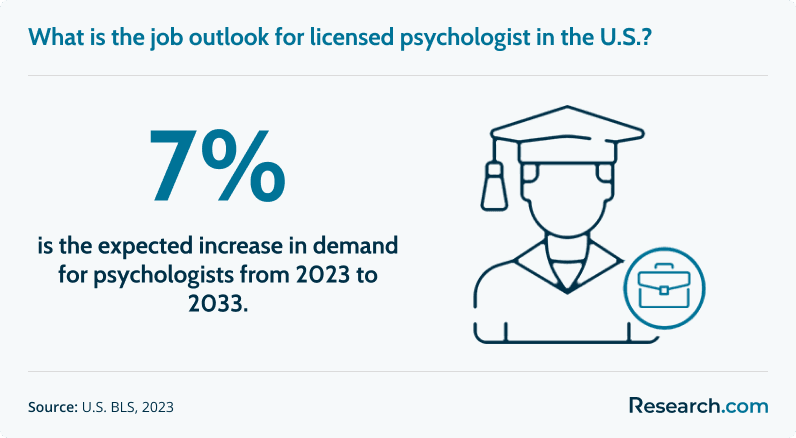
The labor market for psychologists is supported by continued need for mental health assessment, therapy, crisis care, and behavioral health services. The overall employment of psychologists is expected to grow by seven percent from 2023 to 2033, with about 13,000 job openings each year, on average.
Demand is influenced by greater public attention to anxiety, depression, stress, trauma, and overall well-being, along with efforts to expand access to mental health care. Opportunities may be available in hospitals, outpatient clinics, government programs, nonprofit mental health organizations, integrated care settings, schools, and private practice.
Factors that can affect clinical psychologist salary
- Location: Urban areas may pay more than rural areas, and states such as California, New York, and Massachusetts may offer higher pay because of cost of living and demand.
- Experience: Psychologists with years of practice, advanced specialization, supervisory responsibilities, or administrative roles may earn more than entry-level clinicians.
- Education and certification: A Ph.D., Psy.D., postdoctoral specialization, or board certification can strengthen professional credibility and may support higher earning potential in some settings.
- Work setting: Private practice, hospitals, government agencies, schools, academic institutions, and community mental health centers can differ substantially in compensation structure and benefits.
Salary figures should be treated as planning information, not a guaranteed outcome. Debt level, geographic mobility, licensure timing, insurance reimbursement, and specialization can all affect long-term return on investment.
What are the newest technologies in clinical psychology?
Technology is changing how clinical psychologists deliver care, monitor symptoms, document progress, and support clients between sessions. These tools can improve access and efficiency, but they also raise questions about privacy, evidence quality, crisis response, and professional responsibility.
- Teletherapy and telehealth platforms: Video-based care allows psychologists to meet with clients remotely, which can improve access for people in rural areas, underserved communities, or situations where in-person attendance is difficult.
- Virtual reality therapy: VR tools can create controlled exposure environments for concerns such as phobias, anxiety, PTSD, and trauma-related triggers. The clinician can structure exposure while keeping the experience monitored and adjustable.
- Artificial intelligence in diagnosis and treatment support: AI tools may analyze speech, language, written text, or other patient data to assist with screening or clinical decision support. Psychologists must use these tools carefully and avoid replacing clinical judgment with automated output.
- Mobile health apps: Mental health apps may support mood tracking, journaling, mindfulness practice, habit monitoring, and symptom management between therapy sessions. Clinicians should evaluate whether an app is evidence-informed, secure, and appropriate for the client’s condition.
Technology questions clinicians and students should ask
- Does the tool have evidence supporting its use with the target population?
- How does the platform protect client privacy and clinical records?
- What happens if a client reports suicidal ideation or crisis symptoms through a digital tool?
- Is the technology accessible for clients with disabilities, limited bandwidth, or limited digital literacy?
- Does state law or the licensing board restrict telehealth practice across state lines?
Can integrating ABA therapy techniques amplify treatment outcomes?
Applied behavior analysis techniques can help clinical psychologists make interventions more observable, measurable, and behaviorally specific. Training through ABA therapy programs may be useful for clinicians who work with behavioral challenges, developmental concerns, autism-related services, or structured behavior-change plans.
ABA-informed methods should be integrated ethically and appropriately. They work best when goals are individualized, client dignity is prioritized, caregivers are properly involved when relevant, and progress is measured without ignoring emotional, cultural, or contextual factors.
How can clinical psychologists build a successful private practice?
Private practice requires clinical skill and business discipline. Psychologists must define their services, understand local demand, select a billing model, manage documentation, comply with privacy rules, and build referral relationships with physicians, schools, attorneys, community agencies, and other mental health providers.
- Choose a clear niche: A focused practice area, such as child assessment, trauma therapy, health psychology, couples work, or forensic evaluation, helps clients and referral sources understand what you offer.
- Create a realistic business plan: Include projected expenses, expected caseload, insurance participation, self-pay rates, office or telehealth costs, software, taxes, and emergency coverage plans.
- Build referral systems: Strong referral relationships often come from reliable communication, ethical collaboration, and consistent service quality.
- Invest in operations: Scheduling, billing, informed consent forms, recordkeeping, outcome tracking, and compliance procedures must be organized from the start.
- Strengthen specialty credentials: Additional education, such as an online degree child psychology program, may help clinicians expand a youth-focused practice when aligned with licensure and scope of practice.
How can affordable forensic psychology online masters programs elevate clinical practice?
Forensic psychology training can help clinicians understand the intersection of mental health, legal systems, risk assessment, competency questions, family court issues, correctional settings, and justice-involved clients. Programs such as affordable forensic psychology online masters programs may be useful for professionals who want more structured exposure to legal contexts.
This training can support collaboration with attorneys, courts, correctional agencies, and treatment teams. However, clinicians should not assume a forensic master’s degree alone qualifies them for every forensic role. Specialized supervision, expert witness training, assessment competence, and state-specific rules may also matter.
How does research training enhance clinical psychology practice?
Research training helps clinical psychologists evaluate treatment evidence, interpret assessment data, measure client progress, and avoid relying on unsupported methods. Strong clinicians understand not only how to deliver therapy, but also how to judge whether an intervention is appropriate for a specific client and whether it is working.
Doctoral options such as PsyD programs APA accredited online may include structured research components that help students connect scientific findings with applied clinical work. Even practice-focused psychologists benefit from research literacy because clinical recommendations should be grounded in evidence, client values, and professional judgment.
Are accelerated master's programs an effective pathway to advancing clinical practice?
Accelerated master’s programs can help students or working professionals build knowledge more quickly, but they are not a shortcut to independent clinical psychologist licensure. Their value depends on the student’s goal: strengthening a doctoral application, adding a specialty area, transitioning into a related mental health field, or updating skills while continuing to work.
Options such as one year psychology masters programs online may be worth considering when the curriculum is credible, the workload is manageable, and the credits or training outcomes align with the next step. Students should be cautious about programs that promise speed without clear accreditation, clinical relevance, or graduate pathway value.
What are the essential admission criteria for clinical psychology programs?
Admission to clinical psychology programs can be competitive, especially at the doctoral level. Applicants are usually evaluated on academic preparation, research experience, clinical or volunteer exposure, recommendation letters, personal fit with faculty, writing ability, and readiness for intensive training.
| Admission factor | Why it matters | How to strengthen it |
| Undergraduate coursework | Programs want evidence that applicants can handle psychology, statistics, and research-heavy graduate study. | Complete courses in abnormal psychology, statistics, research methods, development, cognition, and personality when available. |
| Research experience | Doctoral training often requires strong scientific reasoning and dissertation work. | Join a lab, assist with data collection, present posters, or contribute to research projects. |
| Clinical or volunteer experience | Programs look for realistic understanding of mental health work and client populations. | Volunteer in crisis lines, community agencies, hospitals, schools, or behavioral health settings when appropriate. |
| Faculty fit | Applicants often need alignment with faculty research, clinical interests, or supervision areas. | Review faculty profiles and explain clearly why the program matches your goals. |
| Program outcomes | Internship placement, completion, and licensure support affect career readiness. | Ask programs for outcome data and compare it before applying. |
Students considering faster undergraduate preparation can review the fastest online psychology degree options, but speed should not come at the expense of prerequisites, research preparation, or graduate school readiness.
Common mistakes to avoid when choosing a clinical psychology path
- Confusing counseling, social work, and clinical psychology licensure: These fields overlap in helping people, but the degrees, licenses, scope of practice, and timelines differ.
- Choosing a program without checking accreditation: Accreditation can affect internships, licensure eligibility, transfer options, and employer confidence.
- Looking only at tuition: Total cost includes fees, living expenses, books, insurance, unpaid training time, travel, relocation, and interest on loans.
- Assuming online means fully remote: Clinical psychology training requires supervised practical experience, and many programs have in-person components.
- Ignoring state licensure rules: A program that works for one state may not automatically satisfy requirements in another.
- Applying without research or clinical exposure: Doctoral programs often expect applicants to understand the field through labs, volunteer work, internships, or related experience.
- Assuming salary outcomes are guaranteed: Income depends on location, setting, credentials, reimbursement, demand, and business model.
Is becoming a clinical psychologist worth it?
Becoming a clinical psychologist can be worth it for people who want advanced mental health training, are prepared for doctoral-level study, and value work involving assessment, therapy, research-informed care, and long-term professional development. It is a poor fit for students seeking a quick path into practice, those unwilling to complete supervised training, or those who want to avoid research, documentation, and licensure requirements.
| This path may be a strong fit if you... | Consider another path if you... |
| Want to diagnose and treat complex mental health conditions. | Want to enter the workforce as quickly as possible. |
| Are willing to spend eight to 12 years in education and training. | Prefer a shorter graduate path in counseling, social work, or applied behavior analysis. |
| Enjoy research, assessment, clinical reasoning, and evidence-based treatment. | Dislike statistics, research writing, documentation, or regulated practice. |
| Want options in hospitals, private practice, academia, assessment, or specialty care. | Want a role focused mainly on coaching, wellness, or non-clinical support. |
| Can evaluate cost, debt, funding, and licensure requirements carefully. | Are not ready to compare long-term financial return and opportunity cost. |
What clinical psychology graduates say about the career
-
: "
Becoming a clinical psychologist has been one of the most meaningful choices I have made. Helping clients work through painful experiences and move toward healthier lives gives the work a strong sense of purpose. The role keeps challenging me to grow as both a clinician and a person. — Marie
"
-
: "
The training process was demanding, but the work has been deeply worthwhile. I get to support people from many backgrounds and witness real change over time. That responsibility motivates me to keep improving my skills. — Claire
"
-
: "
Clinical psychology lets me combine my interest in human behavior with practical work that can improve people’s lives. The relationships built in therapy are powerful, and helping clients regain stability during difficult periods is incredibly rewarding. — Luigi
"
Key Insights
- Clinical psychologists usually need a doctoral degree, supervised clinical experience, and state licensure before they can practice independently.
- The full education and training process commonly takes eight to 12 years, so students should plan carefully before committing.
- Costs vary widely. Undergraduate tuition, master’s study, doctoral tuition, fees, internship expenses, and relocation can all affect total debt and return on investment.
- The median annual salary for clinical psychologists is approximately $92,740, and overall employment of psychologists is expected to grow by seven percent from 2023 to 2033.
- APA accreditation, internship outcomes, licensure alignment, faculty fit, and clinical placement quality are more important than convenience alone.
- Online or hybrid study can increase flexibility, but clinical training, supervised practice, and state licensing rules still determine whether a program supports your career goal.
- Specializations such as child psychology, neuropsychology, health psychology, forensic psychology, trauma, and addiction can shape your training, job options, and long-term practice focus.
- The best path is the one that matches your desired role, state licensure plan, financial limits, and willingness to complete years of rigorous clinical and research-based training.
Resources:
- Arizona State University. (2024). Cost of higher education and financial aid for graduate students. https://admission.asu.edu/cost-aid/graduate
- Boston University. (2024). PhD & MFA: Cost of Attendance. https://www.bu.edu/cas/admissions/phd-mfa/fellowship-aid/cost-of-attendance
- U.S. Bureau of Labor Statistics. (2023). Occupational Outlook Handbook: Psychologists. https://www.bls.gov/ooh/life-physical-and-social-science/psychologists.htm#tab-6
- University of Illinois. (2024). Undergraduate Admissions: Tuition. https://www.admissions.illinois.edu/invest/tuition
Other Things You Should Know About Becoming A Clinical Psychologist
To become a clinical psychologist in 2027, you must pass the Examination for Professional Practice in Psychology (EPPP) and any state-specific exams. The Association of State and Provincial Psychology Boards sets these requirements to ensure practitioners meet professional standards.
A doctoral degree is required in 2027, usually a PhD in clinical psychology or a PsyD. In the United States, the program should be accredited by the APA, and most states also require supervised internship and postdoctoral hours before licensure.