
2027 Therapist vs. Clinical Psychologist: Explaining The Difference

Co-Founder and Chief Data Scientist
Choosing between becoming a therapist and becoming a clinical psychologist is really a decision about scope of practice, education time, licensing, debt risk, and the type of mental health work you want to do every day. Both careers help people manage emotional, behavioral, and psychological challenges, but they are not interchangeable. Therapists often enter practice with a master’s degree and focus on counseling, relationships, coping skills, and ongoing support. Clinical psychologists usually complete doctoral training and are prepared for diagnosis, psychological testing, complex treatment planning, research, and specialized clinical roles.
This guide is for students, career changers, and working mental health professionals comparing these two paths in 2026. You will learn how the roles differ, what education and licensure each path requires, how salaries compare, where jobs are found, what challenges to expect, and how to decide which route better fits your goals.
Quick answer: therapist vs clinical psychologist
A therapist is usually a master’s-level mental health professional, such as a counselor, marriage and family therapist, psychotherapist, or clinical social worker, depending on state licensure. A clinical psychologist is typically a doctoral-level professional with training in assessment, diagnosis, treatment, research methods, and psychological testing. If you want to begin practicing sooner and focus mainly on counseling, the therapist route may fit better. If you want deeper specialization, testing authority, research options, and doctoral-level clinical practice, clinical psychology may be the stronger match.
What are the benefits of working as a therapist vs clinical psychologist?
- Therapists often have a shorter training path and can work in private practice, schools, community agencies, hospitals, and nonprofit settings.
- Clinical psychologists usually have broader authority for diagnosis, assessment, psychological testing, and treatment of more complex mental health conditions.
- Both careers can provide meaningful, people-centered work, but clinical psychology generally offers more room for advanced specialization, research, and doctoral-level leadership.
Table of Content
- What is the difference between a therapist and a clinical psychologist?
- How do you become a therapist or a clinical psychologist?
- What education do therapists and clinical psychologists need?
- How does licensing differ for therapists and clinical psychologists?
- How much do therapists and clinical psychologists earn?
- Top Therapist Careers for 2027
- Top Clinical Psychologist Careers for 2027
- What industries hire therapists and clinical psychologists?
- How can interdisciplinary skills strengthen mental health careers?
- What continuing education options help mental health professionals stay competitive?
- What challenges should therapists and clinical psychologists expect?
- Can specialized certifications support career growth?
- How can you choose an affordable online doctorate in psychology?
- How can an online doctorate in psychology support advancement?
- What entry-level paths lead toward child psychology?
- How can students find affordable, accredited psychology education?
- How can therapists and clinical psychologists advance their careers?
- How can online PsyD programs support clinical psychology training?
- Which states are strong options for therapists and clinical psychologists?
- What is the job outlook for therapists and clinical psychologists?
- Are therapist and clinical psychologist careers worth it?
What is a therapist vs clinical psychologist?
The word “therapist” is an umbrella term. It can describe several licensed professionals who provide counseling or psychotherapy, including professional counselors, marriage and family therapists, clinical social workers, and other mental health providers. Many therapists complete graduate study at the master’s level and work with clients on anxiety, depression, stress, grief, relationship difficulties, life transitions, trauma recovery, and coping strategies.
A clinical psychologist is a psychologist trained at the doctoral level, usually through a Ph.D. or Psy.D. program. Clinical psychologists provide therapy, but their training also commonly includes psychological assessment, diagnosis, research methods, evidence-based interventions, and work with more severe or complex mental health conditions. Depending on state law and training, clinical psychologists may use standardized psychological tests and prepare detailed evaluations.
The question Can you diagnose with a masters in psychology? depends heavily on the license, state rules, supervised experience, and professional title. A master’s degree alone does not automatically grant diagnostic authority. Licensed master’s-level clinicians may diagnose within their legal scope in many settings, while clinical psychologists generally receive more extensive training in diagnosis and assessment.
| Decision point | Therapist | Clinical psychologist |
| Typical education level | Usually a master’s degree for independent clinical practice, depending on the license. | Usually a doctoral degree, such as a Ph.D. or Psy.D. |
| Main work focus | Counseling, psychotherapy, coping skills, relationship concerns, emotional support, and treatment planning within scope. | Assessment, diagnosis, therapy, psychological testing, complex case formulation, research, and specialized treatment. |
| Common client needs | Stress, anxiety, depression, life changes, family issues, grief, relationship challenges, and behavioral concerns. | Complex psychological disorders, diagnostic questions, severe symptoms, cognitive or personality assessment, and specialized treatment needs. |
| Best fit if you want | A counseling-centered career with a shorter route to practice. | Advanced clinical authority, testing expertise, research options, and doctoral-level specialization. |
How do I become a therapist vs a clinical psychologist?
The therapist path usually starts with a bachelor’s degree followed by a master’s program in counseling, psychology, marriage and family therapy, social work, or a related field. After graduate school, aspiring therapists complete supervised clinical hours and pass the licensing exam required by their state and profession. The exact title may vary, but the goal is the same: qualify to provide counseling or psychotherapy legally and ethically.
The clinical psychologist path is longer and more research- and assessment-intensive. Students typically complete undergraduate preparation, enter a doctoral program, complete supervised clinical training, participate in an internship or residency, and meet state licensing requirements. If you are exploring how to become a counseling psychologist, expect doctoral-level preparation and a strong emphasis on evidence-based practice, ethics, assessment, and supervised experience.
Both routes require strong communication skills, cultural competence, emotional steadiness, documentation habits, and a willingness to keep learning. The main difference is depth and duration: therapists often reach practice sooner, while clinical psychologists invest more years in doctoral study for broader clinical and assessment roles.
| Step | Therapist route | Clinical psychologist route |
| 1. Undergraduate preparation | Complete a bachelor’s degree, often with psychology, human services, or social science coursework. | Complete a bachelor’s degree with strong psychology, statistics, research, and behavioral science preparation. |
| 2. Graduate education | Earn a master’s degree in counseling, social work, psychology, marriage and family therapy, or a related field. | Earn a Ph.D. or Psy.D. in clinical psychology or a closely related doctoral specialization. |
| 3. Supervised training | Complete supervised clinical hours required for the license you are pursuing. | Complete doctoral practicum training, internship or residency requirements, and postdoctoral supervised experience if required. |
| 4. Licensing | Pass the required exam and meet state-specific rules for independent practice. | Pass the required psychology licensing process, commonly including the EPPP and state requirements. |
| 5. Career direction | Move into counseling, community mental health, private practice, school-based services, or specialized therapy. | Work in hospitals, clinics, private practice, universities, assessment centers, research, or specialty care. |
What is the difference in education requirements between therapists and clinical psychologists?
Education is one of the biggest practical differences between these careers. Therapists such as marriage and family therapists generally need a master’s degree in psychology, counseling, marriage and family therapy, social work, or another approved field. Their training emphasizes counseling theories, ethics, human development, assessment within scope, multicultural practice, treatment planning, and supervised client work.
Clinical psychologists usually need a doctoral degree, either a Ph.D. or Psy.D. This path requires several years of advanced study and supervised clinical training. Doctoral education typically goes deeper into psychopathology, psychological testing, research design, statistics, evidence-based treatment, ethics, and clinical supervision.
Students comparing cost and flexibility should look carefully at accreditation, field placement requirements, state licensure alignment, and total program cost. Some affordable online school counseling programs may help students manage costs while preparing for counseling-related roles, but applicants should confirm that the program fits their state’s licensing rules before enrolling.
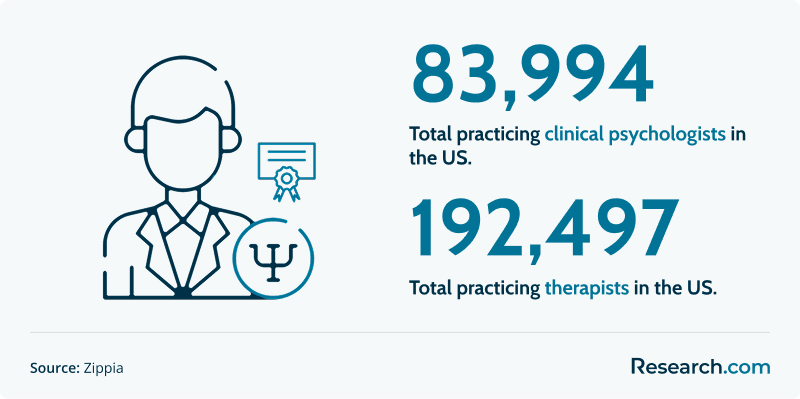
There are currently over 83,994 clinical psychologists and 192,497 therapists working in the United States. That large workforce reflects multiple entry points into mental health careers, but the education requirements still shape what each professional can legally do.
Who should choose the therapist path?
- You want to provide counseling and psychotherapy without committing to a doctoral program.
- You are drawn to relationship work, community mental health, school-based services, addiction counseling, family systems, or direct client support.
- You want a shorter training timeline than clinical psychology typically requires.
- You are comfortable checking state licensing rules closely and completing supervised hours after graduation.
Who should choose the clinical psychologist path?
- You want doctoral-level expertise in diagnosis, psychological assessment, and complex treatment.
- You are interested in research, teaching, hospitals, neuropsychology, testing, or academic medical settings.
- You are prepared for a longer and more selective education path.
- You want broader options for specialization and leadership in clinical, academic, or research environments.
What is the difference in licensing between therapists and clinical psychologists?
Licensing is not optional for independent clinical practice. It protects clients, defines professional scope, and determines what services a provider can legally offer. Requirements vary by state, so students should always verify rules with the licensing board where they plan to work.
All states require marriage and family therapists to be licensed. The standard path includes an approved master’s degree, supervised clinical hours, and a licensing exam. Other therapist licenses, such as counseling or clinical social work licenses, have their own state-specific rules, but they generally include graduate education, supervision, exams, ethics requirements, and continuing education.
Clinical psychologists must be licensed to practice independently in all 50 states and the District of Columbia. The usual requirements include a doctoral degree, supervised internship or related clinical training, and passing the Examination for Professional Practice in Psychology (EPPP). Some states allow unlicensed psychology professionals to work under a licensed clinical psychologist’s supervision, especially in research, academic, or structured institutional settings.
Licensing questions to ask before choosing a program
- Does this program meet education requirements in the state where I want to practice?
- Is the program properly accredited for my intended license?
- How many supervised hours will I need after graduation?
- Does the school help students secure practicum, internship, or field placement sites?
- What licensing exam will I need to pass?
- If the program is online, are in-person clinical placements available in my state?
How much can I make as a therapist vs as a clinical psychologist?
Pay varies by license, employer, location, specialty, experience, and whether you work in private practice, healthcare, education, government, or community services. According to the Bureau of Labor Statistics, the mean annual wage for clinical psychologists is $106,600 as of May 2023. Marriage and family therapists, one therapist subgroup, have a median annual wage of $58,510.
Zippia reports that clinical psychologists earn an average salary of $97,659 per year, with a typical range between $72,000 and $132,000. Zippia’s therapist data lists an average annual salary of $55,943, with salaries ranging from $39,000 to $80,000 depending on experience and location.
Specialized psychology careers can also differ in pay. Industrial-organizational psychologists have a median annual wage of $92,740, showing how specialty area, employer type, and advanced training can affect earnings. Salary should be one factor in your decision, but not the only one. You should also weigh tuition, time in school, unpaid or lower-paid supervised training periods, licensing costs, and long-term career fit.
| Career comparison | Therapist | Clinical psychologist |
| Reported salary figures | Marriage and family therapists have a median annual wage of $58,510; Zippia lists therapists at $55,943 on average, with a range from $39,000 to $80,000. | BLS reports a mean annual wage of $106,600 as of May 2023; Zippia lists $97,659 on average, with a range between $72,000 and $132,000. |
| Training investment | Generally lower than doctoral training, though costs vary widely by program and state requirements. | Usually higher because of doctoral study, longer training, and internship or residency expectations. |
| Earning upside | Can increase with private practice, supervision, specialization, and leadership roles. | Often higher in specialty assessment, hospitals, consulting, academia, and advanced clinical roles. |
| Important caution | Salary outcomes are not guaranteed and depend on license, setting, location, and client demand. | Higher pay may come with longer education, more debt, and more competitive training requirements. |
The chart below summarizes earning potential across these roles and highlights how specialized psychology training can influence compensation.
Top Therapist Careers for 2027
Therapist-related careers are not limited to one title. Some roles require clinical licensure, while others are adjacent positions in education, healthcare coordination, supervision, or community support. The following options show how broad the therapist career track can be.
Counselor
Counselors work with individuals, families, or groups to address emotional, behavioral, and personal concerns. They may support clients dealing with anxiety, depression, grief, relationship stress, or major life transitions. Workplaces can include schools, hospitals, community agencies, private practices, and nonprofit organizations.
- Average annual salary: $36,225
- Education Requirement: Master’s degree in Counseling or a related field
- Job outlook: 10% growth, reflecting increasing recognition of mental health needs
Social Worker
Social workers help people access services, navigate systems, manage crises, and improve well-being. Clinical social workers may provide therapy, while other social workers focus on case management, advocacy, policy, healthcare, schools, or community programs.
- Average annual salary: $50,102
- Education Requirement: Bachelor's degree in Social Work, with a Master's preferred for clinical roles
- Job outlook: 9% growth, driven by broader social recognition and expanding services
Instructor
Instructors teach students in academic or training environments. They prepare lessons, evaluate student progress, support learning outcomes, and may teach psychology, counseling, human services, or related subjects depending on their background and institution.
- Average annual salary: $53,426
- Education Requirement: Master’s degree, typically required in higher education settings
- Job outlook: 12% growth, showing an increasing demand for education professionals in various learning contexts
Clinical Supervisor
Clinical supervisors guide developing clinicians, review cases, monitor ethical practice, and support skill development. This role is best suited to experienced professionals who are comfortable with mentorship, documentation, risk management, and professional standards.
- Average annual salary: $61,615
- Education Requirement: Master’s degree in a relevant healthcare field
- Job outlook: 9% growth, indicative of a need for more leadership in expanding healthcare services
Clinical Care Manager
Clinical care managers coordinate services for patients or clients across healthcare settings. They may help connect people with providers, monitor care plans, manage resources, and support continuity of care.
- Average annual salary: $70,859
- Education Requirement: Bachelor's degree in Nursing or Healthcare Management
- Job outlook: 28% growth, one of the highest in healthcare, due to an increasing need for healthcare coordination
Top Clinical Psychologist Careers for 2027
Clinical psychology can lead to therapy-focused roles, assessment positions, academic work, supervision, and highly specialized practice. Some of the roles below are direct clinical psychology positions, while others are closely related psychology career paths.
Psychology Instructor
Psychology instructors teach courses, develop learning materials, advise students, and may participate in academic research. This path can fit professionals who enjoy explaining psychological concepts, mentoring students, and contributing to education.
- Average annual salary: $58,760
- Education Requirement: Master's or Doctorate in Psychology
- Job outlook: 12% growth
Clinical Supervisor
Clinical supervisors oversee the work and training of mental health professionals. They help supervisees improve clinical judgment, apply ethical standards, manage risk, and deliver effective care.
- Average annual salary: $61,615
- Education Requirement: Master's degree in Psychology or related field
- Job outlook: 9% growth
Counseling Psychologist
Counseling psychologists provide therapeutic services for emotional, mental, behavioral, and adjustment-related concerns. They use evidence-based approaches and may work in private practice, colleges, healthcare systems, government agencies, or community settings.
- Average annual salary: $80,294
- Education Requirement: Doctorate in Counseling Psychology
- Job outlook: 14% growth
Psychometrist
Psychometrists administer and score psychological or neuropsychological tests under appropriate supervision. Their work supports assessment, diagnosis, treatment planning, educational decisions, and research.
- Average annual salary: $89,483
- Education Requirement: Bachelor's or Master's degree in Psychology, with specific training in psychometrics
- Job outlook: 14% growth
Neuropsychologist
Neuropsychologists evaluate how brain function affects thinking, behavior, emotion, and daily life. They often work with patients who have brain injuries, neurological disorders, cognitive decline, developmental conditions, or complex medical histories.
- Average annual salary: $94,580
- Education Requirement: Doctorate in Neuropsychology or Clinical Neuropsychology
- Job outlook: 6% growth
What are the top industries for therapists vs clinical psychologists?
Therapists and clinical psychologists work in some of the same sectors, but their roles often differ. Therapists are frequently hired for counseling, case support, school services, and community-based care. Clinical psychologists are more likely to be hired for diagnostic assessment, treatment of complex cases, psychological testing, research, and doctoral-level clinical leadership.
Common industries for therapists
- Health care: Therapists work in hospitals, outpatient clinics, integrated care teams, rehabilitation centers, and private practices.
- Social services: Community agencies, nonprofits, and government-funded programs hire therapists to support families, individuals, and vulnerable populations.
- Education: School-based therapists and counselors help students manage emotional, behavioral, social, and academic challenges.
- Private practice: Many therapists build independent or group practices serving individuals, couples, families, and groups.
Common industries for clinical psychologists
- Health care: Clinical psychologists work in hospitals, mental health clinics, outpatient centers, and specialty programs treating more complex psychological conditions.
- Academic and research institutions: Some teach, publish research, supervise trainees, or work in applied areas such as industrial organizational psychology careers, where psychology is applied to workplace performance and employee well-being.
- Government and military: Clinical psychologists may support service members, veterans, public employees, correctional systems, or crisis response programs.
- Private practice: Like therapists, clinical psychologists can operate private practices, often adding assessment, diagnosis, and specialized treatment services.
How can interdisciplinary skills expand long-term success in mental health careers?
Mental health work is increasingly shaped by telehealth, digital tools, measurement-based care, data-informed treatment planning, and collaboration across medical, educational, and social service systems. Therapists and clinical psychologists who build interdisciplinary skills can adapt more easily to changing client needs and employer expectations.
Useful skill areas include teletherapy delivery, ethical use of digital platforms, research literacy, outcome tracking, crisis response, cultural humility, behavioral health integration, and basic data interpretation. Professionals interested in cognition, perception, memory, and decision-making can also explore careers in cognitive psychology as a way to understand related specialization options.
What are the best continuing education options for mental health professionals?
Continuing education helps clinicians maintain licensure, stay aligned with ethical standards, and update their treatment skills. Strong options include accredited workshops, professional conferences, supervised advanced training, certificate programs, trauma-informed care training, assessment training, and evidence-based therapy courses.
Some professionals use graduate study to expand their qualifications. For example, the cheapest online master's degree in psychology options may appeal to learners seeking additional psychology education while balancing work. Before enrolling, confirm accreditation, licensure relevance, faculty qualifications, clinical requirements, and whether the program supports your intended career outcome.
What are the challenges of therapist vs clinical psychologist careers?
Both careers can be rewarding, but neither is easy. Therapists may face high caseloads, crisis calls, emotional fatigue, insurance paperwork, client no-shows, and pressure to maintain boundaries while providing compassionate care. Burnout risk is real, especially in under-resourced agencies or roles with heavy documentation demands.
Clinical psychologists may face longer training timelines, doctoral debt, competitive internships, complex diagnostic responsibilities, research obligations, administrative leadership, and high-stakes assessment decisions. Some also balance clinical work with teaching, supervision, publishing, or institutional responsibilities.
Additional education can help, but it should be chosen carefully. An accelerated psychology degree may shorten a student’s academic timeline, but students should still verify accreditation, transfer policies, graduate school preparation, and licensure relevance.
Common mistakes to avoid
- Choosing a program without checking licensure fit: A degree may be legitimate but still fail to meet your state’s licensing requirements.
- Looking only at tuition: Total cost also includes fees, books, technology, travel, practicum expenses, exam fees, supervision, and lost work time.
- Assuming online means easier: Online programs can still require intensive reading, clinical placements, live sessions, and strict deadlines.
- Ignoring accreditation: Accreditation can affect licensure eligibility, transfer credit, financial aid, and employer acceptance.
- Overlooking supervised hours: Graduation is not the same as full independent licensure.
- Expecting salary guarantees: Earnings depend on role, license, state, employer, specialty, and experience.
Can specialized certifications amplify career growth?
Specialized certifications can help mental health professionals deepen expertise, serve specific client populations, and stand out in hiring or private practice. Useful areas may include trauma-informed care, behavior analysis, addiction counseling, family systems, child and adolescent work, telehealth, assessment, or evidence-based therapy models.
Certification should match your scope of practice. For clinicians interested in applied behavior analysis, behavior analyst programs online can provide a focused route for adding ABA-related skills. Before enrolling, confirm whether the credential supports your state requirements, employer expectations, and long-term goals.
How can I choose an affordable online doctorate in psychology?
An online doctoral program can be attractive for working adults, but cost should not be the only factor. Prospective clinical psychology students should evaluate accreditation, doctoral model, faculty expertise, practicum and internship support, residency requirements, student outcomes, state licensure alignment, and total cost.
If your goal is clinical licensure, confirm whether the program meets the requirements of the state where you plan to practice. Some programs may be flexible and affordable but not appropriate for every licensure pathway. A comparison of the cheapest online doctorate in psychology options can be a useful starting point, but students should use affordability alongside quality, placement support, and licensing fit.
How can an online doctorate in psychology propel your career forward?
A doctorate in psychology can support advancement into specialized clinical practice, supervision, assessment, research, teaching, consulting, or leadership roles. Online formats may make doctoral study more accessible for working professionals, but clinical training still requires careful planning because practicum and internship experiences are central to preparation.
Students comparing online PhD psychology programs should look beyond convenience. Important questions include whether the program supports research training, whether it prepares students for the intended license, how clinical placements are arranged, and whether graduates pursue the kinds of roles you want.
What are the entry-level pathways for specializing in child psychology?
Students interested in child psychology can begin building relevant experience before graduate school or licensure. Helpful entry-level settings include schools, youth programs, behavioral health clinics, child welfare organizations, developmental support programs, research labs, and community mental health agencies.
These early roles can strengthen skills in observation, developmental milestones, family communication, crisis response, documentation, and evidence-based intervention support. Exploring entry level child psychology jobs can help students identify practical ways to build experience before pursuing advanced clinical training.
How can I access affordable, accredited psychology education?
Affordable education is valuable only if the program also supports your professional goal. Students should compare accreditation, curriculum, faculty experience, transfer credit rules, internship or practicum requirements, graduation support, and licensure preparation. Low tuition can become expensive if credits do not transfer or the degree does not meet licensing requirements.
Online study can reduce commuting and relocation costs, but students should still verify field placement expectations and state authorization. A list of affordable online psychology degrees can help you compare options, but the best choice is the program that balances cost, quality, flexibility, and career alignment.
What are the career advancement opportunities for therapists and clinical psychologists?
Therapists can advance by earning independent licensure, building a specialty, moving into private practice, becoming clinical supervisors, managing programs, teaching, consulting, or pursuing advanced credentials. Specialties such as trauma, family therapy, addiction, child and adolescent therapy, couples counseling, and behavioral intervention can strengthen career focus.
Clinical psychologists may advance into neuropsychology, forensic psychology, health psychology, academic roles, research leadership, hospital administration, assessment practice, supervision, or executive-level behavioral health positions. Some professionals add focused training through options such as accredited ABA programs to expand interdisciplinary practice or consulting opportunities.
How Can Online PsyD Programs Elevate Your Clinical Psychology Training?
Online PsyD programs may appeal to students who want practitioner-focused doctoral training with more scheduling flexibility than a traditional campus format. However, clinical psychology training is not fully theoretical. Students still need supervised clinical experiences, strong faculty guidance, assessment preparation, and alignment with state licensure rules.
Before choosing a program, review accreditation, residency requirements, practicum support, internship placement expectations, faculty clinical experience, tuition, completion support, and graduate outcomes. Comparing PsyD counseling psychology online options can help students identify programs that balance flexibility with rigorous clinical preparation.
Which are the best states for therapists vs clinical psychologists?
The best state depends on more than employment numbers. Students and professionals should consider license portability, cost of living, reimbursement rates, supervision availability, telehealth rules, population needs, and employer demand. Based on available job outlook data, the following states stand out for these professions.
Best states for therapists
- Vermont - High demand with a 44% employment per 1000 people, indicating a strong market for therapists.
- New Hampshire - Similar to Vermont, showing a 42% employment rate per 1000 people.
- Massachusetts - A robust 35% employment per 1000 people, supported by strong healthcare systems and educational institutions.
- Rhode Island and North Dakota - Both have a 31% employment rate per 1000 people, reflecting a solid demand for therapists.
Best states for clinical psychologists
- California - Leads with the highest employment level and offers competitive salaries due to the high cost of living and large population.
- New York - Notable for its high number of employed clinical psychologists and extensive mental health services.
- Massachusetts - Known for its educational institutions and healthcare facilities, providing ample opportunities for clinical psychologists.
- Illinois - Offers a substantial number of jobs combined with strong academic and healthcare infrastructures.
California and New York may also be relevant for professionals interested in workplace psychology because large corporate markets can support demand for employee well-being, organizational assessment, and workplace efficiency services.
What is the job outlook for therapist vs clinical psychologist?
The outlook for both careers is positive, reflecting continued demand for mental health services. Therapists have an expected job growth rate of 17% from 2018 to 2028. Clinical psychologists have a projected growth rate of 14% over the same period. These figures suggest demand across healthcare, schools, community agencies, private practice, and specialized mental health settings.
For students asking what jobs you can get with a doctorate degree in psychology, the answer extends beyond one job title. Doctoral training can support roles in clinical practice, neuropsychology, psychometrics, research, academia, supervision, assessment, and healthcare leadership. The right option depends on your license, specialization, training quality, and geographic market.
Current trends shaping both careers
- Telehealth is now a standard part of care: Clinicians need to understand ethical, legal, and clinical issues related to remote sessions.
- Employers increasingly value evidence-based treatment: Training in measurable, research-supported approaches can improve employability.
- Integrated care is expanding: Mental health professionals are working more often with primary care, schools, social services, and hospitals.
- Documentation and compliance matter: Insurance, privacy, risk management, and state rules affect daily work.
- Specialization can improve fit: Trauma, child psychology, neuropsychology, addiction, assessment, and behavioral interventions may help professionals define a clearer niche.
Are therapist and clinical psychologist careers worth it?
For many people, both careers can be worth the investment, but the better choice depends on your goals, finances, tolerance for long training, and preferred scope of practice. A therapist career may be worth it if you want direct counseling work and a faster route to practice. Clinical psychology may be worth it if you want doctoral-level specialization, testing authority, research options, and potentially higher earnings.
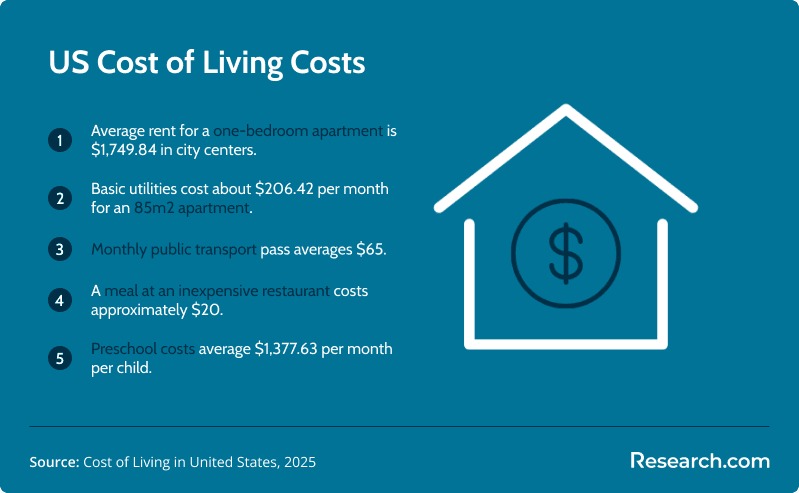
For therapists, Zippia lists an average annual salary of about $55,943, and the projected job growth rate is 17%. That can support a stable career in many regions, though cost of living matters. Numbeo lists the monthly cost for a single person without rent at $1,166.4 in the U.S.
So, is clinical psychology a good career? It can be, especially for people who are prepared for doctoral training and want advanced clinical, assessment, research, or academic opportunities. Zippia lists an average salary of about $97,659 for clinical psychologists, and the projected job growth rate is 14%.
For families, Numbeo lists basic monthly expenses for a family of four, without rent, at around $4,153.6. Because rent, debt, insurance reimbursement, and state licensing rules vary widely, students should run a personal return-on-investment calculation before committing to either path.
How to decide which path is right for you
| If this describes you | Consider this path | Why it may fit |
| You want to provide counseling as soon as responsibly possible. | Therapist | The master’s-level route is generally shorter than doctoral clinical psychology training. |
| You want to conduct psychological testing and advanced diagnostic assessments. | Clinical psychologist | Doctoral psychology training is typically designed for deeper assessment and diagnostic work. |
| You are focused on couples, families, school counseling, community mental health, or general therapy. | Therapist | Many therapist licenses align directly with these practice settings. |
| You want research, teaching, hospital-based specialty practice, or neuropsychology. | Clinical psychologist | Doctoral training better supports research-intensive and specialized roles. |
| You are concerned about time in school and educational cost. | Therapist | A master’s-level path may reduce time and cost, though supervised hours are still required. |
| You are willing to invest more years for broader clinical authority. | Clinical psychologist | The doctoral route can open assessment, academic, research, and specialized clinical opportunities. |
Here’s What Graduates Have to Say About Their Therapist or Clinical Psychology Careers
- My clinical psychology training gave me the assessment and treatment skills I use every day. The work is demanding, but seeing clients make measurable progress makes the long doctoral path feel meaningful. Emily
- I chose an online therapy program because I needed flexibility while working part time. The structure helped me build a strong foundation in counseling techniques that I now apply in client sessions. Jordan
- Therapy has allowed me to build deep professional connections with people during difficult points in their lives. Each session reminds me how powerful skilled listening, trust, and consistent support can be. Marcus
Key Insights
- Therapist is a broad term; clinical psychologist is a more specific doctoral-level psychology role.
- Therapists often need a master’s degree, while clinical psychologists typically need a Ph.D. or Psy.D.
- Clinical psychologists average $97,659 annually in Zippia data; therapists average $55,943.
- BLS reports the mean annual wage for clinical psychologists as $106,600 as of May 2023, while marriage and family therapists have a median annual wage of $58,510.
- Therapists have a projected 17% growth rate from 2018 to 2028; clinical psychologists have a projected 14% growth rate for the same period.
- Choose therapy if you want a shorter route into counseling-centered work; choose clinical psychology if you want advanced assessment, diagnosis, research, and specialization.
- Never choose a program based only on price or convenience. Accreditation, licensure alignment, supervised training, and state rules matter more for long-term career eligibility.
- California and New York are strong markets for clinical psychologists, while Vermont and New Hampshire stand out for therapists based on the listed employment data.
References:
- Bureau of Labor Statistics. Occupational Outlook Handbook - Psychologists.
- Bureau of Labor Statistics. Occupational Employment and Wages, May 2023 - Clinical, Counseling, and School Psychologists.
- Bureau of Labor Statistics. Occupational Outlook Handbook - Marriage and Family Therapists.
- Numbeo. Cost of Living in United States.
- Zippia. Clinical Psychologist Jobs.
- Zippia. Therapist Jobs.
Other Things You Should Know About Therapists vs Clinical Psychologists
In 2027, therapists focus on providing support through talk therapy and addressing emotional and psychological issues. Clinical psychologists are trained to conduct more specialized psychological assessments and can diagnose and treat mental disorders. Both aim to improve mental health but employ different methods according to their training.
No, therapists cannot prescribe medication. This authority is generally reserved for psychiatrists and other medical doctors. Clinical psychologists also typically do not prescribe medication unless they are specially licensed in a few states that offer prescribing rights to trained psychologists.
In 2027, becoming a clinical psychologist typically requires a doctoral degree (Ph.D. or Psy.D.), which involves about 8-12 years of studies. In contrast, becoming a therapist often requires a master's degree, totaling approximately 6-8 years of education.
In 2027, therapists primarily provide counseling and support to help clients with various emotional and mental health issues. Clinical psychologists engage in similar activities but often handle more complex cases, including conducting assessments, providing psychotherapy, and executing research. Their roles may also include collaborating with medical professionals for a comprehensive treatment approach.


