2027 Psychologist vs. Therapist: Explaining the Difference

Co-Founder and Chief Data Scientist
Choosing between psychologist and therapist careers is not just a vocabulary question. It affects how long you study, how much you may spend, what license you pursue, which clients you can serve, and whether your work centers more on assessment, diagnosis, counseling, research, or systems-based care. This guide is for students, career changers, and early-career mental health professionals who want a practical comparison before committing to a degree path. You will learn how psychologists and therapists differ in education, scope of practice, licensing, costs, treatment style, career fit, and long-term opportunities.
Quick Answer: Psychologist vs. Therapist
A psychologist is usually a doctoral-level mental health professional with training in psychological assessment, diagnosis, research, and psychotherapy. A therapist is a broader term for licensed professionals—often counselors, clinical social workers, or marriage and family therapists—who usually hold a master’s degree and provide counseling or psychotherapy. Both can help people manage mental health concerns, but psychologists typically complete longer training and may be more likely to conduct formal testing, while therapists often focus on ongoing counseling, relationship work, coping skills, and client-centered support.
- Typical education: Psychologists usually earn a PhD or PsyD, while many therapists earn a master’s degree in counseling, social work, or marriage and family therapy.
- Typical work focus: Psychologists often combine diagnosis, testing, therapy, and research-informed treatment planning. Therapists generally focus on counseling, emotional support, behavior change, and practical intervention.
- Licensure: Both fields are regulated by state licensing boards, but psychologists generally complete doctoral training, supervised practice, and the EPPP, while therapists complete graduate-level clinical training, supervised hours, and a state-approved exam.
- Education and training: psychologist vs. therapist
- Where psychologists and therapists overlap
- Who can diagnose mental health conditions?
- Psychologist specialties to know
- Therapist specialties to compare
- How treatment approaches differ
- Licensing and certification requirements
- Cost to become a psychologist
- Cost to become a therapist
- Which path should you choose?
- Ethical and legal issues in mental health practice
- Future career prospects
- Finding an affordable online master’s in psychology
- Why accreditation matters
- Fast-tracking the psychology pathway
- Professional development strategies
- Combined degree options for mental health careers
How do psychologists and therapists differ in education and training?
The biggest difference is the level and purpose of training. Psychologists generally complete doctoral-level preparation that emphasizes psychological science, assessment, diagnosis, clinical methods, and research. Therapists usually complete master’s-level clinical preparation focused on counseling techniques, supervised client care, ethics, and practice within a specific license category.
| Factor | Psychologist | Therapist |
| Common degree level | Doctorate, usually PhD or PsyD | Master’s degree in counseling, social work, marriage and family therapy, or a related field |
| Training emphasis | Assessment, diagnosis, research methods, psychotherapy, psychological theory, and clinical practice | Counseling methods, therapeutic relationship-building, intervention planning, supervised practice, and client advocacy |
| Typical time investment | Longer because doctoral study and postdoctoral requirements are common | Shorter than the psychologist route in many cases because most paths are master’s-level |
| Common work settings | Hospitals, universities, private practices, research settings, assessment clinics, schools, and healthcare organizations | Private practices, community agencies, schools, substance use programs, hospitals, nonprofits, and family service organizations |
| Best fit for students who want | Advanced assessment authority, research training, complex diagnostic work, or doctoral-level clinical roles | Direct counseling work, a faster route into client care, relationship-based practice, or community mental health roles |
Educational background for psychologists
Most psychologists complete a doctoral program, commonly a PhD or PsyD in psychology. Their graduate education typically includes psychological theory, research design, statistics, ethics, assessment, diagnosis, intervention, and supervised clinical experience. Many candidates also complete internships or postdoctoral training before becoming fully licensed. Students comparing doctorate in psychology programs should look closely at accreditation, clinical placement support, faculty expertise, licensure outcomes, and whether the program is designed for research, practice, or both.
Recent data from the U.S. Bureau of Labor Statistics (BLS) shows that graduates from these programs are highly sought after, with many positions paying competitive annual salaries ranging from $90,000 to $160,000. Salary outcomes still depend on specialty, state, employer, experience, credentials, and whether the professional works in private practice, healthcare, academia, government, or organizational consulting.
Educational background for therapists
Therapists usually complete a master’s program tied to a specific professional license. Common degrees include counseling, clinical mental health counseling, social work, marriage and family therapy, or addiction counseling. Compared with doctoral psychology programs, these degrees are usually more practice-focused and less research-intensive. Students learn assessment basics, counseling theories, ethics, multicultural practice, crisis response, group counseling, and supervised therapy skills.
This route can be more practical for students who want to begin clinical work sooner and do not need doctoral-level assessment or research training. However, “therapist” is not a single license. The requirements for an LPC, LMFT, LCSW, or substance abuse counselor can differ by state, so students should choose a program that matches the license they plan to pursue.
Alternative training pathways and online options
Online and hybrid mental health programs have expanded access for working adults, rural students, and career changers. Still, most regulated therapy roles require a relevant graduate degree, supervised clinical hours, and a state license. Articles about becoming a therapist without a psychology degree can be useful for understanding alternative entry points, but readers should be cautious: certificates alone usually do not qualify someone for independent clinical practice.
If your goal is licensure, verify three things before enrolling: whether the program is accredited or recognized for your license type, whether it includes required practicum or internship experiences, and whether it meets the rules in the state where you intend to practice.
What are the key similarities between psychologists and therapists?
Psychologists and therapists differ in training, but their work overlaps in several important ways. Both are mental health professionals who help clients understand patterns, manage symptoms, improve relationships, and build healthier coping strategies.
- Both address mental health concerns: Psychologists and therapists commonly work with anxiety, depression, stress, trauma, grief, relationship strain, life transitions, and behavioral challenges.
- Both use evidence-informed methods: Many practitioners use approaches such as cognitive behavioral therapy (CBT), dialectical behavior therapy (DBT), exposure-based methods, family systems work, mindfulness-based strategies, and solution-focused techniques.
- Both rely on trust: The therapeutic relationship matters in both professions. Effective care depends on confidentiality, clear goals, active listening, empathy, and consistent progress monitoring.
- Both are regulated: Licensed psychologists and licensed therapists must follow state rules, professional ethics, documentation standards, confidentiality requirements, and continuing education obligations.
- Both may collaborate with other providers: Psychologists and therapists often coordinate care with psychiatrists, primary care physicians, school teams, social service agencies, or specialists when clients need additional support.
| Shared area | What it means in practice |
| Client care | Both help clients identify problems, set goals, and work toward emotional or behavioral change. |
| Ethics | Both must protect confidentiality, obtain informed consent, and practice within their competence. |
| Therapy skills | Both may provide talk therapy, teach coping skills, and adjust treatment plans based on client progress. |
| Referral judgment | Both should refer clients when a concern falls outside their training, license, or scope of practice. |
Can both psychologists and therapists diagnose mental health conditions?
In many situations, both psychologists and licensed therapists may be involved in diagnosis, but legal authority depends on the professional’s license and state law. The safest answer is: psychologists are broadly trained in formal assessment and diagnosis, while therapists may diagnose in many jurisdictions if their license permits it.
Psychologists
Psychologists often receive extensive training in diagnostic evaluation, psychological testing, clinical interviewing, and interpretation of assessment results. This preparation is especially important when a client needs formal documentation, complex differential diagnosis, neuropsychological testing, educational assessment, or evaluation for co-occurring conditions.
Therapists
Licensed therapists with master’s-level credentials may be allowed to diagnose mental health conditions depending on state rules and license type. For example, licensed professional counselors, clinical social workers, and marriage and family therapists may use diagnostic frameworks as part of treatment planning when their license permits it. In settings where their diagnostic authority is limited, therapists may coordinate with psychologists, psychiatrists, or other qualified clinicians.
When a client may need a psychologist specifically
- A school, court, employer, or medical provider requires formal psychological testing.
- The case involves complex diagnostic questions or multiple possible conditions.
- Neuropsychological, cognitive, personality, or learning assessment is needed.
- Treatment has stalled and a deeper evaluation may clarify the next step.
What are the different types of psychologists and their specialties?
Psychology includes clinical, research, organizational, educational, and applied specialties. The right specialty depends on whether you want to provide therapy, conduct assessments, study behavior, work with organizations, or focus on specific populations.
- Clinical psychologists: These professionals evaluate, diagnose, and treat mental health conditions. They may provide psychotherapy, behavioral interventions, and psychological testing in hospitals, clinics, private practices, universities, or integrated healthcare settings. Readers asking what clinical psychologists do are often comparing this path with counseling, psychiatry, or social work.
- Counseling psychologists: These psychologists often help clients manage life stress, adjustment issues, identity concerns, career challenges, relationship problems, and emotional distress. Their work may look similar to therapy but is grounded in doctoral psychology training.
- Industrial-organizational psychologists: These specialists apply psychological research to workplaces. They may study employee motivation, hiring systems, leadership, productivity, job satisfaction, and organizational behavior.
- Neuropsychologists: These psychologists focus on the connection between brain function and behavior. Their work often involves assessment after brain injury, neurological illness, developmental concerns, or cognitive decline.
Other psychology specialties
Psychologists may also specialize in developmental psychology, social psychology, cognitive psychology, school psychology, forensic psychology, health psychology, psycholinguistics, and related fields. Students interested in income potential should review how specialty, setting, credentials, and geography affect compensation rather than assuming one path always pays more. Research.com’s guide to high-paying psychology careers can help compare options that require advanced training or specialized expertise.
| Psychology specialty | Common focus | Good fit if you want to... |
| Clinical psychology | Assessment, diagnosis, and treatment | Work with complex mental health concerns and provide clinical care |
| Counseling psychology | Adjustment, wellness, relationships, and life challenges | Support clients through personal, emotional, academic, or career issues |
| Industrial-organizational psychology | Workplace behavior and organizational performance | Apply psychology outside traditional therapy settings |
| Neuropsychology | Brain-behavior relationships and cognitive assessment | Use testing to understand cognitive, neurological, or behavioral functioning |
What are the different types of therapists and their specialties?
“Therapist” is an umbrella term. It can refer to professionals with different licenses, populations, methods, and work settings. Before choosing a program, match the degree to the license and client population you want to serve.
- Licensed professional counselors (LPCs): LPCs provide counseling for concerns such as anxiety, depression, stress, grief, life transitions, and relationship difficulties. They generally complete a master’s degree and supervised clinical hours.
- Marriage and family therapists (MFTs): MFTs focus on relationships, family systems, communication patterns, conflict, parenting issues, and couples work. They may treat individuals, couples, and families through a relational lens.
- Clinical social workers: Clinical social workers provide therapy while also considering social, economic, family, community, and resource-related factors. Many combine counseling with case coordination, advocacy, and referrals.
- Substance abuse counselors: These professionals support people dealing with addiction, substance use, relapse prevention, recovery planning, and co-occurring mental health concerns. Services may include individual counseling, group work, education, and referrals to treatment programs.
Career changers sometimes search for the fastest way to become a counselor, but speed should not be the only factor. A shorter path is only useful if it leads to the license, supervised experience, and employment opportunities you actually need.
Compensation also varies by license, setting, state, and specialty. Research.com’s overview of counseling careers can help readers compare therapist roles and salary considerations without treating all counseling jobs as identical.
| Therapist type | Primary focus | Common settings |
| Licensed professional counselor | Individual counseling, mental health support, coping skills, and goal-setting | Private practice, community agencies, schools, hospitals, and clinics |
| Marriage and family therapist | Couples, families, relational patterns, and communication | Family service agencies, private practice, schools, and community programs |
| Clinical social worker | Therapy, advocacy, case coordination, and social context | Hospitals, nonprofits, mental health agencies, government programs, and private practice |
| Substance abuse counselor | Addiction recovery, relapse prevention, behavioral change, and support groups | Recovery centers, outpatient programs, hospitals, community agencies, and correctional settings |
How do treatment approaches differ between psychologists and therapists?
Both psychologists and therapists can provide psychotherapy, but they may approach cases differently because their training emphasizes different skills. Psychologists are more likely to integrate structured diagnostic interviews, standardized assessments, and research-based case formulation. Therapists are more likely to emphasize counseling relationships, practical coping strategies, client strengths, family systems, community resources, and day-to-day functioning.
Psychologists may begin with detailed evaluation, especially when symptoms are complex or when a formal diagnosis is needed. They may use comprehensive psychological testing to clarify cognitive, emotional, behavioral, or personality factors before developing a treatment plan. Their methods may include CBT, DBT, exposure therapy, behavioral interventions, and other evidence-informed approaches.
Therapists also use evidence-informed approaches, but their work often centers on collaboration, emotional processing, relationship patterns, skill-building, and practical change. Depending on the license and training, a therapist might use family systems therapy, motivational interviewing, solution-focused brief therapy, trauma-informed care, group counseling, or relapse prevention strategies.
| Clinical situation | Psychologist may be a strong fit when... | Therapist may be a strong fit when... |
| Diagnostic uncertainty | Testing or complex assessment is needed | A working diagnosis and ongoing counseling are sufficient |
| Anxiety or depression | Symptoms are severe, complex, or tied to multiple conditions | The client needs coping skills, support, behavior change, and regular therapy |
| Relationship concerns | Individual psychological factors require deeper evaluation | Couples, family, or communication patterns are the primary focus |
| Career goal for the student | The student wants doctoral-level assessment, research, and clinical authority | The student wants direct counseling practice with a master’s-level route |
What are the licensing and certification requirements for each profession?
Licensure protects the public by setting minimum standards for education, supervised practice, examinations, ethics, and continuing education. Requirements vary by state, so students should always confirm rules with the licensing board where they plan to practice.
For psychologists
- Education: A PhD or PsyD is typically required for independent practice as a psychologist.
- Supervised experience: Candidates usually complete supervised clinical training, internship experience, and often postdoctoral practice before full licensure.
- Examination: Many states require the Examination for Professional Practice in Psychology (EPPP).
- State rules: States such as California and New York may require the national exam as well as additional state-specific exams, jurisprudence requirements, or continuing education.
For therapists
- Education: Most licensed therapy roles require a master’s degree in counseling, social work, marriage and family therapy, or a related field.
- Supervised hours: Candidates must complete supervised clinical practice after or during graduate training, with exact hour requirements set by each state and license board.
- Examination: Therapists usually take a national or state-approved licensing exam connected to their credential.
- State rules: Texas and Florida, for example, have detailed requirements for supervised hours, documentation, license renewal, and continuing education.
Questions to ask before choosing a licensure path
- Which exact license do I want: psychologist, LPC, LMFT, LCSW, or another credential?
- Does the degree I am considering meet the education rules in my intended state?
- Will the program arrange practicum or internship placements, or am I responsible for finding them?
- How many supervised hours are required after graduation?
- Can this license transfer to another state if I move?
- Does the license allow diagnosis, private practice, telehealth, insurance billing, or supervision of other clinicians?
How much does it cost to become a psychologist?
The psychologist route is usually the more expensive and time-intensive option because it often includes undergraduate study, graduate training, doctoral education, supervised experience, examinations, and licensing fees.
- Undergraduate degree: A bachelor’s degree in psychology or a related field typically costs between $8,000 and $35,000 per year depending on institution type and residency status.
- Graduate school: Students who complete a master’s degree before or during doctoral preparation may spend an additional $30,000 to $60,000 per year.
- Doctoral programs: Psychology doctoral programs can take four to seven years to complete, with total tuition ranging from $100,000 to $200,000+ depending on the school.
- Licensing and added expenses: Postdoctoral training costs, examination fees, licensing applications, and certifications can add another $5,000 to $10,000.
Cost factors that can change the total
| Cost factor | Why it matters |
| Public vs. private institution | Tuition can differ substantially, especially for out-of-state students. |
| Funded doctoral programs | Some doctoral routes may offer assistantships or tuition support, while others may rely more heavily on student loans. |
| Full-time vs. part-time study | Part-time study may reduce yearly pressure but can extend the time before full licensure and earnings growth. |
| Clinical placement location | Travel, relocation, internship availability, and supervision costs can affect the real price of training. |
| Licensure preparation | Exam preparation, application fees, background checks, and renewal fees add to the total investment. |
How much does it cost to become a therapist?
Becoming a therapist can still be a major financial commitment, but the required education is often shorter than the psychologist pathway. Costs depend on degree type, state requirements, supervision arrangements, online or campus format, and whether the student attends a public or private institution.
- Undergraduate degree: Like psychologists, therapists typically begin with a bachelor’s degree, which costs $8,000 to $35,000 per year.
- Master’s degree: A master’s in counseling, social work, or marriage and family therapy takes two to three years and costs $20,000 to $80,000 in total.
- Licensing and supervised hours: Most states require supervised clinical hours, with supervision and exam-related costs generally ranging from $2,000 to $7,000.
Overall, the therapist route is usually less expensive and faster than the psychologist route, but it still requires careful planning. Students should compare not only tuition but also fees, practicum costs, supervision costs, exam fees, licensure applications, technology fees, and the income they may give up while studying.
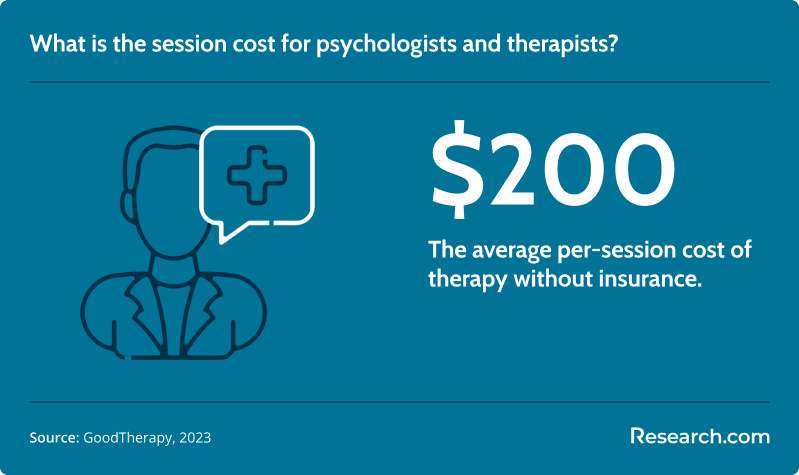
The average cost per session for both psychologists and therapists is around $200, with psychologists typically charging between $150 and $300, and therapists between $100 and $250. These figures should not be treated as guaranteed earnings. Actual income depends on location, insurance contracts, client volume, employer, credential level, overhead, specialization, and years of experience.
Should you become a psychologist or a therapist?
The better path depends on the type of work you want to do, the population you want to serve, your tolerance for graduate school, and your budget. Neither option is automatically “better.” A psychologist path may offer broader assessment and research opportunities, while a therapist path may get you into direct counseling practice sooner.
| Choose the psychologist path if... | Choose the therapist path if... |
| You want doctoral-level training in assessment, diagnosis, research, and clinical practice. | You want to provide counseling and emotional support through a master’s-level clinical route. |
| You are interested in psychological testing, complex case formulation, or academic research. | You prefer direct client work, relationship-based therapy, or community mental health practice. |
| You are prepared for a longer and more expensive education pathway. | You want a shorter path into supervised practice and eventual licensure. |
| You may want to work in hospitals, assessment clinics, universities, or specialized clinical roles. | You may want to work in counseling centers, agencies, private practice, schools, family services, or addiction programs. |
| You are comfortable with intensive research, assessment training, and doctoral expectations. | You are more motivated by practical intervention, counseling skills, and ongoing client support. |
Decision checklist
- Clarify your ideal workday: Do you want to spend more time testing, diagnosing, researching, and writing reports, or more time counseling clients session by session?
- Check your state rules: Licensure titles, diagnostic authority, telehealth rules, and supervision requirements vary.
- Compare total cost: Include tuition, fees, supervision, lost income, exam preparation, and relocation—not just advertised tuition.
- Look at placement support: A program with strong practicum and internship support may be more valuable than a cheaper program with limited clinical connections.
- Consider mobility: If you may move states, ask how portable the license is and whether the curriculum meets multiple state requirements.
- Think about long-term identity: If you want to be known as a psychologist, you need the appropriate doctoral training and license. If your goal is therapy practice, a counseling, social work, or MFT license may be enough.
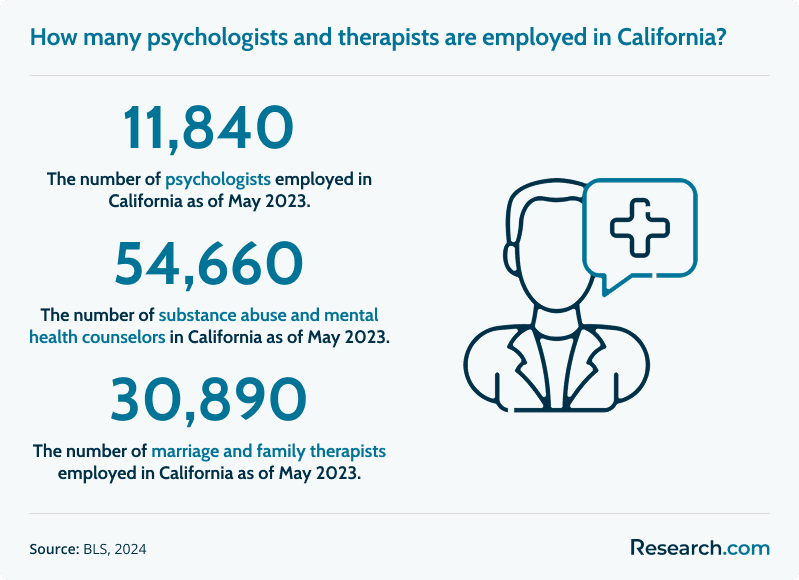
Both professions can lead to meaningful work. California has the highest employment level of psychologists and therapists, and as of May 2023, there are 11,840 psychologists, 54,660 substance abuse and mental health counselors, and 30,890 marriage and family therapists in California.
Can an accelerated online psychology degree fulfill industry standards?
An accelerated online psychology program can meet professional expectations when it is properly accredited, academically rigorous, and designed with appropriate clinical or applied learning experiences. Faster does not automatically mean weaker, but students should be careful. A compressed schedule can be demanding, and some online psychology degrees may not satisfy licensure requirements unless they include the right coursework and supervised training.
Before enrolling, review accreditation status, faculty qualifications, curriculum sequence, practicum expectations, state authorization, and whether graduates can pursue the credential you want. Research.com’s guide to a fast psychology degree can help you compare accelerated options without overlooking academic quality.
How do ethical and legal considerations shape daily mental health practice?
Ethics and law shape nearly every part of mental health work. Psychologists and therapists must protect client confidentiality, explain informed consent, keep appropriate records, avoid conflicts of interest, practice within their competence, and understand when they have a duty to act to protect a client or another person from harm.
These responsibilities become especially important in high-risk or specialized settings, including child services, addiction treatment, forensic work, behavioral intervention, schools, and crisis care. Professionals who support clients with complex behavioral needs may benefit from specialized training through ABA programs, particularly when intervention planning must align with ethical documentation and evidence-based practice.
Common ethical mistakes to avoid
- Assuming confidentiality is absolute without explaining legal limits.
- Taking on cases outside your training or license scope.
- Failing to document informed consent, treatment goals, risk assessments, or referrals.
- Providing telehealth across state lines without checking licensing rules.
- Letting personal relationships, dual roles, or financial pressures affect clinical judgment.
How can I finance my education in psychology or therapy?
Financing should be part of your program search from the beginning. Mental health degrees can lead to stable and meaningful work, but the investment can be large, especially for doctoral study. Start with federal student aid, scholarships, grants, assistantships, employer tuition benefits, and school-based aid. Then compare repayment obligations against realistic career plans.
Students interested in child and adolescent practice can also compare targeted affordability resources such as masters in child psychology programs. When reviewing programs, ask about total program cost, fees, clinical placement expenses, financial aid eligibility, loan options, and whether the degree supports licensure in your state.
Ways to reduce education costs
- Choose an accredited public institution when it meets your licensing goals.
- Ask whether transfer credits are accepted.
- Compare online, hybrid, and campus programs based on total cost, not convenience alone.
- Look for assistantships, scholarships, tuition reimbursement, or employer partnerships.
- Avoid enrolling in a program before confirming that it leads to the license you want.
How can I integrate forensic psychology into my mental health career?
Forensic psychology sits at the intersection of psychology, mental health, law, and public safety. It may involve risk assessment, court-related evaluation, correctional settings, victim advocacy, competency issues, expert consultation, or treatment for justice-involved populations. This path can be valuable for clinicians who want their mental health training to support legal decision-making or rehabilitation.
Because forensic work carries ethical and legal complexity, students should seek programs with strong instruction in assessment, documentation, professional boundaries, and court-related standards. Budget-conscious students can explore affordable online master’s degrees in forensic psychology while still checking accreditation, faculty experience, and licensure alignment.
What are the future career prospects for psychologists and therapists?
Mental health careers are being reshaped by telehealth, integrated care, school and community-based services, workforce shortages, demand for culturally responsive care, and the growing use of digital tools. Psychologists and therapists who can combine strong clinical judgment with technology literacy, ethical practice, and interdisciplinary collaboration will be better prepared for changing work environments.
Future opportunities may include private practice, hospitals, community mental health, schools, teletherapy platforms, employee assistance programs, behavioral health integration, research, assessment clinics, and specialty services. Readers interested in research-heavy or applied cognitive roles can also explore cognitive psychology careers.
AI and technology impact
AI tools may support scheduling, documentation, screening, training, and research review, but they do not replace clinical judgment, therapeutic rapport, crisis response, ethical accountability, or licensed diagnosis. Students entering the field should learn how to use technology responsibly while protecting client privacy and complying with professional standards.
How can I find an affordable online master's program in psychology?
An affordable online master’s program should be evaluated on more than tuition. The right program must fit your career goal, learning style, state requirements, and budget. A low-cost degree that does not support licensure, practicum placement, or career advancement may cost more in the long run.
Start by confirming accreditation, curriculum relevance, faculty credentials, student support, transfer credit policies, practicum requirements, and state authorization. Students comparing cost-conscious options can review Research.com’s list of online master’s in psychology programs as part of a broader program search.
Questions to ask schools
- Is the program designed for licensure, doctoral preparation, career advancement, or general psychology study?
- Does it meet education requirements in my state?
- Are practicum or internship placements required, and who helps arrange them?
- What is the total cost, including fees and required materials?
- Can I attend part time while working?
- What support is available for online students?
How does accreditation influence my psychology career?
Accreditation is one of the most important quality checks in psychology and therapy education. It signals that a school or program has been reviewed against recognized academic standards. For students, accreditation can affect financial aid eligibility, transfer credits, graduate admissions, internship access, licensure eligibility, and employer confidence.
For doctoral-level clinical psychology, accreditation can be especially important because many internships, employers, and licensing pathways prefer or require recognized program quality. Students comparing online doctoral routes should review accredited online PsyD programs carefully and confirm whether the format, practicum structure, and residency requirements match their state’s rules.
Accreditation checks before enrolling
- Confirm the school’s institutional accreditation.
- Check whether your specific program has the professional accreditation expected for your field.
- Ask your state licensing board whether the degree meets education requirements.
- Verify whether online coursework, residencies, and supervised placements are accepted.
- Do not rely only on rankings, marketing pages, or admissions representatives.
Can I fast-track my journey to becoming a psychologist?
Some accelerated psychology pathways shorten the time to degree by compressing coursework, integrating master’s and doctoral study, or offering intensive year-round schedules. These options can be useful for highly prepared students, but they are not shortcuts around licensure. You still need the required education, supervised training, examinations, and state approval.
Students considering accelerated doctoral study should compare workload, clinical training quality, faculty access, internship support, residency requirements, and total cost. Research.com’s guide to fast-track psychology doctoral programs can help you understand the trade-offs before choosing a condensed route.
Who should be cautious about accelerated programs?
- Students who need to work full time and cannot manage an intensive course load.
- Students who require extensive academic support or a slower clinical learning pace.
- Students who have not confirmed licensure compatibility in their state.
- Students choosing speed over practicum quality, internship access, or accreditation.
What strategies can I use to enhance ongoing professional development in mental health?
Mental health practice changes as research, laws, technology, insurance rules, and community needs evolve. Continuing education is not only a license renewal task; it is how clinicians maintain competence and improve client care.
Useful professional development strategies include advanced certifications, supervision, peer consultation, conference participation, specialty workshops, ethics training, and evidence-based treatment courses. Clinicians interested in behavioral analysis can review online BCBA master’s programs to understand how specialized graduate training may support niche expertise.
High-value professional development areas
- Risk assessment and crisis response.
- Trauma-informed care.
- Culturally responsive practice.
- Telehealth ethics and privacy.
- Evidence-based treatment methods.
- Documentation, billing, and legal compliance.
- Supervision and leadership skills for advanced practitioners.
What are the benefits of combined degree options for advancing my mental health career?
Combined degree programs can help students move through graduate psychology training in a more coordinated way. These programs may connect master’s-level coursework with PsyD preparation, allowing students to build research, assessment, and clinical skills in a structured sequence.
The main advantage is planning efficiency: students may avoid applying to separate programs and may follow a clearer pathway toward doctoral-level training. The trade-off is commitment. Combined programs can be intense, costly, and less flexible if your career goals change. Before enrolling, compare admissions rules, exit options, accreditation, licensure alignment, supervised training, and total cost. Research.com’s resource on combined master’s and PsyD programs can help you evaluate whether this route fits your timeline.
Common mistakes when choosing between psychologist and therapist careers
- Using the terms interchangeably: “Therapist” can describe many license types, while “psychologist” usually refers to a specific doctoral-level credential.
- Ignoring state licensure rules: A degree that works in one state may not automatically satisfy requirements in another.
- Choosing only by salary: Income varies by setting, specialization, location, and business model; it is not guaranteed by the title alone.
- Looking only at tuition: Supervision, fees, exam costs, relocation, lost income, and loan interest can change the real cost.
- Assuming online means licensure-ready: Online programs can be strong, but students must confirm practicum, internship, accreditation, and state authorization requirements.
- Underestimating emotional demands: Both careers require boundaries, resilience, supervision, self-awareness, and ethical discipline.
- Relying only on rankings: Rankings can help you discover programs, but accreditation, licensure fit, placement support, and cost matter more for career readiness.
What you should know about the differences between a psychologist and a therapist
Amelie’s decision became clearer when she realized she was most interested in psychological testing, diagnostic questions, and structured treatment planning. That made the psychologist route a stronger match for her goals than a general counseling pathway. Amelie
Frank originally thought every mental health career followed the same training model. After comparing the roles, he recognized that he preferred direct counseling conversations, practical coping strategies, and ongoing client support, which pointed him toward becoming a therapist. Frank
Kylan felt uncertain until he compared the daily work of each profession. His interest in research, complex cases, and long-term clinical study made psychology appealing, while he still saw therapy as an essential path for professionals who want immediate client-facing impact. Kylan
Key Insights
- Psychologists and therapists both provide mental health support, but their training paths are different: psychologists typically complete doctoral education, while therapists commonly complete a master’s-level clinical degree.
- Psychologists are especially associated with assessment, diagnosis, testing, research, and complex clinical formulation. Therapists often focus on counseling, relational work, coping skills, client support, and practical intervention.
- Recent BLS data shows that psychologists' annual salaries range from $90,000 to $160,000.
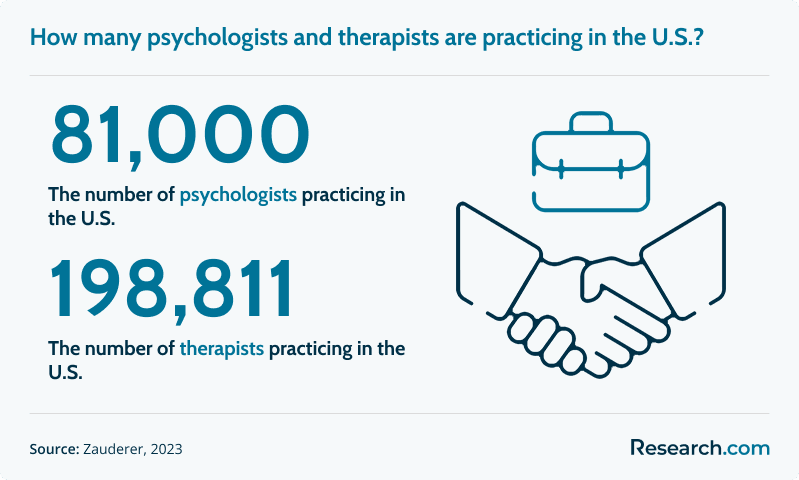
- In the U.S., approximately 81,000 psychologists and 198,811 therapists are practicing.
- The average per-session cost for therapy is around $200, with psychologists typically charging between $150 and $300, and therapists between $100 and $250.
- In California, there are 11,840 psychologists, 54,660 substance abuse and mental health counselors, and 30,890 marriage and family therapists as of May 2023.
- The psychologist route usually costs more and takes longer, with doctoral programs taking four to seven years and total tuition ranging from $100,000 to $200,000+ depending on the institution.
- The therapist route is often faster and less expensive, with a master’s in counseling, social work, or marriage and family therapy taking two to three years and costing $20,000 to $80,000 in total.
- Before choosing a program, verify accreditation, state licensure alignment, clinical placement support, total cost, and whether the degree leads to the role you actually want.
- The best choice depends on your preferred work: choose psychology if you want doctoral-level assessment and research-informed clinical practice; choose therapy if you want a master’s-level path centered on direct counseling and client support.
References:
- BLS. (2024, April 3). Occupational Employment and Wage Statistics: Clinical and counseling psychologists. BLS.
- BLS. (2024, April 3). Occupational Employment and Wage Statistics: Marriage and Family Therapists. BLS.
- BLS. (2024, April 3). Occupational Employment and Wage Statistics: Substance Abuse, Behavioral Disorder, and Mental Health Counselors. BLS.
- BLS. (2024, August 29). Occupational Outlook Handbook: Marriage and family therapists. BLS.
- BLS. (2024, August 29). Occupational Outlook Handbook: Psychologists. BLS.
- BLS. (2024, August 29). Occupational Outlook Handbook: Substance abuse, behavioral disorder, and mental health counselors. BLS.
- Data USA. (2023). Psychology. datausa.io.
- GoodTherapy. (2023, October 31). How much does therapy cost?. goodtherapy.org.
- Zauderer, S. (2023, January 11). Therapist Statistics and Facts: How many are there?. crossrivertherapy.com.
Other Things You Should Know About the Differences Between a Psychologist and a Therapist
In most U.S. states, psychologists cannot prescribe medication. A small number of jurisdictions allow prescribing only for psychologists who complete postdoctoral psychopharmacology training and meet state board rules. Therapists, including licensed professional counselors and marriage and family therapists, do not have prescribing authority.
In 2027, psychologists can provide specialized therapies like cognitive-behavioral therapy and neuropsychological testing, often not offered by therapists. Psychologists are trained to administer and interpret complex assessments, a capability typically outside the scope of standard therapy sessions provided by therapists.