
2027 Arkansas Psychology Licensure Requirements – How to Become a Psychologist in Arkansas

Co-Founder and Chief Data Scientist
Becoming a psychologist in Arkansas is a long, regulated process because licensed psychologists diagnose, assess, and treat serious mental health concerns. For students, career changers, and current mental health workers, the key question is not only “What degree do I need?” but also “How much time, money, supervision, testing, and continuing education will this path require?”
This guide explains how to become a psychologist in Arkansas, from choosing a psychology program to completing supervised experience, passing the EPPP, applying through the Arkansas Psychology Board, and planning for career growth. It also covers costs, accredited school options, online PsyD considerations, specialization choices, job outlook, common challenges, and mistakes to avoid before committing to this career path.
Quick answer: How do you become a psychologist in Arkansas?
To become a licensed psychologist in Arkansas, you generally need to complete advanced psychology education, satisfy supervised experience requirements, pass the Examination for Professional Practice in Psychology (EPPP), submit the required materials to the Arkansas Psychology Board, and maintain your license through continuing education. The full path commonly takes about 10 to 12 years from the start of undergraduate study to licensure.
Important points to know before you begin:
- Psychologist employment is projected to grow 6% until 2032, which is faster than the average for all occupations.
- A psychology education can require a major financial commitment, with in-state undergraduate psychology programs averaging $10,284 and in-state graduate programs averaging $11,381.
- Industrial-organizational psychologists are among the higher-paid psychology specialists, with a median salary of $139,280.
- Psychology graduates may see lifetime earnings ranging from $41,420 to $3.12 million, depending on education level, role, location, and career path.
- The need for mental health professionals remains significant, especially because 47% of the U.S. population lives in areas with a shortage of mental health providers.
- Steps to become a psychologist in Arkansas
- How long the Arkansas psychology licensure path takes
- Finding internship opportunities for licensure
- EPPP retake rules in Arkansas
- Online continuing education for Arkansas psychologists
- Psychology program tuition and related costs
- Arkansas schools with psychology programs
- How to choose a psychology program in Arkansas
- Psychology specializations available in Arkansas
- Psychologist job outlook in Arkansas
- Psychologists and substance abuse recovery
- Forensic psychology career value
- Behavior analysis and psychology practice
- Online education for career advancement
- LPC licensure and psychology careers
- Collaboration with social workers
- Specialized practice and research opportunities
- Whether psychology is a good career in Arkansas
- Dual certifications for clinical practice
- Ethical and legal practice considerations
- Why an online PsyD may be worth considering
- Common challenges for Arkansas psychologists
- Related licensed professions
- Criminal psychology in Arkansas
- Arkansas mental health needs and the psychologist’s role
What are the steps to becoming a psychologist in Arkansas?
The Arkansas path to psychologist licensure is structured to verify that applicants have the academic preparation, supervised experience, ethical grounding, and examination readiness needed for independent practice. The process is especially important in a state where rural and underserved communities may have limited access to behavioral health services.
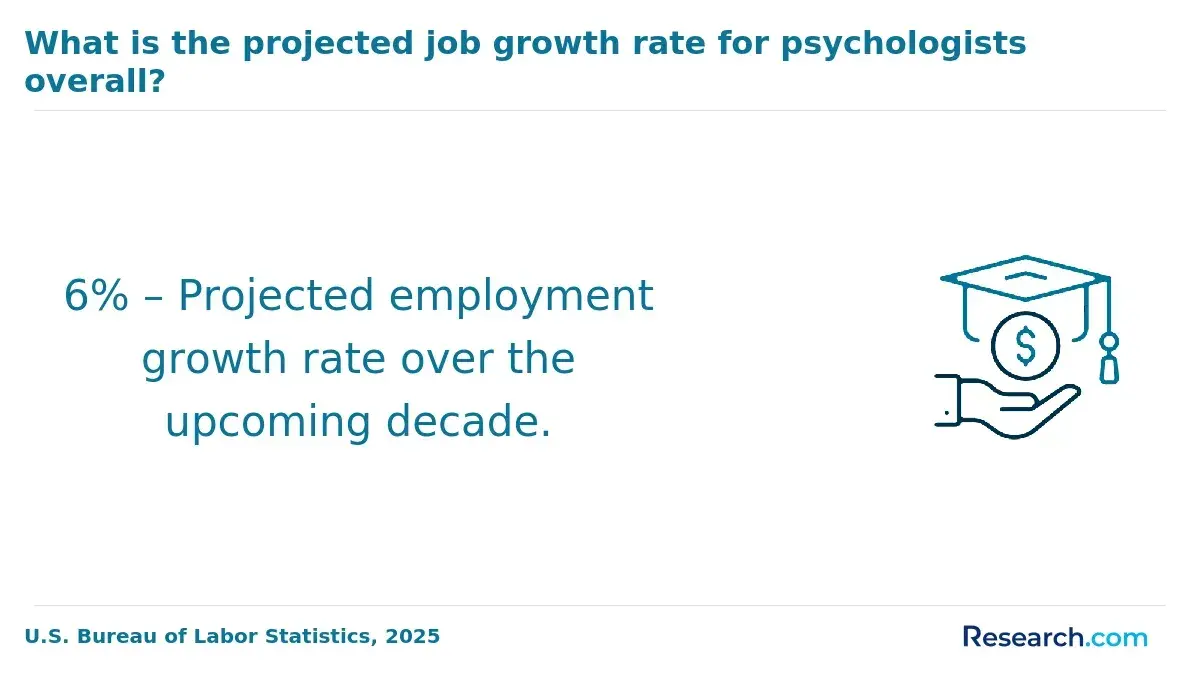
Employment prospects are also part of the decision. Psychologist jobs are projected to grow 6% until 2032, supported by demand for services in healthcare, schools, community agencies, correctional settings, private practice, and workplace consulting.
Applicants should follow the Arkansas Psychology Board application process. The main stages include:
| Stage | What you must do | Why it matters |
| Complete required education | Earn the psychology education required for the license category you are pursuing. | Your degree and coursework determine whether the Board can move your application forward. |
| Finish supervised experience | Complete a 2000-hour internship that meets Arkansas Psychology Board requirements. | Supervised practice confirms that you can apply psychological knowledge with real clients under professional oversight. |
| Request and submit the application | Request the application by email, complete it, and submit the application fee and two background check fees. | The Board uses these materials to build your file and verify eligibility. |
| Prepare for written examinations | After core courses are approved, schedule the EPPP and aim for a passing score of 500. | The EPPP is a central licensure exam used to evaluate professional psychology knowledge. |
| Submit supporting documentation | Provide a Statement of Intent, three reference forms, and a letter from the program director. Out-of-state applicants must provide additional documentation. | These materials help the Board evaluate training, professional readiness, and intended scope of practice. |
| Practice provisionally if approved | Work as a provisionally licensed psychologist under required supervision. A provisional license fee applies for each six-month period, up to 18 months. | Provisional licensure allows supervised practice while final requirements are completed. |
| Finalize licensure | Submit a revised Statement of Intent and pay the certification and prorated license fees. | After all requirements are met, the Board issues the official wallet card and certificate. |
The figure below summarizes national psychologist job outlook information.
What Arkansas Psychology Graduates Say About Practice
- Practicing in Arkansas has given me the chance to work closely with communities that need consistent mental health support. The relationships I build with clients make the work deeply meaningful. -Emily
- Online study made it possible for me to keep working while preparing for a psychology career in Arkansas. That flexibility helped me connect classroom learning with real-world experience. -John
- Serving rural communities in Arkansas has shown me how varied mental health needs can be across the state. Reaching people who have limited access to care is one of the most rewarding parts of the profession. -Sarah
How long does it take to become a psychologist in Arkansas?
The typical timeline to become a psychologist in Arkansas is about 10 to 12 years. The length depends on your degree path, doctoral program requirements, internship availability, supervision timeline, exam preparation, and the pace of the licensing review.
| Step | Typical time commitment | Decision point for students |
| Bachelor’s degree | Typically four years | Choose psychology or a related major and build research, writing, statistics, and human services experience. |
| Doctoral degree | About 4 to 7 years | Decide between a Ph.D. or PsyD based on whether you want a stronger research focus, clinical focus, or a mix of both. |
| Supervised experience | 2,000 hours within a 24-month period | Confirm that the internship or supervised placement meets Arkansas Psychology Board expectations before starting. |
| Exams and application review | Varies by applicant | Plan time for EPPP preparation, background checks, references, statements, fees, and Board correspondence. |
Students should also account for delays that are not always visible at the start, such as limited internship placements, supervisor availability, application processing time, and the need to retake the EPPP if they do not pass on the first attempt.
How can you find approved internship opportunities in Arkansas for psychology licensure?
Internship selection is one of the most important licensure planning decisions. Before accepting a placement, verify that the experience will count toward Arkansas requirements rather than assuming that any psychology-related internship qualifies.
- Start with your program advisor: Your department may track approved or commonly used internship sites, including options for students enrolled in a bachelor’s in psychology online pathway who later plan to pursue advanced study.
- Use professional databases: The American Psychological Association and other professional groups can help students identify recognized internship resources.
- Ask about prior student placements: Programs with a history of successful licensure outcomes can often tell you which sites have supported previous Arkansas applicants.
- Contact the Arkansas Psychological Association: State professional associations may know of local training sites, supervisors, or networking events.
- Search psychology-specific job boards: Platforms such as PsycCareers and general employment boards may list internships, fellowships, or supervised training positions.
- Use LinkedIn strategically: Follow Arkansas mental health organizations, university clinics, hospitals, community agencies, and professionals who supervise trainees.
- Reach out directly to potential sites: If a hospital, clinic, school system, or community agency fits your goals, contact the training director or supervisor to ask whether they accept psychology trainees.
Before committing, ask the site who will supervise you, how hours are documented, whether the experience aligns with Board requirements, and whether past interns have successfully used the placement for licensure.
How many times can you retake the EPPP if you fail in Arkansas?
In Arkansas, candidates may retake the EPPP up to four times within a 12-month period after an unsuccessful attempt. A 60-day waiting period applies after each failed attempt, giving applicants time to review weak areas before testing again.
This rule matters for planning. If you are pursuing a specialization such as industrial psychology or another psychology pathway, build exam preparation into your licensure timeline early. Retesting can delay licensure, add cost, and affect provisional practice planning.
Can you complete continuing education credits online in Arkansas?
Yes. Arkansas psychologists can complete continuing education credits online when the courses meet applicable approval requirements. Online CE is especially useful for professionals balancing clinical work, supervision duties, private practice management, rural service delivery, and family responsibilities.
The Arkansas Psychology Board recognizes online continuing education options, allowing psychologists to study topics such as assessment, ethics, treatment methods, emerging research, telehealth, trauma-informed care, or specialized populations. Before enrolling, confirm that the provider, subject matter, and documentation format will satisfy renewal expectations.
What are the tuition and associated costs of psychology programs in Arkansas?
Psychology program costs in Arkansas vary by school, degree level, residency status, delivery format, and whether the student attends full time or part time. Undergraduate psychology programs average about $10,284 for in-state students and $30,743 for out-of-state students. Graduate psychology programs average $11,381 for in-state students and $24,645 for out-of-state students.
| Cost category | What to review | Why it affects your total investment |
| Tuition and fees | Compare in-state, out-of-state, graduate, and undergraduate rates. | Tuition is usually the largest direct education expense. |
| Books and supplies | Ask whether courses require textbooks, testing materials, software, or assessment tools. | Psychology students may need materials beyond standard textbooks, especially in advanced programs. |
| Housing and transportation | Estimate rent, commuting, parking, relocation, or campus attendance costs. | A lower tuition program may become more expensive if it requires relocation or frequent travel. |
| Internship and practicum costs | Consider travel, background checks, liability coverage, and unpaid placement time. | Supervised training can reduce work hours or require additional expenses. |
| Licensure expenses | Budget for application fees, background check fees, provisional license fees, exam costs, and renewal requirements. | Licensure costs occur after tuition and can be overlooked during school selection. |
| Financial aid | Review scholarships, grants, assistantships, employer benefits, and federal aid eligibility. | A program’s sticker price does not always reflect your final out-of-pocket cost. |
Psychologists earn a median annual wage of $85,330, but salary outcomes are not guaranteed. Earnings depend on specialty, employer, region, experience, credentials, and whether you work in private practice, healthcare, schools, government, research, or consulting.
Which schools in Arkansas offer accredited psychology programs?
Choosing a school is not just about brand recognition. For future licensure, students should evaluate accreditation, curriculum fit, supervised training access, faculty expertise, research opportunities, cost, and whether the program supports the type of psychology career they want.
How do we rank schools?
Research.com school evaluations are based on research and data analysis. More information is available in our methodology section. Data sources considered include:
- IPEDS database
- Peterson’s database
- Distance Learning Licensed Data Set, College Scorecard database
- National Center for Education Statistics
University of Arkansas
The University of Arkansas psychology program includes undergraduate and graduate study options. Its research-oriented structure can be a good match for students who want preparation for graduate school, research roles, or advanced psychology training. In-state undergraduate tuition and fees average $10,284, while in-state graduate costs are approximately $11,381.
- Program length: 4 years
- Track/concentration: Bachelor of Arts in Psychology
- Cost per credit: $255
- Required credits to graduate: 42
- Accreditation: American Psychological Association
University of Central Arkansas
The Department of Psychology and Counseling at the University of Central Arkansas offers advanced psychology training, including a Ph.D. program with pathways connected to school psychology and counseling psychology. Students considering this route should review practicum access, research expectations, and whether the program’s training model aligns with their intended licensure or professional goals.
- Program length: 5-7 years
- Tracks/concentrations: Ph.D. in Psychology
- Cost per credit: $285
- Required credits to graduate: 96
- Accreditation: American Psychological Association
Arkansas State University
Arkansas State University offers psychology study with attention to clinical, counseling, and experimental areas. The program may appeal to students who want a foundation in both research and applied psychology. Out-of-state undergraduate tuition and fees are around $30,743, and out-of-state graduate programs cost $24,645.
- Program length: 4 years
- Track/concentration: B.S. Psychology
- Cost per credit: $255
- Required credits to graduate: 120
- Accreditation: Higher Learning Commission
Henderson State University
Henderson State University’s psychology program emphasizes psychological concepts and applied learning that can support graduate study or related human services careers. Students should compare its curriculum, advising support, internship options, and transfer policies before enrolling.
- Program length: 4 years
- Track/concentration: B.S. Psychology
- Cost per credit: $255
- Required credits to graduate: 120
- Accreditation: Higher Learning Commission
Lyon College
Lyon College offers psychology coursework across areas such as social, developmental, and abnormal psychology. Students can develop research skills and may complete individual research, a senior internship, or a thesis project, depending on program requirements.
- Program length: 4 years
- Tracks/concentrations: B.S. Psychology
- Cost per credit: $1,100
- Required credits to graduate: 120
- Accreditation: Higher Learning Commission
What factors should be considered when selecting a psychology program in Arkansas?
The best psychology program for you depends on your career target. A student planning to become a licensed psychologist needs a different roadmap than someone preparing for a human resources, research assistant, case management, or counseling-related role. If you are comparing campus programs with options such as a master’s program in organizational psychology online, focus on outcomes and requirements rather than convenience alone.
| Factor | Questions to ask | Why it matters |
| Accreditation | Is the institution accredited, and is the relevant psychology program recognized for your intended path? | Accreditation can affect licensure eligibility, transfer credits, financial aid, and employer acceptance. |
| Licensure alignment | Does the program prepare students for Arkansas requirements? | Not every psychology degree leads to psychologist licensure. |
| Program focus | Does the curriculum emphasize clinical practice, counseling, research, school psychology, organizational psychology, or another area? | Your coursework should match the population and setting you want to serve. |
| Faculty expertise | Do faculty members publish, practice, supervise, or conduct research in your area of interest? | Faculty fit can influence research opportunities, mentorship, and graduate school preparation. |
| Practicum and internship access | Where do students complete supervised training? | Strong placement networks can reduce delays in meeting experience requirements. |
| Total cost | What will you pay after tuition, fees, books, travel, housing, and licensure expenses? | The lowest tuition is not always the lowest total cost. |
| Flexibility | Are online, evening, hybrid, or part-time options available? | Working adults and rural students may need flexible formats to stay enrolled. |
What specializations are available for psychologists in Arkansas?
Specialization determines the types of clients you serve, the settings where you work, and the skills employers expect. Arkansas psychologists may pursue several professional directions, including:
- Clinical psychology: Focuses on assessment, diagnosis, and treatment of mental health disorders, including conditions such as depression, anxiety, and schizophrenia. Clinical psychologists may work in hospitals, clinics, community agencies, or private practice.
- Counseling psychology: Helps people address life transitions, relationship concerns, career stress, coping skills, and emotional adjustment. Common settings include universities, schools, private practices, and counseling centers.
- Forensic psychology: Applies psychological knowledge to legal and criminal justice questions. Work may include evaluations, consultation, risk assessment, and court-related services.
- School psychology: Supports students’ academic, emotional, behavioral, and social functioning. School psychologists often collaborate with families, teachers, administrators, and special education teams.
- Health psychology: Examines how psychological, behavioral, and social factors affect physical health. Psychologists in this area may help patients manage chronic illness, treatment adherence, stress, and lifestyle change.
What is the job outlook for psychologists in Arkansas?
The outlook for psychologists is favorable compared with many occupations, with the U.S. Bureau of Labor Statistics projecting 6% growth until 2032. In Arkansas, demand is shaped by several pressures: shortages of mental health providers, rural access barriers, substance use concerns, school-based needs, and broader recognition that behavioral health is a core part of healthcare.
Shortages are not evenly distributed. Rural and medically underserved communities may struggle more with access, provider retention, transportation barriers, and limited specialty services. Telehealth can improve access, but it does not eliminate the need for trained psychologists who understand local communities and can coordinate care with schools, physicians, social workers, counselors, and addiction professionals.
If you are still deciding whether advanced psychology training is the right investment, it can help to review broader career options and outcomes, including what you can do with a master’s in psychology before committing to a doctoral licensure route.
How can psychologists contribute to substance abuse recovery efforts in Arkansas?
Psychologists can strengthen substance abuse recovery by identifying co-occurring mental health conditions, providing evidence-based therapy, supporting relapse prevention, and coordinating care with addiction treatment providers. Their assessment training is especially useful when substance use overlaps with trauma, anxiety, depression, family conflict, chronic pain, or serious mental illness.
In practice, psychologists may work alongside counselors, physicians, peer support specialists, social workers, and community programs to create more complete treatment plans. Professionals who want to understand complementary addiction-focused roles can review how to become a substance abuse counselor in Arkansas.
Can a specialization in forensic psychology enhance career prospects?
Yes, forensic psychology can expand career possibilities for psychologists interested in legal, correctional, investigative, or court-connected work. This specialty may involve competency-related evaluations, risk assessment, consultation with attorneys or courts, expert testimony preparation, and assessment of individuals involved in the justice system.
Forensic work requires more than clinical skill. Psychologists must understand legal standards, documentation expectations, ethics, and the limits of their role. Those exploring this area can learn more about forensic psychology careers.
Can psychologists benefit from integrated behavior analysis?
Behavior analysis can give psychologists additional tools for understanding and changing behavior, especially when working with developmental disorders, disruptive behaviors, learning challenges, or structured intervention plans. Applied behavior analysis can also support data-driven treatment planning and interdisciplinary collaboration.
Psychologists interested in this complementary credential can review how to become a BCBA in Arkansas to understand the training and certification route.
How can further online education transform your psychology career in Arkansas?
Online education can help working professionals build advanced skills without stepping away from employment, supervision responsibilities, or community practice. It may be useful for psychologists or psychology graduates who want targeted training in clinical methods, research, organizational psychology, behavior analysis, or specialized populations.
Cost still matters. Before enrolling, compare tuition, accreditation, practicum requirements, transfer credit policies, and whether the program supports your license or career goal. Students seeking lower-cost graduate options can explore affordable online masters in clinical psychology.
Can obtaining an LPC license enhance your psychology career in Arkansas?
An LPC credential can be useful for some professionals who want a counseling-focused scope, but it is not the same as psychologist licensure. The value depends on your current education, career goals, and intended services. For some practitioners, counseling licensure may support therapy-focused work, interdisciplinary collaboration, or an alternative path if they do not plan to complete doctoral psychology training.
Before pursuing dual credentials, compare education requirements, supervised experience rules, examinations, renewal obligations, and legal scope of practice. A helpful starting point is how to become an LPC in Arkansas.
How can collaboration with social workers enhance psychological practice in Arkansas?
Psychologists and social workers often serve the same clients from different professional angles. Psychologists may focus on assessment, diagnosis, therapy, and psychological testing, while social workers often help clients navigate systems, benefits, housing, family needs, community supports, and care coordination.
In Arkansas, this collaboration can be especially valuable for clients facing rural access barriers, economic instability, transportation problems, family stress, or chronic health conditions. Psychologists who understand social work roles can make better referrals and build stronger treatment plans. For related career context, see what degree you need to be a social worker in Arkansas.
What are the emerging opportunities for specialized practice and research in Arkansas?
Psychologists in Arkansas can expand beyond general clinical roles by building expertise in areas such as neuropsychology, behavioral medicine, forensic applications, digital mental health, school-based intervention, and rural mental health access. Research partnerships with academic institutions, hospitals, schools, and community organizations can also help psychologists address practical problems in the state’s care system.
School-based practice is one area of continuing need. Professionals interested in that route can review how to become a school psychologist in Arkansas to compare training, credentialing, and practice expectations.
Is psychology a good job in Arkansas?
Psychology can be a strong career in Arkansas for people who are prepared for the education, licensure process, emotional demands, and ethical responsibilities of the profession. The field offers meaningful work, varied settings, and demand tied to mental health access needs. Nationally, psychologist employment is projected to grow 6% until 2032.
The need is also visible in provider shortages. Because 47% of Americans live in areas with inadequate mental health services, Arkansas communities—especially rural and underserved areas—need qualified behavioral health professionals. The University of Central Arkansas’s receipt of a $2.2 million grant to support its school psychology graduate program also signals attention to workforce development.
Students interested in serving children, families, or schools may want to compare psychology pathways with a child psychology major or related graduate training.
The chart below compares median annual wages for psychologists.
Can dual certifications boost your clinical practice in Arkansas?
Dual credentials can broaden a mental health professional’s services, but they should be pursued strategically. A second credential may help if it gives you a legally recognized scope you do not already have, deepens a specialty, or supports the client population you serve. It may not be worth the cost if it duplicates your existing authority or adds renewal obligations without improving your practice options.
For professionals comparing counseling routes, the shortest path to become a counselor in Arkansas can help clarify alternative or complementary credential options.
What are the ethical and legal considerations for practicing psychology in Arkansas?
Psychologists in Arkansas must practice within state law, Board rules, professional ethics, and the boundaries of their competence. Core responsibilities include confidentiality, informed consent, accurate documentation, appropriate supervision, mandatory reporting, privacy compliance, and clear professional boundaries.
Ethical practice also requires knowing when to refer, consult, or decline services that fall outside your training. Psychologists who collaborate with counselors should understand how counseling licensure differs from psychology licensure; a related resource is Arkansas LPC license requirements.
Why consider an online PsyD program?
An online PsyD program may appeal to Arkansas students who need doctoral-level psychology training but cannot easily relocate, commute frequently, or leave current employment. This can be especially relevant for rural residents and working adults.
However, online does not mean easier, shorter, or automatically license-eligible. Psychology licensure depends on whether the program meets educational standards, supervised training requirements, internship expectations, and Arkansas Psychology Board rules. Students should verify these details before enrolling.
Benefits of online PsyD programs
- Schedule flexibility: Online coursework can help students manage employment, caregiving, or other responsibilities while completing academic requirements.
- Better access for rural students: Students outside major education hubs may be able to pursue doctoral study without relocating immediately.
- Reduced relocation and commuting costs: Online formats may lower some expenses, although students must still budget for tuition, fees, technology, travel, and clinical training requirements.
- Digital academic resources: Many online programs use recorded lectures, online libraries, virtual discussions, and remote learning tools to support different learning styles.
Accreditation and quality checks
Before choosing an online PsyD, verify accreditation, internship placement support, licensure alignment in Arkansas, faculty qualifications, student outcomes, and whether any in-person residencies are required. Students comparing options can review online PsyD programs accredited to begin evaluating programs that may fit their goals.
What are the common challenges faced by psychologists in Arkansas?
Psychology can be rewarding, but practicing in Arkansas may come with pressures that students should understand before entering the field.
- Heavy demand: Provider shortages can create large caseloads, long waitlists, and emotional strain, particularly in underserved areas.
- Limited local resources: Some communities may have fewer specialty clinics, peer consultation groups, training events, or referral options.
- Complex client needs: Clients may face overlapping concerns such as economic hardship, limited healthcare access, trauma, substance use, family stress, and transportation barriers.
- Licensure and renewal requirements: Applicants must track Board rules, supervised hours, exams, fees, continuing education, and documentation. Psychologists expanding their skills may also compare options such as BCBA certification online.
- Professional isolation: Psychologists in smaller communities may need to work harder to build consultation networks and avoid practicing without adequate professional support.
What other licensed professions should psychologists in Arkansas be aware of?
Psychologists frequently work with other licensed mental health professionals, including licensed marriage and family therapists, licensed professional counselors, social workers, substance abuse counselors, and behavior analysts. Understanding each role improves referrals, coordination, and client care.
For example, professionals interested in family systems work may review the requirements for an MFT license in Arkansas.
How can I pursue a career in criminal psychology in Arkansas?
Criminal psychology applies psychological knowledge to criminal behavior, investigations, corrections, legal questions, and justice-involved populations. Students interested in this path should build a foundation in assessment, abnormal psychology, forensic psychology, ethics, research methods, and criminal justice systems.
Relevant internships or supervised experiences may include court-connected programs, correctional settings, forensic clinics, law enforcement consultation environments, or community agencies serving justice-involved clients. For a more focused roadmap, review how to become a criminal psychologist in Arkansas.
What are the mental health challenges in Arkansas and the role of psychologists?
Arkansas faces substantial mental health access challenges, especially in rural communities where provider shortages, distance, cost, stigma, and limited specialty services can prevent people from receiving timely care. Nearly 50% of Arkansans live in areas with a shortage of mental health professionals, and common concerns include depression, anxiety, and substance use disorders.
Psychologists help address these challenges through assessment, diagnosis, therapy, prevention, consultation, telehealth, school collaboration, community partnerships, and advocacy. They also play an important role in culturally responsive care, especially when communities have different linguistic, cultural, economic, or geographic needs.
Students who want to train for these needs can compare programs through best colleges for psychology in Arkansas and look for schools that emphasize supervised practice, rural mental health, school-based care, or community partnerships.
Common mistakes to avoid when pursuing psychology licensure in Arkansas
| Mistake | Why it can hurt your progress | Better approach |
| Choosing a program without checking accreditation | Your degree may not support licensure, transfer, financial aid, or employer expectations. | Confirm institutional and program-level recognition before enrolling. |
| Assuming every psychology degree leads to licensure | Bachelor’s and some master’s programs may prepare you for related roles but not independent psychologist licensure. | Map your target job title to the exact education and license required. |
| Focusing only on tuition | Fees, housing, travel, books, internship costs, and exam fees can change the real cost. | Compare total cost of attendance and licensure-related expenses. |
| Waiting too long to plan supervised experience | Internship availability can delay graduation or licensure. | Ask early where students train and how placements are approved. |
| Underestimating the EPPP | Failed attempts can delay licensure because retake limits and waiting periods apply. | Create a study plan before you become eligible to test. |
| Assuming online programs automatically meet Arkansas rules | Some online programs may not align with state licensure requirements. | Ask the program and the Arkansas Psychology Board how the degree supports licensure. |
| Relying only on rankings | A highly ranked school may not be the best fit for your specialization, budget, or location. | Use rankings as one input alongside accreditation, outcomes, cost, and training access. |
Key Insights
- Becoming a psychologist in Arkansas usually requires a long-term plan: undergraduate study, doctoral education, 2,000 hours of supervised experience, EPPP testing, Board review, and continuing education.
- The timeline is commonly about 10 to 12 years, so students should evaluate cost, stamina, career fit, and licensure requirements before committing.
- Arkansas needs mental health professionals, particularly in rural and underserved communities, but demand does not guarantee a specific salary or job outcome.
- Program choice matters. Verify accreditation, supervised training access, licensure alignment, faculty expertise, and total cost—not just tuition.
- Online PsyD and graduate options can improve access for working adults and rural students, but applicants must confirm that the program supports Arkansas licensure requirements.
- Specializations such as clinical, counseling, forensic, school, health, industrial-organizational, substance abuse, and behavior analysis can shape career opportunities and earning potential.
- The strongest applicants plan early for internships, exam preparation, documentation, references, fees, and continuing education instead of treating licensure as a final administrative step.
Related Articles for Nearby States
- 2027 Missouri Psychology Licensure Requirements – How to Become a Psychologist in Missouri
- 2027 Oklahoma Psychology Licensure Requirements – How to Become a Psychologist in Oklahoma
- 2027 Tennessee Psychology Licensure Requirements – How to Become a Psychologist in Tennessee
- 2027 Mississippi Psychology Licensure Requirements – How to Become a Psychologist in Mississippi
- 2027 Louisiana Psychology Licensure Requirements – How to Become a Psychologist in Louisiana
- 2027 Texas Psychology Licensure Requirements – How to Become a Psychologist in Texas
- 2027 Kentucky Psychology Licensure Requirements – How to Become a Psychologist in Kentucky
- 2027 Kansas Psychology Licensure Requirements – How to Become a Psychologist in Kansas
- 2027 Alabama Psychology Licensure Requirements – How to Become a Psychologist in Alabama
- 2027 Illinois Psychology Licensure Requirements – How to Become a Psychologist in Illinois
References:
- CollegeTuitionCompare. (2024). Behavioral Sciences. College Tuition Compare.
- CollegeTuitionCompare. (2024). Psychology. College Tuition Compare.
- Derby, C. (2024, February 27). Grant helps University of Central Arkansas graduate program fill need for more school psychologists. KARK; KARK.
- U.S. Bureau of Labor Statistics. (2025). Psychologists. https://www.bls.gov/ooh/life-physical-and-social-science/psychologists.htm
- U.S. Bureau of Labor Statistics. (2025). Psychologists: Occupational Outlook Handbook. https://www.bls.gov/ooh/life-physical-and-social-science/psychologists.htm
Other Things You Should Know About Becoming a Psychologist in Arkansas
In Arkansas, becoming a licensed psychologist typically takes about 8-10 years. This includes earning a bachelor's degree (4 years), completing a doctoral program in psychology (3-7 years), and obtaining required supervised professional experience (2 years). Afterward, candidates must pass the Examination for Professional Practice in Psychology (EPPP) and the Arkansas Jurisprudence Exam.
In Arkansas, psychologists must complete 20 hours of continuing education annually to maintain their license. This includes three hours in ethics every other year. Failure to fulfill these requirements can result in the non-renewal of the license.
To become a licensed psychologist in Arkansas in 2027, you must obtain a doctoral degree from an accredited program, complete a pre-doctoral internship and post-doctoral supervised experience totaling 4,000 hours, and pass the Examination for Professional Practice in Psychology (EPPP) and the Arkansas Jurisprudence Exam.


