
2027 Best Careers to Pursue With a Sport Psychology Master’s Degree

Co-Founder and Chief Data Scientist
A master’s in sport psychology can lead to careers that sit at the intersection of mental performance, athlete well-being, coaching, rehabilitation, counseling, and organizational performance. The important question is not only “What jobs can I get?” but also “Which roles can I legally practice, which ones require licensure, and which path fits my salary goals, training level, and preferred work setting?”
This guide is for prospective graduate students, current psychology or kinesiology majors, coaches, athletic trainers, and professionals considering a transition into sport and performance psychology. You will learn which careers are realistic with a master’s degree, where additional licensure or doctoral training may be needed, how salaries vary by setting, and how to choose a program that supports your long-term goals.
Quick answer: What can you do with a master’s in sport psychology?
With a master’s in sport psychology, graduates commonly pursue roles such as mental performance consultant, performance coach, rehabilitation support specialist, youth sports counselor, corporate wellness coach, sports program administrator, research assistant, or coaching consultant. Clinical roles that involve diagnosing or treating mental health conditions usually require state licensure and, in many cases, doctoral-level preparation. Non-clinical performance consulting roles may be available with a master’s degree, supervised experience, and credentials such as the Certified Mental Performance Consultant.
What to know before choosing this career path
- The field is broader than professional sports. Graduates may work with athletes, coaches, schools, universities, military personnel, first responders, corporate teams, rehabilitation clinics, and wellness organizations.
- Licensure matters. A master’s degree may prepare you for performance-focused work, but therapy, diagnosis, and clinical treatment are regulated by state licensing boards.
- Salary depends heavily on setting. Private practice, Olympic committee work, professional teams, and high-profile consulting may pay more than entry-level roles, nonprofit work, or academic support positions.
- Experience is essential. Internships, supervised practice, team placements, and applied projects often matter as much as coursework when competing for jobs.
- Career flexibility is a major advantage. The same skills used to improve athletic focus, resilience, motivation, and recovery can also apply in corporate wellness, leadership development, military performance, and health behavior change.
- What are the best careers to pursue with a master's in sports psychology for 2027?
- What is a Master’s in Sport Psychology degree?
- How do you start a career with a master’s in sports psychology?
- What skills are most important for success in sports psychology careers?
- How can internships help you get a job in sports psychology?
- What certifications are required for sports psychology professionals?
- How much do sports psychologists make annually?
- What are the emerging trends and challenges in sports psychology careers?
- What are the key ethical and legal considerations for sports psychology professionals?
- What is the return on investment for a Master's in Sports Psychology?
- Can an accelerated PsyD program boost career advancement in sports psychology?
- What are the certification costs and financial implications for professionals?
- Could an Accelerated Psychology Degree Propel Your Sports Psychology Career?
- How Can Interdisciplinary Experience Elevate Your Sports Psychology Career?
- Should You Explore Complementary Online Master's Programs to Enhance Your Sports Psychology Career?
- How Can You Choose the Best Sports Psychology Master’s Program?
- How Can Advanced Doctoral Training Elevate Your Sports Psychology Career?
- What industries hire sports psychology professionals?
- Which sports psychology roles offer the best salary potential?
- Is sports psychology a good career choice for long-term growth?
- Key insights for choosing a sport psychology career path
What are the best careers to pursue with a master's in sports psychology for 2027?
A master’s in sport psychology is one of the applied pathways within the broader landscape of psychology degrees and related careers. It combines psychology, exercise science, counseling principles, research methods, and performance training. The best career choice depends on whether you want to provide clinical care, coach mental skills, support rehabilitation, teach, conduct research, or consult with organizations.
| Career path | What you do | Best fit for | Licensure or additional training considerations |
| Sports psychologist | Help athletes manage pressure, strengthen confidence, improve focus, and address mental barriers that affect performance. | Students who want to combine psychology, athletics, and direct client work. | Clinical practice often requires state licensure and may require a doctoral degree. |
| Mental performance consultant | Teach skills such as visualization, attention control, goal setting, pre-performance routines, and motivation strategies. | Graduates who want performance-focused work without necessarily providing therapy. | Credentials such as CMPC can strengthen credibility. |
| Rehabilitation specialist | Support athletes coping with injury, fear of reinjury, loss of identity, frustration, or return-to-play anxiety. | Professionals interested in sports medicine, physical therapy settings, and recovery support. | Clinical counseling services may require licensure. |
| Exercise psychologist | Use physical activity principles to support motivation, behavior change, mental health, and wellness. | Graduates interested in public health, fitness, wellness, or behavior change. | Requirements vary by employer and scope of practice. |
| Youth sports counselor | Help young athletes build confidence, manage competition stress, communicate with coaches, and balance sport with school and family demands. | Those who enjoy working with children, adolescents, parents, and school-based programs. | Work involving counseling minors may require state-regulated credentials. |
| Coaching consultant | Advise coaches on leadership, communication, team culture, motivation, conflict resolution, and athlete development. | Former coaches, educators, and performance professionals. | Usually depends on experience, reputation, and applied training. |
| Corporate wellness coach | Translate sport psychology concepts into workplace performance, stress management, resilience, and leadership programs. | Graduates who want to work outside traditional athletic settings. | May benefit from coaching, wellness, or organizational psychology training. |
| Military performance specialist | Train service members in focus, stress regulation, resilience, and decision-making under pressure. | Professionals interested in high-stakes performance environments. | Employer-specific requirements vary widely. |
| Sports program administrator | Manage athlete development initiatives, mental health programming, team services, and wellness resources. | Graduates who prefer program leadership instead of one-on-one consulting. | Management experience can be as important as psychology coursework. |
| Academic or researcher | Study motivation, performance, injury recovery, team dynamics, burnout, or exercise behavior. | Students who enjoy research, teaching, and evidence-based practice. | A PhD may be required for tenure-track university roles. |
Sports psychologist
Sports psychologists support athletes who need help with competitive anxiety, motivation, injury adjustment, burnout, team conflict, confidence, and performance routines. The average salary of a sports psychologist is well beyond $90,000, but earnings depend on setting, credentials, and experience.
Performance consultant
Performance consultants typically focus on mental skills rather than clinical treatment. They may work with individual athletes, teams, coaches, executives, military units, or other groups that need to perform under pressure.
Rehabilitation specialist
In rehabilitation settings, sport psychology training can help injured athletes cope with fear, frustration, identity disruption, and motivation challenges during recovery. These roles often involve collaboration with athletic trainers, physicians, physical therapists, and coaches.
Exercise psychologist
Exercise psychology roles focus on behavior change and well-being. Professionals may design programs that encourage physical activity, reduce stress, improve adherence, and support mental health through movement.
Academic or researcher
Research-focused graduates may study athlete burnout, coaching behavior, youth sport participation, injury recovery, motivation, or the psychological effects of exercise. Teaching-heavy academic roles may require a doctorate, especially for tenure-track faculty positions.
Youth sports counselor
Youth-focused professionals help young athletes develop healthy confidence, manage pressure from parents or coaches, and build age-appropriate coping skills. This path requires strong ethical judgment because minors, families, schools, and sports organizations may all be involved.
Coaching consultant
Coaching consultants help coaches improve team communication, leadership habits, motivation systems, and conflict management. This role can be a strong fit for graduates who have coaching experience or athletic backgrounds.
Corporate wellness coach
Corporate wellness roles use sport psychology concepts in non-sport environments. Graduates may teach resilience, stress regulation, goal setting, and high-performance routines to employees, managers, and executives.
Military performance specialist
Military and tactical performance specialists apply mental conditioning to high-pressure work. Their focus may include attention control, composure, resilience, stress response, and performance under uncertainty.
Sports program administrator
Program administrators oversee services that support athlete development and mental wellness. A sport psychology background can also support work in athletic departments, academies, and community organizations. If you are considering administrative roles, compare this path with sports management career options.
What is a Master’s in Sport Psychology degree?
A master’s in sport psychology is a graduate degree focused on how thoughts, emotions, motivation, behavior, and social environments influence athletic performance and exercise participation. The field is recognized by the American Psychological Association as an area connected to performance, physical activity, and well-being; students can review the APA overview of sport psychology specialization for additional context.
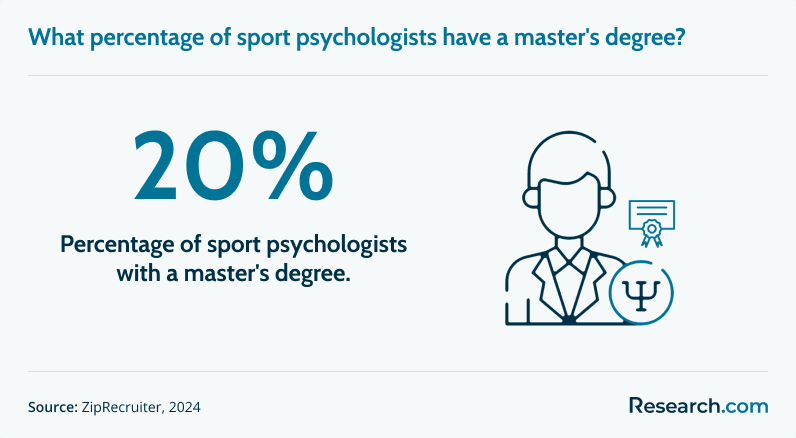
Most programs combine psychology, kinesiology, counseling, coaching science, and research. Students learn how mental processes affect performance and how participation in sport and exercise can influence psychological health. In 2024, among sport psychologists, 20% have a master's degree.
Common topics in a sport psychology master’s program
- Performance enhancement: Goal setting, imagery, self-talk, concentration, routines, and mental rehearsal.
- Motivation and behavior: Why athletes persist, disengage, improve, or struggle to maintain effort.
- Stress and anxiety management: Strategies for competition pressure, performance anxiety, and emotional control.
- Team dynamics: Leadership, cohesion, communication, role clarity, and conflict within teams.
- Injury recovery: Psychological support for rehabilitation, confidence rebuilding, and return-to-play challenges.
- Exercise psychology: The relationship between physical activity, mental health, adherence, and behavior change.
Admission requirements
Admissions expectations vary by school, but applicants are usually evaluated on academic preparation, relevant experience, professional goals, and readiness for graduate-level research and applied work. Students comparing traditional and accelerated psychology master’s programs should check whether faster formats still include supervised field experience.
| Requirement | What schools commonly look for | Why it matters |
| Bachelor’s degree | A degree from an accredited institution; psychology, kinesiology, sports science, or related preparation may be preferred. | Programs need evidence that you can handle graduate psychology and research coursework. |
| GPA | A minimum GPA of 3.0 on a 4.0 scale is often required. | Competitive programs may use GPA to assess academic readiness. |
| GRE | Some programs require GRE scores, while others do not. | When required, scores may support the academic portion of the application. |
| Relevant experience | Coaching, athletic training, counseling, sport administration, fitness, or volunteer experience may be valued. | Applied experience shows that you understand sport environments and client needs. |
| Internships or volunteer work | Work with athletes, teams, fitness programs, clinics, or youth organizations can strengthen an application. | Programs often want students who can connect theory with practice. |
What are the core courses in sports psychology master’s?
Most sport psychology master’s programs blend theory, research, ethics, and applied training. Course names differ by institution, but the following subjects are commonly used to prepare students for sport psychology master’s degree careers.
- Foundations of Sport Psychology: Key theories, historical development, and major applications in sport and exercise settings.
- Performance Enhancement Techniques: Mental skills used to improve consistency, confidence, focus, and preparation.
- Psychology of Injury and Rehabilitation: Psychological responses to injury and strategies that support recovery and return to activity.
- Exercise Psychology: Mental health benefits of physical activity and approaches for improving exercise adherence.
- Research Methods in Sport Psychology: Study design, measurement, data analysis, and interpretation of evidence in sport settings.
- Applied Sport Psychology: Practice-based training for working with athletes, teams, coaches, and organizations.
- Social and Cultural Aspects of Sport: How identity, culture, social systems, and access shape sport participation and performance.
- Ethics and Professional Practice in Sport Psychology: Confidentiality, boundaries, consent, scope of practice, and responsible service delivery.
- Lifespan Development in Sports: Psychological needs of youth athletes, collegiate athletes, adults, and older participants.
- Capstone or Internship: A supervised applied project, practicum, or field placement that connects coursework to practice.
Students who want to move toward athletic administration may also use this coursework as a foundation for sports management. If that direction interests you, review what it takes to become a sports manager.
How do you start a career with a master’s in sports psychology?
Launching a sport psychology career requires more than earning the degree. You need to clarify your scope of practice, build supervised experience, choose credentials strategically, and develop a professional network in the settings where you want to work.
Step 1: Decide whether you want a clinical or performance-focused path
- Choose a clinical path if you want to diagnose, treat, or provide therapy for mental health conditions. This route usually requires state licensure and may require doctoral training.
- Choose a performance path if you want to teach mental skills, motivation strategies, resilience, focus, and performance routines without providing therapy.
- Choose an organizational path if you want to work in athletic departments, corporate wellness, military performance, or program administration.
Step 2: Use internships and field placements deliberately
Do not treat practicum hours as a graduation requirement only. Use them to test work settings, collect references, learn supervision expectations, and build examples of applied work that employers can understand.
Step 3: Match credentials to your target role
The Certified Mental Performance Consultant credential can be useful for applied performance work, while clinical licensure is essential for regulated counseling or therapy services. Additional coaching, fitness, or rehabilitation credentials may be useful when they directly support your chosen job market. Some credentials may influence opportunities and compensation; compare career options and sport psychologist salary factors before investing.
Step 4: Build a network before you graduate
- Join sport psychology associations, psychology organizations, and coaching or athletic groups relevant to your niche.
- Attend conferences, webinars, workshops, and local sport science events.
- Ask supervisors and faculty which organizations regularly hire or contract with graduates.
- Create a professional profile that explains your scope of practice clearly and ethically.
Step 5: Prepare evidence of your applied skills
Employers and clients want to know what you can do. Build a portfolio that may include sample workshops, supervised intervention plans, research projects, needs assessments, presentations, and evaluation methods, while protecting client confidentiality.
What skills are most important for success in sports psychology careers?
Sport psychology professionals need a combination of psychology knowledge, communication ability, cultural awareness, research literacy, and practical judgment. These skills are especially important because athletes may face intense pressure, identity concerns, injury setbacks, public criticism, and burnout. In 2024, 79.6% of athletes had experiences related to disengagement and burnout.
| Skill | Why it matters | How to build it |
| Communication | Athletes, coaches, parents, medical staff, and administrators may all need different explanations and boundaries. | Practice active listening, concise feedback, workshop delivery, and difficult conversations. |
| Emotional intelligence | Clients may experience anxiety, frustration, shame, anger, or fear after mistakes or injuries. | Develop empathy, self-regulation, and the ability to recognize emotional cues. |
| Research literacy | Interventions should be grounded in evidence rather than motivational slogans. | Take research methods seriously and learn how to evaluate outcomes. |
| Applied problem-solving | Each athlete, team, sport, and competitive environment is different. | Learn assessment, case conceptualization, and individualized planning. |
| Ethical judgment | Sport environments create confidentiality, role conflict, and pressure-to-perform challenges. | Study professional ethics and seek supervision when cases are complex. |
| Adaptability | Work may happen in offices, gyms, fields, locker rooms, clinics, classrooms, or virtual settings. | Gain experience across multiple sports, age groups, and organization types. |
Communication skills
Clear communication helps professionals build trust and explain mental skills in language athletes and coaches can use. A youth athlete may need a different approach than an Olympic-level competitor, and a head coach may need a different conversation than a rehabilitation clinician.
Emotional intelligence
Sport psychology work often involves strong emotions. Professionals must stay calm, notice emotional shifts, respond with empathy, and avoid becoming reactive when athletes or teams are under pressure.
Analytical and problem-solving skills
Good practice starts with understanding the problem. A slump, fear of failure, low motivation, or team conflict may have different causes, so professionals need to assess carefully before choosing an intervention.
Knowledge of psychological theories and practices
Even one-year online master’s programs should provide a strong foundation in psychology, research, and applied methods. Useful areas include cognitive-behavioral strategies, motivation theories, stress management, confidence building, and behavior change.
Goal-setting and motivation skills
Goal setting is central to sport psychology, but goals must be specific, realistic, measurable, and connected to the athlete’s context. These skills can also support professionals exploring the best jobs for master’s in sports management graduates.
How can internships help you get a job in sports psychology?
Internships are often the bridge between classroom learning and paid employment. They help you prove that you can work responsibly with athletes, communicate with multidisciplinary teams, follow ethical boundaries, and apply mental performance principles in real situations.
- They provide applied experience. You can practice assessment, goal setting, mental skills training, workshop facilitation, and consultation under supervision.
- They clarify your preferred setting. A placement with a college team, rehabilitation clinic, youth league, or wellness organization can show you what type of work you actually enjoy.
- They create references. Supervisors, coaches, and program directors can become important sources for recommendations and job leads.
- They strengthen your credibility. Employers often want evidence that you have worked with real athletes or performance populations, not only completed coursework.
- They support skill development. In addition to online certifications that can improve employability, supervised fieldwork gives you practice with applied cases, feedback, and professional communication.
- They expose you to ethical realities. You may learn how to handle confidentiality, pressure from coaches, parent involvement, injuries, crisis concerns, and referral decisions.
How to choose a useful internship
- Ask whether the placement includes supervision from a qualified professional.
- Confirm what you will be allowed to do and what is outside your scope.
- Look for direct interaction with athletes, coaches, or performance populations.
- Prioritize placements that align with your career target, not just convenient hours.
- Ask whether previous interns were hired, referred, or supported after graduation.
What certifications are required for sports psychology professionals?
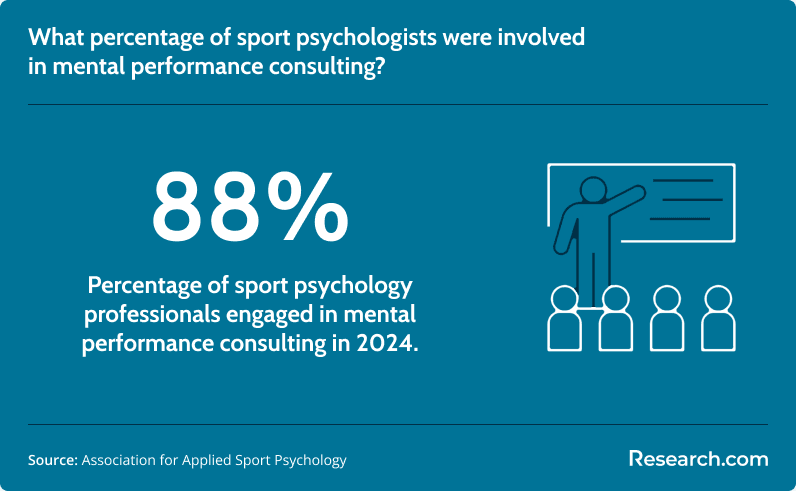
Certification requirements depend on the services you plan to provide. In 2024, 88% of sports psychology professionals were engaged in mental performance consulting. For performance consulting, the Certified Mental Performance Consultant is one of the most recognized credentials. For therapy, counseling, diagnosis, or clinical treatment, state licensure rules are the controlling requirement.
| Credential | Offered by | Best used for | Important caution |
| Certified Mental Performance Consultant | Association for Applied Sport Psychology | Applied mental performance consulting with athletes, teams, and performance populations. | It is not the same as a clinical psychology license. |
| Licensed Psychologist | State licensing boards | Clinical assessment, diagnosis, therapy, and regulated psychological services. | Most states require doctoral-level education and supervised experience. |
| Licensed Professional Counselor or Licensed Marriage and Family Therapist | State licensing boards | Counseling or therapy services for emotional, behavioral, or relational concerns. | Scope of practice and education requirements vary by state. |
| Certified Athletic Trainer | Board of Certification, Inc. | Collaboration in athletic healthcare and injury-related settings. | This is an athletic training credential, not a sport psychology credential. |
| Certified Strength and Conditioning Specialist | National Strength and Conditioning Association | Performance environments where physical preparation and mental conditioning overlap. | Useful as a complement, but not a substitute for psychology training. |
| Certified Consultant in Sports Psychology | The American Board of Sport Psychology | Specialized recognition in sport psychology practice. | Applicants should compare recognition, requirements, and fit with career goals. |
Certified Mental Performance Consultant
The Certified Mental Performance Consultant credential signals preparation in applied mental performance work. It can be especially useful for professionals who want to work with athletes, teams, coaches, or other performers without presenting themselves as clinical providers.
Licensed Psychologist
Licensure as a psychologist is usually required when a professional provides clinical services such as diagnosis or therapy. State boards define the requirements, and those requirements can differ substantially by jurisdiction.
Licensed Professional Counselor or Licensed Marriage and Family Therapist
Some graduates pursue counseling-related licensure if they want to work with athletes on emotional, behavioral, or relational concerns. Always verify whether a program meets the educational requirements for the state where you plan to practice.
Complementary credentials
Credentials such as Certified Athletic Trainer or Certified Strength and Conditioning Specialist may be helpful for professionals working in multidisciplinary athletic environments. They should be chosen because they support a clear role, not simply because they add letters after a name.
How much do sports psychologists make annually?
Annual earnings vary by job title, state, licensure status, client population, organization type, and whether the professional is employed, contracted, or self-employed. Sports psychologists are often discussed among the higher-paying psychology career paths, but salary outcomes are not guaranteed.
Sports psychologists typically earn between $60,000 and $100,000 per year. Entry-level professionals may earn less, while experienced professionals working with elite athletes, private clients, or major organizations may earn more.
| Experience level | Common annual salary range | What may influence pay |
| Entry-Level (0-3 years of experience) | $50,000 to $60,000 annually | Supervised experience, job setting, location, and whether the role is clinical or performance-focused. |
| Mid-Level (3-7 years of experience) | $60,000 to $80,000 annually | Credentials, specialized experience, employer type, and client base. |
| Experienced Professionals (7+ years of experience) | $80,000 to $100,000 or more per year | Private practice, elite sport clients, leadership roles, and reputation. |
Location also matters. Professionals in large metropolitan areas or regions with major sports organizations may have access to more opportunities than those in smaller markets, although competition may also be stronger.
What are the emerging trends and challenges in sports psychology careers?
Sport psychology is changing as athletes, teams, schools, and organizations place greater attention on mental health, performance data, and interdisciplinary support. Technology is also affecting the field through wearable performance trackers, AI-powered analytics, virtual training environments, remote consulting, and digital assessment tools.
These tools can support more personalized interventions, but they also raise important questions about data privacy, consent, accuracy, and who is allowed to view athlete information. Professionals must understand both the promise and the limits of technology, especially when psychological data is involved.
Another trend is closer collaboration with adjacent fields. Professionals with backgrounds similar to those found in master’s in clinical psychology career paths may bring useful perspectives on assessment, emotional well-being, and referral decisions.
What are the key ethical and legal considerations for sports psychology professionals?
Ethics are especially important in sport settings because the client may not always be obvious. An athlete may receive services paid for by a team, school, parent, sponsor, or organization. That arrangement can create tension around confidentiality, performance expectations, injury disclosure, and reporting responsibilities.
- Confidentiality: Clarify what information stays private and what may be shared with coaches, teams, parents, or administrators.
- Informed consent: Explain services, risks, limits, fees, records, and referral procedures before beginning work.
- Scope of practice: Do not provide therapy or diagnosis unless you are properly licensed to do so.
- Dual relationships: Be careful when serving as a consultant, evaluator, coach, and counselor within the same organization.
- Work with minors: Parent consent, athlete assent, school policies, and mandated reporting rules may all apply.
- Emergency concerns: Know how to respond when an athlete presents risk of harm, abuse concerns, or severe mental health symptoms.
Students working with young athletes may also benefit from understanding ethical issues in child psychology careers, especially around consent, confidentiality, and developmental needs.
What is the return on investment for a Master's in Sports Psychology?
The ROI of a sport psychology master’s degree depends on total program cost, how quickly you finish, whether you can work while enrolled, whether the degree supports licensure, and the job market you plan to enter. A lower-cost program may not be the best value if it lacks supervised fieldwork, while an expensive program may be hard to justify if it does not improve your qualifications for the roles you want.
When estimating ROI, compare tuition, fees, travel, technology costs, certification expenses, lost income, internship requirements, and likely entry-level pay. Students evaluating affordability can use resources on master’s in psychology cost and affordability to frame the financial decision.
| ROI factor | Questions to ask | Why it matters |
| Licensure alignment | Does the program meet state requirements for counseling or psychology licensure if I want clinical work? | A degree that does not meet licensure requirements may limit clinical options. |
| Field experience | Are internships, practicums, or supervised applied placements built into the curriculum? | Applied experience can improve employability. |
| Cost | What is the full cost beyond tuition, including fees, books, travel, and technology? | Total cost affects debt and payback time. |
| Career services | Does the school connect students with teams, clinics, organizations, or alumni? | Networking is important in a relationship-driven field. |
| Program reputation | Are faculty active in sport psychology, performance consulting, research, or clinical practice? | Faculty expertise can influence mentorship and opportunities. |
Can an accelerated PsyD program boost career advancement in sports psychology?
Doctoral training can expand options for professionals who want clinical authority, advanced assessment skills, leadership roles, research depth, or eligibility for psychologist licensure. An accelerated PsyD may be attractive for students who want a shorter path than traditional doctoral formats, but speed should not be the only factor.
Before enrolling in accelerated PsyD programs, confirm accreditation status, state licensure alignment, supervised clinical training, internship expectations, cost, and whether the program supports sport psychology-related placements.
What are the certification costs and financial implications for professionals?
Additional credentials can improve credibility, but they also create expenses. Professionals should evaluate application fees, exam costs, study materials, supervision requirements, continuing education, renewal fees, travel, and time away from paid work.
The best approach is to connect each credential to a specific role. If a certification is not recognized by the employers, clients, or licensing boards relevant to your goals, it may not provide enough return. Reviewing cost structures in related fields, such as BCBA certification cost considerations, can help students think more carefully about credential-related expenses.
Could an Accelerated Psychology Degree Propel Your Sports Psychology Career?
An accelerated psychology degree may help students move more quickly into graduate study or entry-level roles, especially if they already have relevant athletic, coaching, counseling, or fitness experience. The trade-off is that shorter programs can feel intensive and may leave less time for fieldwork, networking, research, or career exploration.
If you are considering a psychology accelerated degree, check whether the curriculum includes research methods, abnormal psychology, developmental psychology, statistics, ethics, and applied experiences that can support sport psychology graduate admissions.
How can sports psychology graduates ensure continuous professional growth?
Sport psychology professionals need ongoing training because athlete needs, technology, ethical standards, and performance environments continue to evolve. Growth may come through supervision, workshops, specialty credentials, research conferences, peer consultation, and interdisciplinary learning.
Some graduates build complementary expertise by studying behavior analysis, coaching science, counseling, rehabilitation, leadership, or organizational psychology. For example, exploring top ABA programs may help professionals understand behavior change frameworks that can be useful in some performance and wellness contexts.
How Can Interdisciplinary Experience Elevate Your Sports Psychology Career?
Sport psychology rarely operates in isolation. Athletes are influenced by development, family systems, culture, coaching, physical health, injury history, team dynamics, and organizational pressure. Interdisciplinary experience can make a professional more useful in complex environments.
Training connected to developmental psychology can be valuable for those working with youth athletes. Students interested in age-specific needs may compare sport psychology with child and adolescent psychology master’s programs.
Should You Explore Complementary Online Master's Programs to Enhance Your Sports Psychology Career?
Complementary online master’s programs can be useful when they build skills that your sport psychology training does not fully cover. However, adding another degree should be a strategic decision, not a substitute for supervised experience or licensure planning.
Before enrolling, evaluate accreditation, faculty expertise, fieldwork requirements, career outcomes, total cost, transfer policies, and how the degree fits your intended scope of practice. For example, affordable forensic psychology master’s programs online may be relevant for students interested in decision-making, behavior analysis, risk, or high-pressure environments, but they are not a direct replacement for sport psychology training.
How Can You Choose the Best Sports Psychology Master’s Program?
The best program is the one that matches your intended career path. A student who wants clinical licensure should evaluate programs differently from a student who wants performance consulting, coaching support, or research.
| Program feature | What to verify | Red flag |
| Accreditation | The institution should be properly accredited, and clinical programs should align with relevant professional expectations. | The school is unclear about accreditation or licensure eligibility. |
| Licensure preparation | Ask whether the program meets educational requirements in the state where you plan to practice. | The program markets counseling careers but avoids direct licensure questions. |
| Applied training | Look for internships, practicums, supervised consulting, or partnerships with teams and organizations. | The degree is mostly theoretical with little applied experience. |
| Faculty expertise | Review faculty backgrounds in sport psychology, counseling, performance consulting, kinesiology, or research. | Few faculty members have direct experience in the field. |
| Career support | Ask about alumni placements, employer partnerships, mentorship, and networking opportunities. | The school cannot explain where graduates work. |
| Doctoral pathways | If you may pursue clinical psychology, compare master’s options with combined master’s and PsyD programs online. | You would need to repeat major coursework or start over to continue into doctoral study. |
Questions to ask before enrolling
- Does this program prepare students for performance consulting, clinical licensure, research, or another track?
- What supervised applied experiences are required?
- Can online students access internships or practicums near their location?
- What credentials do graduates typically pursue?
- What are the total costs, including fees and required travel?
- How does the curriculum address ethics, scope of practice, and work with minors?
- Where have recent graduates been employed?
How Can Advanced Doctoral Training Elevate Your Sports Psychology Career?
Doctoral training may be important for professionals who want to become licensed psychologists, lead clinical programs, conduct advanced research, teach at the university level, or supervise other practitioners. A PsyD can strengthen clinical assessment and intervention skills, while a PhD may be more research-intensive depending on the program.
Students considering doctoral education should compare accreditation, internship match support, licensure outcomes, faculty expertise, dissertation or applied project requirements, and total cost. Options such as online APA accredited PsyD programs may help students explore doctoral routes, but state licensure rules should always be checked before enrolling.
What industries hire sports psychology professionals?
Sport psychology professionals are hired in settings where performance, mental health, recovery, motivation, and resilience matter. Among sport psychologists, 63% hold credentials for mental performance consulting.
| Industry | Typical work | Who may thrive there |
| Professional sports teams and organizations | Performance routines, confidence, stress management, team cohesion, and injury adjustment for elite athletes. | Professionals comfortable with high pressure, travel, and strong confidentiality demands. |
| Collegiate sports programs | Support student-athletes balancing academics, training, competition, identity, and mental health pressures. | Graduates who enjoy campus environments and interdisciplinary work. |
| Rehabilitation centers and medical facilities | Help athletes cope with injury recovery, motivation, and return-to-play concerns. | Professionals interested in sports medicine collaboration. |
| Private practice and consulting | One-on-one services, workshops, mental skills training, and specialized performance support. | Entrepreneurial professionals who can manage marketing, ethics, billing, and referrals. |
| Corporate wellness programs | Resilience, stress management, leadership performance, burnout prevention, and goal execution. | Graduates who want to apply performance psychology beyond athletics. |
Which sports psychology roles offer the best salary potential?
Salary potential is strongest in roles tied to elite performance, leadership, private clients, and specialized consulting. The average median salary for Olympic committee work setting is $115,000 while for those in private practice the median is $62,500.
Some sport psychology careers are also discussed among high-paying jobs with a master’s in psychology, but earnings vary and should not be treated as guaranteed.
| Role | Salary range stated | Why pay may be higher |
| Sports psychologist for professional sports teams | $100,000 to $200,000+ | Professional teams may invest heavily in performance, recovery, and athlete support. |
| Sports psychologist for Olympic athletes or elite individual sports | $100,000 to $200,000+ | Elite athletes may seek specialized support to improve consistency and manage pressure. |
| Mental performance consultant for high-profile athletes | $90,000 to $150,000+ | Consultants with strong reputations may command higher rates. |
| Director of sports psychology or mental health programs | $90,000 to $150,000+ | Leadership roles add program management, supervision, and organizational responsibility. |
| Sports psychologist in private practice | $80,000 to $150,000+ | Income may rise with specialization, referrals, client base, and business management. |
Is sports psychology a good career choice for long-term growth?
Sport psychology can be a strong long-term career choice for people who are comfortable combining psychology, athletics, education, consulting, and ongoing professional development. The U.S. Bureau of Labor Statistics (BLS) projects that employment of psychologists will grow by about 7% from 2023 to 2033.
Growth is supported by increasing attention to athlete mental health, burnout, performance pressure, injury recovery, and holistic support. The field is also not limited to U.S. professional sports. Countries with strong sporting cultures, including the UK, Australia, and Canada, also recognize the role of mental performance and psychological support in sport.
Still, the path can be competitive. Jobs with professional teams or elite athletes are limited, and many professionals build careers through a mix of consulting, teaching, private practice, team contracts, wellness work, and applied research.
Common mistakes to avoid when planning a sport psychology career
- Assuming a master’s degree automatically makes you a licensed psychologist. Clinical practice is regulated, and requirements vary by state.
- Choosing a program without checking accreditation. Accreditation can affect credit transfer, financial aid eligibility, employer recognition, and licensure planning.
- Ignoring fieldwork. A program with weak internship options may leave you with limited applied experience.
- Focusing only on tuition. Fees, travel, technology, supervision, exam costs, and lost income can change the real cost of the degree.
- Relying only on rankings. A highly ranked program may still be a poor fit if it does not support your target state, credential, or career setting.
- Using protected clinical language without proper licensure. Be precise about whether you provide performance consulting, coaching, counseling, or therapy.
- Expecting elite-sport jobs immediately. Many professionals begin in schools, clinics, youth sports, wellness, research, or assistant roles before moving into higher-profile settings.
Key Findings
- The U.S. Bureau of Labor Statistics (BLS) projects that employment of psychologists will grow by about 7% from 2023 to 2033.
- In 2024, among sport psychologists 20% have a master's degree.
- The average median salary for Olympic committee work setting is $115,000 while for those in private practice the median is $62,500.
- In 2024, 79.6% of athletes had experiences related to disengagement and burnout.
- Among sport psychologists, 63% hold credentials for mental performance consulting.
- In 2024, 88% of sport psychology professionals were engaged in mental performance consulting.
Key Insights
- A master’s in sport psychology can prepare you for performance consulting, coaching support, rehabilitation-related work, wellness roles, research support, and program administration.
- Clinical work is different from mental performance consulting. If you want to diagnose or treat mental health conditions, verify licensure requirements before choosing a program.
- Internships and supervised applied experience are critical because employers want proof that you can work responsibly in real sport and performance environments.
- The strongest salary potential is often found in elite sport, Olympic committee work, leadership roles, private practice, and high-profile consulting, but these roles are competitive.
- Program fit matters more than speed or brand name alone. Check accreditation, licensure alignment, fieldwork quality, faculty expertise, total cost, and graduate outcomes.
- Sport psychology is increasingly interdisciplinary. Professionals who understand psychology, ethics, data, coaching, injury recovery, youth development, and organizational performance can adapt across more settings.
References:
- Association for Applied Sport Psychology (n.d.). Compensation for Mental Performance Work in North America.
- U.S. Bureau of Labor Statistics (2025). Psychologists.
- U.S. Center for SafeSport. (2024). Culture Climate Survey.
- ZipRecruiter. (2025). Mental Performance Coach Salary: Hourly Rate.
- Zippia. (2025). Sports Psychologist Jobs: Demographics.
Other Things You Should Know About the Best Careers with a Sport Psychologist Master’s Degree
Yes, sport psychologists can find lucrative opportunities in corporate wellness by applying principles of sports psychology to improve employee performance, resilience, and mental health. These roles leverage expertise in motivation and stress management to enhance both individual and team productivity in corporate settings.
In 2027, cutting-edge roles for those with a Master’s in Sport Psychology include positions such as performance enhancement consultant, esports psychologist, and athlete mental health coach. These emerging roles emphasize the application of psychological principles to optimize performance, improve well-being, and address mental health in diverse athletic contexts.


