2027 How To Become A Sports Manager

Co-Founder and Chief Data Scientist
Becoming a sports manager is a business career inside the sports world. The job is not limited to watching games, working with athletes, or coordinating travel. Sports managers help teams, athletic departments, venues, leagues, agencies, recreation programs, and individual athletes make decisions about money, operations, marketing, contracts, events, compliance, and long-term growth.
This guide is for students, career changers, athletes planning a second career, and business professionals who want to work in sports without becoming coaches or players. You will learn what sports managers do, which degrees and skills matter, when certifications help, what career paths are available, how digital tools are changing the field, and how to evaluate whether this career is worth pursuing in 2026.
Quick answer: How do you become a sports manager?
Most aspiring sports managers start with a bachelor’s degree in sports management, business administration, marketing, finance, communications, or a related field. From there, they build practical experience through internships, game-day operations, athletic department work, event support, marketing roles, or entry-level jobs with teams, schools, venues, agencies, recreation departments, or sports media organizations. A master’s degree, MBA, or specialized certification can help for leadership, analytics, finance, event management, compliance, or athlete representation roles, but it is not required for every job.
Key Things You Should Know About Becoming a Sports Manager for 2026
- A sports manager handles the business, administrative, and operational side of sports organizations, teams, programs, facilities, or athletes.
- According to Zippia, 57% of sports team managers in the United States have a bachelor's degree, 17% hold an associate degree, 12% have a high school diploma, and 7% earned a master's degree.
- The employment of sports, entertainment, and recreation managers is anticipated to increase by 8% through 2034.
- There are currently over 6,100 job openings for sports, entertainment, and recreation manager positions in the United States.
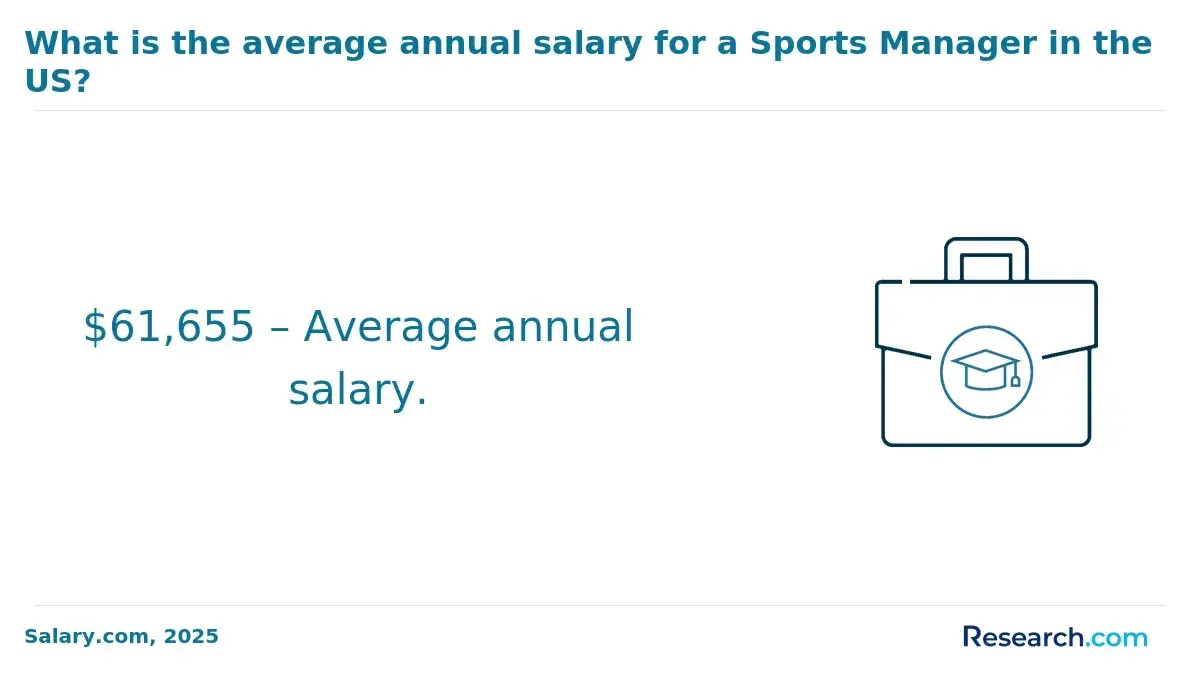
- Sports managers take home an average annual salary of around $60,000 or more.
- The US states that offer the highest average annual salaries to sports managers are Washington ($54,814), District of Columbia ($54,689), New York ($52,947), Massachusetts ($52,855), and Alaska ($52,120).
- Large sports organizations make frequent high-stakes operational and commercial choices. For example, top European football teams make an average of 50 critical sports management decisions annually.
- What does a sports manager do?
- How does one become a sports manager?
- What are the degrees needed to become a sports manager?
- What are the skills needed to become a successful sports manager?
- What are the different specializations of sports managers?
- Do you need certifications to work as a sports manager?
- What are the career paths of sports management graduates?
- How is digital innovation reshaping sports management careers?
- How Can Short-Term Training Programs Enhance a Sports Manager’s Career?
- Do I Need an Advanced Business Degree for Success in Sports Management?
- How can professional networking and mentorship boost a sports manager's career?
- How Can Advanced Business Education Propel a Sports Manager’s Career?
- Can advanced doctoral education bolster a sports manager’s strategic capabilities?
- How Can Global Opportunities Expand a Sports Manager’s Horizons?
- Can a one year online MBA accelerate your sports management career?
- How Can Sports Managers Effectively Manage Crises?
- How important is financial literacy in sports management?
- What Are the Emerging Trends in Sports Management?
- How Do Project Management Skills Enhance Sports Management Efficiency?
- What is the job outlook of sports managers?
- What is the average salary of sports managers?
- What are the biggest challenges faced by sports managers?
What does a sports manager do?
A sports manager is responsible for making sure the business side of a sports organization works. The exact duties depend on the employer. A manager for a college athletic department may focus on compliance, budgets, schedules, and facilities, while a manager for a professional team may spend more time on sponsorships, media obligations, contracts, ticketing, and fan engagement.
In simple terms, sports managers connect athletic performance with business execution. They coordinate the people, money, schedules, partnerships, rules, and systems that allow teams and sports programs to operate professionally.
| Responsibility | What it usually involves | Why it matters |
| Contract management | Supporting negotiations, tracking agreements, coordinating endorsement terms, and helping ensure contracts follow league or organizational rules. | Poor contract oversight can create legal, financial, or reputational problems. |
| Scheduling and logistics | Coordinating practices, games, travel, lodging, facility use, meetings, and event-day timelines. | Sports operations depend on precise timing and coordination across many stakeholders. |
| Public relations | Working with media, preparing announcements, arranging appearances, and supporting crisis communication when issues arise. | Teams and athletes are public-facing brands, so communication affects trust and revenue. |
| Budgeting and finance | Planning expenses, monitoring revenue, supporting ticketing and merchandise goals, managing travel and equipment costs, and tracking operating budgets. | Financial decisions determine whether a team, program, or venue can operate sustainably. Students who want a deeper finance path can compare the most affordable online finance degrees. |
| Event planning | Organizing games, tournaments, promotional events, fundraisers, youth clinics, sponsor activations, and community events. | Events affect fan experience, sponsor value, safety, and revenue. |
| Team and program operations | Helping coaches, trainers, staff, and athletes access the resources they need for practices, competitions, and travel. | Operational problems can distract athletes and staff from performance goals. |
| Marketing and sponsorship | Developing campaigns, working with sponsors, increasing brand visibility, and supporting fan engagement across digital and live channels. | Marketing drives attendance, merchandise sales, partnerships, and community loyalty. Students interested primarily in brand strategy can review marketing degree requirements. |
| Compliance | Monitoring rules from athletic associations, leagues, schools, governing bodies, or regulatory agencies. | Compliance mistakes can lead to penalties, loss of eligibility, or damaged credibility. |
| Community engagement | Building relationships through outreach programs, youth sports initiatives, local partnerships, and public events. | Strong community ties can strengthen attendance, donations, sponsorships, and public support. |
| Facility or recreation management | Managing fields, arenas, fitness centers, recreation programs, maintenance, staffing, and safety procedures. | Facilities must be safe, well-run, and financially responsible. |
How does one become a sports manager?
There is no single path into sports management, but most successful candidates combine education, hands-on experience, strong communication, and industry relationships. The field is competitive because many people want to work in sports, so practical experience often matters as much as the degree title.
- Build a relevant academic foundation. Start with a bachelor’s degree in sports management, business administration, marketing, finance, communications, recreation management, or a related area. Choose programs that include internships, applied projects, sport law, finance, analytics, and event operations rather than programs that only offer broad survey courses.
- Get experience as early as possible. Look for internships, volunteer roles, student athletic department jobs, game-day operations work, ticketing support, campus recreation positions, youth sports administration, or event staffing. These roles teach the pace, pressure, and details of sports operations.
- Learn the business of sports, not just the culture of sports. Employers need people who can manage budgets, deadlines, sponsors, contracts, compliance, and people. Being a fan can help you understand the audience, but business skills are what make you employable.
- Develop a portfolio of results. Track projects you worked on, such as events staffed, campaigns supported, budgets managed, sponsor proposals assisted, schedules coordinated, or analytics reports created. A clear portfolio makes entry-level candidates more credible.
- Strengthen communication and negotiation skills. Sports managers frequently interact with athletes, coaches, owners, sponsors, parents, administrators, vendors, media professionals, and fans. Learn how to write clearly, present information, handle conflict, and communicate under pressure.
- Use certifications strategically. Certifications are not mandatory for most sports management jobs, but they can help in specialized areas such as event management, sports analytics, facility management, risk management, or athlete services. Related credentials, such as the best nutritionist certification online, may be useful for professionals who work closely with athlete wellness programs, but they should match your actual career goal.
- Start in an entry-level role and move toward specialization. Many sports managers begin as marketing assistants, operations coordinators, event staff, ticketing associates, recreation coordinators, compliance assistants, or facility staff. Use the first role to learn the industry and identify the specialization you want to pursue.
- Keep up with technology and market changes. Digital ticketing, fan analytics, wearable technology, streaming, social media, esports, and virtual engagement are changing how sports organizations operate. Students more interested in the analytics side can compare data analytics online programs.
A practical timeline for becoming a sports manager
| Stage | What to focus on | Examples of useful experience |
| High school or early college | Explore business, communication, statistics, marketing, and sports operations. | Team manager roles, youth sports volunteering, event support, school athletics assistance. |
| Associate or bachelor’s study | Complete relevant coursework and start building a resume before graduation. | Internships, athletic department jobs, campus recreation, ticketing, sports marketing projects. |
| Entry-level employment | Learn daily operations and prove reliability under pressure. | Operations assistant, event coordinator, marketing assistant, facility assistant, recreation coordinator. |
| Mid-career specialization | Choose a track such as analytics, sponsorship, compliance, events, athlete services, or facility management. | Leading projects, managing budgets, supervising staff, negotiating with vendors, supporting sponsors. |
| Leadership advancement | Build strategic, financial, and people-management expertise. | Department leadership, athletic administration, agency management, venue operations, executive roles. |
What are the degrees needed to become a sports manager?
A bachelor’s degree is the most common starting point for sports management careers, but it is not the only option. The right degree depends on the role you want. A facility operations job may value management and logistics coursework, while a sponsorship role may place more weight on marketing, sales, and negotiation. A compliance role may benefit from sport law and policy courses. A front-office analytics role may require stronger quantitative training.
| Degree level | Typical purpose | Best fit for | Important considerations |
| Associate degree | Introduces the basics of sports management, operations, marketing, and budgeting. | Students seeking a lower-cost entry point or planning to transfer into a bachelor’s program. | May qualify graduates for support roles, but advancement can be limited without additional experience or education. |
| Bachelor’s degree | Provides broader preparation in sport law, finance, marketing, communications, management, and operations. | Most aspiring sports managers, athletic department staff, event coordinators, and operations professionals. | Look closely at internship access, employer partnerships, alumni outcomes, and applied projects. |
| Master’s degree | Adds graduate-level preparation for leadership, analytics, sport administration, or business strategy. | Professionals pursuing higher-level roles, career changers, or those seeking specialized knowledge. | A Master of Sports Management is more industry-specific; an MBA is broader and may apply across industries. |
| Doctoral degree | Emphasizes research, advanced leadership, policy, organizational strategy, or academic preparation. | Future professors, researchers, senior executives, consultants, or policy-focused professionals. | Usually most useful when the career goal requires advanced research or executive-level expertise. |
According to Zippia, 57% of sports team managers in the United States have a bachelor's degree, 17% hold an associate degree, 12% have a high school diploma, and 7% earned a master's degree. That distribution shows that degree paths vary, but it also reinforces why a bachelor’s degree remains the most common credential in the field.
Sports management degree vs. business degree: which is better?
| Option | Strengths | Potential drawback | Choose it if... |
| Sports management degree | Industry-specific courses in sport law, event management, athletic administration, sponsorship, and facility operations. | May be less flexible outside sports if the curriculum is narrow. | You are committed to sports and want internships, faculty, and coursework tied directly to the industry. |
| Business administration degree | Broad training in management, accounting, finance, marketing, and strategy. | You may need to build sports-specific experience on your own. | You want flexibility across industries or are not fully certain you will stay in sports. |
| Marketing degree | Strong preparation for fan engagement, sponsorship, branding, social media, and revenue-generating roles. | Less direct preparation for compliance, facility operations, or athletic administration. | You want to work in sponsorship, promotions, partnerships, or digital fan engagement. |
| Finance or analytics degree | Useful for budgeting, forecasting, pricing, data analysis, roster strategy, and business intelligence roles. | May not cover the culture, regulations, and operating structure of sports organizations. | You want to work with numbers, revenue models, performance data, or strategic planning. |
What are the skills needed to become a successful sports manager?
The best careers for masters in sports management to pursue can lead in several directions, but the core skill set is consistent: sports managers must combine people skills, business judgment, operational discipline, and comfort with data. The strongest candidates can move between the locker room, the boardroom, the media environment, and the event site without losing control of details.
- Leadership: Sports managers must set priorities, make decisions, motivate staff, and create a professional culture even when emotions are high.
- Communication: Clear speaking, writing, listening, and presentation skills are essential because managers coordinate with athletes, coaches, sponsors, administrators, vendors, fans, and media contacts.
- Financial management: Budgeting, forecasting, cost control, pricing, and contract awareness help managers protect resources and support growth.
- Strategic thinking: Strong managers identify revenue opportunities, anticipate risks, interpret trends, and align short-term operations with long-term goals.
- Adaptability: Weather disruptions, injuries, travel issues, public controversies, rule changes, and staffing problems can force rapid adjustments.
- Problem solving: Managers need to diagnose issues quickly, compare options, and act without creating larger operational or reputational problems.
- Networking: Relationships with coaches, agents, sponsors, athletic administrators, media professionals, and vendors can lead to partnerships and job opportunities.
- Marketing ability: Fan engagement, brand positioning, sponsorship value, social media, and promotions are central to sports revenue. Students who want to focus on digital promotion can research affordable online social media marketing degree programs.
- Organization: Travel, schedules, permits, facilities, staffing, inventory, ticketing, and event timelines leave little room for careless planning.
- Data analysis: Sports organizations increasingly use data to understand fans, performance, ticketing, sponsorship value, and operations.
How to build these skills before your first sports management job
- Volunteer for game-day operations and ask to assist with scheduling, guest services, equipment, or facility setup.
- Take business courses that require budgets, presentations, market research, or data analysis.
- Learn spreadsheet, presentation, customer relationship management, and project management tools.
- Join student sports business clubs, athletic department committees, or recreation programming teams.
- Practice writing short reports that explain a problem, compare options, and recommend a decision.
- Seek feedback from supervisors after events, especially on communication, reliability, and attention to detail.
What are the different specializations of sports managers?
Sports management is not one job. It is a broad career field with many tracks. Some sports managers work close to athletes and coaches; others focus on fans, sponsors, facilities, legal issues, or business intelligence. If you are comparing degree options such as fast track MBA programs, use your target specialization to decide which curriculum gives you the best return.
| Specialization | Primary focus | Good fit for people who... |
| Sports marketing | Brand campaigns, sponsorship value, fan engagement, promotions, and revenue growth. | Enjoy creativity, sales, audience research, and digital platforms. |
| Event management | Planning and running games, tournaments, fan experiences, fundraisers, and major competitions. | Work well under pressure and can manage timelines, vendors, budgets, and crowds. |
| Sports law and compliance | Contracts, rules, eligibility, risk, disputes, governance, and regulatory requirements. | Are detail-oriented and interested in legal, ethical, or policy issues. |
| Athlete development | Career guidance, life skills, financial education, personal development, and athlete support. | Want to help athletes manage success beyond competition. |
| High-performance coaching administration | Coordination of performance programs using coaching, sport psychology, kinesiology, and athlete services. | Have interest in performance environments but prefer management over coaching. |
| Sports analytics | Using data to evaluate performance, fans, markets, operations, pricing, or strategy. | Like statistics, dashboards, research, and evidence-based decisions. |
| Facility management | Operations, safety, maintenance, staffing, scheduling, and event readiness for venues. | Prefer hands-on operations and complex logistics. |
| Corporate partnerships | Sponsorship sales, partner servicing, brand alignment, and commercial strategy. | Have strong communication, negotiation, and business development skills. Professionals seeking deeper business training may compare AACSB accredited online MBA programs. |
| Recreation management | Community sports programs, local facilities, participation initiatives, and wellness programming. | Want to work with schools, municipalities, nonprofits, or community organizations. |
| Esports management | Competitive gaming teams, tournaments, streaming audiences, sponsorships, and digital communities. | Understand gaming culture and want to work in a fast-changing digital sports market. |
Do you need certifications to work as a sports manager?
Most sports management jobs do not require a certification. Employers usually care more about relevant education, work experience, dependability, communication, and evidence that you can handle real operations. However, certifications can help if they build a specific skill the employer needs or if the role has a formal credential requirement.
Athlete representation is one area where requirements can be stricter. Sports agents often need certification from the leagues they work with and may also need to follow state regulations. Before paying for a credential, confirm whether it is recognized by employers in your target role.
| Certification or certificate area | What it can support | Best use case |
| Certified Sports Manager (CSM) | The CSM certification from GAQM addresses sports management topics such as team management, facility oversight, policy planning, and safe sporting environments. | Professionals who want a broad management credential tied to sports operations. |
| Sports Management Specialist (SMS) | This IFPA credential emphasizes sports-focused marketing and management strategies and includes an online course and exam. | Candidates interested in marketing, management, or fitness-related sports settings. |
| Sports Management Worldwide specialized certifications | Options may focus on topics such as hockey analytics, athlete marketing, and event management. | Professionals seeking a niche skill in a clearly defined area. |
| Certified Sports Field Manager (CSFM) | Validates knowledge related to sports field maintenance, facility performance, and operational efficiency. | Facility, field, grounds, and venue operations professionals. |
| Sports law and risk management certificates | Focus on contracts, legal issues, compliance, and organizational risk. | Managers working with governance, contracts, eligibility, or event liability. |
| Event management certification | Covers planning, logistics, budgeting, vendor coordination, and execution. | Event coordinators, tournament staff, venue staff, and operations professionals. |
How to decide whether a sports management certification is worth it
- Check job postings for your target role and see whether employers actually request that credential.
- Ask alumni, supervisors, or hiring managers whether the credential is respected in your region or specialization.
- Compare the cost of the credential with the skill you will gain and the roles it may help you access.
- Avoid credentials that promise guaranteed jobs, unrealistic salary increases, or vague “industry recognition.”
- Choose certifications that include applied projects, exams, case studies, or portfolio-ready work.
What are the career paths of sports management graduates?
Sports management graduates can work in professional sports, college athletics, school systems, recreation departments, fitness organizations, facilities, agencies, sponsorship groups, media organizations, nonprofits, and esports companies. The best first job is not always the most glamorous one. Entry-level roles that expose you to budgeting, scheduling, ticketing, sponsors, events, or compliance can be more valuable than a job title that sounds exciting but offers little responsibility.
| Career path | Main responsibilities | Common employers |
| Sports marketing and sponsorship manager | Develop campaigns, manage sponsor relationships, coordinate promotions, and support revenue goals. | Teams, leagues, agencies, athletic departments, brands, sports media firms. |
| Event coordinator | Plan tournaments, games, fan events, fundraisers, and promotional activities while managing budgets and logistics. | Venues, colleges, professional teams, recreation departments, event companies. |
| Athletic director | Oversee athletic programs, budgets, staff, coaches, facilities, compliance, and student-athlete support. | Schools, colleges, universities, athletic associations. |
| Sports agent | Represent athletes, negotiate contracts, secure endorsement opportunities, and support career planning. | Sports agencies, management firms, independent practices. |
| Facility manager | Manage stadiums, arenas, recreation centers, fields, maintenance, staffing, safety, and event coordination. | Venues, municipalities, schools, universities, private facility operators. |
| Sports analyst or data scientist | Analyze performance, fan behavior, market trends, pricing, or operations to improve decisions. | Teams, leagues, media companies, analytics vendors, betting-related firms where legal and applicable. |
| Recreation program director | Create and manage community programs that encourage sports participation and physical activity. | Local governments, nonprofits, schools, parks and recreation departments. |
| Esports manager | Manage teams, events, sponsors, content, and competitive gaming operations. | Esports organizations, game publishers, tournament operators, streaming-focused companies. |
| Sports media and communications specialist | Handle public relations, social media, content, announcements, and media coordination. | Teams, universities, leagues, media outlets, agencies. |
| Sports law consultant | Advise on contracts, intellectual property, compliance, disputes, and sports-related legal issues. | Law firms, teams, agencies, athletic departments, consulting groups. |
Students who want to support athletes more directly through mental performance, well-being, or counseling-related work may prefer sport psychology. That route can lead to some of the best careers to pursue with a sport psychology masters degree, depending on licensure, education, and role requirements.
How is digital innovation reshaping sports management careers?
Digital tools are changing how sports organizations sell tickets, understand fans, evaluate performance, manage sponsors, communicate with audiences, and run events. Sports managers are increasingly expected to understand dashboards, customer data, social platforms, streaming engagement, digital sponsorship assets, and virtual collaboration tools.
This does not mean every sports manager must become a programmer. It does mean that managers who can interpret data, ask better questions, and work with technical teams may have an advantage. A flexible online sports management degree can be useful for professionals who need advanced training while continuing to work.
How Can Short-Term Training Programs Enhance a Sports Manager’s Career?
Short-term training can be useful when you need a specific skill faster than a full degree allows. For example, a sports manager who already has experience in operations may need targeted training in digital marketing, analytics, project management, risk management, or sponsorship sales. In those cases, short certificate programs that pay well may help fill skill gaps, especially when they include applied work that can be shown to employers.
How can advanced business education strengthen a career in sports management?
An advanced business degree can help sports managers move from coordination roles into strategic leadership. Graduate business study can strengthen budgeting, financial analysis, negotiation, organizational behavior, operations, and executive decision-making. It is most useful when your target jobs require broader management responsibility rather than only sport-specific knowledge.
Cost and flexibility matter. Working professionals who need a lower-cost option may compare an online MBA cheap pathway, but they should still verify accreditation, faculty experience, course relevance, and employer recognition.
How can professional networking and mentorship boost a sports manager's career?
Sports management is relationship-driven. Many opportunities come through referrals, internships, alumni networks, professional associations, mentors, and supervisors who have seen your work under pressure. Networking is not just collecting contacts. It is building trust by being prepared, reliable, and useful.
Mentorship can also help you avoid costly mistakes, such as choosing the wrong specialization, underestimating compliance issues, or applying only for highly competitive front-office roles without building operational experience first. Some graduate programs, including a top online MBA, may also expand professional networks, but the value depends on the quality of the cohort, alumni activity, and career services.
How Can Advanced Business Education Propel a Sports Manager’s Career?
Sports organizations are businesses with complex revenue streams, public visibility, stakeholder pressure, and operational risk. Advanced business education can help managers understand markets, evaluate investments, lead teams, assess financial trade-offs, and make decisions based on evidence rather than instinct alone.
For professionals who already have sports experience and want to advance quickly, the fastest MBA programs may be worth comparing. Speed should not be the only factor, though. Students should also evaluate accreditation, workload, course depth, career support, and whether the program fits their target role.
Can advanced doctoral education bolster a sports manager’s strategic capabilities?
Doctoral education can be valuable for sports managers who want to conduct research, teach at the university level, consult, lead complex organizations, or study strategy, risk, governance, and innovation in depth. A doctorate is not necessary for most entry-level or mid-level sports management jobs, but it may support specialized executive, academic, or research-focused goals.
Professionals considering a DBA should weigh time commitment, research expectations, cost, and career payoff. Flexible options such as affordable online DBA programs may help experienced managers continue working while pursuing advanced study.
How Can Global Opportunities Expand a Sports Manager’s Horizons?
Sports is increasingly international. Teams, leagues, sponsors, athletes, media platforms, and fan communities often cross borders. A global outlook can help sports managers understand different fan markets, sponsorship norms, regulations, media rights environments, and cultural expectations.
International opportunities can be especially relevant in soccer, basketball, motorsports, esports, Olympic sports, global events, and international athlete representation. Managers who need broader business training may consider an accelerated business degree, especially if it includes international business, finance, or management coursework.
Can a one year online MBA accelerate your sports management career?
A one-year MBA can be useful for sports professionals who already have work experience and need concentrated business training in finance, leadership, strategy, operations, and data-informed decision-making. The advantage is speed; the trade-off is intensity. Students should be realistic about the workload, especially if they are working full time.
A one year online MBA may be a good fit if you can manage the pace and already know how the degree supports your target jobs. It may be less suitable if you need more time for internships, networking, career exploration, or foundational business coursework.
How Can Sports Managers Effectively Manage Crises?
Crisis management is a core part of modern sports management because sports organizations operate in public view. Crises may involve athlete conduct, injuries, event cancellations, facility problems, financial disruptions, travel failures, social media backlash, compliance investigations, or sponsor concerns.
Effective sports managers prepare before a crisis happens. They create response plans, define who speaks publicly, coordinate with legal and communications teams, document decisions, and communicate quickly with affected stakeholders. Executive-level programs such as affordable online EMBA programs may help experienced managers strengthen leadership, risk management, and decision-making under pressure.
How important is financial literacy in sports management?
Financial literacy is essential in sports management because nearly every major decision has a budget impact. Sports managers may be involved in travel expenses, facility costs, staffing, equipment, ticket pricing, sponsorship value, merchandising, fundraising, event budgets, or contract planning.
Managers who understand budgets and forecasts can make better recommendations, negotiate more effectively, and explain trade-offs to leaders. Students who want a deeper finance foundation can explore a finance bachelor degree online, especially if they are interested in revenue strategy, analytics, or executive management.
What Are the Emerging Trends in Sports Management?
Several trends are shaping sports management careers: data-driven decision-making, digital fan engagement, artificial intelligence tools, real-time analytics, esports, virtual events, sustainability efforts, and more personalized fan experiences. These trends do not eliminate traditional management skills, but they change the tools managers use and the questions employers expect them to answer.
For example, a manager may need to know whether a sponsor received value from a campaign, whether a digital promotion increased attendance, whether staffing levels matched event demand, or whether fan engagement changed after a new content strategy. Professionals who want stronger economic and market analysis skills may consider an affordable online master in economics as a complement to sports experience.
How Do Project Management Skills Enhance Sports Management Efficiency?
Sports managers run projects constantly: tournaments, sponsor activations, facility upgrades, travel plans, media days, fundraising events, community programs, and digital campaigns. Project management skills help them define scope, set timelines, assign responsibilities, monitor budgets, manage risks, and communicate progress.
Formal training through an accelerated project management degree can be useful for professionals who want a structured approach to planning and execution. Even without a full degree, learning project management fundamentals can make day-to-day sports operations more reliable.
Is sports management worth it?
Sports management can be worth it for people who want a business career in a competitive, public-facing, fast-moving industry. It is a strong fit for people who enjoy operations, teamwork, deadlines, communication, and problem solving. It is usually not a good fit for people who want predictable hours, guaranteed high salaries, or a career based mainly on being a sports fan.
| Sports management may be worth it if... | You may want another path if... |
| You enjoy the business side of sports, not only the games. | You mainly want access to athletes or teams without doing administrative work. |
| You can handle nights, weekends, events, travel, and changing schedules. | You need a standard schedule with little disruption. |
| You are willing to start in entry-level operations, events, ticketing, marketing, or recreation roles. | You expect to move directly into a high-profile front-office role. |
| You like coordinating people, budgets, sponsors, logistics, and deadlines. | You dislike detail-heavy planning or stakeholder management. |
| You are prepared to network and build experience before advancing. | You want a degree alone to guarantee career outcomes. |
How to choose a sports management program
Choosing the right program matters because sports management is an experience-driven field. A program with strong internships, industry projects, alumni connections, and practical coursework can be more valuable than a program that only sounds sport-related.
Questions to ask before enrolling
- Is the college or university properly accredited?
- Does the program require an internship or practicum?
- Where have recent students completed internships?
- Which teams, athletic departments, agencies, venues, or recreation organizations recruit from the program?
- Does the curriculum include sport law, finance, marketing, analytics, event management, and facility operations?
- Can online students access the same career services and internship support as campus students?
- What are the total costs beyond tuition, including fees, travel, books, and technology?
- How many credits can transfer if you already completed college coursework?
- Does the program prepare students for your target specialization?
- Are faculty members connected to the sports industry through research, consulting, or professional experience?
Common mistakes to avoid
| Mistake | Why it can hurt you | Better approach |
| Choosing a program only because it has “sports” in the title. | The curriculum may be too general or lack employer connections. | Compare internships, coursework, faculty, alumni outcomes, and career support. |
| Ignoring accreditation. | Accreditation can affect transfer credit, graduate admissions, employer trust, and financial aid eligibility. | Verify institutional accreditation before applying. |
| Focusing only on tuition. | Fees, travel, housing, books, and lost work time can change the true cost. | Calculate total cost of attendance and compare financial aid options. |
| Assuming an online program automatically provides local internships. | Some online students must find their own placements. | Ask how the school supports internship placement in your area. |
| Waiting until graduation to get experience. | Sports employers often expect practical experience before hiring. | Start volunteering, interning, or working events early. |
| Relying only on rankings. | A highly ranked school may not match your specialization, budget, or location needs. | Use rankings as one input, not the entire decision. |
| Assuming salary outcomes are guaranteed. | Pay varies by role, employer, location, experience, and level of responsibility. | Research job postings and salary sources for your target market. |
What is the job outlook of sports managers?
According to the United States Bureau of Labor Statistics (BLS), the employment of entertainment and recreation managers—an occupational group with work that overlaps with sports management—is anticipated to increase by 8% through 2034. This is more than double the collective growth rate of all US jobs, which is 3.1%.
There are currently over 6,100 job openings for this occupation group in the United States. For aspiring sports managers, this suggests that opportunities exist across recreation, entertainment, athletics, event operations, and related management settings. However, competition for high-profile team and league roles can still be intense.
The chart below shows how demand for sports managers compares with other positions collectively.
What is the average salary of sports managers?
According to ZipRecruiter, sports managers take home an average annual salary of $62,661. The bottom 10% earns $28,500, while top earners make $113,000 annually. This wide range reflects differences in employer size, market visibility, location, specialization, seniority, and whether the role is with a school, recreation program, agency, venue, professional team, or major sports organization. For more role-specific salary comparisons, see Research.com’s guide to the highest paying sports management careers and salaries.
Meanwhile, the US states that offer the highest average annual salaries to sports managers are Washington ($54,814), District of Columbia ($54,689), New York ($52,947), Massachusetts ($52,855), and Alaska ($52,120). State-level salary figures should be interpreted carefully because pay can vary widely within the same state depending on city, employer type, and level of responsibility.
What are the biggest challenges faced by sports managers?
Sports managers work in environments where business performance, public attention, athlete needs, and operational details intersect. A small mistake can affect revenue, reputation, athlete experience, sponsor relationships, or fan trust. The most common challenges include financial pressure, legal risk, people management, market competition, and the need for constant professional growth.
Budget constraints
Sports managers often have to deliver high-quality events, facilities, staffing, marketing, and athlete support without unlimited resources. Unexpected costs from injuries, cancellations, travel changes, facility problems, or weather disruptions can create additional pressure. Strong managers set priorities, build contingency plans, and look for new revenue or funding sources when needed.
Legal and ethical issues
Contracts, athlete eligibility, sponsorship obligations, safety standards, intellectual property, employment issues, and governing-body rules can create complex legal and ethical questions. Sports managers should know when to involve legal professionals, document decisions, and follow established policies rather than relying on informal judgment.
Team dynamics
Sports organizations bring together athletes, coaches, executives, trainers, sponsors, parents, fans, and administrators. Conflicting goals or communication styles can create tension. Managers need emotional intelligence, conflict resolution skills, and a clear process for aligning people around shared objectives.
Market competition
Teams and sports organizations compete not only with each other but also with streaming platforms, entertainment venues, social media, esports, and other leisure options. Managers must understand their audience, improve the fan experience, and show sponsors why the organization remains valuable.
Career development
Sports management changes quickly. Managers who stop learning may fall behind in analytics, digital engagement, sponsorship models, compliance, or operations technology. Continuing education, mentorship, networking, and targeted skill development are important for long-term growth.
Here's What Sports Managers Say About Their Jobs
"Sports management lets me combine business thinking with the energy of competition. One day I may be working on a sponsorship proposal, and the next I may be helping prepare for a major event. The schedule can be demanding, but it is rewarding to see fans, athletes, staff, and partners all benefit from careful planning behind the scenes." - Steve
"This career has taught me how much relationships matter. Sponsorships, community programs, event operations, and internal teamwork all depend on trust. The best moments are when the entire organization works together and fans feel connected to something bigger than the game itself." - Tony
"I loved sports growing up, but I knew I was not going to be a professional athlete. Sports management gave me another way to be part of the industry. The work is demanding and often happens behind the scenes, but helping athletes and teams succeed makes the effort feel meaningful." - Wanda
References:
- Bierhoff, O., Flegr, S., Küpper, J., & Tacke, T. (2024, February 28). Translating budgets into quality: European football’s value frontier. McKinsey
- BLS (2025). Occupational Projections, 2024–2034, and worker characteristics. BLS
- Bureau of Labor Statistics. (2025). Occupational Outlook Handbook: Coaches and Scouts. BLS
- Coursera (2025). Your 2024 Guide to a Career in Sports Management. Coursera
- PayScale. (2026). Athletic Director salary in 2026. PayScale
- Western Governors University. Sports Management Career. Western Governors University
- Zippia (2025). Sports Team Manager Education Requirements. Zippia
- ZipRecruiter. (2026). Sports Manager Salary. ZipRecruiter
- ZipRecruiter. (2026). What Is the Average Sport Management Salary by State. ZipRecruiter
Key Insights
- Sports management is a business career, not just a sports-adjacent role. The strongest candidates understand operations, money, marketing, compliance, people, and data.
- A bachelor’s degree is the most common educational starting point, but internships and hands-on experience are often what separate competitive applicants from other graduates.
- Specialization matters. Sports marketing, facility management, analytics, compliance, athlete development, events, recreation, and esports require different skill sets.
- Certifications are optional for most roles, but they can be useful when they build a clearly needed skill or meet a specific requirement, such as in athlete representation.
- Digital tools, AI, analytics, and virtual fan engagement are changing employer expectations. Future sports managers should be comfortable using data to support decisions.
- Salary varies widely by role, employer, location, experience, and level of responsibility. Do not assume a sports management degree guarantees a high-paying position.
- The best next step is to identify your target role, compare programs by internship strength and accreditation, build practical experience early, and choose credentials that support a specific career path.
Other Things You Need to Know About Becoming a Sports Manager
A bachelor's degree in sports management, business administration, or a related field is typically required. Advanced knowledge in sports analytics, business courses, and relevant internships can greatly enhance your prospects in 2027.
In 2027, aspiring sports managers need strong communication, leadership, and negotiation skills. Familiarity with sports law, event management, and financial planning is crucial. Effective use of sports technology and data analytics also plays a significant role in enhancing team and athlete performance.
To become a sports manager in 2027, you typically need a bachelor's degree in sports management, business administration, or a related field. Experience in the sports industry, strong communication skills, and knowledge of sports law and ethics are increasingly important.