2027 Sport Management Careers: Guide to Career Paths, Options & Salary

Co-Founder and Chief Data Scientist
Sport management is a practical career path for people who want to work in sports without necessarily becoming athletes, coaches, or trainers. The field covers the business side of sports: events, marketing, operations, analytics, facilities, athlete services, sponsorships, recreation programs, and organizational leadership. The hard part for many students is not deciding whether sports are interesting; it is figuring out which role fits their strengths, what education is actually needed, and whether the career path can support their long-term goals.
This guide explains how sport management careers work, what jobs are available by education level, what skills employers value, how salaries vary, and when advanced education may be worth the cost. It is designed for students, career changers, and working professionals comparing sport management with related options such as sports psychology, exercise science, finance, economics, marketing, and project management.
Labor market data shows why the field continues to attract attention. Data published in 2024 by the BLS indicates that entertainment and sports occupations are expected to add nearly 108,900 jobs annually until 2033. That does not mean every sport management graduate will land a high-paying team job immediately, but it does show that sports-related work spans many employers, from schools and community recreation departments to venues, agencies, media companies, and professional organizations.
Key Insights
- Sport management is a business-focused sports career path, not a single job. Students should compare roles in events, marketing, analytics, athletic administration, facilities, recreation, consulting, and media.
- A bachelor’s degree is the standard entry point for many management-track roles, while certificates are best for targeted skills or early exploration.
- Experience is critical. Internships, event work, campus athletics, volunteer leadership, and measurable projects can make a candidate more competitive than coursework alone.
- Salary potential varies widely. Entry-level roles are often modest, while higher-paying positions usually require experience, business skills, revenue responsibility, leadership, and strong networks.
- Advanced education can help, but only when it aligns with a specific goal. Compare cost, accreditation, internships, employer connections, and career outcomes before enrolling.
- The most durable skills in sport management are leadership, communication, financial literacy, marketing, analytics, and project management.
- Before choosing a program, ask whether it is accredited, what the total cost is, how internships work, where graduates are hired, and whether the curriculum prepares you for real business responsibilities in sports.
Quick Answer: Is Sport Management a Good Career Path?
Sport management can be a strong career choice if you enjoy sports, business operations, communication, leadership, and problem-solving. Most entry-level management-track roles require a bachelor’s degree in sport management or a related field, while certificates are usually best for targeted skills or early exploration. Entry-level positions such as event coordinator, recreation program leader, and marketing assistant often provide the first step into the field, while higher-paying roles typically require experience, business knowledge, strong networks, and sometimes graduate education.
Key Things You Should Know About Sport Management Careers
- A bachelor's degree in sport management is the standard requirement for most entry-level roles.
- Entry-level positions, such as event coordinators and marketing assistants, pay $40,000-$60,000 per year.
- Sports agents and general managers earn some of the highest salaries, often exceeding $200,000 annually.
- Common tracks include sports marketing, event operations, athletic administration, facility management, analytics, and recreation programming.
- Employers consistently look for leadership, communication, organization, budgeting, and problem-solving ability.
- Global sports, including soccer and basketball, create the most opportunities due to their massive audience base.
- Why sport management careers appeal to students and career changers
- Sport management career outlook, salaries, and role examples
- Can an accelerated online degree help you enter sport management faster?
- Skills required for sport management careers
- Can an MBA improve your strategic value in sport management?
- How to build a useful professional network in sport management
- How to start a career in sport management
- Emerging trends affecting sport management careers
- Is advanced education worth it for long-term sport management growth?Sport management trends to watch
- How to finance sport management education
- Would an Executive MBA help a sport management career?
- How financial expertise can strengthen sport management careers
- Can economics complement a sport management background?
- How project management skills support sport management success
- How to advance in sport management
- Alternative career options for sport management graduates
- Should you consider dual master’s degrees in sport management?
- Should you pursue a doctorate in sport management?Dual-degree considerationsAlternative career paths
Why sport management careers appeal to students and career changers
Sport management attracts people who want to combine a passion for sports with business, leadership, and community impact. The work is broader than game-day operations. Depending on the employer, sport management professionals may negotiate sponsorships, coordinate travel, manage budgets, promote events, analyze fan behavior, support athlete development, oversee facilities, or build recreation programs for schools and communities.
The career can also be personally meaningful. Sports create connection, encourage physical activity, and give communities shared experiences. Data in 2024 highlighted that global health issues like mental health (45%) and stress (31%) are major concerns. Sport management professionals do not replace health professionals, but they can help create programs, events, and environments that encourage participation, teamwork, and social connection.
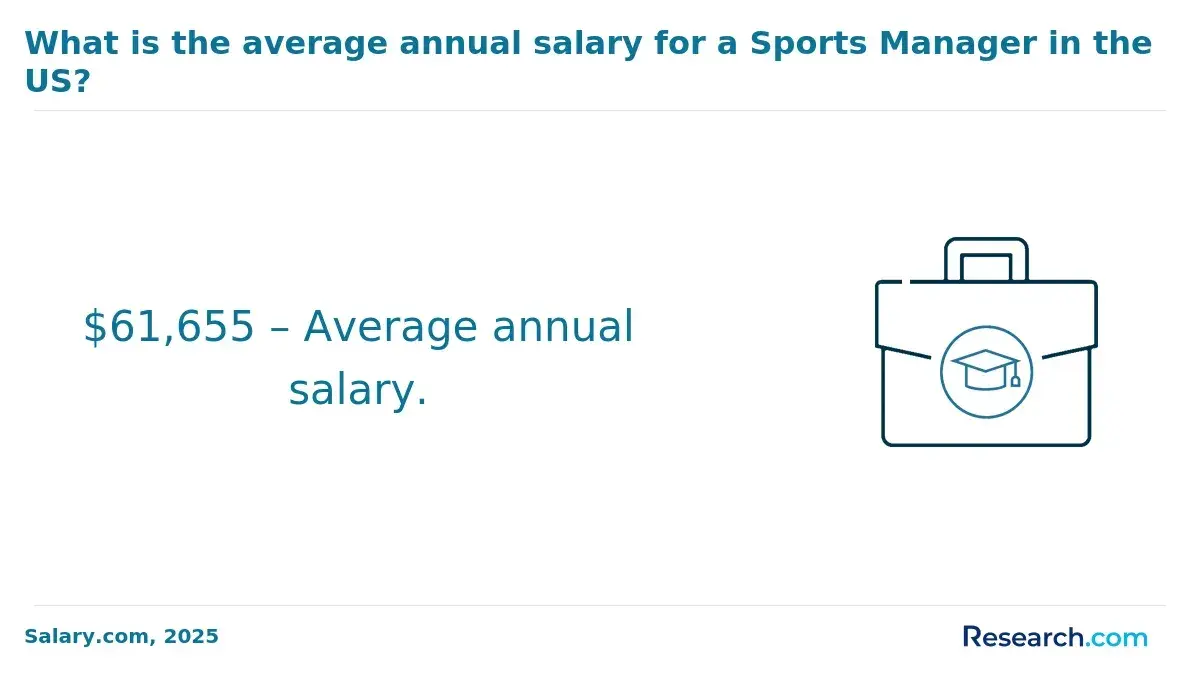
The career path also offers room to grow. Entry-level salaries in this field typically range from $35,000 to $50,000 annually, depending on the role and location. With experience, professionals can earn $70,000 or more annually, especially in high-demand positions like sports marketing or team management. The BLS overview of sports-related occupations shows that sports work includes many different jobs, so students should compare roles carefully rather than assuming every opportunity looks like working for a professional franchise.
The chart below illustrates the number of jobs projected for select sports-related occupations by 2032, as reported by the BLS in 2024.
Sport management career outlook, salaries, and role examples
The sport management outlook is strongest for candidates who understand that “sports jobs” are not one single market. Employment can be tied to schools, colleges, professional teams, fitness and recreation organizations, stadiums, agencies, sponsors, media companies, nonprofit programs, and sports technology firms. That variety helps create opportunity, but it also means job titles, pay, and hiring requirements vary widely.
Employment in entertainment and sports occupations is expected to grow faster than the average for all jobs from 2024 to 2034. According to the Bureau of Labor Statistics, approximately 108,900 job openings will be available yearly due to growth and worker replacement needs. Students should read this as a broad labor-market signal, not a guarantee of employment in a specific team, league, or city.
Pay also depends heavily on specialization. Event coordinators earn a median salary of $50,000 annually, while athletic directors earn between $60,000 and $90,000. Sports marketing managers, a high-demand position, can earn over $100,000 with experience. Roles involving revenue, strategy, analytics, sponsorships, or executive decision-making often require stronger business skills and more experience than entry-level operations jobs.
Sports psychology is another related area gaining visibility as athletes, teams, and organizations pay closer attention to performance, mental health, and stress management. Students interested in that direction should compare sport management with psychology-focused training and review the sports psychologist job outlook before choosing a program.
| Experience Level | Example Occupation | Salary | Job Growth |
| Entry-Level | Recreation Program Leader | $35,380 | 4% |
| Junior Management | Sports Data Analyst | $82,640 | 7% |
| Middle Management | Sports Consultant | $86,430 | 7% |
| Senior Management | Director of Operations | $107,680 | 6% |
How to interpret sport management salary information
- Entry-level pay is usually modest. Many graduates begin in coordination, assistant, recreation, ticketing, operations, or marketing support roles before moving into management.
- High salaries are possible but competitive. Roles tied to revenue, executive leadership, athlete representation, or major organizations often require years of experience and strong professional networks.
- Location matters. Large sports markets may offer more openings, but competition and cost of living can also be higher.
- Experience often matters as much as the degree. Internships, event work, volunteer leadership, analytics projects, and sales or marketing experience can affect employability.
Can an accelerated online degree help you enter sport management faster?
Accelerated online programs can make sense for students who need a quicker credential, want to change careers, or already have some college credit. The main advantage is flexibility: learners may be able to study while working, gaining practical experience, or completing internships. However, speed should not be the only factor. Students should check accreditation, transfer policies, internship support, faculty experience, and whether the curriculum includes business fundamentals such as finance, marketing, law, analytics, and operations.
An accelerated pathway may be especially useful for students who want to qualify for entry-level roles first and build experience over time. If you are comparing short-format options, an associate degree in 6 months online can help you understand how compressed programs are structured and what trade-offs to evaluate before enrolling.
Skills required for sport management careers
Sport management employers look for candidates who can operate in fast-moving environments where schedules change, stakeholders have competing priorities, and public-facing events must run smoothly. Technical knowledge matters, but soft skills often determine whether someone can handle pressure, communicate with partners, and lead teams effectively.
Core sport management skills and why they matter
| Skill Area | Why It Matters in Sport Management | Where It Shows Up on the Job |
| Event Planning and Coordination | Sports events involve logistics, scheduling, vendors, staff, safety, promotion, and contingency planning. | Tournaments, fundraisers, game-day operations, camps, community programs, and venue events. |
| Marketing and Branding | Teams, athletes, venues, and events need audience engagement, sponsor visibility, and consistent messaging. | Social media campaigns, fan engagement, ticket promotions, sponsorship activation, and brand partnerships. |
| Data Analysis | Organizations increasingly use data to evaluate performance, attendance, revenue, engagement, and operations. | Performance reports, fan analytics, ticketing trends, marketing dashboards, and operational planning. |
| Financial Management | Budgets shape staffing, facilities, travel, sponsorship, events, and long-term planning. | Budget tracking, revenue analysis, vendor contracts, sponsorship proposals, and resource allocation. |
| Leadership and Communication | Sport management professionals coordinate people with different responsibilities and expectations. | Staff supervision, stakeholder updates, negotiations, conflict resolution, and partner relationships. |
Specialized knowledge that can make candidates more versatile
- Health, fitness, and wellness awareness: Sport management professionals who understand athlete wellness and participation barriers can be more effective in recreation, training, and performance-adjacent settings. An online degree in nutrition may be relevant for students interested in the connection between sports, fitness, and wellness programming.
- Digital marketing: Teams and sports organizations rely on social platforms, email campaigns, video content, and sponsor-focused storytelling to reach fans.
- Analytics: Data skills can support roles in performance analysis, ticketing, sponsorship reporting, and fan engagement.
- Sport law and compliance: Contracts, eligibility, risk management, and liability issues are important in schools, colleges, events, and professional settings.
Professional skills that separate strong candidates
- Leadership: Sport management work often requires directing volunteers, interns, event staff, coaches, vendors, or department teams.
- Communication: Clear writing and speaking are essential when negotiating, giving updates, solving conflicts, and working with sponsors or administrators.
- Time Management: Multiple deadlines often overlap, especially before events, seasons, tournaments, or major campaigns.
- Problem-Solving: Weather delays, staffing gaps, vendor issues, technology problems, and schedule changes are common in sports operations.
- Financial Management: Budgeting is central to operations and events. Some professionals build stronger business skills through options such as the cheapest MBA online, especially when they want to move into management or executive roles.
Can an MBA improve your strategic value in sport management?
An MBA can be useful in sport management when your target role requires broader business decision-making. Sport organizations need leaders who understand revenue, budgeting, people management, marketing strategy, operations, and risk. A sport management degree may help you enter the industry, while MBA-level training can strengthen your ability to manage departments, evaluate investments, and lead complex organizations.
The value depends on timing. Early-career students may benefit more from internships and job experience first. Mid-career professionals aiming for director, operations, finance, or executive roles may find that business training makes them more competitive. If speed and flexibility are important, compare curriculum, accreditation, tuition, and outcomes among the fastest online MBA programs.
How to build a useful professional network in sport management
Networking is not optional in sport management because many roles are filled through referrals, internships, seasonal work, event experience, and industry relationships. A strong network can help you learn which organizations are hiring, what skills matter in a specific market, and how to move from support roles into management.
- Start with real work experience. Volunteer at tournaments, campus athletics, recreation programs, youth leagues, or community events.
- Ask for informational interviews. Speak with athletic directors, event coordinators, marketing managers, facility managers, and analysts to understand their career paths.
- Join relevant associations and attend events. Conferences, local sports business groups, and alumni events can lead to internships and referrals.
- Build a visible portfolio. Document campaigns, event plans, analytics projects, sponsorship decks, or operations improvements you helped create.
- Strengthen communication and leadership. Programs such as self-paced MBA online programs may help working professionals build business vocabulary and confidence while maintaining job responsibilities.
How to start a career in sport management
The best starting point depends on your current education, experience, and target role. Some students begin with an associate degree and local recreation or event jobs. Others complete a bachelor’s degree and pursue internships with athletic departments, agencies, venues, or teams. Certificates can help with targeted skills, but they rarely replace the value of experience and a full degree for management-track roles.
Sport management education paths compared
| Path | Best For | Typical Career Use | Important Caution |
| Certificate | Students testing the field or professionals adding a specific skill | Coaching, officiating, event support, digital marketing, analytics, or project-based skills | Usually not enough for long-term management roles by itself |
| Associate’s Degree | Students seeking a faster entry point or a transfer pathway | Recreation programming, event support, marketing assistance, facility support | Advancement may require a bachelor’s degree |
| Bachelor’s Degree | Most students pursuing entry-level management-track roles | Athletic administration, marketing, operations, analytics, event coordination | Internships and practical experience are critical |
| Master’s Degree | Professionals aiming for leadership, consulting, or specialized roles | Operations leadership, facility management, sports consulting, advanced administration | ROI depends on cost, experience, and career target |
| Doctorate | Professionals pursuing research, teaching, executive strategy, or policy leadership | University teaching, research, senior administration, organizational leadership | Requires a significant time and financial commitment |
What can you do with an associate’s degree in sport management?
An associate’s degree can help students qualify for entry-level support roles and build experience before transferring into a bachelor’s program or moving up through an organization. Students exploring graduate outcomes later can also review the best careers for masters in sports management to understand where advanced study may eventually lead.
Sports Event Coordinator
Sports event coordinators help plan and run games, tournaments, fundraisers, and community sports activities. Their work can include logistics, vendor contact, scheduling, promotion, staffing, and on-site troubleshooting.
Median salary: $50,890
Recreation Program Leader
Recreation program leaders organize community sports programs, oversee activities, promote participation, and help maintain safe environments for participants.
Median salary: $37,003
Marketing Assistant
Marketing assistants support campaigns, social media, outreach, fan engagement, and sponsorship-related projects for teams, venues, athletic departments, or sports organizations.
Median salary: $45,446
What can you do with a bachelor’s degree in sport management?
A bachelor’s degree is the common baseline for many sport management roles because it usually includes business, sport law, marketing, finance, ethics, event management, and internship components. Students should prioritize programs with employer connections and practical projects, not just sports-themed coursework.
Athletic Director
Athletic directors manage sports programs, budgets, staff, schedules, facilities, and compliance responsibilities for schools, colleges, or organizations.
Median salary: $62,246
Sports Marketing Manager
Sports marketing managers develop campaigns that promote teams, athletes, events, brands, or facilities. They may work on advertising, sponsorship, social media, fan engagement, and brand positioning.
Median salary: $49,858
Sports Data Analyst
Sports data analysts use performance, business, and audience data to help organizations improve team decisions, marketing campaigns, operations, and revenue strategies.
Median salary: $82,640
Can you get a sport management job with only a certificate?
Yes, but the realistic options are narrower. Certificates can help with coaching, officiating, event support, analytics tools, digital marketing, or project management. They can also strengthen a resume if you already have sports experience. For management roles, however, employers commonly prefer candidates with a degree, relevant internships, and practical achievements.
A certificate is best viewed as a supplement or a low-risk way to test the field. Students who want a stronger foundation in athlete performance and wellness may also compare sport management with a degree in exercise science online, especially if they are interested in roles connected to fitness, training, recreation, or health promotion.
The chart below lists the states with the highest sports participation, as published by Project Play in 2024.
Emerging trends affecting sport management careers
Sport management is changing as organizations invest in digital engagement, analytics, streaming, esports, fan data, mobile ticketing, and new sponsorship models. Employers increasingly value professionals who can connect sports knowledge with business technology, audience behavior, and operational efficiency.
Several trends matter for students planning a career. Data analytics is becoming more important in both performance and business decisions. Digital media has changed how teams and athletes build fan relationships. Event operations now require stronger risk planning and communication. Sustainability and community impact are also becoming more visible in venue management and large-scale events. Continuous learning can help professionals keep pace, whether through short courses, graduate study, or leadership programs such as the cheapest online doctorate in organizational leadership.
Is advanced education worth it for long-term sport management growth?
Advanced education can be worthwhile when it matches a specific career goal. A master’s degree may help professionals move into leadership, consulting, analytics, facility management, or athletic administration. A doctorate may be appropriate for research, teaching, or high-level strategic leadership. An MBA may be more useful than a sport-specific graduate degree if your target role is heavily focused on finance, operations, marketing, or executive management.
The key question is return on investment. Compare tuition, fees, time away from work, employer tuition assistance, internship access, alumni outcomes, and whether the credential is actually requested in job postings. Reviewing resources on MBA program cost can help you think through the financial commitment before choosing a graduate path.
When advanced education may make sense
- You already have sport industry experience and need stronger business or leadership credentials.
- Your target jobs regularly list a master’s degree, MBA, doctorate, or specialized graduate training.
- The program offers practical projects, employer connections, internships, or a strong alumni network.
- Your employer provides financial support or career advancement incentives.
When advanced education may not be the best next step
- You have little or no practical experience and would benefit more from internships or entry-level work first.
- The program is expensive but does not report meaningful outcomes or industry connections.
- You are choosing graduate school mainly to delay a job search.
- Your target role values a portfolio, sales results, event experience, or analytics skills more than another degree.
How to finance sport management education
Sport management students should plan education costs early because tuition is only one part of the total investment. Books, fees, travel, technology, lost work hours, relocation, and internship expenses can affect affordability. Before enrolling, ask schools about financial aid, scholarships, grants, payment plans, employer sponsorship, transfer credits, and whether internships are paid or unpaid.
Online programs may reduce relocation and commuting costs, but they are not automatically cheaper. Compare total program cost and outcomes, not just advertised tuition. Students who want to combine business training with sport management should also compare options such as the cheapest AACSB MBA to understand how accreditation and affordability can affect program choice.
Questions to ask before paying for a sport management program
- Is the institution accredited?
- What is the total cost, including fees?
- Can previous credits transfer?
- Are internships required, optional, paid, or unpaid?
- Which employers have hired recent graduates?
- Does the program teach business fundamentals, not only sports topics?
- What career services are available to online and campus students?
- Are alumni active in the sports industry?
Would an Executive MBA help a sport management career?
An Executive MBA may help experienced sport management professionals who are already managing people, budgets, departments, or strategic projects. It is usually not the first credential a new graduate needs. The value is strongest when the professional wants to move into senior operations, executive administration, entrepreneurship, consulting, or organization-wide leadership.
Executive MBA programs often focus on decision-making, finance, negotiation, leadership, and organizational strategy. Those skills can be valuable in sports organizations where revenue, sponsorships, facilities, personnel, and fan experience must be managed together. If you are comparing executive formats, review affordable executive MBA online programs and evaluate schedule, accreditation, peer network, and employer relevance.
How financial expertise can strengthen sport management careers
Finance is one of the most useful complementary skills in sport management. Many sports decisions come down to budgets, revenue projections, sponsorship value, staffing costs, facility expenses, ticketing, travel, and return on investment. Professionals who can explain financial trade-offs clearly may have an advantage in leadership conversations.
Financial knowledge is especially relevant for event directors, athletic administrators, facility managers, operations leaders, sponsorship professionals, and consultants. Students who want a formal foundation can compare sport management coursework with a bachelors in finance online to see whether a finance-heavy path better fits their long-term goals.
Can economics complement a sport management background?
Economics can help sport management professionals understand markets, pricing, consumer behavior, labor dynamics, public funding, opportunity cost, and the broader business impact of sports. These skills can be useful when evaluating ticket pricing, sponsorship strategy, venue investments, public-private partnerships, or the financial feasibility of events.
Professionals who enjoy analysis, forecasting, and policy questions may find economics especially valuable. An affordable online economics masters degree may be worth comparing if your career goals involve strategy, research, consulting, or high-level decision support in sports or adjacent industries.
How project management skills support sport management success
Sport management is project-heavy. A single event can involve timelines, permits, vendors, budgets, staffing, transportation, technology, marketing, safety planning, and post-event reporting. Project management skills help professionals turn complex plans into organized execution.
These skills are valuable in event operations, facility upgrades, marketing campaigns, tournament planning, sponsorship activation, and department initiatives. Students or professionals who want a structured credential can explore an accelerated project management degree, especially if they want to manage larger operations or improve cross-functional coordination.
How to advance in sport management
Advancement in sport management usually comes from a combination of experience, measurable results, education, and relationships. A degree may help you enter the field, but promotions often depend on whether you can manage budgets, lead teams, improve operations, grow revenue, strengthen partnerships, or solve complex problems.
What can you do with a master’s in sport management?
A master’s degree can help experienced professionals move into more specialized or senior roles. The strongest programs connect theory with practical projects, internships, analytics, leadership, and employer networks. Students comparing graduate options can review online sports administration programs to evaluate affordability and format.
Director of Operations
Directors of operations manage daily functions across sports organizations. Their responsibilities may include budgets, staffing, policies, department coordination, vendor relationships, and strategic execution.
Median salary: $107,680
Sports Consultant
Sports consultants advise teams, athletic departments, organizations, or athletes on operations, revenue, marketing, performance systems, and strategic improvement.
Median salary: $86,430
Facilities Manager
Facilities managers oversee the safety, scheduling, maintenance, staffing, and revenue use of sports venues and related spaces.
Median salary: $68,936
If you want to work closely with athletes on performance, motivation, and well-being, sport psychology may be a better match than general sport management. Sports psychologists, performance consultants, sports counselors, and wellness coaches are among the best jobs to pursue with a sport psychology masters degree.
What kind of job can you get with a doctorate in sport management?
A doctorate is usually intended for people who want to teach, conduct research, influence policy, lead at a high level, or specialize deeply in organizational strategy. It is not necessary for most entry-level or mid-level sport management jobs.
University Professor
University professors teach sport management courses, advise students, conduct research, publish scholarship, and contribute to academic programs.
Median salary: $114,792
Sports Scientist
Sports scientists study performance, training, injury prevention, and athlete outcomes, often working with teams, universities, or research organizations.
Median salary: $70,757
Executive-Level Administrator
Executive-level administrators lead large sports organizations, departments, governing bodies, or institutional programs. They may shape policy, strategy, budgets, and long-term organizational direction.
Median salary: $76,731
Which certification is best for sport management?
The best certification depends on the role you want. Event professionals need different credentials than marketers, analysts, facility managers, or project leaders. Certifications are most helpful when they build a specific skill and can be connected to real work experience.
| Certification | Best Fit | How It Can Help |
| Certified Sports Event Executive (CSEE) | Sports event professionals | Supports knowledge in event marketing, sponsorships, logistics, and event execution. |
| Sports Management Worldwide (SMWW) Certifications | Students and professionals seeking sports-specific specialization | Sports Management Worldwide offers training in areas such as sports marketing, analytics, and player management. |
| Project Management Professional (PMP) | Professionals managing large projects, facilities, events, or operations | Demonstrates structured project planning, risk management, and execution skills. |
| Digital Marketing Certification | Sports marketing, fan engagement, and brand roles | Builds skills in social media, campaign planning, content creation, and digital audience growth. |
Certifications can improve credibility, but they are not automatic career changers. Choose credentials that match job postings, employer expectations, and the skills you can demonstrate in a portfolio or interview.
Alternative career options for sport management graduates
A sport management degree can lead beyond teams, athletic departments, and event operations. Because the curriculum often includes leadership, communication, marketing, business strategy, and operations, graduates may also pursue roles in media, apparel, wellness, athlete services, analytics, education, or recreation.
Sports Media Analyst
Sports media analysts interpret statistics, performance trends, team decisions, and industry developments for television, radio, podcasts, websites, or social platforms. This path fits people who enjoy both sports and storytelling and can explain data in a clear, audience-friendly way.
Brand Manager for Sportswear Companies
Brand managers for sportswear or equipment companies develop campaigns, manage brand identity, support partnerships, and study consumer behavior. This option suits creative professionals who understand sports culture and want to work at the intersection of marketing and business strategy.
Athlete Development Specialist
Athlete development specialists support athletes with career planning, education, personal development, and transition planning. This role can fit people who enjoy mentoring and understand the pressures athletes face during and after competition.
Sport management can also be a useful foundation for students considering sports psychology later. If that direction interests you, review this guide on how to become a sports psychologist before choosing your next credential.
Should you consider dual master’s degrees in sport management?
Dual master’s degrees can make sense for students with a clear reason to combine sport management with another field, such as business, public administration, data analytics, finance, law, education, or psychology. The benefit is breadth: you may graduate with stronger interdisciplinary skills and a broader network. The drawback is cost, time, and the risk of earning credentials that do not directly improve your target career path.
Before enrolling, compare total credits, tuition, internship access, completion time, and whether employers in your target roles value both degrees. Research on dual masters degrees can help you evaluate when combining fields is practical and when a single focused program may be enough.
Should you pursue a doctorate in sport management?
A doctorate in sport management is best for professionals who want to teach at the university level, conduct research, influence policy, or pursue senior strategic leadership. PhD and DBA options serve different purposes. A PhD is typically more research-focused, while a DBA emphasizes applied executive decision-making and organizational problem-solving.
Before choosing a doctoral program, be realistic about cost, time, dissertation or capstone requirements, career outcomes, and whether your goals truly require a terminal degree. For professionals who want advanced business leadership with practical application, accredited DBA programs online may be worth comparing with sport management doctorates.
Common mistakes to avoid when choosing a sport management path
- Choosing a program only because it sounds exciting. Review courses, internships, employer connections, and graduate outcomes before enrolling.
- Ignoring accreditation. Accreditation affects credit transfer, financial aid eligibility, and employer confidence.
- Assuming a degree guarantees a team job. Professional team roles are competitive, and many graduates start in schools, recreation, events, sales, marketing, or facilities.
- Waiting too long to get experience. Internships, volunteer work, seasonal roles, and campus athletics experience can matter as much as coursework.
- Focusing only on tuition. Compare fees, travel, internship costs, transfer credits, financial aid, and time to completion.
- Overlooking business skills. Finance, marketing, analytics, communication, and project management are often what turn sports interest into career value.
- Relying only on rankings. Rankings can be useful, but fit, cost, location, internship access, and career support matter more for individual outcomes.
What graduates say about working in sport management
-
: "
"Coordinating major sports tournaments gave me the chance to travel, solve problems quickly, and see how much planning goes into a successful event. The work can be intense, but game day makes the preparation feel worthwhile." – Ethel
"
-
: "
"I wanted a role where I could connect fans with a team they care about. Sport management helped me understand campaigns, partnerships, and the business side of creating memorable fan experiences." – Marlon
"
-
: "
"Athletic administration lets me combine leadership with mentoring. Supporting coaches and watching student-athletes develop reminds me why I chose this field." – Nina
"
References
- Bureau of Labor Statistics (BLS). (2024a). A look at sports-related occupations in advance of the big game. The Economics Daily. BLS.
- Bureau of Labor Statistics (BLS). (2024b). Coaches and Scouts. Occupational Outlook Handbook. BLS.
- Bureau of Labor Statistics (BLS). (2024c). Entertainment and Sports Occupations. Occupational Outlook Handbook. BLS.
- National Association of Colleges and Employers (NACE). (2024). Job Outlook 2024. NACE.
- Project Play. (2024). Participation Trends. State of Play 2024. Project Play.
- Zippia. (2024). Operations Director Education Requirements. Zippia.
Other Things You Should Know About Sport Management Careers
In 2027, crucial technological skills for sport management careers include data analytics, social media marketing, and familiarity with sports management software like KORE and SAP Sports One. These skills are vital for effective decision-making, enhancing fan engagement, and improving operational efficiency.
Sport managers commonly use ticketing platforms, CRM systems, Excel, and data dashboards such as Tableau or Power BI. Event operations teams also rely on scheduling software and incident-reporting tools, while fan analytics often draws on survey platforms and social media listening systems.