2027 What Is Procurement Contract Management?

Co-Founder and Chief Data Scientist
A procurement contract can protect a company only if it is negotiated, monitored, enforced, and updated throughout the supplier relationship. Many organizations lose value after the contract is signed because pricing terms are not tracked, service levels are not measured, renewals are missed, compliance obligations are unclear, or vendor issues are handled too late.
Procurement contract management addresses that problem. It connects sourcing, purchasing, legal review, supplier performance, risk management, payment, and renewal decisions into one controlled process. The function matters more in 2026 because companies depend heavily on suppliers, digital platforms, automation, and global or regional supply networks to keep operations running. Gartner reports that about 50% of businesses will leverage AI to conduct supplier contract risk analysis and redlining, among other procurement technology uses.
This guide explains what procurement contract management means, why it matters, how the contract lifecycle works, what skills and credentials employers value, and how to evaluate this career path. It is written for business students, supply chain professionals, career changers, and anyone comparing procurement work with related paths such as international business careers or operations roles. Some professionals also enter vendor-facing business environments after completing programs such as an associate degree in hospitality management online, although higher-level procurement contract roles typically require broader business, legal, finance, or supply chain training.
Procurement Contract Management Table of Contents
- What procurement contract management means
- Why procurement contract management matters
- Procurement contract management jobs and salaries
- Legal and compliance challenges
- Major challenges facing procurement teams today
- Key performance indicators to track
- How to become a procurement contract manager
- How to move into senior procurement and contract roles
- How risk management reduces contract problems
- How vendor relationship management improves contract results
- How dispute resolution strengthens contract performance
- How agile contract management helps during supply chain disruption
- The value of advanced education
- Technology in procurement contract management
- Sustainability and financial insight in procurement
- Emerging trends in procurement contract management
Quick Answer: What Is Procurement Contract Management?
Procurement contract management is the process of planning, negotiating, approving, monitoring, and closing contracts for goods or services purchased from outside suppliers. It ensures that vendors deliver what they promised, buyers pay under agreed terms, risks are controlled, and the contract continues to support business goals after signature.
In practical terms, it sits between procurement, supply chain, legal, finance, operations, and supplier management. A strong procurement contract management process helps organizations control cost, reduce legal exposure, improve supplier performance, prevent missed renewals, and make better sourcing decisions.
Understanding Procurement Contract Management
What is procurement?
Procurement is the business process of obtaining goods, services, materials, technology, or external work from suppliers. It includes identifying business needs, evaluating vendors, negotiating commercial terms, placing orders, receiving goods or services, approving invoices, and managing supplier performance.
Companies use procurement because few organizations produce everything they need internally. A manufacturer may buy raw materials, parts, packaging, logistics services, and maintenance support. A service company may purchase software, professional services, office supplies, outsourced labor, cloud platforms, or equipment. Students in online business administration programs often study procurement as part of operations, finance, supply chain, or management coursework.
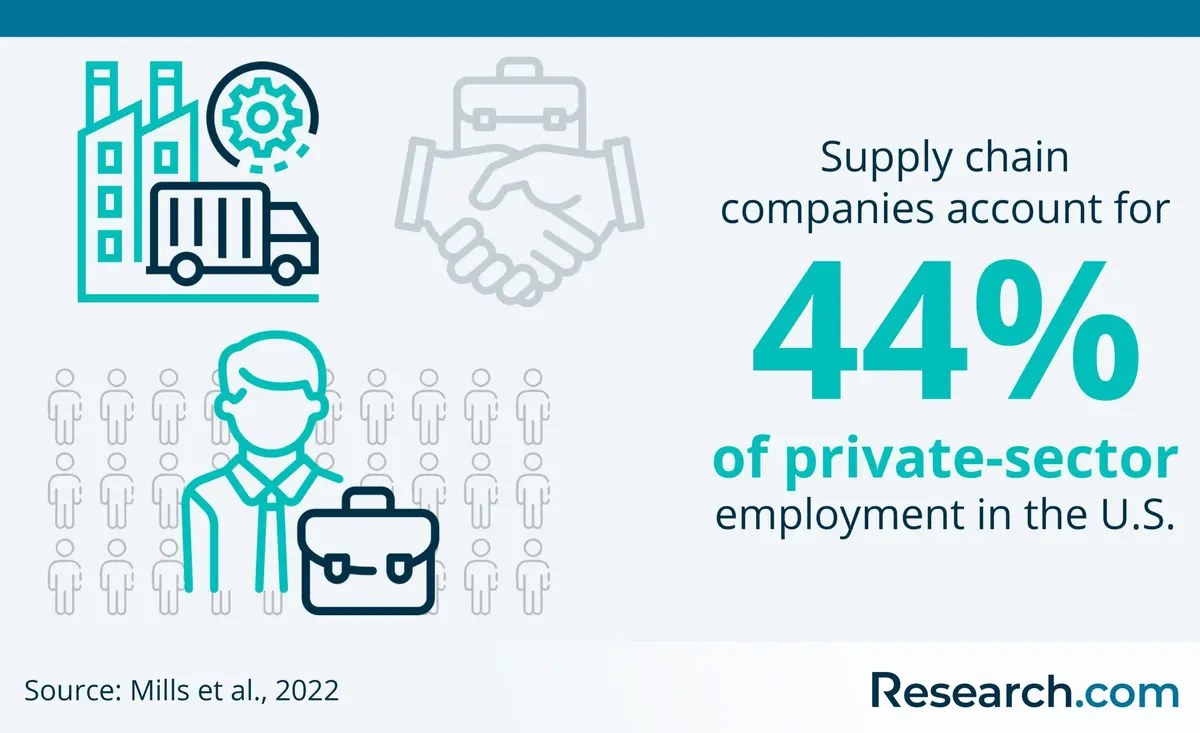
Procurement remains central to supply chain strategy. Businesses are reassessing where they source and manufacture products as they try to reduce disruption risk. By 2026, roughly 69% of supply chains serving U.S. customers are predicted to be based in the Americas, up from 59% two years earlier, reflecting a growing shift toward regionalization and resilience. At the same time, e-commerce and digital supplier platforms have made it easier for businesses to compare vendors across local, regional, and global markets.
What is procurement management?
Procurement management is the discipline of obtaining the right goods or services from qualified suppliers at the right time, quality, quantity, and price. It focuses on sourcing strategy, supplier selection, bid evaluation, purchasing controls, spend analysis, and delivery performance.
What is contract management?
Contract management is the structured oversight of agreements between two or more parties. It covers contract drafting, negotiation, approval, execution, compliance monitoring, amendments, renewals, dispute handling, and contract closeout.
How procurement contract management combines both functions
Procurement contract management applies contract management discipline to purchasing relationships. It makes sure procurement agreements are not treated as static documents but as living tools for controlling cost, risk, performance, payment, and supplier accountability. Although the phrase may sound narrow, the procurement contract management process affects everyday business operations in measurable ways.
| Stage | What happens | Why it matters |
| Demand planning | The organization estimates future purchasing needs using past spending, inventory data, demand forecasts, business plans, and market conditions. | Better forecasting reduces emergency buying, excess inventory, and avoidable supplier costs. |
| Supplier identification | Procurement teams research vendors, request bids, evaluate capability, review pricing, and assess reliability. | Supplier selection affects quality, delivery performance, compliance risk, and total cost. |
| Contract drafting | The buyer and legal team define scope, pricing, quantities, delivery obligations, quality standards, service levels, confidentiality, warranties, and termination rights. | Clear language reduces disputes and makes supplier obligations easier to enforce. |
| Negotiation and approval | Business, legal, finance, procurement, and supplier representatives review terms and approve the final agreement. | Cross-functional review helps prevent unfavorable pricing, hidden risks, or unrealistic obligations. |
| Purchase order issuance | The company issues a purchase order based on the approved contract. | The purchase order connects contract terms to an actual buying transaction. |
| Receipt and inspection | Goods or services are checked against contract requirements, delivery terms, and quality expectations. | Inspection helps the buyer avoid paying for incomplete, late, defective, or nonconforming work. |
| Invoice review and payment | The supplier invoice is matched against the purchase order, delivery records, and contract terms before payment is released. | Invoice controls reduce overpayments, duplicate payments, and payment disputes. |
| Supplier relationship management | The buyer tracks performance, communicates with the vendor, resolves issues, and evaluates whether the relationship should continue. | Ongoing management protects long-term value and prepares the organization for renewals or rebidding. |
Why is Procurement Contract Management Important?
Procurement contract management is important because supplier agreements shape cost, quality, operational continuity, legal exposure, and customer experience. A contract that is well written but poorly managed can still fail. A supplier may miss delivery deadlines, pricing may drift from negotiated terms, service levels may go unmeasured, or renewal dates may pass without review.
Strong procurement contract management helps organizations move from reactive purchasing to disciplined supplier governance. It gives teams a clear view of what was promised, who is responsible, what risks exist, and whether the supplier relationship is still worth keeping.
- Cost control: Poor contract management typically costs companies 11% of their total contract value each year. Organizations reduce value leakage by negotiating practical terms, onboarding suppliers carefully, monitoring compliance, and tracking lifecycle events such as renewals and price adjustments.
- Risk reduction: Contracts can create financial, legal, operational, cybersecurity, regulatory, and reputational risks. Active oversight helps procurement teams identify issues before they become expensive disputes.
- Stronger supplier relationships: The current economic climate, marked by a recession and inflation, has caused 55% of businesses to extend payment terms with suppliers. Longer payment cycles can strain vendor cash flow. Clear communication, fair expectations, and consistent contract administration help preserve trust.
- Quality assurance: Procurement teams use contract terms, inspection requirements, service-level agreements, and performance reviews to confirm that purchased goods and services meet business requirements.
- Operational efficiency: Standard templates, approval workflows, centralized contract records, and automated alerts reduce manual work and help teams avoid preventable mistakes.
Procurement Contract Management Jobs
Procurement contract management can be a strong career fit for people who enjoy negotiation, analysis, vendor communication, business operations, and risk management. The work is especially appealing to professionals who want to influence business performance without working in a traditional sales or production role.
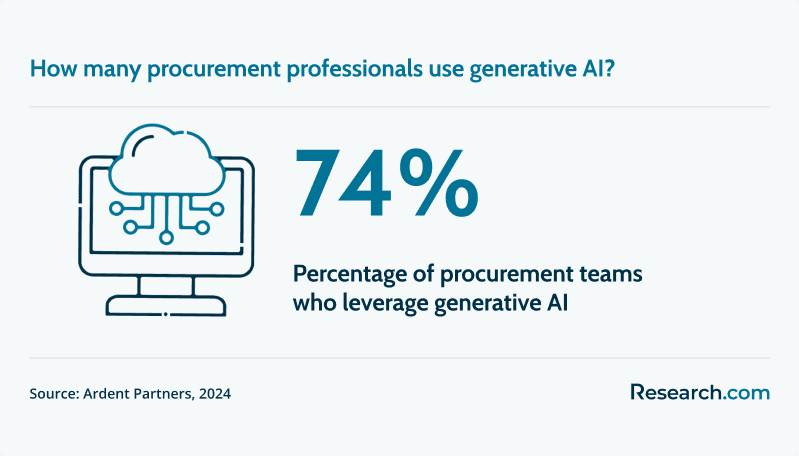
Procurement professionals work with internal stakeholders and outside suppliers, which gives them visibility across finance, operations, legal, logistics, technology, and executive decision-making. The field is also being reshaped by automation. The results of the 2024 survey by Ardent Partners demonstrate that 74% of procurement teams have integrated Generative AI to boost automation, enhance decision-making processes, and improve user experience, despite facing global supply chain uncertainties and market challenges.
Professionals may enter the field through business, supply chain, finance, operations, law, public administration, or industry-specific pathways. Related office and administrative training, such as an associate office administration program, can support entry-level business operations roles, but procurement contract management typically requires deeper commercial and analytical skills as responsibilities increase.
Common procurement and contract management roles
| Role | Main focus | Best fit for |
| Procurement specialist or purchasing assistant | Vendor communication, purchase orders, inventory support, quote comparison, and basic purchasing documentation. | Entry-level professionals building purchasing experience. |
| Procurement manager | Sourcing strategy, supplier selection, spend control, cross-functional purchasing decisions, and supplier performance. | Professionals who enjoy strategy, data analysis, negotiation, and stakeholder management. |
| Contract manager | Drafting, reviewing, tracking, and enforcing contract terms in collaboration with legal and business teams. | Professionals with strong writing, legal awareness, detail orientation, and risk management skills. |
| Procurement contract manager | End-to-end oversight of supplier contracts, from sourcing and negotiation to compliance, performance, renewal, and closeout. | Experienced professionals who can connect commercial, legal, financial, and operational requirements. |
| Category manager | Managing spending and supplier strategy for a specific category, such as technology, facilities, logistics, or raw materials. | Procurement professionals who want deeper market specialization. |
| Supplier relationship manager | Long-term supplier performance, collaboration, issue resolution, and business continuity. | Professionals skilled in communication, relationship management, analytics, and escalation handling. |
What does a procurement manager do?
A procurement manager leads purchasing strategy and supplier selection. The role requires balancing cost, quality, availability, risk, and business priorities. Procurement managers commonly analyze spending, forecast purchasing needs, evaluate supplier proposals, negotiate terms, coordinate with internal departments, and monitor vendor performance.
Core skills include:
- Research and data analysis
- Strategic decision-making
- Relationship management
- Financial analysis
- Purchase forecasting
Procurement managers often represent the company during supplier negotiations. They work closely with contract managers, legal teams, finance teams, and business stakeholders to create terms that are commercially useful and operationally realistic. Understanding psychology in business can also help in negotiation, persuasion, stakeholder alignment, and supplier communication.
What does a contract manager do?
A contract manager oversees agreements between an organization and parties such as vendors, clients, employees, consultants, or service providers. In procurement, the role centers on supplier contracts: drafting terms, reviewing obligations, managing approvals, tracking deliverables, monitoring compliance, and supporting dispute resolution.
The question is not only what a contract says, but whether it is being followed. That is why contract management in procurement requires close coordination with legal, finance, procurement, and operations teams.
Gartner reports that 73% of procurement leaders plan to adopt Generative AI, highlighting the expected role of automation in contract review, analysis, and workflow support. Contract managers may use technology to manage clause libraries, approval routing, audit trails, renewal alerts, risk reviews, and contract repositories.
Important skills include:
- Collaboration
- Project management
- Business and legal knowledge
- Negotiation
- Attention to detail
What does a procurement contract manager do?
A procurement contract manager combines purchasing expertise with contract oversight. This professional manages supplier agreements from planning through execution, performance monitoring, renewal, amendment, or termination. The role requires understanding what the organization needs, what suppliers can deliver, which terms create risk, and how contract performance should be measured.
Common responsibilities include:
- Coordinating sourcing events and supplier evaluations
- Drafting or reviewing procurement contract terms with legal counsel
- Negotiating pricing, delivery, warranty, service-level, confidentiality, and termination provisions
- Monitoring supplier performance against contract requirements
- Managing changes, escalations, disputes, renewals, and closeout activities
- Using procurement or contract lifecycle management software to track obligations
Strong procurement contract managers are commercially practical. They know that the best contract is not always the most aggressive contract. It is the one the business can administer, the supplier can fulfill, and both sides can rely on when conditions change.
Job outlook and salary
According to the U.S. Bureau of Labor Statistics, employment for purchasing managers, buyers, and purchasing agents may increase by 5% from 2024 to 2034 due to increasing automation and outsourcing of procurement tasks. There are over 47,000 jobs expected to open in this field during this decade.
A contract management and procurement role can also be financially attractive, although pay varies by title, industry, employer size, location, and years of experience. The latest BLS reports show that purchasing managers earn a median of $139,510 annually. Typical purchasing manager salaries can range between $85,500 and $219,140 annually. In comparison, contract managers earn an average of $110,670 a year, and can make anywhere between $71,072 and $172,332 annually, depending on location, job title, skills, and years of experience.
Salary figures differ by source and role definition, so readers should compare job postings, BLS data, employer salary ranges, and local market information before making career decisions.
| Percentile | 10% | 25% | 50% (Median) | 75% | 90% |
| Reported annual wage distribution | $80,000 | $101,790 | $131,350 | $166,980 | $ 210,000 |
The manufacturing industry employs the largest percentage of purchasing managers, accounting for 24% of those employed, according to the BLS. Many also work in the management of companies and enterprises (18%), government (13%), and wholesale trade (12%).
Contract manager opportunities may appear across a wider range of organizations. According to Zippia (n.d.), 20% of contract managers are employed by Fortune 500 companies, 14% by technology companies, and 10% by healthcare companies.
Alternative jobs for procurement contract managers
The procurement contract management skill set transfers well because it combines negotiation, financial judgment, compliance awareness, project coordination, and stakeholder communication. Professionals may move into related roles such as:
- Operations manager: Oversees business processes, resources, staffing, and operational performance.
- Financial analyst: Reviews financial data and provides analysis that supports budgeting, purchasing, pricing, and investment decisions.
- Lawyer: Provides legal advice, represents clients, and helps resolve legal matters after meeting education and licensure requirements.
- HR manager: Leads workforce policies, talent development, compliance, compensation, employee relations, and retention strategies.
- Sales manager: Guides sales teams, revenue strategy, customer relationships, and performance targets.
- Compliance officer: Helps organizations follow applicable laws, regulations, standards, and internal policies.
- Product manager: Coordinates product development, market fit, cross-functional planning, and lifecycle performance.
Legal and Compliance Challenges in Procurement Contract Management
Legal and compliance risk is one of the main reasons procurement contract management must be structured rather than informal. Supplier agreements can involve data privacy, intellectual property, cybersecurity, employment law, import/export rules, tax obligations, anti-corruption requirements, environmental standards, warranties, insurance, indemnity, and dispute procedures.
Organizations that buy globally face additional complexity. Procurement teams may need to account for cross-border trade rules, customs requirements, fair trade standards, taxation, sanctions exposure, country-specific data protection obligations, and industry regulations. Failing to manage these requirements can lead to penalties, contract termination, delayed delivery, litigation, or reputational harm.
Intellectual property rights and data protection are especially important when buying software, technology services, consulting, research support, technical equipment, or outsourced business processes. Contracts may need to define ownership rights, permitted use, confidentiality duties, data handling requirements, audit rights, breach notification procedures, and restrictions on subcontractors.
Contract lifecycle management tools can help by storing contracts in a central repository, routing agreements through legal review, flagging nonstandard clauses, tracking obligations, and generating renewal alerts. However, technology does not replace legal judgment. Procurement teams should work with legal counsel when terms involve high-value commitments, regulated data, intellectual property, complex liability, or international obligations.
Professionals who want stronger financial and compliance knowledge may explore business-adjacent programs such as the fastest accounting degree online, especially if they plan to work in cost analysis, audit, public procurement, or regulated industries.
What are the key challenges faced in procurement contract management today?
Procurement contract managers are working in an environment shaped by supply uncertainty, cost pressure, regulation, automation, and stronger expectations for supplier accountability. The most common challenges include:
- Supply chain disruption: Natural disasters, geopolitical conflict, public health events, labor shortages, logistics bottlenecks, and supplier instability can affect availability, delivery schedules, and pricing.
- Rising costs: Inflation, commodity volatility, transportation costs, and supplier pricing changes can reduce the value of fixed or poorly structured agreements.
- Complex compliance requirements: Healthcare, finance, government, technology, manufacturing, and international trade contracts often require more rigorous monitoring than standard purchasing agreements.
- Digital transformation: Procurement teams are expected to use automation, analytics, electronic sourcing, contract lifecycle management platforms, and AI-assisted tools while still maintaining human oversight.
- Vendor relationship management: Buyers must reduce cost without damaging the suppliers they depend on for quality, speed, innovation, and continuity.
| Challenge | Contract management response | Question to ask before signing |
| Supplier delivery risk | Include clear delivery milestones, remedies, escalation steps, and backup sourcing options. | What happens if the supplier misses a critical deadline? |
| Price volatility | Use defined price adjustment rules, benchmarking rights, volume terms, or renegotiation triggers where appropriate. | Can either party change price, and under what conditions? |
| Regulatory exposure | Require compliance warranties, audit rights, documentation, and legal review for regulated purchases. | Which laws, standards, or certifications must the supplier meet? |
| Data or cybersecurity risk | Define data access, security duties, breach notice, subcontractor limits, and confidentiality obligations. | Will the supplier access sensitive company, employee, or customer data? |
| Poor performance visibility | Set service levels, reporting expectations, review cadence, and consequences for nonperformance. | How will we measure whether the supplier is meeting the contract? |
What Are the Key Performance Indicators in Procurement Contract Management?
Procurement contract management should be measured with practical indicators that show whether contracts are delivering value. Common metrics include contract compliance rates, cost savings achieved, procurement cycle times, supplier performance scores, and the overall efficiency of vendor relationships.
Useful KPIs depend on the organization’s goals. A manufacturer may emphasize delivery reliability and quality defects. A technology buyer may prioritize data protection, service uptime, renewal control, and support responsiveness. A public-sector organization may focus on transparency, policy compliance, documentation, and fair competition. Professionals who want to connect procurement performance with policy and public decision-making may find MPP online programs relevant.
| KPI | What it measures | Why procurement leaders use it |
| Contract compliance rate | Whether purchases, pricing, terms, and supplier actions align with approved contracts. | Shows if negotiated value is actually being captured. |
| Cost savings achieved | Documented savings from negotiation, supplier consolidation, demand management, or process improvement. | Connects procurement activity to financial outcomes. |
| Procurement cycle time | Time required to move from need identification to approved purchase or contract execution. | Highlights bottlenecks in approvals, sourcing, legal review, or supplier onboarding. |
| Supplier performance score | Delivery, quality, responsiveness, compliance, innovation, and service-level results. | Supports renewals, corrective actions, and supplier development decisions. |
| Renewal and expiration tracking | Whether contract dates, notice periods, and renewal options are monitored. | Prevents automatic renewals, rushed renegotiations, and service gaps. |
How to Become a Procurement Contract Manager
Education and work experience
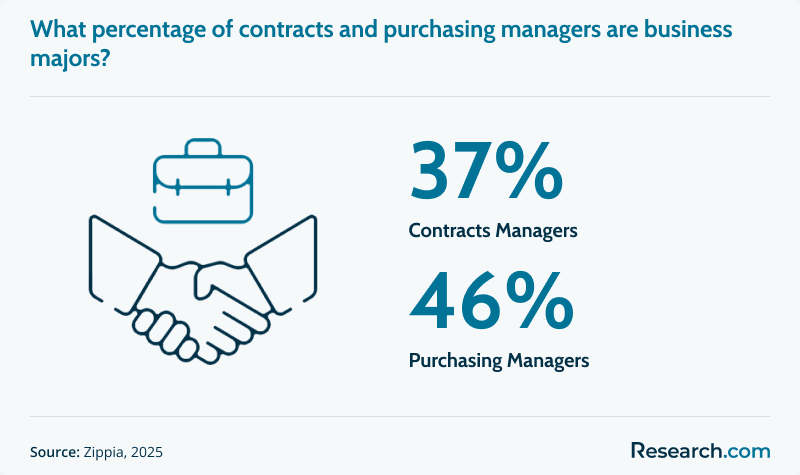
Most procurement contract manager roles require at least a bachelor’s degree, especially when the position includes negotiation, budget responsibility, compliance oversight, or supplier strategy. Business is by far the most popular procurement and contract management course, taken by 37% of contract managers and 46% of purchasing managers on Zippia. Studying supply chain management can be especially useful because it covers operations, logistics, finance, sourcing, and production concepts.
Entry-level job titles may include procurement specialist, purchasing assistant, contract associate, sourcing coordinator, inventory analyst, or vendor management assistant. Some learners build early business experience through programs such as an associate degree in hospitality management online, particularly when they work in purchasing-heavy environments such as hotels, food service, events, or facilities operations.
To move into mid-level roles such as procurement contract manager, category manager, or supplier relationship manager, professionals generally need at least five years of procurement experience. During that time, it is important to build experience with supplier negotiations, purchase orders, contract review, spend analysis, stakeholder communication, and performance tracking.
A business or supply chain bachelor’s degree can support advancement, and flexible online bachelor degree programs may help working adults complete the credential while staying employed. For senior roles such as procurement director or chief procurement officer, employers may prefer advanced education, deep category expertise, leadership experience, and a record of measurable cost, risk, or supplier performance improvement.
Certifications for procurement contract management
Certification is usually not mandatory, but it can help demonstrate professional commitment and technical knowledge. Common credentials mentioned in the field include the Certified Purchasing Professional (CPP), Certified Professional in Supply Management (CPSM), Certified Supply Chain Professional (CSCP), and Certified Federal Contracts Manager (CFCM). The best choice depends on whether you work in commercial procurement, supply chain operations, federal contracting, or supplier management.
| Credential area | When it may help | What to verify before enrolling |
| Purchasing certification | You want to demonstrate purchasing, sourcing, supplier, and procurement process knowledge. | Employer recognition, exam requirements, renewal rules, and professional experience expectations. |
| Supply chain certification | You want broader credibility in logistics, operations, planning, inventory, and end-to-end supply chain work. | Whether the curriculum matches your target industry and job level. |
| Contract management certification | You work heavily with contract terms, negotiation, compliance, or government contracting. | Whether the credential is designed for commercial, federal, or specialized contracting environments. |
| Finance or accounting education | You want stronger cost analysis, budgeting, audit, or supplier financial evaluation skills. | Accreditation, course relevance, transfer policies, and total program cost. |
Professional networking
An estimated 80% of job openings are never posted on job sites or public platforms (Flynn, 2023). They are instead filled through networking with personal or industry connections. Because procurement roles often depend on trust, business judgment, and industry knowledge, networking can be especially valuable.
Professionals can build visibility by attending supply chain events, joining groups such as the Council of Supply Chain Management Professionals (CSCMP) or the Institute for Supply Management (ISM), connecting with senior procurement leaders, volunteering for cross-functional projects, and maintaining relationships with vendors and internal stakeholders.
How can professionals advance their careers in procurement and contract management?
Career advancement in procurement contract management depends on more than years of service. Employers look for evidence that a professional can reduce cost, improve supplier performance, prevent risk, lead negotiations, manage stakeholders, and use data to make better decisions.
- Earn relevant credentials: Certifications such as CPSM or CFCM can strengthen your profile when they match your target role. They are most useful when paired with real project experience.
- Keep learning: Procurement changes with technology, regulation, market volatility, and supplier risk. Courses in finance, analytics, negotiation, law, and supply chain systems can keep your skills current. If financial analysis is a gap, compare options such as the cheapest online finance degree carefully for accreditation, curriculum, schedule, and cost.
- Build cross-functional experience: Work with legal, finance, operations, IT, compliance, and executive stakeholders. Senior procurement roles require the ability to translate business needs into workable supplier agreements.
- Specialize by category or industry: Expertise in technology procurement, healthcare contracting, manufacturing supply, logistics, construction, government procurement, or professional services can improve your marketability.
- Document outcomes: Track cost savings, cycle-time reductions, supplier improvements, risk reductions, and contract compliance gains. Advancement is easier when you can show measurable impact.
How can effective risk management mitigate procurement contract challenges?
Risk management helps procurement teams identify potential failures before they disrupt operations or create financial loss. Strong contract risk management includes supplier due diligence, market monitoring, financial review, compliance screening, performance tracking, escalation rules, and contingency planning.
Procurement teams should assess supplier capacity, financial stability, quality record, cybersecurity posture, geographic exposure, regulatory obligations, and dependence on subcontractors. Digital analytics can help detect performance changes, late deliveries, price shifts, and unusual invoice activity. Professionals who want broader financial risk insight may also explore resources related to high paying accounting jobs, since accounting and finance skills often support stronger contract evaluation.
How can effective vendor relationship management boost procurement contract performance?
Vendor relationship management improves contract performance by creating a structured partnership after the contract is signed. It includes regular performance reviews, transparent communication, issue escalation, joint planning, supplier scorecards, and clear accountability for both parties.
Good supplier management does not mean avoiding difficult conversations. It means raising problems early, using contract terms consistently, and giving suppliers enough information to meet expectations. Financial literacy also matters because procurement professionals must understand pricing models, payment terms, life-cycle cost, and supplier financial pressures. An affordable online associate's degree in accounting may be useful for professionals who want foundational accounting knowledge before moving into more advanced procurement or finance work.
How can effective dispute resolution enhance procurement contract management?
Disputes are easier to resolve when the contract already defines escalation steps, documentation expectations, notice requirements, cure periods, mediation options, and termination rights. Without a clear process, disagreements over delivery, quality, payment, scope, or service levels can quickly damage the supplier relationship.
Procurement contract managers should keep written records of performance issues, meeting notes, supplier commitments, inspection findings, correspondence, and corrective actions. Digital tools can support audit trails and accountability. Professionals comparing business credentials may also consider whether is CPB certification worth it for their broader career goals, particularly if their role involves financial documentation, payment review, or vendor records.
How can agile procurement contract management address supply chain disruptions?
Agile procurement contract management helps organizations respond when supplier conditions change. Instead of treating the contract as fixed and untouchable, procurement teams monitor risk signals, maintain alternative suppliers, review critical terms, and prepare contingency plans before disruptions become emergencies.
Agility may involve flexible sourcing, clearer substitution rules, phased commitments, stronger supplier communication, cross-functional response teams, and faster decision workflows. Organizations also need skilled people who can make sound commercial decisions under pressure. Compensation benchmarking, including resources such as how much can a CPA make, can help leaders understand the broader market for finance and contract-related talent.
What Role Does Advanced Education Play in Procurement Contract Management?
Advanced education can help procurement professionals move into higher-level roles, especially when they need deeper knowledge of law, finance, analytics, supply chain strategy, or leadership. An online master of legal studies, for example, may be useful for professionals who manage complex agreements but do not plan to become licensed attorneys.
Graduate education is not the only route to advancement. Some professionals progress through experience, certifications, category expertise, or employer-sponsored training. The best choice depends on your target role. If you want to become a procurement director, strategic sourcing leader, contracts director, or chief procurement officer, compare how each program builds leadership, negotiation, financial analysis, compliance, and technology skills.
What is the role of technology in procurement contract management?
Technology is changing procurement contract management by reducing manual work and improving visibility across the contract lifecycle. Contract lifecycle management software can support drafting, approvals, version control, clause libraries, electronic signatures, obligation tracking, renewal alerts, supplier repositories, and reporting.
AI and automation can assist with contract review, supplier risk analysis, redlining, data extraction, spend analysis, and compliance checks. These tools can improve speed and consistency, but they should not be used without human review. Procurement professionals still need to understand business context, legal risk, supplier relationships, and ethical use of data.
Professionals who want flexible training options can compare online colleges with no application fee while checking accreditation, course relevance, technology training, transfer policies, and total cost. The strongest programs are those that help learners apply tools to real procurement decisions rather than simply describe software features.
| Technology | Procurement contract use | Risk to manage |
| Contract lifecycle management software | Centralizes contracts, approvals, obligations, amendments, and renewals. | Poor implementation can create incomplete records or low user adoption. |
| AI-assisted review | Flags clauses, extracts data, supports redlining, and identifies possible risk patterns. | Outputs may be incomplete or inaccurate without human legal and business review. |
| Supplier analytics | Tracks performance, delivery trends, spending, and risk indicators. | Data quality problems can lead to weak decisions. |
| Digital collaboration tools | Improves communication among procurement, legal, finance, operations, and suppliers. | Teams still need clear ownership and escalation rules. |
| Blockchain and traceability tools | Some organizations are evaluating them for transparency and record integrity across supplier networks. | Use cases should be tested carefully before broad adoption. |
How can sustainability and financial insight drive procurement contract management success?
Sustainability is becoming part of procurement contract strategy because suppliers influence environmental impact, regulatory exposure, brand reputation, and long-term cost. Procurement teams may include environmental benchmarks, reporting duties, responsible sourcing requirements, packaging standards, labor expectations, or audit rights in supplier agreements.
Financial insight is equally important. A low purchase price may not be the best value if the supplier creates quality issues, late deliveries, high maintenance costs, waste, compliance risk, or poor customer outcomes. Procurement professionals should evaluate life-cycle cost, payment terms, supplier stability, price adjustment clauses, and the financial effect of sustainability requirements. Those who need stronger cost and reporting skills may compare options such as an easy online accounting degree, while still verifying accreditation and curriculum quality.
What are the emerging trends in procurement contract management?
Procurement contract management is moving toward more data-driven, technology-enabled, and risk-aware practices. The strongest teams are not only negotiating contracts; they are using supplier data, market intelligence, legal oversight, and performance analytics to guide sourcing decisions.
- AI-assisted contract work: More organizations are using AI to support review, redlining, clause comparison, risk identification, and workflow automation.
- Supplier risk visibility: Procurement teams are paying closer attention to supplier financial health, geopolitical exposure, cybersecurity, compliance, and business continuity.
- Regionalization and resilience: Companies are reassessing supplier location and redundancy as they respond to disruption risk.
- Sustainability requirements: Contracts increasingly include environmental, social, and responsible sourcing expectations where relevant to the business and industry.
- Cross-functional financial skill: Procurement teams are expected to understand budgeting, cost modeling, payment terms, and value leakage. This overlaps with skills used in an accounting career, especially in roles that require spend analysis or supplier financial review.
How to Choose the Right Education or Career Path for Procurement Contract Management
There is no single path into procurement contract management. The right choice depends on your current education, work history, target industry, and whether you prefer supplier negotiation, legal review, data analysis, operations, or leadership.
| Your situation | Practical next step | Why it makes sense |
| You are starting college | Consider business, supply chain management, finance, operations, or legal studies coursework. | These areas build the foundation for sourcing, contracts, budgeting, and supplier management. |
| You already work in administration or operations | Volunteer for purchasing, vendor communication, inventory, invoice review, or contract tracking tasks. | Procurement employers value hands-on exposure to supplier processes. |
| You work in finance or accounting | Build skills in negotiation, supplier risk, contract terms, and sourcing strategy. | Financial analysis is valuable, but procurement also requires commercial and relationship judgment. |
| You work in legal support | Learn purchasing workflows, supplier performance metrics, and business operations. | Contract knowledge becomes more powerful when paired with operational understanding. |
| You want a senior leadership path | Develop category expertise, team leadership, analytics, stakeholder management, and strategic sourcing experience. | Senior roles require measurable business impact, not only contract administration. |
If you are comparing business degrees, a guide on business administration vs management can help you understand how broad business programs differ from management-focused programs. Learners who already know they want a supply chain path may prefer an online supply chain management degree program because it more directly addresses sourcing, logistics, procurement, operations, and supplier networks.
Common Mistakes to Avoid in Procurement Contract Management
- Treating signature as the finish line: The contract creates obligations, but value is captured through monitoring, communication, and enforcement.
- Choosing suppliers only by price: Low bids can become expensive if quality, delivery, compliance, or service performance is weak.
- Ignoring renewal dates: Missed notice periods can lock an organization into unfavorable terms or cause service disruption.
- Using vague contract language: Unclear scope, service levels, acceptance criteria, or remedies increase dispute risk.
- Skipping legal review for high-risk purchases: Contracts involving data, intellectual property, regulated services, international suppliers, or major financial commitments need careful review.
- Failing to document supplier issues: Without records, it is harder to enforce terms, negotiate remedies, or justify switching suppliers.
- Assuming software solves process problems: CLM tools help only when teams define ownership, workflows, data standards, and decision rules.
- Relying only on rankings or program names when choosing education: Check accreditation, curriculum, faculty experience, transfer policies, career support, cost, and fit with your target role.
Questions to Ask Before Entering This Field
- Do I enjoy negotiation, analysis, documentation, and stakeholder communication?
- Am I comfortable working with legal, finance, operations, suppliers, and senior leaders?
- Which industry interests me most: manufacturing, government, technology, healthcare, logistics, construction, hospitality, or professional services?
- Do I want to focus more on sourcing strategy, contract terms, supplier relationships, compliance, or analytics?
- What degree, certificate, or work experience gap is most likely to limit my next promotion?
- Can I document measurable results such as savings, faster cycle times, stronger supplier performance, or reduced risk?
Building Business Success Through Strong Procurement Contract Management
Procurement contract management helps organizations turn supplier agreements into controlled business assets. When done well, it improves cost discipline, reduces legal and operational risk, supports supplier accountability, and gives leaders better data for sourcing decisions.
For individuals, the field offers a practical career path that blends business judgment, negotiation, finance, legal awareness, technology, and relationship management. It can lead to roles in procurement, contract management, supplier relationship management, category strategy, compliance, operations, and executive supply chain leadership.
Key Insights
- Procurement contract management is lifecycle work: It starts before the contract is signed and continues through delivery, payment, performance review, renewal, amendment, or closeout.
- The main value is control: Strong processes help organizations reduce cost leakage, missed obligations, supplier disputes, compliance failures, and renewal surprises.
- Career success requires mixed skills: Procurement contract managers need negotiation, financial analysis, legal awareness, technology fluency, supplier management, and communication skills.
- Technology is useful but not automatic: AI and CLM platforms can improve speed and visibility, but human review remains essential for legal risk, business judgment, and supplier strategy.
- Education should match your target role: Business, supply chain, finance, accounting, legal studies, and public policy pathways can all be relevant, but the best choice depends on whether you want to focus on sourcing, contracts, compliance, analytics, or leadership.
- Supplier relationships are strategic assets: The best procurement teams do not only pressure vendors for lower prices; they build accountable relationships that support quality, resilience, innovation, and long-term value.
References:
- Ardent Partners (2024). Procurement Metrics that Matter in 2024. https://info.ivalua.com/reports/ardent-partners-procurement-metrics-report-en
- Berrocoso, P. (2024, August 13). What's in the Gartner Hype Cycle for Procurement & Sourcing 2024? Process Automation Pulse. https://theprocessautomationpulse.substack.com/p/whats-in-the-gartner-hype-cycle-for
- Flynn, J. (2026, January 22). 25+ Important Networking Statistics [2026]: The Power of Connections In The Workplace. Zippia. https://www.zippia.com/advice/networking-statistics
- Indeed. (2026, March 23). Contract manager salary in United States. Indeed. https://www.indeed.com/career/contract-manager/salaries
- Indeed. (2026, January 23). What Is a Contract Manager? (With Duties, Skills and Tips). Indeed. https://www.indeed.com/career-advice/finding-a-job/what-is-contract-manager
- Indeed. (2025, December 10). How To Become a Procurement Manager (With Duties and Salary). Indeed. https://www.indeed.com/career-advice/finding-a-job/how-to-become-procurement-manager
- Marino, D. (2025, December 29). 2026 Supply Chain Hiring Outlook. Ahearn & Soper. https://www.ahearn.com/2026-supply-chain-hiring-outlook/ Related Indeed source: https://www.indeed.com/career-advice/finding-a-job/how-to-become-procurement-manager
- Misra, S. (n.d.). 7 Key Contract Manager Skills You Need Today. ContractPodAi. https://contractpodai.com/news/7-key-contract-manager-skills
- O*NET. (n.d.). 11-3061.00 Purchasing Managers. O*NET. https://www.onetonline.org/link/summary/11-3061.00
- PASA (2026, January 19). Procurement contracts leaking 11 percent of value due to enterprise-wide failures. https://procurementandsupply.com/procurement-contracts-leaking-11-percent-of-value-due-to-enterprise-wide-failures/
- SAP Taulia (2025, December 19). Supplier Survey 2025/26: How Suppliers are Redefining Working Capital. https://taulia.com/resources/blog/supplier-survey-2025-26-how-suppliers-are-redefining-working-capital/ Procurement management background: https://www.michiganstateuniversityonline.com/resources/supply-chain/what-is-procurement-management
- U.S. Bureau of Labor Statistics. (2025, August 28). Purchasing Managers, Buyers, and Purchasing Agents. Bureau of Labor Statistics. https://www.bls.gov/ooh/business-and-financial/purchasing-managers-buyers-and-purchasing-agents.htm
- Vecchio, L. D. (n.d.). Contract Management Process Explained. Planergy. https://planergy.com/blog/contract-management-process
- Zippia. (2025, January 8). Purchasing manager education requirements. Zippia. https://www.zippia.com/purchasing-manager-jobs/education
- Zippia. (2025, January 8). Best Colleges for Contracts Managers. Zippia. https://www.zippia.com/contracts-manager-jobs/education
Other Things You Should Know About Procurement Contract Management
Procurement contract management is the process of ensuring that procurement or purchase contracts are executed correctly from start to finish, covering forecasting needs, identifying suppliers, contract creation and negotiation, order placement, receipt inspection, invoice clearing, and relationship management.
It ensures that a company's contract agreements with vendors are secure and beneficial, leading to cost savings, risk mitigation, improved supplier relationships, quality assurance, and greater operational efficiency.
Key skills include research and data analysis, strategic decision-making, relationship management, financial skills, and purchase forecasting.
A contract manager oversees agreements between an organization and vendors, ensuring contracts are executed correctly and all parties are satisfied with the terms and conditions. They work closely with legal teams and monitor the fulfillment status of agreements.
Procurement contract managers perform the combined duties of procurement and contract managers, overseeing the entire procurement process and ensuring activities align with overall company goals.
In 2027, a procurement contract manager will be responsible for drafting and negotiating contracts, ensuring compliance with regulations, and managing supplier relationships. They will also need to utilize data analytics to optimize procurement strategies and monitor market trends to mitigate risks and leverage opportunities.