2027 What is Human Resources: Guide to Roles & Responsibilities

Co-Founder and Chief Data Scientist
Human resources is the business function that turns a workforce into an organized, compliant, productive, and sustainable part of an organization. If you are exploring HR as a career, managing employees for a growing company, or deciding whether an HR degree or certification is worth pursuing, the main question is not simply “What does HR do?” It is how HR affects hiring quality, employee retention, legal risk, workplace culture, compensation, and business performance.
HR now sits at the center of several high-stakes workplace changes: hybrid work, AI-supported recruiting, skills-based hiring, pay transparency, employee well-being, labor law compliance, and diversity, equity, and inclusion. This guide explains the major HR roles and responsibilities, salary expectations, qualifications, career paths, HR technology, analytics, compliance issues, and the practical questions you should ask before choosing an HR career path or building an HR function for an organization.
Quick answer: What does human resources do?
Human resources manages the employee life cycle, from recruiting and onboarding to training, compensation, employee relations, compliance, performance management, and workforce planning. In modern organizations, HR is also expected to support culture, improve retention, use workforce data responsibly, and help leaders make better people-related decisions.
- HR supports job satisfaction and retention through benefits, learning opportunities, employee support programs, fair policies, and career development.
- HR is no longer only an administrative department; it helps align talent, skills, staffing plans, and workplace culture with business goals.
- Employment of human resources specialists is projected to grow 8 percent from 2023 to 2033, with about 86,200 job openings each year over the decade.
- What is human resources, and why does it matter in 2027?
- How much do HR professionals earn?
- What responsibilities do HR professionals handle?
- How does HR shape culture and engagement?
- What HR job titles and career paths are available?
- What qualifications are needed for HR jobs?
- How does HR improve employee satisfaction?
- What is the difference between an HR generalist and an HR specialist?
- How can HR analytics improve business decisions?
- How does digital transformation make HR more effective?
- How can advanced research degrees support HR leadership?
- How do HR practices support ESG goals?
- What challenges are HR leaders facing now?
- How should HR manage legal and ethical risk?
- What diversity and inclusion trends affect HR?
- What is the career outlook for HR professionals?
- How can advanced business degrees help HR careers?
- How can HR encourage entrepreneurial thinking?
- Why does financial literacy matter in strategic HR?
What is human resources, and why does it matter in 2027?
Human resources, often shortened to HR, is the department or business function responsible for managing employee-related policies, systems, and programs. HR work includes recruiting, hiring, onboarding, training, employee relations, benefits, compensation, workplace policies, compliance, performance management, and long-term workforce planning.
At its best, HR helps an organization answer practical questions: Who should we hire? What skills will we need next year? Are employees being paid fairly? Are managers handling performance issues legally and consistently? Are workplace policies clear? Are employees leaving because of compensation, culture, workload, poor management, or limited career growth?
For 2027, HR is especially important because organizations are managing more complex workforce expectations. Remote and hybrid work have changed supervision and communication. AI tools are influencing recruiting and performance processes. Employees expect more transparency around pay, flexibility, development, and inclusion. At the same time, employers must keep pace with changing labor laws and compliance obligations.
| HR area | What it covers | Why it matters |
| Talent acquisition | Recruiting, interviewing, hiring, and onboarding | Helps employers fill roles with qualified candidates and reduce costly hiring mistakes |
| Employee relations | Conflict resolution, employee concerns, investigations, and manager guidance | Reduces workplace disruption and supports fair, consistent treatment |
| Compensation and benefits | Pay structures, benefits, incentives, leave, and rewards | Supports retention, motivation, and competitive positioning in the labor market |
| Learning and development | Training, leadership development, upskilling, and career paths | Builds employee capability and prepares workers for changing business needs |
| Compliance | Employment law, workplace policies, documentation, and safety requirements | Helps organizations avoid legal, financial, and reputational risk |
| Workforce strategy | Staffing plans, succession planning, analytics, and organizational design | Connects people decisions to business goals and long-term growth |
How much do HR professionals earn?
HR pay depends on job level, specialization, location, industry, organization size, and experience. Entry-level HR assistants and recruiters generally earn less than HR managers, compensation leaders, and senior specialists. Roles that require legal knowledge, labor relations experience, analytics skills, or executive-level strategy often command higher pay.
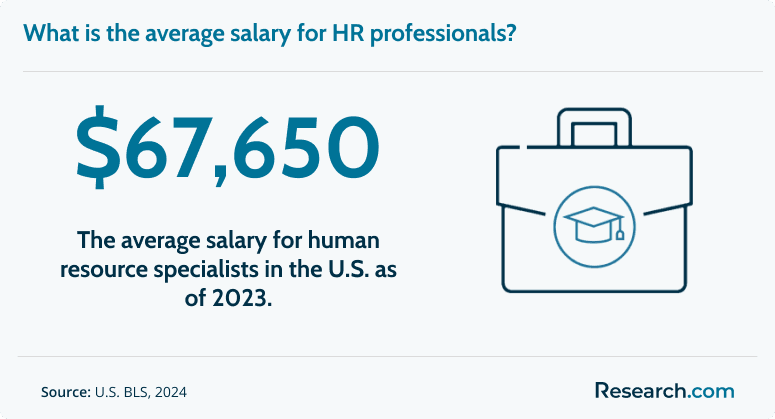
The median annual wage for human resources specialists was $67,650, with the lowest 10% earning less than $42,900 and the highest 10% earning more than $121,800. These professionals commonly support recruiting, interviewing, placement, employee relations, benefits, and HR administration. If you are interested in recruiting-focused HR work, this human resources recruiter career guide can help you understand how candidate sourcing, screening, interviewing, and hiring coordination fit into the broader HR function.
Human resources managers earn more because they oversee HR teams, manage policies, lead workforce planning, and advise leadership on people strategy. The median annual wage for human resources managers was $136,350 in May 2023. The lowest 10% earned less than $81,060, while the highest 10% earned more than $239,200. Professionals aiming for leadership may pursue broader education in business, management, or human services; an accelerated online human services degree may be relevant for students who want a faster path into people-centered roles.
| HR role | Reported wage information | What can influence pay |
| Human resources specialist | Median annual wage of $67,650; lowest 10% earned less than $42,900; highest 10% earned more than $121,800 | Recruiting experience, industry, location, HRIS skills, employee relations duties, and specialization |
| Human resources manager | Median annual wage of $136,350 in May 2023; lowest 10% earned less than $81,060; highest 10% earned more than $239,200 | Company size, leadership scope, labor law knowledge, strategic planning duties, and years of management experience |
What responsibilities do HR professionals handle?
HR responsibilities cover the full employee life cycle. In a small organization, one HR generalist may handle many of these tasks. In a larger employer, separate teams may specialize in recruiting, compensation, benefits, training, labor relations, HR operations, or people analytics.
| Responsibility | What HR does | What success looks like |
| Recruitment and hiring | Defines job needs, posts roles, sources candidates, coordinates interviews, supports selection, and manages onboarding | Roles are filled with qualified candidates, hiring is consistent, and new employees understand expectations early |
| Employee relations and engagement | Responds to employee concerns, supports managers, resolves workplace issues, and promotes respectful communication | Employees trust the process, conflicts are addressed early, and policies are applied consistently |
| Training and development | Creates onboarding, compliance training, skills development, leadership training, mentoring, and career growth programs | Employees build skills that improve performance and prepare them for future roles |
| Compliance and workplace policies | Maintains employment policies, supports documentation, tracks legal requirements, and trains managers on workplace obligations | The organization reduces legal exposure and follows employment rules in a consistent way |
| Performance management and compensation | Builds review processes, supports goal setting, manages feedback systems, and helps maintain pay and benefits structures | Employees receive clear expectations, meaningful feedback, and fair reward systems |
Compliance is especially important because HR decisions often involve employment law, pay practices, leave rules, benefits, safety, harassment prevention, and documentation. Just as finance professionals may use the best bookkeeping courses to stay current on technical rules, HR professionals must keep learning as workplace regulations and employer obligations change.
If you want to enter this field, the path outlined in Research.com’s guide on how to become a human resources specialist can help you evaluate education, entry-level roles, certifications, and skill-building steps. HR specialists often begin with broad exposure and then deepen their expertise in recruiting, benefits, employee relations, training, or compliance.
How does HR shape culture and engagement?
Company culture is not created by slogans alone. It is shaped by hiring standards, leadership behavior, performance expectations, communication norms, reward systems, manager training, and how the organization responds when problems occur. HR influences each of those areas.
- Clarifying values and workplace expectations: HR helps translate mission statements and values into policies, hiring criteria, manager training, and everyday behavior standards.
- Improving engagement: HR supports recognition programs, career paths, feedback systems, and employee listening tools that help leaders understand what employees need to perform well.
- Supporting work-life balance: HR may design flexible schedules, remote work policies, leave practices, wellness resources, and mental health supports that reduce avoidable burnout.
- Strengthening communication: HR can organize surveys, manager check-ins, town halls, and feedback channels so employees have more than one way to raise concerns.
- Building inclusion and belonging: HR supports mentoring, employee resource groups, inclusive hiring practices, accessibility, and training that help employees participate fully.
HR cannot fix culture alone. Senior leaders and front-line managers must model the behavior the organization claims to value. However, HR gives leaders the systems, data, training, and accountability tools needed to make culture practical instead of symbolic.
What HR job titles and career paths are available?
HR includes both broad generalist roles and specialized positions. Some professionals begin as HR assistants or coordinators, move into specialist or generalist roles, and later advance into HR manager, HR business partner, director, or consultant positions. Others build deep expertise in compensation, labor relations, HR analytics, learning and development, or employee relations.
| Role | Main focus | Reported salary information |
| HR specialists | Recruiting, interviewing, hiring, benefits support, and employee relations tasks | Average salary is $67,650 per year, with top earners making over $121,800 |
| HR managers | HR department leadership, policy development, compliance, and workforce strategy | Average salary is $136,350 per year, with the highest 10% earning over $239,200 |
| Labor relations specialists | Employer-employee negotiations, labor law compliance, and union-related matters | Average salary is $89,980 per year |
| Public relations specialists in HR communications | Employer brand, internal messaging, reputation, and engagement communication | Average salary is $66,750 per year |
| Training and development managers | Employee learning, leadership programs, skills development, and performance improvement | Average salary is $125,040 per year |
| Compensation and benefits managers | Pay strategy, benefits design, rewards programs, and competitive compensation planning | Average salary is $136,380 per year |
Another path is consulting. HR consultants advise organizations on hiring systems, compliance, compensation, workforce planning, employee relations, or organizational change. If that route interests you, Research.com’s guide on how to become an HR consultant explains why consultants usually need both broad HR experience and the ability to connect HR recommendations to business outcomes.
When choosing an HR path, think about the kind of work you want daily. Recruiting is fast-paced and people-facing. Compensation requires data, market research, and attention to detail. Employee relations demands judgment, documentation, and conflict-resolution skills. Learning and development suits professionals who enjoy teaching, coaching, and designing programs.
What qualifications are needed for HR jobs?
HR qualifications vary by role, but most career paths combine education, practical experience, employment law awareness, communication skills, technology skills, and, for some roles, professional certification. Entry-level jobs often prioritize organization, confidentiality, communication, and basic HR knowledge. Senior roles usually require leadership experience and stronger strategic, legal, financial, or analytical skills.
| Qualification | Typical expectation | Best for |
| Education | Most entry-level HR roles require a bachelor’s degree, which typically takes four years to complete | Students seeking HR assistant, recruiter, coordinator, or specialist roles |
| Internships or entry-level experience | Many early HR roles value internships or 1-2 years of related work experience | Candidates who need practical exposure to recruiting, onboarding, HRIS, and employee records |
| Advanced degree | HR managers or directors may benefit from a master’s degree, MBA with an HR focus, or Master’s in Human Resource Management | Professionals pursuing leadership, strategy, consulting, or organizational development roles |
| Professional certification | Common options include PHR, SPHR, SHRM-CP, and SHRM-SCP | HR professionals who want to document knowledge and strengthen credibility |
| Technical skills | HRIS, payroll systems, applicant tracking systems, reporting tools, and data analytics are increasingly useful | Professionals working in HR operations, recruiting, analytics, compensation, or HR management |
| Core workplace skills | Communication, confidentiality, problem-solving, ethics, documentation, conflict management, and attention to detail | All HR roles, especially employee relations and compliance-facing positions |
If you are starting from the beginning, Research.com’s guide on how to become a human resources assistant can help you understand entry-level steps. HR assistant roles often provide exposure to records management, onboarding, benefits paperwork, scheduling, recruiting support, and employee questions.
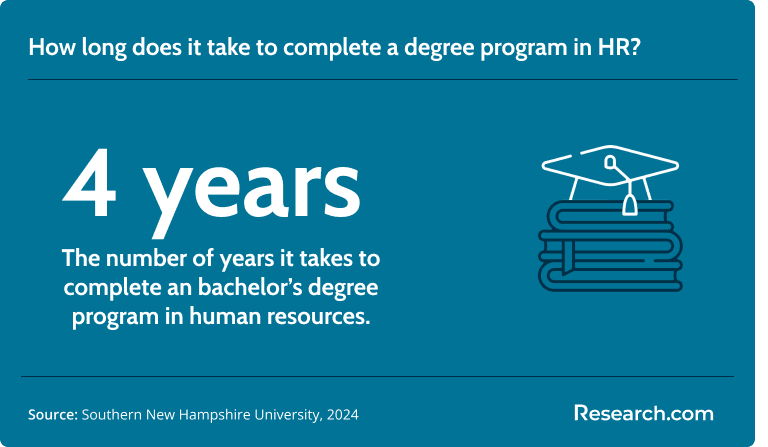
The time required to earn an HR-related degree depends on the credential, transfer credits, course load, and format. A bachelor’s degree in human resources or a related field typically takes four years of full-time study, although accelerated schedules or transfer credits may shorten the path. Students who need more flexibility may compare options through a self-paced online college, especially if they are balancing employment, caregiving, or military responsibilities.
Questions to ask before choosing an HR program or credential
- Does the curriculum cover employment law, compensation, recruiting, HR analytics, training, and employee relations?
- Will the program help you qualify for the type of HR role you actually want?
- Does the school accept transfer credits, prior learning, or work experience?
- Are internships, career services, or employer partnerships available?
- Does the program prepare students for HR certification topics without promising certification outcomes?
- Can you afford the total cost, including fees, books, technology, and time away from work?
How does HR improve employee satisfaction?
HR improves workplace satisfaction by making sure employees have fair systems, useful support, and realistic opportunities to grow. Compensation and benefits matter, but satisfaction also depends on manager quality, workload, flexibility, communication, psychological safety, recognition, and whether employees believe policies are applied consistently.
Effective HR teams work with leaders to design benefits, development programs, performance reviews, feedback channels, and workplace policies that employees can understand and trust. HR also helps identify patterns in turnover, absenteeism, complaints, survey results, and exit interviews so leaders can address problems before they spread.
| Employee need | How HR can support it | What to avoid |
| Fair pay and benefits | Use structured pay ranges, benefits education, and consistent compensation processes | Relying on informal salary decisions that create avoidable inequities |
| Career growth | Offer training, coaching, mentoring, internal mobility, and clear advancement criteria | Expecting employees to stay without development opportunities |
| Work-life balance | Support remote work options, flexible schedules, leave practices, and wellness resources where appropriate | Offering flexibility without clear expectations or manager training |
| Recognition | Create meaningful recognition tied to performance, teamwork, and organizational values | Using recognition as a substitute for fair pay or manageable workloads |
| Trust and voice | Maintain surveys, complaint channels, open-door practices, and transparent communication | Collecting feedback without explaining what will happen next |
What is the difference between an HR generalist and an HR specialist?
The main difference is scope. HR generalists handle many HR functions across the employee life cycle, while HR specialists focus on one defined area. Both paths can lead to leadership, but they build different kinds of expertise.
| Comparison point | HR generalist | HR specialist |
| Scope | Works across recruiting, onboarding, benefits, employee relations, compliance, and policy administration | Concentrates on one function such as recruiting, compensation, training, benefits, or labor relations |
| Common workplace | Often found in small and mid-sized organizations where HR staff cover multiple needs | More common in larger organizations with separate HR teams |
| Expertise profile | Broad working knowledge across many HR areas | Deep technical knowledge in a specific HR discipline |
| Career direction | Can move into HR manager, HR business partner, or HR director roles | Can advance into senior specialist, center-of-excellence, consultant, or functional leadership roles |
| Best fit | People who like variety, problem-solving, and cross-functional work | People who prefer technical depth, structured processes, or a defined subject area |
Some HR professionals combine broad and specialized education. For example, online dual degree programs may appeal to students who want to pair HR-related learning with business, psychology, data analytics, organizational leadership, or another field that supports their career goals.
How can HR analytics improve business decisions?
HR analytics uses workforce data to help leaders make better decisions about hiring, retention, performance, compensation, training, staffing, and employee engagement. Instead of relying only on instinct, HR teams can examine trends such as turnover by department, time to fill open roles, training completion, pay equity concerns, promotion patterns, absenteeism, and employee survey results.
Analytics is most valuable when it is tied to a business question. For example, if turnover is rising, HR analytics can help determine whether exits are concentrated among certain managers, locations, job levels, tenure groups, or pay bands. If leadership wants to expand, workforce data can help estimate skill gaps, hiring timelines, training needs, and succession risks.
| HR analytics question | Data HR may review | Decision it can support |
| Why are employees leaving? | Turnover, exit interviews, engagement surveys, tenure, manager data, and compensation comparisons | Retention strategy, manager training, compensation review, or workload changes |
| Are hiring processes efficient? | Time to fill, source of hire, candidate drop-off, interview stages, and offer acceptance | Recruiting budget, process redesign, employer branding, or interview training |
| Do employees have the right skills? | Performance data, training records, skills inventories, and workforce plans | Upskilling, reskilling, hiring priorities, and succession planning |
| Are pay practices consistent? | Salary ranges, job levels, tenure, performance ratings, and demographic data where legally appropriate | Pay structure review, equity analysis, and compensation policy changes |
HR professionals who want to combine analytics with management strategy may benefit from business training. Programs such as accredited online MBA programs can help HR practitioners understand finance, operations, strategy, and organizational decision-making in addition to people management.
How does digital transformation make HR more effective?
Digital transformation in HR means using technology to reduce manual work, improve access to information, standardize processes, and support better decisions. Common tools include applicant tracking systems, HR information systems, payroll platforms, digital onboarding, learning management systems, employee self-service portals, performance platforms, and analytics dashboards.
Technology can make HR faster and more consistent, but it does not replace judgment. AI-supported recruiting tools, for example, still require oversight to avoid biased screening, poor candidate experience, or overreliance on automated rankings. HR must understand how systems are configured, what data they use, who can access employee information, and whether automated processes comply with applicable laws and internal policies.
| Digital HR tool | Potential benefit | Risk to manage |
| Applicant tracking system | Organizes candidate pipelines and hiring workflows | Overly rigid filters can screen out qualified candidates |
| HRIS | Centralizes employee records, benefits, payroll data, and reporting | Poor data quality can lead to incorrect decisions or compliance problems |
| Digital onboarding | Speeds up paperwork and gives new hires consistent information | Automation cannot replace manager connection and team integration |
| Performance platforms | Tracks goals, feedback, and reviews in one system | Badly designed metrics can encourage short-term or unfair evaluation |
| Learning systems | Delivers training and tracks completion | Completion data does not always prove skill mastery |
HR professionals who want to connect digital tools with strategy may consider advanced business education. For example, short online MBA programs may be useful for professionals who need stronger grounding in operations, finance, technology adoption, and leadership.
How can advanced research degrees support HR leadership?
Advanced research degrees can help experienced HR professionals study complex workforce problems with stronger research, data, and strategy skills. This path is most relevant for people interested in executive leadership, organizational research, consulting, teaching, or evidence-based HR transformation.
Research-driven programs can strengthen skills in quantitative analysis, organizational theory, decision-making, and applied business research. For HR leaders, those skills may support work on employee retention, leadership development, organizational change, talent strategy, or workforce planning. Programs such as an online DBA may appeal to professionals who want a doctoral-level business credential with practical application to leadership and organizational strategy.
How do HR practices support ESG goals?
Environmental, social, and governance priorities affect HR because workforce policies are part of how organizations demonstrate responsibility. HR’s role is especially visible in the social and governance areas: fair hiring, pay practices, worker well-being, diversity and inclusion, ethical conduct, leadership accountability, transparency, and training.
HR can support ESG objectives by embedding responsible practices into recruiting, onboarding, leadership development, performance management, employee communication, and workplace policy. For example, ESG-related training may help leaders understand ethical decision-making, anti-harassment expectations, sustainable operations, and fair treatment of employees. HR can also help track workforce-related ESG indicators, although organizations should be careful not to collect or report employee data without proper privacy and compliance controls.
Professionals who want to understand the broader business context behind ESG may benefit from programs such as a fast online business degree, particularly if their HR work involves leadership, operations, corporate responsibility, or organizational strategy.
What challenges are HR leaders facing now?
HR leaders must balance employee expectations, business constraints, legal obligations, technology adoption, and constant organizational change. The hardest HR problems usually involve trade-offs: increasing flexibility without losing productivity, using AI without creating bias, controlling labor costs without damaging retention, and standardizing policies while still responding to individual needs.
| Challenge | Why it is difficult | Practical HR response |
| Hybrid and remote work | Teams need flexibility, but managers also need coordination, performance visibility, and communication norms | Create clear remote work policies, train managers, and define measurable expectations |
| AI and automation | Tools can save time but may introduce bias, privacy concerns, or overreliance on automation | Review vendors carefully, audit outputs, document decisions, and keep humans accountable |
| Retention pressure | Employees may leave because of pay, workload, culture, advancement, or manager quality | Use exit data, engagement surveys, compensation reviews, and manager development |
| Compliance complexity | Employment rules change and can vary by location, role, and employment arrangement | Maintain updated policies, consult legal experts, train managers, and document decisions |
| Skills gaps | Business needs can change faster than internal talent pipelines | Build workforce plans, skills inventories, internal mobility programs, and targeted learning |
HR leaders who need broader strategic tools may look at programs such as 12 month MBA programs, especially when their responsibilities include budgeting, change management, operations, workforce planning, and executive communication.
How should HR manage legal and ethical risk?
HR sits close to legal and ethical risk because people decisions affect hiring, pay, promotions, discipline, termination, leave, workplace accommodations, complaints, safety, and employee data. The safest HR teams do not treat compliance as a one-time checklist. They build repeatable processes, train managers, document decisions, and seek legal guidance when issues are complex.
Common HR mistakes and better alternatives
| Mistake | Why it creates risk | Better approach |
| Choosing HR software without reviewing privacy, bias, or access controls | Employee data can be mishandled, and automated tools may affect employment decisions unfairly | Evaluate vendors, involve legal and IT, document tool use, and audit outcomes |
| Applying policies inconsistently | Uneven treatment can create employee distrust and legal exposure | Train managers, use written procedures, and require documentation for exceptions |
| Ignoring manager training | Managers often make daily decisions that create HR problems before HR is involved | Train managers on feedback, documentation, interviewing, leave, harassment prevention, and escalation |
| Focusing only on tuition when choosing an HR degree | Total cost includes fees, books, time, technology, and lost work hours | Compare total program cost, transfer policies, schedule, career services, and expected career relevance |
| Assuming all online programs fit every career goal | Program content, accreditation, employer recognition, and career support can vary | Check accreditation, curriculum, student support, and alignment with your target role |
| Relying only on rankings | A highly ranked program may not fit your schedule, budget, transfer needs, or career path | Use rankings as one input, then compare outcomes, curriculum, flexibility, and affordability |
Senior HR leaders sometimes pursue executive business education to handle legal, ethical, and strategic issues with more confidence. Options such as cheap executive MBA programs may be relevant for experienced professionals who need stronger leadership, finance, governance, and decision-making skills.
What diversity and inclusion trends affect HR?
Diversity and inclusion work has become more structured, data-informed, and tied to leadership accountability. Effective D&I is not limited to one annual training session. It touches recruiting, promotion, pay, leadership development, employee resource groups, accessibility, manager behavior, and workplace flexibility.
- Data-informed diversity initiatives: Organizations are using workforce data to review representation, hiring patterns, promotion outcomes, and potential barriers. These efforts require careful privacy, legal, and ethical oversight.
- Inclusive leadership development: Employers are training managers to lead across differences, reduce avoidable bias, support belonging, and communicate effectively with diverse teams.
- Neurodiversity and disability inclusion: More HR teams are reviewing hiring processes, workplace accommodations, communication practices, and accessibility for employees with disabilities and neurodiverse workers.
- Pay equity and compensation transparency: Employers are paying closer attention to pay structures, salary ranges, audits, and fair compensation processes.
- Flexible and inclusive work policies: Remote work, hybrid schedules, and flexible learning paths can support working parents, caregivers, employees with disabilities, and working adults. Similarly, the best online colleges for working adults can help professionals continue their education while managing work and personal responsibilities.
For HR teams, the practical test is whether inclusion efforts improve everyday employee experience. Policies should be clear, managers should be trained, and employees should know how to request support or raise concerns without fear of retaliation.
What is the career outlook for HR professionals?
The HR career outlook is positive for both specialists and managers. Employment of HR specialists is projected to grow 8 percent from 2023 to 2033, faster than the average for all occupations. This growth is expected to produce about 86,200 job openings each year over the decade.
Employment of HR managers is projected to grow 6 percent from 2023 to 2033, also faster than the average for all occupations. About 17,400 job openings for HR managers are projected each year over the decade, largely because workers move into other roles or leave the workforce.
| Occupation | Projected employment growth | Projected annual openings | What this means for candidates |
| HR specialists | 8 percent from 2023 to 2033 | About 86,200 job openings each year over the decade | Entry and mid-level candidates may find opportunities in recruiting, employee relations, benefits, HR operations, and compliance |
| HR managers | 6 percent from 2023 to 2033 | Approximately 17,400 job openings each year over the decade | Experienced HR professionals with leadership, compliance, workforce planning, and business strategy skills may be more competitive |
Students who want to qualify for HR roles sooner may compare fast online degrees, but speed should not be the only factor. Accreditation, curriculum, transfer credit policies, total cost, schedule fit, and career services can matter just as much as completion time.
What HR graduates say about their career paths
"Moving into HR changed the direction of my career in the best possible way. I enjoy connecting employees with leadership, supporting a healthier work environment, and helping the organization succeed. The work gives me a chance to influence both employee growth and workplace well-being." – Mary
"HR has given me a role that blends strategy with real human interaction. I have helped build policies that influence culture while also guiding employees through professional development. The work can be demanding, but seeing people grow makes it worthwhile." – David
"I began in recruitment, but I quickly learned that HR reaches far beyond hiring. Employee engagement, conflict resolution, and workplace satisfaction all bring different challenges. What keeps me motivated is knowing that my work can make the workplace better for employees." – Tim
How can advanced business degrees help HR careers?
Advanced business degrees can help HR professionals move from operational work into strategic leadership. HR leaders need to understand budgets, financial trade-offs, organizational design, data, risk, and business strategy. Without that context, HR recommendations may be seen as administrative rather than strategic.
An MBA or similar business degree can help HR professionals justify workforce investments, evaluate return on training programs, communicate with executives, and connect talent initiatives to business performance. For professionals who want flexible study options, online MBA programs may offer a practical way to build management skills while continuing to work.
How can HR encourage entrepreneurial thinking?
HR can support entrepreneurial thinking by designing systems that reward useful experimentation, cross-functional collaboration, creative problem-solving, and calculated risk-taking. This does not mean encouraging reckless decisions. It means building an environment where employees can suggest improvements, test ideas, learn from outcomes, and adapt quickly.
Practical HR strategies include mentorship programs, internal innovation challenges, leadership development, job rotations, performance goals tied to improvement, and recognition for problem-solving. HR can also help managers create psychological safety so employees are willing to share ideas before problems become larger.
Professionals interested in connecting talent development with innovation may find Research.com’s guide, What can you do with an entrepreneurship degree?, useful for understanding how entrepreneurial skills apply beyond starting a business.
Why does financial literacy matter in strategic HR?
Financial literacy helps HR professionals speak the language of leadership. Workforce decisions affect payroll, benefits, turnover costs, training budgets, recruiting costs, productivity, compliance exposure, and long-term business performance. HR leaders who understand budgets and return on investment can make stronger cases for talent initiatives.
For example, HR may need to justify a leadership development program, recommend compensation adjustments, compare outsourcing costs, or evaluate whether turnover reduction efforts are worth the investment. Stronger financial skills also improve collaboration between HR, finance, operations, and executive leadership.
Professionals who want deeper finance knowledge may explore the fastest finance degrees online to build skills in financial planning, analysis, budgeting, and risk management that can support strategic HR work.
Key Insights
- Human resources manages the full employee life cycle, including hiring, onboarding, training, compensation, benefits, employee relations, compliance, performance, and workforce planning.
- Most HR roles require at least a bachelor’s degree in human resources or a related field, while leadership roles may benefit from graduate education, certification, or specialized experience.
- HR specialists had a median annual wage of $67,650, while human resources managers had a median annual wage of $136,350 in May 2023.
- Employment of HR specialists is projected to grow 8 percent from 2023 to 2033, and employment of HR managers is projected to grow 6 percent over the same period.
- HR generalists are best suited for professionals who like broad, varied responsibilities; HR specialists are better for those who want deeper expertise in one function such as compensation, recruiting, training, or labor relations.
- AI, HR analytics, digital onboarding, and HRIS platforms can improve efficiency, but HR teams must manage privacy, bias, compliance, and data quality risks.
- Before choosing an HR degree, certification, or graduate program, compare accreditation, curriculum, cost, schedule, transfer policies, career support, and alignment with your target role rather than relying only on speed or rankings.
Resources:
- Southern New Hampshire University. (2024). How to Become a Human Resources Manager. https://www.snhu.edu
- U.S. Bureau of Labor Statistics. (2024). Occupational Outlook Handbook: Human Resources Specialists. https://www.bls.gov
Other Things You Should Know About Human Resources
In 2027, HR roles not only encompass traditional talent management tasks such as recruitment and employee development but also emphasize strategic workforce planning and leveraging technology to enhance employee engagement and performance, distinguishing it from traditional talent management.
In 2027, HR is evolving by integrating technology to enhance recruitment processes, focusing on data-driven strategies for employee engagement, and promoting continuous learning. This shift in practices differentiates modern HR from traditional talent management, emphasizing adaptability to rapidly changing workforce dynamics.