2027 Online Creative Writing Degrees That Help Build Professional Writing Confidence

Co-Founder and Chief Data Scientist
Deciding whether an online creative writing degree is worth the time and tuition usually comes down to one question: will it make you a more confident, employable writer? The U.S. Bureau of Labor Statistics reported a May 2024 median wage of $72,270 for writers and authors, but writing careers vary widely by industry, portfolio, and specialization.
This guide is for adults, transfer students, and aspiring authors who want to compare degree types, costs, accreditation, online formats, admissions, and career outcomes before choosing a program.
Key Things You Should Know
- Online creative writing degrees are most valuable when they combine workshop feedback, literature study, revision practice, portfolio development, and career-facing courses such as editing, publishing, digital content, or technical communication.
- Cost and time vary by credential. Bachelor's programs usually take about four years for first-time students, while master's programs often take one to three years; College Board's 2024 data shows average published tuition and fees of $11,610 for in-state public four-year students and $43,350 at private nonprofit four-year institutions.
- Career outcomes are not limited to novel writing. BLS 2024 wage data lists median pay of $72,270 for writers and authors, $75,260 for editors, and $91,670 for technical writers, making specialization and portfolio quality central to ROI.
What is an online creative writing degree and how does it build professional writing confidence?
An online creative writing degree is a college program delivered fully or mostly through a learning platform, with coursework in fiction, poetry, nonfiction, screenwriting, literature, editing, rhetoric, and professional writing. At the undergraduate level, it usually develops broad writing and analytical skills. At the graduate level, it often focuses on advanced craft, a manuscript, a thesis, or a publishable portfolio.
The confidence-building part matters because writing is rarely improved by reading advice alone. Strong programs create a repeated cycle: draft, receive critique, revise, reflect, and submit stronger work. That process helps students move from "I like writing" to "I can make choices about voice, structure, audience, market, and revision."
For many students, the degree is less about one guaranteed job title and more about building a professional writing practice. The most useful programs typically help students strengthen several capabilities at once:
- Craft judgment: understanding point of view, pacing, scene design, imagery, argument, genre expectations, and narrative structure.
- Revision discipline: learning how to improve a draft through multiple passes rather than treating the first version as final.
- Feedback literacy: giving, receiving, and applying critique without losing creative ownership of the work.
- Portfolio readiness: producing polished samples for graduate applications, freelance clients, publishers, employers, or internships.
- Professional adaptability: translating creative skill into content strategy, editing, communications, publishing, teaching support roles, grant writing, or technical communication.
Online study can also build confidence for students who are returning to school after years away. Asynchronous discussion boards and recorded lectures give learners more time to think before responding, while live workshops can recreate the accountability of a campus classroom.
How do online creative writing programs compare with campus-based options for aspiring writers?
Online and campus-based creative writing programs can lead to similar academic outcomes when they are accredited, faculty-led, and built around serious workshop participation. The main difference is the learning environment: online programs prioritize flexibility and written interaction, while campus programs often provide more spontaneous in-person networking and literary community events.
The table below compares the major decision points. Use it to decide whether you need flexibility, immersion, local networking, or access to specific faculty and genres.
| Decision factor | Online creative writing degree | Campus-based creative writing degree | Best fit |
| Schedule | Often asynchronous or low-residency, with weekly deadlines | Set class times and on-campus attendance | Online is stronger for working adults, caregivers, military-affiliated students, and students outside major literary hubs |
| Workshop experience | Written peer critique, video sessions, discussion forums, annotated drafts | Live classroom discussion, studio-style critique, campus readings | Either can work if critique expectations are rigorous and faculty are engaged |
| Networking | Virtual readings, online journals, remote internships, alumni groups | Campus literary events, visiting writers, local presses, informal faculty access | Campus may help students who want frequent in-person literary community |
| Cost and relocation | No relocation required; technology and distance fees may apply | Housing, commuting, and relocation may increase total cost | Online may lower indirect costs, but tuition policies still matter |
| Learning style | Requires self-direction, time management, and comfort with digital platforms | Provides physical routine and face-to-face accountability | Campus may be better for students who struggle without external structure |
Choose online if the degree must fit around employment, family responsibilities, geographic limitations, or military mobility. Choose campus if you want daily in-person immersion, access to a specific local arts scene, or the structure of scheduled studio classes. The strongest choice is not the format by itself; it is the format that gives you consistent writing time, high-quality critique, and a realistic path to completion.
What types of online creative writing degrees are available for U.S. students?
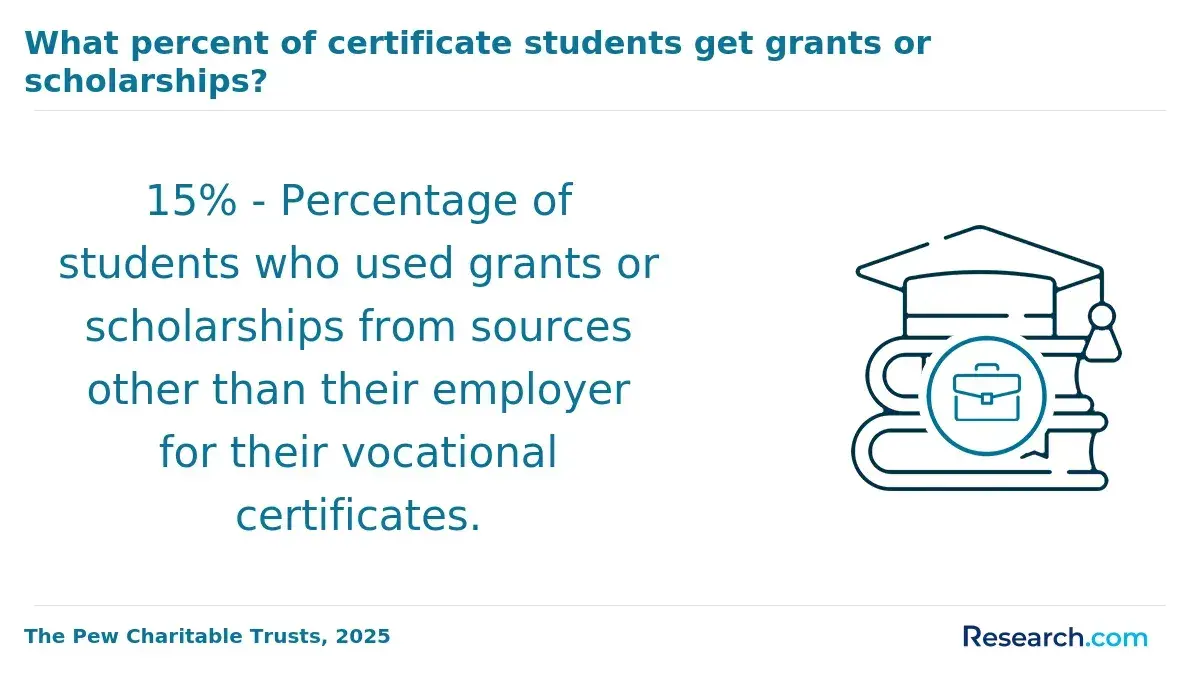
U.S. students can study creative writing through several degree levels and related majors. The right option depends on whether you need a first college credential, a career-changing portfolio, advanced literary mentorship, or a shorter way to test the field before committing to a full degree.
The table below summarizes common online creative writing credentials and when each one makes sense.
| Credential | Typical academic level | Common focus | Best for | When to consider another option |
| Certificate in creative writing | Undergraduate or graduate nondegree | Focused workshops in fiction, poetry, nonfiction, or screenwriting | Students testing interest, professionals adding writing samples, or writers who already have a degree | If you need a bachelor's or master's credential for employment, promotion, or graduate admission |
| Associate degree with writing or English emphasis | Lower-division undergraduate | Composition, literature, humanities, introductory creative writing | Students seeking an affordable transfer pathway | If the program lacks clear transfer agreements into a bachelor's degree |
| Bachelor's in creative writing | Undergraduate | Workshops, literature, editing, publishing, professional writing, general education | First-degree students who want broad career flexibility and a writing portfolio | If you already hold a bachelor's and mainly need advanced mentorship |
| Bachelor's in English with creative writing concentration | Undergraduate | Literary analysis plus creative writing electives | Students who want writing craft with stronger literature, teaching-prep, or communication foundations | If you want a studio-heavy curriculum with many genre workshops |
| Master of Fine Arts in creative writing | Graduate terminal arts degree | Advanced workshop, manuscript development, literary craft, thesis | Writers seeking intensive mentorship, college teaching competitiveness, or a major manuscript project | If your goal is corporate writing and the curriculum has little professional writing content |
| Master's in English, writing, or professional writing | Graduate | Literature, rhetoric, editing, technical writing, composition, or digital communication | Students who want advanced writing skills with broader professional application | If you want a primarily artistic studio program |
Creative students sometimes compare writing degrees with adjacent digital storytelling paths. For example, a game design degree online may be a better fit for students who want interactive narrative, worldbuilding, and writing for games rather than literary publishing or editorial work.
How can I tell if an online creative writing program is accredited and reputable?
Accreditation is the first quality check for any online creative writing degree. In the U.S., the most important form is institutional accreditation from an agency recognized by the U.S. Department of Education or the Council for Higher Education Accreditation. Creative writing programs usually do not require a separate professional license, so institutional accreditation carries most of the weight for transfer credit, financial aid eligibility, and graduate school recognition.
Before applying, verify the program rather than relying only on marketing pages. A reputable online creative writing program should be easy to check through public databases and transparent school materials.
- Search the institution in the U.S. Department of Education's accreditation database and confirm the accreditor, school name, and campus or online division.
- Check whether the school is eligible for federal financial aid if you plan to use grants or federal loans.
- Review faculty biographies to see whether instructors publish, edit, teach in relevant genres, or have professional writing experience.
- Look for clear curriculum maps showing workshops, literature requirements, electives, portfolio expectations, and capstone or thesis requirements.
- Ask whether online students receive the same academic support as campus students, including library access, writing center services, career advising, internship help, and disability accommodations.
- Request information about transfer credit, prior learning credit, residency requirements, and whether credits can apply to a higher degree later.
Red flags include vague accreditation language, pressure to enroll immediately, unclear tuition, missing faculty details, unusually easy portfolio requirements for a selective graduate program, or promises of publication and income. If cost is your biggest constraint, compare accredited options carefully; a guide to the cheapest accredited online college choices can help you separate affordability from low-quality shortcuts.
What core courses and specializations do online creative writing degrees typically include?
Online creative writing degrees usually combine craft courses, literature courses, revision-based workshops, and career-oriented writing electives. The best curriculum is not necessarily the one with the most romantic course titles; it is the one that helps you produce polished work, understand audiences, and apply writing skills beyond the classroom.
The table below shows common course areas and why they matter for professional confidence.
| Course area | What students usually study | Why it matters |
| Fiction workshop | Short stories, novels, scenes, character, dialogue, pacing, point of view | Builds narrative control and revision habits |
| Poetry workshop | Form, image, rhythm, lineation, voice, compression | Strengthens language precision and attention to sound |
| Creative nonfiction | Memoir, personal essay, literary journalism, research-based narrative | Helps writers connect lived experience, evidence, and structure |
| Screenwriting or dramatic writing | Script format, visual storytelling, scenes, dialogue, act structure | Supports careers in film, television, video, podcasts, and interactive media |
| Literary studies | Genre history, contemporary literature, multicultural literature, theory | Gives writers models and context for their own creative choices |
| Editing and publishing | Copyediting, developmental editing, small press work, literary magazines, submissions | Teaches how written work moves from draft to audience |
| Professional and digital writing | Web writing, content strategy, technical communication, grant writing, social media, SEO basics | Connects creative skill to job markets outside literary publishing |
| Capstone, thesis, or portfolio | Polished manuscript, senior project, MFA thesis, or professional portfolio | Creates a tangible outcome for applications, clients, employers, or agents |
Specialization matters because "creative writing" can point toward several different futures. Before choosing electives, map your preferred writing life to the kind of work you want to show after graduation.
- Literary publishing: prioritize fiction, poetry, nonfiction, literary magazine work, contemporary literature, and manuscript workshops.
- Commercial storytelling: look for genre fiction, screenwriting, podcast writing, young adult literature, or writing for media.
- Editorial careers: choose copyediting, publishing, digital editing, literary journal practicum, and professional communication.
- Content and communications: add courses in digital writing, brand voice, audience analysis, technical writing, and content strategy.
- Teaching-oriented paths: consider programs with composition theory, pedagogy, tutoring practicum, or graduate teaching opportunities, while remembering that K-12 public school teaching has state-specific licensure rules.
AI is also changing the curriculum conversation. A strong program should not ignore generative AI, but it should teach ethical use, originality, fact-checking, voice, copyright awareness, and revision judgment rather than treating AI as a replacement for craft.
What are the usual admission requirements for online creative writing bachelor's and master's programs?
Admission requirements differ by degree level and selectivity. Bachelor's programs usually focus on academic readiness, while MFA and other graduate programs place much more weight on the writing sample. For creative writing, the portfolio is often the clearest evidence that an applicant can benefit from advanced workshop study.
The table below compares common requirements for online bachelor's and master's programs.
| Requirement | Online bachelor's programs | Online master's or MFA programs |
| Prior education | High school diploma, GED, or transfer credits | Accredited bachelor's degree, often in any field |
| Transcripts | Required from high school and prior colleges | Required from all colleges attended |
| GPA expectations | Varies by school; transfer-friendly programs may review applicants holistically | Often a minimum undergraduate GPA, with portfolio strength sometimes carrying significant weight |
| Writing sample | Sometimes required, especially for selective programs or scholarships | Usually required and central to admission |
| Statement of purpose | May ask about goals and interest in writing | Often asks about genre, influences, project goals, and fit with faculty |
| Recommendations | Sometimes optional | Common, especially for MFA programs |
| Standardized tests | Usually not central for adult online admissions | GRE requirements have become less common, but policies vary |
Applicants can improve their chances by preparing materials early instead of treating the writing sample as an afterthought. Graduate admissions committees are usually looking for promise, control of language, openness to revision, and a clear reason for choosing that specific program.
- Submit polished work in the genre requested by the program rather than a random mix of unrelated samples.
- Follow page limits and formatting instructions exactly, because workshop programs value editorial discipline.
- Use the statement of purpose to explain your goals, reading interests, and why the online format fits your life.
- Ask recommenders who can comment on your writing, work ethic, intellectual curiosity, or ability to handle critique.
- For bachelor's programs, gather transfer transcripts early so you can receive an accurate credit evaluation before committing.
A common mistake is choosing a graduate program because it sounds prestigious without checking faculty fit. If you write speculative fiction, memoir, screenplays, or poetry, confirm that the program regularly supports your genre and not just creative writing in general.
How long do online creative writing degrees take, and what do they cost?
Program length depends on degree level, transfer credits, course load, and whether the program uses traditional semesters or accelerated terms. A first-time bachelor's student usually needs about four years of full-time study, while transfer students may finish faster if previous credits apply. Many online master's and MFA programs take one to three years, with low-residency MFA programs sometimes extending longer to support manuscript development.
The table below summarizes typical timelines so you can compare the time commitment before requesting admissions information.
| Program type | Typical full-time timeline | Part-time considerations | Main completion factor |
| Certificate | Several months to one year | Often flexible for working adults | Number of required workshops or credits |
| Associate degree | About two years | May take longer if balancing work or family | Transfer pathway and general education requirements |
| Bachelor's degree | About four years for first-time students | Transfer students may reduce time substantially | Accepted transfer credits and course availability |
| Master's degree or MFA | One to three years in many programs | Low-residency or part-time formats may extend completion | Thesis, manuscript, residency, or capstone requirements |
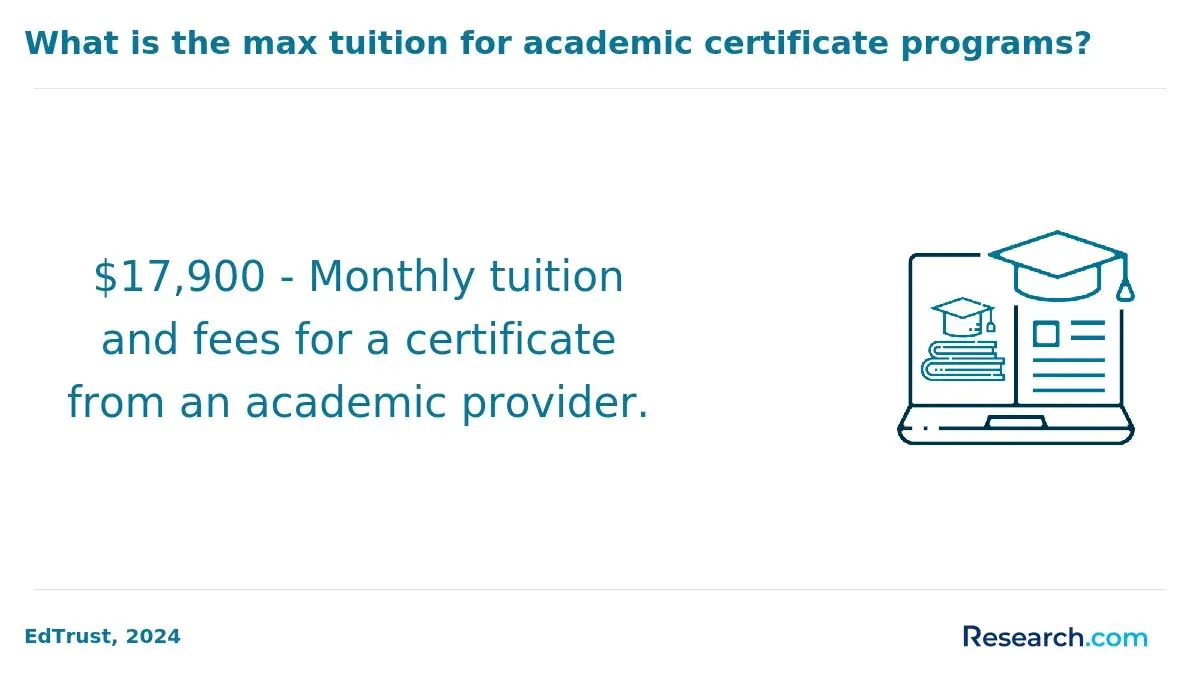
Cost is harder to compare because online tuition may be charged per credit, per term, or at a flat rate. College Board's 2024 Trends in College Pricing reported these average published tuition and fee levels for full-time undergraduates, which provide useful context even though individual online programs may charge different rates:
- $11,610 for in-state students at public four-year institutions
- $30,780 for out-of-state students at public four-year institutions
- $43,350 at private nonprofit four-year institutions
Those figures are not a quote for any specific creative writing program. They are planning benchmarks that show why residency status, transfer credit, employer tuition assistance, and program length can change the total investment dramatically.
When comparing cost, look beyond tuition. Ask about technology fees, online course fees, residency travel, books, software, graduation fees, portfolio platforms, and whether creative writing courses require extra workshop materials. Also compare the net price after scholarships and grants, not just the published tuition.
What careers can an online creative writing graduate pursue, and in which industries?
Online creative writing graduates can pursue careers in literary, educational, corporate, nonprofit, media, and technology settings. The degree is most useful when paired with a portfolio that proves the student can write for a specific audience or format. Employers rarely hire someone simply because they "like writing"; they look for samples, editing judgment, deadline reliability, and subject-matter adaptability.
The table below connects common roles with typical responsibilities and industries. Use it to identify which courses and portfolio samples will best support your target path.
| Career path | Typical responsibilities | Industries where it appears | Portfolio evidence to build |
| Author or literary writer | Write fiction, poetry, essays, memoir, or scripts; revise manuscripts; submit to journals, presses, contests, or agents | Publishing, literary arts, entertainment, independent authorship | Polished manuscript excerpts, published pieces, contest submissions, literary journal work |
| Editor | Improve structure, clarity, grammar, tone, and consistency; manage submissions or editorial calendars | Publishing, media, education, nonprofits, corporate communications | Before-and-after edits, style guides, copyediting samples, magazine or journal experience |
| Content writer or strategist | Create articles, web copy, campaigns, newsletters, landing pages, and brand storytelling | Marketing, technology, healthcare, higher education, finance, nonprofits | Web writing samples, content calendars, audience briefs, SEO-informed articles |
| Technical writer | Explain products, processes, policies, or systems clearly for users or internal teams | Software, engineering, healthcare, manufacturing, government contracting | User guides, process documentation, knowledge base articles, plain-language samples |
| Grant writer | Develop proposals, narratives, needs statements, and reports for funders | Nonprofits, education, arts organizations, public agencies | Proposal excerpts, logic models, persuasive research-based writing |
| Communications specialist | Write press releases, internal communications, speeches, stories, and public-facing updates | Government, universities, healthcare, corporate communications, advocacy groups | Press materials, executive messages, campaign copy, stakeholder communications |
| Writing tutor or teaching support professional | Help students develop writing, revision, grammar, and research skills | Colleges, tutoring centers, online education, community programs | Tutoring reflections, lesson materials, writing center experience, pedagogy coursework |
Students who want to write in specialized fields should consider whether they also need subject-matter training. For example, someone aiming at wellness journalism, recipe development, or health content may benefit from comparing a best online nutrition degree path with a writing-focused degree, because employers in regulated or science-heavy spaces may value content knowledge as much as style.
Creative writing can also support freelance work, but freelancing requires business skills that are not always built into the degree. If self-employment is your goal, look for courses or electives in contracts, publishing, entrepreneurship, digital marketing, and client communication.
What salary ranges and job outlook can creative writing degree holders expect?
Salary outcomes for creative writing degree holders vary because graduates enter different occupations. A novelist, marketing writer, editor, technical writer, and grant writer may all use similar writing foundations but face different markets, pay structures, and advancement paths. For planning, national occupational data is more reliable than anecdotes about bestselling authors or viral freelance success.
The table below uses U.S. Bureau of Labor Statistics May 2024 wage data and the 2023-2033 employment outlook, where available. Treat these as occupational benchmarks, not promises for any degree program.
| Occupation | May 2024 median annual wage | Outlook projection through 2033 | What the data means for creative writing students |
| Writers and authors | $72,270 | 5% growth | Opportunities exist, but income can vary widely by publishing model, employer, platform, and freelance consistency |
| Editors | $75,260 | -2% decline | Editing remains important, but applicants may need digital publishing, content management, and multimedia skills to stay competitive |
| Technical writers | $91,670 | 4% growth | This path may offer stronger wage potential for writers who can explain complex products, software, or processes |
| Public relations specialists | $69,780 | 6% growth | Creative writing skills can transfer to messaging, storytelling, and media materials, especially when paired with communications experience |
The outlook is mixed rather than universally strong or weak. Creative writing students who build only literary samples may face a narrower market, while students who add editing, digital content, technical communication, or industry-specific expertise may have more ways to monetize their writing skills.
Generative AI is also reshaping employer expectations. It may reduce demand for routine first drafts in some settings, but it can increase the value of writers who can provide original voice, narrative judgment, ethical editing, fact-checking, audience strategy, and human-centered storytelling. The practical takeaway is to graduate with a portfolio that shows thinking, not just fluent sentences.
How can adult learners choose an online creative writing program that fits their goals and schedule?
Adult learners should choose an online creative writing program by working backward from their writing goal, schedule, and budget. The best program for a working parent finishing a bachelor's degree may be very different from the best program for an aspiring poet seeking MFA mentorship or a military-affiliated student who needs portability.
Use the following steps to compare programs in a practical order. This sequence helps you avoid falling in love with a program before confirming that it is affordable, accredited, and aligned with your goals.
- Define your primary outcome: first bachelor's degree, manuscript development, career change, publishing preparation, teaching preparation, or professional writing portfolio.
- Confirm accreditation and federal aid eligibility before reviewing course titles or promotional claims.
- Ask for a transfer credit evaluation if you have prior college coursework, military training, exams, or professional learning that may reduce time to completion.
- Compare the workshop model, including class size, critique frequency, synchronous requirements, faculty feedback, and whether students work in your preferred genre.
- Review total cost, not just per-credit tuition, including online fees, residency travel, books, software, and the number of credits required.
- Check career support for online students, including internship access, alumni networks, portfolio reviews, literary journal opportunities, and job-search help.
- Evaluate schedule fit by asking how many hours per week each course typically requires and whether deadlines are flexible or fixed.
- Speak with admissions, financial aid, and preferably a faculty member or current student before enrolling.
Common mistakes include choosing the cheapest program without checking course availability, assuming an MFA is necessary for every writing career, ignoring the importance of a portfolio, or enrolling in a program that does not support your genre. Veterans and active-duty students should also check military benefits, deployment flexibility, credit for prior learning, and student support; students comparing creative visual fields may find the best military-friendly online photography degrees useful as a model for what military-aware online program support can look like.
The smartest choice is usually the program that you can finish without excessive debt, that gives you repeated expert feedback, and that helps you leave with writing samples matched to your next step. If a school cannot clearly explain how online students build a portfolio, interact with faculty, and access career resources, keep comparing.
Other Things You Should Know About Creative Writing
Using a pen name while studying creative writing is a personal choice. It can offer privacy or help establish a distinct writing persona. However, using a pen name is not a requirement and does not impact the professional confidence-building focus of online creative writing degrees in 2027.
In most cases, students retain copyright to their own creative work, but policies can vary by institution, publication venue, contest, or collaborative project. Review the school's intellectual property policy before submitting work to university-sponsored platforms.
No. A low-residency MFA combines remote coursework with required in-person residencies, often lasting several days or weeks. A fully online MFA generally does not require campus travel, though it may still include live virtual workshops.
References
- Creative Writing BA(Hons) (Online) https://www.falmouth.ac.uk/study/online/undergraduate/creative-writing
- Create Your Best 2025 with These Top MFA Creative Writing Programs https://www.onlinemastersdegrees.org/best-programs/fine-arts-mfa/creative-writing/
- Creative Writing https://www.algonquincollege.com/online/program-info/creative-writing-part-time/
- Self-Guided Writing Courses To Make You a Better Writer https://writinggales.com/2025/08/27/self-guided-writing-courses-to-make-you-a-better-writer/
- Online Creative Writing Courses https://www.interlochen.org/online/online-creative-writing-courses
- BA Hons Creative Writing Enrolment Form https://www.oca.ac.uk/courses/ba-creative-writing/
- How to choose the best online creative writing course step-by-step https://nationalcentreforwriting.org.uk/writing-hub/best-online-creative-writing-courses/
- Careers options in MA Creative Writing https://online.hull.ac.uk/courses/ma-creative-writing/careers
- Choosing a Creative Writing Course https://www.nawe.co.uk/writing-in-education/writing-at-university/choosing-a-course.html
- So You Want to Teach an Online Writing Course? | Jane Friedman https://janefriedman.com/want-teach-online-writing-course/