2027 Best Online Bachelor's in Creative Writing With Prior Learning Credit

Co-Founder and Chief Data Scientist
Choosing an online creative writing degree is partly an academic decision and partly a cost-control strategy. Prior learning credit can shorten the path for adults with military training, professional writing experience, exams, certificates, or old college credits.
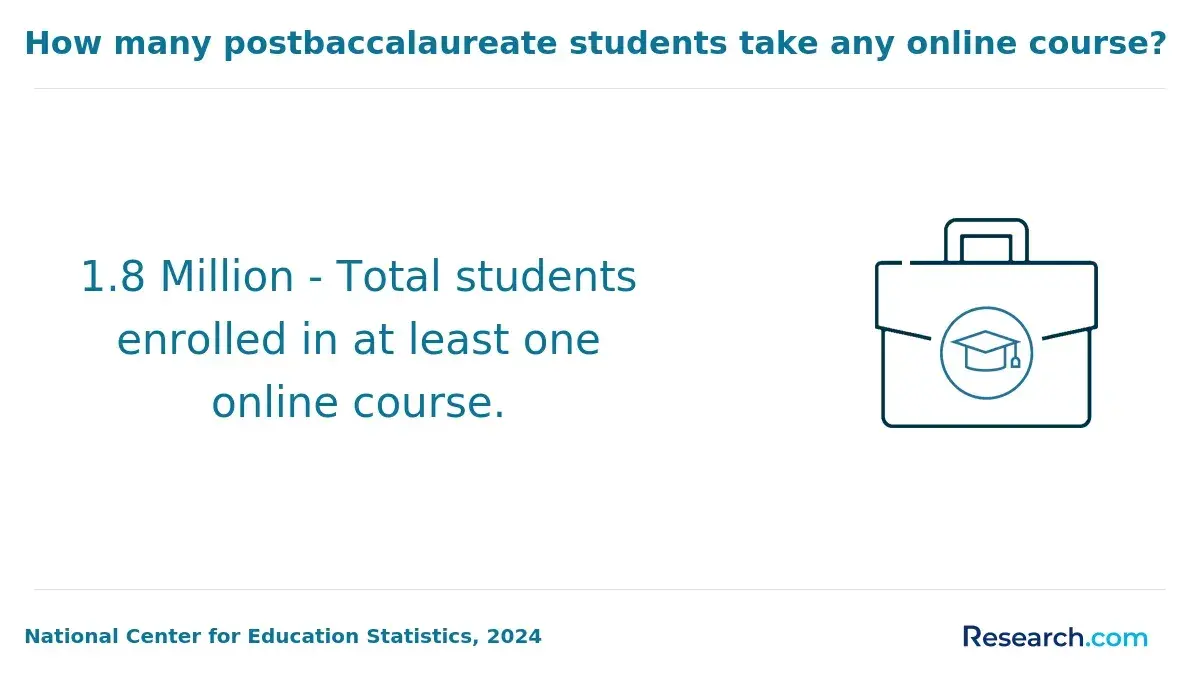
NCES distance education data published through IPEDS shows that online study remains a mainstream option for U.S. undergraduates, so program quality and transfer policy matter more than format alone. This guide explains how to compare accredited programs, estimate savings, evaluate career outcomes, and avoid paying for credits you may not need.
Key Things You Should Know
- The best online creative writing bachelor's program is usually the accredited one that accepts the most applicable transfer and prior learning credit without weakening your writing portfolio, internship access, or major requirements.
- Most bachelor's degrees require about 120 credits, but adults entering with 30, 60, or 90 accepted credits can often reduce both time and tuition if the school applies those credits toward general education, electives, or major requirements.
- BLS 2024 wage data places the median annual pay for writers and authors at $72,270, but outcomes vary widely by role, industry, location, portfolio strength, and whether graduates combine writing with editing, marketing, technical, digital, or AI-assisted content skills.
What is the best online bachelor's in creative writing with prior learning credit?
The best online bachelor's in creative writing with prior learning credit is not simply the cheapest or fastest option. It is a regionally accredited program that helps you complete a bachelor's degree efficiently while building a strong body of writing samples, receiving faculty feedback, and learning how publishing, editing, digital media, and professional communication work.
For most adult learners, the strongest fit will have three features: generous but transparent credit evaluation, a real creative writing curriculum rather than only general English courses, and career-relevant support such as portfolio development, literary magazine participation, internships, or capstone projects. A program that accepts many credits but offers little writing mentorship may be less valuable than a slightly slower program with stronger workshops and faculty engagement.
Creative writing degrees are often housed in English, liberal arts, professional writing, communications, or interdisciplinary studies departments. If your prior credits are scattered across several fields, you may also want to compare creative writing with broader degree-completion pathways such as best value online interdisciplinary studies degrees, especially if your goal is to finish a bachelor's degree for career mobility rather than pursue an MFA later.
This table summarizes the main program types you are likely to encounter and when each one makes sense. Use it to match the degree structure to your goals rather than choosing by name alone.
| Program type | Best for | Potential limitation |
| BA in Creative Writing | Students who want workshops in fiction, poetry, screenwriting, creative nonfiction, or literary publishing | May have fewer directly career-focused courses unless paired with electives in editing, marketing, or digital media |
| BA in English with creative writing concentration | Students who want a balance of literature, analysis, writing craft, and teaching or graduate school preparation | Creative writing course availability may be more limited than in a dedicated major |
| BA or BS in Professional Writing | Students interested in editing, business writing, grant writing, content strategy, or technical communication | May offer fewer literary workshop experiences |
| Degree-completion liberal arts major with writing emphasis | Adults with many previous credits who need a flexible route to graduation | May not be ideal for students who want a highly specialized creative writing transcript |
A good "best" choice should also fit your working life. Fully asynchronous courses are helpful if you work irregular hours, while synchronous workshops can provide a stronger sense of community. If you need predictable pacing, ask whether major workshops are offered every term or only once per year.
How does prior learning credit work for creative writing degrees?
Prior learning credit is college credit awarded for learning that happened outside a traditional college classroom. In creative writing degree completion, it may come from exams, military training, workplace learning, professional certifications, portfolio assessment, standardized credit recommendations, or previously completed college coursework.
The most important point is that "accepted" credit and "useful" credit are not always the same. A school may accept 60 credits in total, but only some may apply to the degree plan you need. Creative writing programs usually protect upper-division writing workshops, capstones, and residency requirements, so prior learning credit is most often applied to general education, free electives, lower-division writing, or humanities requirements.
Common prior learning credit routes include several categories. Ask the admissions or registrar's office how each option is evaluated before you enroll.
- Transfer credit from regionally accredited colleges, including community colleges and previous four-year institutions
- Credit by exam, such as CLEP, DSST, Advanced Placement, or International Baccalaureate where accepted by the institution
- Military training evaluated through American Council on Education recommendations and official military transcripts
- Portfolio assessment documenting college-level learning from professional writing, publishing, editing, journalism, marketing, nonprofit communication, or comparable experience
- Industry or workplace training that a school has already reviewed for credit equivalency
Portfolio assessment can be especially relevant for writers, but it is not the same as submitting creative work for admission. A prior learning portfolio usually must prove college-level learning, not just talent. You may need to connect your experience to course outcomes, provide documentation, and pay an assessment fee.
Before committing, follow a clear credit-evaluation sequence. This reduces the risk of discovering too late that your credits do not shorten your degree as expected.
- Request unofficial transfer guidance before applying if the school offers it, then request an official evaluation after admission.
- Ask how many credits can transfer in total and how many must be completed at the institution.
- Confirm whether prior learning credit can satisfy general education, electives, lower-division major courses, or upper-division requirements.
- Ask whether portfolio-assessment fees, exam fees, transcript fees, or evaluation fees are separate from tuition.
- Get a written degree plan showing remaining courses, estimated terms, and expected tuition before making a deposit.
A common mistake is assuming that professional writing experience will replace creative writing workshops. Many programs still require workshop courses because they involve peer critique, revision, craft study, and faculty assessment in a structured environment.
Are online creative writing degrees accredited and respected by employers?
Online creative writing degrees can be accredited and respected when they come from properly accredited institutions. In the U.S., the key baseline is institutional accreditation from an accreditor recognized by the U.S. Department of Education or the Council for Higher Education Accreditation. Creative writing programs usually do not require a specialized programmatic accreditor in the way nursing, social work, or teacher preparation programs often do.
Employers generally care less about whether the degree was completed online and more about whether the institution is credible, whether the degree is relevant, and whether the applicant can write well. For writing-related jobs, your portfolio, clips, editing samples, internships, and ability to adapt to audience and format often carry significant weight.
Online learning is now common enough that the format itself is rarely the issue. The more important questions are whether the transcript identifies the degree as online, whether online students have access to the same faculty and services, and whether the program has enough interaction to support growth as a writer.
Use the following comparison to evaluate credibility. It separates signals that usually matter from signals that can be misleading.
| Credibility factor | Why it matters | What to verify |
| Institutional accreditation | Supports credit transfer, graduate school eligibility, and federal financial aid access | Accreditor recognition through official federal or accreditor databases |
| Faculty qualifications | Writing programs depend heavily on feedback quality and mentorship | Faculty publications, editing experience, teaching background, and genre coverage |
| Student work opportunities | Employers and graduate programs often review samples, not just transcripts | Literary journals, capstones, internships, public readings, or digital publishing projects |
| Transparent credit policy | Prior learning credit only helps if it applies to your remaining degree requirements | Written transfer evaluation, residency rule, and maximum credit limit |
| Career services for online students | Remote students still need portfolio, resume, internship, and networking support | Online advising, job boards, alumni access, and writing-specific career help |
Be cautious with schools that avoid naming their accreditor, promise unusually fast degrees without reviewing your transcripts, or use pressure-based enrollment tactics. A reputable program should be willing to explain exactly how credits apply and what academic work remains.
What courses are in an online creative writing bachelor's program?
An online creative writing bachelor's program usually combines general education, literature, writing craft, workshops, electives, and a final portfolio or capstone. The exact mix varies by school, but the goal is to help students read closely, write clearly, revise seriously, and understand how different genres and audiences work.
Most programs include courses across several categories. The best curriculum for you depends on whether you want a literary path, a professional writing path, or a flexible writing-centered bachelor's degree.
- Creative writing workshops in fiction, poetry, creative nonfiction, screenwriting, playwriting, or genre writing
- Craft courses focused on narrative structure, voice, character, form, imagery, dialogue, revision, and style
- Literature courses that build close-reading skills and expose students to historical, contemporary, multicultural, and global texts
- Professional writing or editing courses covering copyediting, publishing, rhetoric, grant writing, content writing, or digital communication
- Research and critical analysis courses that help students support arguments, evaluate sources, and write for academic or professional audiences
- Capstone or portfolio courses where students revise polished work and prepare samples for graduate school, publication, or employment
Online workshops deserve special attention. A strong workshop course should have clear critique guidelines, regular revision, faculty feedback, and respectful peer interaction. If a program relies mostly on discussion posts without substantial feedback on drafts, it may not provide the level of development many writers need.
Students who want more technical or market-facing options should look for electives in digital storytelling, technical communication, UX writing, marketing copy, editing, or publishing technology. AI-assisted writing tools have also changed the field: writers are increasingly expected to understand prompt use, fact-checking, voice consistency, source evaluation, and ethical disclosure policies.
If you are drawn to creative fields but prefer spatial design, visual storytelling, or built environments, an architecture online degree may align better than a writing major. Creative writing is strongest for students who want language, narrative, editing, and communication at the center of their work.
What admission requirements do online creative writing programs usually have?
Admission requirements for online creative writing bachelor's programs are usually accessible, especially for degree-completion students. However, requirements vary by school, applicant type, and number of transfer credits. First-year applicants, transfer students, returning adults, and military students may follow different admissions processes.
Most schools ask for a core set of documents. Some programs may also require a writing sample, especially if admission to the creative writing concentration is separate from admission to the university.
- Completed online application and any required fee or fee-waiver request
- Official high school transcript, GED documentation, or equivalent if required
- Official transcripts from every college previously attended, even if credits are old or grades were low
- Minimum GPA, often with conditional admission options for applicants below the preferred threshold
- Writing sample, personal statement, or portfolio if the program uses selective admission for the major
- Proof of English proficiency for applicants whose prior education requires it under school policy
- Military, exam, certification, or portfolio documentation if seeking prior learning credit
Test scores are less central than they once were for many adult-focused online programs, but policies differ. Do not assume a test-optional admissions policy means the program is low quality; instead, evaluate accreditation, curriculum, faculty, retention support, and transfer transparency.
A practical admissions strategy is to apply only after you understand the school's transfer-credit process. If two programs admit you but one applies 75 credits to your degree and the other applies 45, the first may save far more time and money even if its per-credit tuition is higher.
How many credits and semesters does the degree usually require?
Most online bachelor's degrees in creative writing require about 120 semester credits. A traditional full-time student entering with no prior college credit may need around four academic years, while a transfer or prior-learning student may finish faster depending on accepted credits, course availability, and personal pace.
The number of credits you bring in is only one part of the timeline. Upper-division major courses may have sequencing rules, and some workshops or capstones may be offered in specific terms. A student entering with many credits can still be delayed if the remaining required courses are not available frequently.
The table below gives a practical timeline framework. It is not a guarantee, but it helps you estimate how prior learning credit can change the length of study.
| Accepted credits at entry | Approximate credits remaining | Typical planning implication |
| 0 credits | About 120 credits | Plan for a full bachelor's pathway with general education, electives, major courses, and capstone |
| 30 credits | About 90 credits | Often similar to entering as a sophomore if credits fit degree requirements |
| 60 credits | About 60 credits | Often a strong degree-completion position, especially with an associate degree |
| 90 credits | About 30 credits | Potentially fast, but residency rules and upper-division major requirements become critical |
Full-time online students often take 12 to 15 credits per term, while working adults may prefer 6 to 9 credits. Accelerated eight-week courses can help motivated students move quickly, but they are not automatically easier. Writing courses require drafting, reading, peer critique, and revision time, so overload can reduce the quality of your portfolio.
Ask whether the school uses semester, quarter, or competency-based pacing. Competency-based options can be efficient for disciplined adults with strong writing and self-management skills, but workshop-heavy creative writing programs may still require term-based interaction.
How much does an online creative writing degree cost after transfer credits?
The cost of an online creative writing degree after transfer credits depends on tuition per credit, credits remaining, fees, books, prior learning assessment costs, and whether the school charges different rates by residency. The basic formula is simple: remaining credits multiplied by tuition per credit, plus required fees and materials.
College Board's 2024 Trends in College Pricing reported average published tuition and fees of $11,610 for in-state students at public four-year institutions and $43,350 at private nonprofit four-year institutions for the 2024-25 academic year. Those figures are not online creative writing prices, but they show why transfer credit matters: reducing the number of credits you must buy can have a meaningful effect on total cost.
Here is a simplified way to think about cost after credit evaluation. The table focuses on the main variables rather than promising a universal price.
| Cost factor | How it affects your total cost | Question to ask |
| Remaining credits | The largest driver of tuition after transfer evaluation | How many credits will I still need after all transcripts and prior learning are reviewed? |
| Per-credit tuition | Determines the base cost of each remaining course | Is the online rate flat, in-state, out-of-state, or program-specific? |
| Fees | Technology, graduation, assessment, and course fees can raise the real price | What mandatory fees apply to online students? |
| Portfolio or exam credit costs | Prior learning can save money, but assessments may have separate costs | What is the fee per portfolio review, exam, or credit-award process? |
| Course availability | Delayed courses can extend enrollment and indirect costs | Are required workshops and capstones offered every term? |
To compare programs fairly, do not rank them by advertised tuition alone. A school charging more per credit may cost less overall if it accepts more applicable credits. Conversely, a low-tuition school may become more expensive if it rejects old credits or requires many institutional credits.
Use this practical checklist before enrolling. It helps you estimate the real cost instead of relying on marketing claims.
- Request an official or near-final degree audit showing exactly which requirements remain.
- Multiply remaining credits by the tuition rate that applies to online students in your residency category.
- Add mandatory fees, books, software, graduation fees, transcript fees, and prior learning assessment charges.
- Ask whether scholarships, employer tuition assistance, military benefits, or federal aid can be applied to the online program.
- Compare total remaining cost against your career plan, not against broad averages alone.
Be careful with programs that advertise "finish fast" without first reviewing your credits. Speed is only valuable if it leads to a credible degree and enough writing development to support your next step.
What jobs can you get with a creative writing bachelor's degree?
A creative writing bachelor's degree can lead to writing, editing, communications, marketing, publishing, education-adjacent, and digital content roles. It is not a single-track professional degree, so your job options depend heavily on internships, portfolio samples, software skills, industry knowledge, and how well you connect writing to business or public needs.
Creative writing graduates often succeed when they pair storytelling and language skills with a practical specialty. For example, a student who writes fiction and also learns content strategy may pursue brand storytelling, while a student who enjoys research and clarity may move toward technical writing or grant writing.
The table below connects common roles with the kinds of writing evidence employers may want to see. Use it to plan electives and portfolio projects while you are still enrolled.
| Role | Typical responsibilities | Helpful portfolio evidence |
| Content writer | Write articles, website copy, newsletters, product content, or campaign materials | Published clips, SEO samples, audience briefs, and edited drafts |
| Copywriter | Create persuasive copy for ads, landing pages, email campaigns, and brand messaging | Short-form campaigns, A/B copy examples, brand voice samples, and results where available |
| Editor or assistant editor | Review drafts, improve structure, correct errors, manage style, and coordinate publication workflows | Before-and-after edits, style-sheet examples, literary magazine work, and proofreading samples |
| Technical writer | Explain products, processes, software, policies, or procedures clearly for specific users | Documentation samples, user guides, process instructions, and examples of complex topics made clear |
| Grant writer | Prepare proposals, narratives, needs statements, and reports for nonprofit or public funding | Proposal excerpts, research summaries, outcome narratives, and nonprofit communication samples |
| Publishing assistant | Support acquisitions, editorial review, production, publicity, rights, or literary magazine operations | Editorial notes, reader reports, copyediting samples, and publication project experience |
AI is changing writing work, but it has not removed the need for human judgment. Employers increasingly value writers who can use tools responsibly, verify facts, maintain voice, revise machine-generated drafts, and understand audience intent. This makes editing, strategy, subject-matter understanding, and ethical judgment more important.
If you want a more quantitative path, a math degree online may lead to different roles in analytics, finance, education, or data-heavy fields. Creative writing is a better fit when you want communication, narrative, language, and audience engagement to be central to your work.
What is the salary potential for creative writing graduates?
Salary potential for creative writing graduates varies because the degree can lead to many occupations. A novelist, content strategist, technical writer, editor, marketing specialist, and grant writer may all use writing skills, but their compensation structures and job markets are different.
BLS 2024 data reports a median annual wage of $72,270 for writers and authors. This figure is useful as a broad labor-market benchmark, but it should not be treated as a predicted salary for every creative writing graduate. Entry-level pay, freelance income, regional demand, industry specialization, and portfolio quality can all shift outcomes substantially.
The table below gives a realistic way to interpret salary potential by career direction. It focuses on how the degree is commonly converted into work, not on guaranteed earnings.
| Career direction | Salary context | What can improve marketability |
| Literary or creative author | Income can be irregular, especially for freelance, book, or independent publishing paths | Publication history, platform building, editing skill, teaching experience, and persistence |
| Marketing and content roles | Pay often depends on industry, measurable campaign skills, and digital experience | SEO knowledge, analytics familiarity, brand voice samples, and content management systems |
| Editing and publishing | Entry-level roles can be competitive, with advancement tied to experience and specialization | Copyediting samples, style guides, internships, production knowledge, and genre expertise |
| Technical communication | Often stronger when writing skill is paired with software, science, healthcare, engineering, or policy knowledge | Documentation tools, UX writing, subject-matter fluency, and structured information design |
| Nonprofit and grant writing | Compensation varies by organization size, funding environment, and proposal experience | Research skill, budget literacy, outcomes writing, and successful proposal samples |
The return on investment is usually strongest when students use the degree to build a targeted portfolio before graduating. If your goal is income stability, avoid relying only on literary publication as a career plan. Pair creative work with practical writing applications such as editing, communications, technical documentation, education support, or digital content.
Students interested in the technology side of writing should also watch how AI reshapes content roles. If you want to build deeper technical credentials alongside communication skills, exploring degrees in AI may make sense as an alternative or future graduate path.
How do you choose a reputable online creative writing program?
Choosing a reputable online creative writing program requires more than reading a ranking. The right program should fit your goals, accept useful credit, provide serious writing instruction, and offer enough support to help you graduate with polished work.
Start with accreditation, then move to degree fit. A legitimate school should clearly disclose its accreditor, tuition, curriculum, faculty, transfer rules, and student support services. If any of those are vague, slow down before enrolling.
Use these steps to compare programs in a practical order. They are designed to protect your time, money, and career options.
- Verify institutional accreditation through an official accreditor or federal database, not only through the school's marketing page.
- Request a transfer and prior learning credit review before you make a final decision.
- Compare how many remaining credits apply to the major, general education, electives, and residency requirement.
- Review the curriculum for workshops, revision-heavy courses, literature, editing, professional writing, and a capstone or portfolio.
- Check whether online students can access faculty office hours, tutoring, library databases, career services, internships, and alumni networks.
- Ask for course rotation information so you know whether required workshops are available when you need them.
- Calculate total remaining cost after credit, fees, and financial aid rather than relying on tuition per credit alone.
- Look for evidence of student outcomes, such as internships, publications, graduate school placement, or career support, while remembering that individual results vary.
Also watch for red flags. These do not always prove a program is poor, but they are reasons to ask harder questions before enrolling.
- No clear institutional accreditation information or confusing accreditation claims
- Promises that life experience will automatically remove most degree requirements
- High-pressure enrollment calls before your transcripts have been evaluated
- Unclear tuition, fees, refund rules, or prior learning assessment costs
- Few upper-division writing courses or limited evidence of faculty feedback
- No meaningful portfolio, capstone, workshop, internship, or publication opportunities
The best final choice is the program that gives you a credible credential, the shortest responsible path to completion, and the strongest writing portfolio for your next goal. If those three factors do not align, keep comparing.
Other Things You Should Know About Creative Writing
When choosing between creative writing and professional writing in 2027, consider your career goals. Creative writing focuses on storytelling, poetry, and fiction, while professional writing emphasizes technical writing and communication skills. Evaluate course content, career prospects, and personal interests to determine which aligns best with your aspirations.
It can be. MFA admissions committees usually focus heavily on the writing sample, academic readiness, recommendations, and fit with faculty or genre strengths. A bachelor's degree in English, writing, communications, or another field may also be acceptable.
Some programs are fully online, while others may require optional or mandatory residencies, readings, workshops, or intensives. Always confirm residency requirements before enrolling, especially if travel would be difficult.
Choose creative writing if you want workshops, literary craft, and genre-based development. Choose professional writing if your priority is workplace communication, editing, technical documentation, content strategy, or business writing. Some students benefit from programs that combine both.
References
- Online Transferable College Courses | Sophia https://www.sophia.org/plans-and-pricing/
- How Many Credits Do You Need to Graduate from College? https://www.trident.edu/how-many-credits-to-graduate-college
- Creative Writing Degree | Online Creative Writing Degree https://www.creativewritingedu.org/degree-creative-writing/
- Creative Writing BA(Hons) (Online) https://www.falmouth.ac.uk/study/online/undergraduate/creative-writing
- What Are Credit Hours In College? https://www.citizensbank.com/student/articles/what-are-credit-hours-in-college.aspx
- 25 best creative writing courses and classes you can’t afford to miss – Creativindie https://www.creativindie.com/best-online-writing-courses-for-authors/
- How Many Credits Do You Need to Graduate College? (2026 Guide) https://www.straighterline.com/blog/self-paced-how-many-credits-do-you-need-to-graduate-college-2026-guide
- 10 Considerations Before You Apply to a Creative Writing MFA Program — Set Your Muse on Fire! https://www.setyourmuseonfire.com/blog/10-considerations-before-you-apply-to-a-creative-writing-mfa-programnbspnbsp
- How to choose the best online creative writing course step-by-step https://nationalcentreforwriting.org.uk/writing-hub/best-online-creative-writing-courses/