2027 Online Ed.D. in Leadership and Learning in Organizations: Designing a Project About Workforce Reskilling
Audited and Verified:
Our Editorial and Data Verification Process
Research.com uses government datasets, official education statistics and primary institutional information to support its career and degree guides. Our review process checks factual accuracy, occupational definitions, source dates and the requirements associated with the credentials discussed.
How This Article Was Fact-Checked
Our editorial team verifies salary estimates, employment projections, education requirements and program information against original data providers and official organizations. Salary figures are checked against the relevant occupational definitions and reporting periods. Information about licensure, accreditation and required in-person training is reviewed separately.
Fact-checked and verified on:

Co-Founder and Chief Data Scientist
A workforce reskilling initiative can make a strong Ed.D. project - but only if it addresses a defined organizational need, uses evidence the student can access, and meets the program's academic requirements.
This guide is for learning and development professionals and organizational leaders considering an online doctorate while working. It explains how to turn a broad training idea into a feasible applied project, what to verify before enrolling, and when a shorter professional-development route may be the better choice.
Key Things You Should Know
- A viable reskilling project identifies a specific role transition or performance gap, an authorized project partner, measurable indicators, and a deliverable the Ed.D. program will accept.
- Training completion alone does not show that workers can perform new tasks; assess skill use and workplace conditions as well as participation.
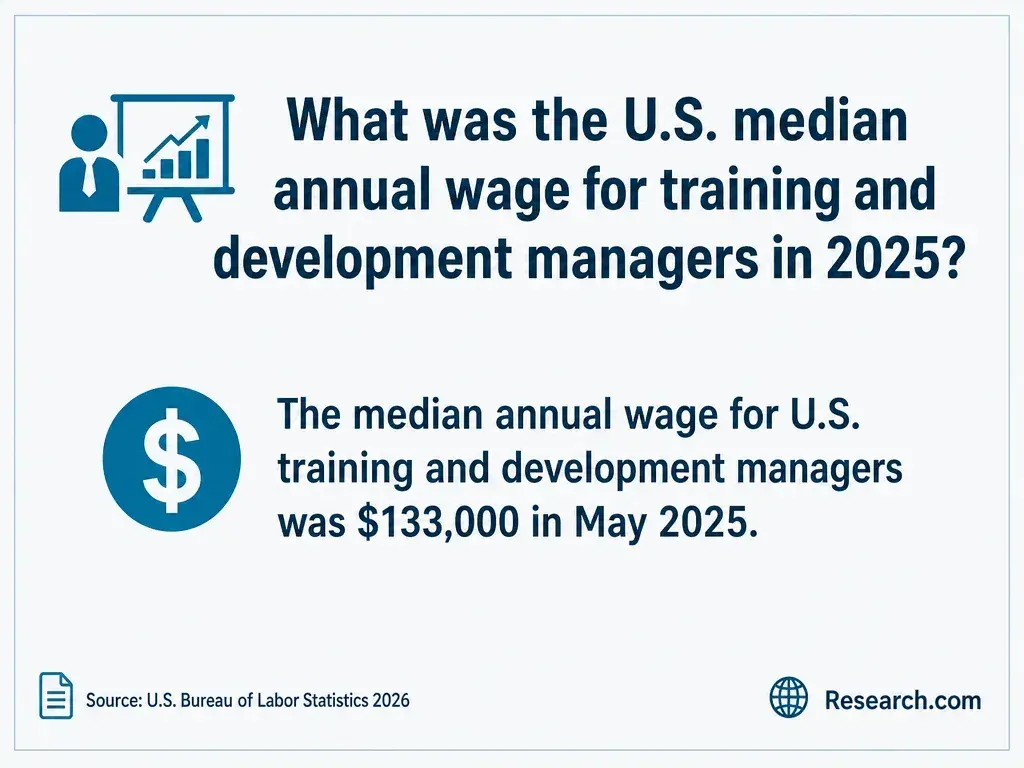
- The U.S. Bureau of Labor Statistics reports a $133,000 median annual salary for training and development managers in 2025, but that occupation-wide figure is not an expected Ed.D. graduate salary.
What is an online Ed.D. in leadership and learning in organizations?
An Ed.D. in leadership and learning in organizations is a practice-oriented doctorate focused on how people learn, how organizations change, and how leaders use evidence to improve practice. "Online" describes where much of the instruction takes place; it does not necessarily mean self-paced study or a fully remote project. Exact degree titles, curricula, and final projects vary by institution.
For a reskilling project, the appeal is the combination of adult learning, organizational diagnosis, implementation, and applied inquiry. A research-focused PhD may fit someone whose primary goal is to produce generalizable scholarship. An Ed.D. is more directly aligned with investigating and improving a problem in a particular organization, although the required research and final deliverable still depend on the program.
Prior graduate study can affect the route into a doctorate. Someone with an education specialist degree, for example, can explore evaluating education specialist to doctorate pathways, but should ask each institution separately whether prior study satisfies admission conditions or actually reduces Ed.D. requirements.
How can an Ed.D. prepare you to lead workforce reskilling programs?
Workforce reskilling prepares people to perform substantially changed or new work, rather than simply refreshing skills for their current tasks. An Ed.D. can help a leader investigate which capabilities are needed, why a gap exists, how adults learn those capabilities, and whether an intervention transfers to the job.
That sequence matters. If employees cannot use a new system because permissions, staffing, or workflows are inadequate, another course may not solve the problem. Doctoral work can strengthen the leader's ability to distinguish a learning need from an operational constraint, bring managers and workers into the design, and evaluate implementation without claiming that training alone caused every observed change.
The degree is most useful when you can apply those skills to decisions you influence. If your immediate need is to build a single course or learn one platform, supervised project experience, targeted instructional-design training, or employer-sponsored development may be faster and less costly.
What courses are included in an online Ed.D. in leadership and learning?
Course names differ, but programs relevant to reskilling may cover adult learning, organizational leadership and change, learning design, research methods, and program evaluation. The important question is not whether a catalog mentions "workforce development"; it is whether the sequence equips you to diagnose a gap, design an intervention, obtain appropriate evidence, and interpret the results.
Compare syllabi and project requirements for depth. A learner with extensive training-design experience may gain more from evaluation, organizational change, and data-governance coursework. A manager new to learning and development may need stronger preparation in adult learning, needs assessment, and measurement. An elective is not a guaranteed specialization, and exposure to analytics does not establish advanced statistical expertise.
Online delivery can make attendance possible without relocating, while campus study may offer more routine in-person contact. Neither format determines the quality of faculty guidance or organizational partnerships. Online cohorts may still require scheduled classes, group meetings, and campus convenings - obligations that matter when a reskilling project also depends on workplace access.
Ask for the actual meeting schedule, attendance policy, travel requirements, and project milestones. Intensive online education doctoral pathways may compress coursework, but a shorter calendar does not necessarily shorten employer approvals, data collection, or revision cycles. Choose a pace that leaves room to complete the project ethically, not merely to finish classes quickly.
Requirements are institution-specific and may include prior graduate education, professional experience, transcripts, recommendations, a statement of purpose, and an interview. A background in business, healthcare, technology, government, or education may be relevant if you can show responsibility for organizational learning or change; an education master's is not a universal prerequisite.
For an application centered on reskilling, describe a problem you have observed, the decisions within your authority, and the evidence you would need - not a promised intervention or invented results. Demonstrate research readiness and ask whether the proposed setting could support the program's project model. Applicants returning to doctoral study can review Ed.D. programs considering previous doctoral coursework, while obtaining a written institutional assessment of admission eligibility and any credits that would apply to the new degree.
Completion time depends on enrollment pace, course sequencing, the required final project, and how quickly approvals and data access can be secured. Published schedules are planning estimates, not guarantees that a workplace project will finish on time.
Compare programs using a written cost estimate covering tuition and required fees through completion, plus any campus travel, software, and project-related expenses. Check whether employer assistance is paid upfront or reimbursed later, whether continued employment is required, and what happens if the project takes an additional term. Reviewing budget-conscious Ed.D. degree options is a starting point; the relevant comparison is the total cost of programs whose project and scheduling rules fit your situation.
Start with a decision an organization actually needs to make: whether a defined group can prepare for changed work, what support they need, and how leaders will judge progress. For example, a hypothetical public agency introducing a new procurement workflow might examine whether affected staff can complete specified tasks - not assume that course attendance proves readiness.
The following sequence turns that question into a proposal that a faculty advisor and organizational sponsor can evaluate:
- Define the boundary: Name the workforce group, the changed tasks, the organizational decision, and a scope achievable within the program's project timeline.
- Investigate the gap: Compare required tasks with existing processes and available baseline evidence; ask workers and supervisors whether barriers involve skills, access, incentives, or workflow.
- Agree on roles and access: Identify the decision-making sponsor, faculty advisor, data custodian, and any project teammates. Obtain organizational permission before assuming records or participants are available.
- Specify the intervention and indicators: Describe the proposed learning or performance support and assess relevant outcomes, such as demonstrated task performance or supported use on the job, alongside participation.
- Plan analysis and deliverables: Set a feasible collection schedule, document limitations, and propose a decision-ready report with recommendations rather than promising a positive result.
Choose measures that match the claim you want to make. A pre/post skills assessment can describe change among participants, but without an appropriate comparison it cannot by itself establish that training caused the change. Manager ratings may add context yet reflect expectations or uneven observation. If a pilot is too small for strong outcome claims, an implementation study or needs assessment may be a more honest - and more useful - project.
Academic approval, employer sponsorship, access to records, and permission to share findings are separate decisions. Ask the program whether its required deliverable is an individual dissertation in practice, a team capstone, or another format; online Ed.D. capstone alternatives to compare are not interchangeable with a particular school's graduation rules. Before collecting employee information, confirm institutional review procedures, consent and confidentiality expectations, employment-data restrictions, and any needed data-use agreement. A workplace evaluation is not automatically exempt from academic review.
Take a short concept note to the faculty advisor and sponsor before enrolling or committing to a site. Ask: Will this question meet the program's standard? Who can authorize participation and data access? What aggregated or deidentified evidence is available? What happens if the organization changes priorities? The answers determine whether to narrow the question, find another partner, or choose a project that does not depend on restricted records.
For an experienced learning and development professional, plausible paths include leading a training function, managing organizational development initiatives, evaluating workforce programs, or consulting on learning and change. The project can provide evidence of needs assessment, stakeholder coordination, implementation, and evaluation - but employers will also examine the scale of your actual leadership responsibility.
The best target depends on the work you want to do. Training and development managers oversee programs and teams; specialists often design or deliver learning; organizational consultants may diagnose broader process and change problems. An Ed.D. does not substitute for management experience, sector knowledge, or the technical skills required by a particular role. Nor does a general organizational-learning doctorate automatically qualify someone for school-administrator licensure.
Occupational figures provide context for career planning, not a forecast of graduates' earnings. These U.S. Bureau of Labor Statistics figures describe entire occupations across education levels and experience:
| Occupation | Median annual salary, 2025 | Projected employment growth, 2025-2035 |
| Training and development managers | $133,000 | +6.4% |
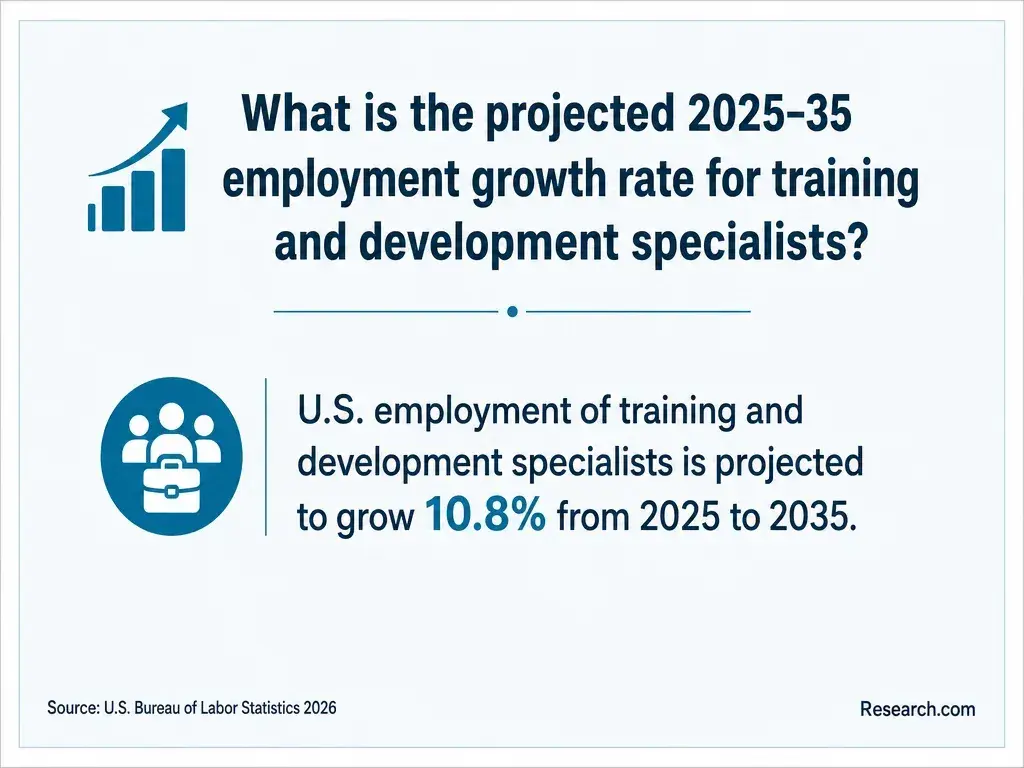
| Training and development specialists | $69,280 | +10.8% |
The difference between these roles is a reminder to assess the job you can realistically pursue, not price the degree against a manager's median if you have not yet led programs or staff. Employer, location, sector, and prior experience also affect compensation; neither figure measures a return on Ed.D. tuition.
How can you evaluate accreditation and quality in an online Ed.D. program?
Verify the institution's current accreditation with the accreditor and confirm the exact degree being awarded. Then examine the program itself: required courses, faculty expertise, advisor availability, final-project rules, research support, online attendance, and any campus visits. Institutional accreditation does not establish that the degree carries a particular professional certification or educator license.
For a reskilling project, ask to see the published project handbook and assessment criteria. Find out when a site must be approved, whether an external organization is acceptable, how faculty supervise data collection, and what options exist if an employer withdraws access. These details are more predictive of project fit than a broad promise that students can "apply learning at work."
Other Things You Should Know About EdD Leadership
Potentially. A carefully documented result that challenges the original plan can inform a useful organizational decision. The work must still meet the program's standards for evidence, analysis, and the required deliverable.
Check program rules and organizational data policies first. Do not enter identifiable or confidential feedback into an unapproved tool; retain a documented, reviewable process for any permitted analysis.
Ownership and publication rights depend on institutional policies and employer agreements. Clarify intellectual property, access to the final document, and permission to share a redacted version before the work begins.
No. Reskilling can address changed responsibilities in healthcare, public service, operations, or other fields. The essential test is whether the project defines new work requirements and a credible way to assess preparation for them.
- Ethical Considerations and Data Protection Principles | WHO SMART Trust v1.7.4 https://smart.who.int/trust/ethical_principles.html
- Ethical considerations in quality improvement: key... - PMC https://pmc.ncbi.nlm.nih.gov/articles/PMC8372876/
- Doctor of Education (Ed.D.) in Leadership in Schooling | uml.edu https://www.uml.edu/education/doctorate/ed-leadership.aspx
- UNC EdD Online: Organizational Learning and Leadership https://online.unc.edu/online-doctoral-programs/online-edd-organizational-learning-and-leadership/
- Advance Your Leadership Career with an Online Ed.D. | UMass Global https://www.umassglobal.edu/blog-news/advance-your-leadership-career-online-edd
- Section 5. Developing an Evaluation Plan - Community Tool Box https://ctb.ku.edu/en/table-of-contents/evaluate/evaluation/evaluation-plan/main
- EdD in Educational Leadership | Merrimack College | https://www.merrimack.edu/academics/education-and-social-policy/graduate/edd-educational-leadership-doctorate/
- Understanding the skills gap - and what employers can do about it | Brookings https://www.brookings.edu/articles/understanding-the-skills-gap-and-what-employers-can-do-about-it/
- Online Ed.D. in Leadership and Learning in Organizations | VU-EDU https://peabodyonline.vanderbilt.edu/edd-in-organizational-learning/
- Tools for Planning for Process Improvement | uci.edu https://dfa.uci.edu/pde/cpi/lss-tools/planning-for-process-improvement.php