2027 Choosing an Online Ed.D. in Leadership and Learning in Organizations Around a Planned Move Between Countries
Audited and Verified:
Our Editorial and Data Verification Process
Research.com uses government datasets, official education statistics and primary institutional information to support its career and degree guides. Our review process checks factual accuracy, occupational definitions, source dates and the requirements associated with the credentials discussed.
How This Article Was Fact-Checked
Our editorial team verifies salary estimates, employment projections, education requirements and program information against original data providers and official organizations. Salary figures are checked against the relevant occupational definitions and reporting periods. Information about licensure, accreditation and required in-person training is reviewed separately.
Fact-checked and verified on:

Co-Founder and Chief Data Scientist
An online doctorate may let you keep studying through an international move, but a change of country can affect more than your internet connection. Live classes, campus visits, enrollment permissions, and access to an organization for applied research may all become harder to manage. This guide is for prospective Ed.D. students who expect to relocate before or during their degree. It explains which questions to put to a university - and which answers to get in writing - so you can choose a program that remains workable on both sides of the move.
Key Things You Should Know
- Confirm that the university permits enrollment from both your current and destination countries; an "online" designation does not establish overseas eligibility.
- Compare live-class times, required campus visits, and applied-project access against your move date, not just the program's advertised format.
- Check degree recognition, immigration rules, and the full cost of studying from each location separately. A US Ed.D. does not itself provide work authorization or professional licensure.
What is an online Ed.D. in Leadership and Learning in Organizations?
An Ed.D., or Doctor of Education, in leadership and learning is generally a practice-oriented doctorate concerned with how organizations develop people, use evidence, and manage change. Its setting may be a business, university, government agency, healthcare organization, or nonprofit - not necessarily a school district. The exact degree title, curriculum, and final project depend on the institution.
For someone moving countries, the attraction is location flexibility. That flexibility has limits: online coursework may still involve scheduled discussions, group work, and a dissertation or other approved applied project. If your goal spans organizational leadership and universities, online Ed.D. study connecting organizations and higher education can help frame the kind of program to investigate. Check the university's own catalog before treating any program as a match.
How can you verify an online Ed.D. program's accreditation and degree recognition?
Start with the university's exact legal name and degree designation. Check its institutional accreditation through the accreditor's directory and the US Department of Education's accreditation records; confirm that the status covers the institution awarding the degree. Then ask the program whether it makes any separate accreditation claim. Institutional accreditation does not mean a leadership doctorate prepares graduates for a regulated occupation.
Recognition abroad is a different question. If you expect to work or pursue further study in the destination country, ask the relevant employer, university, credential-recognition authority, or professional regulator how it evaluates a US online doctorate. Ask whether delivery mode, required physical presence, or the degree's field matters. Get that answer before enrolling when recognition is essential to your plan; a US university cannot guarantee another country's decision.
Is an online Ed.D. practical when planning to move between countries?
It can be, provided the program allows study from both locations and you can meet its attendance and research requirements throughout the transition. The strongest test is to map a normal teaching week and a project-intensive term against your expected locations. A class scheduled for a convenient US evening may fall in your destination country's working day or overnight; daylight-saving changes can shift the conflict again.
Compare these requirements with your actual move window. Each can turn a seemingly portable degree into a difficult commitment.
- Enrollment location: Ask whether students may participate from each country, including during a temporary stay elsewhere, and whether location affects access to course platforms or university services.
- Attendance: Request live-session schedules, attendance rules, group-meeting expectations, and the policy for interrupted connectivity during travel.
- Campus convenings: Confirm dates, location, attendance requirements, and whether you would need permission to enter the country where they occur.
- Applied work: Ask whether your proposed organization and data sources remain acceptable after relocation, and who approves a replacement site if access changes.
Build a contingency for a delayed move, a new employer, or a term when travel is impossible. Ask about leave and reentry rules before assuming you can pause without consequences. If you are considering comparing the fastest online Ed.D. formats, scrutinize fixed course sequences: a shorter advertised timeline may leave less room to absorb a move.
Enrollment and immigration are separate decisions. An online US Ed.D. does not by itself confer a US visa or permission to work in the United States. Check the rules that apply to your citizenship, residence, and intended physical location with the appropriate authorities.
Depending on your prior experience, the degree may support work in learning and development, organizational development, leadership development, consulting, or higher-education administration. These roles differ: a training manager directs learning programs, an organizational consultant analyzes operating problems, and an education administrator works within an institution's governance and staffing structure.
For a cross-border move, choose a target role and country before judging career value. Employers may value local sector experience, language ability, management responsibility, and a recognized credential differently. An Ed.D. can strengthen an experienced practitioner's ability to evaluate and lead change; it is not a substitute for the experience or local eligibility a particular job requires.
Relevant study may include adult learning, organizational change, leadership, research methods, and evaluation. The useful distinction for a relocating student is between course exposure and a feasible opportunity to apply those methods. A program focused on workplace inquiry is a weaker fit if its project rules require access to an employer you expect to leave.
Compare the required curriculum and final deliverable, not just elective titles. Ask whether a project can use an external partner, whether it must be completed in a particular country, and how faculty supervise work across time zones. Permission to use organizational information, privacy protections, and any required ethics review must be settled under the university's and organization's rules; moving does not carry those permissions with you automatically.
Requirements vary. Programs may ask for a qualifying graduate degree, transcripts, evidence of professional experience, recommendations, a statement of purpose, or an interview. Applicants educated outside the United States should check the institution's credential-evaluation and English-language policies rather than assume US domestic requirements apply unchanged.
Explain your relocation plan in an admissions conversation: where you expect to be during coursework, how you would attend live sessions, and what kind of organizational problem you hope to investigate. Ask for a written answer about overseas enrollment from the office that administers that policy. If you hold an education specialist degree or prior graduate credits, investigate Ed.S. progression into an online Ed.D., but distinguish credits considered for admission from credits actually applied toward doctoral requirements.
There is no reliable universal duration or price. A program's required credits, course sequence, project approval process, and leave policy determine how quickly you can finish. For a planned move, request a term-by-term plan showing when live courses, convenings, and project milestones occur. Ask what happens to that plan if you cannot attend a required activity while relocating.
Obtain an itemized estimate from each university. Compare tuition and fees alongside required travel, lodging, technology, payment arrangements, and the cost of an extra term if the move delays your project. Organizational leadership doctorate tuition comparisons can help you identify candidates, but the university's current charges and requirements should control your budget. Confirm separately whether loans, scholarships, or employer reimbursement remain available after your change of residence or employment.
Online study can reduce the need to live near a university; campus study can make regular in-person access to faculty and local research partners easier. Neither format eliminates the need to check where you may study or conduct a project. The comparison below focuses on what a country move changes.
| Feature | Online Ed.D. | Campus-based doctorate |
| Location during coursework | May permit study from multiple places, subject to university rules | Normally depends on attendance near campus |
| Scheduled participation | May include live classes and remote team meetings across time zones | Usually includes scheduled in-person classes and meetings |
| Travel exposure | May still require campus visits | Relocation away from campus can interrupt regular attendance |
| Project access | Depends on approved sites, supervision, and data permissions | May offer local partnerships, which can become less accessible after a move |
If your destination and move date remain uncertain, prioritize a program with written location and leave policies over one advertised simply as convenient. Compare lower-tuition Ed.D. program choices with any campus option using total attendance and travel costs, not tuition alone. A shorter certificate or employer-supported leadership project may be preferable if your goal does not require a doctorate and your location is unsettled.
Organizational learning and development roles do not generally carry a single Ed.D.-specific license. Regulated roles are different: a position such as school principal may require approval or licensure from the relevant jurisdiction. A general leadership and learning doctorate should not be assumed to meet those requirements, in the United States or abroad.
If licensure is your goal, identify the jurisdiction and role first. Ask its regulator and the university whether this specific program satisfies the applicable education, fieldwork, and location requirements. Optional professional certifications should likewise be assessed against the job you want, not treated as automatic outcomes of the degree.
What salary and job outlook can Ed.D. graduates expect?
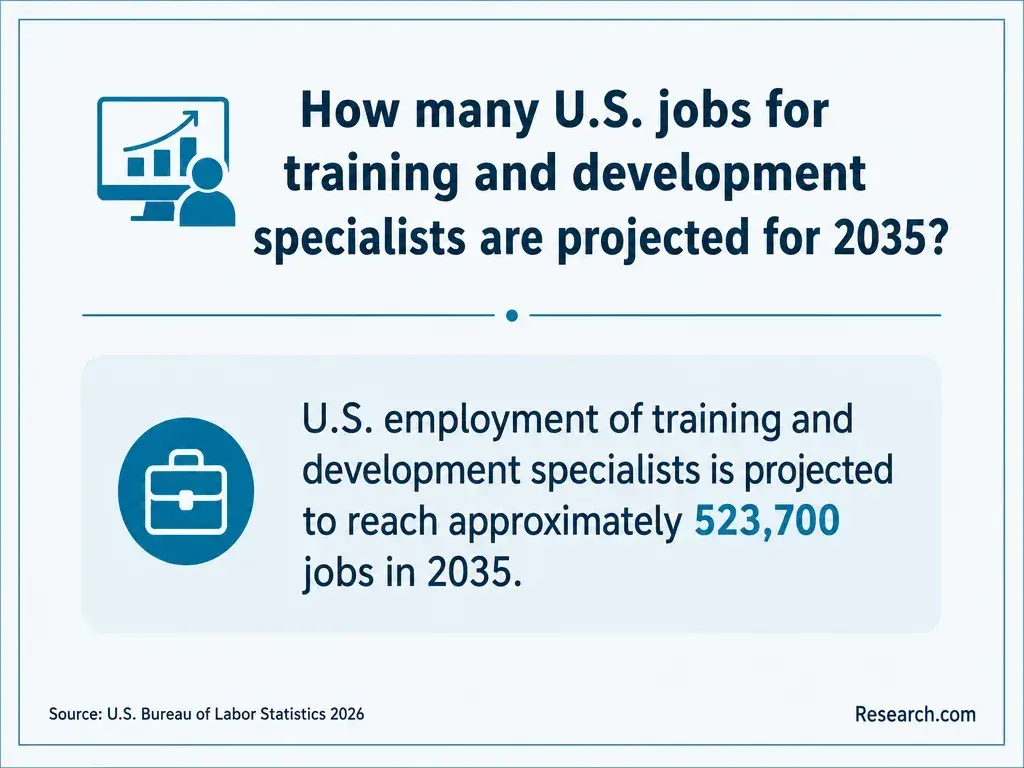
Pay depends on the occupation, country, sector, and your experience - not on holding an Ed.D. alone. In the US, the Bureau of Labor Statistics reports a May 2025 median annual salary of $133,000 for training and development managers. That is an occupational median, not an expected salary for new doctorate graduates or for jobs outside the United States.
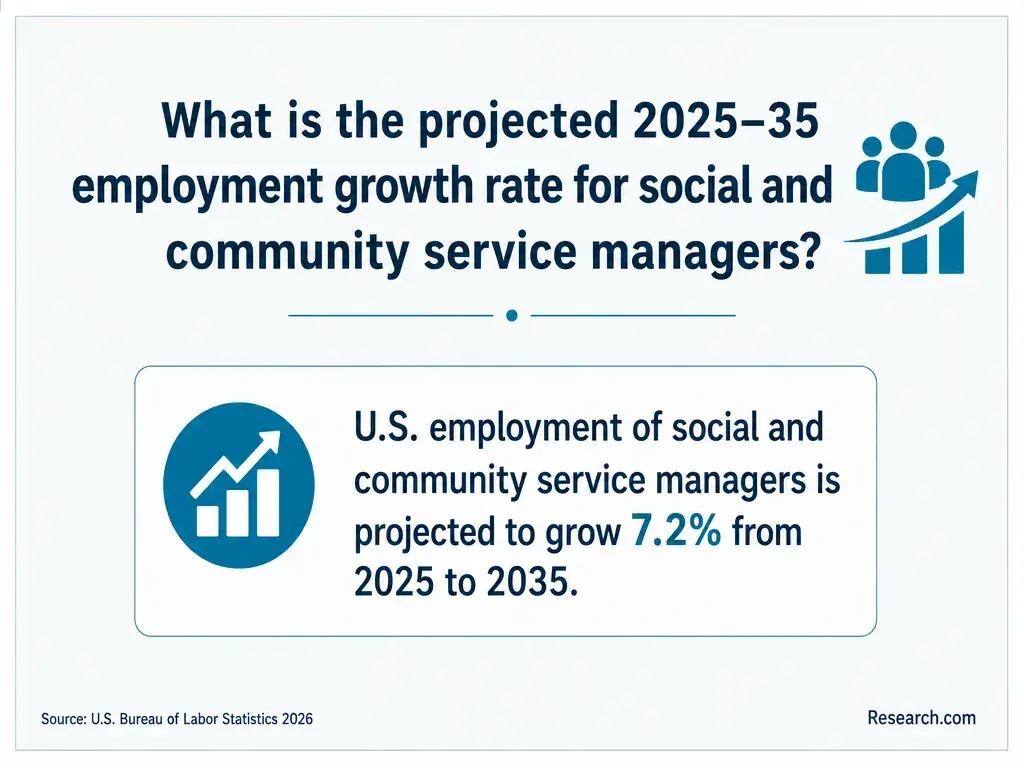
The BLS projects employment in that US occupation to grow 6.4% from 2025 to 2035. Use the projection as context for a target role, then examine job postings where you expect to live: their experience, local credential, and work-authorization requirements will be more useful to your personal decision than a national average.
Other Things You Should Know About EdD Leadership
Ask the university's IT and library teams about access from your destination country, required authentication methods, and support hours. Test your setup before a term begins; do not assume every licensed resource works identically everywhere.
Possibly, but obtain the university's location-policy answer for that country too. Temporary travel can still affect platform access, live attendance, and your ability to enter a country for required activities.
It may. Review the employer's written eligibility, repayment, and continued-employment terms before relying on reimbursement for future terms.
Yes. Give admissions the expected countries and dates, then ask the offices responsible for enrollment and program delivery to confirm what they permit. That is more useful than relying on a general assurance that the degree is online.
- Optional Practical Training (OPT) for F-1 Students | uscis.gov https://www.uscis.gov/working-in-the-united-states/students-and-exchange-visitors/optional-practical-training-opt-for-f-1-students
- FAFSA Simplification Questions and Answers | ed.gov http://www.ed.gov/laws-and-policy/higher-education-laws-and-policy/fafsa-simplification-questions-and-answers
- Types of Financial Aid: Grants, Work-Study, and Loans | studentaid.gov https://studentaid.gov/understand-aid/types
- Ethical Guidelines and the Institutional Review Board - PMC https://pmc.ncbi.nlm.nih.gov/articles/PMC10885741/
- Chapter II: Proposal Preparation Instructions | NSF https://www.nsf.gov/policies/pappg/24-1/ch-2-proposal-preparation
- DAPIP | Homepage - Office of Postsecondary Education (OPE) https://ope.ed.gov/dapip/
- Permissions and Approvals - Research and Innovation https://research.uoregon.edu/manage/integrity-compliance/human-subjects-research/guidance-library/permissions-approvals
- International Research | Oregon State University https://research.oregonstate.edu/ori/irb/policies-and-guidance-investigators/guidance/international-research
- Attendance and Participation in Online Classes - Blogs@Baruch https://blogs.baruch.cuny.edu/ctl/attendance-and-participation-in-online-courses/
- International Research - Research at the UW https://research.washington.edu/research/hsd/guidance/international-research/