2027 Is an Online Ed.D. in Leadership and Learning in Organizations a Good Fit for Insurance Learning Leaders?
Audited and Verified:
Our Editorial and Data Verification Process
Research.com uses government datasets, official education statistics and primary institutional information to support its career and degree guides. Our review process checks factual accuracy, occupational definitions, source dates and the requirements associated with the credentials discussed.
How This Article Was Fact-Checked
Our editorial team verifies salary estimates, employment projections, education requirements and program information against original data providers and official organizations. Salary figures are checked against the relevant occupational definitions and reporting periods. Information about licensure, accreditation and required in-person training is reviewed separately.
Fact-checked and verified on:

Co-Founder and Chief Data Scientist
Insurance learning leaders often have to do more than deliver courses: they must help employees apply changing products, procedures, and compliance requirements across distributed teams. An online Ed.D. in Leadership and Learning in Organizations may strengthen that work, but its value depends on the problems you lead, the evidence you can use, and the career you want next. This guide examines what the degree teaches, how it compares with other routes, and what to verify before committing your time and money.
Key Things You Should Know
- An Ed.D. is most compelling when you already lead insurance workforce development and need stronger organizational-change and evaluation skills - not simply another training credential.
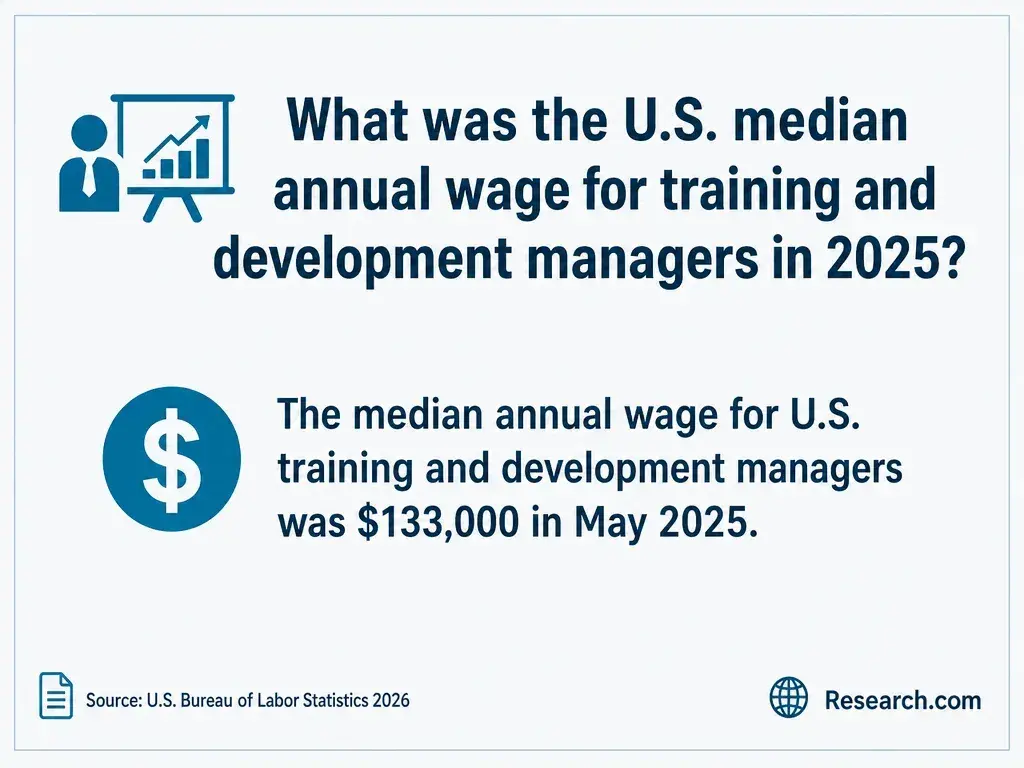
- The US median annual pay for training and development managers was $133,000 in May 2025, according to the Bureau of Labor Statistics; that occupational figure is not an Ed.D. graduate salary.
- Before enrolling, confirm the program's applied-project rules, access to usable workplace data, total cost, and whether its online schedule fits insurance peak periods.
Is an online Ed.D. in Leadership and Learning in Organizations right for insurance learning leaders?
It can be a good fit if your work extends beyond course delivery into organizational learning, leadership development, and evidence-based change. An insurance learning leader might oversee claims-handler development, underwriting training, producer onboarding, or manager coaching. The doctoral question is whether you need to diagnose why learning does - or does not - translate into performance across those systems.
For example, low adoption of a new claims process could reflect unclear procedures, conflicting incentives, technology friction, or inadequate practice. An Ed.D. may help you investigate and address that wider problem; another course alone may not. The degree is less persuasive if your immediate goal is to master an authoring tool, earn a designation, or qualify for your first supervisory role. Targeted training and a chance to lead a cross-functional project may get you there more directly.
Look for a program whose emphasis matches your responsibilities rather than assuming that every leadership doctorate has an insurance-relevant curriculum. A guide to choosing an Ed.D. concentration can help you distinguish a formal area of study from a few related electives.
What does an online Ed.D. in Leadership and Learning in Organizations cover?
A practice-oriented Ed.D. typically studies how adults learn, how organizations change, and how leaders use evidence to improve practice. Relevant work may include learning transfer, organizational culture, program evaluation, research methods, and an applied dissertation or capstone. Exact requirements vary by institution.
For an insurance leader, the useful test is whether the curriculum connects learning to operational decisions. Can you assess whether new underwriters can apply judgment consistently, rather than merely document course completion? Can you examine whether managers reinforce a new procedure? Doctoral methods can improve those questions, but they do not substitute for insurance subject-matter expertise or authority to change business processes.
Applied projects also require a feasible setting. Employee performance records, customer information, and compliance findings may be restricted. Before treating your employer as a project site, ask the program what academic approval is required and ask your organization what data access, privacy review, and permission to share findings it would allow.
What career opportunities can an Ed.D. create for insurance learning leaders?
An Ed.D. may strengthen an experienced professional's case for broader learning and development, talent development, organizational effectiveness, or internal consulting responsibilities. In an insurer, that might mean leading enterprise-wide manager development, evaluating onboarding across business units, or coordinating learning during a major operational change.
The degree adds evidence of advanced study; it does not replace a record of leadership. Hiring managers may still expect budget ownership, stakeholder influence, implementation experience, and measurable work that can be described without disclosing confidential information. A move from insurance training into a senior talent role is generally more plausible when you can show those responsibilities already expanding.
If your intended move is instead into higher education administration, investigate that sector's hiring expectations separately. Resources on employer-sponsored higher education leadership doctoral education address a different employment setting; do not assume an insurer offers the same support or career pathway.
Online delivery can let an insurance professional remain employed without relocating, but it describes where much of the teaching occurs - not necessarily when participation happens. Live classes, team meetings, and campus convenings can still conflict with quarter-end reporting, regulatory deadlines, or a major product rollout.
The comparison below highlights the practical differences to check with each institution; neither format is inherently more rigorous.
| Consideration | Online Ed.D. | Campus-based doctorate |
| Work continuity | May allow study while remaining in an insurance role | May require commuting, relocation, or a different work schedule |
| Interaction | May combine live sessions, asynchronous work, and virtual teams | May offer more routine in-person contact with peers and faculty |
| Applied project | Workplace access can be convenient, subject to approval | Local research partnerships may be easier to develop, depending on the program |
| Travel | Required convenings may still create travel costs | Regular attendance may create continuing travel or housing costs |
Compare published calendars and attendance rules, not just an advertised completion pace. Even fast-track online education doctorate programs need to leave enough room for research approvals, data collection, and demanding work periods.
Course titles differ, but insurance learning leaders should inspect syllabi for adult learning and learning transfer, organizational diagnosis and change, leadership and ethics, qualitative and quantitative methods, and program evaluation. An instructional design course may help with training development; it is not the same as preparation to lead enterprise-wide change.
Pay particular attention to measurement. A course that teaches you to interpret assessment results and implementation evidence could help you distinguish "employees completed training" from "employees can apply a procedure at work." Ask how students practice using imperfect organizational data and whether electives in learning analytics or workforce development are actually offered during your likely enrollment period.
Requirements are program-specific. Schools may request graduate transcripts, a statement of purpose, recommendations, evidence of professional experience, and an interview; some set particular degree, grade, or test requirements. Insurance experience can be relevant even without an education degree, especially when you can document responsibility for learning decisions and organizational improvement.
Describe a genuine problem you have authority to examine, rather than proposing results you cannot promise. If you previously began a doctorate, ask admissions to evaluate eligibility and any transferable credit separately. An Ed.D. completion pathway after unfinished doctoral study may be worth investigating, but prior credits do not automatically shorten a new program.
Completion time depends on the required credits, course sequence, enrollment pace, and applied-project requirements. Published tuition is only one part of the financial decision: include mandatory fees, books and technology, any convening travel, and the possibility that a project takes longer than planned.
Request a written estimate for your intended enrollment pace and ask how tuition or fees change if you need additional terms. Check employer reimbursement limits, eligible expenses, grade conditions, and any obligation to repay support after leaving the company. A budget-focused overview of organizational leadership doctoral study on a budget can help frame comparisons, but confirm each school's charges directly.
Then compare the degree's expected value with a smaller investment: an employer-sponsored change initiative, mentoring, or focused evaluation training. Do not base a return-on-investment calculation on an assumed promotion or salary increase.
No - an organizational leadership Ed.D. is an academic degree, not an insurance license or professional designation. State insurance authorities set applicable licensing rules, while certification and designation providers set their own requirements. Doctoral coursework should not be assumed to satisfy examinations or continuing-education obligations.
If your goal is to sell insurance, hold a regulated insurance role, or earn a particular industry designation, identify that credential first and check its governing authority. Choose an Ed.D. for leadership, learning, and applied-inquiry goals, not as a substitute for occupation-specific eligibility.
There is no reliable single salary for insurance learning leaders who hold an Ed.D. The closest broad benchmark depends on the job performed: the US Bureau of Labor Statistics reported a May 2025 median annual salary of $133,000 for training and development managers, with projected employment growth of 6.4% from 2025 to 2035. That median includes managers across industries and education levels; it cannot predict an insurance professional's pay after graduation.
For a useful comparison, examine current openings at insurers and your employer's pay bands. Match them to your experience, management scope, location, and required skills. If target jobs value large-scale implementation more than a doctorate, seek that experience before counting on the degree to change your compensation.
How can you choose an accredited online Ed.D. program?
Start by confirming the institution's recognized accreditation and the exact degree it awards. Accreditation establishes an institutional quality-assurance framework; it does not establish insurance licensure eligibility, a particular curriculum, or strong career outcomes.
Use the following questions to compare programs against your insurance role rather than their marketing language.
- Which courses and applied assignments address adult learning, organizational change, and evaluation?
- What are the live-attendance, group-work, campus-convening, and graduation requirements?
- Does the final project require an employer site, and what happens if I change jobs or cannot obtain data access?
- What is the estimated total cost at my planned pace, including required travel and extra enrollment terms?
- What completion and career-outcome information does the program publish, and how were those outcomes measured?
Ask for answers applicable to your proposed entry term. The strongest fit is a program whose academic requirements you can complete ethically while continuing to do meaningful leadership work - not simply the one with the most convenient description.
Other Things You Should Know About EdD Leadership
Only with the appropriate organizational permission and any required academic review. Ask what data can be accessed, deidentified, retained, and reported before designing the project.
Ask the program whether your project can move to another approved site or use a different setting. Do not assume access or approvals transfer with you.
Potentially, if the project meets program rules and organizational privacy requirements. Focus on a defined learning or performance decision rather than assuming AI use improves outcomes.
Possibly, but obtain permission before sharing it. A redacted account of the problem, your methods, and your responsibilities may be safer than publishing restricted data or internal findings.
- Evaluate Training: Measuring Effectiveness | cdc.gov https://www.cdc.gov/training-development/php/about/evaluate-training-measuring-effectiveness.html
- Accreditation in the U.S. | ed.gov http://www.ed.gov/laws-and-policy/higher-education-laws-and-policy/college-accreditation/accreditation-in-the-us
- Maximizing the Impact and ROI of Leadership Development | nih.gov https://pmc.ncbi.nlm.nih.gov/articles/PMC11505461/
- What Is an Accredited University? Understanding Accreditation | National University https://www.nu.edu/blog/what-is-an-accredited-university/
- and Ask For - Employer Tuition Reimbursement Benefits | Harvard Extension School https://extension.harvard.edu/blog/how-to-use-and-ask-for-employer-tuition-reimbursement-benefits/
- Choosing an Ed.D. Research Focus: Problem of Practice Examples | marymount.edu https://online.marymount.edu/blog/problem-of-practice-examples-edd
- PhD vs. EdD in Education: Nine expert tips to help you choose | USC Rossier https://rossier.usc.edu/news/phd-vs-edd-in-education-nine-expert-tips-to-help-you-choose/
- EdD vs. PhD in Education: Choosing the Right Program | Goodwin College of Professional Studies https://drexel.edu/soe/resources/career-path/edd-vs-phd/
- Online Doctorate in Education Leadership and Innovation | NYU https://leadershipinnovation.steinhardt.nyu.edu/
- Ed.D. in Executive Leadership - Degrees & Requirements | Columbia University https://www.tc.columbia.edu/organization-and-leadership/edd-in-executive-leadership/degrees--requirements/executive-leadership-edd/