2027 Teacher Certification Types & Requirements in Missouri

Co-Founder and Chief Data Scientist
Getting teacher certification in Missouri is the step that turns classroom interest into legal eligibility to teach in the state’s public schools. The right route depends on where you are starting: an undergraduate education major, a bachelor’s degree holder changing careers, a substitute teacher, a paraprofessional, or an experienced educator moving from another state.
This guide explains Missouri teaching certificate types, education and testing requirements, alternative routes, costs, timelines, renewal rules, reciprocity, and common problems that can slow candidates down. It is designed to help you compare options before you choose a program, pay tuition, or apply for certification.
Quick answer: How do you become a certified teacher in Missouri?
To become a certified teacher in Missouri, most candidates need a bachelor’s degree from a regionally accredited institution, completion of a Missouri-approved educator preparation program, required field and student teaching experience, passing scores on state-required assessments, fingerprinting, and a criminal background check. Career changers may qualify through alternative certification or the Temporary Authorization Certificate route while completing required coursework and exams.
Key facts about Missouri teacher certification
- Missouri uses multiple credentials, including the Initial Professional Certificate, Career Continuous Professional Certificate, Temporary Authorization Certificate, substitute permits, endorsements, and administrative certificates.
- High-need areas such as special education, STEM, and rural districts may offer stronger hiring opportunities for certified teachers.
- The average salary for Missouri teachers is around $32,288, though actual pay depends on district, grade level, subject area, experience, contract length, and advanced credentials.
- Traditional certification usually takes about four years through a bachelor’s program, while post-baccalaureate and alternative routes may take about one to three years depending on the pathway.
- Before enrolling, candidates should confirm that the program is approved for Missouri certification and that it matches the grade level and subject they plan to teach.
- What are the different types of teaching certifications in Missouri?
- What are the education requirements to become a certified teacher in Missouri?
- What tests are required for teacher certification in Missouri?
- What are the best certification programs in Missouri?
- Are there alternative routes to teacher certification in Missouri?
- How much does it cost to get a teaching certification in Missouri?
- How long does it take to get certified as a teacher in Missouri?
- What challenges can arise during the Missouri teacher certification process?
- How can I become certified as a physical education teacher in Missouri?
- How do you renew Missouri teaching certification?
- Is teacher certification in Missouri transferable to other states?
- What are the benefits of having a teacher certification in Missouri?
What are the different types of teaching certifications in Missouri?
Missouri’s certification system is built around career stage, preparation route, and teaching assignment. A first-time teacher leaving an approved education program will not apply for the same credential as a career changer, substitute teacher, special education teacher, or aspiring principal. Understanding the certificate categories first helps you avoid applying for the wrong route.
| Missouri certificate type | Best fit | What it generally allows | Important planning note |
| Initial Professional Certificate (IPC) | New teachers who completed an approved teacher preparation program | Entry into classroom teaching in an approved grade level and content area | This is the common first certificate for traditional teacher preparation graduates. |
| Career Continuous Professional Certificate (CCPC) | Experienced educators who have met teaching and professional growth expectations | Long-term teaching authorization after successful experience | This certificate is valid for 99 years and is treated differently from renewable certificates. |
| Provisional or Temporary Authorization Certificate | Bachelor’s degree holders who need to complete education requirements while teaching | Teaching while finishing required coursework, mentoring, and assessments | Some areas, including elementary education, may not be available through this option. |
| Alternative Route Certification | Career changers with a bachelor’s degree | A structured path into teaching without completing a traditional undergraduate education major | Programs vary, so confirm the route leads to the certificate and subject you want. |
| Emergency or Substitute Teaching Permits | Candidates seeking short-term or flexible classroom work | Substitute or temporary service based on permit rules | This can be useful experience but is not the same as full teacher certification. |
| Subject-Specific and Special Education Endorsements | Certified teachers who want to add a teaching area | Expanded eligibility in areas such as mathematics or special education | Endorsements can improve flexibility, especially in high-need staffing areas. |
| Advanced Professional Licenses and Administrative Certificates | Teachers pursuing school leadership or specialized professional roles | Eligibility for roles such as principal, director, or other administrative positions | These usually build on classroom experience and graduate-level preparation. |
If your long-term goal includes leadership, curriculum supervision, or school administration, you may eventually compare graduate pathways connected to master’s in education administration careers. For now, focus first on the Missouri certificate that matches the classroom role you want.
What are the education requirements to become a certified teacher in Missouri?
Missouri teacher certification requires both academic preparation and supervised classroom practice. The exact sequence can differ by program, but most first-time candidates must meet the following requirements before they can be recommended for certification.
- Complete a bachelor’s degree: Candidates need a bachelor’s degree from a regionally accredited institution, usually with a major or substantial coursework aligned with the intended teaching subject.
- Finish a Missouri-approved educator preparation program: An approved Educator Preparation Program, or EPP, provides teaching methods, education theory, assessment training, classroom management preparation, and supervised practice.
- Meet GPA expectations: Missouri candidates are expected to maintain at least a 2.75 cumulative GPA, along with a 3.0 GPA in professional education and content coursework.
- Complete field and clinical experience: Preparation includes field observations of 30 hours at the early level and 45 hours at the mid-level, followed by a full-time, 12-week student teaching placement.
- Clear background requirements: Candidates must complete fingerprinting and a criminal background check. They also need a Substitute Teaching certificate before beginning student teaching.
These requirements are meant to confirm that future teachers have subject knowledge, pedagogical training, and real classroom experience before they become the lead teacher of record. Candidates interested in school library, media, or information literacy roles may also compare teaching credentials with options such as a master’s of library science online, depending on their career goals.
The chart below shows teacher educational attainment across the U.S.:
What tests are required for teacher certification in Missouri?
Missouri uses several assessments to evaluate basic academic skills, professional readiness, subject knowledge, and classroom performance. Testing requirements can vary by route and certification area, so candidates should verify the exam list with both their preparation program and the Missouri Department of Elementary and Secondary Education.
| Assessment | When it is used | What it measures | Who should pay close attention |
| Missouri General Education Assessment (MoGEA) | Before or during admission to an approved educator preparation program | English language arts, mathematics, writing, science, and social studies | Traditional teacher preparation candidates entering Missouri-approved programs |
| Missouri Educator Profile (MEP) | Included within the MoGEA process | Work habits, professional tendencies, and educator dispositions | Candidates who need feedback on professional strengths and growth areas |
| Missouri Content Assessments through ETS Praxis | Before certification in a specific subject or grade level | Knowledge in the teaching field | All candidates seeking certification in a content area, especially after Missouri adopted ETS Praxis content exams exclusively starting July 1, 2024 |
| Missouri Pre-Service Teacher Assessment (MoPTA) | During student teaching | Instructional planning, classroom-based teaching performance, and professional practice | Candidates completing student teaching, including those whose programs require a video or non-video version |
| Temporary Authorization Certificate examinations | For candidates using the TAC route | Principles of Learning and Teaching plus content knowledge | Career changers seeking to move from temporary authorization to Initial Teacher Certification |
A smart testing plan starts early. Confirm your exam codes, registration deadlines, score-reporting process, retake rules, and whether your program requires passing scores before student teaching or before the certification recommendation.
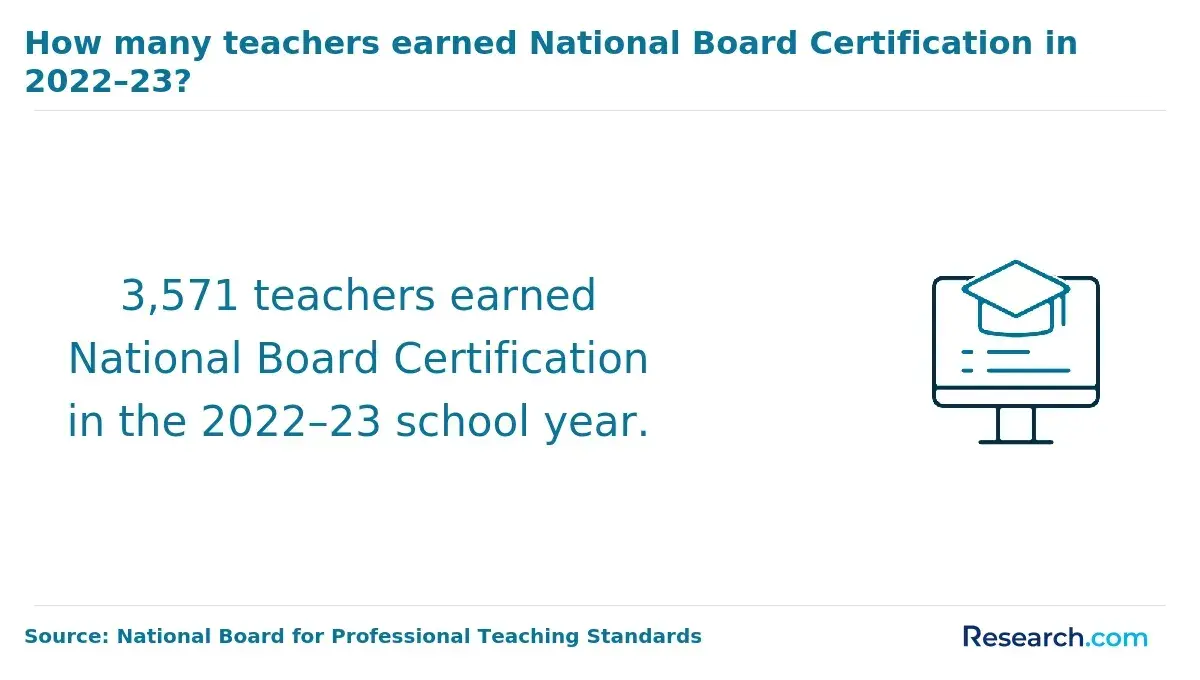
The image below provides context on teachers who pursue National Board Certification in the U.S.
What are the best certification programs in Missouri?
The best Missouri teacher certification program is not simply the most recognizable school. It is the program that is approved for your intended certificate, offers the grade level and subject you need, provides strong clinical placements, prepares you for required assessments, and fits your budget and schedule.
Several Missouri institutions are commonly associated with traditional teacher preparation and certification pathways:
- University of Missouri – Columbia (Mizzou): This flagship institution offers a four-year route to initial certification that combines education coursework with student teaching arranged through district partnerships.
- Missouri State University: The educator preparation model blends academic requirements, practical field experience, Missouri Educator Gateway Assessments, and the Missouri Pre-Service Teacher Assessment.
- University of Central Missouri: Candidates can expect mentorship, structured advising, and certification exam preparation built into the educator preparation process.
- Rockhurst University: This private Jesuit university places teacher education within a liberal arts framework while incorporating fieldwork in urban and suburban school settings.
- Southeast Missouri State University: The program emphasizes clinical practice and classroom experience aligned with Missouri professional teaching standards.
Before choosing among programs, ask whether the program is approved for the exact Missouri certification area you want, how student teaching placements are assigned, what support is available for exam preparation, and whether online or hybrid coursework affects clinical requirements. If flexibility and cost are major concerns, compare campus-based options with affordable online education degree programs that may support certification planning.
How to compare Missouri teacher certification programs
| Selection factor | Why it matters | Question to ask before enrolling |
| State approval | Only the right approved pathway can lead to the Missouri credential you need. | Is this program approved for my intended grade level and subject area in Missouri? |
| Clinical placement quality | Student teaching and fieldwork shape your classroom readiness and job references. | Where are candidates typically placed for observations and student teaching? |
| Testing support | Required assessments can delay certification if not completed on time. | What preparation is provided for MoGEA, Praxis content exams, and MoPTA? |
| Cost and financial aid | Tuition is only one part of the total cost of certification. | What are the full costs for tuition, fees, exams, fingerprinting, materials, and travel? |
| Format | Online coursework may be convenient, but fieldwork still requires in-person school experience. | Which parts are online, and which must be completed in Missouri schools? |
| Career support | District relationships can help with hiring after certification. | Does the program connect graduates with Missouri school districts? |
Are there alternative routes to teacher certification in Missouri?
Yes. Missouri offers alternative routes for people who did not complete a traditional undergraduate teacher education program. These pathways are especially relevant for career changers, professionals with content-area expertise, paraprofessionals, and substitutes who want to become full-time certified teachers.
| Alternative route | Who it is designed for | Typical structure | Best use case |
| Post-baccalaureate alternative certification | Bachelor’s degree holders from any field | About 30 semester hours of education coursework, often with flexible or online options and sometimes a master’s degree option | You want a structured college-based route and may want graduate credit or a graduate degree. |
| Temporary Authorization Route | Candidates with a bachelor’s degree in a content area such as math or science | Teaching under a renewable one-year certificate while completing at least 24 semester hours of education coursework, mentoring, and exit exams | You have strong subject preparation and want to teach while completing requirements. |
| Residency-based and partnership programs | Candidates who benefit from intensive coaching in a school setting | Classroom work paired with coursework, supervision, and mentorship from experienced educators | You want more guided practice before taking full responsibility for a classroom. |
| American Board and other nontraditional programs | Self-paced candidates seeking a faster or more flexible route | Online preparation, exam completion, provisional certification, and classroom experience requirements | You are highly self-directed and need a route that may move faster than a campus program. |
Alternative certification can be a practical route, but it is not automatically easier. Candidates often teach while taking coursework, preparing for exams, and learning classroom management in real time. Before starting, confirm whether the route is available for your intended subject, whether your bachelor’s coursework qualifies, and whether you can handle the workload while employed.
-
: "
One Missouri teacher described the alternative pathway as demanding but workable because it allowed him to earn income while completing certification requirements. The mentorship he received during a residency helped him build confidence faster than coursework alone. His main advice was simple: choose a route with strong advising, because small misunderstandings about exams or coursework can delay certification.
"
How much does it cost to get a teaching certification in Missouri?
The cost of Missouri teacher certification depends on whether you complete a traditional undergraduate program, a graduate program, or an alternative route. Tuition is the largest expense, but candidates should also budget for application fees, exams, background checks, books, materials, and possible commuting costs for fieldwork and student teaching.
| Cost category | Amount stated | What to consider |
| Traditional undergraduate teacher preparation at Missouri public universities | $8,000 to $11,000 per year for in-state students | This does not include books, fees, or living costs. |
| Graduate programs such as a Master of Arts in Teaching | $10,000 to $20,000 for the full program | Costs vary by institution and credit hours and may be added to prior undergraduate debt. |
| Alternative certification programs | $4,000 to $8,000 | These routes may be shorter but still require coursework, assessments, and supervised teaching practice. |
| Missouri Educator Profile exam | $22 | This is one of the required assessment-related costs. |
| Missouri Content Assessment exam | $73 to $189 depending on the subject | Candidates may also need specialty exams such as Praxis II. |
| Certification application fee | $50 for new candidates and $85 for those with four or more years | Confirm the correct fee category before applying. |
| Fingerprinting and background check | About $40 to $50 | This is required for certification-related clearance. |
| Books, study guides, and materials | Several hundred dollars over time | Used materials, library access, and program-provided resources can reduce out-of-pocket costs. |
Missouri candidates may be able to reduce costs through scholarships, grants, loan forgiveness programs, TEACH Grants, Public Service Loan Forgiveness, or incentives tied to high-need teaching areas. If you are considering graduate-level preparation, review affordable options such as this list of most affordable online master’s degrees in teaching before committing to a program.
Ways to reduce certification costs
- Ask whether previous college credits can transfer into a post-baccalaureate or graduate certification program.
- Compare total program cost rather than tuition alone, including assessment, application, and placement-related expenses.
- Look for districts that support alternative-route candidates with mentoring, tuition assistance, or hiring pipelines.
- Complete exams on schedule to avoid retake costs and delayed employment.
- Choose the shortest approved route that still prepares you well for the classroom.
How long does it take to get certified as a teacher in Missouri?
Your Missouri certification timeline depends on your education history, certificate area, route, course load, exam timing, and whether any requirements must be repeated or verified. The fastest route is not always the best route if it leaves you underprepared for classroom realities.
| Pathway | Typical timeline stated | What happens during the pathway |
| Traditional bachelor’s degree pathway | Typically four years of full-time study | Candidates complete an education degree, fieldwork, content preparation, and at least one semester of student teaching, usually around eight semester hours. |
| Post-baccalaureate certification | About one to two years | Bachelor’s degree holders complete education coursework, supervised teaching or internships, and required assessments. |
| Temporary Authorization Route | Two to three years | Candidates teach while completing up to 24 semester hours of education coursework, usually including nine semester hours per year, plus exit exams. |
| Accelerated or alternative programs such as ABCTE | Sometimes under a year | Progress depends on self-paced preparation, exam completion, and certification requirements in high-need subjects. |
| Exam preparation and background checks | Exam preparation usually takes a few months; background checks are typically completed within 7 to 10 business days | Planning early prevents paperwork and testing from delaying program completion or hiring. |
Several choices can shorten or lengthen the process. Transferring prior coursework, studying full time, and scheduling exams early can move you faster. Part-time enrollment, failed exams, delayed transcripts, incomplete background checks, or changing certification areas can add months or longer.
The chart below shows projected changes in teaching opportunities over the next 10 years:
What challenges can arise during the Missouri teacher certification process?
Certification delays often come from paperwork, timing, and route confusion rather than a lack of ability. Candidates may misunderstand eligibility rules, submit incomplete transcripts, choose a program that does not match the intended certificate, miss testing deadlines, or underestimate how long verification can take.
| Common mistake | Why it can cause problems | Better approach |
| Choosing a program before checking Missouri approval | A program may offer education coursework without leading to the certificate you need. | Verify approval for your exact grade level and subject before enrolling. |
| Focusing only on tuition | Exams, applications, fingerprinting, books, and travel can change the total cost. | Build a full certification budget before comparing programs. |
| Assuming online means fully remote | Fieldwork and student teaching usually require in-person school placements. | Ask where and when clinical requirements must be completed. |
| Waiting too long to schedule exams | Late scores can delay student teaching, certification recommendation, or hiring. | Create a testing calendar during your first advising session. |
| Ignoring transcript and GPA rules | Missing coursework or GPA gaps can block admission or certification progress. | Request a transcript review before committing to a route. |
| Relying only on rankings or reputation | A well-known school may not be the best fit for your subject, schedule, or budget. | Compare approval, placement support, cost, exam preparation, and completion timeline. |
When problems arise, contact the Missouri Department of Elementary and Secondary Education, your program certification officer, and your district mentor if you are already teaching. Candidates trying to control costs can also compare guidance on the cheapest way to get a teaching credential in Missouri while confirming that low-cost options still meet Missouri requirements.
How can I become certified as a physical education teacher in Missouri?
To become a physical education teacher in Missouri, you need a route that prepares you for PE-specific certification requirements. Coursework often includes exercise science, kinesiology, health, motor development, adapted physical education, coaching concepts, and instructional methods for school-age students.
Because PE teachers work in both classroom and activity-based environments, practical experience matters. Candidates should look for programs with school-based placements, opportunities to observe experienced PE teachers, and preparation for managing safety, equipment, inclusive participation, assessment, and student motivation. For a focused step-by-step path, see this guide on how to become a PE teacher in Missouri.
How do you renew Missouri teaching certification?
Missouri certificate renewal depends on the type of certificate you hold. Teachers should track professional development or coursework requirements well before the expiration date because a lapsed certificate can require additional steps to reactivate.
| Certificate or renewal item | Requirement stated | What teachers should do |
| Most Missouri teaching certificates | Renewed every four years | Track renewal deadlines through the Educator Certification System. |
| Career Continuous Certificate | Valid for 99 years and does not require renewal | Maintain professional records even though standard renewal is not required. |
| Professional development | 15 contact hours each year, totaling 60 hours over four years | Save proof of completed PD in case documentation is requested. |
| Temporary Certificates | Valid for one year and require nine semester hours of college coursework annually | Plan coursework early so the certificate does not expire before requirements are met. |
| Provisional Certificates | Generally non-renewable but sometimes extendable by the employing district | Work with the district and certification office before the certificate nears expiration. |
| Renewal submission | Completed through the Missouri Department of Elementary and Secondary Education online portal | Upload proof of PD or coursework, pay the renewal fee, and complete any required background checks. |
If you are not yet certified and want an accessible route into teaching, comparing an easy education degree program may help you understand which education pathways are more manageable for your schedule and background.
Is teacher certification in Missouri transferable to other states?
Missouri certification can help when moving to another state, but it does not guarantee automatic full licensure everywhere. Missouri participates in the NASDTEC Interstate Agreement, which can simplify transfer to many states, including Kansas, Texas, Florida, and California. However, each destination state can still require additional exams, coursework, background checks, applications, or a provisional licensing period.
The safest approach is to treat reciprocity as a starting point, not a promise. Before moving, review the destination state’s educator licensing rules, request official transcripts, keep proof of teaching experience, confirm your Missouri certificate status, and ask whether you will receive a temporary, provisional, or full license while completing any extra requirements.
-
: "
A Missouri teacher who transferred her credential said the process was easier than starting over, but not as simple as submitting one form. Her new state recognized her Missouri license, then required an additional exam and a provisional period before full licensure. Her experience highlights why teachers should research reciprocity rules before accepting an out-of-state position.
"
What are the benefits of having a teacher certification in Missouri?
Teacher certification matters because it gives schools evidence that you meet state standards for subject knowledge, pedagogy, supervised practice, and professional conduct. It also expands the roles you can pursue in Missouri public schools and many other educational settings.
- Access to more teaching roles: Certification qualifies candidates for Missouri public school teaching positions, many charter school roles, specialized programs, and high-need subject areas.
- Stronger employment credibility: A state certificate signals that you have met preparation, testing, and background requirements expected of professional educators.
- Potential for salary progression: Certified teachers may qualify for district salary schedules that increase with experience, advanced degrees, additional endorsements, or leadership responsibilities.
- Eligibility for support programs: Missouri educators may benefit from mentoring, professional development, loan forgiveness options, and incentives tied to high-need schools or subject areas.
- Pathways to advancement: Certification can be the foundation for endorsements, graduate study, instructional coaching, curriculum leadership, or administrative credentials.
- Better classroom preparation: The certification process includes training in lesson planning, assessment, classroom management, student development, and supervised teaching practice.
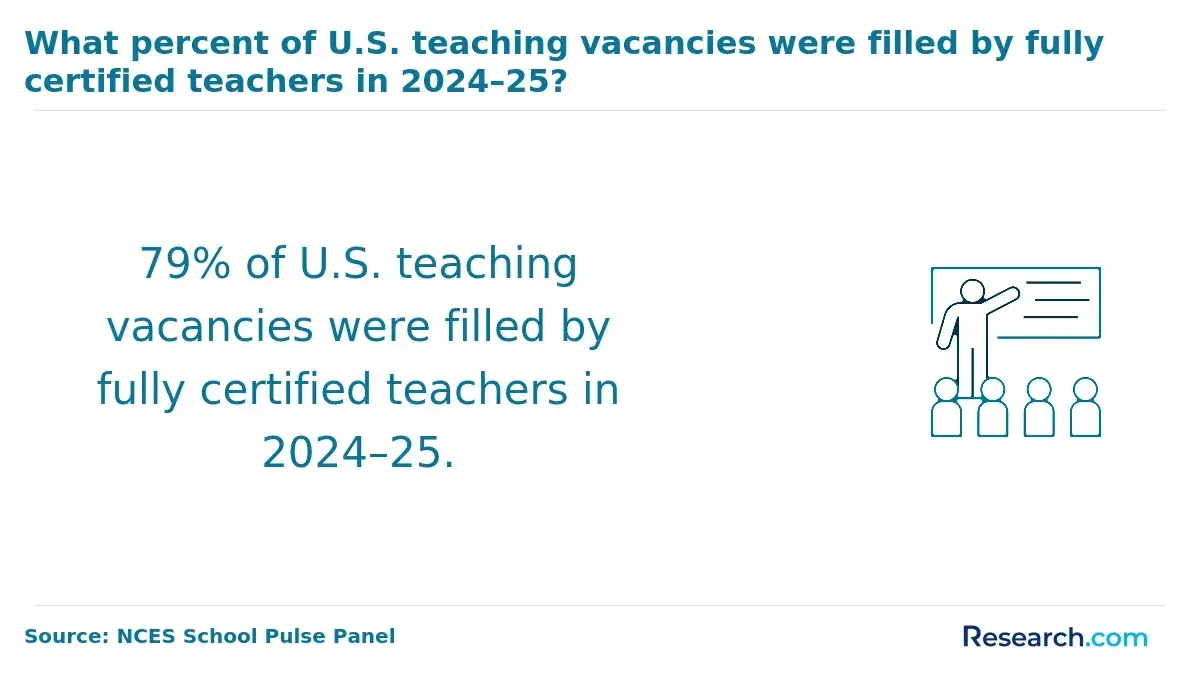
The image below connects certified teacher preparation to broader staffing needs in schools, including Missouri and other states.
What teachers in Missouri say about their certification
- Certification gave me a clearer career path and helped me move from short-term classroom work into a stable teaching role. The process took planning, but having the credential made district hiring conversations much easier. – Enzo
- After earning my Missouri certification, I started seeing education as a long-term profession rather than only a classroom job. The experience pushed me to consider leadership, mentoring, and eventually administration. – Mel
- The professional development expectations have helped me keep improving. Workshops and ongoing training made it easier to update my teaching strategies and use classroom technology more confidently. – Sharon
Related Articles for Nearby States
- 2027 Teacher Certification Types & Requirements in Kansas
- 2027 Teacher Certification Types & Requirements in Iowa
- 2027 Teacher Certification Types & Requirements in Nebraska
- 2027 Teacher Certification Types & Requirements in Arkansas
- 2027 Teacher Certification Types & Requirements in Oklahoma
- 2027 Teacher Certification Types & Requirements in Illinois
- 2027 Teacher Certification Types & Requirements in Kentucky
- 2027 Teacher Certification Types & Requirements in Tennessee
- 2027 Teacher Certification Types & Requirements in Indiana
- 2027 Teacher Certification Types & Requirements in South Dakota
References:
- All Education Schools. (n.d.). Missouri state teacher certification guide. https://www.alleducationschools.com/teacher-certification/missouri
- American Board. (n.d.). Become a teacher in Missouri | Missouri teacher certification. https://www.americanboard.org/missouri
- Columbia College. (n.d.). Missouri alternative teacher certification program. https://www.ccis.edu/degrees/education-mat-alternative-certificates
- Drury University. (n.d.). Post-baccalaureate teacher certification | Teacher certification program. https://www.drury.edu/education/post-baccalaureate-teacher-certification
- Indeed. (2025). Teacher salary in Missouri. https://www.indeed.com/career/teacher/salaries/MO
- Missouri Department of Elementary and Secondary Education. (n.d.). Routes to certification. https://dese.mo.gov/educator-quality/certification/routes-certification
- Missouri State University. (n.d.). Professional education certification – Missouri State. https://www.missouristate.edu/Certification/default.htm
- Missouri State Teachers Association. (n.d.). Certification facts. https://msta.org/success-guide/certification-facts
- University of Central Missouri. (n.d.). Alternative pathways to certification. https://www.ucmo.edu/college-of-education/clinical-services-and-certification/alternative-certification
- University of Missouri-St. Louis. (n.d.). Alternative certification | UMSL. https://www.umsl.edu/education/degrees-programs/alternative-certification/index.html
- Washington University in St. Louis. (n.d.). Teacher certification | Department of Education. https://education.wustl.edu/teacher-certification
- Zippia. (2025). Teacher Demographics and Statistics [2025]: Number of teachers in the US. https://www.zippia.com/teacher-jobs/demographics
Key Insights
- Missouri teacher certification is route-specific. Traditional undergraduates, career changers, substitute teachers, and experienced educators should not assume they need the same credential.
- The usual foundation is a bachelor’s degree, a Missouri-approved educator preparation program, required fieldwork, student teaching, testing, fingerprinting, and a background check.
- Alternative certification can shorten the path for bachelor’s degree holders, but it often requires balancing employment, coursework, mentoring, and exams at the same time.
- Costs vary widely by route. Traditional undergraduate preparation, graduate programs, and alternative certification have different tuition ranges, and candidates must also budget for exams, applications, background checks, and materials.
- Before enrolling, verify state approval, subject eligibility, clinical placement requirements, exam expectations, total cost, and transfer credit policies.
- Certification can improve access to Missouri teaching jobs, endorsements, advancement opportunities, and renewal-based professional growth, but salary and hiring outcomes depend on district needs and individual qualifications.
Other Things You Should Know About Teacher Certification Types and Requirements in Missouri
The most common option is the Career Continuous Professional Certificate pathway after an initial alternative program, but candidates usually begin with an Initial Professional Certificate. Missouri’s Department of Elementary and Secondary Education requires a bachelor’s degree, content-area coursework, passing scores on required exams, and completion of an approved route to certification.
Yes, Missouri offers alternative certification routes for those without education degrees. These include programs like the American Board for Certification of Teacher Excellence and other state-approved teacher preparation programs that require passing relevant exams and fulfilling additional educational requirements.
The Missouri Department of Elementary and Secondary Education oversees teacher certification, ensuring educators meet state standards. It administers the certification process, approves educator preparation programs, and maintains records. It also provides guidelines and policy updates relevant to certification requirements in 2027.
In 2027, those pursuing alternative teacher certification in Missouri can complete an Alternative Certification Program approved by the Missouri Department of Elementary and Secondary Education, often involving coursework and teaching experience. This route is suitable for individuals without a traditional education degree but with a bachelor's degree in another field.