2027 Become a Medical Assistant in 6 Weeks – Best Accelerated Programs

Co-Founder and Chief Data Scientist
Traditional medical assistant programs can be lengthy, with some degrees spanning years. Fortunately, accelerated programs now offer a viable alternative, enabling quicker entry into the workforce and a chance to earn competitive salaries earlier in your career. For instance, according to 2023 data, the highest-paid medical assistants in the country, working in Washington, earn as much as $53,780 annually.
Drawing upon my expertise and experience as a career counselor, I put together this guide to accelerated medical assistant programs. By furnishing valuable insights and resources, this guide aims to assist you in pursuing your career aspirations in a cost-effective and efficient manner.
What are the benefits of an accelerated medical assistant degree?
- Accelerated medical assistant programs open doors to entry-level positions in various healthcare settings such as hospitals, clinics, and physicians' offices.
- The median salary for medical assistants with an accelerated degree in 2023 is $42,000 per year, depending on factors such as location, experience, and specific job responsibilities.
- These programs provide a fast-track route to becoming a medical assistant, allowing you to enter the workforce and start your career sooner than traditional programs.
What can I expect from an accelerated medical assistant program?
- Expect a condensed curriculum covering essential medical assisting skills such as patient care, medical office procedures, pharmacology, and anatomy.
- You will engage in practical, hands-on training through labs, simulations, and clinical experiences to develop clinical skills and proficiency in medical procedures.
- Prepare for an accelerated pace of learning, with many accelerated medical assistant programs lasting from 6 weeks to 12 months.
- These programs may cost students up to $10,000, depending on the institution and the duration of the program.
- During the program, you'll gain preparation for national certification exams such as the Certified Medical Assistant (CMA) exam, which can enhance your employment opportunities and earning potential.
Where can I work with an accelerated medical assistant degree?
With an accelerated medical assistant program, you can work in various healthcare settings, providing essential support to medical professionals and delivering quality patient care. Hospitals are among the primary employment options for medical assistants. In hospitals, medical assistants may work in various departments such as emergency rooms, outpatient clinics, or surgical units.
Additionally, medical assistants can find opportunities in private medical practices, including family medicine, internal medicine, and specialty clinics. In these settings, you may perform clinical duties such as taking patient vital signs, administering medications, and assisting with minor surgical procedures, as well as administrative tasks like scheduling appointments and handling billing.
How much can I make with an accelerated medical assistant degree?
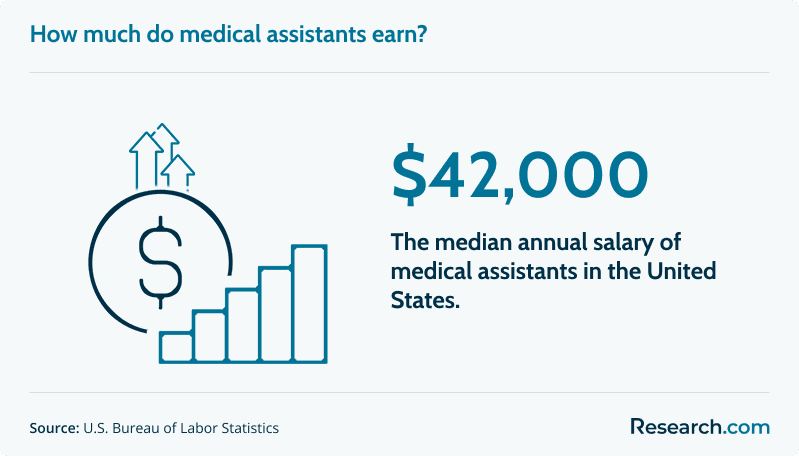
According to the U.S. Bureau of Labor Statistics, on average, medical assistants in the United States earn an annual salary of $42,000. However, those with specialized skills or certifications may earn higher salaries.
For example, medical assistants who obtain certification through organizations such as the American Association of Medical Assistants (AAMA) or the National Healthcareer Association (NHA) command higher pay.
Additionally, medical assistants working in metropolitan areas or healthcare facilities with high demand may earn higher salaries compared to those in rural or less populated areas.
- Best Accelerated Medical Assistant Programs for 2027 Top Programs
- How long does it take to complete an accelerated medical assistant program? Program Duration
- How does an accelerated medical assistant program compare to an on-campus program? Online vs Campus Program
- What is the average cost of an accelerated medical assistant program? Program Cost
- What are the financial aid options for students enrolling in an accelerated medical assistant program? Financial Aid
- What are the prerequisites for enrolling in an accelerated medical assistant program? Admision Requirements
- What courses are typically in an accelerated medical assistant program? Curriculum
- What types of specializations are available in an accelerated medical assistant program? Specializations
- How to choose the best accelerated medical assistant program? How to choose the best accelerated medical assistant program?
- What career paths are available for graduates of accelerated medical assistant programs? What career paths are available for graduates of accelerated medical assistant programs?
- What factors influence the medical assistant salary? What factors influence the medical assistant salary?
- What accreditation and quality assurance measures should I look for in accelerated medical assistant programs? What accreditation and quality assurance measures should I look for in accelerated medical assistant programs?
- What is the job market for graduates of accelerated medical assistant programs? What is the job market for graduates of accelerated medical assistant programs?
- What is the return on investment for an accelerated medical assistant program? What is the return on investment for an accelerated medical assistant program?
- What challenges should students anticipate in accelerated medical assistant programs? What challenges should students anticipate in accelerated medical assistant programs?
Best Accelerated Medical Assistant Programs for 2027
Choosing an accelerated medical assistant program is usually a speed-versus-quality decision. You may want to enter healthcare quickly, but you still need training that employers respect, prepares you for certification, and gives you enough hands-on practice to work safely with patients. This guide is designed for students comparing short medical assistant certificates, online or hybrid programs, and associate degree options.
Below, you will find a practical ranking of accelerated medical assistant programs, a clear explanation of how long these programs take, what they cost, how online and campus formats differ, and what to check before enrolling. The goal is not only to list schools but to help you decide whether a fast medical assistant pathway is the right move for your schedule, budget, and career plans.
Quick answer: What is the best accelerated medical assistant program?
The best accelerated medical assistant program depends on what you need most: the shortest timeline, the lowest listed tuition, online flexibility, campus-based clinical practice, or a credential that supports certification. Some programs can be completed in as little as 6 weeks, while others take 9 months, 1 year, or 12 to 18 months. Before choosing, verify accreditation, clinical requirements, certification exam preparation, total program cost, and whether the format fits your state, employer, and career goals.
How do we rank schools?
Research.com evaluates education options with a focus on transparency, comparability, and decision usefulness. For institutional data, our research process draws from established sources such as the IPEDS database, Peterson's database, including distance learning data, the College Scorecard database, and the National Center for Education Statistics.
Rankings should be used as a starting point, not as the only basis for enrollment. Review each program’s accreditation, clinical placement support, certification eligibility, refund policies, and student outcomes before committing. You can learn more about our evaluation process in our methodology.
Accelerated medical assistant programs compared
| Program | Length | Listed cost | Best fit |
| Phlebotomy Career Training Online Certified Medical Assistant Program | 6 weeks to 6 months | $650 | Students seeking a self-paced online option with a phlebotomy track |
| Advanced E-Clinical Online Medical Assistant Course | 6 to 8 weeks | $600 | Learners who want mobile-friendly, self-paced CCMA preparation |
| CareerStep Online Education & Training Solutions Accelerated Medical Assisting Course | 4 months | N/A | Students looking for a structured online certificate pathway |
| University of Utah Medical Assistant Program | 1 year | $3200 | Students who want coursework, labs, and clinical training through a university continuing education program |
| U.S. Career Institute Medical Assistant Course | 4 to 7 months | $1,239 to $1,539 | Students seeking an online career-training option for entry-level medical office roles |
| Care One Health Training Institute Medical Assistant Online Hybrid Program | 9 months | $4500 | Learners who want hybrid training with phlebotomy and EKG technician exposure |
| Keiser University Associate of Science Degree in Medical Assisting | 12 to 18 months | N/A | Students who prefer an associate degree with broader academic preparation |
| Medical Training Institute of New York Administrative Medical Assistant Program | 36 to 45 weeks | $8250 | Students interested in administrative and clinical medical office preparation |
| National Louis University Medical Assistant Training | 9 to 12 months | $7,200 | Students who want a certificate pathway connected to college credit opportunities |
| University of Houston Certified Clinical Medical Assistant Program | 9 months | N/A | Students seeking CCMA preparation through a university-based professional development program |
1. Phlebotomy Career Training Online Certified Medical Assistant Program
Phlebotomy Career Training provides a self-paced online Certified Medical Assistant program that may be completed in as little as 6 weeks, with a longer completion window for students who need more time. The program awards a Certificate in Certified Clinical Medical Assistant and is presented as preparation for certification exams and licensure opportunities across the U.S. and Canada. Coursework covers patient-facing skills such as vital signs and support during minor surgical procedures, along with administrative duties, workplace management, and professional conduct.
- Program Length: 6 weeks to 6 months
- Tracks/Concentrations: Phlebotomy
- Cost: $650
- Required Credits to Graduate: 20 to 40 credits
- Accreditation: Commission on Accreditation of Allied Health Education Programs (CAAHEP) and the National Accreditation Agency for Clinical Laboratory Sciences (NAACLS)
2. Advanced E-Clinical Online Medical Assistant Course
Advanced E-Clinical offers an online medical assistant course focused on preparation for the Certified Clinical Medical Assistant credential. The format is self-paced and available through mobile- and tablet-friendly access, which can help working adults study around job or family responsibilities. Topics include clinical procedures, patient privacy, infection control, pharmacology, healthcare systems, and related medical assisting competencies. The course also includes instructor support, simulation-based learning, and job search assistance.
- Program Length: 6 to 8 weeks
- Tracks/Concentrations: N/A
- Cost: $600
- Required Credits to Graduate: N/A
- Accreditation: National Healthcare Association (NHA)
3. CareerStep Online Education & Training Solutions Accelerated Medical Assisting Course
CareerStep offers online medical assistant training designed for students who want a flexible route to a certificate in a relatively short period. The course can be completed in 4 months and is built for remote study from home or another convenient location.
The curriculum includes patient advocacy, phlebotomy, clinical care, and other core medical assisting skills. CareerStep uses online learning tools such as exercises, images, games, and interactive activities to help students review and apply material. The provider also offers related healthcare training, including medical coding and EMS education.
- Program Length: 4 months
- Tracks/Concentrations: Certified Clinical Medical Assistant (CCMA)
- Cost per Credit: N/A
- Required Credits to Graduate: N/A
- Accreditation: National Healthcare Association (NHA)
4. University of Utah Medical Assistant Program
The University of Utah offers a medical assistant program that combines medical coursework, in-person labs, and clinical training. Students may take up to one year to finish the program. Before clinical training, students must complete a criminal background check, drug screening, required immunization documentation, and Basic Life Support (BLS) certification. The BLS training is provided at no cost.
- Program Length: 1 year
- Tracks/Concentrations: Certified Medical Assistant (CCMA)
- Cost: $3200
- Required Credits to Graduate: 265 credits
- Accreditation: Northwest Commission on Colleges and Universities (NWCCU)
5. U.S. Career Institute Medical Assistant Course
The U.S. Career Institute Medical Assistant course is designed to help students build the knowledge and practical skills needed for entry-level work in medical offices. The program includes foundational healthcare topics such as anatomy and physiology, along with practice management concepts used in outpatient and office-based healthcare settings.
- Program Length: 4 to 7 months
- Tracks/Concentrations: N/A
- Cost: $1,239 to $1,539
- Required Credits to Graduate: N/A
- Accreditation: Distance Education Accrediting Commission (DEAC)
6. Care One Health Training Institute Medical Assistant Online Hybrid Program
CareOne Health Institute offers a hybrid medical assistant program for students preparing to perform clinical procedures in medical office environments. Training covers patient histories, vital signs, exam preparation, physician assistance, blood draws, basic laboratory testing, medication and diet instruction, medication preparation and administration, X-rays, electrocardiograms, and maintenance of clinical equipment in ambulatory care settings.
- Program Length: 9 months
- Tracks/Concentrations: Phlebotomy and EKG technician
- Cost: $4500
- Required Credits to Graduate: 920 credit hours
- Accreditation: Accrediting Commission of Career Schools and Colleges (ACCSC).
7. Keiser University Associate of Science Degree in Medical Assisting
Keiser University offers an Associate of Science degree in Medical Assisting at multiple Florida campuses. This pathway is longer than many certificate programs, but it can appeal to students who want degree-level preparation rather than a short training certificate. The curriculum is designed to prepare graduates for credentialing examinations and entry into the medical assisting field.
- Program Length: 12 to 18 months
- Tracks/Concentrations: N/A
- Cost per Credit: N/A
- Required Credits to Graduate: 60 credit hours
- Accreditation: Southern Association of Colleges and Schools Commission on Colleges (SACSCOC)
8. Medical Training Institute of New York Administrative Medical Assistant Program
The Medical Training Institute of New York offers an Administrative Medical Assistant program for students preparing for healthcare office roles in clinics, physician practices, and similar settings. The curriculum includes medical practice, law, ethics, patient preparation, basic laboratory procedures, records management, insurance processing, medical office administration, and health records coding. The program includes 450 clock hours across didactic instruction, lab training, and clinical rotation hours.
- Program Length: 36 to 45 weeks
- Tracks/Concentrations: Clinical Administrative and Clinical
- Cost: $8250
- Required Credits to Graduate: 720 credit hours
- Accreditation: Accrediting Commission of Career Schools and Colleges (ACCSC).
9. National Louis University Medical Assistant Training
National Louis University offers a medical assistant training pathway that is primarily online and built around preparation for healthcare facility roles. Graduates receive a nationally-recognized certification and college credit that may apply toward a bachelor's degree. The program emphasizes clinical experience, recognized credentials, online flexibility, community support, and potential consideration for medical assistant roles with healthcare partners.
- Program Length: 9 to 12 months
- Cost: $7,200
- Required Credits to Graduate: 180 quarter hours
- Accreditation: Higher Learning Commission (HLC)
10. University of Houston Certified Clinical Medical Assistant (CCMA) Program
The University of Houston Certified Clinical Medical Assistant program prepares students for work in ambulatory healthcare settings. The curriculum covers ethical conduct, communication, patient privacy, medical terminology, insurance, body systems, medical records, venipuncture, asepsis, diagnostic procedures, pharmacology, nutrition, medical office management, computer use, telecommunications, billing, and coding. Students comparing administrative healthcare options may also want to review medical billing and coding salary information before choosing a track.
- Program Length: 9 months
- Tracks/Concentrations: Clinical Medical Assistant (CCMA)
- Cost per Credit: N/A
- Required Credits to Graduate: N/A
- Accreditation: UH Downtown is accredited by the Southern Association of Colleges and Schools Commission on Colleges (SACSCOC)
What students should take away from these accelerated medical assistant options
Fast medical assistant programs vary widely. Some are short online courses, some are hybrid programs with clinical components, and some are degree pathways that take longer but may offer broader academic preparation. A 6-week program and a 12 to 18 months associate degree are not interchangeable, even if both use the term “medical assistant.”
The most important question is whether the program prepares you for the job you actually want. If you want direct patient care, look closely at clinical practice, lab access, and externship support. If you prefer front-office work, administrative medical assisting, billing, coding, records management, and practice management may matter more.
Key findings
- 62% of employers prioritize certification as the primary screening criterion for medical assistant applications.
- Accelerated medical assistant programs can shorten the time between enrollment and workforce entry compared with longer traditional programs.
- The median salary for medical assistants with an accelerated degree in the U.S. ranges from $42,000 to $53,000, depending on location, experience, employer type, and job duties.
- Employment of medical assistants is projected to grow 14% from 2022 to 2032, with roles available in physician offices, hospitals, outpatient care centers, and offices of other health practitioners.
- Tuition for accelerated medical assistant programs ranges from $5,000 to $15,000, excluding additional costs such as textbooks and certification exam fees.
How long does it take to complete an accelerated medical assistant program?
Most accelerated medical assistant programs take about 6 to 12 months to complete, although some intensive options advertise timelines as short as 6 weeks or up to one month. Program length depends on the format, clinical requirements, pace, and whether the credential is a certificate, diploma, or associate degree.
Accelerated programs compress the academic and clinical preparation needed for entry-level medical assisting roles. Traditional programs may take 1 to 2 years, especially when they include general education coursework or lead to an associate degree. Students exploring other short healthcare pathways may also compare medical assisting with fast track medical LPN programs, although nursing and medical assisting have different scopes of practice and credentialing expectations.
A shorter timeline does not automatically mean a weaker program, but it does require more discipline. Fast programs can move quickly through medical terminology, anatomy, patient care, documentation, and clinical skills. Students who are considering broader nursing advancement routes, such as RN to MSN programs, should understand that medical assisting is typically an entry-level allied health pathway rather than a registered nursing pathway.
| Timeline | Typical format | Best for | Important caution |
| 6 weeks to 8 weeks | Highly compressed online or self-paced certificate training | Students with strong study habits who need a quick route | Confirm clinical practice, certification eligibility, and employer acceptance |
| 4 to 7 months | Short online certificate or career-training program | Working adults who need flexibility | Ask whether hands-on training is included or arranged separately |
| 9 months to 1 year | Hybrid, university-based, or clinically structured certificate program | Students who want more practice time before entering the field | Budget for clinical requirements, supplies, and testing fees |
| 12 to 18 months | Associate degree pathway | Students who want a degree credential and broader coursework | Longer timelines may delay workforce entry but can support future academic plans |
How does an accelerated medical assistant program compare to an on-campus program?
Accelerated online courses and campus-based medical assistant programs can both prepare students for entry-level healthcare work, but they serve different types of learners. The right choice depends on your schedule, learning style, comfort with online study, and need for in-person support.
| Factor | Accelerated online or hybrid program | Traditional on-campus program |
| Completion time | Often 6 weeks to 12 months | Often 1 to 2 years |
| Schedule | May include self-paced, evening, weekend, or online access | Usually follows fixed class and lab schedules |
| Curriculum pace | Condensed and intensive | More spread out, sometimes with electives or general education courses |
| Hands-on training | May use simulations, labs, externships, or local clinical placements | Often includes regular in-person labs and direct instructor supervision |
| Best for | Motivated students who need speed and flexibility | Students who prefer face-to-face instruction and campus resources |
Duration
Accelerated programs are built to shorten the path to employment. Many fall between 6 weeks and 12 months, while more traditional campus-based programs may take 1 to 2 years. Speed can be useful, but only if the shorter format still provides enough training for the type of work you plan to do.
Curriculum intensity
Fast programs concentrate on the essential medical assisting skills needed for entry-level practice. Campus programs may have more time for repetition, instructor feedback, and broader coursework. If you learn best through repeated in-person practice, a longer program may be worth considering.
Flexibility
Online and hybrid programs are often easier for working adults, parents, or students who live far from campus. However, flexibility should not be confused with being easy. Accelerated coursework can require consistent weekly study, even when lectures are available on demand.
Hands-on training
Medical assisting is not a purely online profession. Even if lectures are online, students still need opportunities to practice clinical procedures safely. Ask each school how labs, simulations, externships, or clinical placements are handled before enrolling.
Learning environment
Accelerated programs tend to suit students who are independent and organized. Campus programs may be better for learners who benefit from live demonstrations, immediate instructor correction, peer interaction, and access to campus labs.
What is the average cost of an accelerated medical assistant program?
Tuition for an accelerated medical assistant program can range from $5,000 to $15,000. That range does not automatically include textbooks, uniforms, medical supplies, certification exam fees, clinical placement charges, background checks, immunizations, or technology costs.
Shorter programs are often less expensive than longer degree pathways, but total value depends on what is included. A low-cost program that does not support clinical practice or certification preparation may end up being less useful than a higher-cost program with stronger student support. Programs lasting 6 months to 1 year may cost more when they include additional learning resources or career preparation features, such as:
- Lab supplies and practice equipment
- Online learning resources
- Career services assistance
| Cost item | Why it matters | Question to ask |
| Tuition | This is the published program price, but it may not reflect the full cost of attendance. | Is tuition all-inclusive, or are fees billed separately? |
| Books and supplies | Medical assisting programs may require workbooks, lab kits, uniforms, or clinical tools. | Which supplies are included, and which must I buy? |
| Certification exam fees | Certification can affect employability, and exam costs may not be included. | Does the program price include exam registration? |
| Clinical requirements | Background checks, immunizations, drug screenings, and BLS training may be required. | What must I complete before externship or clinical placement? |
| Transportation | Hybrid labs and externships may require travel even when coursework is online. | Where are clinical sites located, and can I choose one near me? |
What are the financial aid options for students enrolling in an accelerated medical assistant program?
Financial aid depends on the school, program type, accreditation status, enrollment intensity, and student eligibility. Not every short certificate program qualifies for the same aid as a degree program, so students should ask the financial aid office for program-specific guidance before signing an enrollment agreement.
- Federal Financial Aid. Eligible students may use federal aid such as grants, loans, or work-study by completing the Free Application for Federal Student Aid (FAFSA). Common options for qualifying students include Federal Pell Grants and Direct Subsidized and Unsubsidized Loans.
- Scholarships. Healthcare employers, schools, foundations, and professional organizations may offer awards for students pursuing medical assisting or allied health training. Scholarships may be based on merit, financial need, background, location, or career goals.
- Grants. Students may qualify for federal, state, local, or private grants. Unlike loans, grants usually do not need to be repaid if all eligibility rules are met.
- Employer Tuition Assistance. Some healthcare employers help employees pay for education or reimburse training costs after successful completion. This can be especially useful for students already working in clinics, hospitals, or administrative healthcare roles.
- Military Benefits. Active-duty service members, veterans, and eligible dependents may be able to use military tuition assistance, GI Bill benefits, or other education benefits through the Department of Veterans Affairs (VA).
- Work-Study Programs. Some schools offer work-study jobs that allow eligible students to earn money while enrolled. Availability depends on the institution and the student’s aid package.
What are the prerequisites for enrolling in an accelerated medical assistant program?
Prerequisites vary by school, but accelerated medical assistant programs commonly expect students to meet basic academic, health, and professional readiness requirements. Because medical assistants may work with patients, schools often screen students before clinical placement.
| Requirement | Why schools may require it | What to verify |
| High school diploma or equivalent | Programs need evidence that students are ready for postsecondary training. | Ask whether transcripts, placement tests, or prior coursework are required. |
| Background check | Clinical sites may restrict placement for certain criminal history findings. | Ask how results affect enrollment and externship eligibility. |
| Drug screening | Healthcare facilities often require screening before patient contact. | Confirm timing, cost, and retesting policies. |
| Immunization records | Clinical settings need to protect patients, staff, and students. | Ask which vaccines or health documents are required. |
| Basic Life Support or CPR | Students may need emergency response training before clinical work. | Find out whether the school provides the training or expects students to obtain it independently. |
| Technology access | Online and hybrid programs require reliable access to course platforms. | Check computer, internet, webcam, and software requirements. |
What courses are typically in an accelerated medical assistant program?
Accelerated medical assistant programs usually combine classroom learning, lab practice, and clinical experience. The exact course names differ by school, but most programs cover the administrative and clinical duties expected in outpatient care settings.
- Medical terminology. Students learn the vocabulary, abbreviations, word roots, and anatomical language used in healthcare records and clinical communication.
- Anatomy and physiology. Coursework introduces the body’s major systems, tissues, cells, and functions so students can understand common procedures and patient conditions.
- Medical office procedures. This area covers scheduling, patient communication, electronic health records, billing and coding basics, and front-office workflows.
- Clinical procedures. Students practice skills such as vital signs, injections, electrocardiograms, exam room preparation, and assistance with minor procedures. Students interested in cardiac testing can also review EKG technician education requirements.
- Pharmacology. Students study common drug categories, dosage calculations, medication routes, and safety procedures.
- Medical law and ethics. This course addresses patient confidentiality, informed consent, professional boundaries, regulatory expectations, and the ethical use of technology such as AI in healthcare.
- Patient care and communication. Students build skills for speaking clearly with patients, families, providers, and coworkers while delivering respectful and culturally aware care.
What types of specializations are available in an accelerated medical assistant program?
Some medical assistant programs are generalist pathways, while others include focused training in administrative or clinical specialties. A specialization can help you target a specific entry-level role, but it should match local employer demand and your comfort with patient-facing work.
- Administrative medical assisting. This focus emphasizes scheduling, records, insurance, practice operations, and billing concepts. Students who prefer office-based healthcare work may also compare programs with the best medical billing and coding schools.
- Clinical medical assisting. This specialization centers on hands-on patient care, vital signs, diagnostic testing support, exam preparation, and assistance with procedures.
- Phlebotomy. Phlebotomy training focuses on venipuncture and blood collection, preparing students for work in clinics, hospitals, laboratories, and diagnostic settings.
- EKG technician. EKG-focused training teaches students to perform electrocardiograms, support cardiac monitoring, and assist providers with basic diagnostic information.
How to choose the best accelerated medical assistant program?
The best accelerated medical assistant program is the one that fits your career target, meets recognized quality standards, prepares you for certification, and provides enough hands-on practice for safe entry-level work. Do not choose based on speed alone.
- Verify accreditation first. Look for recognized institutional or programmatic accreditation, and ask whether graduates are eligible for the certification exam you plan to take.
- Compare curriculum depth. Make sure the program covers both clinical and administrative competencies, including patient care, medical terminology, documentation, medical office workflow, and legal or ethical issues.
- Ask about clinical placement. Confirm whether the school arranges externships, requires students to find their own site, or uses in-person labs and simulations.
- Check the real total cost. Compare tuition, supplies, testing fees, uniforms, books, technology expenses, background checks, and clinical requirements.
- Match format to your life. A self-paced program can be convenient, but it requires discipline. A campus or hybrid program may be less flexible but can offer stronger direct support.
- Review graduate support. Ask about exam preparation, job search help, resume support, employer partnerships, and access to instructors.
- Confirm local employer expectations. Search job postings in your area to see whether employers prefer CMA, CCMA, phlebotomy, EKG, or other credentials.
| Program feature | Green flag | Red flag |
| Accreditation | The school clearly identifies accrediting bodies and certification eligibility. | The program uses vague claims and does not explain exam eligibility. |
| Clinical training | Externship or lab expectations are explained before enrollment. | Students discover placement requirements only after paying tuition. |
| Cost transparency | Tuition, fees, supplies, and exam costs are listed clearly. | The advertised price excludes major required expenses. |
| Student support | Students can access instructors, tutoring, and career help. | The program is self-paced with minimal academic or job-search support. |
| Timeline | The pace is fast but realistic for the required competencies. | The program promises extremely quick completion without explaining clinical preparation. |
What career paths are available for graduates of accelerated medical assistant programs?
Graduates of accelerated medical assistant programs can pursue several entry-level healthcare roles, especially in outpatient settings. The exact options depend on training, certification, local employer requirements, and whether the program includes clinical or administrative specialization.
- Medical assistant. Medical assistants work in physician offices, clinics, hospitals, and other healthcare environments. They may record vital signs, help with exams, schedule appointments, communicate with patients, and manage records.
- Phlebotomist. Students with phlebotomy preparation may collect blood specimens for lab testing in hospitals, diagnostic laboratories, blood donation centers, and outpatient clinics.
- Medical office manager. With experience, some graduates move into office leadership roles that involve staffing, billing processes, scheduling, compliance, and daily operations.
- Healthcare administrator. Graduates interested in broader leadership may later pursue additional education, such as healthcare management online degrees, to prepare for administrative or management positions.
What factors influence the medical assistant salary?
Medical assistant pay can vary by state, city, employer, experience level, specialty, certification, and job duties. A medical assistant in a specialty practice may have a different pay range than one in a general outpatient clinic, and wages can also shift with local demand and cost of living. Students comparing career outcomes should review medical assistant salary data by location before estimating return on investment.
What accreditation and quality assurance measures should I look for in accelerated medical assistant programs?
Accreditation helps students assess whether a program or institution meets recognized education standards. When comparing accelerated medical assistant programs, look for recognized bodies such as the Commission on Accreditation of Allied Health Education Programs (CAAHEP) or the Accrediting Bureau of Health Education Schools (ABHES), when applicable. Also review faculty qualifications, clinical placement structure, curriculum updates, certification exam preparation, and student support systems. Students interested in healthcare office training can compare related standards through an online medical office administration school pathway.
What is the job market for graduates of accelerated medical assistant programs?
The job outlook for medical assistants is favorable. According to the U.S. Bureau of Labor Statistics, employment of medical assistants is projected to grow 14 percent from 2022 to 2032, much faster than the average for all occupations.
Medical assistants work across several healthcare settings, including physician offices, hospitals, outpatient care centers, and offices of other health practitioners. The chart below shows the largest employers of medical assistants:
What soft skills are essential for success in an accelerated medical assistant program?
Technical training matters, but soft skills often determine whether students can keep up in a fast program and perform well in clinical settings. Accelerated medical assistant students should develop the following abilities:
- Time management. Condensed programs move quickly, so students must organize study time, clinical preparation, assignments, and personal responsibilities.
- Communication. Medical assistants need to speak clearly with patients, families, providers, and administrative staff while documenting information accurately.
- Adaptability. Healthcare work changes throughout the day. Students should be ready for shifting schedules, patient needs, and unexpected tasks.
- Attention to detail. Small errors in vital signs, records, medication documentation, or patient instructions can create serious problems.
- Empathy and compassion. Medical assistants often support patients who feel anxious, ill, confused, or frustrated.
- Teamwork. Medical assistants work with physicians, nurses, front-desk staff, lab personnel, and other healthcare professionals.
- Problem-solving. Scheduling issues, patient questions, documentation problems, and workflow delays require calm judgment and practical thinking.
How can short-term medical certificate programs complement medical assistant training?
Additional short-term certificates can help medical assistants broaden their skills or move toward specialized work. Common add-ons include phlebotomy, EKG technology, healthcare administration, or billing-related training. Credentials such as Certified Phlebotomy Technician (CPT) and Certified EKG Technician (CET) may be useful when they match employer needs in your area.
Students who want to build healthcare skills without committing to a long program can compare medical certificate programs. These options may help medical assistants become more versatile, but they should be chosen strategically. More certificates are not always better; the best credential is the one that supports the job you want.
How do accelerated medical assistant programs compare to other fast online degree options?
Accelerated medical assistant programs are different from many fast online degree paths because they prepare students for patient-facing healthcare work. Even when lectures are online, legitimate medical assistant training often requires labs, simulations, externships, or in-person clinical practice.
By contrast, some of the fastest degree to get online options may focus on fields such as business, IT, or healthcare management and may not require clinical training. Those programs can be more flexible for fully remote learners, but they do not prepare graduates for the same direct patient care duties.
If you want a quick path into a healthcare clinic, an accelerated medical assistant program may be more targeted. If you want broader career flexibility across industries, a fast online degree may be a better fit. The right choice depends on whether you want immediate clinical work, administrative healthcare work, or a more general credential.
What are the career advancement opportunities after completing an accelerated medical assistant program?
Medical assistant training can be a starting point rather than an endpoint. Graduates may build experience, earn additional clinical or administrative credentials, or pursue further education in healthcare management, nursing, billing, coding, or related fields. Students considering billing and coding as a next step can review how much does it cost to go to school for medical billing and coding before choosing an additional program.
What is the role of technology in modern medical assisting?
Technology is now part of everyday medical assisting. Students should expect to use electronic records, scheduling systems, billing platforms, telehealth tools, and digital diagnostic workflows. Programs such as affordable online medical assistant programs may include training in these tools, but students should ask exactly which systems or competencies are covered.
- Electronic Health Records (EHR). Medical assistants use EHR systems to update patient information, manage documentation, and help providers access accurate records.
- Medical billing and coding software. Many offices rely on digital billing and coding platforms to support claims, diagnoses, treatments, and payment workflows.
- Telemedicine platforms. Medical assistants may help schedule virtual visits, prepare patient information, support remote check-ins, and maintain telehealth records.
- Medical imaging and diagnostic tools. Depending on the setting and training, medical assistants may help prepare patients for X-rays, ultrasound procedures, ECGs, or EKGs.
- Mobile health applications. Some healthcare teams use mobile tools to coordinate appointments, track symptoms, support medication reminders, or communicate with patients.
Other things you should know about accelerated medical assistant programs
What is the fastest medical assistant program?
The fastest medical assistant programs are usually certificate or diploma programs offered through vocational schools, community colleges, or online institutions. These programs focus directly on medical assisting coursework and may be completed in as little as 6 to 12 months, depending on structure and pace.
What is the shortest time to become a medical assistant?
The shortest route is typically an accelerated certificate or diploma program, which may be completed in as little as 6 months. Students should still verify accreditation, certification preparation, and hands-on training before choosing the shortest option available.
What degree is best for medical assistant?
The best credential depends on your goals. A short certificate or diploma can help you enter the workforce quickly, while an associate degree may provide a broader academic foundation.
- Certificate or Diploma Programs. These programs focus on medical assisting skills and are usually the fastest route to entry-level employment.
- Associate's Degree Programs. Associate degree programs in medical assisting generally take 1 to 2 years and include general education courses along with medical assisting training.
How does the role of a medical assistant contribute to patient care?
Medical assistants support patient care by preparing patients for visits, recording health information, assisting providers, explaining instructions, managing administrative tasks, and helping clinics run efficiently. Their work can affect patient comfort, appointment flow, documentation accuracy, and overall care coordination.
What hands-on training opportunities are available in a medical assistant degree program?
Medical assistant degree programs may include clinical rotations, internships, lab practice, and supervised patient-care experiences. Students often practice phlebotomy, EKG administration, basic laboratory procedures, exam preparation, and administrative workflows. These experiences help students build confidence before working independently in healthcare settings.
What is the fastest you can become a medical assistant?
The fastest route usually involves a short-term training program that can take as little as 9 months to a year. Students complete coursework and clinical practice, may pursue certification after graduation, and then begin applying for entry-level medical assistant positions.
Is certification required?
Certification is optional in some settings but strongly recommended because many employers use it to screen applicants. After training, students may prepare for exams such as the Certified Medical Assistant (CMA) exam through the American Association of Medical Assistants (AAMA) or other credentials aligned with their program.
Is medical assistant easier than CNA?
Medical assisting and CNA work are different rather than simply easier or harder. Medical assistants usually complete postsecondary training lasting about 9 months to a year and learn both clinical and administrative duties, such as drawing blood, assisting with exams, and managing appointments. CNAs often complete shorter training, commonly between 4 to 12 weeks, and focus more heavily on direct patient care, daily living assistance, and monitoring patient conditions. The better fit depends on whether you prefer clinic-based multitasking or hands-on bedside care.
Can I get my MA online?
Yes, students can complete portions of a medical assistant program online. However, most reputable programs still require hands-on clinical practice, lab work, an externship, or another in-person component. Online coursework can cover theory, terminology, law and ethics, office procedures, and anatomy, but patient-care skills need supervised practice.
What should I check before enrolling in an online MA program?
- Accreditation: Confirm that the program or institution is accredited by a recognized organization, such as the Commission on Accreditation of Allied Health Education Programs (CAAHEP) or the Accrediting Bureau of Health Education Schools (ABHES), when applicable.
- Clinical internship: Ask whether the school arranges clinical placement or requires students to secure their own externship site.
- Certification preparation: Find out which certification exams the program prepares students to take and whether exam fees are included.
Is online medical assistant training legitimate?
Online medical assistant programs can be legitimate when they are accredited, transparent about clinical requirements, and aligned with recognized certification pathways. Be cautious with programs that promise extremely fast completion, do not explain hands-on training, or avoid clear answers about accreditation and employer acceptance.
What is the highest paying medical assistant job?
Higher-paying medical assistant roles often involve specialization, experience, or employment in settings with more complex duties. Specialty medical assistants in areas such as cardiology, dermatology, or orthopedics may earn more because they need additional knowledge. Surgical medical assistants and clinical medical assistants in high-demand environments may also see stronger compensation, depending on employer, location, and responsibilities.
Common mistakes to avoid when choosing an accelerated medical assistant program
- Choosing only the fastest program. Speed helps only if the training is accepted by employers and prepares you for safe practice.
- Ignoring accreditation. Accreditation can affect certification eligibility, transfer options, and employer trust.
- Comparing tuition without fees. Books, uniforms, clinical screening, supplies, and certification exams can change the real cost.
- Assuming online means fully remote. Medical assistant training often requires in-person labs, externships, or clinical practice.
- Overlooking certification requirements. Employers may prefer or require credentials, so ask which exam the program supports.
- Relying only on rankings. Rankings are useful, but your decision should also reflect location, schedule, support, clinical placement, and career goals.
- Assuming salary outcomes are guaranteed. Earnings depend on location, experience, employer, certification, and specific duties.
Questions to ask before enrolling
- Is the program institutionally or programmatically accredited?
- Which certification exam does the curriculum prepare students to take?
- Are certification exam fees included in tuition?
- Does the school arrange externships or clinical placements?
- Where are clinical sites located?
- What happens if I cannot complete the program on the accelerated timeline?
- What are the refund, withdrawal, and transfer credit policies?
- How much will I pay beyond tuition?
- What student support is available online and during clinical training?
- Do local employers hire graduates from this program?
References:
- National Healthcareer Association. (2022, January 14). 3 key stats about medical assistants in 2022. National Healthcareer Association.
- Stepful. (2023). Medical assistant statistics (Employment, salary, & more). Stepful.
- U.S. Bureau of Labor Statistics. (2023). Medical Assistants. U.S. Bureau of Labor Statistics.
- Zippia. (2024, April 5). Medical assistant demographics and statistics [2024]: Number of medical assistants in the US. Zippia.
Key Insights
- Accelerated medical assistant programs can shorten your path into healthcare, but the fastest option is not always the best option.
- Program quality depends on accreditation, certification preparation, clinical practice, instructor support, and employer recognition.
- Online medical assistant programs can be legitimate, but most still require hands-on training through labs, externships, or clinical placements.
- Costs should be evaluated beyond tuition. Supplies, exams, immunizations, uniforms, and clinical screening can affect the real price.
- Certification matters because 62% of employers prioritize certification as the primary screening criterion for medical assistant applications.
- Medical assistant employment is projected to grow 14 percent from 2022 to 2032, but salary and job opportunities vary by location, employer, experience, specialty, and credential.
- The best choice is the program that matches your timeline, budget, learning style, and target role—clinical medical assistant, administrative medical assistant, phlebotomy-focused assistant, EKG-focused assistant, or future healthcare manager.
Other Things You Should Know About Accelerated Medical Assistant Programs
No. The AAMA CMA exam requires graduation from an accredited medical assisting program, and most 6-week programs do not meet that standard. Candidates also need an authorized program course of study, including both classroom instruction and a practicum, before sitting for the exam.
In 2027, accelerated medical assistant programs often feature hands-on training such as clinical practica in healthcare settings or simulation labs. These experiences help students develop practical skills necessary for patient care, including taking vital signs, assisting in examinations, and performing basic laboratory tests.
Prerequisites often include a high school diploma or GED. Some programs might require CPR certification and a background check. Confirm specific requirements with your chosen program to ensure eligibility for the accelerated schedule.
After completing a 6-week accelerated program, medical assistants can pursue certifications like the Certified Medical Assistant (CMA) from the American Association of Medical Assistants (AAMA). Achieving certifications can enhance job prospects and professional credibility. Check specific program requirements for eligibility.