
2027 Best 4-Week Online Medical Assistant Certificate Programs

Co-Founder and Chief Data Scientist
Choosing an online medical assistant certificate program is usually a practical career decision: you want healthcare training that is faster than a degree, flexible enough to fit around work or family, and credible enough to help you qualify for entry-level roles. The U.S. healthcare workforce includes about 793,460 medical assistants (U.S. Bureau of Labor Statistics, 2024a), and these professionals help clinics, hospitals, and outpatient centers keep patient care and office operations moving.
This guide is for prospective students comparing online medical assistant certificate programs, especially those who want to understand cost, accreditation, certification eligibility, clinical training requirements, salary potential, and career paths before enrolling. You will also find a ranked program list, decision tables, common mistakes to avoid, and practical questions to ask schools so you can choose a program with fewer surprises.
Quick answer: Is an online medical assistant certificate worth considering?
An online medical assistant certificate can be worth considering if you want a relatively fast route into healthcare support work and you choose a program that includes credible certification preparation, transparent pricing, and required hands-on clinical training. Most programs teach both administrative skills, such as patient records and billing support, and clinical skills, such as vital signs, specimen handling, injections, and exam-room assistance.
What are the main benefits of an online medical assistant certificate program?
- Flexible learning: Online coursework can make training more manageable for students who are working, raising a family, or changing careers.
- Healthcare career access: Medical assisting is tied to the continuing demand for outpatient care, physician office support, and clinical workflow assistance. The U.S. Bureau of Labor Statistics projects employment of medical assistants to grow much faster than average over the next decade.
- Moderate training time: Many certificate programs can be completed in several months, although clinical hours, externships, and certification exam preparation may extend the full timeline.
- Clear salary reference point: Many medical assistants earn around $44,720 yearly, with pay affected by experience, certification, employer type, state, and specialty.
What can I expect from an online medical assistant certificate program?
Online medical assistant certificate programs usually combine web-based coursework with some form of in-person clinical practice. The online portion often covers medical terminology, anatomy, office procedures, billing basics, patient communication, legal and ethical issues, and clinical theory. Because medical assistants perform hands-on patient care tasks, reputable programs typically require labs, simulations, externships, or supervised local clinical experiences.
| Program component | What it usually covers | Why it matters |
| Online coursework | Medical terminology, anatomy, healthcare law, medical office procedures, insurance basics, and clinical theory | Builds the knowledge base needed for patient care, documentation, and certification exams |
| Clinical skills training | Vital signs, injections, specimen collection, phlebotomy basics, EKG basics, infection control, and exam-room support | Prepares students for the hands-on responsibilities employers expect |
| Administrative training | Scheduling, electronic health records, patient intake, coding concepts, claims workflows, and professional communication | Helps graduates support front-office and back-office operations |
| Externship or practicum | Supervised experience in a clinic, physician office, outpatient center, or other healthcare site | Provides real-world practice and may be required for graduation or certification eligibility |
| Certification preparation | Review for exams such as CMA, RMA, CCMA, CMAA, NCMA, or related credentials | Can improve employability because many employers prefer or require certification |
- Self-paced or hybrid formats: Some programs let students complete online lessons on their own schedule, while others combine online modules with live virtual meetings, campus labs, or local externships.
- Medical terminology and anatomy: These courses teach the vocabulary and body-system knowledge students need to understand provider instructions, patient charts, and common diagnoses.
- Administrative procedures: Students learn how healthcare offices schedule patients, maintain records, process insurance information, and manage electronic health records.
- Clinical practice: Even when lectures are online, students should expect some hands-on component because employers need medical assistants who can safely interact with patients and equipment.
Where can I work with an online medical assistant certificate?
Graduates can work in healthcare settings that need both patient-facing and administrative support. The exact roles available will depend on your certification, local employer requirements, clinical experience, and the type of program you completed.
According to the BLS, common employment settings include:
- Offices of physicians: Physician practices are major employers of medical assistants. Duties often include greeting patients, documenting medical histories, recording vital signs, preparing exam rooms, and assisting providers during visits.
- General medical and surgical hospitals: Hospitals may use medical assistants in departments that need patient preparation, documentation, coordination, and support for clinical staff.
- Outpatient care centers: These facilities may provide diagnostic testing, specialty care, minor procedures, or follow-up services. Medical assistants often help with intake, scheduling, patient preparation, and documentation.
- Offices of other health practitioners: Specialty offices may hire medical assistants for front-desk work, patient flow, and procedure support, with duties shaped by the practice’s specialty.
- Employment services: Staffing organizations may place medical assistants in temporary, contract, or short-term roles across multiple healthcare environments.
The credential is flexible, but flexibility does not mean every job will be the same. A small family medicine office may require broad multitasking, while a specialty clinic may expect deeper knowledge of one patient population or procedure type.
How much can I make with an online medical assistant certificate?
Most medical assistants earn an annual wage of $44,720 (BLS, 2024a). Reported wages range from $35,020 in the 10th percentile to $57,830 in the 90th percentile. Pay can change substantially based on experience, certification, specialty, employer type, state, and whether the role includes advanced administrative or clinical duties.
| Pay factor | Reported figure | What it means for students |
| Overall annual wage | $44,720 | This is a useful baseline, not a guaranteed starting salary. |
| 10th to 90th percentile range | $35,020 to $57,830 | Entry-level workers may start near the lower end, while experienced or specialized workers may earn more. |
| Grantmaking and giving services | $58,170 | This industry reports the highest pay for the profession in the figures cited. |
| Outpatient care centers | $51,550 yearly | Outpatient roles may offer stronger earnings than some other settings. |
| State government, excluding hospitals | $47,580 | Government roles may provide a different compensation and benefits profile. |
| Highest-paying state listed | Alaska, $57,630 | Location can strongly affect wages, but cost of living should also be considered. |
State-level wages also vary. Alaska reports $57,630, followed by Washington ($55,050), the District of Columbia ($52,880), California ($52,770), and Oregon ($51,120).
Certification can also affect pay. The American Association of Medical Assistants (AAMA, 2024) reported that certified medical assistants earn $42,963.09, while non-certified professionals earn $39,913.18 yearly. Entry-level medical assistants typically earn between $35,000 and $40,000, while experienced professionals earn around $47,000 to upwards of $50,000.
When comparing programs, do not evaluate salary potential by tuition alone. A cheaper program that does not prepare you for certification or arrange clinical experience may create barriers after graduation, while a more expensive program still needs to justify its cost through accreditation, support, and outcomes.
- Best Online Medical Assistant Certificate Programs for 2027
- Can a medical assistant certificate really be completed online in four weeks?
- Which certifications are best for medical assistants?
- Which specialty areas are available to medical assistants?
- Online vs. on-campus medical assistant certificate programs
- Average cost of an online medical assistant certificate program
- Accreditation standards to check before enrolling
- Career support in online medical assistant programs
- Financial aid options for certificate students
- Using a medical assistant certificate as a pathway to more healthcare education
- How to handle common online learning challenges
- How to evaluate ROI before enrolling
- Can medical assisting lead to healthcare management?
- Typical online medical assistant certificate courses
- Billing and coding preparation in medical assistant programs
- How to choose the right online medical assistant certificate program
- Career paths after an online medical assistant certificate
- Job market outlook for medical assistant graduates
- Other questions about online medical assistant certificate programs
List of the Best Online Medical Assistant Certificate Programs for 2027
How do we rank schools?
Research.com evaluates online certificate options with a focus on quality, value, accessibility, and student decision-making. Our ranking process uses our published methodology and draws on information from the Integrated Postsecondary Education Data System, Peterson’s database and its Distance Learning Licensed Data Set, College Scorecard, and the National Center for Education Statistics (NCES). Use the list as a starting point, then confirm current tuition, externship requirements, certification eligibility, and accreditation directly with each school.
1. Phlebotomy Career Training
Phlebotomy Career Training offers a self-paced online Medical Assistant course with mobile-friendly modules and 24/7 course access. The program covers clinical and administrative competencies, including vital signs, minor procedure support, and injections. Students must complete a supervised internship that satisfies clinical core requirements, and they are responsible for arranging approved local clinical sites. Students who finish within six months can have national accredited exam fees covered by Phlebotomy Career Training through its certification organization partnerships.
If you are comparing entry-level healthcare paths, this program may also help you think through how phlebotomy, medical assisting, and physician assistant roles differ.
- Program Length: 6 weeks–6 months
- Tracks/Concentrations: Clinical Medical Assisting
- Cost: $650
- Required Credits to Graduate: 996 course instruction hours + 204 clinical internship hours
- Accreditation: American Medical Certification Association (AMCA), National Center for Competency Testing (NCCT), National Healthcareer Association (NHA)
2. San Francisco State University
San Francisco State University provides a hybrid Clinical Medical Assistant course that combines online study with in-person learning. Students receive instruction in phlebotomy, pharmacology, diagnostic testing, cardiology, medication administration, professional behavior, and legal and ethical responsibilities. The program includes lectures and lab work. A 160-hour clinical externship is strongly recommended for real-world practice, although it is not required for course completion.
- Program Length: 2.5–3 months
- Tracks/Concentrations: Clinical Medical Assisting
- Cost per Credit: $2,599
- Required Credits to Graduate: 140 course contact hours + 160 clinical externship hours
- Accreditation: WASC Senior College and University Commission (WSCUC)
3. California State University, Long Beach
California State University, Long Beach offers a Clinical Medical Assistant program focused on phlebotomy, pharmacology, medication administration, vital signs, cardiology, and core clinical procedures. Students may choose a hybrid format with online lessons, live Zoom sessions, and seven on-campus lab classes, or a fully online self-paced format with coordinator support. After completing the program, students may coordinate a clinical externship with a local healthcare provider.
- Program Length: 3–6 months
- Tracks/Concentrations: Clinical Medical Assisting
- Cost: $2,899
- Required Credits to Graduate: 140 course contact hours
- Accreditation: WSCUC
4. University of Houston Downtown
The University of Houston-Downtown offers a self-paced online Clinical Medical Assistant Program with rolling enrollment. Coursework addresses phlebotomy, pharmacology, diagnostic testing, patient care procedures, lead placement, cardiology basics, healthcare ethics, and legal responsibilities. The program includes a 160-hour clinical externship, giving students supervised experience in a healthcare environment.
- Program Length: 4–6 months
- Tracks/Concentrations: Clinical Medical Assisting
- Cost: $2,599
- Required Credits to Graduate: 140 course contact hours + 160 clinical externship hours
- Accreditation: Southern Association of Colleges and Schools Commission on Colleges (SACSCOC)
5. U.S. Career Institute
The U.S. Career Institute online Medical Assistant Program covers patient support, vital signs, administrative tasks, basic clinical procedures, anatomy, medical terminology, diagnostics, emergency response, and therapeutic practices. Students use readings, videos, interactive activities, and open-note quizzes. Graduates are prepared for entry-level work in settings such as doctors’ offices, hospitals, nursing facilities, medical laboratories, and related healthcare environments.
- Program Length: 4–7 months
- Tracks/Concentrations: Medical Assisting
- Cost: $1,439
- Required Lesson Modules to Graduate: 27
- Accreditation: Distance Education Accrediting Commission (DEAC)
6. Greenfield Community College
Greenfield Community College offers a Medical Assistant Certificate Program that blends online coursework with required in-person lab learning. Students study clinical procedures, medical office work, medication dosage calculations, and professional communication. The program also emphasizes active listening, cultural awareness, self-reflection, and patient-centered interaction.
- Program Length: 8 months
- Tracks/Concentrations: Medical Assisting
- Cost per Credit: $298 (in-state); $553 (out-of-state)
- Required Credits to Graduate: 29
- Accreditation: Commission on Accreditation of Allied Health Programs (CAAHEP)
7. Casa Loma College
Casa Loma College offers a blended Medical Assistant Certificate that combines online coursework, campus-based lab sessions, and a clinical practicum. The program can be completed in under a year and is aligned with ABHES standards. Students receive preparation connected to certifications such as CCMA, CMAA, and CET. Coursework includes electronic health records, medical software, appointment scheduling, terminology, insurance processes, billing procedures, and patient privacy requirements.
- Program Length: 32 weeks
- Tracks/Concentrations: Medical Assisting
- Cost: $16,835
- Required Credits to Graduate: 33.5
- Accreditation: Accrediting Bureau of Health Education Schools (ABHES)
8. Charter College
Charter College provides a blended Medical Assistant Certificate focused on clinical, administrative, and communication skills for entry-level healthcare employment. Students complete online and on-campus instruction in diagnostic procedures, medical office operations, legal and ethical standards, and problem-solving activities. A 180-hour externship at a local clinic or healthcare site gives students applied experience.
- Program Length: 10 months
- Tracks/Concentrations: Clinical Medical Assisting
- Cost per Credit: $379
- Required Credits to Graduate: 64
- Accreditation: ABHES
9. Goodwin University
Goodwin University offers online Medical Assistant training that prepares students for Clinical Medical Assistant, Phlebotomy Technician, and EKG Technician certification pathways. Coursework includes patient care, anatomy, venipuncture, electronic medical records, and administrative procedures. Students receive a venipuncture kit for skill practice, have 24/7 access to online coursework, and must complete required clinical hours.
- Program Length: 1 year
- Tracks/Concentrations: Clinical Medical Assisting + Phlebotomy + EKG
- Cost: $3,799
- Required Credits to Graduate: 36
- Accreditation: CAAHEP
10. Idaho State University
Idaho State University offers a Medical Assistant program with training in areas such as cardiology, orthopedics, pediatrics, OB/GYN, dermatology, and gastroenterology. Students learn administrative and clinical functions, including appointment scheduling, insurance processing, bookkeeping, and support for clerical operations. Graduates may pursue roles in medical offices, urgent care centers, multi-specialty clinics, public health agencies, laboratories, insurance companies, and billing services. The program is available online and on campus and accepts 20 students per year.
- Program Length: 1 year
- Tracks/Concentrations: Medical Assisting
- Cost: $9,750
- Required Credits to Graduate: 19–23
- Accreditation: CAAHEP
Can you really complete a medical assistant certificate program online in four weeks?
A four-week online medical assistant certificate is usually not enough time to complete the full training expected for certification-ready medical assisting, especially if the role includes hands-on clinical duties. Some short courses may cover introductory topics quickly, but students still need clinical practice, exam preparation, and sometimes externship hours before they are ready for employment or certification.
Traditional medical assisting programs often take 10 months to one year, although the broader range can vary. Diploma and certificate options may be shorter than associate degrees, but quality programs still need enough time to teach both administrative and clinical skills safely.
| Step | Approximate timeline | What happens during this stage |
| Earning a credential | Four months to two years | Students complete foundational coursework. Diploma and certification programs usually last six weeks to one year, while associate degrees span two years. Most programs require a high school diploma or GED. |
| Externship or clinical training | One to three months | Students practice clinical and administrative tasks in a supervised healthcare setting after or alongside coursework. |
| Certification exam preparation | A few weeks to one month | Graduates review exam content, complete practice questions, and prepare for certification requirements. |
Accelerated programs can make sense for students with prior healthcare experience, professionals whose certifications have lapsed, or learners who need focused refresher training. New students should be cautious about any program that promises a complete medical assisting pathway in four weeks without explaining clinical training, certification eligibility, or employer acceptance. If you are starting from scratch, review this guide on how to become a medical assistant with no experience before committing to an accelerated option.
What are the best certifications for medical assistants?
A certificate from a school is not the same thing as professional certification. School certificates show that you completed a training program. Professional certifications are issued by credentialing organizations and often require an exam. Graduates of online medical assistant certificate programs and medical assistant trade schools should compare certification options before enrolling because eligibility rules can depend on program accreditation, clinical hours, or work experience.
| Certification | Credentialing organization | Best fit |
| Certified Medical Assistant (CMA) | American Association of Medical Assistants (AAMA) | Students graduating from a CAAHEP- or ABHES-accredited program who want a widely recognized clinical and administrative credential |
| Registered Medical Assistant (RMA) | American Medical Technologists (AMT) | Candidates with approved training or relevant work experience |
| Clinical Medical Assistant Certification (CMAC) | American Medical Certification Association (AMCA) | Students focused heavily on direct patient care and clinical procedures |
| Certified Clinical Medical Assistant (CCMA) | National Healthcareer Association (NHA) | Learners preparing for direct patient care roles in clinics, physician offices, and outpatient settings |
| Certified Medical Administrative Assistant (CMAA) | National Healthcareer Association (NHA) | Students who prefer front-office, records, scheduling, and documentation responsibilities |
| National Certified Medical Assistant (NCMA) | National Center for Competency Testing (NCCT) | Graduates, experienced workers, or military-trained candidates seeking a broad medical assisting credential |
- Certified Medical Assistant (CMA) – American Association of Medical Assistants (AAMA): Candidates must graduate from a CAAHEP- or ABHES-accredited program and pass an exam covering administrative and clinical content. Recertification is required every 60 months.
- Registered Medical Assistant (RMA) – American Medical Technologists (AMT): This option is available through approved education pathways or relevant work experience and is recognized in a variety of healthcare workplaces.
- Clinical Medical Assistant Certification (CMAC) – American Medical Certification Association (AMCA): This credential emphasizes clinical patient care, making it relevant for students who want hands-on responsibilities.
- Certified Clinical Medical Assistant (CCMA) – National Healthcareer Association (NHA): Eligibility requires completion of a training program or at least one year of field experience, and the exam focuses on patient interaction, clinical procedures, and ethics.
- Certified Medical Administrative Assistant (CMAA) – National Healthcareer Association (NHA): This credential is better suited to students who want administrative roles involving records, scheduling, documentation, and patient communication.
- National Certified Medical Assistant (NCMA) – National Center for Competency Testing (NCCT): This certification evaluates both clinical and administrative readiness and accepts several eligibility routes, including education, experience, and military training.
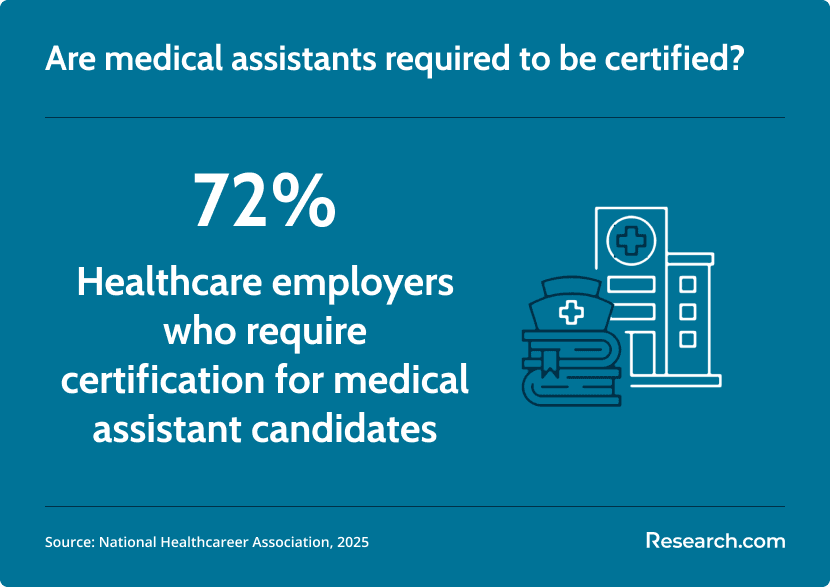
Certification matters because employers increasingly use credentials as a hiring filter. According to NHA’s report (2025), 72% of healthcare employers require candidates to be certified in medical assisting, while 24% encourage them to acquire one. Before enrolling, ask the school which exam the program prepares you for and whether graduates meet that exam’s eligibility rules.
What specialty areas can medical assistants take?
Medical assistants can remain generalists or develop specialty knowledge that matches the type of patients, providers, and procedures they want to support. Clinical medical assistants usually focus on patient care tasks, while medical administrative assistants concentrate on scheduling, records, billing workflows, insurance information, and patient communication.
Some graduates pursue Specialty Certified Medical Assistant (SCMA) credentials. The SCMA includes 13 specialty areas in medical assisting, including:
- Cardiology: Medical assistants support heart-related care by helping with diagnostic preparation, documentation, patient education, and clinic workflow.
- Family Medicine: This broad area involves patients of many ages and conditions, making it useful for assistants who want variety and continuity of care.
- Geriatrics: This specialty focuses on older adults, age-related conditions, medication documentation, care coordination, and long-term patient support.
- Obstetrics and Gynecology (OB/GYN): Medical assistants help prepare patients for exams, support prenatal and reproductive care workflows, and maintain sensitive records.
- Transplantation Surgery: Assistants may support scheduling, patient education, record maintenance, and preoperative or postoperative coordination for transplant teams.
Specialization can make your resume more targeted, but it should match your preferred workplace. The general medical assistant job description includes both administrative and clinical duties, while specialty roles may demand familiarity with specific procedures, terminology, and patient needs.
According to Zippia (2025), the most common skill among medical assistant candidates is patient preparation (20%), including patient laboratory preparation, record documentation, and communication. Other top skills include taking vital signs and administering patient care. These skills become more valuable when applied in a specialty setting.
Workplace distribution also matters. According to the National Center for Health Workforce Analysis (2024), 62.5% of medical assistants work in ambulatory care, while 24.7% work in hospitals. Students interested in family medicine or pediatrics may prefer outpatient clinics, while those drawn to surgery, internal medicine, or more complex clinical workflows may prefer hospital-based roles.
This chart displays the top skills found in medical assistant candidates.
How does an online medical assistant certificate program compare to an on-campus program?
Online and on-campus medical assistant certificate programs can both lead to entry-level healthcare roles, but the right format depends on your schedule, learning style, access to transportation, and need for hands-on support. The biggest question is not whether online learning is legitimate; it is whether the program includes the clinical practice and certification preparation employers expect.
| Factor | Online or hybrid program | On-campus program |
| Schedule | Often more flexible; may include asynchronous lessons or live virtual sessions | Usually follows fixed class and lab times |
| Hands-on practice | May require local externships, campus labs, or arranged clinical sites | Often includes scheduled labs and direct instructor observation |
| Support access | Advising, tutoring, and faculty support may be virtual | Students may have easier access to in-person faculty, labs, and campus services |
| Best for | Working adults, caregivers, rural learners, and self-directed students | Students who prefer structure, live demonstration, and face-to-face interaction |
| Main risk | Weak clinical placement support or unclear certification eligibility | Less scheduling flexibility and possible commuting costs |
When comparing formats, look for accredited schools, clear externship policies, responsive faculty, and transparent exam preparation. You can also compare broader options through Research.com’s guide to top ranked online medical assistant programs.
What is the average cost of an online medical assistant certificate program?
The cost of an online medical assistant certificate varies by provider, program length, public or private status, included materials, clinical requirements, and certification exam support. On average, students can expect to pay anywhere from $1,500 to $15,000 in total tuition for a full program. Some programs include course materials and technology access, while others may charge separately for books, uniforms, supplies, background checks, immunizations, externship requirements, or certification exams.
According to the National Center for Education Statistics (2024), the average tuition and fees for first-time, full-time degree or certificate-seeking students in 2022 to 2023 were around $4,000 in two-year public institutions and $9,800 in four-year public institutions. In two-year private institutions, this ranged from $16,300 to $19,500.
Students seeking lower-cost options often start with community colleges and public technical schools. Private and for-profit options may offer convenience or faster pacing, but the total price should be compared against accreditation, certification eligibility, clinical placement support, and graduate outcomes. If aid is important, review online medical assistant programs with financial aid before selecting a school.
| Cost item | Why to ask about it |
| Tuition | Confirm whether the listed price is total tuition, cost per credit, or only part of the program. |
| Books and supplies | Some programs include materials; others require separate purchases. |
| Lab or clinical fees | Hands-on training may require additional fees, travel, uniforms, background checks, or health records. |
| Certification exams | Ask whether exam fees are included and which exam the program prepares you to take. |
| Externship placement | Find out whether the school places students or requires students to find their own sites. |
What accreditation standards should I look for in online medical assistant certificate programs?
Accreditation is one of the most important checks before enrolling. For medical assisting, CAAHEP and ABHES are especially important because some certification pathways require graduation from programs accredited by these bodies. Regional or national institutional accreditation can also affect financial aid eligibility, transferability, and employer perception.
Ask whether the program itself is programmatically accredited, whether the institution is accredited, and which certification exams graduates are eligible to take. Accreditation also helps students compare pricing, policies, and academic quality more clearly. If you are comparing administrative healthcare credentials alongside medical assisting, it can also be useful to review the cost of medical billing and coding certification.
Do online medical assistant certificate programs offer integrated career support services?
Many online programs offer career services, but the quality varies. Stronger programs may provide resume help, interview coaching, externship coordination, job boards, employer partnerships, certification exam guidance, and career counseling. These services are especially valuable for students with no healthcare experience.
Before enrolling, ask whether career support is included in tuition, whether job placement assistance is available after graduation, and whether the school has relationships with clinics, hospitals, or outpatient centers in your area. Students comparing allied health pathways may also look at related options, such as ultrasound tech school, to understand how different healthcare credentials vary in clinical intensity and career direction.
What are the financial aid options for students enrolling in an online medical assistant certificate program?
Medical assistant certificate students may have several funding options, but eligibility depends on the school, program type, accreditation, enrollment status, and student circumstances. Always confirm aid eligibility before enrolling because not every short-term certificate qualifies for federal student aid.
- Federal and state financial aid: Eligible students may apply for aid such as Federal Direct Loans by completing the FAFSA, but the school and program must qualify.
- Maxine Williams Scholarship: This scholarship offers $1,000 to high school graduates interested in becoming medical assistants. Applicants must have a GPA of 3.0 or higher and demonstrate financial need.
- AMT Scholarship from American Medical Technologists: This option is open to high school graduates or GED holders and certified AMT members in good standing. Applicants must be enrolled in a regionally accredited college and pursuing a discipline certified by AMT.
- SkillPointe Foundation Scholarship: This scholarship supports students in approved community colleges, technical schools, or other eligible institutions, including for-credit and non-credit training in high-demand fields such as healthcare.
- Employer tuition assistance: Healthcare employers may reimburse tuition or help employees pay for relevant training, especially when the credential supports staffing needs.
- Private scholarships and grants: Local foundations, workforce boards, community groups, and healthcare associations may provide additional funding based on financial need, academic performance, or commitment to healthcare service.
Apply early, track deadlines, and ask the school’s financial aid office for a full cost breakdown before signing an enrollment agreement.
Can online medical assistant certificate programs serve as a pathway to advanced healthcare education?
Yes. A medical assistant certificate can be a first step into healthcare, especially for students who want to gain patient care exposure before pursuing additional education. Some graduates later move into practical nursing, registered nursing, health information, public health, healthcare administration, or allied health programs. The certificate itself usually will not replace the prerequisites or clinical requirements for those programs, but it can help students build confidence and workplace experience.
If your long-term goal is public health, health systems work, or community health, compare transfer policies and future education options early. Some students eventually consider an online bachelor's degree public health after building entry-level healthcare experience.
How can students overcome common challenges in online medical assistant certificate programs?
Online medical assistant students often face three challenges: staying on schedule, securing hands-on training, and feeling connected to instructors or classmates. These problems are manageable if you plan before classes begin.
- Create a weekly study schedule: Treat online coursework like fixed class time, even if the program is self-paced.
- Confirm clinical requirements early: Ask when externships begin, who arranges them, and what documents you need.
- Use academic support before you fall behind: Contact instructors, tutors, or advisors as soon as you struggle with terminology, anatomy, or procedures.
- Build a healthcare resume while enrolled: Track skills, clinical hours, software exposure, and certifications so you are ready to apply near graduation.
- Practice professional communication: Medical assistants interact with patients, providers, and office staff daily, so communication is not optional.
Students interested in administrative advancement can also explore broader healthcare career ladders, including highest paying entry level healthcare administration jobs.
Is the ROI of an online medical assistant certificate program competitive?
The return on investment depends on four things: total program cost, time to completion, certification eligibility, and local wages. A lower-priced program can be a strong choice if it is credible and prepares you for employment. A higher-priced program may still be reasonable if it offers accredited training, clinical placement, certification exam preparation, and strong career support. The problem is paying a high tuition price for a program that does not improve your hiring prospects.
Use the reported annual wage of $44,720 as a general salary reference, then compare it with the full program cost, likely starting pay in your area, and whether you will need additional training later. ROI analysis is useful across many online programs, including non-healthcare fields such as the cheapest sports management bachelor's degree online, but medical assisting has the added requirement of hands-on skill development.
Can a medical assistant certificate pave the way for healthcare management roles?
A medical assistant certificate alone is usually not enough for management roles, but it can provide a useful foundation. Medical assistants learn how clinics function, how patients move through visits, how records are managed, and how clinical and administrative teams coordinate. With experience, additional education, and leadership training, some professionals move into lead medical assistant, office coordinator, practice supervisor, or healthcare operations roles.
Students who want management responsibility should develop skills in scheduling, billing workflows, compliance, team communication, budgeting basics, and process improvement. Additional business training, such as the fastest online business degree, may support longer-term movement into roles that combine healthcare knowledge with operations and leadership.
What courses are typically in an online medical assistant certificate program?
Most online medical assistant certificate programs cover both patient care and medical office administration. Course names vary, but the core subjects tend to be similar because graduates must understand clinical procedures, documentation, communication, safety, and healthcare workflows.
- Fundamentals of Medical Assisting: Introduces the role, professional expectations, patient interaction, legal duties, ethical standards, and workplace conduct.
- Diagnostic Procedures: Covers basic tests such as EKGs and urinalysis, including equipment use, patient preparation, and documentation.
- Medical Terminology: Teaches prefixes, suffixes, root words, abbreviations, and body-system terms used in healthcare records and communication.
- Phlebotomy: Introduces blood collection, specimen handling, infection control, labeling, and patient communication.
- Human Anatomy: Reviews major body systems and functions so students can understand conditions, procedures, and provider instructions.
- Clinical Procedures: Focuses on vital signs, exam-room preparation, minor procedure assistance, safety protocols, and patient care accuracy.
- Medical Office Procedures: Covers scheduling, phone communication, patient intake, electronic health records, basic billing concepts, and healthcare software.
- Claims Management: Introduces insurance claims, coding concepts, reimbursement procedures, compliance, and error prevention.
Students who want a deeper preview can read more about what to expect in a medical assistant course. A strong curriculum should prepare students to triage patients appropriately within their scope, assist providers, document accurately, and contribute to clinical reports.
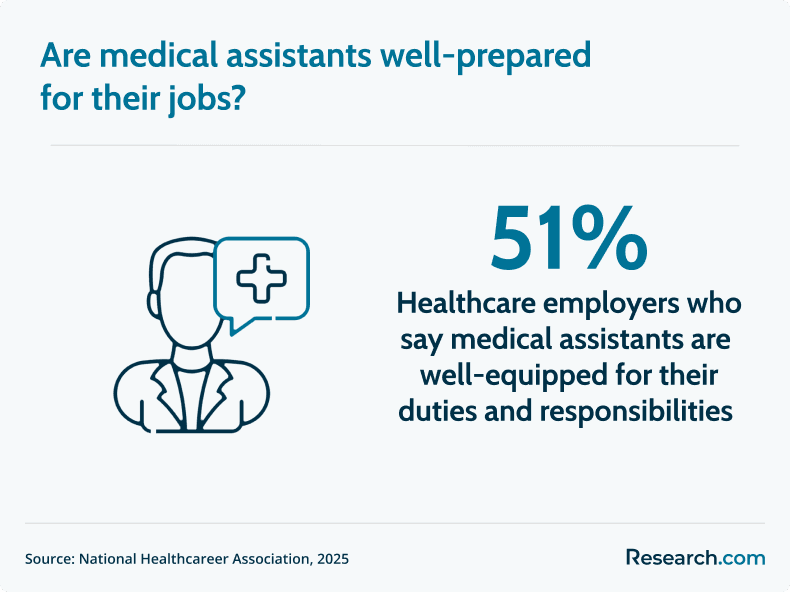
According to the NHA, 51% of employers say newly certified medical assistants are well-prepared for their job responsibilities—an encouraging 20% increase from 2023. That finding reinforces the value of choosing a program that teaches practical skills rather than only terminology and theory.
Do online medical assistant programs prepare you for integrated billing and coding roles?
Some online medical assistant programs include billing, coding, insurance, claims, and electronic health record content, but not all programs go deeply enough to prepare graduates for dedicated billing and coding roles. Medical assistants often need to understand billing workflows because they handle patient information, encounter forms, insurance data, and documentation. However, specialized coding positions usually require more focused coding training.
If you want a job centered on claims, reimbursement, diagnosis codes, procedure codes, and revenue cycle support, compare medical assistant programs with dedicated billing and coding training. You may also want to review the best medical coding programs as a separate or complementary pathway.
How to choose the best online medical assistant certificate programs?
The best program is not automatically the cheapest, fastest, or most heavily advertised. It is the one that fits your schedule while preparing you for certification, clinical competence, and realistic job opportunities in your area.
| Question to ask | Why it matters |
| Is the program accredited by CAAHEP, ABHES, or another recognized accreditor? | Accreditation can affect certification eligibility, aid options, and employer trust. |
| Which certification exam does the program prepare students for? | Employers may prefer specific credentials, and eligibility rules vary. |
| Are clinical hours, labs, or externships required? | Medical assisting requires hands-on skill development, not only online lectures. |
| Who finds the externship site? | If students must arrange their own placements, the process can delay graduation. |
| What is the total cost? | Tuition may not include books, supplies, exams, background checks, or clinical fees. |
| What support is available to online students? | Faculty access, tutoring, technical support, and career services can affect completion. |
| What outcomes does the school report? | Graduation rates, certification pass rates, and job placement information help evaluate value. |
- Verify accreditation: Confirm both institutional and programmatic accreditation when possible, especially if you plan to take a certification exam with specific eligibility rules.
- Match the program to your target credential: A curriculum should clearly align with the certification you want, such as CMA, RMA, CCMA, CMAA, or NCMA.
- Check clinical training arrangements: Reputable online programs should explain how students complete labs, externships, or supervised practice.
- Evaluate instructor and advisor support: Online students need timely answers, feedback, and guidance, especially during clinical placement.
- Compare flexibility with accountability: Self-paced programs are convenient, but students must stay organized and complete milestones.
- Review employer connections: Programs with healthcare partnerships may offer stronger externship and job-search support.
Common mistakes to avoid when choosing a program
- Choosing based only on speed: A very short program may not include enough hands-on training or certification preparation.
- Ignoring accreditation: Lack of recognized accreditation may limit exam eligibility, aid, or employer acceptance.
- Looking only at tuition: Ask about total cost, including supplies, exams, clinical fees, background checks, and travel.
- Assuming online means fully remote: Medical assistant programs often require in-person labs or externships.
- Not checking state or employer expectations: Requirements and preferences can differ by location and workplace.
- Waiting too long to plan externships: Clinical placement can take time, especially if the school does not arrange sites for you.
- Assuming salary outcomes are guaranteed: Wages vary by employer, region, certification, and experience.
What career paths are available for graduates of online medical assistant certificate programs?
Many graduates begin as medical assistants, but the training can also support movement into related healthcare roles with additional education, experience, or certification. Some roles are lateral moves into specialized support work, while others require a longer academic pathway.
- Phlebotomists ($44,390): Phlebotomists collect blood for testing, donation, transfusion, or analysis while following strict safety, labeling, and specimen-handling procedures.
- Medical Records Specialists ($55,970): These professionals manage health records, support coding and billing documentation, and maintain accurate patient information.
- Social Work Case Managers ($58,000): Case managers assess client needs, build care plans, connect people with services, and support vulnerable or underserved populations.
- Licensed Practical Nurses ($64,150): LPNs provide basic nursing care under the supervision of registered nurses or physicians. Students comparing hands-on healthcare careers should understand the difference between LPN vs medical assistant roles before choosing a pathway.
- Health Information Technologists ($73,410): These workers manage, protect, and improve digital health information systems and electronic records.
- Registered Nurses ($98,430): RNs assess patients, create care plans, administer treatments, coordinate care, and work closely with physicians and other providers.
- Physician Assistants ($136,900): Physician assistants examine, diagnose, and treat patients under physician supervision, and may prescribe medications or assist with procedures. Compare medical assistant vs physician assistant salary information if you are considering a long-term clinical ladder.
- Medical and Health Services Managers ($137,730): These managers oversee healthcare departments or facilities, including compliance, staffing, budgets, records, and operational performance.
Medical assisting can also be compared with adjacent healthcare support roles. For example, students interested in clinical support outside physician offices may want to compare medical assistant vs dental assistant responsibilities, training, and work environments.
This chart shows the difference in wages among healthcare roles.
What is the job market for graduates of online medical assistant certificate programs?
The job market for medical assistants is supported by ongoing demand for outpatient care, preventive services, and efficient patient flow. Employment of medical assistants is expected to grow by 15% from 2023 to 2033, which is significantly faster than the average for all occupations.
Physician offices, outpatient care centers, specialty clinics, hospitals, and long-term care settings are common employment targets. Graduates with certification, externship experience, strong communication skills, and comfort with electronic health records may be more competitive.
Students should also understand the realities of the work. A study published in BMC Health Services Research found that medical assistants may leave the field because of high workloads, limited advancement, and difficult relationships with supervisors or patients (Mambrey et al., 2024). This does not mean the career is a poor choice; it means students should choose employers carefully, continue building skills, and plan for advancement if they want long-term growth.
Current trends affecting medical assistants
- Credential-focused hiring: NHA’s report (2025) shows that certification is a major employer expectation, with 72% requiring certification and 24% encouraging it.
- More digital workflows: Electronic health records, digital intake tools, insurance systems, and automated scheduling require medical assistants to be comfortable with healthcare technology.
- Blended training models: Many programs now combine online coursework with local externships or campus labs, giving students flexibility without eliminating hands-on practice.
- Pressure on patient flow: Clinics rely on medical assistants to prepare patients, document accurately, and help providers maintain efficient appointment schedules.
This chart reveals the employment growth of various healthcare careers.
Other Things You Should Know About Online Medical Assistant Certificate Programs
What is the most recognized medical assistant certification?
The Certified Medical Assistant (CMA) credential from the American Association of Medical Assistants (AAMA) is often considered one of the most recognized credentials in the field. It verifies knowledge across clinical and administrative duties. Candidates must complete an accredited program and pass the CMA exam. Many employers respect the credential because it signals preparation for a broad medical assisting role.
Which medical assistant gets paid the most?
Medical assistants with specialty experience, additional credentials, and strong clinical or administrative skills often have better earning potential. Work setting and geography also matter. According to AAMA’s data, medical assistants in the U.S. Pacific region with more than 16 years of experience earn the most, at $59,511.
What is the quickest way to become a medical assistant?
The fastest realistic route is usually an accelerated certificate program that can be completed in four to six months. These programs focus on core clinical and administrative skills and may combine online classes with in-person clinical practice. Students should still confirm certification eligibility, externship requirements, and employer acceptance before enrolling.
What skills does a medical assistant need?
Medical assistants need clinical, administrative, technical, and interpersonal skills. Common clinical skills include taking vital signs, assisting with procedures, preparing patients, collecting specimens, and following infection-control rules. Administrative skills include scheduling, record management, billing support, and patient communication. Employers also value empathy, accuracy, adaptability, technology comfort, and the ability to multitask in busy care settings.
References:
- American Association of Medical Assistants. (2024). 2024 CMA (AAMA) Compensation and Benefits Report. https://www.aama-ntl.org/docs/default-source/about/2024-c-b-report-web.pdf?sfvrsn=488d6fc8_3
- National Center for Education Statistics. (2024). Tuition costs of colleges and universities. Fast Facts. https://nces.ed.gov/fastfacts/display.asp?id=76
- National Healthcareer Association. (2025). 2025 Industry Outlook. https://info.nhanow.com/hubfs/Marketing/Campaigns/Industry%20Outlook/2025/9-NHA-HS-Q125-industry-outlook-2025.pdf
- U.S. Bureau of Labor Statistics. (2024a). Medical assistants [Interactive data]. May 2024 OEWS Profiles, Occupational Employment and Wage Statistics (OEWS) Profiles. Retrieved April 17, 2025, from https://data.bls.gov/oesprofile
- U.S. Bureau of Labor Statistics. (2024b, August 29). Occupational projections, 2023–33, and worker characteristics, 2023 (Numbers in thousands). Employment Projections. https://www.bls.gov/emp/tables/occupational-projections-and-characteristics.htm
- Zippia. (2025, January 8). Medical Assistant skills for your resume and career. Retrieved April 17, 2025, from https://www.zippia.com/medical-assistant-jobs/skills
Key Insights
- An online medical assistant certificate can be a practical entry point into healthcare, but the strongest programs combine online coursework with verified hands-on clinical training.
- Do not judge a program by speed alone. Four-week options may be useful for limited refresher training, but most new students need more time to complete coursework, externship requirements, and certification preparation.
- Accreditation matters. CAAHEP and ABHES are especially important for students pursuing certain certification pathways, while institutional accreditation can affect aid and credibility.
- Certification can improve employability. NHA’s report (2025) found that 72% of healthcare employers require medical assisting certification and 24% encourage it.
- Medical assistants earn an annual wage of $44,720 overall, with reported wages ranging from $35,020 in the 10th percentile to $57,830 in the 90th percentile.
- Total cost is more than tuition. Ask about books, supplies, exams, uniforms, background checks, lab fees, travel, and who arranges externships.
- The best program is the one that fits your schedule, prepares you for a recognized certification, supports clinical placement, and aligns with your preferred work setting.
Other Things You Should Know About 4-Week Online Medical Assistant Certificate Programs
Yes, prerequisites for enrolling often include a high school diploma or GED. Some programs may require proficiency in biology or healthcare basics. It's essential to check specific entrance requirements of each program prior to application for 2027.
Yes, many employers accept them for entry-level roles if the program covers core clinical and administrative skills and includes a recognized certificate of completion. Employers usually care most about training content, documented hours, and whether the program meets their hiring standards for medical assistants.


