2027 How to Get a Medical Assistant Job With No Experience

Co-Founder and Chief Data Scientist
Getting a medical assistant job without experience is realistic, but it requires a targeted approach. Employers in physician offices, clinics, urgent care centers, and other healthcare settings often need dependable entry-level staff who can learn quickly, communicate well with patients, and handle both clinical and administrative tasks. Certification can make you more competitive, but it is not always required for a first job.
This guide explains how to enter medical assisting with no prior healthcare background, what education and certifications may help, where to look for entry-level openings, how much beginners can expect to earn, and how to turn a first medical assistant role into a longer healthcare career. It is written for first-time job seekers, career changers, recent graduates, and workers moving from customer service, caregiving, retail, or office roles into healthcare.
Quick Answer: Can You Get a Medical Assistant Job With No Experience?
Yes. Many employers hire medical assistants with no previous experience, especially for entry-level roles that include on-the-job training. A high school diploma or GED may be enough for some openings, although a certificate, diploma, associate degree, CPR training, or medical assistant certification can improve your chances. The strongest applicants show reliability, patient communication skills, attention to detail, basic computer ability, and a willingness to learn clinical procedures safely.
- Medical assisting is projected to grow 15% from 2023 to 2033, with 119,800 openings expected each year.
- The national average annual salary for medical assistants is $43,350, with wages ranging from $33,500 to $56,480.
- Physicians' offices employ 430,490 medical assistants and are often a practical starting point for beginners.
- Washington is the highest-paying state listed, with an average salary of $53,780.
- Additional credentials in phlebotomy, EKG, coding, or administration can help medical assistants qualify for more specialized roles.
- How to get a medical assistant job with no experience in 2026
- What education do you need to become a medical assistant?
- Do you need certifications to become a medical assistant?
- Which certifications or specializations can increase earnings?
- Where can you find medical assistant jobs that do not require experience?
- What skills do employers value in entry-level medical assistants?
- What is a typical day like for a new medical assistant?
- What challenges should new medical assistants expect?
- Can online courses improve your medical assistant qualifications?
- How can you succeed in a medical assistant interview with no experience?
- Can additional healthcare education advance a medical assistant career?
- Can accelerated training help you enter medical assisting faster?
- How can you negotiate your starting medical assistant salary?
- Can specialized training programs support career growth?
- How can a public health degree help a medical assistant?
- How much do medical assistants with no experience earn?
- How are emerging technologies changing medical assisting?
- Can mentorship and networking accelerate career growth?
- What career paths are available for medical assistants?
- What is the job market for medical assistants?
- Should medical assistants consider further academic education?
How to Get a Medical Assistant Job With No Experience in 2026
The fastest way to get hired without experience is to apply where entry-level training is common, present your transferable skills clearly, and show employers that you understand the responsibilities of the role. Many medical assistant jobs involve a mix of patient intake, appointment support, medical records, room preparation, vital signs, and communication with clinicians. Even if you have not worked in healthcare before, experience in customer service, reception, caregiving, food service, childcare, or office administration can be relevant.
Step-by-Step Plan for Getting Hired
- Search for the right job titles. Use phrases such as “entry-level medical assistant,” “medical assistant trainee,” “no experience required,” “back office assistant,” “clinic assistant,” and “patient care assistant.”
- Target employers that train beginners. Start with small physician practices, family medicine offices, urgent care centers, community clinics, assisted living facilities, and outpatient clinics.
- Create a healthcare-focused resume. Highlight communication, scheduling, data entry, confidentiality, multitasking, customer service, caregiving, and any science or health coursework.
- Add low-cost proof of readiness. CPR certification, HIPAA training, basic medical terminology, or a short online course can show initiative.
- Apply online and directly. Submit applications through job boards, but also check clinic websites and contact local offices professionally.
- Prepare for interviews with examples. Be ready to explain how you handled difficult customers, protected confidential information, learned new systems, or stayed organized under pressure.
- Keep applying while building skills. If you are not getting interviews, consider volunteering, shadowing, completing an externship, or enrolling in a short training program.
What to Put on a Resume With No Medical Assistant Experience
| What You Have | How to Present It for a Medical Assistant Role |
| Customer service experience | Emphasize patient-facing communication, professionalism, conflict resolution, and empathy. |
| Reception or office work | Show scheduling, phone etiquette, data entry, document accuracy, and record management. |
| Caregiving or childcare | Connect it to patience, safety awareness, observation skills, and helping people with daily needs. |
| Retail or food service | Highlight multitasking, teamwork, standing for long shifts, and staying calm during busy periods. |
| Coursework or training | List medical terminology, anatomy, CPR, HIPAA, EHR exposure, billing, coding, or clinical basics. |
Best Employers to Target First
Entry-level applicants often have better results when they start with settings that need flexible support staff and are willing to train. Large hospitals may require certification more often, while smaller practices may value reliability and fit.
- Physician offices: These are the largest employers of medical assistants and are a strong starting point for beginners.
- Urgent care centers: These workplaces can be fast-paced, but they often provide broad exposure to clinical and administrative duties.
- Community clinics: These settings may value bilingual ability, cultural competence, and patient communication skills.
- Specialty practices: Dermatology, pediatrics, cardiology, ophthalmology, and orthopedics may train medical assistants for specific office procedures.
- Assisted living and rehabilitation settings: These can help applicants build patient care experience before moving into a clinic role.
Common Mistakes When Applying Without Experience
- Applying only to hospitals. Hospitals may have stricter requirements. Include private practices and outpatient clinics in your search.
- Using a generic resume. A resume written for retail or general office work should be rewritten around patient service, accuracy, confidentiality, and dependability.
- Ignoring certification preferences. Even when certification is not legally required, some employers prefer it. Read postings carefully.
- Waiting until you feel fully qualified. Entry-level postings often include training. Apply if you meet the core requirements and can learn quickly.
- Overlooking soft skills. Employers do not only hire for clinical knowledge. They need people who can reassure patients, follow instructions, and protect privacy.
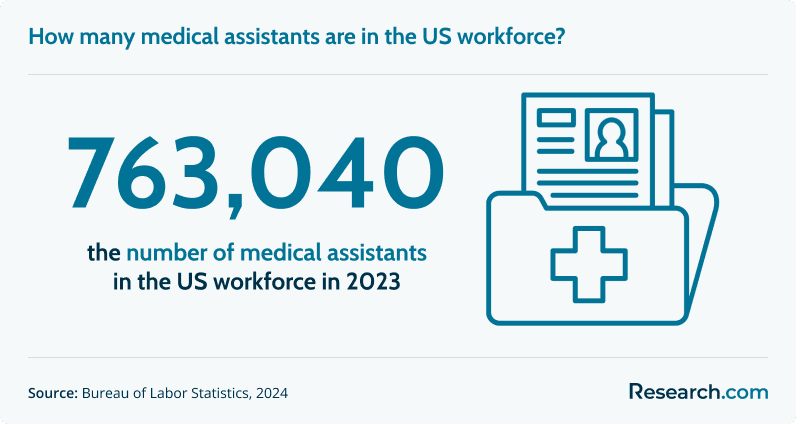
In 2023, there were more than 700,000 medical assistants in the US workforce across many industries.
What Education Do You Need to Become a Medical Assistant?
Medical assistant education requirements vary by employer, state rules, and job duties. Some employers hire applicants with a high school diploma or GED and provide training. Others prefer applicants who completed a medical assisting certificate, diploma, or associate degree program. If you want to enter the field quickly, on-the-job training or a short certificate may be enough. If you want broader preparation and more flexibility later, formal training can be worth considering.
Medical Assistant Education Options
| Path | Typical Best Fit | Main Advantage | Important Limitation |
| On-the-job training | Applicants who need to start working as soon as possible | No formal program may be required before applying | Training quality and advancement options depend heavily on the employer |
| Certificate or diploma program | Students who want focused job preparation | Programs typically last 6 months to 1 year and cover core clinical and office skills | Credits may not always transfer into a degree later |
| Associate degree in medical assisting | Students who want deeper training and possible future academic mobility | A 2-year program may include broader coursework and an internship or externship | Usually takes longer and may cost more than a short certificate |
| Online or hybrid program | Working adults or students who need scheduling flexibility | An affordable online medical assistant program may lower commuting and scheduling barriers | Clinical skills may still require in-person labs, externships, or local placements |
How to Choose the Right Education Path
- Check job postings in your area. If most local employers require certification or formal training, a program may be worth the investment.
- Verify accreditation and exam eligibility. Do not assume every program qualifies graduates for the certification exam they want.
- Ask about externships. Hands-on practice can help students with no experience become stronger job candidates.
- Compare total cost, not just tuition. Include books, supplies, uniforms, exam fees, transportation, and lost work time.
- Understand transfer policies. If you may later pursue nursing or another healthcare degree, ask whether credits can transfer.
Formal education is not always mandatory, but it can reduce the learning curve, improve confidence, and help applicants compete for employers that prefer trained candidates.
Do You Need Certifications to Become a Medical Assistant?
You do not always need certification to work as a medical assistant, but certification can make a major difference in hiring competitiveness. Some employers train uncertified employees, while others prefer or require a credential before assigning clinical duties. Certification can also help when applying to larger healthcare systems, specialty practices, or roles that involve more hands-on patient care.
Common Medical Assistant Certifications
| Certification | Issuing Organization | What It Signals to Employers |
| Certified Medical Assistant (CMA) | American Association of Medical Assistants (AAMA) | Preparation in clinical procedures, medical terminology, patient interaction, and administrative responsibilities. |
| Registered Medical Assistant (RMA) | American Medical Technologists (AMT) | Competency in administrative and clinical duties through qualifying education, experience, or military training. |
| Certified Clinical Medical Assistant (CCMA) | National Healthcareer Association (NHA) | Clinical readiness for tasks such as vital signs, injections, patient preparation, and procedure support. |
| National Certified Medical Assistant (NCMA) | National Center for Competency Testing (NCCT) | Knowledge developed through a training program or relevant work experience. |
Medical assistant credentials are different from nursing certifications. Medical assistants usually support physicians and clinical teams with both office and clinical duties, while nursing credentials are tied to different scopes of practice and direct nursing care. If you are comparing entry-level healthcare options, understanding what is the difference between a CNA and MA can help you choose the better first step.
Should You Get Certified Before or After Your First Job?
If employers in your area are open to training, you may be able to start working first and pursue certification later. This can help you confirm that medical assisting is the right fit before paying for a program or exam. If local postings frequently say “certification required” or “certification preferred,” earning a credential earlier may help you get interviews faster.
- Review local job postings and note which credentials employers mention most often.
- Choose a certification that matches your target jobs and eligibility status.
- Complete the required education or experience pathway.
- Apply for the exam and prepare using official materials.
- Track renewal and continuing education requirements after certification.
In 2023, the industries that employ the most medical assistants (with or without certifications) were physicians' offices (430,490) and hospitals (115,850).
Which Certifications or Specializations Can Increase Earnings?
Medical assistants can improve their career options by adding skills that employers need in specific settings. Specialized training may be especially useful after you have some entry-level experience and understand which parts of healthcare interest you most. Many options are short-term credentials, including some 6-month certificate programs that pay well.
| Specialization | Best For | Possible Work Settings |
| Phlebotomy technician certification | Medical assistants who want to focus on blood collection and specimen handling | Hospitals, diagnostic labs, blood donation centers, clinics |
| EKG technician certification | Medical assistants interested in cardiac testing and monitoring | Cardiology offices, hospitals, outpatient clinics, emergency settings |
| Certified Medical Administrative Assistant (CMAA) | Workers who prefer scheduling, records, billing support, and office coordination | Physician offices, hospitals, healthcare administration teams |
| Certified Coding Specialist (CCS) | Medical assistants interested in insurance claims, coding accuracy, and health information | Hospitals, insurance companies, private practices |
| Ophthalmic or optometric assistant certification | Medical assistants who want to work in eye care | Eye clinics, optometry practices, vision centers, optical retail settings |
| Patient Care Technician (PCT) certification | Workers who want more direct patient care responsibilities | Hospitals, nursing homes, rehabilitation centers |
The best specialization depends on your strengths. If you like procedures, phlebotomy or EKG may be a good fit. If you prefer organization and documentation, coding or administrative credentials may be more useful. If you want a stepping stone toward nursing, patient care training may align better with your long-term plans.
Where Can You Find Medical Assistant Jobs That Do Not Require Experience?
Entry-level medical assistant openings are easier to find when you search beyond the most obvious job boards. Some employers do not advertise widely, and smaller clinics may fill roles through referrals, walk-in applicants, or direct website postings. A broad search strategy gives beginners more chances to find employers willing to train.
Online Job Boards
- Indeed, ZipRecruiter, and SimplyHired: Search with “entry-level,” “no experience,” “trainee,” or “will train.”
- Monster and Glassdoor: Use employer reviews to identify workplaces that support new healthcare workers.
- LinkedIn Jobs: Follow clinics, connect with healthcare employees, and look for hiring managers or recruiters who post openings.
Employer Career Pages
Hospitals, clinic networks, and regional healthcare systems may post jobs on their own websites before they appear elsewhere. Check career pages for:
- Major hospital systems and regional medical centers
- Private physician offices and family practices
- Outpatient clinics, urgent care centers, and community health clinics
Alternative Healthcare Settings
If you cannot get hired immediately in a traditional medical office, adjacent settings can help you build patient care or administrative experience.
- Chiropractic offices: These offices may need help with scheduling, patient flow, and basic office support.
- Assisted living facilities: Roles may involve intake support, coordination, and resident-facing communication.
- Rehabilitation centers: These employers may need support staff who can help patients and therapy teams stay organized.
Military and Government Opportunities
- US Military: Some branches provide healthcare training as part of assigned medical support roles.
- Veterans Affairs (VA) clinics: Government-funded facilities may offer structured entry points into healthcare employment.
Applying in Person
For small practices, a professional in-person introduction can still help. Call first, avoid peak patient hours, dress appropriately, bring a clean resume, and briefly explain that you are looking for an entry-level medical assistant opportunity and are willing to train.
While many beginners start in physicians' offices and hospitals, higher-paying settings may become realistic after you gain experience. Scientific research and development services average $55,130 per year for medical assistants, and junior colleges average around $53,890 annually. If you want structured preparation before applying, accredited medical assistant trade school programs can provide practical training and help you enter the field with more confidence.
What Skills Do Employers Value in Entry-Level Medical Assistants?
Employers hiring medical assistants with no experience usually look for trainability first. They want someone who can follow instructions, protect patient privacy, document carefully, communicate with compassion, and stay organized in a busy environment. Clinical skills matter, but many can be taught. Reliability and professionalism are harder to train.
Clinical and Administrative Skills
- Taking vital signs: Blood pressure, pulse, temperature, weight, and basic patient measurements are common entry-level tasks.
- Preparing exam rooms: Cleaning rooms, stocking supplies, and setting up equipment help clinics run on time.
- Supporting procedures: Depending on training and state rules, medical assistants may help with injections, specimen collection, or minor procedures.
- Scheduling and records management: Accurate appointment coordination and documentation are essential for safe care.
- Electronic health records: Comfort with digital systems can help new hires adapt faster.
Soft Skills That Matter Most
- Empathy: Patients may be nervous, sick, or frustrated. A calm tone matters.
- Confidentiality: Medical assistants handle sensitive information and must respect privacy rules.
- Attention to detail: Small documentation errors can create real problems in healthcare.
- Teamwork: Medical assistants coordinate with physicians, nurses, front desk staff, billing teams, and patients.
- Adaptability: Priorities can change quickly when schedules run behind or patients need urgent attention.
Some of these skills can be developed through formal study, including the fastest associates degree online options, while others come from work experience in service, caregiving, or office settings. For a broader occupational profile, O*NET lists essential skills associated with medical assistants.
What Is a Typical Day Like for a New Medical Assistant?
A medical assistant’s day depends on the setting, but most entry-level roles combine patient preparation, documentation, room turnover, scheduling support, and communication with the clinical team. Before accepting a job, ask whether the position is mostly administrative, mostly clinical, or a mix of both.
Typical Daily Workflow
| Part of the Day | Common Tasks |
| Start of shift | Review the schedule, prepare exam rooms, restock supplies, check equipment, and coordinate with clinicians. |
| Patient check-in and rooming | Update patient information, verify details, collect medical history, and enter information into the EHR. |
| Clinical support | Take vital signs, prepare patients for exams, assist with approved procedures, and help collect or label specimens. |
| Administrative work | Schedule follow-up visits, answer calls, update records, handle forms, and communicate instructions under supervision. |
| End of shift | Clean and restock rooms, finish documentation, report issues, and prepare for the next clinic day. |
Many people enter medical assisting after working in another field. The average age of medical assistants in the US was 36.8 in 2022, and 90.5% of the workforce were women. These figures show that the occupation includes many career changers and adults entering healthcare later in life.
If you are comparing medical assisting with practical nursing, review an LPN and medical assistant job comparison before choosing a path. Medical assistants and LPNs may both work with patients, but training requirements, scope of practice, licensure, responsibilities, and advancement options differ.
What Challenges Should New Medical Assistants Expect?
Medical assisting can be rewarding, but the first months can feel demanding. New hires are often learning medical terminology, clinic flow, documentation standards, patient communication, and workplace expectations at the same time. Knowing the common challenges makes it easier to prepare.
Common Early-Career Challenges
- Balancing clinical and administrative work: You may move from rooming patients to answering calls to restocking supplies within the same hour.
- Keeping pace in a busy clinic: Schedules can run behind, patients may need extra help, and providers may need quick support.
- Learning medical language: Abbreviations, diagnoses, medications, and procedure names can be overwhelming at first.
- Handling difficult interactions: Patients may be anxious, upset, or in pain. Professional communication is essential.
- Documenting accurately: New medical assistants must learn how to enter information correctly and promptly.
How to Make the First 90 Days Easier
- Carry a small notebook for approved workflow reminders, not private patient information.
- Ask your supervisor which tasks must be done immediately and which can wait.
- Review medical terminology outside work until common terms become familiar.
- Request feedback early instead of waiting for formal evaluations.
- Find an experienced medical assistant who can explain practical shortcuts and clinic expectations.
Can Online Courses Improve Your Medical Assistant Qualifications?
Online courses can help entry-level applicants build knowledge before or during their first medical assistant job. They are especially useful for topics that do not always require a lab, such as medical terminology, HIPAA basics, EHR navigation, scheduling, billing, and coding. For example, a cheapest medical billing and coding program may help applicants understand insurance claims, codes, documentation, and revenue cycle basics.
Online learning is not a substitute for hands-on clinical practice when a task requires direct patient care training. Before enrolling, ask whether the course is accredited, whether it prepares you for a recognized certification, and whether local employers value the credential.
How Can You Succeed in a Medical Assistant Interview With No Experience?
In an interview, your goal is to prove that you are safe to train, dependable, and comfortable working with patients. Employers may not expect you to know every clinical procedure, but they will expect honesty, professionalism, and examples of how you learn quickly.
Interview Questions to Prepare For
- Why do you want to work as a medical assistant?
- How would you handle an upset or anxious patient?
- Tell me about a time you had to multitask in a busy environment.
- How do you protect confidential information?
- What would you do if you did not know how to complete a task?
- Are you comfortable learning clinical procedures under supervision?
How to Answer Without Healthcare Experience
Use examples from work, school, volunteering, caregiving, or customer service. A restaurant worker can discuss staying calm during rush periods. A receptionist can discuss scheduling accuracy and confidentiality. A caregiver can discuss patience and observation. If you have completed coursework through the best accredited medical billing and coding schools online or similar training, explain how it strengthened your understanding of healthcare documentation and office operations.
Can Additional Healthcare Education Advance a Medical Assistant Career?
Additional education can help medical assistants move beyond entry-level work, but it should match a realistic career goal. Short clinical credentials may be useful for immediate advancement, while degree programs may make more sense for those aiming for nursing, healthcare administration, public health, health information, or another licensed profession. Some medical assistants explore broader healthcare education, including online pharmacy programs, when they want to understand medication-related care pathways or consider longer-term professional options.
Can Accelerated Training Help You Enter Medical Assisting Faster?
Accelerated medical assistant training can be useful for students who want structured preparation but do not want a long program. These programs typically compress essential administrative and clinical concepts into a shorter schedule and may include simulations, labs, career services, or externship support. Options such as fast medical assistant programs may appeal to career changers who want to build job-ready skills quickly.
Before choosing an accelerated program, confirm what it actually includes. Ask about hands-on practice, externship placement, certification exam eligibility, total cost, refund policies, graduate support, and whether local employers recognize the training.
How Can You Negotiate Your Starting Medical Assistant Salary?
Entry-level salary negotiation should be realistic and evidence-based. Beginners usually have less leverage than experienced or certified medical assistants, but they can still ask informed questions about pay, raises, benefits, schedules, and training support.
What to Research Before Discussing Pay
- Typical wages in your city or state
- Whether the employer requires evenings, weekends, travel, or floating between clinics
- Whether certification, phlebotomy, EKG, bilingual skills, or EHR experience affect pay
- Benefits such as health insurance, paid time off, tuition reimbursement, exam reimbursement, and shift differentials
- When performance reviews and raises are considered
If the employer cannot raise the starting wage, ask whether they can support certification fees, paid training time, or a scheduled wage review after you complete probation. Reviewing broader healthcare compensation patterns, such as highest paying healthcare administration jobs, can also help you understand how earnings may change as education and responsibility increase.
Can Specialized Training Programs Support Career Growth?
Specialized training can help medical assistants move into more technical or focused healthcare roles. The best program depends on your career target. If you enjoy diagnostic testing, EKG or phlebotomy may be practical. If you want a more advanced technical healthcare role, researching fields connected to imaging, such as ultrasound tech schools, can help you compare training expectations and long-term direction.
Avoid enrolling in a specialized program only because it sounds high-paying. First, check local job demand, admission requirements, clinical placement availability, credential recognition, and whether the role requires licensure or certification in your state.
How Can a Public Health Degree Help a Medical Assistant?
A public health degree may be useful for medical assistants who want to move from individual patient support into community health, outreach, prevention programs, health education, data-informed planning, or healthcare leadership. Programs such as affordable online MPH programs may build skills in data analysis, program planning, policy, and population health.
This path is not necessary for every medical assistant. It makes the most sense if your long-term goal involves community health, public programs, healthcare management, or graduate-level work rather than staying in a traditional clinic support role.
How Much Do Medical Assistants With No Experience Earn?
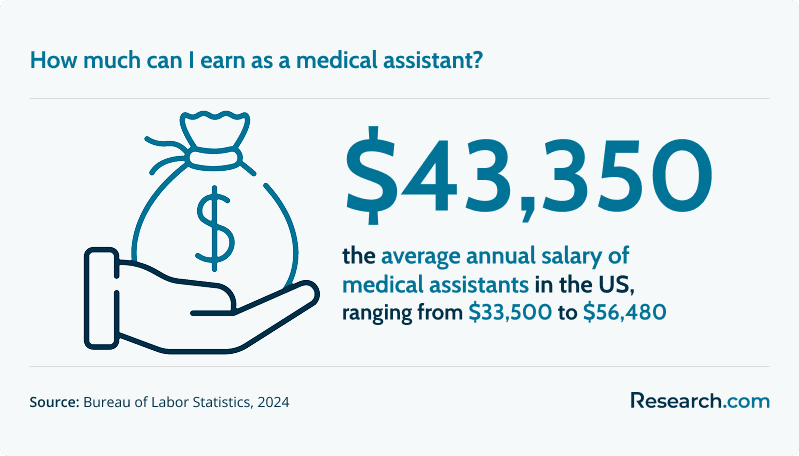
Entry-level medical assistants usually start toward the lower end of the wage range, but pay depends on location, employer type, certification, shift, specialty, and local demand. The national average annual salary for medical assistants is $43,350, with earnings ranging from $33,500 to $56,480.
Salary Facts to Know
| Category | Salary or Employment Figure |
| National average annual salary | $43,350 |
| Reported salary range | $33,500 to $56,480 |
| Outpatient care centers average salary | $50,250 |
| Scientific research and development services average salary | $55,130 |
| Junior colleges average salary | $53,890 |
| Washington average salary | $53,780 |
| Physicians' offices employment | 430,490 medical assistants |
Factors That Affect Pay
- Location: Wages vary by state, metro area, cost of living, and local competition for healthcare workers.
- Employer type: Hospitals, outpatient care centers, physician offices, research settings, and education settings may pay differently.
- Certification: A recognized credential can help applicants qualify for employers that pay more or require proof of competency.
- Specialized skills: Phlebotomy, EKG, coding, bilingual communication, and EHR experience may improve competitiveness.
- Experience: Pay often improves after a medical assistant proves reliability, speed, accuracy, and clinical judgment.
How Are Emerging Technologies Changing Medical Assisting?
Technology is changing the daily work of medical assistants. Electronic health records, patient portals, telehealth workflows, automated appointment reminders, digital intake forms, remote patient monitoring, and mobile health tools all affect clinic operations. Medical assistants who are comfortable learning new software and explaining digital steps to patients may have an advantage.
AI and automation are more likely to reshape routine administrative work than eliminate the need for medical assistants. Clinics still need staff who can prepare patients, communicate with care teams, notice problems, document accurately, and provide human support. Medical assistants who want a stronger science foundation for future healthcare study may also explore options such as online biology bachelor degrees.
Can Mentorship and Networking Accelerate Career Growth?
Mentorship can help new medical assistants learn faster, avoid preventable mistakes, and understand which certifications or career moves are worth pursuing. A mentor may be a senior medical assistant, nurse, office manager, instructor, or clinician who is willing to explain expectations and give practical feedback.
Ways to Build a Healthcare Network
- Ask instructors, externship supervisors, or former coworkers for referrals.
- Join local healthcare job groups or professional communities.
- Connect with medical assistants and clinic managers on LinkedIn.
- Attend hiring events hosted by hospitals, clinics, or community colleges.
- Volunteer in healthcare settings when paid roles are hard to access.
For medical assistants who later want management responsibilities, an online healthcare administration degree may pair well with workplace mentorship by developing leadership, operations, and healthcare systems knowledge.
What Career Paths Are Available for Medical Assistants?
Medical assisting can be a long-term occupation or a launch point into another healthcare career. The right path depends on whether you prefer direct patient care, office administration, technical procedures, leadership, or further clinical education.
Career Paths After Entry-Level Medical Assisting
| Path | How It Builds on Medical Assisting | Best Fit |
| Lead or senior medical assistant | Uses clinic experience to supervise workflow, train new staff, and support providers | Medical assistants who like team coordination and daily operations |
| Specialized medical assistant | Focuses on a specialty such as pediatrics, dermatology, cardiology, or ophthalmology | Workers who enjoy a specific patient population or procedure type |
| Medical office management | Builds on scheduling, records, compliance, billing, and staff coordination | Medical assistants with strong administrative and leadership skills |
| Phlebotomist or EKG technician | Adds technical testing skills used in clinics, hospitals, and labs | Workers who enjoy focused clinical procedures |
| LPN or RN pathway | Uses patient care exposure as a foundation for nursing education | Medical assistants who want broader clinical responsibility and licensure |
| Healthcare administration | Turns front-office and clinic operations experience into management potential | Workers interested in systems, staffing, finance, and operations |
Many medical assistants later pursue nursing. The medical assistant to LPN route is a common next step because it builds on patient care experience and may lead to greater responsibility. LPN programs can be completed in as little as one year, and some LPNs later continue toward RN roles.
What Is the Job Market for Medical Assistants?
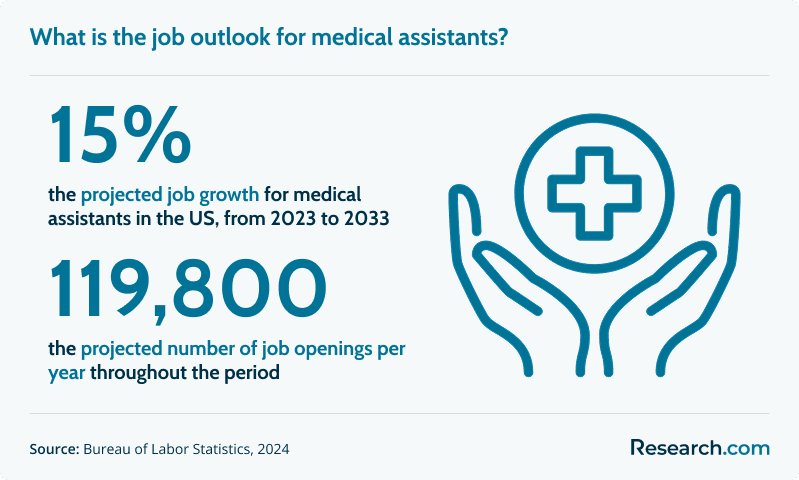
The medical assistant job market is strong. Employment is projected to grow 15% from 2023 to 2033, much faster than the average for all occupations, with about 119,800 openings expected each year. Demand is especially high in states like California (25.6%), Texas (25.2%), and Florida (22.7%), where large populations increase the need for healthcare support workers.
One reason demand remains high is that many clinics need more support staff to keep patient care moving. A Berkeley Public Health report noted that many practices operate with only one medical assistant per clinician, and just 11.4% meet the recommended two-to-one ratio needed to fully support patient care. As medical assistants take on more patient support, documentation, and chronic disease management responsibilities, staffing needs remain important for clinic efficiency.
If you are preparing to enter the field, it helps to understand what you learn in a medical assistant course. Courses can clarify the clinical, administrative, and communication skills employers expect in entry-level roles.
Should Medical Assistants Consider Further Academic Education?
Further education can be valuable, but it should be tied to a specific goal. A medical assistant who wants to become an LPN, RN, sonographer, health information specialist, public health worker, or healthcare manager may benefit from additional academic study. A medical assistant who is happy in clinic support may get a better return from targeted certifications, employer training, or specialty experience.
When Further Education Makes Sense
- You want a licensed clinical role with a broader scope of practice.
- You want to qualify for supervisory, administrative, or management positions.
- You need a degree for your long-term healthcare career goal.
- Your employer offers tuition reimbursement or education benefits.
- You have confirmed that credits, accreditation, and licensure requirements align with your plan.
Some medical assistants pursue science-focused degrees, such as the fastest online bachelors in biology degree, when they want a stronger academic foundation for future healthcare study. Before enrolling, compare total cost, time commitment, transfer credit policies, accreditation, and whether the degree clearly supports your next step.
What Medical Assistants Say About Getting Hired Without Experience
- “I thought no clinic would consider me because I had no healthcare background. I rewrote my resume around customer service, stayed persistent, and added CPR certification to show I was serious. A busy clinic hired me within a month.” Monique
- “A referral helped me get my first interview. I told a friend in nursing school that I was applying, and she introduced me to her clinic manager. I still had to show I was ready to learn, but the connection opened the door.” Kayla
- “Hospitals were harder for me at first. Smaller private practices were more flexible and willing to train. I started in family medicine, built experience, and now I have more options.” Savannah
References
- Berkley Public Health. (2024, May 28). Study reveals inadequate levels of medical assistant staffing in US. University of California, Berkeley. Retrieved February 24, 2025, from University of California, Berkley.
- Bureau of Labor Statistics. (2024). Medical assistants. Retrieved February 24, 2025, from BLS.
- Bureau of Labor Statistics. (2024). Occupational employment and wages, May 2023 - 31-9092 medical assistants. Retrieved February 24, 2025, from BLS.
- Data USA. (2025). Medical assistants. Retrieved February 24, 2025, from Data USA.
- Projections Central. (2025). Long-term occupational projections (2022-2032). Retrieved February 24, 2025, from Projections Central.
Key Insights
- You can get a medical assistant job with no experience, especially if you apply to entry-level roles in physician offices, clinics, urgent care centers, and smaller practices that train new hires.
- Certification is not always required, but it can improve interview chances, especially with larger employers or roles involving more clinical duties.
- The strongest beginner resume connects past experience to patient service, confidentiality, scheduling, accuracy, multitasking, and dependability.
- Medical assistants earn an average annual salary of $43,350, but pay varies by location, employer, experience, certification, and specialty skills.
- Career growth is realistic. Medical assistants can move into lead roles, specialty offices, phlebotomy, EKG, coding, office management, LPN programs, nursing, public health, or healthcare administration.
- Before paying for any program, verify accreditation, certification eligibility, externship support, total cost, employer recognition, and whether the training matches your career goal.
Other Things You Should Know About How to Get a Medical Assistant Job With No Experience
Yes, many employers accept online training if it includes supervised clinical practice. Look for programs with at least 160 externship hours, and verify that the school prepares you for the CMA (AAMA) or RMA (AMT) certification exam, which strengthens entry-level applications.
Obtaining certifications like the Certified Medical Assistant (CMA) from the American Association of Medical Assistants can significantly improve your job prospects. This certification demonstrates your commitment and knowledge in the field, even without prior job experience.