2027 Best Online Photography Programs

Co-Founder and Chief Data Scientist
The global photography market is a massive $105.2 billion industry, yet for aspiring creatives, the path to a stable career can feel uncertain. You have the passion and the talent, but you're likely asking a critical question: Can an online degree truly lead to a sustainable professional life? You need a clear plan, not just a list of schools.
That's exactly why this guide was created. Our career planning experts, with over 10 years of experience, have analyzed the curriculum, costs, and career outcomes of the best online photography programs. We're here to give you the insights needed to turn your creative drive into a viable, successful career.
What are the benefits of getting an online photography degree?
- Graduates are prepared for the freelance-dominated field with the business skills to manage clients, market their work, and build a sustainable creative enterprise.
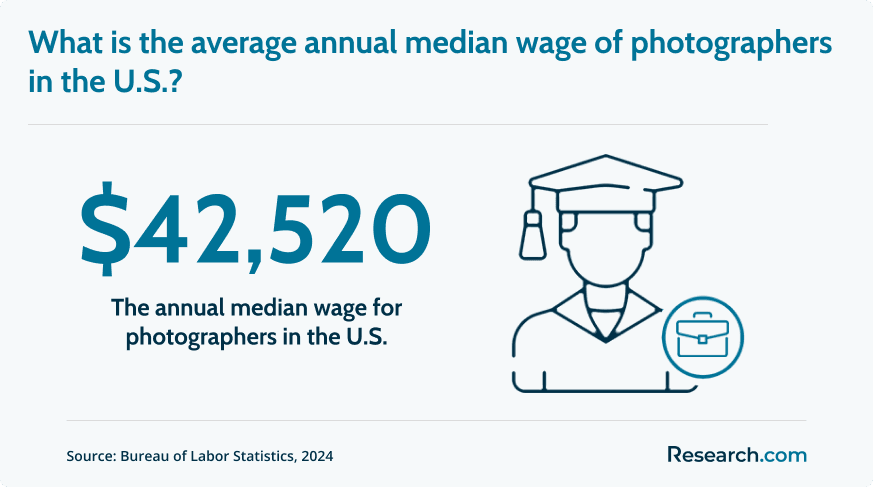
- A formal degree can position you for higher earning potential, helping you exceed the national median salary of $42,520 for photographers.
- The best online photography programs teach you essential remote collaboration and digital workflow skills that are directly transferable to high-demand fields like UX design jobs.
What can I expect from an online photography degree?
You can expect a highly structured academic experience designed to build professional-level skills through a "virtual darkroom." Programs use a consistent weekly rhythm of expert video lectures, practical shooting assignments with clear objectives, and digital portfolio submissions. This is a formal education, not a series of disconnected online tutorials.
The core of the learning process is the intensive feedback loop. Your work will be consistently reviewed by faculty and fellow students through video conferences and online forums, creating a dynamic environment for critique. This structured process of shooting, submitting, and refining your work is how you develop a unique artistic voice and the technical skills for careers in cinematography and other visual fields.
Where can I work with an online photography degree?
You can work primarily as a self-employed professional, as the vast majority of photographers run their own businesses. A degree prepares you for this entrepreneurial path, equipping you to launch a studio focused on high-demand areas like commercial and product photography, weddings, portraiture, or real estate.
While building your own business is the most common route, you can also find salaried positions. Graduates pursue a range of digital photography careers as photo editors for publications, studio assistants for established photographers, or digital asset managers for large corporations. The program gives you the skills for both freelance and traditional employment.
How much can I make with an online photography degree?
You can expect to start near the median annual wage for photographers, which is around $42,520. In a field driven by freelance work, however, this figure is best understood as a starting point rather than a fixed ceiling.
Your actual earning potential is determined by your business strategy and specialization. Photographers who develop expertise in lucrative niches like advertising, corporate events, or architectural photography can command significantly higher rates. The business and marketing skills learned in a degree program are what enable you to build a brand that attracts these higher-paying clients.
- List of the Best Online Photography Programs for 2027 List of Programs
- How long does it take to complete an online photography degree program? Completion Time
- How does an online photography degree program compare to an on-campus program? How does an online photography degree program compare to an on-campus program?
- What is the average cost of an online photography degree program? Program Cost
- What are the financial aid options for students enrolling in an online photography degree program? Financial Aid
- What are the prerequisites for enrolling in an online photography degree program? What are the prerequisites for enrolling in an online photography degree program?
- What courses are typically in an online photography degree program? What courses are typically in an online photography degree program?
- What types of specializations are available in an online photography degree program? Specializations
- How to Choose the Best Online Photography Program How to Choose the Best Online Photography Program
- What career paths are available for graduates of an online photography degree program? Career Paths
- What is the job market for graduates of an online photography degree program? Job Market
Best Online Photography Degree Programs for 2026
Choosing an online photography degree is not just a question of which school has the strongest name. You are deciding how to build a portfolio, learn professional editing and lighting workflows, understand the business side of creative work, and prepare for a field where many photographers work independently. The right program should help you produce better images, communicate with clients, manage digital files, price your work, and adapt as AI tools and visual media platforms reshape the industry.
This guide is for students comparing online photography bachelor’s programs, working adults who want a formal creative credential, and self-taught photographers deciding whether a degree is worth the time and cost. It explains what top programs offer, how online study compares with campus-based training, what you may pay, which courses and specializations to expect, and how to evaluate career value before enrolling. If you are also comparing creative technology routes such as a UX design bootcamp or degree pathway, this guide can help you see how photography fits into a broader digital creative career plan.
Quick answer: What is the best online photography program?
The best online photography program is the one that matches your intended career, budget, schedule, and portfolio goals. Students seeking a fine arts environment may prefer a BFA with intensive critique and conceptual development, while students planning to freelance may benefit more from a program with business, branding, marketing, and client management coursework. Accreditation, faculty experience, portfolio support, equipment expectations, transfer credit policies, and total cost should matter more than name recognition alone.
| Program | Best fit | Key consideration |
| Savannah College of Art and Design - BFA in Photography | Students who want a broad fine arts photography education with analog and digital training | Higher credit requirement and higher listed cost per credit |
| Southern New Hampshire University - BA in Digital Photography | Students who want a practical, business-oriented online photography degree | BA structure may appeal more to career-focused learners than studio-intensive fine arts students |
| California Institute of the Arts - BFA in Photography and Media | Artists interested in experimental image-making, media, performance, and cultural critique | Total tuition is substantially higher than many online options on this list |
| Arizona State University - BFA in Art (Digital Photography) | Students who want structured critique, portfolio development, and digital art training | Students should review equipment, software, and course delivery expectations carefully |
| Rocky Mountain College of Art and Design - BFA in Photography | Students who want a portfolio-centered BFA with professional practice built into the curriculum | Program structure may be best for learners ready for a focused art-school experience |
How Research.com evaluates online photography programs
Because a bachelor’s degree requires a serious financial and time commitment, our ranking process emphasizes transparent, comparable information rather than promotional claims. The evaluation uses data sources such as the Integrated Postsecondary Education Data System, Peterson's database, the College Scorecard database, and The National Center for Education Statistics.
These sources help support comparisons across institutions, including institutional characteristics and student-facing data. Rankings should be used as a starting point, not a substitute for your own review of curriculum, cost, faculty, portfolio requirements, and career fit. You can learn more about how Research.com evaluates programs on the Research.com methodology page.
1. Savannah College of Art and Design - BFA in Photography
Savannah College of Art and Design offers a photography BFA that connects traditional photographic history and analog methods with contemporary digital production. The curriculum is designed for students who want to refine a personal visual style while building a professional portfolio that can support work in creative industries.
- Program Length: ~4 years
- Required Credits to Graduate: 180 hours
- Cost per Credit: $914
- Accreditation: Southern Association of Colleges and Schools Commission on Colleges (SACSCOC)
2. Southern New Hampshire University - BA in Digital Photography
Southern New Hampshire University provides a digital photography degree with a strong practical and entrepreneurial focus. The program may suit students who want to learn image-making while also developing the branding, marketing, and business skills often needed to operate as an independent photographer.
- Program Length: ~4 years
- Required Credits to Graduate: 120 credits
- Cost per Credit: $342
- Accreditation: New England Commission of Higher Education (NECHE)
3. California Institute of the Arts - BFA in Photography and Media
California Institute of the Arts is a strong match for students who want to push beyond conventional photography and explore image-making as part of broader media practice. Coursework encourages experimentation with still images, moving images, installation, performance, and critical conversations about contemporary culture.
- Program Length: ~4 years
- Required Credits to Graduate: 128 credits
- Total Tuition: $235,984
- Accreditation: Western Association of Schools and Colleges Senior College and University Commission (WSCUC); National Association of Schools of Art and Design (NASAD)
4. Arizona State University - BFA in Art (Digital Photography)
Arizona State University emphasizes digital photography as both a technical and conceptual practice. Students complete hands-on assignments, participate in critiques, and work toward a cohesive portfolio and artist statement that can support professional opportunities or graduate study.
- Program Length: ~4 years
- Required Credits to Graduate: 120 credits
- Cost per Credit: $661
- Accreditation: Higher Learning Commission (HLC)
5. Rocky Mountain College of Art and Design - BFA in Photography
Rocky Mountain College of Art and Design structures its photography BFA around portfolio growth, professional habits, and artistic development. Regular portfolio reviews help students assess progress and refine their direction as both image-makers and creative professionals.
- Program Length: ~4 years
- Required Credits to Graduate: 123 credits
- Cost per Credit: $740
- Accreditation: Higher Learning Commission (HLC); National Association of Schools of Art and Design (NASAD)
How Long Does an Online Photography Degree Take?
A bachelor’s degree in photography usually takes about four years of full-time study. Many bachelor’s programs are built around 120 credits, although some fine arts programs require more credits depending on studio, critique, general education, and portfolio requirements.
Online delivery can make the timeline more flexible. Some students finish faster by taking heavier course loads or using transfer credits, while working adults may enroll part time and take longer. Before choosing a program, ask whether courses are offered every term, whether studio courses must be taken in sequence, and whether portfolio reviews can delay progression if requirements are not met.
| Study pace | What it means | Who it may work for |
| Full time | Students follow a standard bachelor’s sequence and may finish in roughly four years. | Recent high school graduates or students who can make school their main commitment |
| Part time | Students take fewer courses per term and usually extend the completion timeline. | Working adults, parents, freelancers, and students balancing school with client work |
| Accelerated or transfer-heavy path | Students may shorten the timeline if the school accepts previous credits or permits heavier course loads. | Students with prior college credit, strong time management, and clear portfolio goals |
How a degree fits into the photography labor market
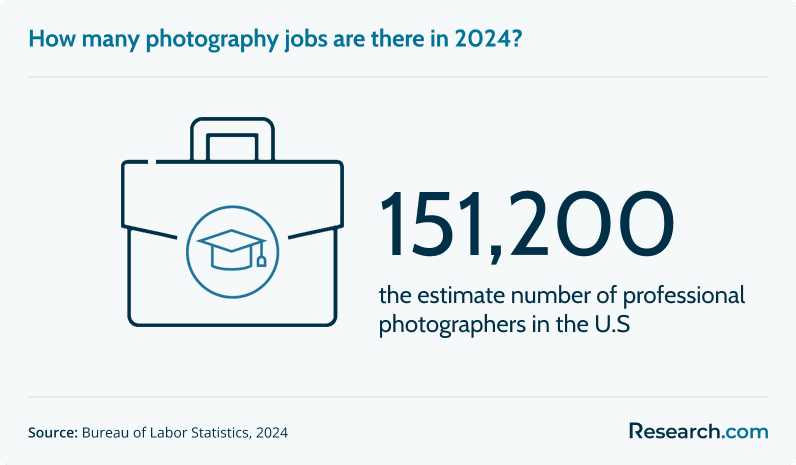
The time commitment should be weighed against the size and competitiveness of the field. A degree can help students build the technical, creative, and business foundation needed to pursue opportunities among the 151,200 photography jobs in the current market. It is not a guarantee of employment, but it can provide structured critique, portfolio development, and professional training that self-study may not deliver consistently.
Students comparing online career paths may also want to look at fields with different skill requirements and job structures, such as coding and cyber security careers, especially if they are deciding between creative work, technical work, or a hybrid digital career.
Online vs. On-Campus Photography Programs: Which Format Is Better?
Online and on-campus photography programs can both be effective, but they support different learning needs. Online programs offer flexibility, location independence, and the ability to build skills from your own working environment. Campus-based programs often provide easier access to studios, lighting equipment, darkrooms, printers, and in-person critique spaces.
The better option depends on your goals and resources. If you already have camera equipment, a reliable workspace, and the discipline to practice independently, an online degree may be practical. If you need frequent access to specialized facilities or learn best through in-person studio work, a campus program may be a better fit.
| Factor | Online photography degree | On-campus photography degree |
| Flexibility | Usually better for students who need to study around work, family, or freelance projects | Usually follows a more fixed class and studio schedule |
| Facilities | Students may need to provide or rent equipment and create their own shooting setup | Students may have access to studios, labs, darkrooms, printers, and school-owned gear |
| Critique experience | Often conducted through video meetings, discussion boards, digital submissions, and recorded feedback | Usually includes in-person critiques and direct studio interaction |
| Networking | Requires intentional outreach to classmates, faculty, alumni, and local creative communities | May provide more spontaneous peer interaction and campus-based collaboration |
| Best for | Self-directed students who want flexibility and can manage their own production environment | Students who want regular access to physical resources and in-person studio culture |
Why digital workflow matters more than format alone
Employers and clients usually care more about the quality of your portfolio than whether you studied online or on campus. A strong online program should still teach lighting, composition, editing, file management, critique, and professional presentation. It may also strengthen remote collaboration skills, which are increasingly useful for creative teams working across locations. Those same visual and user-centered abilities can support adjacent creative technology options, including UX design career paths.
How Much Does an Online Photography Degree Cost?
The price of an online photography degree depends heavily on the institution, credential type, transfer credits, fees, and required equipment. Based on the programs included in this guide, tuition can range from approximately $15,000 to over $30,000 per year. These figures describe the listed programs and should not be treated as a complete picture of the entire online photography degree market.
Students should calculate the full cost of attendance, not tuition alone. Photography students may need a camera body, lenses, lighting gear, storage drives, color-calibrated monitors, printing supplies, portfolio hosting, and software subscriptions such as Adobe Creative Suite. Some programs also charge technology, online learning, or studio-related fees.
| Cost category | What to check before enrolling |
| Tuition | Confirm whether pricing is per credit, per term, or total program cost. |
| Fees | Ask about online course fees, technology fees, graduation fees, and portfolio review fees. |
| Equipment | Request the required camera, lens, lighting, and storage specifications before the first term. |
| Software | Find out whether editing software is included, discounted, or fully paid by the student. |
| Transfer credits | Ask how many credits can transfer and whether studio or art credits are evaluated differently. |
| Portfolio expenses | Budget for printing, website hosting, image licensing tools, and professional presentation materials. |
How to think about return on investment
ROI for a photography degree should be measured carefully because income can vary by specialization, location, client base, experience, and whether you work freelance or in a salaried role. The industry’s median salary of $42,520 can be used as one reference point, but it should not be read as a guaranteed outcome for graduates.
To reduce borrowing, search for institutional awards, portfolio-based aid, and outside funding such as Art-Photography Scholarships. Students who are comparing affordability across institutions may also find it useful to review affordable HBCU program options when building a broader list of cost-conscious degree choices.
Financial Aid Options for Online Photography Students
Students enrolled in accredited online degree programs may qualify for many of the same financial aid options available to campus-based students. The key first step is completing the Free Application for Federal Student Aid, which is used to determine eligibility for federal grants, loans, and work-study opportunities.
- Submit the FAFSA early. The FAFSA is the central application for federal student aid, and many schools also use it when awarding institutional aid.
- Review Federal Pell Grant eligibility. Pell Grants are need-based federal awards and do not have to be repaid.
- Compare Federal Stafford Loans. These may be subsidized or unsubsidized and often have borrower protections that private loans may not offer.
- Ask about art and photography scholarships. Some schools award aid based on portfolio quality, academic record, financial need, or intended major.
- Check employer or military benefits. Working adults should ask whether tuition assistance, veterans benefits, or professional development funds can apply.
- Use transfer credits strategically. Accepted credits can reduce both time and tuition, but policies vary by school and course type.
Do not assume financial aid will cover every expense. Confirm aid limits, renewal rules, satisfactory academic progress requirements, and whether equipment or software can be included in your cost of attendance. This kind of cost-benefit comparison is similar to deciding whether an accounting degree or certificate is the better investment: the right answer depends on your goals, timeline, and financial constraints.
Admission Requirements for Online Photography Degree Programs
Most online bachelor’s programs in photography ask applicants for a high school diploma or GED, official transcripts, and a minimum GPA that is often around 2.5. Some schools may request SAT or ACT scores, although test requirements vary and have become less common at many institutions.
The most important admissions component for many photography programs is the portfolio. Schools use it to evaluate your visual thinking, technical promise, creativity, and readiness for critique. A portfolio does not have to prove that you are already a professional photographer, but it should show intentional image-making and a developing point of view.
How to build a stronger photography portfolio for admission
- Select 10-15 strong images. Choose work that shows range, consistency, and your ability to make deliberate creative choices.
- Avoid including everything you have made. A smaller, carefully edited portfolio is usually stronger than a large but uneven one.
- Show more than technical sharpness. Admissions reviewers often want to see concept, composition, experimentation, and visual curiosity.
- Write clearly about your work. If the school asks for an artist statement, explain what you are exploring and why the images matter.
- Follow file and submission instructions exactly. Missed format requirements can weaken an otherwise strong application.
A strong undergraduate portfolio can also become the foundation for future graduate study. Students considering advanced creative education can review possible outcomes in this guide to careers after a master's of fine arts degree.
Common Courses in an Online Photography Degree
Online photography programs usually combine studio practice, art foundations, digital production, critique, and professional preparation. The goal is to help students create stronger images while understanding how photography functions as art, communication, documentation, and commercial work.
| Course area | What students typically learn | Why it matters professionally |
| Visual foundations | Composition, color, design principles, art history, and visual literacy | Helps students make intentional images rather than relying only on equipment |
| Camera and lighting technique | Exposure, lenses, studio lighting, location lighting, and controlled shooting methods | Builds the technical consistency clients and employers expect |
| Digital editing and post-production | Workflow, retouching, color correction, file preparation, and tools such as Adobe Lightroom and Photoshop | Supports professional delivery standards across print, web, advertising, and editorial work |
| Critique and portfolio development | How to evaluate work, revise projects, sequence images, and present a cohesive body of work | Creates the portfolio students need for clients, jobs, exhibitions, or graduate applications |
| Business and legal practices | Marketing, pricing, client communication, copyright, contracts, and entrepreneurship | Prepares students for freelance work and creative business management |
| Video and multimedia | Motion capture, storytelling, sound, editing, and cross-platform visual production | Expands opportunities as clients increasingly request mixed photo and video content |
The broad curriculum is one reason a formal degree can help students compete. With 51% of professional photographers holding a bachelor's degree, the credential can signal structured training, although portfolio quality and professional experience remain critical. Students interested in motion-based visual work may also explore cinematography career options.
Photography Degree Specializations to Consider
Specialization helps photographers move from general image-making to a clearer market position. During the later part of a degree, students may focus their portfolio around a specific audience, industry, or artistic direction.
| Specialization | What it focuses on | Best for students who want to... |
| Commercial photography | Product, advertising, fashion, brand, and promotional imagery | Create images for companies, agencies, ecommerce, and marketing teams |
| Photojournalism | Documentary storytelling, editorial standards, news judgment, and ethics | Work with publications, news organizations, nonprofits, or documentary projects |
| Portraiture | Individuals, families, weddings, headshots, editorial portraits, and personal branding | Build a client-facing business centered on people and relationships |
| Fine art photography | Conceptual development, exhibitions, artist statements, and gallery-oriented work | Create personal bodies of work for galleries, grants, residencies, or graduate school |
| Digital media and visual content | Photography combined with video, social media assets, editing, and multimedia storytelling | Work across platforms where still images, motion, and design overlap |
How to choose a specialization
Choose a specialization based on both creative interest and market reality. For example, commercial photographers often need strong lighting, production, and client management skills, while fine art photographers need conceptual depth, exhibition strategy, and a coherent body of work. Location may also influence opportunity; photographers in New York or California often find high-paying commercial work. Students who enjoy combining image-making with layout, branding, and visual communication may also consider related graphic design career paths.
Current Trends Affecting Photography Students in 2026
Photography education is changing because the work of photographers is changing. Students should look for programs that teach durable fundamentals while also addressing current tools, client expectations, and ethical issues.
- AI-assisted editing is becoming part of the workflow. Photographers still need lighting, composition, direction, and judgment, but many editing tasks are increasingly supported by automated tools. Programs should teach responsible use, not just software shortcuts.
- Clients often expect both photo and video deliverables. A photographer who can capture stills, short-form video, and social assets may have more ways to serve clients.
- Authenticity, copyright, and image ethics matter more. Generative tools and synthetic imagery make it important for photographers to understand disclosure, licensing, consent, and ownership.
- Remote collaboration is normal. Students should be comfortable sharing galleries, managing digital assets, presenting work online, and communicating revisions clearly.
- Personal branding is no longer optional for freelancers. A strong portfolio website, niche positioning, client testimonials, and consistent marketing can matter as much as technical skill.
How to Choose the Best Online Photography Program
The best online photography program should help you produce stronger work and make a realistic career plan. Do not choose only by ranking position, tuition sticker price, or school reputation. Use the program’s curriculum, faculty, student work, accreditation, and cost transparency to judge whether it fits your goals.
- Confirm institutional accreditation. Accreditation affects federal financial aid eligibility, transfer credit, and graduate school options.
- Review faculty portfolios. Look for instructors with active professional or artistic practices in the areas you want to study.
- Study the curriculum sequence. Make sure the program includes critique, lighting, editing, portfolio development, and business preparation.
- Ask about equipment requirements. A lower tuition program may still be expensive if students must purchase substantial gear immediately.
- Compare student and alumni portfolios. Graduate work can reveal what the program actually helps students produce.
- Check flexibility and course availability. Online does not always mean self-paced. Some courses may have fixed deadlines, live critiques, or sequential prerequisites.
- Calculate net cost, not sticker price. Use financial aid offers, transfer credits, fees, and equipment costs to compare real affordability.
Questions to ask before enrolling
| Question | Why it matters |
| Is the institution accredited by a recognized accreditor? | Accreditation can affect aid, transferability, and credential recognition. |
| What equipment and software are required in the first year? | Upfront costs may be significant and are not always obvious from tuition pages. |
| How are critiques delivered online? | Consistent, rigorous feedback is essential in a studio-based field. |
| Can I transfer previous credits? | Transfer credits may reduce time and total cost, but policies vary. |
| Does the program include business coursework? | Many photographers work independently and need pricing, marketing, and client management skills. |
| What career support is available for online students? | Online learners should have access to portfolio reviews, career advising, and networking resources. |
Career Paths With an Online Photography Degree
An online photography degree can prepare graduates for freelance work, salaried creative roles, and hybrid positions involving digital content. The field is highly portfolio-driven, so the degree is most valuable when paired with strong work samples, client experience, technical fluency, and a clear niche.
| Career path | Typical work | Important skills |
| Freelance photographer | Weddings, portraits, products, real estate, events, branding, or editorial assignments | Client communication, pricing, lighting, editing, marketing, contracts, and scheduling |
| Photo editor | Selecting, organizing, editing, and preparing images for publications, websites, agencies, or brands | Visual judgment, metadata, editing software, copyright awareness, and deadline management |
| Studio manager | Coordinating studio operations, bookings, equipment, billing, production schedules, and client needs | Organization, production planning, customer service, budgeting, and workflow management |
| Digital asset manager | Maintaining image libraries, file naming systems, rights information, and media archives | Digital organization, metadata, licensing knowledge, software systems, and attention to detail |
| Visual content creator | Producing photography, short video, social media content, and branded visuals | Photography, video basics, editing, storytelling, platform awareness, and brand consistency |
The entrepreneurial reality of photography work
Students should understand that photography is often a self-directed field. Data shows that 66% of photographers are self-employed, which means a strong program should teach more than image capture. Graduates need to know how to find clients, write estimates, manage contracts, deliver files, protect copyrights, and maintain a sustainable workflow. For a closer look at related opportunities, review this guide to digital photography careers.
Largest Employers of Photographers

Job Market Outlook for Photography Graduates
The photography job market is competitive, and success depends heavily on specialization, portfolio quality, professional network, and business ability. The U.S. Bureau of Labor Statistics projects modest job growth of about 2% for photographers. At the same time, consumer and business demand for professional imagery remains meaningful, with recent data showing that 45% of adults are planning to hire a professional photographer in the near future.
This creates a practical takeaway for students: a degree alone is not enough. Graduates need a polished portfolio, a defined service area or artistic identity, reliable editing and delivery systems, and the ability to market themselves. The strongest online photography programs prepare students to operate as visual professionals, not just camera users.
Common mistakes to avoid when choosing an online photography degree
| Mistake | Better approach |
| Choosing the cheapest program without checking total costs | Compare tuition, fees, equipment, software, transfer credits, and aid packages together. |
| Ignoring accreditation | Verify accreditation before applying, especially if you need federal aid or may transfer later. |
| Assuming online means self-paced | Ask whether courses have live sessions, critique deadlines, group projects, or fixed schedules. |
| Overlooking portfolio quality | Review student and alumni work to see whether the program produces the kind of outcomes you want. |
| Focusing only on artistic courses | Look for business, copyright, marketing, and client communication coursework if you plan to freelance. |
| Expecting the degree to guarantee income | Treat the degree as training and portfolio development, then build experience, clients, and a niche. |
What Graduates Say About Online Photography Programs
- Ben: "Before earning my degree, I often felt pressure to defend my rates and convince clients that I knew what I was doing. Completing the bachelor’s program changed how I presented myself. The credential gave me confidence, and clients seemed more comfortable trusting my process."
- Isabella: "I expected online study to feel isolated, but the critiques were frequent, detailed, and demanding. Professors and classmates reviewed my work every week, and that pressure helped me build a much stronger portfolio. That portfolio is what helped me book my first major commercial project."
- Timmy: "I already understood the basics of my camera, but I wanted the technical depth to support a side business. The advanced lighting and composite editing courses gave me practical skills I could use right away. Learning from working professionals made the assignments feel connected to what clients actually request."
Key Insights
- The best online photography degree depends on fit. A fine arts-focused BFA, a business-oriented BA, and an experimental media program can all be strong choices for different students.
- Portfolio development is the core value. Accreditation and curriculum matter, but your final portfolio will play a major role in client trust, job applications, graduate admissions, and freelance opportunities.
- Online programs require self-direction. Students must manage shooting schedules, equipment access, file delivery, critique participation, and practice time outside a traditional studio environment.
- Total cost goes beyond tuition. Budget for software, cameras, lenses, lighting, storage, printing, website hosting, and fees before comparing programs.
- Business skills are essential. Because 66% of photographers are self-employed, students should prioritize programs that teach marketing, pricing, contracts, copyright, and client management.
- The market rewards specialization. Commercial photography, portraiture, photojournalism, fine art, and digital media each require different portfolios and professional strategies.
- AI and multimedia skills are now part of career readiness. Students should learn ethical editing, copyright awareness, digital asset management, and video or multimedia production where possible.
- Use rankings as a starting point, not the final answer. Before enrolling, confirm accreditation, review faculty and alumni work, compare net cost, and ask how online critiques and portfolio reviews are handled.
References:
- Data USA. (n.d.). Photographers. Retrieved October 5, 2025, from https://datausa.io/profile/soc/photographers
- Molnar, D. (2024, September 1). 50+ photography statistics you should know in 2024. Great Big Photography World. Retrieved October 5, 2025, from https://greatbigphotographyworld.com/photography-statistics/
- Nakao, R. (2021, October 19). Study finds 45 percent of Americans plan to purchase photography. Professional Photographer Magazine. Retrieved October 5, 2025, from https://www.ppa.com/ppmag/articles/study-finds-45-percent-of-americans-plan-to-purchase-photography
- U.S. Bureau of Labor Statistics. (2023, September 6). Photographers. Occupational Outlook Handbook. Retrieved October 5, 2025, from https://www.bls.gov/ooh/media-and-communication/photographers.htm#tab-1
- Zippia. (2024, May 17). Photographer jobs. Retrieved October 5, 2025, from https://www.zippia.com/photographer-jobs/
- Zippia. (2024, May 17). These are the 10 best states for photographers. Retrieved October 5, 2025, from https://www.zippia.com/photographer-jobs/best-states/
Other Things You Need To Know About an Online Photography Degree
In 2027, online photography programs like Parsons School of Design Online and Falmouth University offer comprehensive career support packages. They provide services such as portfolio reviews, career counseling, and networking opportunities, helping students transition smoothly into the professional world.
Yes, if the program is regionally accredited and the receiving college approves the coursework. Most transfer-friendly associate programs require at least a C grade, and some schools cap transfer credit at 60 semester hours toward a bachelor’s degree.
Some online photography programs in 2027 may require in-person sessions for hands-on workshops, especially to develop skills in lighting and equipment use. Be sure to check individual program details as requirements vary between institutions.