
2027 What Can You Do With a Master of Fine Arts (MFA) Degree?

Co-Founder and Chief Data Scientist
A Master of Fine Arts degree equips graduates with advanced creative, technical, and professional skills, preparing them for diverse careers in the arts and beyond. Whether pursuing roles in writing, visual arts, theater, film, or emerging media, MFA holders often work as professional artists, educators, creative directors, or content creators.
Many also leverage their expertise in fields like marketing, publishing, and design. With its blend of artistic mastery and practical application, an MFA can open doors to both traditional and nontraditional career paths. In this guide, we explore the top opportunities and industries available to MFA graduates.
What are the benefits of pursuing a Master of Fine Arts degree?
- You can use a Master of Fine Arts degree in creative careers like writing, visual arts, theater, and film.
- MFA programs often provide mentorship and networking opportunities with industry professionals.
- With a Master of Fine Arts degree, you may qualify for teaching positions at colleges and universities.
- Graduates can build a strong professional portfolio to attract clients, publishers, or employers.
- What jobs can you secure with a Master of Fine Arts degree? MFA Jobs
- Do you need certification or licensure for MFA-related careers? MFA Certifications
- How can Master of Fine Arts degree graduates prepare for certification or professional recognition? How can Master of Fine Arts degree graduates prepare for certification or professional recognition?
- Will I get an ROI from a Master of Fine Arts degree? ROI
- Why pursue a Master of Fine Arts degree? Career Benefits
- What are the top industries and employers hiring Master of Fine Arts degree graduates? Top Employers
- What is the job outlook for MFA-related careers in 2027? Job Outlook
- How much can Master of Fine Arts degree graduates earn in different fields? Earnings
- What are the challenges of building a career with a Master of Fine Arts degree? Challenges
- What alternative career paths can Master of Fine Arts degree graduates pursue? What alternative career paths can Master of Fine Arts degree graduates pursue?
- How can interdisciplinary studies further advance an MFA career? How can interdisciplinary studies further advance an MFA career?
What can you do with a Master of Fine Arts degree?
A Master of Fine Arts degree is a graduate credential for artists, writers, performers, filmmakers, designers, and other creative professionals who want advanced studio practice, critical feedback, and professional-level training. The decision to earn an MFA matters because creative careers rarely follow one predictable path: some graduates teach, some freelance, some work in media or design, and others combine several income streams.
This guide explains what jobs MFA graduates can pursue, when the degree is worth it, which careers may require extra credentials, how salaries and job outlook differ by field, and how to make a more practical career plan before investing in graduate study. If you are comparing creative graduate options with broader humanities pathways such as the fastest online liberal arts degree, the key question is not only “What can I study?” but “How will this credential help me build sustainable work?”
Quick answer: What jobs can MFA graduates get?
MFA graduates can work in higher education, studio art, creative writing, publishing, film, theater, museums, animation, design, advertising, arts administration, and digital media. Common roles include college professor, professional artist, writer, art director, curator, theater director, animator, grant writer, creative director, and arts administrator. The best path depends heavily on the MFA concentration, portfolio strength, professional network, location, and willingness to combine creative work with teaching, freelance, commercial, or administrative roles.
| Career path | Typical MFA fit | What employers or clients usually evaluate |
| College or university professor | Creative writing, visual arts, theater, film, design, performance | Terminal degree status, teaching experience, portfolio, publications, exhibitions, performances, professional reputation |
| Professional artist or performer | Painting, sculpture, acting, dance, music, film, interdisciplinary art | Portfolio, auditions, exhibitions, commissions, residencies, audience or market traction |
| Creative director or art director | Visual arts, design, photography, film, digital media | Leadership ability, visual strategy, campaign results, portfolio, software fluency, industry experience |
| Writer or author | Fiction, poetry, nonfiction, screenwriting, playwriting | Writing samples, publications, scripts, agents, fellowships, workshop experience |
| Gallery or museum curator | Fine arts, art history-adjacent practice, museum studies-related work | Exhibition experience, research ability, collection knowledge, public programming, institutional experience |
| Theater director or playwright | Theater, dramatic writing, directing, performance | Productions, scripts, collaborations, reviews, directing portfolio, company relationships |
| Multimedia designer or animator | Animation, digital art, film, design, interactive media | Demo reel, technical tools, storytelling ability, production workflow, client or studio experience |
| Grant writer or arts administrator | Arts management-adjacent MFA training, community arts, nonprofit arts | Writing ability, budgeting, fundraising record, program management, nonprofit experience |
Do MFA careers require certification or licensure?
Most MFA-related careers do not require licensure. Creative hiring is usually driven by the quality of the portfolio, performance record, writing samples, exhibitions, publications, teaching experience, or professional credits. However, credentials become important when the work involves regulated education, therapy, or specialized technical tools.
| Career goal | Is the MFA usually enough? | When additional credentials may matter |
| College teaching in art, writing, theater, film, or design | Often, yes. The MFA is commonly treated as a terminal degree in many arts disciplines. | Competitive faculty roles may still require strong teaching evaluations, exhibitions, publications, productions, or professional recognition. |
| K–12 arts teaching | No, not by itself in most cases. | A state-issued teaching license or certification is usually required for public school teaching. |
| Art therapy or drama therapy | No, not by itself. | These fields intersect with mental health practice and may require additional certification and/or licensure beyond an MFA. |
| Digital art, animation, multimedia design, gaming, or UX-adjacent work | Sometimes, but the portfolio is central. | Software or platform credentials in tools such as Adobe Creative Suite, Autodesk, or Unity can help demonstrate technical readiness. |
| Grant writing or arts administration | Usually, yes. | Nonprofit management certificates, fundraising training, or grant-writing workshops can strengthen advancement prospects. |
The short version: an MFA can be sufficient for many artistic, writing, and higher education paths, but it does not replace state licensure, therapy credentials, or technical certifications when those are required by the role.
The chart below highlights digital upskilling patterns among creative professionals. Nearly three-fourths of visual artists have started using digital tools, and many media creators and artists are exploring upskilling or reskilling to keep pace with a more technology-driven creative market.
How can MFA graduates prepare for certification, recognition, or stronger hiring prospects?
Because creative careers are evidence-based, the most useful preparation is not simply collecting credentials. MFA graduates should build proof of skill, proof of audience, proof of collaboration, and proof of professional reliability. Certifications can help, but they work best when paired with a strong body of work.
- Confirm the rules for your target career. Check whether your intended role requires state licensure, professional certification, supervised practice, or only a portfolio. This is especially important for K–12 teaching, art therapy, drama therapy, and public-sector roles.
- Use supplemental training strategically. Choose workshops, online courses, or professional programs that solve a real skills gap, such as motion graphics, UX research, grant budgeting, museum collections systems, or Adobe Certified Professional exam preparation.
- Join field-specific organizations. Groups such as the College Art Association (CAA), Writers Guild of America (WGA), and American Alliance of Museums can provide networking, professional standards, calls for work, conferences, peer recognition, and sometimes pathways toward specialized credentials.
- Earn teaching credentials if your goal is K–12 education. An MFA may improve your subject expertise, but public school teaching usually requires completing a teacher preparation pathway and passing state-required exams.
- Keep your portfolio current. Employers, galleries, clients, publishers, and search committees want recent evidence. Include finished work, process documentation, artist statements, teaching materials, publications, client work, or a demo reel depending on the field.
- Apply for external validation. Grants, fellowships, residencies, juried exhibitions, readings, screenings, commissions, and awards can signal professional seriousness and help offset the lack of standardized licensing in many arts careers.
Is a Master of Fine Arts degree worth the investment?
An MFA can be worth it when it directly supports a realistic career plan: college teaching, serious studio practice, publishing, screenwriting, design leadership, performance, arts administration, or a portfolio-based transition into creative industries. It is riskier when the student expects the degree alone to guarantee a stable arts job, high salary, agent representation, gallery success, or a tenure-track appointment.
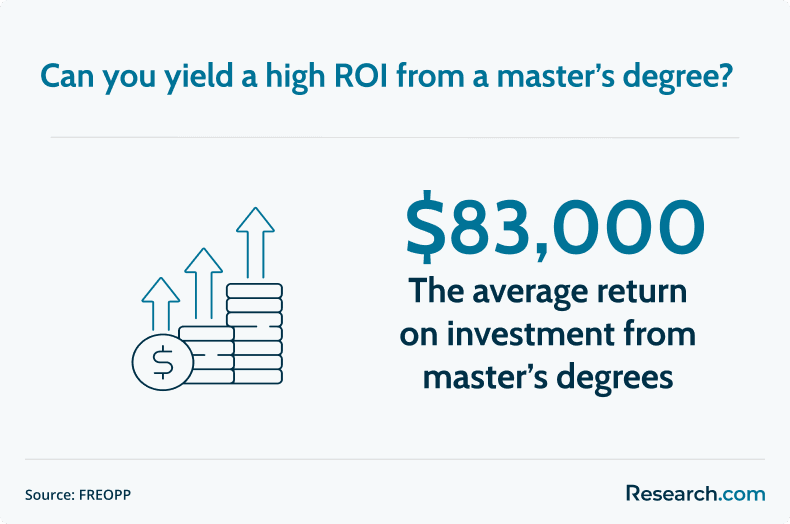
According to the Foundation for Research on Equal Opportunity, the average ROI for masters degrees is $83,000. That broad figure should not be read as a guaranteed MFA outcome because earnings in the arts vary widely by discipline, geography, employment type, and professional network.
| ROI factor | Why it matters for MFA students | Questions to ask before enrolling |
| Funding package | Assistantships, tuition remission, stipends, and fellowships can dramatically change the financial risk of an MFA. | How much tuition will I actually pay after aid? Is funding guaranteed for every year? |
| Career goal | The MFA is more directly useful for college teaching and advanced artistic practice than for jobs that primarily require technical certificates or commercial experience. | Does this program have evidence of placing graduates in the type of work I want? |
| Portfolio development | A stronger portfolio can lead to exhibitions, publications, auditions, grants, commissions, design roles, or faculty opportunities. | Will I leave with polished work, professional documentation, and faculty mentorship? |
| Network access | Mentors, visiting artists, editors, curators, alumni, and peers can influence creative opportunities. | Who teaches in the program, and how active are alumni in my target field? |
| Income stability | Many arts careers involve freelance, adjunct, project-based, or self-employed work. | What is my plan for health insurance, debt repayment, savings, and slow work periods? |
For visual arts and photography-focused students, it can also help to compare MFA outcomes with more specialized career preparation. Students asking what jobs can you get with a digital photography degree often evaluate paths such as commercial photographer, photojournalist, art director, or visual content creator—roles where portfolio, client experience, and technical skill may matter as much as the graduate credential.
Why pursue a Master of Fine Arts degree?
The strongest reason to pursue an MFA is to develop a serious creative practice within a structured environment that provides time, critique, mentorship, and professional exposure. For many artists and writers, the value of the degree is not only the credential; it is the concentrated period of making work, receiving feedback, building discipline, and learning how to explain and defend creative choices.
Because the MFA is often considered a terminal degree in the arts, it can also support postsecondary teaching opportunities. Still, faculty hiring is competitive, and the degree works best when combined with teaching experience, a strong portfolio, publications, exhibitions, performances, or other professional accomplishments.
| Good reasons to pursue an MFA | Weak reasons to pursue an MFA |
| You need dedicated time and expert critique to build a professional body of work. | You expect the degree alone to make you financially secure. |
| You want to teach at the college level in an arts discipline. | You are using graduate school mainly to delay career decisions. |
| You have identified programs with faculty, funding, and networks aligned with your goals. | You have not reviewed total cost, debt, placement data, or alternative paths. |
| You want access to studios, workshops, production resources, literary communities, or performance opportunities. | You assume every MFA program has equal reputation or equal career value. |
| You are prepared to combine creative work with teaching, freelance, commercial, nonprofit, or administrative income if needed. | You are unwilling to build a portfolio, network, pitch work, apply for grants, or market your skills. |
Which industries and employers hire MFA graduates?
MFA graduates work across both arts-centered and business-facing environments. Some roles are directly tied to creative practice, while others use the communication, design thinking, critique, storytelling, project management, and visual judgment developed during graduate study.
Students who want to combine visual practice with digital product work may also compare MFA training with the best online user experience design degree programs. UX, digital design, and interactive media can be practical options for artists who want more structured employment in technology or product teams.
- Higher education and academia: MFA graduates may teach at universities, art schools, and community colleges. Examples of institutions associated with arts education include the University of Iowa Writers’ Workshop, Rhode Island School of Design (RISD), School of the Art Institute of Chicago (SAIC), and Savannah College of Art and Design (SCAD).
- Publishing, writing, and media: Writers and editors may work with publishing houses, literary agencies, magazines, and digital outlets. Examples include Penguin Random House, The New Yorker, The Atlantic, and Condé Nast.
- Film, theater, and entertainment: Screenwriters, actors, directors, editors, designers, and production professionals may seek opportunities with Netflix, HBO, Warner Bros., Broadway companies, and regional theater organizations.
- Museums, galleries, and arts administration: Curatorial, education, collections, programming, and development roles can be found at institutions such as the Metropolitan Museum of Art, Guggenheim Museum, Whitney Museum of American Art, and the Smithsonian Institution.
- Design, marketing, and creative direction: MFA graduates with strong visual portfolios may work in branding, advertising, publishing, product design, or visual strategy for companies such as Apple, Google, IDEO, Nike, Ogilvy, and Wieden+Kennedy. Students researching what can you do with a user experience degree will find related roles such as UX researcher, interaction designer, and product strategist.
- Self-employment and freelancing: Many MFA graduates build independent practices as artists, illustrators, filmmakers, designers, performers, consultants, or writers.
- Corporate innovation and technology: Companies such as Microsoft, Meta, Adobe, gaming studios, VR firms, and startups may value MFA-trained professionals for creative strategy, product storytelling, user-centered design, and visual problem-solving.
The most sustainable MFA careers often combine multiple arenas: teaching plus studio practice, freelance design plus exhibitions, arts administration plus writing, or commercial media work plus independent projects.
What is the job outlook for MFA-related careers in 2027?
The job outlook for MFA-related careers is mixed. Employment in arts and design fields such as graphic design, fine arts, and animation is projected to grow slightly slower than the average pace between 2024 and 2034, with about 84,900 openings annually. Demand is stronger in some digital, museum, therapy, and education-related areas, while traditional studio, writing, and academic jobs remain competitive.
| Occupation or field | Projected growth or employment signal stated | What it means for MFA graduates |
| Curators | Around 12% projected growth | Museum and cultural institution roles may offer stronger growth, but relevant experience and collections or exhibition skills matter. |
| Film and video editors | Approximately 3% projected growth | Editing work exists in entertainment, streaming, corporate media, and digital content, but reels and software fluency are essential. |
| Art, drama, or music professors | Approximately 3% projected growth | Postsecondary teaching remains a major MFA goal, but full-time faculty searches are highly competitive. |
| Graphic design jobs | Around 2% projected growth | Competition is likely, but digital marketing, branding, and web design can create opportunities for strong visual communicators. |
| UX/UI designers | Projected to grow by 7% from 2024 to 2034 | Digital product design can be a practical direction for MFA graduates who add research, prototyping, and interface skills. |
| Art therapists | Expected to see 10% growth | This path may appeal to community-oriented artists, but additional credentials are typically required. |
| Post-secondary teaching roles | Projected to grow by 24% | Teaching can provide a stable professional track, though hiring standards vary by discipline and institution. |
| Art directors | Expected to increase by 4% from 2024 to 2034 | Leadership roles may reward MFA-level visual judgment, but candidates usually need a proven record in campaigns, media, or design teams. |
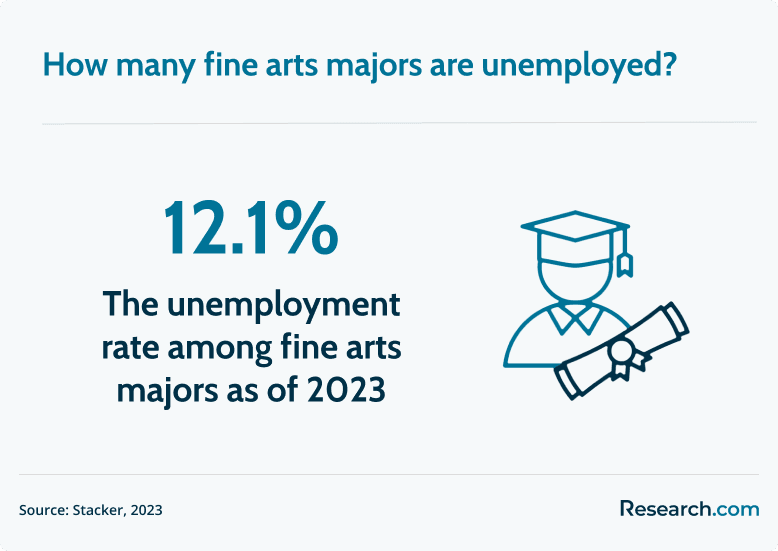
Labor market risk should be taken seriously. According to Stacker, unemployment among fine arts majors is around 12.1%, and underemployment affects approximately 55.4%, with many graduates working in jobs that do not require their degree. That does not mean an MFA is a poor choice for everyone, but it does mean students should plan for portfolio development, networking, income diversification, and cost control before enrolling.
How much can MFA graduates earn?
MFA graduate earnings vary widely because creative work is spread across salaried, freelance, academic, nonprofit, commercial, and self-employed settings. Art directors and UX/UI designers may have stronger pay potential, while fine artists, writers, performers, and art therapists may experience more variable income depending on commissions, grants, contracts, teaching, and part-time work.
Program choice can also influence networks and professional opportunities. For example, students focused on apparel, visual culture, or design industries may compare MFA options with resources on what school has the best fashion design program before choosing a path.
| Career | Salary figure stated | Career notes for MFA graduates |
| Art directors | Around $111,040 | Often among the highest-paying MFA-aligned roles, especially in advertising, media, branding, and creative leadership. |
| Craft and fine artists | Approximately $56,260 | Income may come from sales, commissions, exhibitions, teaching, grants, or residencies. |
| Graphic designers | About $61,300 | Opportunities can exist in publishing, marketing, digital media, branding, and in-house creative departments. |
| Film and video editors | Roughly $70,570 | Work may be tied to entertainment, streaming, advertising, corporate media, and online content. Students interested in production can also review careers for cinematography degree holders. |
| Postsecondary art, drama, and music teachers | Around $80,190 | Academic roles can offer stability and professional standing, but full-time positions may be difficult to secure. |
| Curators and museum professionals | Approximately $61,770 | Relevant experience in exhibitions, collections, education, or programming can be as important as the degree. |
| UX/UI designers | About $80,730, with 13% projected growth | This can be one of the more financially practical directions for MFA graduates who develop digital product and user-centered design skills. |
| Art therapists within rehabilitation counseling | Median pay around $42,000, with strong growth potential at 10% | This path may require additional education, certification, and/or licensure beyond the MFA. |
The chart below compares average annual salaries across common MFA-related careers. In the figures shown, art directors earn the most at over $110,000 annually, while art therapists are listed at $42,000.
What challenges should MFA graduates expect?
An MFA can provide artistic growth, mentorship, and professional credibility, but it does not remove the structural challenges of creative labor markets. Students should understand these risks before enrolling, not after graduation.
| Challenge | How it affects MFA graduates | Practical response |
| Competitive hiring | Tenure-track roles, major exhibitions, publishing contracts, and high-profile arts jobs often attract many qualified candidates. | Build a distinctive portfolio, pursue teaching or industry experience during the program, and apply broadly. |
| Income instability | Freelance, adjunct, commission-based, and project-based work can create irregular cash flow. | Plan multiple income streams, maintain an emergency fund when possible, and develop marketable adjacent skills. |
| Student debt | Expensive MFA programs can be difficult to repay if post-graduation income is unpredictable. | Prioritize funded programs, assistantships, public institutions, scholarships, or lower-cost options. |
| Need for supplementary work | Many artists and writers support their practice through teaching, design, editing, arts administration, or unrelated work. | Choose skill-building work that also strengthens your long-term creative profile. |
| Visibility and networking pressure | Recognition often depends on publications, performances, exhibitions, referrals, and professional relationships. | Attend events, submit work consistently, maintain an online presence, and stay connected with mentors and peers. |
| Geographic concentration | Arts opportunities may cluster in cities such as New York, Los Angeles, and Chicago, where living costs can be high. | Compare local, remote, regional, and hybrid opportunities before relocating. |
Some MFA graduates build more stable careers by pairing creative work with education credentials, commercial design skills, nonprofit management, or online teaching. Those leaning toward formal teaching pathways may compare the MFA with options such as the fastest online master of arts in teaching programs.
What alternative career paths can MFA graduates pursue?
MFA training can transfer beyond traditional studio, stage, page, or classroom work. The most transferable skills include storytelling, critique, audience awareness, project development, visual communication, revision, presentation, collaboration, and creative problem-solving.
For graduates interested in interactive entertainment, it may be useful to explore what qualifications do I need to be a video game designer, since gaming roles often combine artistic ability with software, systems thinking, user experience, and technical production skills.
- Creative industries and media: Film, television, animation, advertising, podcasting, and gaming roles can use MFA-level writing, directing, design, and visual storytelling skills.
- Content creation and digital media: Social media strategy, digital marketing, video production, newsletters, podcast development, and multimedia storytelling can provide flexible creative work.
- Corporate and brand communications: Copywriting, internal communications, brand strategy, creative operations, and presentation design can offer more structured employment.
- Arts administration and nonprofits: Program management, development, community engagement, education programming, and curation can keep graduates connected to the arts while building organizational experience.
- Publishing and editing: Editors, literary agents, content managers, writing coaches, and digital publishing professionals may benefit from advanced writing and critique training.
- Education and training outside tenure-track roles: Community arts programs, K–12 arts education, workshops, continuing education, online courses, and private coaching can all use MFA expertise.
- Therapeutic and community arts: Arts-based wellness, community engagement, and therapy-adjacent work can be meaningful, but clinical roles may require additional credentials.
- Entrepreneurship and freelancing: Independent studios, consulting, commissions, creative agencies, online shops, and teaching platforms can allow graduates to design a portfolio career.
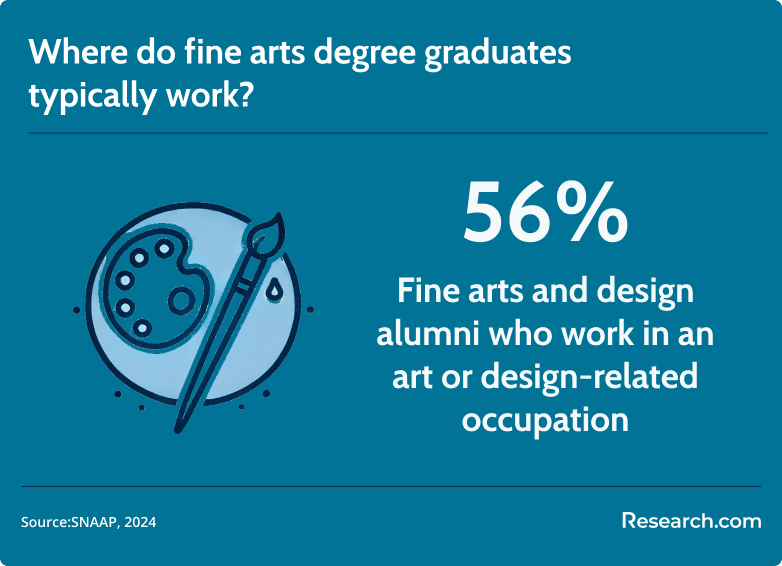
According to the Strategic National Arts Alumni Project, about 56% of arts and design graduates report working in an art or design-related occupation. That figure reinforces a practical point: many graduates stay connected to creative work, but the exact job title may not look like the traditional “artist only” career path.
How can interdisciplinary study strengthen an MFA career?
Interdisciplinary study can make an MFA more marketable when it adds concrete capabilities that employers, clients, institutions, or communities need. Useful pairings include digital media, UX design, architecture, arts administration, education, business, nonprofit management, data storytelling, game design, museum studies, and creative technology.
For example, an affordable online architecture master's degree may strengthen spatial reasoning, design systems thinking, and project management for graduates interested in installation art, exhibition design, scenography, environmental design, or interdisciplinary creative direction.
How to choose an MFA program with career outcomes in mind
The best MFA program is not automatically the most famous one. It is the program that fits your discipline, budget, faculty needs, creative goals, professional network, and risk tolerance. Use the following steps before applying or enrolling.
- Define your primary outcome. Decide whether you want college teaching, a stronger studio practice, publishing, performance, design work, arts administration, or a pivot into digital media.
- Review faculty fit carefully. Look for mentors whose work, teaching style, industry connections, and critique approach match your goals.
- Compare funding, not just tuition. A fully or partially funded MFA can change the ROI calculation more than prestige alone.
- Ask for recent graduate outcomes. Look for evidence of alumni teaching, publishing, exhibiting, performing, curating, designing, or working in relevant industries.
- Evaluate professional access. Consider visiting artists, editors, curators, production partners, internships, residencies, teaching assistantships, and alumni networks.
- Inspect portfolio support. A strong program should help you leave with polished work, documentation, public-facing materials, and a clear professional narrative.
- Check format and location. Studio access, performance space, local arts ecosystems, remote work possibilities, and cost of living can affect both learning and post-graduation opportunities.
Common mistakes to avoid before earning an MFA
| Mistake | Why it can hurt your career | Better approach |
| Choosing a program without reviewing funding | High debt can be difficult to manage with freelance or early-career arts income. | Compare assistantships, tuition remission, stipends, and total borrowing. |
| Assuming the MFA guarantees a teaching job | Faculty hiring is competitive, and many roles depend on teaching record, publications, exhibitions, or professional credits. | Gain teaching experience, build a public portfolio, and develop backup career options. |
| Ignoring portfolio quality | The degree matters less if the work does not demonstrate growth, originality, and professional readiness. | Treat every semester as portfolio development, not just course completion. |
| Focusing only on prestige | A famous program may still be a poor fit if faculty, cost, location, or resources do not match your goals. | Prioritize fit, funding, mentorship, facilities, and alumni outcomes. |
| Overlooking licensure rules | K–12 teaching, art therapy, and drama therapy may require credentials the MFA does not provide. | Check state and professional requirements before enrolling. |
| Waiting until graduation to network | Creative opportunities often come through relationships built over time. | Attend readings, exhibitions, conferences, screenings, workshops, and alumni events while enrolled. |
| Not developing digital skills | Creative markets increasingly reward multimedia, online presentation, and platform fluency. | Add relevant tools in design, editing, animation, UX, web publishing, or digital promotion. |
What MFA graduates say about their careers
- : "My MFA changed how I think about making art. I learned to test ideas, accept rigorous critique, and develop a more recognizable creative voice. That process gave me confidence I could carry into professional projects. — Adam"
- : "The degree helped me see more than one possible future. Through faculty guidance and industry connections, I found ways to apply creative skills in design, publishing, and media rather than limiting myself to a single path. — Uzo"
- : "The most valuable part was the community. My peers and mentors challenged my assumptions, supported my work, and pushed me to grow as both an artist and a thinker. — Sheila"
Key Insights
- An MFA is most useful when it supports a specific creative or academic plan. It can strengthen teaching prospects, portfolio development, artistic discipline, and professional networks, but it does not guarantee stable employment.
- Most MFA careers are portfolio-driven rather than license-driven. Exceptions include K–12 teaching, art therapy, drama therapy, and some specialized technical roles.
- ROI depends on cost, funding, discipline, and income strategy. The average ROI for masters degrees is reported as $83,000, but MFA outcomes can vary sharply by field and employment model.
- Digital skills are increasingly important. Nearly three-fourths of visual artists have started using digital tools, and MFA graduates who add UX, multimedia, animation, editing, or creative technology skills may expand their options.
- Career outcomes are uneven across MFA-related fields. Some roles show stronger growth, such as curators at around 12% and art therapists at 10%, while graphic design is around 2% and many academic or traditional arts roles remain competitive.
- Salary potential differs widely. Art directors are listed around $111,040, while art therapists are listed around $42,000, showing why students should compare realistic job targets before enrolling.
- The safest MFA strategy is a portfolio career mindset. Many graduates combine teaching, freelancing, exhibitions, commissions, nonprofit work, digital design, writing, or consulting to create a sustainable professional life.
References:
- Employed Historian. (n.d.). Statistics on fine arts majors. https://employedhistorian.com/humanities/fine-arts-majors-statistics
- Strategic National Arts Alumni Project. (2024). Arts and design alumni employment and perspectives on their work and careers. SNAAP. https://snaaparts.org/findings/reports/arts-and-design-alumni-employment-and-perspectives-on-their-work-and-careers
- US BLS. (2025, August 28). Archivists, curators, and museum workers. U.S. Department of Labor, Occupational Outlook Handbook. https://www.bls.gov/ooh/education-training-and-library/curators-museum-technicians-and-conservators.htm
- US BLS. (2025, August 28). Art directors. U.S. Department of Labor, Occupational Outlook Handbook. https://www.bls.gov/ooh/arts-and-design/art-directors.htm
- US BLS. (2025, August 28). Arts and design occupations. U.S. Bureau of Labor Statistics. https://www.bls.gov/ooh/arts-and-design
- US BLS. (2025, August 28). Craft and fine artists. U.S. Department of Labor, Occupational Outlook Handbook. https://www.bls.gov/ooh/arts-and-design/craft-and-fine-artists.htm
- US BLS. (2025, August 28). Graphic designers. U.S. Department of Labor, Occupational Outlook Handbook. https://www.bls.gov/ooh/arts-and-design/graphic-designers.htm
- US BLS. (2025, August 28). Postsecondary teachers. U.S. Department of Labor, Occupational Outlook Handbook. https://www.bls.gov/ooh/education-training-and-library/postsecondary-teachers.htm
- ZipDo. (2025). Upskilling and reskilling in the art industry Statistics Statistics: ZIPDO Education Reports 2025. https://zipdo.co/upskilling-and-reskilling-in-the-art-industry-statistics
- Additional background sources originally cited: https://www.mydegreeguide.com/what-can-you-do-with-an-mfa-degree and https://www.mydegreeguide.com/degrees/master/arts/fine
Other Things You Should Know About Pursuing a Master of Fine Arts Degree
Yes. Most MFA programs require a capstone before graduation, usually a thesis, final exhibition, or performance. Students often complete 36 to 60 credit hours, and the work is reviewed by faculty or a committee before the degree is awarded.
Completing an MFA program in 2027 typically takes between two to three years, depending on the institution and whether you are studying full-time or part-time. Full-time students often finish in two years, completing around 60 credit hours.
Typically, obtaining an MFA degree in 2027 requires completion of 60-90 credit hours in coursework and thesis work, a portfolio of creative work, and possibly an interview or audition process, depending on the discipline and institution. Each program may have specific prerequisites and additional requirements.
In 2027, MFA graduates can explore a variety of remote or freelance opportunities, particularly in fields such as graphic design, writing, illustration, and digital media. The growing digital landscape enables creative professionals to collaborate and work on projects from anywhere, offering flexibility and a wider range of prospects.


