2027 Cheapest Accredited Online Journalism Degree Programs: Tuition, Fees, and Financial Aid

Co-Founder and Chief Data Scientist
The hardest part of choosing an affordable online journalism degree is knowing whether the lowest tuition is truly the lowest cost. College Board's latest published pricing shows average tuition and fees of $11,610 for in-state public four-year students and $30,780 for out-of-state students, making careful comparison essential.
This guide is for students comparing accredited online journalism, digital journalism, mass communication, and media programs. You'll learn how to evaluate tuition, fees, aid, accreditation, transfer savings, and net price so you can avoid hidden costs and identify the best value for your goals.
Key Things You Should Know
- The cheapest accredited online journalism options are usually public universities with online or in-state rates, with published per-credit prices ranging from about $129 for eligible in-state UF Online students to the mid-$300s and $400s at several public online programs.
- Advertised tuition is not the same as total cost, a 120-credit bachelor's degree can look inexpensive per credit but rise sharply after mandatory online fees, course materials, portfolio tools, graduation fees, and residency-credit rules.
- Net price matters more than sticker price. FAFSA-based aid, the Federal Pell Grant, state grants, scholarships, employer tuition benefits, and transfer credits can make a higher-tuition accredited program less expensive than the lowest published rate.
What Are the Cheapest Accredited Online Journalism Degree Programs?
The cheapest accredited online journalism degree programs are typically bachelor's programs offered by institutionally accredited public universities. Because many schools use broader names such as digital journalism, journalism and media studies, mass communication, strategic communication, or media studies, the best comparison is not just "journalism" in the title but whether the curriculum includes reporting, media law, editing, multimedia storytelling, ethics, audience analytics, and portfolio development.
The table below compares affordable U.S. online journalism-related bachelor's programs using publicly listed online tuition information available from institutional tuition pages. Estimated degree cost assumes 120 credits before transfer credits and before financial aid, so students should verify the school's current tuition, mandatory fees, residency rules, and total program estimate before applying.
| School | Online journalism-related degree | Institutional accreditation | Published online tuition snapshot | Estimated 120-credit tuition before aid | Cost notes |
| University of Florida Online | B.S. in Journalism: Sports and Media | SACSCOC | About $129.18 per credit for Florida residents; about $552.62 for nonresidents | About $15,502 in-state; about $66,314 out-of-state | Very low for eligible Florida residents; nonresident cost changes the value equation. |
| University of Arkansas at Little Rock | B.A. in Mass Communication, online option | HLC | About $292 per credit for many online undergraduate courses | About $35,040 | Can be cost-competitive when online rates reduce residency pricing differences. |
| Southern Illinois University Carbondale | Online journalism, mass communication, or media-related study options | HLC | Often listed in the low-to-mid $300s per credit for online undergraduate study | Varies by current rate and program pathway | Students should confirm whether the fully online pathway matches their journalism goals. |
| New Mexico State University Global Campus | B.A. in Journalism and Media Studies | HLC | About $395.40 per credit for online undergraduate coursework | About $47,448 | Flat online pricing can help out-of-state students budget more predictably. |
| University of Memphis Global | B.A. in Journalism and Strategic Media | SACSCOC | About $431 per credit for many online undergraduate courses | About $51,720 | Good fit for students seeking journalism plus strategic media or public relations coursework. |
| Penn State World Campus | B.A. in Digital Journalism and Media | Middle States Commission on Higher Education | Usually higher than low-cost public online options | Varies by credit level and current tuition band | May cost more but offers a recognizable online campus and journalism-focused digital curriculum. |
| Arizona State University Online | B.A. in Mass Communication and Media Studies | HLC | Often listed in the mid-$500s to $600s per credit range before fees | Often above the lowest-cost public options | Can be strong for students seeking scale, brand recognition, and broad media coursework. |
For most students, the lowest-cost shortlist should start with UF Online if they qualify for Florida resident pricing, then public online programs with flat or reduced online tuition. Out-of-state students should be especially careful: a school that is the cheapest for residents may become one of the more expensive choices for nonresidents.
How Were the Cheapest Online Journalism Degree Programs Ranked?
The programs above were prioritized by affordability first, but not by tuition alone. A meaningful cost ranking for online journalism degrees should consider whether the degree is offered by an accredited institution, whether the coursework is available online, how transparent the school is about fees, and whether students can use aid or transfer credits.
Use the following ranking logic when building your own final shortlist, because your cheapest program may differ depending on residency, aid eligibility, and transferred credits.
- Confirm institutional accreditation first, because it affects federal aid eligibility, transferability, graduate-school recognition, and employer trust.
- Compare the same unit of cost, usually per-credit tuition multiplied by the number of credits you still need after transfer evaluation.
- Add required online, technology, course, graduation, and student-service fees instead of relying only on the tuition line.
- Check whether the rate changes by residency, because in-state public tuition can be dramatically lower than out-of-state tuition.
- Estimate net price after grants and scholarships, because need-based aid can make a higher sticker price more affordable.
- Review student outcomes and curriculum fit, including portfolio courses, internship options, media law, editing, audience analytics, and multimedia reporting.
A common mistake is ranking schools by the lowest advertised per-credit rate and stopping there. The better approach is to rank by estimated remaining degree cost after transfer credits, mandatory fees, and gift aid, then compare quality factors such as curriculum depth, advising, graduation support, and career alignment.
How Can You Verify the Accreditation of an Online Journalism Degree Program?
Accreditation is the quality-control step that should come before any cost comparison. For online journalism degrees, the most important baseline is institutional accreditation from a recognized accrediting agency, because this is generally tied to federal financial aid eligibility and degree recognition.
Journalism-specific programmatic accreditation, such as ACEJMC accreditation, can be a useful quality signal, but it is not required for every journalism career. Many credible journalism, digital media, and mass communication programs are institutionally accredited even if the specific online degree does not carry a separate journalism accreditation.
Before you apply, verify accreditation through several checkpoints so you are not relying only on marketing language from a program page.
- Search the institution in the U.S. Department of Education accreditation database and confirm that the school is currently accredited, not merely a candidate or formerly accredited institution.
- Check the accreditor's own directory to confirm that the institution appears there and that the status is active.
- Ask whether the online degree is offered by the same accredited institution, especially if the school uses a separate online division, partner company, or alternative campus.
- Confirm federal financial aid participation by checking whether the school has a federal school code and participates in Title IV aid programs.
- Look for program-specific recognition only after institutional accreditation is clear, because programmatic journalism accreditation is helpful but not a substitute for institutional accreditation.
Red flags include vague claims such as "internationally recognized," missing accreditor names, pressure to enroll quickly, unclear school ownership, or a program that cannot explain whether online students are eligible for federal aid.
How Much Does an Accredited Online Journalism Degree Really Cost?
The real cost of an accredited online journalism degree includes tuition, mandatory fees, books and course materials, equipment, software, transfer-credit limits, and the number of credits you must complete at the degree-granting institution. A bachelor's degree is commonly structured around 120 credits, so a $300 per-credit rate implies $36,000 in tuition before fees and aid, while a $500 per-credit rate implies $60,000.
The table below shows how common cost categories affect the final price. This is especially useful because journalism students may need technology and portfolio tools that are not obvious in a tuition-only comparison.
| Cost category | What it means | Why it matters for journalism students |
| Tuition | The instructional charge, usually per credit or per term | This is the headline number, but it rarely captures the full cost. |
| Mandatory fees | Required charges for technology, online learning, student services, assessment, or graduation | Fees can narrow or erase the difference between two tuition rates. |
| Course materials | Textbooks, reporting guides, subscriptions, media tools, or digital access codes | Journalism courses may require current stylebooks, publication tools, or multimedia resources. |
| Equipment | Laptop, microphone, camera, lighting, storage, or editing hardware | Multimedia journalism courses may require more than a basic computer. |
| Software | Editing, design, transcription, analytics, or content-management tools | Some schools provide licenses; others expect students to pay separately. |
| Residency requirement | Minimum number of credits that must be completed at the school | Limits how much transfer credit can reduce your bill. |
| Net price | Cost after grants, scholarships, and other gift aid | This is the best number for comparing affordability. |
Students trying to reduce the cost of a bachelor's degree often start at a community college and transfer later. If you are exploring that path, comparing lower-cost associate degrees can help you understand how general education credits may reduce the total price of a journalism bachelor's program.
Which Tuition Models Make Online Journalism Degree Programs More Affordable?
Online journalism programs use different tuition models, and the model can matter as much as the stated rate. A school with slightly higher tuition but a predictable flat online rate may be cheaper than a school with lower tuition but high out-of-state charges or many required fees.
These are the tuition models students should compare before choosing a program.
- Per-credit tuition charges for each credit attempted, which is simple to compare but can become costly if you repeat courses or take excess electives.
- Flat-rate semester tuition charges the same tuition within a credit range, which can reward full-time students who can handle heavier course loads.
- Flat online tuition charges the same rate to in-state and out-of-state students, which can be valuable for nonresidents.
- In-state public tuition is often the cheapest option for residents but may not help students who live elsewhere.
- Competency-based tuition charges by subscription term or pace, which can reduce cost for students who already know the material and can finish quickly.
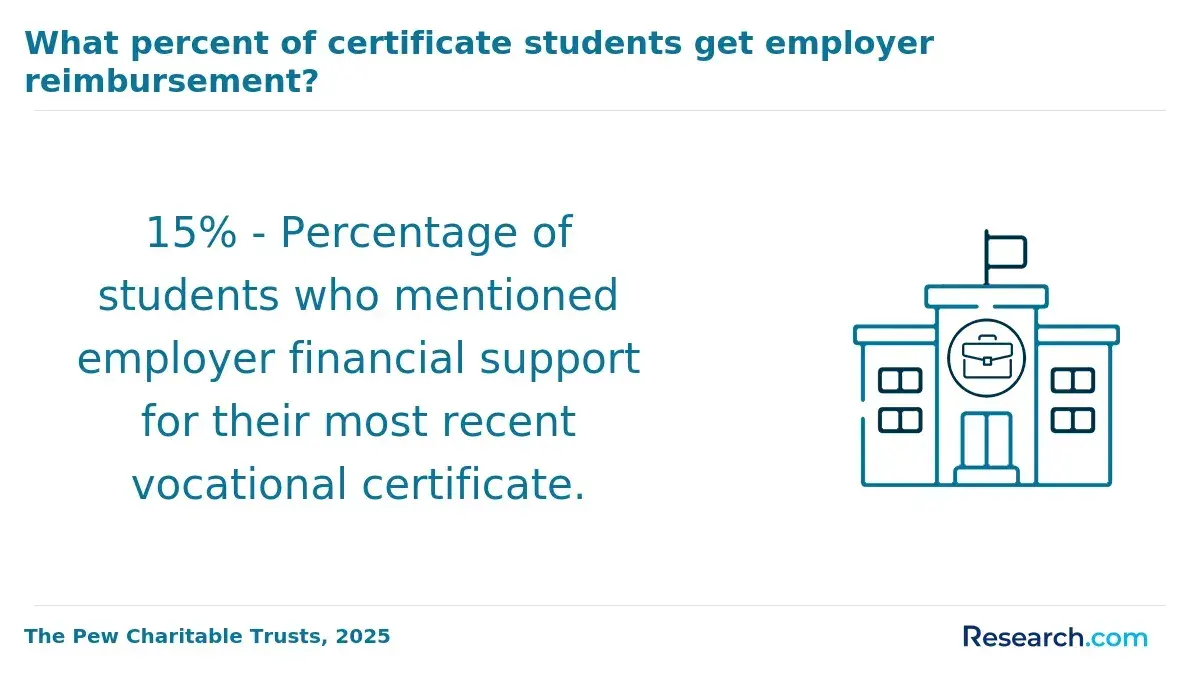
- Employer-paid tuition may reimburse or directly pay part of the program, but it can require grade minimums, employment commitments, or approved school lists.
Flat-rate and waiver-based pricing also appears in other online degree markets, including some MBA online programs, so journalism students should use the same principle: compare the total remaining cost under the exact enrollment pace they expect to use.
What Fees and Hidden Costs Should Online Journalism Degree Students Expect?
Mandatory fees can make a low-tuition online journalism program more expensive than expected. The most important step is to ask for a full cost-of-attendance estimate, not just the tuition rate shown on a program page.
Journalism students should pay close attention to fees and tools tied to online delivery, media production, and professional portfolio development.
- Online learning or distance education fees, which may be charged per credit or per course.
- Technology fees, which may support the learning platform, help desk, digital library, or student systems.
- Course-specific media fees, which may apply to video, audio, design, or production classes.
- Textbooks and digital access codes, including stylebooks, reporting tools, databases, or publisher platforms.
- Software subscriptions, such as editing, design, transcription, analytics, or content-management tools.
- Equipment costs, including a reliable laptop, external storage, microphone, headphones, camera, or mobile reporting accessories.
- Portfolio and publication expenses, such as website hosting, domain registration, or professional portfolio platforms.
- Graduation, transcript, and assessment fees, which may appear near the end of the program.
A practical way to compare schools is to ask each admissions or financial aid office for a written estimate for the same scenario: your residency, transfer credits, enrollment pace, expected start term, and program format. If a school cannot clearly explain mandatory fees, treat that as a cost-transparency warning sign.
How Does FAFSA and Federal Financial Aid Work for Online Journalism Degree Programs?
Online students can use federal financial aid if they enroll in an eligible program at a participating accredited institution and meet aid requirements. The FAFSA is the entry point for federal grants, federal student loans, and many state or institutional aid programs.
The Federal Pell Grant remains especially important for affordability: the maximum Pell Grant for the 2024-2025 award year was $7,395. That amount does not cover every online journalism program, but it can substantially reduce the net price for eligible students when combined with state grants, school scholarships, or transfer credits.
Follow these steps before assuming an online journalism program is affordable with aid.
- Confirm the school participates in federal student aid and has a valid federal school code.
- Submit the FAFSA as early as possible, because some state and institutional grants have limited funding or priority deadlines.
- Review the financial aid offer carefully and separate gift aid from loans that must be repaid.
- Ask whether aid applies to your enrollment pace, because part-time status can change eligibility and disbursement amounts.
- Check satisfactory academic progress rules, because losing eligibility can increase out-of-pocket cost.
- Compare net price across schools after grants, scholarships, tuition discounts, and required fees.
The same federal-aid verification habit is useful across online education levels, including online PhD programs for working professionals, because accreditation and Title IV participation affect whether students can access federal aid.
Which Scholarships, Grants, and Tuition Benefits Can Help Pay for an Online Journalism Degree?
Scholarships and grants are valuable because they usually do not need to be repaid. For journalism students, the best funding strategy is to combine broad undergraduate aid with awards tied to writing, media, public service, first-generation status, transfer status, or local journalism.
Students should look for several funding sources rather than relying on one award.
- Federal grants, including Pell Grants for eligible undergraduates.
- State grants, which may require residency, FAFSA completion, or enrollment at an eligible in-state institution.
- Institutional scholarships, including merit, need-based, transfer, adult learner, and online student awards.
- Journalism foundation scholarships, especially for students interested in local reporting, investigative journalism, sports journalism, photojournalism, or diversity in media.
- Professional association scholarships, which may support students in broadcast journalism, digital media, public relations, or student media leadership.
- Employer tuition assistance, which can help working adults if the degree aligns with communications, marketing, media, or public affairs roles.
- Military and veteran education benefits, which may reduce tuition and fee costs for eligible students.
Before accepting an award, ask whether it is renewable, whether online students qualify, whether part-time students qualify, and whether it applies to tuition only or also to fees. A one-time scholarship can lower first-year cost but may not make the full degree affordable.
Can Transfer Credits, Prior Learning, and Competency-Based Study Lower the Cost of an Online Journalism Degree?
Yes, transfer credits can be one of the strongest ways to lower the cost of an online journalism degree. The biggest savings usually come from transferring general education credits, lower-division electives, or an completed associate degree into a bachelor's program with a clear transfer pathway.
Students should evaluate transfer policies before enrolling, not after, because residency requirements and major-specific rules can limit how many credits actually apply.
- Request an unofficial transfer review before applying, then ask for an official evaluation after admission.
- Confirm how credits apply, because credits that transfer as electives may not reduce major requirements.
- Ask about maximum transfer limits, including how many community college credits can count toward the bachelor's degree.
- Check the residency requirement, which is the minimum number of credits you must complete at the university awarding the degree.
- Ask whether prior learning assessment is available for professional writing, media production, military training, or workplace communication experience.
- Avoid taking extra electives without a degree plan, because unnecessary credits increase both tuition and time to completion.
Students who need a lower-cost starting point may also compare the best associate degree in 6 months online options, but they should confirm transferability before assuming a fast credential will reduce bachelor's degree costs.
How Should Students Compare the Net Price, Quality, and Return on Investment of Online Journalism Degree Programs?
The best-value online journalism degree is not always the cheapest program. A strong value choice combines manageable net price, credible accreditation, relevant coursework, portfolio support, internship or publication opportunities, and career services that match the student's goals.
Labor-market context matters because journalism is competitive and increasingly digital. The U.S. Bureau of Labor Statistics reported a May 2024 median annual wage of about $60,280 for news analysts, reporters, and journalists, but pay varies widely by role, region, employer, experience, and whether a graduate moves into related fields such as communications, content strategy, public relations, audience engagement, or editing.
Use the following questions to compare return on investment without overvaluing either cost or brand name.
- What is my net price after grants, scholarships, employer benefits, and transfer credits?
- How many credits must I complete at the university, and what is the total tuition for those credits?
- Are all required journalism courses available online on a predictable schedule?
- Does the program help me build a publishable portfolio in writing, audio, video, data, or social media journalism?
- Are internship, student media, or capstone opportunities available to online students?
- Does the curriculum address current newsroom expectations, including verification, media ethics, AI-assisted workflows, audience analytics, and multimedia production?
- What do completion, retention, debt, and earnings data suggest when compared with the program's net price?
Students considering adjacent information careers can also compare journalism costs with fields such as library and information science; reviewing MLIS degree cost can help clarify how tuition, aid, and career pathways differ across information-focused degrees.
Other Things You Should Know About Journalism
In 2027, the average cost of tuition and fees for an online journalism degree ranges from $5,000 to $15,000 per year. Costs vary widely based on the institution and program specifics, so researching individual programs for precise figures is essential.
Yes, several scholarships are available for online journalism students in 2027, provided by organizations like the Society of Professional Journalists and Journalism Education Association. Eligibility may vary based on financial need, academic achievement, and specific criteria outlined by the awarding body.
A strong program should teach reporting, fact-checking, interviewing, news writing, media law, ethics, editing, audience awareness, multimedia production, and digital publishing. Programs that include portfolio projects, student media, or internship options may offer stronger career preparation.
An accredited online journalism degree in 2027 typically requires students to complete 120 credit hours, including courses in media ethics, reporting, and digital storytelling. Each program may have its own distribution of major-specific and elective credits.
References
- Journalism Education and Degree Programs in the US | Journalism Authority https://journalismauthority.com/journalism-education-and-degree-programs/
- Financial Aid For Online Colleges https://www.affordablecollegesonline.org/financial-aid/financial-aid-for-online-colleges/
- Accrediting Council on Education in Journalism and Mass Communications - (ACEJMC) https://www.chea.org/accrediting-council-education-journalism-and-mass-communications
- Online Journalism Degree | Programs and Careers https://www.onlinecolleges.net/degrees/journalism/
- Journalism Degree Online | Sheffield State University https://www.sheffieldstateuniversity.com/journalism-degree-online/
- Journalism - Print and Online Journalism Major https://www.sait.ca/programs-and-courses/diplomas/journalism-print-and-online-journalism
- 2025 Most Affordable Online Journalism Degrees https://www.onlineu.com/most-affordable-colleges/journalism-degrees
- Online Journalism Degrees https://mycollegeguide.org/online-journalism-degrees/
- Scholarships & Fellowships https://www.rtdna.org/scholarships-and-fellowships
- Scholarships & Internships, Asian American Journalists Association https://www.aaja.org/news-and-resources/scholarships-internships/