
2027 Best 6-Month Online Associate Degree Programs

Co-Founder and Chief Data Scientist
Six-month online associate degree programs can be useful for adults who already have college credits, military training, workplace learning, or the ability to complete competency-based coursework quickly. They are not usually traditional two-year associate degrees squeezed into half a year. In most cases, the “6-month” timeline applies only when a student enters with enough eligible credits or prior learning to reduce the remaining coursework.
This guide explains what these programs really are, which fields are commonly offered, how employers may view them, what they cost, how to check accreditation, and how to decide whether an accelerated associate pathway is realistic for your schedule, budget, and career goals.
Quick Answer: Can You Really Earn an Associate Degree in 6 Months?
Yes, but only under specific conditions. A 6-month online associate degree is usually possible when you transfer in credits, receive credit for prior learning, enroll in a competency-based program, or take an unusually heavy accelerated course load. Students starting from zero credits should expect a longer timeline because an associate degree typically requires substantial general education and major-specific coursework.
| Best Fit | Use Caution |
| Students with previous college credits | Students with no transfer credits |
| Working adults with documented professional training | Students who need extensive instructor feedback |
| Self-directed learners comfortable with online platforms | Students who struggle with time management |
| Applicants targeting entry-level or advancement-ready roles | Students entering licensed fields without checking state requirements |
Key Things to Know Before Choosing a 6-Month Online Associate Degree
- Timeline: The 6-month path is usually conditional. It depends on transfer credits, prior learning assessment, competency-based pacing, or intensive enrollment.
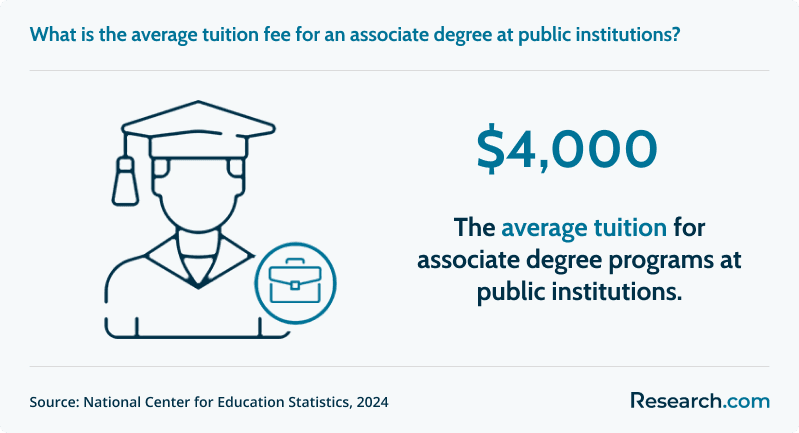
- Cost: Tuition and fees for these programs generally range from $4,000 to $19,500, depending on the school, format, and field.
- Workload: Students often need to budget 10 to 25 hours per week, with heavier weeks during compressed terms or project deadlines.
- Common fields: Business Administration, Criminal Justice, Information Technology, Healthcare Administration, Graphic Design, Accounting, Paralegal Studies, Health Information Technology, and Web Development are common accelerated options.
- Accreditation: Always verify institutional and, when relevant, programmatic accreditation before enrolling. Accreditation affects credit transfer, employer recognition, financial aid, and licensure preparation.
- 2027 List of the Best 6-Month Online Associate Degree Programs
- What are the most popular fields for 6-month online associate degrees for 2027?
- How do 6-month online associate degrees compare to traditional on-campus degrees?
- What are the typical study hours required for a 6-month online associate degree?
- How much do 6-month online associate degree programs cost for 2027?
- What financial aid options are available for 6-month online associate degree programs?
- What are the admission requirements for 6-month online associate degree programs?
- How can I choose the best field of study for a 6-month online associate degree?
- How can I check if a 6-month online associate degree program is accredited?
- How do employers view 6-month online associate degrees compared to traditional degrees?
- What are the career prospects with a 6-month online associate degree?
- Key Facts About 6-Month Associate Degree Programs
- What Are the Highest-Paying Career Paths for 6-Month Online Associate Degree Holders?
- What are the advantages of earning an associate degree online compared to a traditional degree?
- What challenges should I anticipate in a 6-month online associate degree program?
- What are some tips to succeed in a 6-month online associate degree program?
- Can Additional Certifications Enhance a 6-Month Online Associate Degree’s Value?
- Which College Majors Complement a 6-Month Online Associate Degree?
- How are learning support and accessibility services integrated into 6-month online associate degree programs?
- How Do 6-Month Online Associate Degree Programs Adapt to Emerging Industry Trends?
- How to Evaluate the Credibility of 6-Month Online Associate Degree Providers
- What career resources and networking opportunities are available for 6-month online associate degree students?
- What are my academic progression options after a 6-month online associate degree?
- Do Student Outcomes Validate the Value of a 6-Month Online Associate Degree?
- How Do I Evaluate the Return on Investment for a 6-Month Online Associate Degree?
- Program credibility checklist
2027 List of the Best 6-Month Online Associate Degree Programs
The following associate degree areas are commonly available in accelerated online formats. The right choice depends on your transfer credits, target job, state requirements, and whether the curriculum includes applied projects, labs, internships, portfolios, or certification preparation.
1. Associate of Science in Business Administration
A business administration associate degree introduces core business functions such as management, marketing, finance, operations, and organizational communication. It is best for students who want a broad credential that can apply across industries rather than a narrowly technical role.
- Tracks/Concentrations: Management, Marketing, Finance
- Possible Job Positions: Business Manager, Marketing Coordinator, Financial Analyst
2. Associate of Science in Criminal Justice
An online associate degree in criminal justice covers the structure of courts, policing, corrections, investigations, and legal procedures. Students should confirm whether the program supports the requirements of their intended agency or state, especially for roles that involve academy training or background screening.
- Tracks/Concentrations: Law Enforcement, Corrections, Forensic Science
- Possible Job Positions: Police Officer, Correctional Officer, Forensic Technician
3. Associate of Science in Information Technology (IT)
An IT associate degree focuses on practical technology skills such as computer systems, operating environments, networking, troubleshooting, help desk support, and cybersecurity fundamentals. This field is often a strong match for students who can pair the degree with hands-on labs and industry certifications.
- Tracks/Concentrations: Network Administration, Cybersecurity, IT Support
- Possible Job Positions: IT Specialist, Network Administrator, Cybersecurity Analyst
4. Associate of Applied Science in Healthcare Administration
A healthcare administration associate degree prepares students for nonclinical roles in medical offices, clinics, hospitals, and healthcare service organizations. Coursework often emphasizes scheduling, records, billing processes, compliance, healthcare terminology, and administrative coordination.
- Tracks/Concentrations: Medical Office Management, Health Information Technology, Healthcare Services Management
- Possible Job Positions: Healthcare Administrator, Medical Office Manager, Health Services Coordinator
5. Associate of Science in Early Childhood Education
An early childhood education associate degree introduces child development, learning environments, classroom practice, family engagement, and early learning theory. Students planning to become licensed teachers should check state-specific requirements, because an associate degree alone may not meet all credentialing rules. Those comparing longer-term pathways can also review affordable online early childhood education degree options.
- Tracks/Concentrations: Child Development, Special Education, Early Childhood Administration
- Possible Job Positions: Preschool Teacher, Childcare Director, Early Childhood Educator
6. Associate of Science in Graphic Design
A graphic design associate degree builds visual communication skills through typography, color theory, digital media, layout, branding, and design software. For creative roles, the portfolio often matters as much as the degree, so students should look for programs with project-based assignments and portfolio development.
- Tracks/Concentrations: Digital Media Design, Print Media, Web Design
- Possible Job Positions: Graphic Designer, Web Designer, Print Production Artist
7. Associate of Applied Science in Paralegal Studies
Paralegal studies prepares students for legal support work involving research, case organization, document drafting, litigation support, and legal technology. This pathway is more occupation-specific than an online associate degree in legal studies, which generally provides a wider foundation in legal concepts.
- Tracks/Concentrations: Civil Litigation, Criminal Law, Corporate Law
- Possible Job Positions: Paralegal, Legal Assistant, Court Clerk
8. Associate of Science in Health Information Technology
Health information technology programs focus on health records, healthcare data, electronic systems, coding concepts, privacy practices, and information workflows. Students should confirm whether the curriculum aligns with any certification goals they plan to pursue after graduation.
- Tracks/Concentrations: Health Data Management, Electronic Health Records, Health Information Systems
- Possible Job Positions: Health Information Technician, Medical Records Specialist, Health Data Analyst
9. Associate of Science in Accounting
An accounting associate degree develops entry-level skills in bookkeeping, financial statements, payroll, tax concepts, accounts payable, accounts receivable, and managerial accounting. It can support office finance roles and may also transfer into a bachelor’s program in accounting or business.
- Tracks/Concentrations: Financial Accounting, Managerial Accounting, Tax Accounting
- Possible Job Positions: Accountant, Bookkeeper, Accounts Payable Clerk
10. Associate of Science in Web Development
A web development associate degree teaches students how websites and web applications are planned, coded, tested, maintained, and improved. Since employers often ask to see evidence of ability, students should prioritize programs that produce portfolio projects, code samples, or deployable work.
- Tracks/Concentrations: Front-End Development, Back-End Development, Full-Stack Development
- Possible Job Positions: Web Developer, Front-End Developer, Back-End Developer
What are the most popular fields for 6-month online associate degrees for 2027?
The most common accelerated associate fields tend to be career-oriented, transferable, or skills-based. They are popular because students can connect coursework to entry-level jobs, promotion requirements, bachelor’s degree transfer, or industry certifications.
- Business Administration: This is one of the most flexible associate-level options because business skills apply to many workplaces. Students comparing cost-sensitive pathways can review affordable online business degree programs while checking whether credits will transfer into a bachelor’s program.
- Criminal Justice: This field appeals to students interested in courts, corrections, law enforcement, public safety, and legal systems. Because some roles involve additional screening or academy requirements, students should not assume the degree alone is sufficient for every position.
- IT: Information technology remains a practical accelerated field because many jobs value demonstrated technical ability. Students should look for courses that include labs, troubleshooting practice, cybersecurity basics, and certification alignment.
- Healthcare Administration: Students interested in healthcare operations, office management, records, and patient-service coordination often choose this path. Cost-conscious learners can compare affordable online healthcare administration programs before committing.
- Graphic Design: Design programs attract students who want creative work in digital media, print, branding, or web design. A strong portfolio is essential, so the program should include hands-on projects rather than theory alone.
| Field | Best For | Important Check Before Enrolling |
| Business Administration | Students wanting a broad, transferable credential | Transfer pathways and applied business projects |
| Criminal Justice | Students interested in public safety or legal systems | Agency, academy, or state requirements |
| IT | Students seeking technical support or network roles | Labs, certifications, and hands-on assessments |
| Healthcare Administration | Students targeting medical office or administrative roles | Healthcare compliance, records, and billing content |
| Graphic Design | Creative students building a design portfolio | Portfolio outcomes and software access |
How do 6-month online associate degrees compare to traditional on-campus degrees?
A 6-month online associate degree is faster and more flexible, but it also requires more independence. A traditional on-campus associate degree usually offers more structure, scheduled class meetings, campus resources, and face-to-face interaction. Neither format is automatically better; the stronger choice depends on your learning style, available time, transfer credits, and career objective.
Program Length
Accelerated online programs are designed to shorten the path to completion, usually through transfer credit, condensed course terms, or competency-based assessment. Traditional on-campus programs commonly follow a two-year schedule.
Flexibility
Online study can be easier to fit around employment, caregiving, military service, or other responsibilities. Students comparing lower-cost flexible programs can also explore affordable online colleges. Campus programs, by contrast, typically require scheduled attendance and may be better for students who need a set routine.
Cost
Accelerated online programs may reduce total costs when students complete fewer remaining credits or avoid commuting and campus-related expenses. However, the lowest tuition is not always the best value if the program lacks accreditation, support, transferability, or employer recognition.
Accreditation
Accreditation should be verified for any format. Online programs vary widely, and students should confirm that the institution is recognized by a legitimate accrediting body before applying.
| Feature | 6-Month Online Associate Degrees | Traditional On-Campus Degrees |
| Duration | 6 months | 2 years |
| Flexibility | High | Moderate |
| Cost | Generally lower | Generally higher |
| Learning Format | Online, self-paced | In-person, scheduled classes |
| Accreditation | Variable | Generally established |
What are the typical study hours required for a 6-month online associate degree?
The commonly cited workload for a 6-month online associate degree is 10 to 25 hours per week, but that number can be misleading. The real time commitment depends on how many credits you still need, whether courses are compressed into short terms, how many assignments are writing-based, and whether the program uses competency-based assessments.
Students comparing programs at affordable institutions should ask whether the workload is spread evenly or concentrated around weekly deadlines, exams, projects, discussion boards, or capstone assignments.
How the workload feels in practice
Accelerated study rarely feels steady from week to week. Some weeks may involve discussion posts and readings, while others require papers, exams, labs, presentations, or portfolio submissions. Students who work full time should plan for deadline-heavy periods instead of assuming every week will fit the average.
The chart below summarizes average study time reported in a 2022 survey by Grand Canyon University (GCU).
How much do 6-month online associate degree programs cost for 2027?
Tuition and fees for associate degree programs generally range from $4,000 to $19,500. The final cost depends on the school, remaining credits, residency rules, course materials, technology fees, and whether previous credits are accepted.
- Institution: Public colleges, private colleges, and online-focused institutions can charge very different tuition rates.
- Program: Technical, healthcare, or specialized programs may include additional software, lab, exam, or certification-related expenses.
- Additional Fees: Technology fees, textbooks, digital resources, graduation fees, transcript fees, and proctoring fees can increase the total price.
Cost Questions to Ask Before You Enroll
- How many credits will I still need after transfer evaluation?
- Are tuition rates charged by credit, term, subscription period, or program?
- Are textbooks, software, exams, background checks, or proctoring included?
- Will the school provide a written cost estimate before enrollment?
- Can I withdraw or pause without losing a full term of tuition?
What financial aid options are available for 6-month online associate degree programs?
Financial aid may be available, but eligibility depends on the institution, program structure, accreditation status, enrollment intensity, and student circumstances. Before assuming an accelerated program is aid-eligible, confirm the school’s participation in federal aid programs.
- Federal Financial Aid: Students can apply for grants, loans, and work-study consideration through the Free Application for Federal Student Aid (FAFSA). Possible aid may include Pell Grants, Federal Work-Study, and Direct Loans.
- Scholarships: Schools, private organizations, employers, professional associations, and foundations may offer merit-based or need-based awards.
- Payment Plans: Some colleges let students divide tuition into installments rather than paying the full balance upfront.
- Employer Tuition Assistance: Employers may help cover tuition when the program aligns with current job duties or advancement goals.
What are the admission requirements for 6-month online associate degree programs?
Admission requirements vary by institution, but accelerated associate programs typically require applicants to prove academic readiness and provide documentation for any transfer or prior learning credit.
- High School Diploma or General Education Diploma (GED): Most programs require evidence of secondary education.
- Application Form: Applicants usually complete an online application and may pay an application fee.
- Transcripts: Official transcripts help schools evaluate prior coursework and academic history.
- Proof of Transfer Credits: Students seeking a 6-month completion plan often need documentation from previous colleges, exams, military training, or workplace learning.
- Identification Documents: Schools commonly require a government-issued ID for identity verification.
Why transfer credit review matters
The transfer evaluation may determine whether 6-month completion is realistic. Ask the school for a written degree plan showing exactly which requirements are satisfied, which courses remain, and when each remaining course is offered.
How can I choose the best field of study for a 6-month online associate degree?
The best field is not simply the fastest one. It is the field that connects your existing credits, strengths, schedule, and career target with a credential employers understand.
- Clarify your career goal: Identify the job titles you want and review actual job postings for degree, certification, software, and experience requirements.
- Check labor-market fit: Look for roles with clear entry pathways, practical skill requirements, and realistic advancement options.
- Match the field to your strengths: Choose a program that fits how you work, whether that means numbers, writing, technology, legal research, healthcare administration, or design.
- Review the curriculum: Make sure the courses teach current tools and job-relevant skills rather than broad theory alone.
- Study outcomes carefully: Ask for placement data, transfer results, certification pass information, and examples of employers or transfer schools.
| If Your Priority Is... | Consider... | Watch For... |
| Fast entry into office roles | Business Administration or Accounting | Too-general curricula without practical software training |
| Technical support or cybersecurity foundation | Information Technology | Programs without labs or certification alignment |
| Healthcare office work | Healthcare Administration or Health Information Technology | Programs that do not address records, privacy, or billing workflows |
| Legal support | Paralegal Studies | Lack of legal research and document preparation practice |
| Creative work | Graphic Design or Web Development | No portfolio-building assignments |
How can I check if a 6-month online associate degree program is accredited?
Accreditation verification is one of the most important steps before enrolling. It helps protect your ability to transfer credits, qualify for financial aid, pursue certain credentials, and present the degree confidently to employers.
- Start with the school website: Look for institutional accreditation information, but do not stop there.
- Use official databases: Confirm recognition through the Council for Higher Education Accreditation or the U.S. Department of Education.
- Ask admissions for documentation: Request the accreditor name, institutional status, and any program-specific accreditation if your field requires it.
- Be careful with logos: Accreditation seals on marketing pages are not enough. Verify the accreditor independently.
Red Flags
- The school promises guaranteed 6-month completion for all students.
- The program will not provide a written transfer-credit evaluation.
- The accreditor is not recognized by legitimate higher education authorities.
- Admissions staff pressure you to enroll before you compare costs and outcomes.
- The school avoids clear answers about credit transfer or financial aid eligibility.
How do employers view 6-month online associate degrees compared to traditional degrees?
Most employers focus less on whether the degree was online or fast and more on whether it is accredited, relevant, and supported by evidence of skill. The U.S. Bureau of Labor Statistics reported that about 12.255 million workers age 25 and older held an associate degree in 2025, showing that associate-level credentials are common in the workforce.
How hiring teams evaluate the degree
Hiring systems usually screen for required education, keywords, certifications, experience, and job-specific competencies. A fast completion timeline is rarely a hiring advantage by itself.
- Accreditation status: Employers and HR systems are more likely to accept a credential from a recognized institution.
- Skills proof: Certifications, portfolios, labs, writing samples, or technical assessments can strengthen the degree.
- Applicant tracking systems: ATS software generally looks for required terms and credentials, not whether the degree was completed quickly.
- Regulated fields: Healthcare, education, legal, and public safety employers may prioritize certification, licensure, background checks, or state rules.
- Work experience: Internships, projects, military experience, or current job experience can make the credential more useful.
Students sometimes choose the easiest associates degree to reduce academic pressure, but employability depends on whether the program builds job-relevant skills and recognized credentials.
What are the career prospects with a 6-month online associate degree?
Career options depend on the field, your prior experience, local hiring conditions, and whether the role requires licensing, certification, or additional training. Some students use accelerated associate degrees for entry-level employment, while others use them to qualify for promotions or transfer into bachelor’s programs. Students comparing fast credentials can also review short degrees that pay well.
- Business Administration: Business Manager, Marketing Coordinator, and Financial Analyst.
- Criminal Justice: Police Officer, Correctional Officer, and Forensic Technician.
- Information Technology: IT Specialist, Network Administrator, and cyber security career options such as Cybersecurity Analyst.
- Healthcare Administration: Healthcare Administrator, Medical Office Manager, and Health Services Coordinator.
- Graphic Design: Graphic Designer, Web Designer, and Print Production Artist.
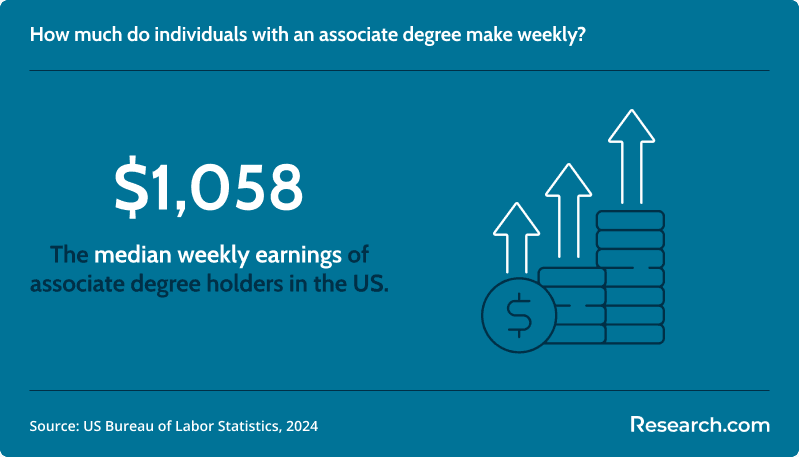
What Are the Highest-Paying Career Paths for 6-Month Online Associate Degree Holders?
The strongest earning potential at the associate level usually comes from fields with clear skill requirements, certification pathways, regulated workflows, or employer demand. The degree alone is not what creates higher pay; the full credential package matters.
This is especially important because only 16% of community college transfer students earned a bachelor’s degree within six years in a 2024 national analysis. Students who may not immediately continue to a bachelor’s program should choose an associate pathway with direct workforce value.
- Healthcare support roles, including Dental Assistant, Medical Imaging Support, and Health Information Technician: These roles may benefit from healthcare staffing needs and structured workflows.
- IT support and network administration roles, including IT Support Specialist and Network Technician: Salary growth may improve when the degree is paired with CompTIA, Cisco, or related certification pathways.
- Paralegal and legal support roles: Legal support can offer stable entry-level options, particularly in corporate or specialized legal settings.
- Accounting and bookkeeping roles: These jobs often have defined entry responsibilities and advancement opportunities tied to additional experience or credentials.
- Web development and digital support roles: Pay can vary widely, but strong portfolios and technical certifications can improve competitiveness.
For more detail on associate-level programs with stronger earning potential, see this guide to the best associate degree to get.
What are the advantages of earning an associate degree online compared to a traditional degree?
Online associate degrees can work well for students who need flexibility, already have credits, or cannot relocate for school. The main advantages are practical, but they come with trade-offs.
- Flexible scheduling: Many online programs let students study from home and fit coursework around work, caregiving, or other obligations.
- Faster completion options: Some programs use accelerated terms or prior-credit pathways similar to an accelerated associates degree.
- Lower indirect costs: Online students may save on commuting, parking, housing, and campus-related expenses.
- Self-paced or competency-based progress: Some programs allow prepared students to move quickly through material they already understand.
- Broader school selection: Students can compare programs beyond their local area, provided they verify accreditation and state requirements.
- Digital skill development: Online learning requires regular use of learning platforms, video tools, file sharing, and digital communication.
What challenges should I anticipate in a 6-month online associate degree program?
The biggest challenge is not the online format; it is the pace. Compressed associate programs require consistent work, fast feedback cycles, strong organization, and reliable technology. Students who fall behind early may have little time to recover.
- Heavy weekly workload: Accelerated courses may require frequent assignments, readings, quizzes, and discussion participation.
- Limited recovery time: Missing one deadline in a short term can affect several assignments.
- Technology dependence: Stable internet, a capable computer, and comfort with online platforms are essential.
- Transfer-credit uncertainty: Not all prior credits will apply to the degree plan.
- Licensure risk: Some fields require state approval, exams, clinical experience, or supervised practice beyond the degree.
Students considering longer accelerated pathways can compare requirements with accelerated online degrees before deciding how fast they should move.
What are some tips to succeed in a 6-month online associate degree program?
Success in a 6-month online associate degree usually comes from planning before classes begin. Treat the program like a major short-term commitment, not a casual online course. If you are also comparing fastest online degrees, the same planning principles apply.
- Build a weekly calendar before the term starts: Block time for readings, assignments, exams, group work, and review.
- Confirm every deadline: Use a calendar, task manager, or planner to track weekly requirements.
- Start assignments early: Accelerated courses leave little room for delays caused by work, illness, or technology problems.
- Use student support immediately: Contact tutoring, advising, library services, and technical support before you fall behind.
- Connect coursework to your job target: Save projects, papers, designs, or technical work that can support your resume or portfolio.
- Protect your study environment: Make sure you have quiet time, reliable internet, and access to required software.
Can Additional Certifications Enhance a 6-Month Online Associate Degree’s Value?
Yes. Industry-recognized certifications can make an accelerated associate degree more useful, especially in IT, healthcare administration, medical billing, business software, project coordination, bookkeeping, and design. Certifications help employers see specific skills that a broad degree title may not fully communicate.
The best certifications are tied to real job postings in your target field. Students comparing credential combinations may also review easiest online degrees that pay well, but should choose based on career fit rather than speed alone.
| Field | Certification Strategy |
| IT | Look for programs aligned with help desk, networking, cybersecurity, or cloud fundamentals. |
| Healthcare Administration | Consider credentials related to medical office workflows, records, billing, or coding. |
| Accounting | Build software, bookkeeping, payroll, or tax-preparation skills. |
| Graphic Design | Use software credentials and portfolio projects to demonstrate applied ability. |
| Paralegal Studies | Prioritize legal research, document management, and litigation technology exposure. |
Which College Majors Complement a 6-Month Online Associate Degree?
If you plan to continue into a bachelor’s program, choose a major that builds directly on your associate degree and accepts the maximum number of credits. The strongest follow-up major depends on your career target, not just transfer convenience. For broader academic planning, see Research.com’s guide to the best degrees to get.
- Business Administration: Commonly pairs with bachelor’s programs in business, management, marketing, finance, accounting, or human resources.
- Information Technology: Can lead into information systems, cybersecurity, network administration, computer science, or cloud computing pathways.
- Healthcare Administration: Often connects to health services administration, health information management, public health, or healthcare management.
- Criminal Justice: May transfer into criminal justice, public administration, legal studies, homeland security, or sociology-related majors.
- Graphic Design or Web Development: Can complement bachelor’s study in digital media, user experience, communication design, or web technologies.
How are learning support and accessibility services integrated into 6-month online associate degree programs?
Support services matter more in a 6-month program because students have less time to recover from confusion, technology problems, or missed deadlines. Strong programs make support easy to access inside the online learning environment instead of expecting students to search for help on their own.
- Academic advising: Advisors should help students understand degree requirements, transfer credits, pacing, and course sequencing.
- Technical support: Online students need reliable help for login issues, learning management systems, software, and proctored exams.
- Tutoring and writing support: Accelerated programs should offer fast feedback on papers, math, business assignments, coding, or technical work.
- Accessibility services: Students may need captioned lectures, screen-reader-compatible materials, extended testing accommodations, or accessible documents.
- Flexible communication: Faculty should provide clear response times and multiple ways to ask questions.
Working adults should compare support carefully when reviewing affordable online colleges for job holders.
How Do 6-Month Online Associate Degree Programs Adapt to Emerging Industry Trends?
Credible accelerated programs update courses when workplace tools, employer expectations, regulations, and certification pathways change. This is especially important in technology, healthcare administration, legal support, design, and business operations.
- AI and automation: Students should look for curricula that teach how to use digital tools responsibly rather than ignore automation trends.
- Credential-based hiring: Many employers want proof of specific skills through certifications, portfolios, assessments, or software proficiency.
- Online work environments: Programs should build communication, collaboration, and digital documentation skills.
- Healthcare and data privacy: Health-related programs should reflect current expectations around records, compliance, and information handling.
- Portfolio-driven fields: Design and web development students need projects that demonstrate current tools and practical ability.
Students who want to strengthen an associate degree with short credentials can compare the best certificate programs that pay well.
How to Evaluate the Credibility of 6-Month Online Associate Degree Providers
A short timeline can make a program attractive, but credibility should come first. A degree that is fast but poorly recognized may create problems with employers, transfer schools, financial aid, and professional requirements.
- Verify accreditation: Confirm that the institution is accredited by a recognized accreditor. Students comparing broader options can review associate's degree online pathways.
- Request a written degree plan: The school should show how your credits apply and what remains.
- Review faculty qualifications: Look for instructors with academic credentials and relevant field experience.
- Compare support services: Advising, tutoring, career help, technical assistance, and accessibility services should be available to online students.
- Ask for outcome data: Graduation, transfer, employment, licensure, or certification data should be explained clearly.
- Study the curriculum: Courses should match the skills and tools employers request in current job postings.
Program credibility checklist
| Question | Why It Matters |
| Is the institution accredited by a recognized accreditor? | Accreditation affects recognition, credit transfer, and financial aid eligibility. |
| Will the school evaluate transfer credits before enrollment? | Your timeline depends on how many requirements are already satisfied. |
| Does the program prepare for any required certification or licensing step? | Some careers require more than an associate degree. |
| Are total costs provided in writing? | Fees, software, books, and exams can change the real price. |
| Are career services built into the program? | Accelerated students need structured support, not optional services they may not have time to use. |
What career resources and networking opportunities are available for 6-month online associate degree students?
Career support is most useful when it is built into the short program timeline. Students in accelerated programs often do not have months to slowly build a network, so resume support, employer connections, and applied projects should begin early. Students comparing accelerated options at popular universities in America should evaluate whether career services are active or merely listed on the website.
Career resources that matter most
- Resume and career coaching: Most useful when tailored to a specific job title rather than written generically.
- Mock interviews: Helps students prepare for behavioral, technical, or field-specific interviews.
- Skills assessments: Useful in IT, business software, accounting, design, and healthcare administration.
- Virtual employer events: Can introduce students to recruiters, but students must follow up quickly.
- Alumni and peer networks: Stronger when alumni are active in the same field, not just listed in a directory.
- Employer-partner pipelines: Often more valuable than general career advice, especially in technical or healthcare-related programs.
- Certification-aligned training: Particularly useful in structured credential fields such as a low cost medical coding and billing online program.
What are my academic progression options after a 6-month online associate degree?
After completing an accelerated associate degree, students may enter the workforce, pursue a bachelor’s degree, add a certification, or combine work experience with further study. The best next step depends on whether the associate degree is terminal for your goal or a bridge to a higher credential.
- Transfer to a bachelor’s program: Confirm articulation agreements and how many credits will apply.
- Stack industry certifications: Add credentials that match your target job postings.
- Move into employment: Use projects, internships, and work experience to strengthen applications.
- Return later for advanced study: Some students use the associate degree to build momentum before longer programs.
Students considering an accelerated graduate path after future bachelor’s study can explore one year graduate programs.
Do Student Outcomes Validate the Value of a 6-Month Online Associate Degree?
Outcome data can be helpful, but it must be interpreted carefully. “Job placement” can be defined differently across schools, including self-reported employment, temporary work, part-time work, or jobs outside the student’s field. Short reporting windows of 3–6 months can also make results look stronger or weaker depending on how the school collects data.
More reliable outcome signals
- Licensure or certification pass rates: Useful when the field requires or values exams.
- Externally verified placement data: Stronger than informal alumni surveys.
- Transfer success: Important for students planning a bachelor’s degree.
- Employer partnerships: More meaningful when they lead to internships, interviews, or hiring pathways.
- Portfolio or project outcomes: Especially important in design, web development, IT, and business analytics.
Students in certification-driven fields may benefit from pairing the associate degree with certification courses that pay well.
How Do I Evaluate the Return on Investment for a 6-Month Online Associate Degree?
Return on investment is not only about tuition. It includes total cost, time away from work, transfer value, employability, certification preparation, support services, and whether the credential moves you closer to a specific job or degree goal. Students who need federal aid eligibility should compare online colleges that accept FAFSA.
| ROI Factor | What to Calculate or Verify |
| Total program cost | Tuition, fees, books, software, exams, and technology costs |
| Time to completion | Whether 6 months is realistic after transfer evaluation |
| Opportunity cost | Work hours reduced, childcare needs, or unpaid time spent studying |
| Credit transfer value | Whether credits apply to a bachelor’s program later |
| Career alignment | Whether target employers request the degree, skills, or certifications |
| Support services | Advising, tutoring, career coaching, and technical support availability |
Common Mistakes to Avoid
- Assuming every student can finish in 6 months: The timeline usually depends on prior credits or accelerated pacing.
- Choosing only by tuition: A cheaper program may cost more in the long run if credits do not transfer or employers do not recognize it.
- Skipping accreditation checks: Accreditation affects financial aid, transfer, and employer acceptance.
- Ignoring state requirements: Some fields require licensure, certification, background checks, clinical hours, or agency training.
- Overestimating available study time: Accelerated programs can be difficult for students with unpredictable work or family schedules.
- Relying only on rankings: A highly ranked school may not be the best fit if it does not accept your credits or support your career goal.
- Assuming salary outcomes are guaranteed: Earnings depend on location, experience, field, employer, skills, and credentials.
Key Insights
- A 6-month associate degree is usually a completion pathway, not a full two-year curriculum compressed for everyone. Transfer credits, prior learning, and competency-based progress are often what make the timeline possible.
- Accreditation should be your first filter. Do not enroll until you verify the school through recognized accreditation sources and understand whether the program meets your transfer or career needs.
- The best field is the one tied to a clear job or transfer plan. Business, IT, healthcare administration, accounting, paralegal studies, criminal justice, graphic design, and web development can all work, but only when the curriculum matches your goal.
- Expect a serious workload. The typical study commitment is often 10 to 25 hours per week, and compressed programs can create deadline-heavy weeks.
- Financial aid may be available, but it is not automatic. Use FAFSA, scholarships, payment plans, and employer assistance only after confirming school eligibility and total cost.
- Employers generally value accreditation and skills more than speed. A fast degree is strongest when paired with certifications, portfolios, labs, work experience, or applied projects.
- ROI depends on more than tuition. Compare total cost, transfer value, career services, certification alignment, and whether the credential helps you reach a specific next step.
References:
- GCU. (2022). An analysis of study habits, according to students across the U.S. https://www.gcu.edu/blog/gcu-experience/analysis-study-habits-according-students-across-us
- National Center for Education Statistics. (2024). COE - Price of attending an undergraduate institution. https://nces.ed.gov/programs/coe/indicator/cua
- US Bureau of Labor Statistics. (2024). Education pays, 2023. https://www.bls.gov/careeroutlook/2024/data-on-display/education-pays.htm
Other Things You Should Know About 6-Month Associate Degree Programs
Most 6-month online associate degree programs use six or eight short terms rather than two long semesters. Courses are often delivered in 5- to 8-week blocks, with weekly deadlines and multiple start dates each year. This format lets students complete roughly 60 credits in fewer terms.
Accreditation for 2027 6-month online associate degree programs is typically managed by regional accrediting agencies recognized by the U.S. Department of Education. It ensures that the programs meet specific academic standards, which aids in transferability and acceptance of credits by other institutions or future employers.


