
2027 Cyber Security Careers: Guide to Career Paths, Options & Salary

Co-Founder and Chief Data Scientist
Cybersecurity is no longer a niche IT specialty. Organizations now need professionals who can protect networks, investigate attacks, secure cloud systems, manage risk, and explain security decisions to leaders who may not have a technical background. For students, career changers, and IT workers planning their next move, the key question is not simply whether cybersecurity is growing. It is which cybersecurity path fits your skills, education goals, budget, and tolerance for high-pressure work.
This guide explains the major cybersecurity career paths, common education and certification routes, salary expectations, industries hiring, advancement strategies, ethical responsibilities, and mistakes to avoid. It is designed to help you compare options clearly before committing to a degree, certification, bootcamp, or job search plan.
Quick answer: Is cybersecurity a good career path?
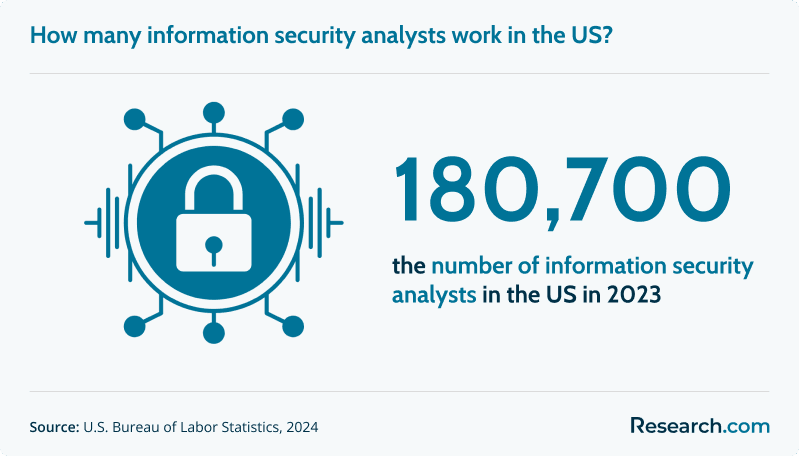
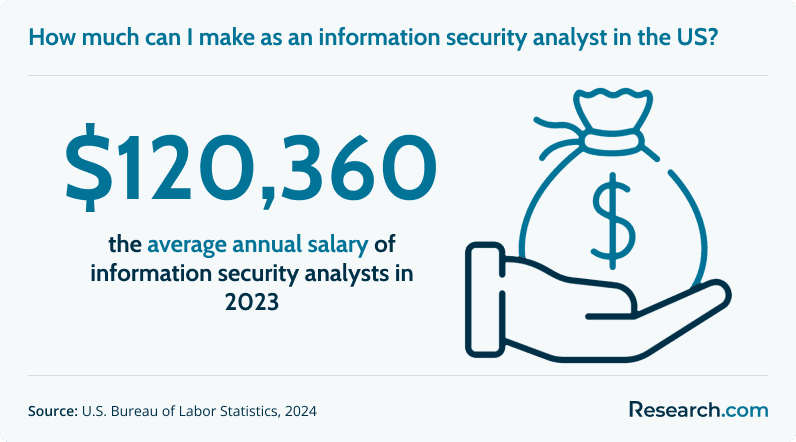
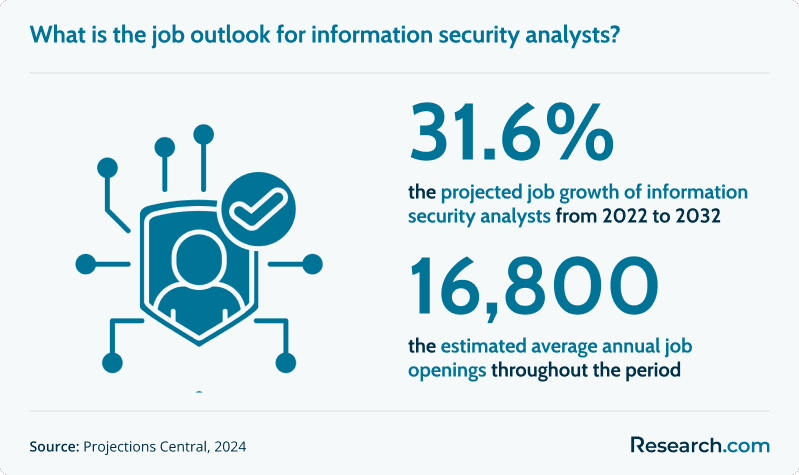
Cybersecurity can be a strong career choice for people who enjoy technical problem-solving, continuous learning, risk analysis, and protecting sensitive systems. The Bureau of Labor Statistics reports 180,700 information security analysts employed in the US in 2023, with projected job growth of 31.6% from 2022 to 2032 and about 16,800 annual job openings during that period. The average annual salary for information security analysts was $120,360 in 2023, though pay varies widely by role, industry, location, and experience.
Key things you should know about cybersecurity careers
- Cybercrime is a major global business risk, with worldwide costs projected at $9.22 trillion. Reported unique threats reached 1.9 million in 2023, which helps explain why employers continue to invest in security talent.
- The US cybersecurity labor market is strong. In 2023, there were 180,700 information security analysts, and employment in this occupation is projected to rise 31.6% from 2022 to 2032.
- Pay can be attractive, but it is not automatic. In 2023, information security analysts earned an average annual salary of $120,360, while the top 10% earned more than $182,370.
- Cybersecurity jobs exist across many sectors, especially computer systems design, finance, management of companies and enterprises, manufacturing, web services, software, media streaming, healthcare, and government.
- Certifications such as CISSP, CEH, CompTIA Security+, CySA+, and CND can help demonstrate job-ready skills, especially when paired with labs, projects, internships, or prior IT experience.
- What does a cybersecurity career involve?
- Which cybersecurity career paths are available for 2027?
- What skills do cybersecurity professionals need?
- What degree is useful for cybersecurity jobs?
- Can certifications alone help you get hired?
- Which beginner cybersecurity certifications should you consider?
- How much do cybersecurity professionals earn for 2027?
- Which industries hire the most cybersecurity professionals?
- How strong is the cybersecurity job market?
- What trends are changing cybersecurity careers?
- How can you move up in cybersecurity?
- What ethical issues do cybersecurity workers face?
- Is a cybersecurity degree worth the cost?
- How should you evaluate cybersecurity education ROI?
- Can game development skills support cybersecurity work?
- What online learning resources can help beginners?
- Can engineering knowledge strengthen a cybersecurity career?
- How can a graduate degree change your cybersecurity path?
- How do computer science skills transfer into cybersecurity?
- Why does interdisciplinary education matter in cybersecurity?
- How is artificial intelligence affecting cybersecurity work?
- How do experience and networking speed up career growth?
- How can broader education expand cybersecurity opportunities?
- How can AI expertise improve cybersecurity career options?
- Which soft skills matter most in cybersecurity?
- How can hardware knowledge improve security defenses?
- Why is continuous learning essential in cybersecurity?
- How can data analytics improve cybersecurity strategy?
- What challenges should cybersecurity professionals expect?
What does a cybersecurity career involve?
A cybersecurity career focuses on protecting digital systems, networks, devices, applications, and data from unauthorized access, disruption, theft, or damage. Professionals in this field may monitor security tools, investigate suspicious activity, test systems for weaknesses, write security policies, respond to incidents, secure cloud environments, or advise executives on risk.
The work matters because modern organizations rely on connected systems for nearly every business function. A single breach can expose personal information, disrupt operations, trigger legal penalties, and damage public trust. The average cost of a data breach reached $4.88 million, which is one reason cybersecurity is now treated as a business priority rather than only an IT issue.
Globally, the cybersecurity workforce includes 4.7 million professionals, yet demand continues to rise as attacks become more frequent and sophisticated. In the United States, information security analysts numbered around 180,700 in 2023, with a strong growth outlook from 2022 to 2032.
Which cybersecurity career paths are available for 2027?
Cybersecurity is not one job. It includes defensive, offensive, investigative, engineering, consulting, and leadership roles. The best path depends on whether you prefer hands-on technical work, risk management, software development, incident response, or executive decision-making.
| Cybersecurity role | What the role focuses on | Good fit for | Average salary |
| Information Security Analyst | Monitoring systems, identifying risks, strengthening defenses, and helping prevent breaches | Beginners with IT foundations, analysts, and problem-solvers who want a common entry point | $120,360 |
| Penetration Tester or Ethical Hacker | Simulating attacks to find vulnerabilities before criminals exploit them | People who enjoy offensive security, testing, scripting, and technical puzzles | $122,133 |
| Security Consultant | Assessing security programs and recommending improvements for different organizations | Professionals who like client-facing work, communication, audits, and varied projects | $96,570 |
| Incident Responder | Containing, investigating, and resolving cyber incidents under time pressure | People who can stay calm, analyze evidence quickly, and work during urgent events | $127,177 |
| Security Architect | Designing secure systems, networks, and enterprise-level security frameworks | Experienced professionals who understand both technology design and business risk | $157,839 |
| Chief Information Security Officer | Leading security strategy, teams, governance, compliance, and risk decisions | Senior professionals with leadership, budgeting, communication, and policy experience | $130,057 |
| Malware Analyst | Studying malicious software, reverse-engineering threats, and developing countermeasures | Technical specialists interested in programming, operating systems, and threat research | $92,613 |
| Security Software Developer | Building tools, applications, encryption systems, and security features | Programmers who want to apply software engineering to security problems | $111,845 |
Information Security Analyst
Information security analysts are often the central defenders in an organization. They review alerts, watch for unusual activity, help close vulnerabilities, and support policies that reduce the chance of unauthorized access. These roles appear in finance, healthcare, government, technology, education, and many other settings.
- Average salary: $120,360
Penetration Tester or Ethical Hacker
Penetration testers use approved hacking techniques to test systems, applications, and networks. Their goal is to uncover weaknesses safely and document how an organization can fix them. This path usually requires strong technical practice, careful reporting, and strict respect for legal authorization.
- Average salary: $122,133
Security Consultant
Security consultants help organizations understand their risks and choose practical defenses. They may evaluate security architecture, compliance readiness, employee training, policies, vendor risk, or incident response plans. This role can suit professionals who want variety and are comfortable explaining recommendations to nontechnical decision-makers.
- Average salary: $96,570
Incident Responder
Incident responders step in when suspicious activity or an attack occurs. They help determine what happened, limit damage, preserve evidence, coordinate recovery, and recommend improvements after the event. The work can be demanding because speed and accuracy both matter.
- Average salary: $127,177
Security Architect
Security architects design the structure of secure systems. They evaluate how networks, applications, cloud platforms, identity controls, monitoring tools, and policies should work together. This is usually a more advanced role that requires broad technical judgment and the ability to plan beyond immediate threats.
- Average salary: $157,839
Chief Information Security Officer
A chief information security officer, or CISO, directs an organization’s overall security program. The role combines cybersecurity expertise with executive leadership, budgeting, compliance, vendor management, risk governance, and communication with boards or senior leadership.
- Average salary: $130,057
Malware Analyst
Malware analysts examine malicious code such as ransomware, worms, viruses, and other harmful software. They study how attacks work and help develop detection and response strategies. This path is highly technical and often benefits from programming, systems, and threat intelligence skills. In 2022, about 5.4 billion malware attacks were recorded worldwide.
- Average salary: $92,613
Security Software Developer
Security software developers build tools and features that protect systems. Their work may involve firewalls, encryption, secure authentication, monitoring tools, or application security functions. This career can be a strong fit for people with programming ability who want to build security into products.
- Average salary: $111,845
In 2023, the computer and peripheral equipment manufacturing industry was one of the highest-paying sectors for information security analysts, with an average salary of $184,190. Web search portals and other information services also ranked among high-paying areas.
What skills do cybersecurity professionals need?
Cybersecurity jobs require both technical depth and good judgment. Tools change, but the core ability to understand systems, identify risk, communicate clearly, and respond responsibly remains essential.
| Skill area | Why it matters | How to build it |
| Networking and operating systems | Security work depends on understanding how data moves and how systems behave | Practice with labs, home networks, Linux, Windows administration, and network fundamentals |
| Programming and scripting | Many roles require automation, log analysis, tool customization, or code review | Learn languages such as Python, Java, or C++ and build small security-focused projects |
| Risk analysis | Organizations need professionals who can separate urgent threats from low-priority noise | Study common attack methods, business impact, vulnerability management, and security frameworks |
| Problem-solving | Incidents and vulnerabilities rarely follow a perfect script | Use capture-the-flag exercises, case studies, simulations, and troubleshooting practice |
| Security tools and protocols | Firewalls, intrusion detection systems, encryption, and monitoring platforms are common in the field | Gain hands-on exposure through labs, coursework, internships, or entry-level IT roles |
| Attention to detail | Small anomalies in logs, permissions, or configurations can point to larger risks | Practice reviewing logs, documenting findings, and validating assumptions |
| Communication | Security recommendations must be understood by executives, employees, legal teams, and customers | Write clear reports, present findings, and practice explaining technical issues in plain language |
| Continuous learning | Threats, tools, platforms, and regulations keep changing | Follow security advisories, pursue training, attend events, and refresh certifications when needed |
- Technical proficiency: Strong knowledge of networks, operating systems, and programming helps professionals understand how attackers exploit systems and how defenders can reduce risk.
- Analytical thinking: Cybersecurity work often involves large volumes of alerts, logs, and signals. Analysts must identify patterns and determine what requires action.
- Problem-solving: Security incidents can be ambiguous. Professionals need to test theories, prioritize actions, and respond quickly without making the situation worse.
- Security protocols and tools: Firewalls, encryption, intrusion detection, access controls, and monitoring systems are part of daily work in many cybersecurity roles.
- Precision: A missed configuration error or overlooked log entry can matter. Careful review and documentation are important habits.
- Communication: Cybersecurity professionals must often translate technical risk into business language so leaders can make informed decisions.
- Ethical hacking knowledge: Understanding attacker behavior helps defenders test systems safely and fix weaknesses before they are abused.
What degree is useful for cybersecurity jobs?
You do not always need the same degree for every cybersecurity role. Some positions emphasize formal education, while others prioritize IT experience, certifications, portfolios, and demonstrated skills. However, degree programs can provide structured training, broader computer science knowledge, and credentials that help with long-term advancement.
| Education option | What it can provide | Best suited for | Limits to consider |
| Associate degree | Introductory cybersecurity, networking, systems, and programming foundations | Students seeking entry-level support or technician roles | May not be enough for roles that require deeper analysis or leadership preparation |
| Bachelor’s degree | Broader preparation in cybersecurity, computer science, information systems, ethical hacking, and assurance | Students aiming for analyst, engineering, or mid-level technical paths | Cost, time, and program quality vary; accreditation and hands-on learning matter |
| Master’s degree | Advanced study in cyber forensics, threat analysis, governance, leadership, and security management | Working professionals seeking senior technical, consulting, or management roles | Best value when it matches a clear career goal and builds on prior experience |
| Doctoral degree | Research depth, advanced methodology, and expertise for academic, research, or executive-level work | Professionals pursuing research, academia, policy, or high-level consulting | Usually unnecessary for most entry-level and mid-level cybersecurity roles |
- Associate degree: An associate program in cybersecurity or a related field usually introduces security principles, network systems, and basic programming. Programs typically take about two years and may support entry-level technician or support positions.
- Bachelor’s degree: A bachelor’s in cybersecurity, computer science, or information systems can prepare students for more technical and analytical roles. Students comparing cost-conscious options may want to review the most expensive programs alongside the cheapest online computer information systems degree choices.
- Master’s degree: A master’s program can help professionals move into specialized or leadership roles in security management, threat analysis, forensics, and consulting. Working adults may compare flexible options such as the cheapest online MS in computer science programs.
- Doctoral degree: Doctoral study is most relevant for research, academic careers, advanced consulting, or senior strategic roles that require original research and deep expertise.
How to choose the right cybersecurity education path
- Choose a certificate or certification if you already have IT experience and need targeted validation.
- Choose an associate degree if you need an affordable academic starting point and want entry-level technical preparation.
- Choose a bachelor’s degree if you want the broadest foundation for analyst, engineering, or long-term advancement roles.
- Choose a master’s degree if you already work in technology and want to move into leadership, forensics, cloud security, policy, or architecture.
- Choose a doctoral path only if your goals involve research, academia, or high-level strategic work.
Can certifications alone help you get hired?
Yes, some candidates can enter cybersecurity with certifications instead of a traditional degree, especially if they also have hands-on practice, prior IT experience, a strong portfolio, or lab work. Certifications can be especially useful because many cybersecurity jobs reward demonstrated ability. Still, certification-only pathways are not equally effective for every role.
Cybersecurity includes some of the online certifications that pay well, but the credential alone rarely tells the full story. Employers usually want evidence that you can apply security concepts in real systems, communicate findings, and work responsibly.
When certification-only paths can work
- You already have IT, networking, systems administration, help desk, software development, or cloud experience.
- You can show practical work through labs, capture-the-flag challenges, scripts, reports, internships, or projects.
- You are targeting entry-level security analyst, IT security specialist, support, junior SOC, or related roles.
- You choose certifications aligned with the job descriptions you are applying for.
When a degree may be the better choice
- You have little or no technical background and need structured foundations.
- You want roles that prefer a bachelor’s degree or advanced education.
- You plan to move into management, architecture, consulting, research, or policy over time.
- You need broader computer science, information systems, or engineering knowledge beyond one certification exam.
Some learners start with short programs such as the easiest online certifications and later continue into more complete study. Others use certifications to test their interest before committing to one of the available online cybersecurity degrees.
Which beginner cybersecurity certifications should you consider?
Beginner certifications can help you learn the vocabulary, tools, and workflows used in security roles. Many students also take cyber security courses online to prepare for certification exams or build practical skills before applying for jobs.
| Certification | Primary focus | Best for |
| CompTIA Security+ | Core security concepts, risk, networks, compliance, and operations | Beginners who want a widely recognized starting point |
| Certified Ethical Hacker | Ethical hacking and penetration testing techniques | Learners interested in offensive security and vulnerability testing |
| CISSP - Associate | Broad security domains for candidates working toward full CISSP status | Newer professionals who want a long-term path toward advanced credibility |
| CompTIA Cybersecurity Analyst | Threat detection, analysis, and response | Learners focused on security operations and analyst work |
| Certified Network Defender | Network protection, detection, and response | Beginners who want to specialize in network security fundamentals |
A certification can help you enter the field, but a degree may provide broader preparation across computer science, systems, programming, and technology strategy. Students who want a faster academic route may compare accelerated computer science degree programs as part of their cybersecurity planning.
How much do cybersecurity professionals earn for 2027?
Cybersecurity salaries vary by job title, experience, employer, industry, and location. In 2023, the average cyber security salary for information security analysts was $120,360. The lower end was $69,210, while the top 10% earned $182,370 or more.
| Role or location factor | Salary figure stated | What it means for career planning |
| Information Security Analyst | $120,360 | Common benchmark for cybersecurity analyst earnings |
| Information Security Analyst salary range | $69,210 to $182,370 | Shows the large gap between entry-level, mid-career, specialized, and senior roles |
| Penetration Tester | $122,133 | Often rewards hands-on offensive security skills |
| Security Consultant | $96,570 | May vary based on specialization, client type, and experience |
| Malware Analyst | $92,613 | Highly technical role with compensation tied to expertise and employer needs |
| Security Architect | $157,839 | Reflects advanced responsibility for security design and strategy |
| Chief Information Security Officer | $130,057 | Executive role where compensation depends heavily on organization size and scope |
| Washington information security analysts | $148,090 | Highest-paying state figure stated for this occupation |
Location can change expected pay significantly. Washington state reported the highest average salary for information security analysts at $148,090, while Iowa and New York also offered salaries above the national average. Entry-level positions, smaller employers, and less specialized roles may pay less than advanced architecture, incident response, and executive roles.
Which industries hire the most cybersecurity professionals?
Cybersecurity hiring is strongest where digital systems, data protection, financial transactions, intellectual property, customer information, and regulatory compliance are critical. In 2023, the computer systems design sector employed 40,290 cybersecurity professionals, making it a major source of jobs. Management of companies and enterprises employed 16,510 cybersecurity experts, and financial services also relied heavily on security talent because of sensitive financial and personal data.
| Industry area | Cybersecurity relevance | Stated employment or salary detail |
| Computer systems design | Secures client IT infrastructure, systems, and technical services | 40,290 professionals |
| Management of companies and enterprises | Protects enterprise systems, corporate data, and internal operations | 16,510 cybersecurity experts |
| Financial services | Protects transactions, accounts, customer data, and regulated systems | Significant employment need |
| Computer and peripheral equipment manufacturing | Supports hardware, product, infrastructure, and intellectual property security | $184,190 |
| Web search portals and other information services | Protects large-scale data platforms and online services | $182,660 |
| Media streaming and software publishing | Protects digital platforms, applications, users, and content systems | Noted for strong demand and compensation |
How strong is the cybersecurity job market?
The cybersecurity job market is strong because organizations face expensive, frequent, and increasingly complex attacks. The average global cost of a data breach from 2014 to 2024 was $4.88 million, which makes prevention, monitoring, and incident response financially important for employers.
In the United States, 180,700 information security analysts were employed in 2023. The field is projected to grow 31.6% from 2022 to 2032, with about 16,800 annual job openings. These figures support the idea that cybersecurity and computer-related programs can be among the best degrees to get for students who want technical careers with long-term demand.
What this means for beginners
- The field is growing, but entry-level jobs can still be competitive.
- Hands-on evidence matters. Labs, internships, projects, and real IT experience can separate you from applicants who only list coursework.
- Job titles vary. Search for security analyst, SOC analyst, IT security specialist, vulnerability analyst, network security, cloud security, and compliance roles.
- Cybersecurity is not only technical. Many employers need people who can document findings, train users, coordinate with legal teams, and explain risk.
What trends are changing cybersecurity careers?
Several trends are reshaping what cybersecurity professionals need to know and how teams operate.
- Artificial intelligence and machine learning: Security teams increasingly use AI-supported tools to analyze large volumes of data, detect patterns, and improve threat response. Professionals still need human judgment to validate results, reduce false positives, and make risk decisions.
- Cloud security: As organizations move systems and data to cloud platforms, demand grows for professionals who understand identity, access controls, configuration risks, cloud monitoring, and shared-responsibility models.
- Remote and hybrid work: Distributed teams create additional pressure around secure access, endpoint protection, identity management, and network architecture.
- Regulatory pressure: Data protection laws such as GDPR and CCPA make compliance knowledge increasingly important for professionals who manage sensitive data.
- Continuous threat evolution: Attackers keep adapting, so long-term success depends on ongoing learning rather than a one-time credential.
Cybersecurity also overlaps with user experience, product design, and secure digital workflows. Professionals interested in the intersection of design and technology may explore the cheapest UX design degree online programs to understand how usability and security can support each other.
How can you move up in cybersecurity?
Career advancement in cybersecurity usually comes from combining practical experience, specialized knowledge, communication ability, and credible credentials. The fastest route is rarely “collect as many certifications as possible.” A better strategy is to choose a target role, identify its required skills, and build proof that you can do the work.
- Start with a clear target role. Decide whether you want security operations, penetration testing, cloud security, governance, forensics, software security, or leadership.
- Build hands-on experience. Use internships, home labs, simulations, capture-the-flag events, volunteer projects, freelance work, or entry-level IT roles.
- Add certifications strategically. After foundational credentials such as CompTIA Security+ or CEH, consider advanced options such as CISSP, CISM, or CCSP when they match your goals.
- Document your work. Create reports, writeups, scripts, diagrams, or case studies that show how you analyze and solve security problems.
- Learn emerging technologies. AI, machine learning, cloud platforms, and blockchain security can create specialized opportunities for professionals who understand the risks.
- Improve communication. Senior roles require explaining technical findings, negotiating priorities, and influencing nontechnical stakeholders.
- Network with purpose. Groups such as ISACA, (ISC)², and CompTIA can support learning, mentorship, and job awareness.
- Consider lateral moves. Moving into cloud security, forensics, compliance, risk, or application security can expand your expertise and advancement options.
- Use adjacent skills. Some professionals combine cybersecurity with IT management, risk management, or even careers in communications when their work involves security awareness, policy, or stakeholder education.
What ethical issues do cybersecurity workers face?
Cybersecurity professionals often have privileged access to systems, sensitive data, monitoring tools, and techniques that could be misused. Ethical judgment is therefore not optional; it is central to the profession. Short training options, including 6-month certificate programs that pay well, should be evaluated not only for technical content but also for how they teach legal and ethical boundaries.
- Privacy versus protection: Security teams may monitor systems to detect threats, but excessive or unauthorized surveillance can violate trust and privacy expectations.
- Authorized testing: Penetration testing and ethical hacking must stay within written permission, defined scope, and applicable law.
- Responsible use of AI: AI-supported tools can improve detection, but professionals must consider bias, misuse, false positives, and unintended consequences.
- Handling sensitive discoveries: Security workers may uncover misconduct, illegal practices, or unsafe systems. Whistleblowing can involve personal and professional risk.
- Professional accountability: Codes of conduct from organizations such as (ISC)² and ISACA help reinforce integrity, confidentiality, and responsible practice.
What do cybersecurity graduates say about the work?
- Cybersecurity changed the direction of my career. The constant need to keep up with new threats keeps the work challenging, and solving a difficult security issue gives me a real sense that my work protects people and organizations. - Jordan
- My cybersecurity path has been intense but rewarding. I enjoy the pressure of stopping threats and helping organizations recover from incidents. The growth potential is one of the biggest reasons I stayed in the field. - Casey
- Cybersecurity has been more meaningful than I expected. Every week requires learning something new, and I like knowing that my work helps protect sensitive data and keep systems trustworthy. - Alex
Key findings
- Information security analysts in the US earned an average annual salary of $120,360 in 2023.
- The global cybersecurity workforce includes 4.7 million professionals.
- Employment for information security analysts is projected to grow 31.6% from 2022 to 2032.
- Computer and peripheral equipment manufacturing was among the top-paying industries for information security analysts, with salaries reaching $184,190.
- Washington reported the highest average salary for information security analysts at $148,090.
- Cybercrime costs are projected at $9.22 trillion globally, underscoring the need for skilled defenders.
Is a cybersecurity degree worth the cost?
A cybersecurity degree can be worth it when it supports a specific career goal, provides hands-on learning, comes from a credible institution, and fits your budget. A degree can validate technical knowledge, develop structured problem-solving, expose students to security frameworks, and support advancement into roles that require broader preparation. For an overview of degree pathways, review this guide to a cyber security degree.
A degree may be less valuable if it is expensive, too theoretical, weak on labs, or not aligned with your target job. Before enrolling, compare curriculum, faculty experience, career support, transfer credit policies, accreditation, internship options, and employer connections.
How should you evaluate cybersecurity education ROI?
Return on investment depends on the total cost of education, the time required to complete it, your current experience, the jobs you are targeting, and the salary range available in your market. Cybersecurity education can lead to higher earning potential, but outcomes are not guaranteed. The practical question is whether a program gives you skills, credentials, and career support that justify its cost.
When comparing cybersecurity, computer science, and related technology programs, it helps to understand tuition and total expenses. Reviewing how much is a computer science degree can provide useful context when weighing degree costs against certification or short-term training routes.
Questions to ask before paying for a cybersecurity program
- Is the institution properly accredited?
- Does the curriculum include labs, projects, cloud security, incident response, and current tools?
- Are certifications built into the program, or will you pay for them separately?
- Can you transfer prior credits or experience?
- What career services, employer partnerships, internships, or portfolio support are available?
- Does the program match your target role, or is it too general?
- What is the full cost, including fees, books, exam costs, technology, and time away from work?
Can game development skills support cybersecurity work?
Game development can build technical abilities that transfer into some cybersecurity roles, especially programming, simulation, system architecture, debugging, and creative problem-solving. These skills may help with security tool development, threat modeling, training simulations, or understanding complex software behavior. Students interested in this interdisciplinary route can compare options such as a game development degree online.
What online learning resources can help beginners?
Aspiring cybersecurity professionals can use online degrees, courses, certificates, labs, documentation, and certification prep materials to build foundations. A cyber security degree online can be useful for learners who want structured study with flexibility, while shorter courses can help with focused topics such as penetration testing, incident response, cloud security, or security management.
Online learning works best when it includes practice. Look for labs, scenario-based assignments, portfolio projects, and opportunities to write security reports—not only video lectures.
Can engineering knowledge strengthen a cybersecurity career?
Engineering study can expand a cybersecurity professional’s understanding of hardware vulnerabilities, embedded systems, secure design, signal processing, and the interaction between software and physical devices. This can be especially relevant in manufacturing, critical infrastructure, Internet of Things environments, and hardware security. Learners comparing technical pathways may find value in cost-conscious options such as the cheapest masters in electrical engineering degree.
How can a graduate degree change your cybersecurity path?
An advanced degree can help experienced professionals move beyond technical execution into strategy, leadership, policy, research, architecture, or high-level consulting. Graduate study often emphasizes frameworks, case studies, governance, emerging threats, and complex security decisions. Professionals considering this route can compare online masters in cybersecurity programs to see which ones align with their goals.
How do computer science skills transfer into cybersecurity?
Computer science foundations are highly useful in cybersecurity because they strengthen code analysis, systems thinking, algorithms, software design, data structures, and troubleshooting. These abilities can support secure software development, vulnerability research, malware analysis, cloud security, and technical leadership. For broader career context, review the highest paying jobs in computer science field.
Why does interdisciplinary education matter in cybersecurity?
Cybersecurity problems rarely sit inside one discipline. Strong defenders often combine computer science, engineering, mathematics, law, business, psychology, and communication. Engineering programs can be especially helpful for professionals who want deeper technical breadth. Comparing options such as the cheapest accredited engineering online colleges can help learners broaden their foundation without ignoring cost.
How is artificial intelligence affecting cybersecurity work?
Artificial intelligence can help security teams process large datasets, identify anomalies, prioritize alerts, and automate parts of threat detection and response. It does not replace cybersecurity judgment. Professionals still need to validate tool output, understand attacker behavior, manage risk, and explain decisions. Students who want deeper preparation in this area may explore a best AI online degree to understand how AI techniques can be applied responsibly in security contexts.
How do experience and networking speed up career growth?
Cybersecurity employers often look for proof that candidates can apply skills under realistic conditions. Internships, labs, simulations, security competitions, open-source contributions, and mentorship can make a candidate more credible. Networking also helps professionals learn which skills are actually in demand and where opportunities are emerging. Combining experience with advanced study, such as an online master's in computer science, can strengthen both technical and strategic career options.
How can broader education expand cybersecurity opportunities?
Cybersecurity overlaps with healthcare, finance, law, data governance, product development, and public policy. Professionals who understand another field can become more valuable in industries where security has specialized requirements. For example, knowledge of health data systems can support work in healthcare security, privacy, and compliance. A health informatics online degree may help professionals combine cybersecurity with healthcare data management.
How can AI expertise improve cybersecurity career options?
AI knowledge can strengthen cybersecurity careers by helping professionals understand automated detection, anomaly analysis, risk scoring, model security, and AI-related vulnerabilities. It may also support roles that combine security operations with data-driven decision-making. Learners looking for faster graduate-level preparation can compare programs such as the fastest artificial intelligence masters online.
Which soft skills matter most in cybersecurity?
Technical ability is essential, but cybersecurity professionals also need communication, judgment, collaboration, calm decision-making, and leadership. A strong analyst can explain risk without exaggeration. A good incident responder can coordinate under pressure. A future CISO can translate security needs into business priorities. Programs such as a master AI online may also help professionals practice strategic communication around complex technical systems.
How can hardware knowledge improve security defenses?
Hardware engineering knowledge can help cybersecurity professionals identify risks that begin below the software layer, including device architecture, firmware, circuit-level exposure, and physical system limitations. This perspective is useful for secure product design, embedded systems, and critical infrastructure. For related education planning, review information on electrical engineer school cost.
Why is continuous learning essential in cybersecurity?
Cybersecurity changes quickly because attackers, tools, platforms, and regulations evolve. A credential earned once is not enough for long-term success. Professionals need to refresh skills through certifications, labs, threat research, vendor training, conferences, practical exercises, and formal study when appropriate. For a deeper look at the value of formal education, read Are cybersecurity degrees worth it?.
How can data analytics improve cybersecurity strategy?
Data analytics helps cybersecurity teams detect anomalies, compare historical patterns, prioritize incidents, and make evidence-based decisions. Analysts who can work with large datasets may contribute to threat hunting, fraud detection, incident response, vulnerability prioritization, and security reporting. Professionals who want to build this capability can explore an affordable data science masters in USA as a way to connect analytics training with security strategy.
What challenges should cybersecurity professionals expect?
Cybersecurity can be rewarding, but it is not an easy field. The work can involve high pressure, constant change, complex tools, and responsibility for systems that affect many people.
| Common challenge | Why it is difficult | Better way to prepare |
| Rapidly changing threats | Attack methods and vulnerabilities evolve constantly | Build a habit of continuous learning and hands-on practice |
| Skill shortages and workload pressure | Security teams may be understaffed, especially during incidents | Learn prioritization, documentation, automation, and stress management |
| Complex security tools | Many platforms generate alerts and require integration | Focus on fundamentals before chasing every new tool |
| Security versus user experience | Controls must protect systems without blocking legitimate work | Understand business workflows and communicate trade-offs clearly |
| Regulatory compliance | Rules such as GDPR can be complex and change over time | Develop governance, policy, and documentation skills |
- Keeping pace with evolving threats: New vulnerabilities and attack techniques require constant learning.
- Working with limited resources: High demand and talent shortages can put pressure on existing teams.
- Managing tool complexity: Security platforms can be powerful but difficult to configure, integrate, and interpret.
- Balancing protection and usability: Strong security controls must still allow employees and customers to complete legitimate tasks.
- Handling compliance requirements: Professionals must understand how legal and regulatory expectations affect security decisions.
If cost is a major concern, compare cheapest cybersecurity degree options carefully and look beyond tuition alone. Fees, transfer credits, certification costs, career services, and completion time can change the real price of a program.
Common mistakes to avoid when planning a cybersecurity career
- Choosing a program without checking accreditation: Accreditation affects credibility, transfer credit, employer recognition, and financial aid eligibility.
- Focusing only on tuition: The cheapest program is not always the best value if it lacks labs, career support, or relevant coursework.
- Assuming certifications guarantee a job: Certifications help, but employers also want experience, judgment, communication, and proof of skills.
- Ignoring entry-level competition: Cybersecurity is growing, but many beginners target the same jobs. Practical projects and IT experience can help.
- Skipping fundamentals: Networking, operating systems, scripting, and troubleshooting remain essential even as tools change.
- Relying only on rankings: Rankings can be helpful, but your decision should include cost, curriculum, flexibility, accreditation, and career fit.
- Overlooking ethics and legality: Security testing without authorization can create serious legal and professional consequences.
Key Insights
- Cybersecurity offers strong career potential, but the best path depends on your target role, current technical background, budget, and willingness to keep learning.
- Information security analyst is a common benchmark role, with 180,700 US workers in 2023, an average annual salary of $120,360, and projected job growth of 31.6% from 2022 to 2032.
- Certifications can open doors, especially for candidates with IT experience, but degrees may provide broader preparation for long-term advancement, leadership, and specialized roles.
- Hands-on proof matters. Labs, internships, simulations, projects, and clear technical reports can be as important as credentials during a job search.
- High-paying cybersecurity roles often require specialization, experience, and the ability to connect technical risk with business decisions.
- AI, cloud security, remote work, and expanding regulation are changing the skills employers value, but fundamentals such as networking, systems, ethics, and communication remain essential.
- Before paying for any cybersecurity education, compare accreditation, total cost, practical training, career support, certification alignment, and fit with your intended job path.
References:
- Glassdoor. (2024). How much does a security architect make? Retrieved September 17, 2024, from Glassdoor.
- Indeed. (2024). Chief information officer salary in United States. Retrieved September 17, 2024, from Indeed.
- Indeed. (2024). IT security specialist salary in United States. Retrieved September 17, 2024, from Indeed.
- Indeed. (2024). Penetration tester salary in United States. Retrieved September 17, 2024, from Indeed.
- Indeed. (2024). Security consultant salary in United States. Retrieved September 17, 2024, from Indeed.
- Projections Central. (2024). Long-term occupational projections (2022-2032). Retrieved September 17, 2024, from Projections Central.
- Salary.com. (2024). Malware analyst salary in the United States. Retrieved September 17, 2024, from Salary.com.
- U.S. Bureau of Labor Statistics. (2024). Information security analysts. Retrieved September 17, 2024, from BLS.
- U.S. Bureau of Labor Statistics. (2024). Occupational employment and wages, May 2023 - 15-1212 Information security analysts. Retrieved September 17, 2024, from BLS.
- ZipRecruiter. (2024). Incident responder salary. Retrieved September 17, 2024, from ZipRecruiter.
- ZipRecruiter. (2024). Security software developer salary. Retrieved September 17, 2024, from ZipRecruiter.
Other Things You Should Know About Cyber Security Careers
In 2027, essential certifications for a cyber security career include Certified Information Systems Security Professional (CISSP), Certified Ethical Hacker (CEH), and CompTIA Security+. These certifications enhance knowledge and are often required by employers seeking qualified security professionals to protect their digital assets.
CompTIA Security+, Certified Ethical Hacker, and CISSP are the most widely recognized certifications for cyber security hiring. Security+ suits entry-level roles, CEH supports penetration testing paths, and CISSP is aimed at experienced professionals with at least five years of paid work experience in two or more domains.


