2027 Fastest Online Surgical Tech Certificate Programs

Co-Founder and Chief Data Scientist
Some careers let you train fast and get hired quickly, and surgical technology is one of them. Many online surgical tech certificate programs now take less than a year to finish. This makes them a good choice for people who want to start working soon. With about 8,700 openings projected each year for the next ten years, this could be a smart first step toward a stable healthcare career.
To help students find the fastest and most affordable online surgical tech certificate programs, I looked at data from several schools and training platforms. I also used my experience in academic advising and career planning. Based on this, I’ve listed the top 10 programs with the key details you need to know.
What are the benefits of taking an online surgical tech certificate program for 2027?
- An online surgical tech certificate can qualify individuals for roles such as operating room technician, surgical first assistant (with experience), or sterile processing technician in hospitals and surgical centers.
- The certificate supports access to a median annual salary of $62,830, with higher pay reported in outpatient care centers and specialty hospitals.
- Completing the program online allows students to train without relocating or leaving their current job, as most courses are self-paced or offer flexible scheduling with evening and weekend options.
What can I expect from an online surgical tech certificate program?
An online surgical tech certificate program is designed to prepare students for entry-level roles in surgical settings through a mix of online coursework and hands-on clinical training. Most programs cover essential topics like anatomy, surgical procedures, aseptic techniques, and patient safety. The core curriculum often includes classes in medical terminology, surgical instrumentation, operating room protocols, and sterile processing.
On average, these programs take 6 to 12 months to complete, depending on the school and whether the student attends full- or part-time. Tuition typically ranges from $4,000 to $15,000, with some programs offering payment plans or financial aid. While didactic lessons are completed online, students should expect to fulfill in-person clinical hours at a partnered hospital or surgical facility before graduation.
Where can I work with an online surgical tech certificate program?
Graduates of an online surgical tech certificate program can find employment in a wide range of healthcare environments. Most commonly, they work in hospitals, where they assist in operating rooms during surgical procedures. Many are also placed in specialized units such as orthopedics, cardiology, OB-GYN, or emergency/trauma surgery, depending on their training focus.
Beyond hospitals, surgical technologists may be employed in physician offices that offer minor surgical services. Some find roles in university hospitals or teaching clinics, contributing to complex or research-based surgeries. Additional opportunities exist in dental surgery, plastic surgery centers, and even travel tech positions.
How much can I make with a surgical tech certificate program?
With a surgical tech certificate, graduates typically have a median annual earnings of $62,830. Entry-level technologists, around the 10th wage percentile, often start less than $43,290 annually. Meanwhile, experienced professionals in the top 10% can earn above $90,700.
The industry setting also plays a significant role. Surgical technologists working in outpatient care centers typically earn the highest average, at about $64,440, while those in general medical and surgical hospitals earn around $62,350. Location also plays a key role. States like California, Alaska, and Washington report some of the highest wages in the field. In addition, professionals may earn more by working night shifts, weekends, or in specialized surgical departments such as cardiovascular or orthopedic units.
- Fastest Online Surgical Tech Certificate Programs for 2027 List of Programs
- How long does it take to complete an online surgical tech certificate program? Completion Time
- How does an online surgical tech certificate program compare to an on-campus program? How does an online surgical tech certificate program compare to an on-campus program?
- What is the average cost of an online surgical tech certificate program in 2027? Average Cost
- What are the financial aid options for students enrolling in an online surgical tech certificate program? Financial Aid
- What are the prerequisites for enrolling in an online surgical tech certificate program? Requirements
- What courses are typically in an online surgical tech certificate program? What courses are typically in an online surgical tech certificate program?
- What types of specializations are available in an online surgical tech certificate program? Specializations
- How do you choose an online surgical tech certificate program? How do you choose an online surgical tech certificate program?
- What career paths are available for graduates of an online surgical tech certificate program in 2027? What career paths are available for graduates of an online surgical tech certificate program in 2027?
- What is the job market like for graduates of an online surgical tech certificate program in 2027? Job Outlook
- What challenges should you consider before enrolling in an online surgical tech certificate program? What challenges should you consider before enrolling in an online surgical tech certificate program?
- How can further education boost your surgical tech career? How can further education boost your surgical tech career?
- Do Online Surgical Tech Certificate Programs Deliver Competitive ROI? Do Online Surgical Tech Certificate Programs Deliver Competitive ROI?
- How do online surgical tech certificate programs incorporate emerging surgical technologies into training? How do online surgical tech certificate programs incorporate emerging surgical technologies into training?
Fastest Online Surgical Tech Certificate Programs for 2027
Choosing an online surgical tech certificate program is not just about finding the shortest timeline. You also need to know whether the program prepares you for certification, includes real clinical experience, fits your budget, and is accepted by employers or clinical sites in your state. Surgical technology is a hands-on operating room role, so even “online” programs usually require in-person labs, externships, or documented surgical cases before graduation or certification eligibility.
This guide is for students who want a faster route into allied health, working adults comparing online and hybrid surgical technology options, and career changers who need to understand accreditation, costs, clinical requirements, and job outcomes before enrolling. You will find a ranked program list, cost and timeline comparisons, financial aid options, admissions requirements, career paths, and practical questions to ask before committing to a school.
Quick Answer: What Is the Fastest Way to Become a Surgical Tech Online?
The fastest online surgical tech certificate programs can be completed in about 4 to 6 months, while many accredited or college-based options take 6 to 12 months or longer. The speed of the program matters, but it should not be the only factor. A strong program should clearly explain its accreditation, certification exam pathway, externship support, clinical case requirements, and total cost before you enroll.
For most students, the best choice is a program that balances speed with hands-on training and certification eligibility. A very short program may be convenient, but it can create problems if it does not help you secure clinical experience or meet employer expectations.
How We Rank Schools
To evaluate fast online and hybrid surgical technology programs, we focus on factors that matter to students making a real enrollment decision: program length, affordability, accreditation or authorization status, clinical placement support, certification preparation, and publicly available outcome indicators. Because surgical technology requires supervised clinical training, we also consider whether a program explains how students complete externships or surgical cases.
Our research draws from current and verified education data sources, including:
- Integrated Postsecondary Education Data System (IPEDS)
- Peterson's database, including the Distance Learning Licensed Data Set
- College Scorecard from the U.S. Department of Education
- National Center for Education Statistics (NCES)
For more detail on ranking criteria and data review practices, visit our methodology page.
Fastest Online Surgical Tech Certificate Programs: At-a-Glance Comparison
| Program | Format or Pace | Cost | Required Credits | Accreditation or Authorization | Best For |
| Madisonville Community College – Surgical Technology Certificate | Online coursework with clinical training | $195 per credit hour | 44 | CAAHEP | Students who want strong externship placement and certification outcomes |
| Santa Fe College – Surgical Technology Certificate | Hybrid | $106.77 per credit hour (in-state); $382.90 per credit hour (out-of-state) | 44 | CAAHEP | Florida students seeking hospital partnerships and hybrid flexibility |
| MedCerts – Surgical Technologist Program | 18-week accelerated online program | $4,000 | N/A (competency-based) | NCCT-authorized | Students who want a compressed, career-focused training model |
| Stepful – Online Surgical Tech Program | 4-month online coursework plus externship | ~$4,000 | N/A (exam prep-based) | NCCT Authorized Training Site | Learners who want a short timeline and externship assistance |
| Preppy – Online Surgical Technology Training | Self-paced online certificate | $1,599 | N/A; Certificate-level | NCCT‑authorized; Auburn University’s Continuing Education (institutionally accredited) | Budget-conscious students who can manage self-paced study |
| Concorde Career Colleges – Associate of Applied Science in Surgical Technology | Accelerated associate degree pathway | $597 - $628 depending on campus location | 74 | ABHES | Working CSTs or students seeking a degree upgrade pathway |
| Great Bay Community College – Surgical Technology Program | Online-accessible program with clinical training | $230 per credit (in-state) | 71 | CAAHEP | New England students who want small classes and regional hospital pipelines |
| Daytona State College – Surgical Technology Certificate | Flexible online-supported structure | ~$8,056 | 64 | CAAHEP and SACSCOC | Veterans and working students who need online support services |
| Tiffin University – Online Surgical Technologist Certification | 4 to 6 months | $4,000 total tuition | Not credit-based | Co-certified by NCCT (TS‑C) and AAH | Adults seeking rapid certification preparation |
| Health Tech Academy – Surgical Technology Certificate | Fast-track online certificate with externship focus | $3,950 (all-inclusive) | N/A; competency-based | CAAHEP | Students interested in specialty externships and virtual lab practice |
1. Madisonville Community College – Surgical Technology Certificate
Madisonville Community College offers a surgical technology certificate that combines online academic coursework with required clinical experience through hospital partners in Kentucky. The program is designed for students who want flexibility without losing the supervised, in-person training needed for operating room readiness. It has received state recognition for workforce placement initiatives connected to local hospital needs, maintains a nearly 90% pass rate for national certification exams, and many students are hired by clinical sites before completing the program.
- Cost: $195 per credit hour
- Required Credits: 44
- Accreditation: CAAHEP
- What Makes It Stand Out: High externship placement; excellent certification outcomes.
2. Santa Fe College – Surgical Technology Certificate
Santa Fe College in Gainesville, Florida, delivers a hybrid surgical technology certificate with strong access to clinical partners across the state. The format can work well for students who want some online flexibility but still value structured, local clinical connections. The program reports a CST exam pass rate of around 91.6% and a graduate employment rate near 91.6%.
- Cost: $106.77 per credit hour (in-state); $382.90 per credit hour (out-of-state)
- Required Credits: 44
- Accreditation: CAAHEP
- What Makes It Stand Out: Strong statewide hospital partnerships; flexible hybrid delivery.
3. MedCerts – Surgical Technologist Program
MedCerts provides an accelerated 18-week surgical technologist program built for students who want a compressed, career-oriented route. It is not structured as a traditional college degree, but it includes certification exam preparation and job-readiness support. Students often consider this option when they want a polished online platform, a shorter schedule, and built-in career tools.
- Cost: $4,000
- Required Credits: N/A (competency-based)
- Accreditation: NCCT-authorized
- What Makes It Stand Out: 18-week timeline; job coaching and exam fee included.
4. Stepful – Online Surgical Tech Program
Stepful structures its online surgical tech training around a 4-month completion goal and preparation for the NCCT’s TS-C certification exam. Students complete instructor-led Zoom sessions and self-paced coursework before moving into an unpaid in-person externship. The externship requires students to document 125 first-scrub cases, making clinical availability an important factor before enrollment.
- Cost: ~$4,000
- Required Credits: N/A (exam prep-based)
- Accreditation: NCCT Authorized Training Site
- What Makes It Stand Out: 4-month finish time; externship assistance guaranteed.
5. Preppy – Online Surgical Technology Training
Preppy offers a fully online, self-paced surgical technology certificate that can be completed in as little as four months. The organization is not itself a university, but it works with regionally accredited colleges to issue recognized certificates. This option may appeal to students who want low tuition, asynchronous coursework, and 24/7 support, but applicants should carefully confirm clinical and certification requirements before enrolling.
- Cost: $1,599
- Required Credits: N/A; Certificate-level
- Accreditation: NCCT‑authorized; Auburn University’s Continuing Education (institutionally accredited)
- What Makes It Stand Out: Budget-friendly; asynchronous, fast-paced structure.
6. Concorde Career Colleges – Associate of Applied Science in Surgical Technology
Concorde Career Colleges, based in Kansas City, Missouri, offers an Associate of Applied Science in Surgical Technology for students who want more than a certificate pathway. The college is known for allied health training, flexible scheduling, employer relationships, and a network of over 20 campuses. The program may be a fit for learners who want to complete an associate degree in as little as eight months while balancing clinical work or employment.
- Cost: $597 - $628 depending on campus location
- Required Credits: 74
- Accreditation: ABHES
- What Makes It Stand Out: Degree upgrade pathway for working CSTs.
7. Great Bay Community College – Surgical Technology Program
Great Bay Community College in New Hampshire provides an online-accessible surgical technology program supported by clinical partnerships throughout New England. The program may be especially useful for students who want a community college environment, access to state workforce grant opportunities, and smaller class sizes with more direct faculty attention.
- Cost: $230 per credit (in-state)
- Required Credits: 71
- Accreditation: CAAHEP
- What Makes It Stand Out: State grant eligibility; regional hospital pipelines.
8. Daytona State College – Surgical Technology Certificate
The surgical technology certificate at DSC combines general education requirements with surgical technology training in a format designed to support students balancing school with work, military service, or family responsibilities. The college has been recognized by U.S. News for online programs and veteran support, and its externship experiences cover multiple surgical specialties.
- Cost: ~$8,056
- Required Credits: 64
- Accreditation: CAAHEP and SACSCOC
- What Makes It Stand Out: Veteran-friendly; strong online student support.
9. Tiffin University – Online Surgical Technologist Certification
Tiffin offers an online surgical technologist certification option for working adults and students seeking a faster entry point into medical support roles. The program runs 4 to 6 months and expects about 20 hours per week of study. It does not include formal CAAHEP accreditation, but it is co-certified by NCCT (TS‑C) and AAH and prepares students for nationally recognized certification exams.
- Cost: $4,000 total tuition
- Required Credits: Not credit-based
- Accreditation: Co-certified by NCCT (TS‑C) and AAH
- What Makes It Stand Out: Accelerated 4–6 month timeline, affordable flat tuition, and dual national certification preparation.
10. Health Tech Academy – Surgical Technology Certificate
Health Tech Academy offers a fast-track surgical technology certificate built around online coursework and externship preparation, with a focus on orthopedic surgical settings. The program uses virtual lab activities and mock skills assessments to help students prepare before entering clinical environments. It may be a good fit for learners interested in high-demand surgical specialties and structured online practice.
- Cost: $3,950 (all-inclusive)
- Required Credits to Graduate: N/A; competency-based
- Accreditation: CAAHEP
- What Makes It Stand Out: Specialty externships; advanced virtual lab training.
How Long Does It Take to Complete an Online Surgical Tech Certificate Program?
Most online surgical tech certificate programs take 6 to 12 months to finish. Accelerated options may take 4 to 6 months, especially when students enroll full-time, follow an intensive schedule, or already have relevant healthcare coursework. Some schools use fixed academic terms, while others let students move through lessons at their own pace.
Even when the classroom portion is online, the clinical portion cannot be skipped. Students must still complete supervised hands-on training, which may include lab practice, externships, and documented surgical cases. In accelerated programs, these requirements can be demanding because academic modules and clinical hours are compressed into a shorter calendar.
Students should expect coursework in anatomy, surgical instruments, sterile technique, patient preparation, and infection control. In a fast-track schedule, several topics may be covered each week, and clinical shifts may require near full-time availability for a period of time. These programs are best for students who can study consistently, meet deadlines without close supervision, and adjust work or family obligations around externship schedules.
| Program Pace | Typical Length | Best Fit | Main Risk |
| Accelerated online certificate | 4 to 6 months | Students with strong time management and flexible clinical availability | Limited time to absorb material or arrange externship logistics |
| Standard certificate | 6 to 12 months | Learners who want a faster workforce route with more structure | Clinical requirements may still be hard to schedule around work |
| Associate degree pathway | Longer than many certificate options | Students who want broader education, transfer value, or advancement potential | Higher credit load and potentially higher total cost |
Online vs. On-Campus Surgical Tech Programs: Which Format Makes Sense?
Online and on-campus surgical tech programs can both prepare students for operating room roles, but they deliver training differently. Online programs usually teach theory through recorded lectures, live video sessions, quizzes, assignments, and virtual lab demonstrations. On-campus programs typically provide more in-person lab time, direct instructor feedback, and structured practice with instruments and sterile procedures before clinical rotations.
The biggest trade-off is hands-on preparation. On-campus students often build technical habits through repeated supervised practice in a lab. Online students may need to rely more heavily on video demonstrations, simulation activities, and later externships to develop confidence. That does not mean online programs are weaker, but it does mean students must be more disciplined and proactive.
Online programs are usually more convenient for students who work, parent, or live far from campus. However, the convenience can shift responsibility onto the student. Before enrolling, ask whether the school secures clinical placements, helps students identify approved sites, or expects students to arrange externships independently.
| Factor | Online or Hybrid Program | On-Campus Program |
| Flexibility | Often easier to fit around work or family responsibilities | Usually follows a set campus schedule |
| Hands-on practice | May rely on virtual labs before externship | More direct lab supervision before clinical placement |
| Clinical placement | Support varies widely by school | Often tied to established local hospital partners |
| Student accountability | Requires strong self-direction and communication | Provides more face-to-face structure |
| Best for | Working adults, rural students, and disciplined independent learners | Students who want frequent instructor feedback and scheduled lab practice |
What Is the Average Cost of an Online Surgical Tech Certificate Program for 2027?
For 2027, online surgical tech certificate programs commonly cost between $4,000 and $15,000. Lower-priced options may start at $1,599, but students should look carefully at what is included. Some lower-cost programs may offer limited accreditation, fewer clinical placement services, or less structured certification support. More expensive options may include exam preparation, externship coordination, job placement services, student support, or bundled fees.
The median annual salary of $62,830 can make surgical technology training financially attractive for students who choose a reputable program, complete certification requirements, and enter a local job market with demand. Some students compare certificates with the best-value online associate's degree in surgical tech to decide whether a faster credential or a broader degree is the better investment. A certificate may be the quickest path into employment, while an associate degree can be useful for students who want academic credits that may support future advancement.
| Cost Item | Why It Matters | Question to Ask |
| Tuition | The advertised price may not include all required expenses | Is the published tuition the full program cost? |
| Fees and supplies | Students may need uniforms, background checks, drug screenings, books, or lab materials | Which required costs are not included in tuition? |
| Certification exam preparation | Exam readiness can affect how quickly you qualify for jobs | Does the program include exam prep or exam fees? |
| Externship support | Clinical placement delays can postpone graduation or certification | Does the school arrange clinical sites or only provide guidance? |
| Transferability | Noncredit training may not transfer into a future degree | Will credits apply toward an associate or bachelor's program later? |
Financial Aid Options for Online Surgical Tech Certificate Students
Financial aid depends heavily on the school, program type, accreditation status, and whether the program is eligible for federal aid. The first step for eligible students is completing the Free Application for Federal Student Aid (FAFSA), because it determines access to federal grants, loans, and some state or institutional aid.
Federal grants may help eligible students reduce out-of-pocket costs. The Pell Grant provides up to $7,395 per year, while the FSEOG can provide up to $4,000.
Students may also qualify for Federal Direct Loans, including subsidized and unsubsidized loan options. Some states provide separate grants for residents pursuing healthcare or career-technical training. California’s Cal Grant program, for example, can award up to $1,094 annually to eligible students in career and technical certificate programs.
- Ask whether the program is Title IV eligible: Not every short online certificate qualifies for federal financial aid.
- Check workforce funding: Local workforce boards, hospitals, and state healthcare initiatives may support training for high-need roles.
- Compare payment plans carefully: Monthly payment options can help cash flow, but students should confirm total cost and refund rules.
- Look for employer support: Current healthcare workers may qualify for tuition reimbursement or career advancement funding.
- Review scholarship restrictions: Some scholarships apply only to accredited colleges, degree programs, or students in specific states.
Prerequisites for Online Surgical Tech Certificate Programs
Admission requirements for surgical technology programs are more rigorous than many students expect. Although online delivery can make coursework more flexible, students are preparing for a clinical role that requires sterile technique, patient safety awareness, physical readiness, and reliable professional behavior in high-pressure environments.
Schools may evaluate academic background, health documentation, technology access, and eligibility for clinical placement. Because hospitals and surgical centers set strict requirements for student participation, applicants should expect screenings and documentation before they can enter an externship.
- High school diploma or GED: Most programs require proof of secondary education before admission.
- Minimum GPA or prerequisite grades: Programs may require a cumulative GPA of 2.0–-, or at least a “C” in courses such as biology or anatomy.
- Prerequisite coursework: Common requirements include biology, chemistry, anatomy & physiology, medical terminology, English composition, and sometimes statistics or psychology.
- Health and safety documentation: Students may need immunization records for TB, Hepatitis B, COVID‑19, health insurance, and CPR certification.
- Background checks and drug screenings: Clinical sites often require these before allowing students into patient care environments.
- Computer access and digital skills: Online learners need dependable internet, basic software skills, and the ability to submit assignments through a learning platform.
Common Courses in an Online Surgical Tech Certificate Program
Surgical tech coursework prepares students to support surgeons, nurses, anesthesiology teams, and patients before, during, and after procedures. The curriculum usually combines science foundations, technical operating room skills, sterile processing concepts, and professional expectations.
Although course names differ by school, students can expect training in the following areas:
- Anatomy & Physiology: Explains major body systems and how anatomy relates to surgical procedures.
- Medical Terminology: Builds the vocabulary needed for operative reports, charting, communication, and procedure identification.
- Surgical Procedures & Techniques: Reviews common operations and the surgical technologist’s role at each stage.
- Microbiology and Infection Control: Covers sterilization, contamination prevention, aseptic technique, and infection risk reduction.
- Pharmacology: Introduces medications used in surgical and anesthesia settings, including safety and dosage considerations.
- Surgical Instrumentation: Teaches instrument names, functions, setup, handling, and maintenance.
- Patient Care and Safety Standards: Focuses on patient preparation, intraoperative support, positioning, monitoring, and post-procedure basics.
- Professionalism and Ethics: Develops communication, accountability, confidentiality, teamwork, and operating room conduct.
Some programs require students to complete approximately 125 real-life surgical cases during a clinical externship. This experience can be important for students preparing for certification pathways such as the Tech in Surgery-Certified (TS-C).
Clinical cases usually take place in hospitals or surgical centers under supervision and may expose students to general surgery, cardio, OB-GYN, orthopedics, and urology. Students comparing online colleges with open enrollment should verify that open admissions do not mean open access to clinical sites; externship approval may still require screenings, prerequisites, and local availability.
Specialization Options in Surgical Technology
Some surgical technology programs include electives, focused clinical rotations, or specialty exposure that lets students build experience in a particular surgical environment. Programs offered through many of the top online colleges may not always label these as formal specializations, so students should ask whether specialty cases are available during externship placement.
- Cardiovascular Surgery: Emphasizes heart and vascular procedures, including cardiac instrument sets, bypass-related equipment, and cannulation concepts.
- Orthopedic Surgery: Covers joint replacement, fracture repair, implants, and high-volume orthopedic instrument systems.
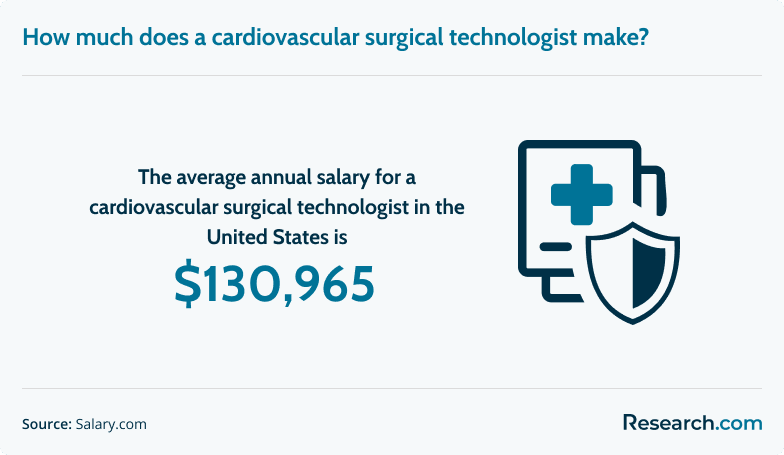
- Neurosurgery: Focuses on brain and spinal procedures. Technologists in neurosurgery can earn significantly more, averaging $84,000-$270,000 per year, depending on experience and facility.
- OB‑GYN Surgery: Includes obstetric and gynecologic cases such as deliveries, hysterectomies, laparoscopic procedures, and related instrument preparation.
- Plastic and Reconstructive Surgery: Uses delicate instruments, fine suturing materials, and techniques common in reconstructive and cosmetic outpatient settings.
- Transplant Surgery: Introduces organ procurement and transplantation protocols, where sterile technique and timing are especially critical.
- Ophthalmic Surgery: Prepares students for eye procedures such as cataract and LASIK surgeries that require precision instruments and careful setup.
Specialty experience can help graduates stand out, but it should not replace core surgical technology training. New students usually benefit from broad exposure first, then specialize after gaining confidence in the operating room.
How to Choose the Right Online Surgical Tech Certificate Program
Start with accreditation, authorization, and certification eligibility. Programs accredited by organizations such as the Commission on Accreditation of Allied Health Education Programs (CAAHEP) or the Accrediting Bureau of Health Education Schools (ABHES) may provide clearer pathways to recognized credentials such as the CST or TS-C. Some employers and hospitals prefer or require graduates from accredited programs with verified clinical experience.
Next, examine clinical placement support. A program can look convenient online but become difficult if students are responsible for finding their own approved externship site. Many states and employers expect documentation of at least 120 to 125 surgical cases before certification or hiring. If the school does not provide placement assistance, ask for written details about how students in your area complete clinical requirements.
Faculty experience also matters. Instructors with current or recent operating room experience can help students understand real workflow, sterile field discipline, surgeon preferences, and current equipment. Mentorship can be especially important in accelerated programs that move quickly.
Questions to Ask Before You Enroll
- Is the program accredited, authorized, or otherwise recognized for the certification exam I plan to take?
- Which certification exam does the program prepare students for?
- Does the school arrange clinical placements, or must I find my own site?
- How many surgical cases are required, and what types of cases count?
- Are there clinical sites near where I live?
- What happens if I cannot secure an externship by the expected date?
- Are tuition, books, supplies, uniforms, screenings, and exam fees included in the quoted cost?
- What are the program’s pass rates, completion rates, and job placement outcomes?
- Will credits transfer if I later pursue an associate or bachelor's degree?
- Does the program meet requirements for employment in my state or preferred hospital system?
Common Mistakes to Avoid
| Mistake | Why It Can Hurt You | Better Approach |
| Choosing only the fastest program | A short timeline may not include enough clinical support or certification preparation | Compare speed with accreditation, externship access, and exam eligibility |
| Ignoring accreditation | Some employers or certification pathways may not accept the training | Confirm accreditation or authorization directly with the school and credentialing body |
| Assuming online means fully remote | Surgical technology requires in-person clinical practice | Plan early for lab work, externships, transportation, and clinical scheduling |
| Looking only at tuition | Fees, supplies, screenings, and exam costs can change the true price | Request a complete cost breakdown in writing |
| Not checking local clinical access | No nearby externship site can delay completion | Ask where recent students in your area completed clinical requirements |
| Assuming salary outcomes are guaranteed | Pay depends on location, employer, certification, experience, and specialty | Use salary data as a planning tool, not a promise |
Career Paths After an Online Surgical Tech Certificate Program for 2027
Graduates of online surgical tech certificate programs for 2027 can pursue entry-level operating room roles and, with experience or additional education, move into specialized, supervisory, or adjacent healthcare positions. Surgical technology is one of several accessible medical field careers for students who want patient care exposure without immediately committing to a longer clinical degree.
- Certified Surgical Technologist (CST): This is the core role for many graduates. The Bureau of Labor Statistics projects it is growing at 6% within a decade, which is faster than the average for all occupations.
- Sterile Processing Technician: These professionals clean, sterilize, organize, and prepare surgical instruments. Entry wages are similar to CSTs, but average salaries can reach $74,900 annually, with some positions paying up to $98,000.
- Specialized Surgical Tech: Experienced technologists may move into cardiovascular, neurosurgery, orthopedic, robotic surgery, or other focused areas. These specializations usually boost earning potential by 15% to 30% over generalist roles.
- First Surgical Assistant or CSFA: This advanced operating room role may include suturing, retracting, and expanded intraoperative support. Technologists typically need 3,000 hours of OR experience and completion of a CAAHEP-accredited program to pursue this level.
- Leadership and Coordination Roles: Experienced techs may become team leads, OR coordinators, or surgical services supervisors. Some pursue fast-track degrees in healthcare administration to support advancement.
- Transition to Other Healthcare Careers: Surgical tech experience can support future training in perioperative nursing, physician assistant studies, healthcare administration, or other clinical and operational roles.
Job Market Outlook for Surgical Tech Graduates for 2027
The surgical technology job market remains favorable for graduates who complete recognized training, document clinical experience, and prepare for certification. The Wall Street Journal recently identified surgical technologists as one of the upwardly mobile allied health roles, largely because the training path is shorter than many healthcare careers and the role can lead to multiple clinical advancement routes.
Employers generally care less about whether classroom coursework was online and more about whether the program is credible, clinically complete, and aligned with certification expectations. Graduates of the best online medical certificate programs should still be ready to explain their externship experience, certification status, and hands-on case exposure during interviews.
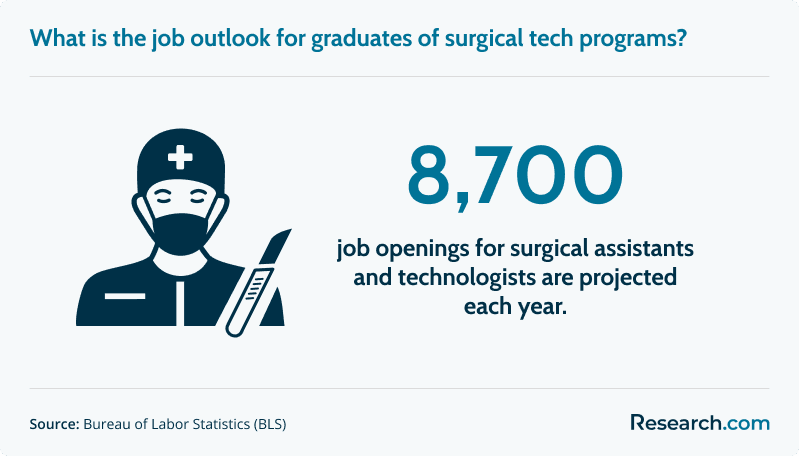
The Bureau of Labor Statistics reports that employment of surgical technologists is projected to grow by 6% until 2033, with approximately 8,700 job openings each year. Opportunities are available in hospitals, outpatient surgical centers, physician offices, trauma units, and specialty clinics.
Hiring conditions can be especially strong in rural and underserved regions where hospitals struggle to recruit qualified surgical staff. Some employers respond with signing bonuses, housing stipends, or student loan forgiveness. Students may also receive job offers during externships, particularly in programs reporting placement rates above 90% in shortage areas.
Challenges to Consider Before Enrolling in an Online Surgical Tech Program
Online surgical tech programs can be convenient, but they also require careful planning. The most common challenge is clinical placement. A program may provide strong online lessons but limited help finding a hospital or surgical center where students can complete hands-on requirements. This can delay graduation or prevent students from becoming eligible for certification on the expected timeline.
Another challenge is learning physical skills remotely. Virtual labs, videos, and simulations can help students understand procedures, but surgical technology also depends on repetition, dexterity, sterile technique, and real-time correction. Students who need frequent in-person feedback may prefer a campus-based or highly structured hybrid program.
Students should also confirm that online support is strong enough for accelerated learning. Fast programs move quickly, and delays in instructor feedback, technical issues, or unclear externship instructions can create serious problems. Some learners broaden their administrative knowledge with related options such as the most affordable online medical billing and coding training, but that should complement—not replace—surgical tech clinical preparation.
What Graduates Say About Online Surgical Tech Certificate Programs
-
: "I finished my online surgical tech certificate in 8 months while working full-time as a pharmacy tech and raising two children. The recorded instrument videos were the most useful part because I could replay OB-GYN setups until they finally stuck. My externship was at a community hospital, and after I completed my 127th case, they offered me a job. I was surprised by how ready I felt after an online program.
— Celia"
-
: "My program gave us a weekly schedule, but I could move ahead when my workload was lighter. At the end of each module, I submitted videos practicing sterile technique with mock trays and items I had at home. The instructor feedback was specific and quick. A few classmates and I also created a private Discord study group, and those weekly quizzes helped a lot before externship started.
— Maeve"
-
: "Returning to school at 39 made me nervous, but the self-paced format let me study anatomy around my night shifts as a patient transport aide. The virtual surgery simulations walked through laparoscopic cholecystectomies and joint replacements step by step. During my trauma center externship, I assisted with over 40 orthopedic cases. Now I work full-time on the ortho call team, and my daughters think my job is amazing.
— Sally"
How Further Education Can Strengthen a Surgical Tech Career
Additional education can help surgical technologists move beyond entry-level operating room duties. Continuing education, specialty workshops, certification preparation, and clinical conferences can deepen technical skills and keep professionals current with changing surgical tools and procedures.
Students interested in leadership, scheduling, department operations, or healthcare management may eventually consider administrative education. For example, the most affordable healthcare administration degrees can help surgical techs build management knowledge while applying their operating room experience to broader healthcare settings.
Do Online Surgical Tech Certificate Programs Offer Strong ROI?
An online surgical tech certificate can offer a practical return on investment when the program is affordable, clinically supported, and aligned with certification or employer requirements. The shorter training timeline can help students enter the workforce faster than many healthcare degree routes, but ROI depends on more than tuition. Students should weigh total cost, program length, certification outcomes, clinical placement quality, local job demand, and long-term advancement options.
It can also help to compare surgical technology with other healthcare education paths. Students interested in healthcare data, compliance, or records management might review the cheapest online health information management programs to see whether a clinical operating room role or an information-focused healthcare career better fits their goals.
How Online Surgical Tech Programs Use Emerging Surgical Technology
Online surgical tech programs increasingly use virtual simulations, video-based instrument demonstrations, digital skills checks, and online lab activities to help students prepare before entering clinical settings. These tools can make remote learning more interactive, especially for students practicing procedure flow, instrument recognition, sterile field concepts, and surgical sequencing.
Technology does not eliminate the need for in-person experience. Instead, it can help students arrive at externships better prepared to observe, ask informed questions, and practice safely under supervision. As healthcare becomes more technology-driven, students may also benefit from understanding related operations such as documentation, coding, and billing workflows. Programs connected to medical billing and coding online schools can provide useful context for how surgical care fits into the broader healthcare system.
Key Insights
- The fastest online surgical tech programs may take 4 to 6 months, but many reputable certificate programs take 6 to 12 months because clinical training cannot be skipped.
- Accreditation, authorization, certification eligibility, and externship support are more important than speed alone.
- Online coursework can be flexible, but students still need in-person clinical experience, often including documented surgical cases.
- Program costs for 2027 commonly fall between $4,000 and $15,000, with some lower-cost options starting at $1,599.
- The median annual salary of $62,830 can support a strong ROI when students choose a credible program and enter a market with hiring demand.
- The Bureau of Labor Statistics projects 6% growth until 2033 and approximately 8,700 job openings each year for surgical technologists.
- Before enrolling, ask who arranges clinical placement, which certification exam the program prepares for, and whether graduates are eligible for jobs in your state or preferred healthcare system.
- Students who want advancement can later pursue specialty surgical roles, first assistant pathways, healthcare administration, or other clinical careers.
References:
Bureau of Labor Statistics. (2024, April 16). Surgical technologists. U.S. Department of Labor. https://www.bls.gov/ooh/Healthcare/Surgical-technologists.htm
Health Tech Academy. (n.d.). Surgical technologist certificate program. https://www.healthtechacademy.org/surgical-technologist
National Board of Surgical Technology and Surgical Assisting. (n.d.). Certification statistics. https://www.nbstsa.org/certification-statistics
National Board of Surgical Technology and Surgical Assisting. (n.d.). NBSTSA home. https://www.nbstsa.org/
National Center for Competency Testing. (n.d.). Tech in Surgery - Certified (TS-C). https://www.ncctinc.com/certifications/ts-c
Santa Ana College. (n.d.). Cal Grant C Awards. https://sac.edu/StudentServices/FinancialAid/Pages/Cal-Grant-C-Awards.aspx
Stepful. (2024, February 28). How much does it cost to become a surgical tech? https://www.stepful.com/post/cost-to-become-a-surgical-tech
Surgical Tech Careers. (n.d.). Surgical tech salary overview. https://www.surgicaltechcareers.com/surgical-tech-salary-overview/
Vivian Health. (2024, May 1). Highest paying surgical technologist specialties. https://www.vivian.com/community/allied-health/high-paying-surgical-technologist-specialties/
Walker, L. (2024, February 21). They are hot, upwardly mobile jobs. Here’s why they are so hard to fill. The Wall Street Journal. https://www.wsj.com/lifestyle/careers/they-are-hot-upwardly-mobile-jobs-heres-why-they-are-so-hard-to-fill-513be597
Other Things You Should Know About the Fastest Online Surgical Tech Certificate Programs for CURRENT_YEAR
Yes. Most surgical tech certificate programs require a criminal background check before clinical placement, and many also require drug screening, immunization records, CPR certification, and proof of a physical exam. Clinical sites can refuse students who do not meet these clearance rules.
Admission requirements typically include a high school diploma or GED. Some programs may require prerequisite courses in subjects like biology or anatomy. Applicants might need to submit standardized test scores, though many online programs in 2027 are waiving these due to evolving educational trends.